Loneliness, isolation and desperate yearning

TLS_Dirda_345351h

Even William Faulkner acknowledged his importance, calling him “the father of my generation of American writers and the tradition of American writing which our successors will carry on. He has never received his proper evaluation”. While Anderson’s prose can sometimes take on sonorous, biblical rhythms or echo the grandstanding rhetoric of county-fair oratory, his best short fiction manages to combine the folksiness of Mark Twain, the naturalist daring of Theodore Dreiser (to whom he dedicated his collection Horses and Men), and, more surprisingly, a linguistic freshness and simplicity he discovered in Gertrude Stein’s Tender Buttons and Three Lives. Above all, though, Anderson exhibits that distinctive tenderness for his characters, despite all their flaws and foibles, that we associate with Russian writers like Chekhov and Turgenev. He once called the latter’s Memoirs of a Sportsman “the sweetest thing in all literature”. If that’s true, Winesburg, Ohio must be one of the most quietly bittersweet. In a cycle of linked vignettes, what we might now describe as a mosaic novel, the book portrays the loneliness, isolation and desperate yearning of the citizens of an 1890s town in the middle of farm country.

more from Michael Dirda at the TLS here.

the height of printmaking

Article_inset_perl_2

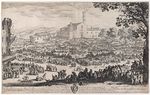
Rarely have life’s sweetness and bitterness been embraced with more evenhanded genius than in the work of Jacques Callot. The seventeenth-century French printmaker finds an ethics of vision—a way of grappling with whatever the world has to offer—in the indomitable force and lucidity of his line. Revered from his own day down to ours by those who see possibilities for transcendence in the printmaker’s technical know-how, Callot has nevertheless been a fairly minor figure in the art history books, no matter that some of his impressions of the horrors of war are as indelible as Goya’s and that his reflections on the pleasures of the theater and the fairground rival those of Rubens and Watteau. Within the frequently Lilliputian dimensions of his prints—some of the most famous ones are little more than two inches high—Callot represented beggars, gypsies, soldiers, actors, and the ladies and gentlemen of the court. He etched Biblical stories, royal festivals, hunts, battles, gardens, landscapes, and seascapes. “Princes & Paupers: The Art of Jacques Callot,” mounted at the Museum of Fine Arts in Houston, is a brave attempt to raise Callot’s profile. It has been many years since this country saw a major show with a catalogue devoted to an artist I would rank among the peerless image makers and storytellers of European art. Allow yourself to succumb to Callot’s work and you will experience a concentrated high.

more from Jed Perl at TNR here.

On Pankaj Mishra

Image_column-one

From the Ruins of Empire ends on a prolonged note of despair. “No convincingly universalist response exists today to Western ideas of politics and economy,” Mishra writes, “even though these seem increasingly febrile and dangerously unsuitable in large parts of the world.” He sees everywhere an ascendant Asia capable of challenging the West for resources, territory and market share. Where Mishra’s ur-generation of Asian intellectuals seemed to agree on the necessity of Western science, so their descendants seem to have settled on one-track Western-style economic development. “The Graduate Students Who Remade Asia” could be the subtitle for the yet-to-be-written history of those US- and UK-trained economists who undertook the market-centered reforms of the 1980s. For Mishra, “the revenge of the East” only means it will repeat the West’s mistakes on a larger scale. This already appears to be happening: in March, the BRICS announced the creation of a development fund meant to be their answer to the World Bank and the IMF. It is unlikely to be a gentler civilizer of nations.

more from Thomas Meaney at The Nation here.

A young Houston couple is planning to give away $4 billion—but only to projects that prove they are worth it. Can they redefine the world of philanthropy?

Brad Reagan in the Wall Street Journal:

ScreenHunter_205 May. 23 14.23Most billionaires tend to write checks to good causes they're part of, hospitals where they were treated or universities they attended. These are the so-called “grateful-recipient” donors. Or there are donors who make sizable gifts to meet an obvious need in a community, such as hunger or education. But at a time when charitable giving in the U.S. is still down from its peak in 2007, the Arnolds want to try something new and somewhat grander. John says the goal is to make “transformational” changes to society.

The Arnolds want to see if they can use their money to solve some of the country's biggest problems through data analysis and science, with an unsentimental focus on results and an aversion to feel-good projects—the success of which can't be quantified. No topic is too ambitious: Along with obesity, the Arnolds plan to dig into criminal justice and pension reform, among others. Anne Milgram, the former New Jersey attorney general hired to tackle the criminal-justice issue, has a name for all this: She calls it the “Moneyball” approach to giving, a reference to the book and movie about how the Oakland A's used smart statistical analysis to upend some of baseball's conventional wisdom. And the Arnolds are in no hurry for answers. Indeed, they believe patience is a key resource behind their giving.

More here.

Thursday Poem

Djinn

Haunted, they say, believing
the soft, shifty
dunes are made up
of false promises.

Many believe
whatever happens
is the other half
of a conversation.

Many whisper
white lies
to the dead.

“The boys are doing really well.”

Some think
nothing is so
until it has been witnessed.

They believe
the bits are iffy;

the forces that bind them,
absolute.
.
.

by Rae Armantrout
from Poetry, Vol. 192, No. 3, June
publisher: Poetry, Chicago, 2008

Wednesday, May 22, 2013

A Mother, a Son and a Wife

From The Wall Street Journal:

MomJim Brown knew he was in trouble before his mother finished asking the question. “Am I a better cook than your wife?” she asked, calmly stirring a pot on the stove in her kitchen. With his wife, Joy, standing next to him, Mr. Brown stammered and stuttered. He prayed—”for a trap door to appear,” he says. Finally, he did the only thing he could think to do: Tell the truth. “I said that my wife is a better cook,” the 50-year-old owner of a Duncanville, Texas, auto-repair shop says. The fallout? “Biblical,” he says. “There was wailing. Gnashing of teeth.” Even his wife got mad—telling him that he had been insensitive to his mother. Sadly, the scene wasn't new to the Browns, who had been married seven years. The strain between his wife and his mother—and his position, stuck in the middle—was taking a toll on all three relationships. His mom criticized his wife for her parenting style and for not getting a job. His wife cried and complained to him. He retreated from both women. “I am a guy and not that intuitive, and I didn't really understand either one,” he says. “My inclination was to go mow the grass.” Over the next couple years, the Browns kept trying to make the triangle work—until the conflict reached a crisis point and then took an unexpected turn.

Few family relationships are more fraught than the ones between a mother-in-law and her daughter-in-law, and the man caught between them. It has been fodder for comedy in movies and on TV forever, yet each generation seems to have to learn for itself how to make this triangle work.

More here.

The big fat truth

From Nature:

Artwork_obesity_GARY_NEILLate in the morning on 20 February, more than 200 people packed an auditorium at the Harvard School of Public Health in Boston, Massachusetts. The purpose of the event, according to its organizers, was to explain why a new study about weight and death was absolutely wrong. The report, a meta-analysis of 97 studies including 2.88 million people, had been released on 2 January in the Journal of the American Medical Association (JAMA)1. A team led by Katherine Flegal, an epidemiologist at the National Center for Health Statistics in Hyattsville, Maryland, reported that people deemed 'overweight' by international standards were 6% less likely to die than were those of 'normal' weight over the same time period. The result seemed to counter decades of advice to avoid even modest weight gain, provoking coverage in most major news outlets — and a hostile backlash from some public-health experts. “This study is really a pile of rubbish, and no one should waste their time reading it,” said Walter Willett, a leading nutrition and epidemiology researcher at the Harvard school, in a radio interview. Willett later organized the Harvard symposium — where speakers lined up to critique Flegal's study — to counteract that coverage and highlight what he and his colleagues saw as problems with the paper. “The Flegal paper was so flawed, so misleading and so confusing to so many people, we thought it really would be important to dig down more deeply,” Willett says.

But many researchers accept Flegal's results and see them as just the latest report illustrating what is known as the obesity paradox. Being overweight increases a person's risk of diabetes, heart disease, cancer and many other chronic illnesses. But these studies suggest that for some people — particularly those who are middle-aged or older, or already sick — a bit of extra weight is not particularly harmful, and may even be helpful. (Being so overweight as to be classed obese, however, is almost always associated with poor health outcomes.)

More here.

Why Rational People Buy Into Conspiracy Theories

Maggie Koerth-Baker in the New York Times:

ScreenHunter_203 May. 22 18.20In the days following the bombings at the Boston Marathon, speculation online regarding the identity and motive of the unknown perpetrator or perpetrators was rampant. And once the Tsarnaev brothers were identified and the manhunt came to a close, the speculation didn’t cease. It took a new form. A sampling: Maybe the brothers Tsarnaev were just patsies, fall guys set up to take the heat for a mysterious Saudi with high-level connections; or maybe they were innocent, but instead of the Saudis, the actual bomber had acted on behalf of a rogue branch of our own government; or what if the Tsarnaevs were behind the attacks, but were secretly working for a larger organization?

Crazy as these theories are, those propagating them are not — they’re quite normal, in fact. But recent scientific research tells us this much: if you think one of the theories above is plausible, you probably feel the same way about the others, even though they contradict one another. And it’s very likely that this isn’t the only news story that makes you feel as if shadowy forces are behind major world events.

“The best predictor of belief in a conspiracy theory is belief in other conspiracy theories,” says Viren Swami, a psychology professor who studies conspiracy belief at the University of Westminster in England. Psychologists say that’s because a conspiracy theory isn’t so much a response to a single event as it is an expression of an overarching worldview.

More here.

The Moral Status of Rocks

Justin E. H. Smith in his blog:

6a00d83453bcda69e201910263e16b970c-350wiA student in rural Iceland, of sheep-farming stock, had her guard down, or didn't yet have a guard. She didn't know how to talk to foreigners, or perhaps felt there was something she had to get across to foreigners, or to this foreigner, who showed an interest in her country. She said, in the hope of conveying to me the whole ethical-spiritual outlook of her country in a single concrete example: In Iceland we are taught not to smash rocks.

In recent years something called 'environmental ethics' is moving into the mainstream, finding space alongside the Kantian, the utilitarian, and so on, which for their part suppose that an ethical relation can only be had toward an ethical subject, and that such subjects are found only among human or at most animal beings. Even environmental ethics tends to imagine the environment with a thick arboreal canopy, with lush grass, and lillypads covering seething green ponds. But in the Arctic and sub-Arctic the 'environment' is mostly a geological rather than a biological phenomenon, and it is not altogether surprising that in such a setting rocks come forward as phenomenally salient, as creatures, as others, more readily than in the Amazon. And still less do the rocks come forward as our petrous co-beings in the big cities of the world, where they only appear ground down and formed into angular artifacts of human ingenuity, which in turn you are not supposed to smash, since in the process of their transformation they have become 'property'.

More here.

The need for critical science journalism

Jalees Rehman in The Guardian:

ScreenHunter_202 May. 22 18.00The bulk of contemporary science journalism falls under the category of “infotainment”. This expression describes science writing that informs a non-specialist target audience about new scientific discoveries in an entertaining fashion. The “informing” typically consists of giving the reader some historical background surrounding the scientific study, summarises key findings and then describes the significance and implications of the research. Analogies are used to convey complex scientific concepts so that a reader without a professional scientific background can grasp the ideas driving the research.

Direct quotes from the researchers also help illustrate the motivations, relevance, and emotional impact of the findings. The entertainment component varies widely, ranging from an enticing or witty style of writing to the choice of the subject matter. Freaky copulation techniques in the animal kingdom, discoveries that change our views about the beginnings of the universe or of life, heart-warming stories about ailing children that might be cured through new scientific breakthroughs, sci-fi robots, quirky anecdotes or heroic struggles of the scientists involved in the research – these are examples of topics that will capture the imagination of the intended audience.

However, infotainment science journalism rarely challenges the validity of the scientific research study or criticises its conclusions. Perfunctory comments, either by the journalist or in the form of quotes – such as “It is not clear whether these findings will also apply to humans” or “This is just a first step and more research is needed” are usually found at the end of such pieces – but it is rare to find an independent or detailed critical analysis.

More here.

Why race as a biological construct matters

Razib Khan in Gene Expression:

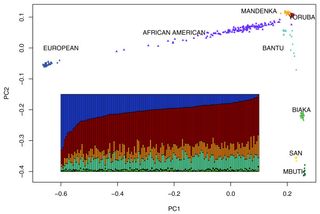
Gb-2009-10-12-r141-1My own inclination has been to not get bogged down in the latest race and IQ controversy because I don’t have that much time, and the core readership here is probably not going to get any new information from me, since this is not an area of hot novel research. But that doesn’t mean the rest of the world isn’t talking, and I think perhaps it might be useful for people if I stepped a bit into this discussion between Andrew Sullivan and Ta-Nehisi Coates specifically. My primary concern is that here we have two literary intellectuals arguing about a complex topic which spans the humanities andthe sciences. Ta-Nehisi, as one who studies history, feels confident that he can dismiss the utility of racial population structure categorization because as he says, “no coherent, fixed definition of race actually exists.” I am actually more of a history guy than a math guy, not because I love history more than math, but because I am not very good at math. And I’ve even read books such as The Rise and Fall of the Caucasian Race and The History of White People (as well as biographies of older racial theorists, such as Madison Grant). So I am not entirely ignorant of Ta-Nehisi’s bailiwick, but, I think it would be prudent for the hoarders of old texts to become a touch more familiar with the crisp formalities of the natural sciences.

In his posts on this topic Ta-Nehisi repeatedly points to the real diversity in physical type and ancestry among African Americans, despite acknowledging implicitly the shared preponderant history. But today with genomic methods we have a rather better idea of the distribution of ancestry among African Americans. The above plot is from Characterizing the admixed African ancestry of African Americans, a 2009 paper with 94 Africans of diverse geographic origins, 136 African Americans, and 38 European Americans. They looked at 450,000 genetic variants (SNPs) per person (there are somewhat more than 10 million SNPs in the human genome). Obviously individuals and populations exhibit genetic relationships to each other contingent upon the patterns of the variation of base pairs (A, C, G, and T) across the genomes of individuals, but there’s no reasonable way to comprehend this “by eye” when you’re talking about hundreds of thousands of markers. The authors used two simple methods to infer clustering within the data set.

More here.

a pretty funny book

1564780910.01.MZZZZZZZ

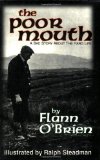
I would dearly love to be able to start this piece by saying that The Poor Mouth is the funniest book ever written. It’d be a real lapel-grabber, for one thing, an opening gambit the casual Millions reader would find it hard to walk away from. And for all I know, it might well be true to say such a thing. Because here’s how funny it is: It’s funnier than A Confederacy of Dunces. It’s funnier than Money or Lucky Jim. It’s funnier than any of the product that any of your modern literary LOL-traffickers (your Lipsytes, your Shteyngarts) have put on the street. It beats Shalom Auslander to a bloody, chuckling pulp with his own funny-bone. And it is, let me tell you, immeasurably funnier than however funny you insist on finding Fifty Shades of Grey. The reason I can’t confidently say that it’s the funniest book ever written is that I haven’t read every book ever written. What I can confidently say is that The Poor Mouth is the funniest book by Flann O’Brien (or Myles na gCopaleen, or any other joker in the shuffling deck of pseudonyms Brian O’Nolan wrote under). And if this makes it, by default, the funniest book ever written, then all well and good; but it is certainly the funniest book I’ve ever read.

more from Mark O’Connell at The Millions here.

Terrence Malick

1368297654

As such, a number of temptations continue to arise when discussing Malick. Foremost among these is the tendency to perpetuate the go-to myths: that the famously media-shy filmmaker is also a recluse, or that he once disappeared from Hollywood for two decades for reasons unknown. Starting with the most basic of biographical details — or lack thereof — it’s easy to see why there are so many misconceptions: there isn’t even a consensus on where the man was born. The Guardian, Los Angeles Times, and The Telegraph all list Malick’s birthplace as Ottawa, Illinois; The New York Times and USA Today cite Waco, Texas as the true site. (That none of these outlets place their own opinion in opposition to anyone else’s is either evidence of their confidence or a suggestion that they aren’t even aware there’s room for debate.) Malick has politely declined every single one of the countless interview requests he’s received since 1975 (by which point he had granted only a few), but mum has rarely, if ever, been the word on him. Critics, academics, and fans alike have made a habit of endlessly speculating about Malick’s habits and whereabouts for the entirety of his now four-decade career; he’s amassed something of a cult following for exhibiting what many would consider perfectly normal behavior and attempting to work in private.

more from Michael Nordine at the LA Review of Books here.

Kertész and auschwitz

Imre-kertesz1

Nobel laureate Imre Kertész is certainly no stranger to controversy. His radical reconceptualization of the term “Holocaust” — in whose “unscrupulous employment” he locates “a cowardly and unimaginative glibness” — to extend beyond the scope of the concentration camps and those who perished therein, rhetorically privileges the survivors over the dead: “the word [Holocaust] actually only relates to those who were incarcerated: the dead, but not the survivors… The survivor is an exception.” And his fictional portrayals of Auschwitz and its repercussions in autobiographical novels like Fatelessness, Kaddish for an Unborn Child and Fiasco have been misread as “betray[ing] the Holocaust” — in spite of Kertész having himself been held at Auschwitz, and later Buchenwald, from the age of fourteen — just as they critique the totalitarian dictatorships that ensued in his native Hungary after the end of the Second World War, regimes that Kertész believes were related to the Holocaust at the level of power: “after Auschwitz the virtuality of Auschwitz inheres in every dictatorship.”

more from K. Thomas Kahn at berfrois here.

Tuesday, May 21, 2013

South Asians and the Shaping of Britain

Sarfraz Manzoor in The Telegraph:

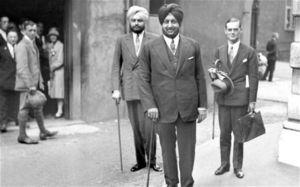
INDIANSWEB_2566044bMahinder Singh Pujji, a 22-year-old Indian man, was queuing to see a film at his local cinema. The man in front of him saw his turban and uniform – Pujji was a member of the RAF – and said: “Sir, you don’t have to stand in the queue.” He ushered him to the front of the line. No one grumbled and the woman working in the ticket office, again seeing his turban and wings, refused to accept money for the ticket. This incident would be surprising and heart-warming if it occurred today; in fact, the film that Pujji was queuing to see was Gone with the Wind, and the year was 1940. What makes this story so powerful is that it challenges established narratives about south Asian migration to Britain: it shows us that years before Commonwealth immigration there had been migrants from the subcontinent; it questions the assumption that migrants were always treated poorly, and it reminds us of the contribution many made.

South Asians and the Shaping of Britain excavates the archives for letters, diaries, books and articles relating to this subject. Taking the year 1870 – the zenith of empire – as the starting point and traversing 80 years to 1950 – a period that witnessed two world wars, the decline of empire, the fight for Indian independence and Partition – the book demonstrates that Britain has a more complex multicultural heritage than is usually acknowledged.

I knew about the role Indians played during the two world wars, for example, but I had no idea that in the period covered here, 80 different south Asian authors published 180-plus books in Britain. This one builds on Rozina Visram’s landmark histories Ayahs, Lascars and Princes and Asians in Britain. But what makes reading it a more visceral experience is the first-hand accounts and documents: a book review by Oscar Wilde from 1890 of the Indian poet Manmohan Ghose, an extraordinary photograph of Sophia Duleep Singh – the mixed-race daughter of the deposed Maharajah of the Punjab – standing outside Hampton Court Palace in 1913 in a long dark coat and hat selling a copy of The Suffragette. Two years later Ludder Singh, an Indian soldier fighting in the trenches during the First World War, writes to his brother back home: “Bodies were lying on bodies like stones in heaps”; “When a man dies in the world I and you think it is a great event, but here in this war corpses are piled one upon another so that they cannot be counted.”

More here.

An Unheralded Breakthrough: The Rosetta Stone of Mathematics

From Scientific American:
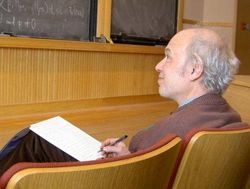
DeligneThere is no Nobel Prize in mathematics, but in 2001 the Norwegian government established a million-dollar Abel Prize, which is widely considered as an equivalent of the Nobel for mathematicians. This year’s prize was awarded to Pierre Deligne, professor emeritus at the Institute for Advanced Study in Princeton, N.J. Today, he is honored at a ceremony held in Oslo. Deligne’s most spectacular results are on the interface of two areas of mathematics: number theory and geometry. At first glance, the two subjects appear to be light-years apart. As the name suggests, number theory is the study of numbers, such as the familiar natural numbers (1, 2, 3, and so on) and fractions, or more exotic ones, such as the square root of two. Geometry, on the other hand, studies shapes, such as the sphere or the surface of a donut. But French mathematician André Weil had a penetrating insight that the two subjects are in fact closely related. In 1940, while Weil was imprisoned for refusing to serve in the army during World War II, he sent a letter to his sister Simone Weil, a noted philosopher, in which he articulated his vision of a mathematical Rosetta stone. Weil suggested that sentences written in the language of number theory could be translated into the language of geometry, and vice versa. “Nothing is more fertile than these illicit liaisons,” he wrote to his sister about the unexpected links he uncovered between the two subjects; “nothing gives more pleasure to the connoisseur.” And the key to his groundbreaking idea was something we encounter everyday when we look at the clock.

If we start working at 10:00 in the morning and work for eight hours, when do we finish? Well, 10 + 8 = 18, so a natural thing to say would be: “We finish at 18 o’clock.” This would be perfectly fine to say in France, where hours are recorded as numbers from zero to 24 (actually, not so fine, because a workday in France is usually limited to seven hours). But in the U.S. we say: “We finish at 6:00 pm.” How do we get six out of 18? We subtract 12: 18 – 12 = 6. Mathematicians call this “addition modulo 12.” Likewise, we can do addition modulo any whole number N. Just imagine a clock in which there are N hours instead of 12. For each N, we then obtain an esoteric-looking numerical system, in which we can do addition and multiplication, just like with ordinary numbers. For many years these systems looked, even to math practitioners, like something that would never have any real-world applications. In fact, English mathematician G.H. Hardy wrote, with defiance and pride, of the “uselessness” of number theory. But the joke was on him: these numerical systems are now ubiquitous in the encryption algorithms used in online banking. Every time we make a purchase online, arithmetic modulo N springs into action!

More here.

Why is Europe so Messed Up? An Illuminating History

H_14325143-580

John Cassidy in The New Yorker:

When the Great Recession struck, U.S. policymakers did what mainstream textbooks recommend: they introduced monetary and fiscal-stimulus programs, which helped offset the retrenchments and job losses in the private sector. In Europe, austerity has been the order of the day, and it still is. Nearly five years after the financial crisis, governments are still trimming spending and cutting benefits in a vain attempt to bring down their budget deficits.

The big mystery isn’t why austerity has failed to work as advertised: anybody familiar with the concept of “aggregate demand” could explain that one. It is why an area with a population of more than three hundred million has stuck with a policy prescription that was discredited in the nineteen-twenties and thirties. The stock answer, which is that austerity is necessary to preserve the euro, doesn’t hold up. At this stage, austerity is the biggest threat to the euro. If the recession lasts for very much longer, political unrest is sure to mount, and the currency zone could well break up.

So why is this woebegone approach proving so sticky? Some of the answers can be found in a timely and suitably irreverent new book by Mark Blyth, a professor of political economy at Brown: “Austerity: The History of a Dangerous Idea.” Adopting a tone that is by turns bemused and outraged, Blyth traces the intellectual and political roots of austerity back to the Enlightenment, and the works of John Locke, David Hume, and Adam Smith. But he also provides a sharp analysis of Europe’s current predicament, explaining how an unholy alliance of financiers, central bankers, and German politicians foisted a draconian and unworkable policy on an unsuspecting populace.

Unknown Mathematician Proves Elusive Property of Prime Numbers

Erica Klarreich in Wired:

Zhang3On April 17, a paper arrived in the inbox of Annals of Mathematics, one of the discipline’s preeminent journals. Written by a mathematician virtually unknown to the experts in his field — a 50-something lecturer at the University of New Hampshire named Yitang Zhang — the paper claimed to have taken a huge step forward in understanding one of mathematics’ oldest problems, the twin primes conjecture.

Editors of prominent mathematics journals are used to fielding grandiose claims from obscure authors, but this paper was different. Written with crystalline clarity and a total command of the topic’s current state of the art, it was evidently a serious piece of work, and the Annals editors decided to put it on the fast track.

Just three weeks later — a blink of an eye compared to the usual pace of mathematics journals — Zhang received the referee report on his paper.

“The main results are of the first rank,” one of the referees wrote. The author had proved “a landmark theorem in the distribution of prime numbers.”

Rumors swept through the mathematics community that a great advance had been made by a researcher no one seemed to know — someone whose talents had been so overlooked after he earned his doctorate in 1992 that he had found it difficult to get an academic job, working for several years as an accountant and even in a Subway sandwich shop.

More here.

Is the Brain No Different From a Light Switch? The Uncomfortable Ideas of the Philosopher Daniel Dennett

Jonathan Weiner in The Daily Beast:

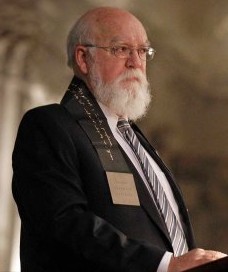
ScreenHunter_201 May. 21 17.17For Daniel Dennett, philosophers are like blacksmiths: they make their own tools as they go along. Unlike carpenters, who have to buy their drills and saws at Sears, blacksmiths can use their own hammers, tongs, and anvils to pound out more hammers, tongs, and anvils. Dennett, whose famous white beard gives him the look of both a blacksmith and a philosopher, has been particularly industrious at the anvil. He has been working as a philosopher for 50 years, and in his new book, Intuition Pumps and Other Tools for Thinking, he shares a few tricks to make the hard work easier. He is a master at inventing tools for thought—metaphysical jokes, fables, parables, puzzles, and zany Monty-Python-like sketches that can help thinkers feel their way forward. Dennett calls them hand tools and power tools for the mind, and he’s built dozens and dozens of them over the years.

“Thinking is hard,” he writes. “Thinking about some problems is so hard that it can make your head ache just thinking about thinking about them.” Thinking tools help philosophers work on the really deep, hard questions about life, the universe, and everything. They facilitate what another philosopher has called Jootsing, which stands for Jumping Out Of the System—the goal is to pop out of the goldfish bowl of commonplace ideas without drowning in thin air. Think of Plato’s Cave, for instance. That little story has helped philosophers puzzle about the nature of reality for more than 23 centuries and counting.

Dennett’s own inventions include “Swampman Meets a Cow-Shark,” “Zombies and Zimboes,” and many other thought experiments that illuminate great questions in philosophy. He focuses on problems of free will, evolution, and consciousness. His ideas about consciousness are rather shocking; he can make you feel that the human brain itself is just a collection of tongs, hammers, and intuition pumps. (More about that in a moment.) Dennett has written more than a dozen books about those deep topics.

More here.