South Asians and the Shaping of Britain

Sarfraz Manzoor in The Telegraph:
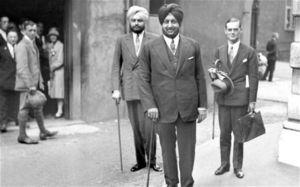
INDIANSWEB_2566044bMahinder Singh Pujji, a 22-year-old Indian man, was queuing to see a film at his local cinema. The man in front of him saw his turban and uniform – Pujji was a member of the RAF – and said: “Sir, you don’t have to stand in the queue.” He ushered him to the front of the line. No one grumbled and the woman working in the ticket office, again seeing his turban and wings, refused to accept money for the ticket. This incident would be surprising and heart-warming if it occurred today; in fact, the film that Pujji was queuing to see was Gone with the Wind, and the year was 1940. What makes this story so powerful is that it challenges established narratives about south Asian migration to Britain: it shows us that years before Commonwealth immigration there had been migrants from the subcontinent; it questions the assumption that migrants were always treated poorly, and it reminds us of the contribution many made.

South Asians and the Shaping of Britain excavates the archives for letters, diaries, books and articles relating to this subject. Taking the year 1870 – the zenith of empire – as the starting point and traversing 80 years to 1950 – a period that witnessed two world wars, the decline of empire, the fight for Indian independence and Partition – the book demonstrates that Britain has a more complex multicultural heritage than is usually acknowledged.

I knew about the role Indians played during the two world wars, for example, but I had no idea that in the period covered here, 80 different south Asian authors published 180-plus books in Britain. This one builds on Rozina Visram’s landmark histories Ayahs, Lascars and Princes and Asians in Britain. But what makes reading it a more visceral experience is the first-hand accounts and documents: a book review by Oscar Wilde from 1890 of the Indian poet Manmohan Ghose, an extraordinary photograph of Sophia Duleep Singh – the mixed-race daughter of the deposed Maharajah of the Punjab – standing outside Hampton Court Palace in 1913 in a long dark coat and hat selling a copy of The Suffragette. Two years later Ludder Singh, an Indian soldier fighting in the trenches during the First World War, writes to his brother back home: “Bodies were lying on bodies like stones in heaps”; “When a man dies in the world I and you think it is a great event, but here in this war corpses are piled one upon another so that they cannot be counted.”

More here.
An Unheralded Breakthrough: The Rosetta Stone of Mathematics

From Scientific American:

DeligneThere is no Nobel Prize in mathematics, but in 2001 the Norwegian government established a million-dollar Abel Prize, which is widely considered as an equivalent of the Nobel for mathematicians. This year’s prize was awarded to Pierre Deligne, professor emeritus at the Institute for Advanced Study in Princeton, N.J. Today, he is honored at a ceremony held in Oslo. Deligne’s most spectacular results are on the interface of two areas of mathematics: number theory and geometry. At first glance, the two subjects appear to be light-years apart. As the name suggests, number theory is the study of numbers, such as the familiar natural numbers (1, 2, 3, and so on) and fractions, or more exotic ones, such as the square root of two. Geometry, on the other hand, studies shapes, such as the sphere or the surface of a donut. But French mathematician André Weil had a penetrating insight that the two subjects are in fact closely related. In 1940, while Weil was imprisoned for refusing to serve in the army during World War II, he sent a letter to his sister Simone Weil, a noted philosopher, in which he articulated his vision of a mathematical Rosetta stone. Weil suggested that sentences written in the language of number theory could be translated into the language of geometry, and vice versa. “Nothing is more fertile than these illicit liaisons,” he wrote to his sister about the unexpected links he uncovered between the two subjects; “nothing gives more pleasure to the connoisseur.” And the key to his groundbreaking idea was something we encounter everyday when we look at the clock.

If we start working at 10:00 in the morning and work for eight hours, when do we finish? Well, 10 + 8 = 18, so a natural thing to say would be: “We finish at 18 o’clock.” This would be perfectly fine to say in France, where hours are recorded as numbers from zero to 24 (actually, not so fine, because a workday in France is usually limited to seven hours). But in the U.S. we say: “We finish at 6:00 pm.” How do we get six out of 18? We subtract 12: 18 – 12 = 6. Mathematicians call this “addition modulo 12.” Likewise, we can do addition modulo any whole number N. Just imagine a clock in which there are N hours instead of 12. For each N, we then obtain an esoteric-looking numerical system, in which we can do addition and multiplication, just like with ordinary numbers. For many years these systems looked, even to math practitioners, like something that would never have any real-world applications. In fact, English mathematician G.H. Hardy wrote, with defiance and pride, of the “uselessness” of number theory. But the joke was on him: these numerical systems are now ubiquitous in the encryption algorithms used in online banking. Every time we make a purchase online, arithmetic modulo N springs into action!

More here.

Why is Europe so Messed Up? An Illuminating History

H_14325143-580

John Cassidy in The New Yorker:

When the Great Recession struck, U.S. policymakers did what mainstream textbooks recommend: they introduced monetary and fiscal-stimulus programs, which helped offset the retrenchments and job losses in the private sector. In Europe, austerity has been the order of the day, and it still is. Nearly five years after the financial crisis, governments are still trimming spending and cutting benefits in a vain attempt to bring down their budget deficits.

The big mystery isn’t why austerity has failed to work as advertised: anybody familiar with the concept of “aggregate demand” could explain that one. It is why an area with a population of more than three hundred million has stuck with a policy prescription that was discredited in the nineteen-twenties and thirties. The stock answer, which is that austerity is necessary to preserve the euro, doesn’t hold up. At this stage, austerity is the biggest threat to the euro. If the recession lasts for very much longer, political unrest is sure to mount, and the currency zone could well break up.

So why is this woebegone approach proving so sticky? Some of the answers can be found in a timely and suitably irreverent new book by Mark Blyth, a professor of political economy at Brown: “Austerity: The History of a Dangerous Idea.” Adopting a tone that is by turns bemused and outraged, Blyth traces the intellectual and political roots of austerity back to the Enlightenment, and the works of John Locke, David Hume, and Adam Smith. But he also provides a sharp analysis of Europe’s current predicament, explaining how an unholy alliance of financiers, central bankers, and German politicians foisted a draconian and unworkable policy on an unsuspecting populace.

Unknown Mathematician Proves Elusive Property of Prime Numbers

Erica Klarreich in Wired:

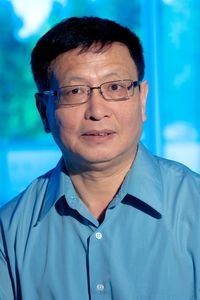
Zhang3On April 17, a paper arrived in the inbox of Annals of Mathematics, one of the discipline’s preeminent journals. Written by a mathematician virtually unknown to the experts in his field — a 50-something lecturer at the University of New Hampshire named Yitang Zhang — the paper claimed to have taken a huge step forward in understanding one of mathematics’ oldest problems, the twin primes conjecture.

Editors of prominent mathematics journals are used to fielding grandiose claims from obscure authors, but this paper was different. Written with crystalline clarity and a total command of the topic’s current state of the art, it was evidently a serious piece of work, and the Annals editors decided to put it on the fast track.

Just three weeks later — a blink of an eye compared to the usual pace of mathematics journals — Zhang received the referee report on his paper.

“The main results are of the first rank,” one of the referees wrote. The author had proved “a landmark theorem in the distribution of prime numbers.”

Rumors swept through the mathematics community that a great advance had been made by a researcher no one seemed to know — someone whose talents had been so overlooked after he earned his doctorate in 1992 that he had found it difficult to get an academic job, working for several years as an accountant and even in a Subway sandwich shop.

More here.

Is the Brain No Different From a Light Switch? The Uncomfortable Ideas of the Philosopher Daniel Dennett

Jonathan Weiner in The Daily Beast:

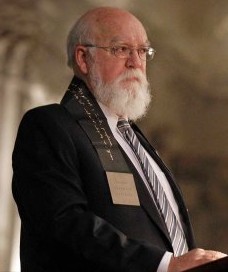
ScreenHunter_201 May. 21 17.17For Daniel Dennett, philosophers are like blacksmiths: they make their own tools as they go along. Unlike carpenters, who have to buy their drills and saws at Sears, blacksmiths can use their own hammers, tongs, and anvils to pound out more hammers, tongs, and anvils. Dennett, whose famous white beard gives him the look of both a blacksmith and a philosopher, has been particularly industrious at the anvil. He has been working as a philosopher for 50 years, and in his new book, Intuition Pumps and Other Tools for Thinking, he shares a few tricks to make the hard work easier. He is a master at inventing tools for thought—metaphysical jokes, fables, parables, puzzles, and zany Monty-Python-like sketches that can help thinkers feel their way forward. Dennett calls them hand tools and power tools for the mind, and he’s built dozens and dozens of them over the years.

“Thinking is hard,” he writes. “Thinking about some problems is so hard that it can make your head ache just thinking about thinking about them.” Thinking tools help philosophers work on the really deep, hard questions about life, the universe, and everything. They facilitate what another philosopher has called Jootsing, which stands for Jumping Out Of the System—the goal is to pop out of the goldfish bowl of commonplace ideas without drowning in thin air. Think of Plato’s Cave, for instance. That little story has helped philosophers puzzle about the nature of reality for more than 23 centuries and counting.

Dennett’s own inventions include “Swampman Meets a Cow-Shark,” “Zombies and Zimboes,” and many other thought experiments that illuminate great questions in philosophy. He focuses on problems of free will, evolution, and consciousness. His ideas about consciousness are rather shocking; he can make you feel that the human brain itself is just a collection of tongs, hammers, and intuition pumps. (More about that in a moment.) Dennett has written more than a dozen books about those deep topics.

More here.

Mohsin Hamid: ‘Islam is not a monolith’

Mohsin Hamid in The Guardian:

MohsinIn 2007, six years after the terrorist attacks of 11 September 2001, I was travelling through Europe and North America. I had just published a novel, The Reluctant Fundamentalist, and as I travelled I was struck by the large number of interviewers and of audience members at Q&As who spoke of Islam as a monolithic thing, as if Islam referred to a self-contained and clearly defined world, a sort of Microsoft Windows, obviously different from, and considerably incompatible with, the Apple OS X-like operating system of “the west”.

I recall one reading in Germany in particular. Again and again, people posed queries relating to how “we Europeans” see things, in contrast to how “you Muslims” do. Eventually I was so exasperated that I pulled my British passport out of my jacket and started waving it around my head. “While it's true the UK hasn't yet joined the eurozone,” I said, ” I hope we can all agree the country is in fact in Europe.”

Six years on, a film inspired by the novel is in the process of appearing on screens around the world, and I am pleased to report that those sorts of questions are a little rarer now than they were in 2007. This represents progress. But it is modest progress, for the sense of Islam as a monolith lingers, in places both expected and unexpected.

More here.

germ houses

Mag-19microbiome-t_CA0-articleLarge

Justin Sonnenburg, a microbiologist at Stanford, suggests that we would do well to begin regarding the human body as “an elaborate vessel optimized for the growth and spread of our microbial inhabitants.” This humbling new way of thinking about the self has large implications for human and microbial health, which turn out to be inextricably linked. Disorders in our internal ecosystem — a loss of diversity, say, or a proliferation of the “wrong” kind of microbes — may predispose us to obesity and a whole range of chronic diseases, as well as some infections. “Fecal transplants,” which involve installing a healthy person’s microbiota into a sick person’s gut, have been shown to effectively treat an antibiotic-resistant intestinal pathogen named C. difficile, which kills 14,000 Americans each year. (Researchers use the word “microbiota” to refer to all the microbes in a community and “microbiome” to refer to their collective genes.) We’ve known for a few years that obese mice transplanted with the intestinal community of lean mice lose weight and vice versa. (We don’t know why.) A similar experiment was performed recently on humans by researchers in the Netherlands: when the contents of a lean donor’s microbiota were transferred to the guts of male patients with metabolic syndrome, the researchers found striking improvements in the recipients’ sensitivity to insulin, an important marker for metabolic health. Somehow, the gut microbes were influencing the patients’ metabolisms.

more from Michael Pollan at the NY Times Magazine here.

the culture animal

168695264

According to genetics, there is not much that makes us human; depending on how you count, we share 98.5 per cent of our genes with chimpanzees. Perhaps this is not such a significant matter, given that we also share about 60 per cent of our genes with tomatoes. As this shows, human beings are fully part of nature, and the elements that make us make not just the rest of the animal and vegetable kingdoms, but the rocks beneath our feet and the stars in the sky above us. So what does make us human? It is not that we live in social groups: ants, antelopes and sparrows do the same. It is not that we have nuanced emotional lives: so do dogs and baboons. It is not even that we have language, for other things – including trees, as it happens – have communication systems, too, and it might be that some of those systems are quite complex, as appears to be the case with dolphins, for example. But in the human case the system of communication – language – is particularly complex and flexible, with great expressive power, and this makes possible the phenomenon of culture. If I were to pick one thing that separates humanity from the rest of the living world, culture is it.

more from AC Grayling at The New Statesman here.

I am dust and ashes and full of sin

20130520-butterfield_jpg_470x404_q85

In the summer of 1494, soon after his engagement, Albrecht Dürer made a startlingly intimate drawing of his fiancée Agnes Frey. One might have expected a twenty-three-year-old to depict his betrothed as a source of love, or comfort or well-being, all the more since her substantial dowry would soon launch his independent career. Instead, Albrecht showed Agnes twisted up in a knot of anxious introversion. She looks withdrawn and preoccupied, and the circles under her heavy-lidded eyes may even make one think she has been crying. In its frank portrayal of an informal moment of unguarded emotion, there had never been a drawing quite like this before. Typically portraiture was honorific and meant to represent the exemplary virtues of the person shown; Dürer instead often sought to capture the idiosyncratic and psychological characteristics of the people he portrayed. He was fascinated with the close scrutiny of dark and brooding emotion. This is especially evident in his self-portraits, many of which show him in states of melancholy, doubt, or disease.

more from Andrew Butterfield at the NYRB here.

Tuesday Poem

Jerusalem
.
And did those feet in ancient time
Walk upon Englands mountains green:
And was the holy Lamb of God,
On Englands pleasant pastures seen!
And did the Countenance Divine,
Shine forth upon our clouded hills?
And was Jerusalem builded here,
Among these dark Satanic Mills?
Bring me my Bow of burning gold:
Bring me my arrows of desire:
Bring me my Spear: O clouds unfold!
Bring me my Chariot of fire!
I will not cease from Mental Fight,
Nor shall my sword sleep in my hand:
Till we have built Jerusalem,
In Englands green & pleasant Land.
.
>
by William Blake

Monday, May 20, 2013

Sunday, May 19, 2013

Clinical trial supports use of Kava to treat anxiety

From Kurzweil AI:

KavaA world-first completed clinical study by an Australian team has found Kava, a medicinal South Pacific plant, significantly reduced the symptoms of people suffering anxiety. The study, led by the University of Melbourne, revealed Kava could be an alternative to pharmaceutical products for the hundreds of thousands of Australians who suffer from generalized anxiety disorders (GAD) “In this study we’ve been able to show that Kava offers a potential natural alternative for the treatment of chronic clinical anxiety; unlike some other options, it has less risk of dependency and less potential for side effects,” said lead researcher, Dr Jerome Sarris from Department of Psychiatry at the University of Melbourne. The study also found that people’s genetic differences (polymorphisms) of certain neurobiological mechanisms called GABA transporters may modify their response to Kava. “If this finding is replicated, it may pave the way for simple genetic tests to determine which people may be likely to have a beneficial anxiety-reducing effect from taking Kava,” Sarris said.

An additional novel finding of the study, recently published in Phytotherapy Research, was that Kava increased women’s sex drive compared to those in the placebo group, believed to be due to the reduction of anxiety, rather than any aphrodisiac effect. Future studies confirming the genetic relationship to therapeutic response, and any libido-improving effects from Kava is now required. Dr Sarris said these significant findings are of importance to sufferers of anxiety and to the South Pacific region, which relies on Kava as a major export.

More here.

SNL’s Ben Affleck Episode: 5 Best Scenes

From The Atlantic:

Stefon-e1323264582113The season finale marked the last regular SNL appearance of Seth Meyers (slated to succeed Jimmy Fallon as host of NBC's Late Night), Fred Armisen, and Bill Hader. (Jason Sudeikis's return remains uncertain.) The show sent them off with a mostly strong episode and some fitting farewell moments. Host Ben Affleck was joined by his wife, Jennifer Garner, during the monologue. Amy Poehler joined Seth Meyers for Weekend Update. Musical guest Kanye West performed “Black Skinhead” and “New Slaves.”

Picture: Seth Meyers beats out Anderson Cooper for Stefon's hand in marriage.

More here.

Habermas, Adorno, Politics

Finlayson_JamesGordon

Richard Marshall interviews Gordon Finlayson in 3:AM Magazine:

3:AM: A key discussion in contemporary liberal theory of ethics and politics is the relationship and differences between Habermas and Rawls. Can you say something about what you take the main points of dispute are and where you stand on this?

GF: Sure. In my view, despite the amount of ink that has been spilt on Habermas and Rawls in their respective fields, relatively little attention has been paid to the dispute between them. This is largely because influential commentators and critics were quick to judge their exchange in the Journal of Philosophy a damp squib.

This was in part because expectations ran high, at the time, because two of the greatest social and political theorists of the 20th century, although working in different traditions, roughly analytic political philosophy and German Social theory had engaged each other in debate. It was also because in truth neither thinker was sufficiently well apprised of the detail of the others theory – unsurprisingly really, since they worked in very different traditions and each had just spent the last few years writing their own major work of political theory. Finally, everyone at the time, including the disputants themselves, were seduced by the assumption that the salient point of comparison between their respective theories was Habermas’s principle (U) and his conception of the moral standpoint, and Rawls’s argument that the principles of justice are those that would be chosen by a rational and reasonable persons in the Original Position. Almost everyone who has written on Habermas and Rawls makes that particular mistake.

My take on that is straightforward. The debate between them concerns their respective political theories. It is basically a dispute between Rawls’s theory of Political Liberalism, and Habermas’s Discourse Theory of Law. It is not primarily a dispute between Rawls’s A Theory of Justice, and Habermas Discourse Ethics. Principle (U) is the central idea in Habermas’s Discourse Ethics, which is a moral theory, not a theory of law or of democratic legitimacy, while the argument from the Original Position takes a back seat in Rawls’s Political Liberalism. People who interpret the Habermas Rawls dispute in the light of the contrast between Habermas’s principle (U) and Rawls’s Original Position, are looking at the wrong thing and so miss the real points of dispute.

What people should have been asking is this. What are the central organizing ideas of their respective political theories, and on what significant points do these ideas conflict?

Argument with Myself

124504-123243

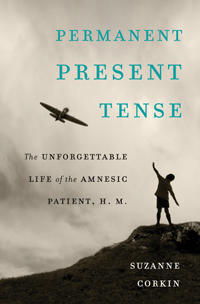
Mike Jay reviews Suzanne Corkin's Permanent Present Tense: The Man with No Memory, and What He Taught the World in the LRB:

Memory creates our identity, but it also exposes the illusion of a coherent self: a memory is not a thing but an act that alters and rearranges even as it retrieves. Although some of its operations can be trained to an astonishing pitch, most take place autonomously, beyond the reach of the conscious mind. As we age, it distorts and foreshortens: present experience becomes harder to impress on the mind, and the long-forgotten past seems to draw closer; University Challenge gets easier, remembering what you came downstairs for gets harder. Yet if we were somehow to freeze our memory at the youthful peak of its powers, around our late twenties, we would not create a polished version of ourselves analogous to a youthful body, but an early, scrappy draft composed of childhood memories and school-learning, barely recognisable to our older selves.

Something like this happened to the most famous case of amnesia in 20th-century science, a man known only as ‘H.M.’ until his death in 2008. When he was 27, a disastrous brain operation destroyed his ability to form new memories, and he lived for the next 55 years in a rolling thirty-second loop of awareness, a ‘permanent present tense’. During this time he was subjected to thousands of hours of tests, of which naturally he had no recall; he provided data for hundreds of scientific papers, and became the subject of a book (Memory’s Ghost by Philip Hilts) and a staple of popular science journalism; by the 1990s digital images of his uniquely disfigured hippocampus featured in almost every standard work on the neuroscience of memory. Since his death his brain has been shaved into 2401 slices, each 70 microns thick, compared in one account to the slivers of ginger served with sushi. Suzanne Corkin, an MIT neuroscientist, first met him in 1962 and after 1980 became his lead investigator and ‘sole keeper’. Permanent Present Tense is her account of Henry Gustave Molaison – his full identity can finally be revealed – and the historic contribution he made to science.

Corkin had a reputation for strict policing of access to Henry, a charge she happily concedes: ‘I did not want him to become a sideshow attraction – the man without a memory.’ After the death of his mother, his last thirty years were spent at a Connecticut nursing home in strict anonymity, with staff sworn to secrecy and filming prohibited. More than a hundred carefully screened researchers were admitted over the years to perform brain scans and cognitive tests, but were never told his name. Corkin’s lucid, well-organised telling of Henry’s story merges intimate case history with an account of the current scientific understanding and how it was reached.

Rite of Spring

Margaret_Fuller_Chappel_jpg_230x640_q85

Christopher Benfey in the NYRB's blog:

Spring should be a time of portents and premonitions, winged harbingers (“I dreaded that first Robin, so,” as Emily Dickinson put it with characteristic ambivalence) and new beginnings.

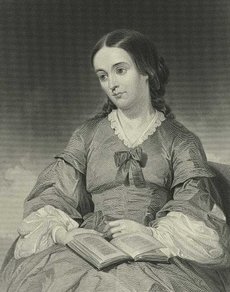
This thought struck me as I read Megan Marshall’s sympathetic new biography of Margaret Fuller, which opens with a familiar phrase from Virgil’s Aeneid, one that inspired an essay Fuller wrote during her precocious childhood. Possunt, quia posse videntur means, roughly, “They can because they think they can,” and describes a team of rowers who, according to Marshall, “will themselves to win a race.” The phrase, which Fuller thought demonstrated “confidence in the future,” gives Marshall an overarching theme for Fuller’s fiercely driven life.

But Fuller also made use of the Aeneid when she was less confident of the future. She was known to perform the ancient form of divination in which a passage of Virgil selected at random is assumed to reveal what lies ahead. Sir Philip Sidney described the practice, with a dash of skepticism, in his Defence of Poesy:

And so far were they carried into the admiration thereof, that they thought in the chanceable hitting upon any such verses great fore-tokens of their following fortunes were placed; whereupon grew the word of Sortes Virgilianae, when by sudden opening Virgil’s book they lighted upon some verse of his making.