grandpa and me

Grandpa-and-me-150x150

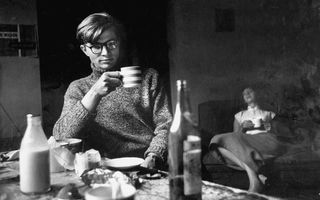
In this picture, Grandpa is lying on his back on a green slope, with his hands behind his head for a pillow and his hat pulled halfway down over his eyes. It’s hard to tell whether he’s dozing or not. It seems that he’s in that blessed peace between a light nap and the calm refreshment of gazing up into the clear sky. A spray of scraggly birch leaves hangs over him from above. The boy, meanwhile, is lost in another kind of contemplation. He’s sitting in front, right next to Grandpa’s side. His straw hat is set back to reveal his whole face. The legs of his patched trousers are rolled almost up to his knees, which are tucked up, while his bare feet – big bony feet, scuffed and dirty with life, brace against the hillside. His she-dog beagle nestles under one of the knees, as she sniffs at one of the three yellow-paper butterflies flitting about. But the boy isn’t thinking of the dog or the butterflies, or even Grandpa. He has a wild daisy in his hand – there are a few of them on the slope – and he’s picking the petals off, one by one. “She loves me, she loves me not, she loves me,” that is evidently what is in his mind, as he looks at the flower, with the slightest trace of a smile on his lips, and his eyebrows raised just a little, in wonder.

more from Anthony Esolen at Front Porch Republic here.

bulgakov’s letters

Rayfield_07_13

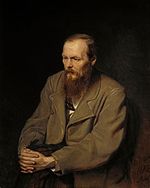
Mikhail Bulgakov, most readers and critics would concur, is the most widely loved and perhaps the greatest Russian writer in the Soviet period of fictional prose and drama. Some might be more deeply affected by Andrei Platonov’s harrowing prose, others impressed by the elegance of Vladimir Nabokov or the prophetic fantasy of Yevgeny Zamyatin, but nobody could render the intervention of the demonic into a corrupt and degraded world so comically and so frighteningly as Bulgakov did in his two major novels (Black Snow and The Master and Margarita) and his short stories and plays. Like many great writers, Bulgakov has his flaws: not all readers feel the saccharine love affair between the Master and Margarita belongs in the same novel as the apocalyptic progress of the satanic Professor Woland; he also liked to hound his oppressors (officials, theatre directors, ideologists) with disproportionate satirical force. Other readers are disconcerted by Bulgakov’s implicit ideology: loyal to the values of the pre-revolutionary educated classes, he seems to have had little hesitation in making a pact with Stalin – the great demon, by destroying lesser demons, protects Bulgakov as an artist, just as Louis XIV shielded Molière and Tsar Nicholas I did for Pushkin.

more from Donald Rayfield at Literary Review here.

dancing Shostakovich

Harssrunninglikeshadows_ftr

What sparks Ratmansky’s imagination is music. This may seem obvious, but there are plenty of choreographers who take their cues from nonmusical sources and ideas. In Shostakovich, he has an ideal partner. The composer’s sound world offers a vibrant spectrum, from cartoonish chases to crashing dissonances and swooning melodies, often spliced together with very little transition from one mood to the next. Without being programmatic, the music seems to suggest images and stories, though usually discontinuous and jumpy, or layered one on top of the other, and full of mischievous play. As the musicologist Simon Morrison told me not long ago, “The phrases are sometimes misaligned, and cut in different ways. If you listen to his music and think about silent-film technique, it’s the musical equivalent of that.” The technique of cutting and splicing—shot, countershot—is one Shostakovich picked up on early. After the Russian Revolution, the young composer earned his keep by improvising on the piano during silent movies—as did George Balanchine—and later wrote scores for modernist Soviet films such as New Babylon (1929). His music sometimes has the feel of several films spliced together, with a Tom and Jerry chase perhaps followed by a moonlit ride down the Elbe, a passionate kiss, a witch’s dance, a soccer match and a close-up of laughing faces.

more from Marina Harss at The Nation here.

They Finally Tested The ‘Prisoner’s Dilemma’ On Actual Prisoners — And The Results Were Not What You Would Expect

Max Nisen in the Business Insider:

ScreenHunter_248 Jul. 23 15.26The “prisoner’s dilemma” is a familiar concept to just about anybody that took Econ 101.

The basic version goes like this. Two criminals are arrested, but police can’t convict either on the primary charge, so they plan to sentence them to a year in jail on a lesser charge. Each of the prisoners, who can’t communicate with each other, are given the option of testifying against their partner. If they testify, and their partner remains silent, the partner gets 3 years and they go free. If they both testify, both get two. If both remain silent, they each get one.

In game theory, betraying your partner, or “defecting” is always the dominant strategy as it always has a slightly higher payoff in a simultaneous game. It’s what’s known as a “Nash Equilibrium,” after Nobel Prize winning mathematician and A Beautiful Mind subject John Nash.

In sequential games, where players know each other’s previous behaviour and have the opportunity to punish each other, defection is the dominant strategy as well.

However, on a Pareto basis, the best outcome for both players is mutual cooperation.

Yet no one’s ever actually run the experiment on real prisoners before, until two University of Hamburg economists tried it out in a recent study comparing the behaviour of inmates and students.

Surprisingly, for the classic version of the game, prisoners were far more cooperative than expected.

More here.

The Trayvon Martin Killing and the Myth of Black-on-Black Crime

Jamelle Bouie in The Daily Beast:

The idea that “black-on-black” crime is the real story in Martin’s killing isn’t a novel one. In addition to Shapiro, you’ll hear the argument from conservative African-American activists like Crystal White, as well as people outside the media, like Zimmerman defense attorney Mark O’Mara, who said that his client “never would have been charged with a crime” if he were black.

(It’s worth noting, here, that Zimmerman wasn’t charged with a crime. At least, not at first. It took six weeks of protest and pressure for Sanford police to revisit the killing and bring charges against him. Indeed, in the beginning, Martin’s cause had less to do with the identity of the shooter and everything to do with the appalling disinterest of the local police department.)

But there’s a huge problem with attempt to shift the conversation: There’s no suchthing as “black-on-black” crime. Yes, from 1976 to 2005, 94 percent of black victims were killed by black offenders, but that racial exclusivity was also true for white victims of violent crime—86 percent were killed by white offenders. Indeed, for the large majority of crimes, you’ll find that victims and offenders share a racial identity, or have some prior relationship to each other.

What Shapiro and others miss about crime, in general, is that it’s driven byopportunism and proximity; If African-Americans are more likely to be robbed, or injured, or killed by other African-Americans, it’s because they tend to live in the same neighborhoods as each other. Residential statistics bear this out (PDF); blacks are still more likely to live near each other or other minority groups than they are to whites. And of course, the reverse holds as well—whites are much more likely to live near other whites than they are to minorities and African-Americans in particular.

More here.

Some innovations spread fast. How do you speed the ones that don’t?

Atul Gawande in The New Yorker:

130729_r23758_p233Did the spread of anesthesia and antisepsis differ for economic reasons? Actually, the incentives for both ran in the right direction. If painless surgery attracted paying patients, so would a noticeably lower death rate. Besides, live patients were more likely to make good on their surgery bill. Maybe ideas that violate prior beliefs are harder to embrace. To nineteenth-century surgeons, germ theory seemed as illogical as, say, Darwin’s theory that human beings evolved from primates. Then again, so did the idea that you could inhale a gas and enter a pain-free state of suspended animation. Proponents of anesthesia overcame belief by encouraging surgeons to try ether on a patient and witness the results for themselves—to take a test drive. When Lister tried this strategy, however, he made little progress.

The technical complexity might have been part of the difficulty. Giving Lister’s methods “a try” required painstaking attention to detail. Surgeons had to be scrupulous about soaking their hands, their instruments, and even their catgut sutures in antiseptic solution. Lister also set up a device that continuously sprayed a mist of antiseptic over the surgical field.

But anesthesia was no easier. Obtaining ether and constructing the inhaler could be difficult. You had to make sure that the device delivered an adequate dosage, and the mechanism required constant tinkering. Yet most surgeons stuck with it—or else they switched to chloroform, which was found to be an even more powerful anesthetic, but posed its own problems. (An imprecise dosage killed people.) Faced with the complexities, they didn’t give up; instead, they formed an entire new medical specialty—anesthesiology.

So what were the key differences?

More here.

Inner speech speaks volumes about the brain

From KurzweilAI:

James_Tissot_-_Inner_VoicesDo you talk to yourself? If so, researcher Mark Scott of the University of British Columbia can help. He’s found evidence that a brain signal called corollary discharge plays an important role in these experiences of internal speech. This is a signal that helps us distinguish the sensory experiences we produce ourselves from those produced by external stimuli. It’s a kind of predictive signal generated by the brain that helps to explain, for example, why other people can tickle us but we can’t tickle ourselves. The signal predicts our own movements and effectively cancels out the tickle sensation.

This explains why we don’t overload our brain when we speak. “By attenuating the impact our own voice has on our hearing — using the ‘corollary discharge’ prediction — our hearing can remain sensitive to other sounds,” Scott said. But Scott also speculated that the internal copy of our voice produced by corollary discharge can be generated even when there isn’t any external sound, meaning that the sound we hear when we talk inside our heads is actually the internal prediction of the sound of our own voice. Curiously, Scott found that the impact of an external sound was significantly reduced when participants said a syllable in their heads that matched the external sound. Their performance was not significantly affected, however, when the syllable they said in their head didn’t match the one they heard. These findings provide evidence that internal speech makes use of a system that is primarily involved in processing external speech, and may help shed light on certain pathological conditions.

Picture: Inner voices, by James Tissot

More here.

Searching for Meaningful Markers of Aging

David Stipp in The New York Times:

How fast are you aging?

Age…In a 2010 study, Dr. Miller and colleagues analyzed medical records of 4,097 women, collected over two decades beginning when they were in their 60s, to sift out 13 factors that best predicted future mortality from different causes. Oddly, contrast sensitivity — as measured by a test of the eye’s ability to pick out very lightly shaded images on white backgrounds — was among the most predictive of the 377 factors evaluated, as was the number of rapid step-ups on a low platform that the subjects could complete in 10 seconds. Taken together, the 13 factors “characterize the clinical presentation of healthy aging” in older women, the study concluded. More recently, novel technologies that can detect thousands of age-associated molecular changes in cells have come to the fore in the biomarker hunt.

Earlier this year Dr. Zhang and his colleagues in San Diego reported that a kind of molecular aging clock is embedded in our genomes whose speed can be measured via blood testing. The moving parts of the clock consist of chemical tags on DNA molecules that control whether genes are active in cells. The researchers found that the patterns of the tags, called epigenetic markers, predictably change with age. In a study published in January in Molecular Cell, the scientists scrutinized around 485,000 of these tags in blood cells of 656 people aged 19 to 101. Some 70,387 tags were predictive of chronological age, the scientists found. Collectively these tags spell out a “signature for age” that is “largely not changed by disease or ethnic background,” said Ronald Kohanski, an expert on biomarkers of aging at the National Institute on Aging. That means these markers may be less muddied by confounders than other factors tied to aging. Of the markers, 71 most indicative of chronological age were selected to measure the speed at which people are growing old. That was calculated by comparing a subject’s epigenetic tags to the norm for his or her age — a 40-year-old whose pattern closely resembled the typical one for 50-year-olds, for example, would apparently be aging 25 percent faster than normal.

Already the molecular clock has yielded interesting findings. Men appear to age on average 4 percent faster than women, the scientists have found, which may largely explain why women’s life expectancy exceeds men’s by about 6 percent worldwide. And the research has shed intriguing light on cancer: The clock indicated that tumor cells have aged, on average, 40 percent more than normal cells taken from the same patients.

More here.

Grandad and a Pramload of Clocks

Wheeling them in,
the yard gate at half-mast
with its ticking hinge,
the tin bucket with a hairnet of webs,
the privy door ajar,
the path gloved with moss
ploughed by metal
through a scalped tyre –
in the shadows of the hood,
in the ripped silk
of the rocking, buckled pram,
none of the dead clocks moving.

And carrying them in
to a kitchen table,
a near-lifetime’s Woodies
coating each cough,
he will tickle them awake;
will hold like primitive headphones
the tinkling shells to each ear,
select and apply unfailingly
the right tool to the right cog
and with movements
as unpredictable as the pram’s
will wind and counter-wind
the scrap to metronomic life.

And at the pub,
at the Grey Horse or Houldsworth,
furtive as unpaid tax,
Rolex and Timex
and brands beneath naming
will change hands for the price of a bevy,
a fish supper
or a down payment
on early retirement
on a horse called Clockwork
running in the three-thirty at Aintree.

by John Lindley

Monday, July 22, 2013

Sunday, July 21, 2013

Every suicide’s an asshole

Clancy Martin in Harper's Magazine:

ScreenHunter_247 Jul. 21 17.52The recent brouhaha over a spread in Vice magazine featuring artistic representations of women writers who took their own lives has me thinking about suicide. For years, growing up, I was obsessed with the thought; among my earliest memories is the desire, at age three or four, to run in front of an oncoming bus. Not because I wanted to see what would happen, but because I was sure I knew what would happen: I wouldn’t have to live any longer. I suspect there may be a suicide gene. My elder brother reports of wanting to kill himself from a very early age, and of having had to battle with the desire many times in his life. We know that suicide often “runs in the family”; three of Ludwig Wittgenstein’s four brothers killed themselves, and Wittgenstein at various points contemplated doing so — this despite his family’s enormous wealth and intelligence and its privileged position in Viennese society.

We tend to talk about suicide most when a famous person kills himself. There was, we all remember, the flurry of argument about suicide — much of it indignant, even outraged — when David Foster Wallace took his own life. His friends were deeply hurt, and many of them were writers, so they wrote about it. “[E]very suicide’s an asshole,” wrote Mary Karr, in a poem about Wallace’s death. “There is a good reason I am not/ God, for I would cruelly smite the self-smitten.” Suicide, seen as among the most selfish of acts, pushes a button in us that even murder doesn’t.

More here.

Physicists Debate Whether the World Is Made of Particles or Fields or Something Else Entirely

Meinard Kuhlmann in Scientific American:

What-is-real_2Physicists routinely describe the universe as being made of tiny subatomic particles that push and pull on one another by means of force fields. They call their subject “particle physics” and their instruments “particle accelerators.” They hew to a Lego-like model of the world. But this view sweeps a little-known fact under the rug: the particle interpretation of quantum physics, as well as the field interpretation, stretches our conventional notions of “particle” and “field” to such an extent that ever more people think the world might be made of something else entirely.

The problem is not that physicists lack a valid theory of the subatomic realm. They do have one: it is called quantum field theory. Theorists developed it between the late 1920s and early 1950s by merging the earlier theory of quantum mechanics with Einstein's special theory of relativity. Quantum field theory provides the conceptual underpinnings of the Standard Model of particle physics, which describes the fundamental building blocks of matter and their interactions in one common framework. In terms of empirical precision, it is the most successful theory in the history of science. Physicists use it every day to calculate the aftermath of particle collisions, the synthesis of matter in the big bang, the extreme conditions inside atomic nuclei, and much besides.

So it may come as a surprise that physicists are not even sure what the theory says—what its “ontology,” or basic physical picture, is. This confusion is separate from the much discussed mysteries of quantum mechanics, such as whether a cat in a sealed box can be both alive and dead at the same time.

More here.

The Grand Scam: Spinning Egypt’s Military Coup

Esam Al-Amin in CounterPunch:

Every coup d’état in history begins with a military General announcing the overthrow and arrest of the country’s leader, the suspension of the constitution, and the dissolution of the legislature. If people resist, it turns bloody. Egypt is no exception.

As the dust settles and the fog over the events unfolding across Egypt dissipates, the political scene becomes much clearer. Regardless of how one dresses the situation on the ground, the political and ideological battle that has been raging for over a year between the Islamist parties and their liberal and secular counterparts was decided because of a single decisive factor: military intervention by Egypt’s generals on behalf of the latter.

As I argued before in several of my articles (as have others), there is no doubt that President Mohammad Morsi and the Muslim Brotherhood (MB) committed political miscalculations and made numerous mistakes, especially by ignoring the demands of many of the revolutionary youth groups and abandoning their former opposition partners. They frequently behaved in a naïve and arrogant manner. But in any civilized and democratic society, the price of incompetence or narcissism is exacted politically at the ballot box.

More here. [Thanks to Nadia Guessous.]

Sunday Poem

Rehearsal Dinner

My son claims that he is somebody now that he is
marrying into wealth. The bride’s family pays
for my trip to their Napa Valley home, where good fences,
manicured and surrounded by snapdragons, are still
fences. At rehearsal they serve the opposite of what I
ordered for the reception. The salmon skin, burnt and
curling, reminds me why I checked the box marked
chicken. His mother-to-be hands me a whiskey glass full
of frozen paradise apple flowers. She tells me that the
petals contain cyanide precursors and can only be
consumed in moderation. I compare her to the flower.
She does not laugh. My son leads me away from the
table, pleading in polished whispers for me to stop
darkening his crimson. I take this moment alone to offer him
an early wedding gift. He opens the box and feels the worn
fabric. I ask him to try it on. But my son claims that the
somebody he is now won’t fit into his father’s old suit.

by Paige Lewis
from Gravel, A Literary Journal

Color, light, impurity, and devotion in Louis Comfort Tiffany’s forgotten chapel

Our own Morgan Meis in The Smart Set:

ID_IC_MEIS_TIFFANY_AP_001Its interior was designed and constructed by Louis Comfort Tiffany. The Chapel is “the only complete and unaltered totally Tiffany designed religious interior known to exist in the world.” It is significant that the Chapel is a religious interior since Louis Comfort Tiffany was, as everyone knows, in love with stained glass. And stained glass is, more often than not, found in churches. Indeed, it was in the churches of medieval Europe that the art and craft of making stained glass windows reached its zenith. That was how Louis Tiffany saw it, anyway.

Tiffany began his artistic career as a painter. But he was never satisfied with painting. Tiffany was drawn to glass. Perhaps he was fated to love the shininess of glass, being the son of famous jewelry maker Charles Lewis Tiffany. Looking at all those precious stones in his father’s shops, a young Louis Tiffany became obsessed with light and color as it penetrates jewels like diamonds and rubies. The opaque surface of the painter’s canvas was never going to light up that way. But stained glass does. Have you ever seen the way evening light comes through the Gothic stained glass windows of Sainte Chapelle in Paris? Then you know something of Tiffany’s obsession. Standing inside of Sainte Chapelle is like standing inside a jewel box.

Louis Comfort Tiffany wanted to learn the old secrets of getting color into glass. The stained glass of the 19th century couldn’t even begin to compare with the incredible work in the 13th century cathedrals. Tiffany figured out why. It was a matter of impurities. Stained glass doesn’t respond well to refinement, to the industrial techniques that were being used in the 19th century. You can mass-produce colored glass with those techniques, but you can’t make the artful, deeply colored glass like the old masters once made.

More here.

The Macabre Beauty of Medical Photographs

From Smithsonian:

HIVNorman Barker was fresh out of the Maryland Institute College of Art when he got an assignment to photograph a kidney. The human kidney, extracted during an autopsy, was riddled with cysts, a sign of polycystic kidney disease. “The physician told me to make sure that it’s ‘beautiful’ because it was being used for publication in a prestigious medical journal,” writes Barker in his latest book, Hidden Beauty: Exploring the Aesthetics of Medical Science. “I can remember thinking to myself; this doctor is crazy, how am I going to make this sickly red specimen look beautiful?” Thirty years later, the medical photographer and associate professor of pathology and art at the Johns Hopkins University’s School of Medicine will tell you that debilitating human diseases can actually be quite photogenic under the microscope, particularly when the professionals studying them use color stains to enhance different shapes and patterns. “Beauty may be seen as the delicate lacework of cells within the normal human brain, reminiscent of a Jackson Pollock masterpiece, the vibrant colored chromosomes generated by spectral karyotyping that reminded one of our colleagues of the childhood game LITE-BRITE or the multitude of colors and textures formed by fungal organisms in a microbiology lab,” says Christine Iacobuzio-Donahue, a pathologist at the Johns Hopkins Hospital who diagnoses gastrointestinal diseases.

Barker and Iacobuzio-Donahue share in interest in how medical photography can take diseased tissue and render it otherworldly, abstract, vibrant and thought-provoking. Together, they collected nearly 100 images of human diseases and other ailments from more than 60 medical science professionals for Hidden Beauty, a book and accompanying exhibition. In each image, there is an underlying tension. The jarring moment, of course, is when viewers realize that the subject of the lovely image before them is something that can cause so much pain and distress.

Picture: HIV.

More here.