A Personal History of Afghanistan in Seven Acts

Image

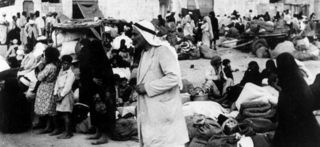
Sunday nights are for tango at the Canadians’. Embassy staffers come wearing wing-tip shoes—improbably clean, despite the mud-sodden streets of Kabul. Humanitarian aid workers, the toughest of tribes, are here too. An air of fatigue clings to them. One evening, an American woman who used to tango in New York shows up, and we note that her embrace is far tighter than anything we are accustomed to. An Afghan who runs a logistics company is a regular. So is a German doctor who runs a children’s hospital. Female officers with the EU police mission come bearing delicate-sounding names like Elise and Marianna. When the dance class adjourns, these women put on their flak jackets to walk the twelve paces from the compound gate to their armored SUVs. Someone tells me it’s an insurance policy mandate. Members of the Australian close protection team (bodyguards for diplomats), whom I’ve heard referred to as “eye candy,” are also present. They are never short of willing women.

more from May Jeong at n+1 here.

Fate’s only gift is death

Munch_FINAL

Death and fashion are sisters, though not everyone knows this. They have known periods of estrangement, but these have been without cause, for they share not only a mother but a calling. It is with these family matters that Giacomo Leopardi begins his “Dialogue Between Fashion and Death,” written in 1824, when Leopardi was twenty-six years old, and published in a book he titled Operette morali (which is normally rendered in English as Essays and Dialogues, but whose title means “diminutive moral works”). The book does not offer a bright view of existence. Its last lines (spoiler alert) are: “If I were offered, on the one hand, the fortune and fame of Caesar or of Alexander, pure of all stains, and, on the other, to die today, and if I were to make a choice, I would say, to die today, and I would not need time to think it over.” But on to brighter matters—like fashion. As the reader of the dialogue will have noted, Fashion has sought out her sister to remind her of a few things (Death has a poor memory). Fashion begins with the bright side of death, that it “continually renews the world,” and argues that this renewal is a part of their shared calling.

more from Leland de la Durantaye at Cabinet here.

the Randolphs

Taylor-1

In Virginia, legends offered themselves up for our affiliation. We were allowed to imagine ourselves against their tableaux. My aunt arranged private tours of Tuckahoe Plantation, Jefferson’s childhood home. We learned about the scandal at a plantation called Bizarre, in which one sad Randolph woman, in a tragic turn, was accused of murdering a child who had been conceived out of wedlock. Only later would I learn that the rumor of the time had been that the child had been conceived with one of the enslaved members of the household. Her family valiantly tried to protect her (and themselves) from shame. Patrick Henry successfully defended her in a proceeding that had been the days’ equivalent of the O. J. Simpson trial, and about which books are still occasionally published by small Virginia presses. As for Jefferson: How could I help but like him? A portrait of Monticello hung on the guest-​bedroom wall. Jefferson’s signature pin glinted above the fireplace. How beautiful his books were, full of gardens, science, democracy. My first visit to Monticello was a private tour. We strolled past Jefferson’s bed nook, his cluttered desk. I remember his micrometer, clock, telescopes.

more from Tess Taylor at VQR here.

Tuesday Poem

My grandmother on my father’s side
.
My grandmother on my father’s side had a favorite saying.
Live for the moment is what she said.
So I lived for the moment.

One of my uncles had a favorite saying.
Live by the moment is what he said.
So I lived by the moment.

A zen master in a book I read had a favorite saying.
Live as the moment is what he said.
So I lived as the moment.

A zen master in another book I read had a favorite saying.
Live with the moment is what he said.
So I lived with the moment.

My friend Jeff has a favorite saying.
Live without prepositions is what he says.
So I live moments. So moments are what I live.

.
by J.R. Solonche
from Gravel, 2013

Reza Aslan Knew Exactly What He Was Doing in That Fox News Interview

From Slate:

Zealot-coverBy now, you've no doubt watched the video and seen the headlines: On Friday, Fox News' Lauren Green aggressively questioned religious scholar Reza Aslan over why he, a Muslim, would choose to write a book about Jesus Christ. During the length of the increasingly absurd 10-minute segment, that implied criticism quickly became direct with Green accusing the author of Zealot: The Life and Times of Jesus of Nazareth of being incapable of providing an unbiased academic account because of his faith, and even wrongly claiming that Aslan had gone to great lengths to hide the fact he is Muslim. The Internet's response was not kind. BuzzFeed, one of the first to spot the clip, spoke for the masses: “Is This The Most Embarrassing Interview Fox News Has Ever Done?” Andrew Kaczynski asked in a headline that needed no answer. The interview was “absolutely demented,” said New Yorker TV critic Emily Nussbaum. “This may just be the single most cringe-worthy, embarrassing interview” in Fox News history, wrote my colleague Daniel Politi.

Green's almost blindingly illogical and offensive line of questioning, though, seems to have obscured the fact that Aslan appears to have arrived ready to do battle. This wasn't a case of an academic being blindsided by a TV anchor. If anything, it was Aslan who had the upper hand at the outset. The day before the interview, FoxNews.com had published pastor John S. Dickerson's screed accusing the mainstream media of helping Aslan hide the fact that he is Muslim. Shortly after, a series of one-star reviews began to appear on Zealot's Amazon page. Aslan had heard the criticism and came ready to smack it down. And—thankfully!—he did.

More here.

Monday, July 29, 2013

Sunday, July 28, 2013

Sexy spring: How group sex will liberate Iran, China

Swinger_club-620x412

Katherine Frank talks to anthropologist Pardis Mahdavi on changing sexual mores in Iran and China and what it means for politics, in Salon:

[T]he new sexual culture in Iran, Mahdavi believes, is not simply an embrace of Western consumerism and morality nor merely an escapist hedonism, a “last resort.” Urban young adults, the focus of Mahdavi’s inquiry, made up about two-thirds of Iran’s population; they were mobile, highly educated, underemployed, and dissatisfied with the political regime at the time. Some were directly involved in politics. Many used the Internet to make connections, blog about their frustrations, and peer into youth cultures elsewhere around the world. Willingly taking risks with their social and sexual behavior, as these Iranian young people were doing, was viewed as a step toward social and political reform—not just a means of escape and excitement. After all, the consequences of partying in Tehran were different from in Los Angeles, despite similarities in flashy dress, electronic music, and group sex. Iranian youth had “restricted access to social freedoms, education, and resources (such as contraceptives or other harm-reduction materials)” that might minimize the risk of some of their behaviors. If caught, the punishments many young people would receive from their parents would likely be harsh. The punishments meted out by the morality police could be harsher. If caught drinking, for example, youth could be detained and sentenced to up to seventy lashes. Premarital sex could be punished by imprisonment and lashings; unmarried men and women caught in a car together could receive up to eighty-four lashings each. Although physical punishment has decreased in recent years, Mahdavi notes, young people are still detained and harassed by the morality police.

Yet stories of being apprehended and arrested by the morality police were sometimes told with pride; occasionally, even parents were pleased that their children stood up for their beliefs. Some young adults courted run-ins with the morality police in the name of activism, boredom, or both. One couple caught having sex at a party were arrested and forced to marry. When Mahdavi talked with the twenty-two-year old woman involved, the woman explained that she and her new husband were trying to annul the marriage. Despite her ruined reputation, however, the young woman mused that her experience was “almost worth it”: “The sex was great, and the excitement and adventure of doing what we know we aren’t supposed to be doing, then being caught! Well, and it makes a great story.”

Mahdavi’s informants claimed that they were living the social and sexual changes they desired, reminding her that their “revolution was not about momentary acts” but was “a way of life.” This way of life included social gatherings and behavior that “could be viewed as hedonistic” but were also “a necessary part of constructing a world over which they had control, a world they could live in rather than in the world of the Islamists, who would have them stay home and obey.”

An Explosive Sorrow

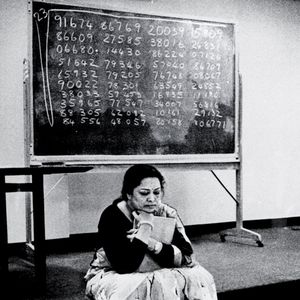
Pietrasik_polio_0660_tom-pietrasik-hires_caption-file-info

Amitava Kumar in Caravan:

THIS IS THE 18TH MARCH OF 1974. It was the day after my eleventh birthday, and I stood on the roof of my parents’ home in Patna, along with my family and some visitors from Arrah and faraway Saharsa, who had been unable to leave because of the curfew imposed all over Patna. There were reports that police had fired into the crowds of rioting students who had marched on the state assembly. We were playing antakshri, in our small group, because one young woman with us, a distant relative, was a wonderful singer. She had light brown eyes, and her hair curled over her forehead in the manner of a Hindi film-star of that decade. The horizon was grey with smoke rising from burning buildings.

The student protests, which would soon find their leader in the septuagenarian activist from Patna, Jayaprakash Narayan—JP, as everyone called him—went on unabated for the rest of that week, resulting in the deaths of 27 people. The movement gathered strength, and soon spread to other states; the following summer, feeling besieged as her power eroded, Indira Gandhi would suspend civil liberties and declare a state of emergency. None of this meant much to me then; 26 June 1975, the date the Emergency began, was memorable to me for years afterward because my tonsils were removed that day. When I regained consciousness, after having been put under anaesthesia, I remember hearing my father and uncles discussing the arrests that were taking place outside the ward at the Patna Medical College and Hospital.

A little more than a decade later, as a graduate student in America, I found a book of photographs by Raghu Rai called Bihar Shows the Way. In that book, alongside commentary by the veteran journalist Sunanda K Datta-Ray, I saw black-and-white photographs from those days on Patna’s streets: soldiers from the Central Reserve Police Force lathi-charging JP and his followers; the rifles of the Bihar Military Police aimed at the students; JP on his bed in his Kadam Kuan home, and then in Gandhi Maidan, addressing the people in the gentle twilight. The discovery of this book was part of a pattern for me, a pattern of coming into adult consciousness at a great distance from my hometown, and returning to it through books and visits. In time I would understand the purpose of those returns as attempts to find out what made Patna a place of such intense contradictions: a place that on the one hand stood self-conscious of its own backwardness, the capital of India’s poorest state, and, on the other, as a place from whose vantage-point it would be possible to predict the future of India.

The Past Gets Bigger and the Future Shrinks: An Interview with Martin Amis

Jane Graham in the Los Angeles Review of Books:

JANE GRAHAM: You began writing seriously when you were relatively young, despite having been more interested in comic books up until your mid-teens. Did it ever occur to you that you might make a living doing something else?

1374391737MARTIN AMIS: Well, my father [Kingsley Amis] was a writer and it seemed natural to start writing in my late teens. I think it was good that I began when I was young and bold and foolish, otherwise I’d have become too self-conscious and aware of the weight of not having written anything yet. I think at that age everyone is looking inside themselves, processing their own thoughts, working themselves out — writers are just people who never grow out of it.

JG: Did it hang over you at first, being the son of such a popular writer in Britain? Or did you think you might capitalize on it?

MA: I started writing so young that I didn’t think about it much. I read his stuff and liked his stuff and was very conscious of being in the same tradition as him, the comic novel. Then it hangs over you a bit later on, especially in Britain anyway — it doesn’t matter so much elsewhere. But here, where he’s still a sort of presence — people get sick of you because you and your father have been around so long. They don’t separate you. It’s as if I was born in 1920. People think, Oh no, not that name again.

JG: Why do you think Kingsley made such a point of not being interested in your work?

MA: I think you’re irritated by your youngers and tend to be respectful of your elders. When I hear about some sensational new writer I sort of think, Shut up… you’ve got to be around for a long time before you can really say you’re a writer. You’ve got to stand the test of time, which is the only real test there is.

More here.

What a Peahen Really Watches When a Peacock Tries to Impress Her

Greg Miller in Wired:

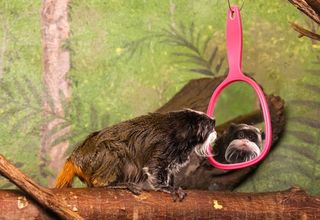
ScreenHunter_254 Jul. 28 22.31The peacock’s tail gave Darwin fits. At first, it seemed to fly in the face of his theory of natural selection. How could evolution possibly favor such cumbersome and conspicuous accoutrement? The very sight of those feathers, Darwin famously wrote to a colleague, made him sick. He soon realized, however, that the feathers might serve another purpose: enhancing the male’s reproductive success even as they made him more visible and vulnerable to predators. The concept of sexual selection was born, and the peacock’s tail remains a textbook example of it to this day.

But exactly what it is about the male’s display that females find attractive is far less clear.

Studies with feral peafowl at a British wildlife park in the 1990s suggested that it’s the ornamentation. Behavioral ecologist Marion Petrie of Newcastle University and her colleagues found that males with more eyespots mate more often. When the researchers used scissors to snip off 20 eyespots from several males, females showed less interest in them. Petrie’s work suggested that in the mind of a peahen, eyespots are pretty sexy.

If that’s true, she should spend a lot of time looking at them when the male does his display, says Michael Platt, a neuroscientist at Duke University and co-author of the new paper, published today in the Journal of Experimental Biology. Platt has previously used eye-tracking equipment to study primate behavior, including the social interactions of freely-moving lemurs, and in the new study he and colleagues developed an even smaller system that could fit on the head of a peahen.

More here.

Mountains of the mind

Adam Thorpe in the Times Literary Supplement:

Thorpe---cover_358819hOn August 8, 1786, two men reached the highest point in Europe, which to them was the top of the world: both hailed from Chamonix, a clockless rusticity of roofs in the valley below. Michel-Gabriel Paccard was its up-to-date doctor; Jacques Balmat a peasant farmer and chamois hunter with a sideline in crystals. For decades the mountain in question, some three miles high, had been celebrated for its glaciers, not its snow-capped altitude; Chamonix had very few visitors before the 1770s. Only hunters ever dared to go high in these colossal mountains, the peaks sensibly given up to dragons and ghosts – the mind’s old poetry of health and safety.

William Windham, a young Englishman on his grand tour, had led a mock caravan to Savoy’s glaciers in 1741 and published a pamphlet with a fellow traveller, Pierre Martel, in which the name “Mont Blanc” appears as the supposed highest point. Thus the mountain was first “discovered” – one of the plethora of assumptions that Peter Hansen gleefully dismantles in this learned and complex analysis of “multiple modernities” as seen through the prism of mountaineering.

Two essential elements of modernity are the foundation myth and the assertion of the solitary will: both illustrated by Petrarch’s ascent of Mont Ventoux in 1336. Interrupting his admiration of the view by opening St Augustine’s Confessions at random, Petrarch fell on a stern admonition: “And men go to admire the high mountains . . . and pass themselves by”. He hurried back down in silence, convinced of the vaster landscape of contemplation. Five hundred years later, Jacob Burckhardt identified this moment in Provence as the arrival of the inward-looking “modern man”, the beginning of the modern age.

More here. [Thanks to Ahmad Saidullah.]

WHO AND/OR WHAT WAS FRESH AND NEW AT SCI/FOO 2013?

From Edge:

But first, what is “SciFoo”? The annual event is run by three sponsors: O'Reilly Media (Tim O'Reilly is responsible for “FOO”, or, “friends of O'Reilly”), Nature Magazine (and their spin-off company, Digital Science), and Google. This year 62% of the participants were new. This approach keeps the event new and fresh every year. The ratio of participants to interesting people? 1-to-1. As theoretical physicist and Nobel Laureate Frank Wilczek noted in his report on SciFoo 2007 for Edge:

“SciFoo is a conference like no other. It brings together a mad mix from the worlds of science, technology, and other branches of the ineffable Third Culture at the Google campus in Mountain View. Improvised, loose, massively parallel—it's a happening. If you're not overwhelmed by the rush of ideas then you're not paying attention.”

DesertPAUL SAFFO: Kröpelin's Mysteries of the Sahara: The single most astonishing session for me was Stefan Kröpelin's “Miracle of the Sahara.” Kroplin compressed 40 years of research and exploration into a whirlwind tour of the Sahara's mysteries and what it is like to do science there. Summarizing conditions, he noted, “Sometimes, you get stuck hundreds of times per day… and the real problem isn't the heat; it's the cold.” The size of the U.S, Kröpelin's Sahara is full of mysteries: Gilf Kebir, a sand plateau atop an ancient fluvial system in Southwest Egypt holds rock art from the middle Holocene, over 10,000 figures in one cave alone. The Wadi Howar was thought by Heroditus to be the source of the Nile; now it is vast desert, but in it's heart is the Ounianga Kebir, a cluster of freshwater aquifer-fed “gravity lakes,” and home to seven crocodiles, the remnant of an Ice Age population, now isolated from other crocs by hundreds of miles of searing desert. But the biggest mystery was sitting right in front of Kröpelin as he spoke. It was a chunk of “Libyan Desert Glass,” 28 million year-old fused glass the color of pale emerald and the purest natural glass in the world. Discovered by Europeans in 1932, the stuff is strewn across a vast area of desert at the edge of Egypt's great Sand Sea. Kröpelin's chunk looked like a glass meteorite, complete with ablation regmaglypts, suggesting that the glass was created by a meteor strike that liquefied the surface rocks in a process not unlike that which created tektite strewn-fields elsewhere on the earth. Except… no one has found a crater. Perhaps the glass is a radiative melt artifact of a Tunguska-like airburst? Others speculate that it is hydrovolcanic in origin, but no has found a volcanic source.

More here.

Sunday Poem

Absence

In the absence of women on board,
when the ship reached the point where no landmass
was visible in any direction
and the funk had begun to accrue-
human funk, spirit funk, soul funk-who
commenced the moaning? Who first hummed that deep
sound from empty bowels, roiling stomachs,
from back of the frantically thumping heart?
In the absence of women, of mothers,
who found the note that would soon be called “blue,”
the first blue note from one bowel, one throat,
joined by dark others in gnarled harmony.
before the head-rag, the cast-iron skillet,
new blue awaited on the other shore,
invisible, as yet unhummed. Who knew
what note to hit or how? In the middle
of the ocean, in the absence of women,
there is no deeper deep, no bluer blue.

by Elizabeth Alexander
from American Sublime
Graywolf Press, 2005

Authors’ Favorite First Lines of Books

From The Atlantic:

First%20lines%20authorsWhen I interviewed Stephen King for the By Heart series, he told me about some of his favorite opening lines in literature. Then, the author had an off-the-cuff idea. “You could go around and ask people about their favorite first lines,” he said. “I think you'll find that most of them, right away, establish the sense of voice we talked about. Why not do it? I'd love to know, like, Jonathan Franzen's favorite first line.” So I reached out to Franzen and 21 other writers. In honor of King's new novel Joyland and its nouveau-pulp publisher Hard Case Crime, there are a good number of crime writers featured in this list. Other writers I spoke to don't write crime fiction at all, preferring to focus on other brands of human mystery. Collected below, the opening lines they picked range widely in tone and execution–but in each, you can almost feel the reader's mind beginning to listen, hear the inward swing of some inviting door.

Megan Abbott (Dare Me, The End of Everything)

I first heard Personville called Poisonville by a red-haired mucker named Hickey Dewey in the Big Ship in Butte. –Dashiell Hammett, Red Harvest

Charles Ardai (Editor, Hard Case Crime; author of Fifty-to-One)

The first time I laid eyes on Terry Lennox he was drunk in a Rolls-Royce Silver Wraith outside the terrace of the Dancers. –Raymond Chandler, The Long Goodbye

More here.

Saturday, July 27, 2013

Twelve Absent Men: Rebuilding the American Jury

Albert W. Dzur in the Boston Review:

Dzur_featureLay citizens no longer have opportunities to play decisive roles in our justice system. Judicial business is handled every day in most courthouses, but weeks can pass without a jury being empanelled.

And though consistently given high approval ratings as an institution in public opinion surveys, the jury feels dead to many who do serve. When it does actually take to court, the jury often seems an appendage of the criminal justice administrative complex, netted in formalities, rules, and procedures. The legal action, at least up to the time of deliberation, is elsewhere. Writing about an impressive federal courthouse in Boston that opened in 1998, legal scholar Judith Resnik notes that only seven or eight trials were held in each of the building’s courts in its inaugural year, and the number has since declined. The lights are off as much as they are on in trial courts across the country.

Until the early 20th century, the jury was the standard way Americans handled criminal cases, but today we operate largely without it. It has been supplanted by plea agreements, settlements, summary judgments, and other non-trial forums that are usually more efficient and cost-effective in the short term. In addition to cost and efficiency, justice officials worry about juror competence in the face of scientific and technical evidence and expert testimony, further diminishing the opportunity for everyday people to serve.

The result is that juries in the United States today hear a small fraction of cases. In 2005 the Bureau of Justice Statistics reported that juries heard 4 percent of all alleged criminal offenses brought before federal courts. State courts match this trend.

More here.