
Category: Recommended Reading
the balloon: a means to mysterious adventure
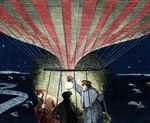 Paul Elie at The New York Times:
“The fact is, we are much more afraid of life than our ancestors,” Robert Louis Stevenson is heard remarking in “Footsteps” (1985), Richard Holmes’s sideways memoir of the “adventures of a Romantic biographer.” This feeling that the present is a time less adventurous in spirit than the past runs through Holmes’s vast body of work; in “Falling Upwards,” about balloonists and ballooning, it rises and spreads like a jet of fire-heated helium, making the new book at once lighter than Holmes’s other books and harder to read straight through.
No writer alive and working in English today writes better about the past than Holmes. The man who once dated a check 1772 (it bounced) while working on a biography of Shelley has lived imaginatively in the 18th and 19th centuries for four decades now, emerging every few years with a propulsive, pioneering book. The Shelley biography (published when he was 28) gave free play to the poet’s radical politics. A two-volume biography of Samuel Taylor Coleridge drew on six volumes of letters to make the subject’s voice ring out Mariner-like from every page.
more here.
The Letters of John F. Kennedy
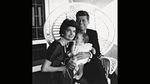
Kennedy knew better than to hide his wiry Irish mop beneath a titfer. It was the crest, the crown, the brand. Everything about him was calculated to give the impression of an almost casual ease beneath the weight of power: the splashing around on Cape Cod; the kid daughter romping through the Oval Office, the droll wit which came as naturally to him as his habitual satyrism. Of the acute physical pain, the relentless drug treatments, the hospital visits, Addison’s disease, spastic colitis we knew nothing. Horsing around with the brothers and the children on the Massachusetts beach, he was President Fine Fettle, rough-house glamour with the bonus of brains. When we looked around at our own politicians we saw pipes, tweeds, the brandy snifter or the mug of tea. So of course we took his murder personally, angry at being robbed of the merry mind; a big chunk of the future blown away in the Dallas motorcade. Norman Mailer spoke for all of us when he said, “For a time we felt the country was ours. Now it’s theirs again.”
A lot of the Best and Brightest who had worked for and with JFK felt much the same way. Nine months after his death, during the 1964 Democratic Convention that was more like a coronation than a nomination for Lyndon Johnson, you could hear the sound of one hand clapping among the survivors of Camelot.
more here.
Hilton Als blurs the lines in ‘White Girls’

Als is not denying Mathers' whiteness, just saying that it's trumped by class, by economics, by his awareness of being on the outside looking in. It's a terrific point, and Als pushes it further by suggesting that “rap's dissonant sound … was as familiar and natural to the burgeoning artist as the short story form was to Flannery O'Connor.” Notice what he does there: arguing not that rap and short fiction are the same (this would devalue both forms by forcing a false equivalency) but that for these artists, the drive to create comes out of a common otherness.
The O'Connor reference highlights another kind of doubling, since Als has already written about her in the book. What he's getting at is how these artists come together in his imagination, echoing one another and himself. This makes “White Girls” more than a collection of disparate pieces but rather a coherent portrait of Als' inner life.
The focus is privilege, who has it and who will never have it, and what those without it are supposed to do. As Als notes of Capote, “It is hard to garner privilege when you begin with none — for those who have to reach for it, it remains perpetually out of reach.”
more here.
The Believer: Flannery O’Connor’s ‘Prayer Journal’
Marilyn Robinson in The New York Times:

The complexity of O’Connor’s thinking, together with the largely flawless pages in her hand, suggest that these entries may be fair copies of earlier drafts. Clearly O’Connor’s virtuosity makes her self-conscious. Young as she was, new to writing, she could only have been pleased, even awed, at having produced these beautiful sentences. Perhaps nothing written is finally meant to go unread, even if the reader is only a creature of the writer’s mind, an attentive and exacting self that compels refinements of honesty. After a little joke about the pedestrian uses we would make of a knowledge of heaven if we had been given one, she says, remembering her intended Hearer, “But I do not mean to be clever although I do mean to be clever on 2nd thought and like to be clever & want to be considered so.” Her mind is examined, faith questioned, weakness confessed, powers tried as they might not have been under the eye of any human observer. Youth and loneliness and the unspent energies of a singular mind are testing the possible and must be allowed free play.
More here.
One and Many: The pluralistic expressions In Sufi poetry
Raheel Lakhani in Aaj News:
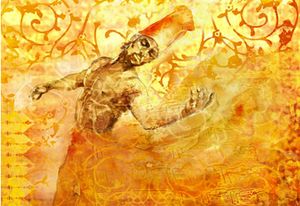
there is a field; I’ll meet you there.
When the soul lies down in that grass,
the world is too full to talk about.
-Rumi
When one reads the Persian mystic Rumi allegorically, it feels as if both the creator and the created are speaking. As if Truth is saying that He dwells beyond the fields of paradise and hell, essentially everywhere and the creation shows readiness to indulge in love and praise of HIM. If this talk of sacredness is outside the measures of right and wrong then Rumi here is inviting us to embrace pluralism while appreciating God’s creation.
…A poet from Sub-continent who refers Rumi repeatedly is Shah Abdul Latif Bhitai. He was a Sindhi mystic saint, poet, and musician. His collected poems were compiled as Shah Jo Risalo. Hossein Nasr described Shah Latif as a direct emanation of Rumi’s spirituality in the Indian world (Nasr, 1974).
The whole creation seeks Him,
He is the Fount of Beauty, thus Rumi says:
If you but unlock yourself, you will see Him
More here.
Saturday Poem
A Crow
In a vast expanse of field
a crow with the sun on its back
flying vigorously
suddenly died.
It fell straight down from the high sky.
And at the same time
its huge shadow
dashed into its dead body
at lightning speed
from the horizon of the crimson field.
Having cast a great shadow on this earth
the crow’s heart quit.
by Shinjiro Kurahara
from Iwana
publisher: Dowaya, Tokyo, 2010
translation: 2010, Mariko Kurahara, William I. Elliott, Katsumasa Nishihara
Friday, November 15, 2013
WHY PAKISTAN LIONIZES ITS TORMENTERS
Mohammed Hanif in The New Yorker:
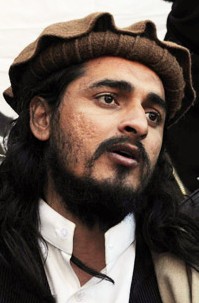
Yet the state seems to have lost the will to fight its old foe, Fazlullah, and his followers. When Mehsud was killed, instead of celebrating or letting out quiet sighs of relief, politicians and journalists reacted as if they had lost a favorite son. He had killed many of us, but we weren’t craving vengeance; we were ready to make up and cuddle.
Why does Pakistan’s political and military élite celebrate the very people it is fighting?
More here.
The Roots of Good and Evil: Sam Harris interviews Paul Bloom
From Sam Harris's blog:
Harris: What are the greatest misconceptions people have about the origins of morality?
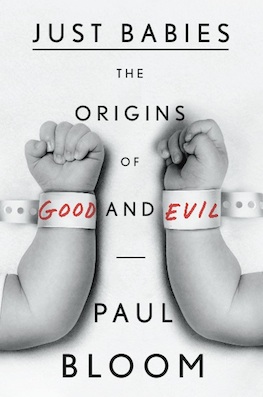
Now, this perspective is not entirely wrong. Certainly some morality is learned; this has to be the case because moral ideals differ across societies. Nobody is born with the belief that sexism is wrong (a moral belief that you and I share) or that blasphemy should be punished by death (a moral belief that you and I reject). Such views are the product of culture and society. They aren’t in the genes.
But the argument I make in Just Babies is that there also exist hardwired moral universals—moral principles that we all possess. And even those aspects of morality—such as the evils of sexism—that vary across cultures are ultimately grounded in these moral foundations.
A very different misconception sometimes arises, often stemming from a religious or spiritual outlook. It’s that we start off as Noble Savages, as fundamentally good and moral beings. From this perspective, society and government and culture are corrupting influences, blotting out and overriding our natural and innate kindness.
This, too, is mistaken. We do have a moral core, but it is limited—Hobbes was closer to the truth than Rousseau. Relative to an adult, your typical toddler is selfish, parochial, and bigoted. I like the way Kingsley Amis once put it: “It was no wonder that people were so horrible when they started life as children.” Morality begins with the genes, but it doesn’t end there.
More here.
Is our universe fine-tuned for the existence of life – or does it just look that way from where we’re sitting?
Tim Maudlin in Aeon:

Ever since the 1920s when Edwin Hubble discovered that all visible galaxies are receding from one another, cosmologists have embraced a general theory of the history of the visible universe. In this view, the visible universe originated from an unimaginably compact and hot state. Prior to 1980, the standard Big Bang models had the universe expanding in size and cooling at a steady pace from the beginning of time until now. These models were adjusted to fit observed data by selecting initial conditions, but some began to worry about how precise and special those initial conditions had to be.
More here.
Watch Piotr Dumala’s Wonderful Animations of Literary Works by Kafka and Dostoevsky
There’s a certain irony to Polish animator Piotr Dumala’s innovative style, a stop-motion technique in which he scratches an image into painted plaster, then paints it over again immediately and scratches the next. Called “destructive animation,” Dumala devised the method while studying art conservation at the Warsaw Academy of Fine Arts.
Trained as a sculptor as well as an animator, Dumala’s award-winning films present strikingly expressionistic textures emerging from pitch black and receding again. The 1991 film Kafka (top) begins with the reclusive writer shrouded in darkness and isolation. He coughs once, and we are transported to Prague, 1883. Each frame of Kafka resembles a woodcut, and the sound design is as spare as the extremely high-contrast animation.
More here. [Thanks to Jim Culleny.]
camus at 100
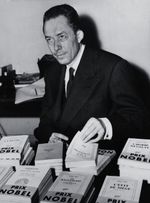
To gaze at Camus’ own modest gravestone in the southern French village of Lourmarin, the inscription “1913–1960” delivers a similar shock. When he left us, Camus was younger than many of us are now; what his father left his son, his son has left us: a profound silence that surges through his remarkable writings and life.
This silence is neither poetic nor mere rhetoric: it was a brute fact of Camus’s life. Not just the absent father, but also the present, yet mute mother. An illiterate cleaning woman, Catherine Camus spoke with difficulty — a handicap perhaps due to the shock of her husband’s death. The young Camus would sometimes find his mother “huddled in a chair, gazing in front of her” in the small apartment they shared with his illiterate grandmother and partly mute uncle in a working class neighborhood of Algiers. Her muteness, he recalled, seemed “irredeemably desolate.”
The silent mother haunts Camus’s writings: it is the dark matter toward which everything else is pulled. In The Stranger, it is the death of Meursault’s mother that begins the unmaking of his life; it is the mostly wordless presence of Dr. Rieux’s mother in The Plague that prevents the unmaking of a world swept by disease.
more here.
Was Norman Mailer the last tough guy?

Mailer lived his life in order to gather material. He was 19 when the US entered the Second World War and he wondered whether a better novel could be written about the Pacific campaigns or the war in Europe; he started planning his war novel before he was called up in March 1944. During basic training, he took notes “on the sex lives of the other soldiers”. He fought in the Philippines and listed the names of the soldiers he met; they turn up in The Naked and the Dead.
This hunger – to get life into literature –was a constant. He followed The Naked and the Dead with two more novels but soon became frustrated with the restrictions of fiction. In the late 1950s, after an unhappy period in Hollywood trying to write screenplays, he turned to journalism and non-fiction. The so-called New Journalists of the 1960s –Gay Talese, Tom Wolfe, Joan Didion –made their pursuit of the story part of the story and wrote themselves into their reports. Mailer’s innovation was an extreme version of this.
more here.
a tribute to laziness
Fasten a mast to the bed, let the sheets catch the wind. It is possible that, if you drift long enough on the waves of sleep, you will awaken into a world that has changed — though who can say for the better? The Greeks told of the boy Epimenides, who was searching for his father’s stray sheep when he stopped for a noonday nap in a cave. When he awoke, fifty-seven years later, everything that he once knew had vanished. Across Crete, news spread that Epimenides must be particularly loved by the gods to have slept so long. For Aristotle, he was proof of the impossibility of the passage of time without the occurrence of change.
Christian martyrs have dozed longer still. The eighteenth chapter of the Quran — and an earlier Syriac legend — tells of a group of young Christian men who, fleeing the persecution of a Roman Emperor, escaped into a cave, where they slumbered for three hundred and nine years. Rising from their long sleep, they found their beards had grown long, Christ’s name was openly spoken, and all of their loved ones were dead. In 1933, the Egyptian playwright Tawfiq al-Hakim dramatized their swim through the oceanic night in The People of the Cave. Awakening into a world where they are hailed as saints, the stiff-limbed sleepers find they cannot live in this strange, undreamt future. “We are like fish, whose water has changed from sweet to salty,” the saints protest, as they retreat into their cave.
Languishing in a French prison in 1883, Paul Lafargue observed that a strange mania had lately gripped mankind.
more here.
Out of the Wild: A Conversation between William Cronon and Michael Pollan
From Orion Magazine:
What is wild? What is cultivated? And what can these ideas teach us about our relationship to landscape? Questions like these have been a lifelong passion for William Cronon and Michael Pollan, both of whom have written deeply on the blurry boundary between nature and culture. Michael’s first book on the subject was Second Nature: A Gardener’s Education; he has gone on to write about food in all its forms in books such as The Omnivore’s Dilemma and the recent Cooked. Bill’s exploration of the wild and the cultivated has emerged from a historical perspective; his first book, Changes in the Land: Indians, Colonists, and the Ecology of New England, traced the history of human alteration to landscape and pioneered an argument against the idea of pristine wilderness. Recognizing the interplay between their ideas, Orion asked Bill and Michael if they would have a conversation that could be shared with Orion’s readers. They met in Berkeley, California, where they talked about ecology and storytelling, nature and artifice, and the promise and challenge of finding meaning in the natural world.
Bill: The chapter “Nature Abhors a Garden” in Second Nature is still one of the best things anybody’s ever written on the boundary between wild and cultivated. Part of what’s brilliant about that piece, I think, is your deployment of humor. What is it about humor that you find so compelling in terms of writing about nature
Michael:“Nature Abhors a Garden” is a comic piece about my war with a woodchuck, and there’s a lot of Bill Murray from Caddyshack in there. There’s a point in the essay at which I describe pouring gasoline down a woodchuck burrow and lighting it on fire, and when I tell that story, especially to young people today, they’re amazed and often upset with me—there’s an assumption that an environmentalist would never do something like that. But working out that conflict between the cultural baggage that we carry into nature and the practical necessity of getting ourselves something to eat—I think that’s a pretty good microcosm of many of the issues we face.
More here.
Electron appears spherical, squashing hopes for new physics theories
Clara Moskowitz in Nature:

The Standard Model of particle physics, which describes all the known particles in the Universe, predicts a practically zero electric dipole moment for the electron. Yet theories that include additional, yet-to-be-detected particles predict a much larger dipole moment. Physicists have been searching for this dipole moment for 50 years. Now a group called the ACME collaboration, led by David DeMille of Yale University and John Doyle and Gerald Gabrielse of Harvard University, has performed a test 10 times more sensitive than previous experiments, and still found no signs of an electric dipole moment in the electron. The electron appears to be spherical to within 0.00000000000000000000000000001 centimeter, according to ACME’s results, which were posted on the preprint site arXiv. “It’s a surprise,” says Ed Hinds, also of Imperial College London, who worked with Hudson on the previous best limit, set in 2011. “Why on Earth is it still zero?”
More here.
Friday Poem
Dalai Lama
The Dalai Lama continues to laugh
addressing
a large audience.
The interpreter is super-serious
has no time for laughter
The English was like a net
the Tibetan words butterflies,
flew from the flower-petal lips of the Dalai Lama
sometimes to sit on the ears of the Tibetan kids
sometimes on the gold-flecked robes,
maybe the wedding dresses
of the Tibetan women
taken out only on special occasions
but worn away at the hems
this bit of sparkle left
like the trace of light in aged eyes.
The Dalai Lama was expounding
the Four Noble Truths of Buddhism
He raised his arm and
like three little dots of ‘therefore’
there were the marks of childhood vaccination
peeping through his ochre robe.
They whispered:
Aha, someone is talking about such high principles
but is from this very world
this very epoch
and he’s just a man.
Right in front of me, rapt, a grandfather
on his shoulder a chubby little boy and his gurgling bottle
wiping his running nose
on grandpa’s sweater —
He must have been like that —
the Dalai Lama
What do we know of Tibet —
Rahul Sanknityayan or Rinpoches
monasteries and chow mein
cheap sweaters and sandals, China,
snow, lost eyes, round faces and faithful Lhasa Apso pups.
How do those noble truths
connect with
such random bits,
the ignoble truths of life?
Does truth too have hierarchies?
A caste system? —
Brahmin truths at the top
and then the Shudra truths at the bottom?
Hunger and
thirst
heat and cold
attachment and cruelties
Love and hate —
are these truths really lower?
Dalai Lama, you tell me, please:
if the truth is like these mountain ranges —
high and low.
I prefer living in the deep cave of a small truth
occasionally coming to you
to learn the nobler truths of life.
by Anamika
from Khurduri Hatheliyan
publisher: Radhakrishna Prakashan, Delhi, 2005
translation: 2006, Arlene Zide and Anamika
Thursday, November 14, 2013
Iran’s Plutonium Game
Jeremy Bernstein in the New York Review of Books:
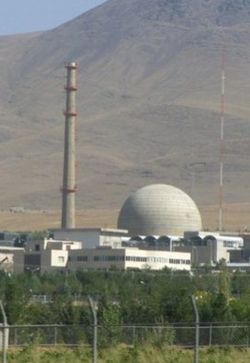
In fact, to anyone who has been following the Iranian nuclear program, it was almost a forgone conclusion that negotiations with Iran would hit a road block when it came to the so-called IR-40 reactor located in Arak. The “40” here refers to the projected power output of forty megawatts of thermal power. To convert this into electric power involves a cumbersome process. The thermal power, which is generated in the form of energetic fission fragments in the reactor, must be converted into steam to run inefficient steam turbines. Thus much of the original reactor generated energy is dissipated; something like only a third of this power could be converted into electricity. And since one large building alone can use several megawatts of power, it is hard to imagine generating much electricity from a forty-megawatt reactor. Whatever the IR-40’s intended use, it is not to produce electric power. A reactor designed for that purpose—such as the one at Bushehr—produces billions of watts.
Moreover, there is nothing about the reactor’s declared purpose that would require it to be a heavy water reactor. According to the Iranian government, the IR-40 reactor is supposed to make medical isotopes. But a light water reactor would have served the stated purpose just as well—and generate the same amount of power.
What makes the Arak reactor suspicious, then, is the design. To understand this we need to understand how a heavy water reactor works.
More here.
Upper-caste India’s debt to Ambedkar
Namit Arora in Caravan:
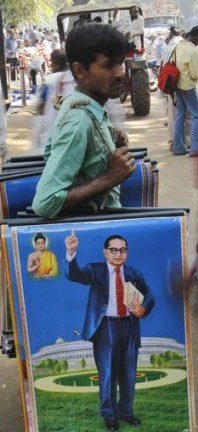
On the other hand, there remains a longstanding apathy for Ambedkar among caste Hindus. What respect he does get from India’s elites is usually limited to his role as the architect of the constitution—important, but arguably among the least revolutionary aspects of his legacy. The social scientist and educationist Narendra Jadhav, interviewed in the Times of India earlier this year, described Ambedkar as the “social conscience of modern India”, and lamented that he has been reduced to being “just a leader of Dalits and a legal luminary.” Indeed, even thoughtful, liberal elite Indians are commonly ignorant about Ambedkar’s life and social impact, both in his lifetime and in the decades since—as the scholar Sharmila Rege noted in Against the Madness of Manu: BR Ambedkar’s writings on Brahmanical Patriarchy, not only lay readers, but Indian post-graduates and academics in the social sciences, humanities, and women’s studies are also unlikely to have read him. What explains this severe disjunction in how Ambedkar is received in India?
More here.
The Math Trick Behind MP3s, JPEGs, and Homer Simpson’s Face
Aatish Bhatia in Nautilus:

You probably use a descendant of Fourier’s idea every day, whether you’re playing an MP3, viewing an image on the web, asking Siri a question, or tuning in to a radio station. (Fourier, by the way, was no slacker. In addition to his work in theoretical physics and math, he was also the first to discover the greenhouse effect [pdf].)
So what was Fourier’s discovery, and why is it useful?
More here.