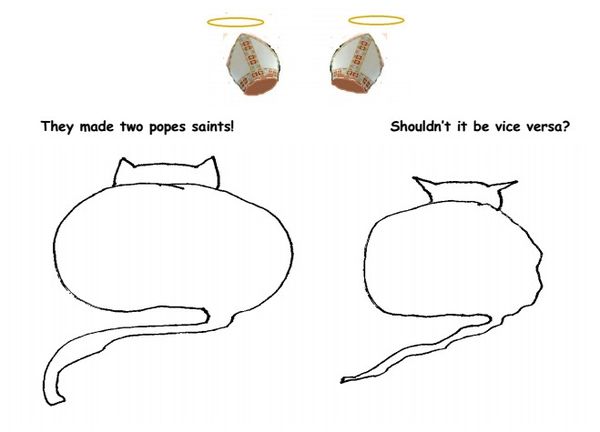
Sunday Poem

Song of a Frigid Woman, or
Baby it's Cold Inside

Oh Lord, please give me an impotent man.
I enjoy a good hug whenever I can
but celibacy is my ultimate plan,
so give me an impotent man.

He could be taking some strong medication
that dampens his drive, or have some combination
of injury, age, ennui and castration,
just give me an impotent man.

I haven't completely abandoned romance,
I just choose to relate where there isn't the chance
stepping out might involve stepping out of my pants.
Please give me an impotent man.

No thrill in the masculine member I find
since my worn out libido just up and resigned,
but I love intercourse with the masculine mind,
so give me an impotent man.

The truth must be told and the facts must be faced,
no man in his prime or his senses would waste
a moment in chasing the forcibly chaste,
so give me an impotent man.

Oh Lord, please don't send me some lusty young buck
because I'm convinced, with my usual luck,
I'd want conversation and he'd want
to physically express his affection.
Oh give me an impotent man.

by Linda M. Stitt
.

Saturday, March 1, 2014

he Doctor and the Saint: Ambedkar, Gandhi and the Battle Against Caste

116035_double-check

Arundhati Roy in Caravan:

ANNIHILATION OF CASTE is the nearly eighty-year-old text of a speech that was never delivered.* When I first read it I felt as though somebody had walked into a dim room and opened the windows. Reading Dr Bhimrao Ramji Ambedkar bridges the gap between what most Indians are schooled to believe in and the reality we experience every day of our lives.

My father was a Hindu, a Brahmo. I never met him until I was an adult. I grew up with my mother, in a Syrian Christian family in Ayemenem, a small village in communist-ruled Kerala. And yet all around me were the fissures and cracks of caste. Ayemenem had its own separate “Parayan” church where “Parayan” priests preached to an “untouchable” congregation. Caste was implied in peoples’ names, in the way people referred to each other, in the work they did, in the clothes they wore, in the marriages that were arranged, in the language we spoke. Even so, I never encountered the notion of caste in a single school textbook. Reading Ambedkar alerted me to a gaping hole in our pedagogical universe. Reading him also made it clear why that hole exists and why it will continue to exist until Indian society undergoes radical, revolutionary change.

Revolutions can, and often have, begun with reading.

Ambedkar was a prolific writer. Unfortunately his work, unlike the writings of Gandhi, Nehru or Vivekananda, does not shine out at you from the shelves of libraries and bookshops.

Of his many volumes, Annihilation of Caste is his most radical text. It is not an argument directed at Hindu fundamentalists or extremists, but at those who consider themselves moderate, those whom Ambedkar called “the best of Hindus”—and some academics call “left-wing Hindus.”1 Ambedkar’s point is that to believe in the Hindu shastras and to simultaneously think of oneself as liberal or moderate is a contradiction in terms.

When the text of Annihilation of Caste was published, the man who is often called the “greatest of Hindus”—Mahatma Gandhi—responded to Ambedkar’s provocation. Their debate was not a new one. Both men were their generation’s emissaries of a profound social, political and philosophical conflict that had begun long ago and has still by no means ended.

More here.

Reading “Capital”: Introduction

9780674430006

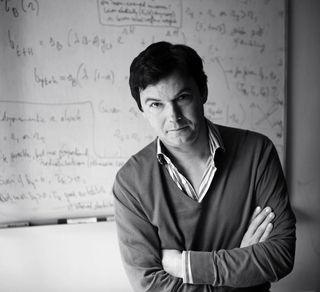
Over at The Economist's Free Exchange, a book club blogging over the next few weeks of Thomas Piketty's Capital in the Twenty-first Century:

LAST year Thomas Piketty, an economist at the Paris School of Economics and a renowned expert on global inequality, published a book titled “Capital in the Twenty-first Century”—in French. It will be released in English on March 10th. We reviewed the book earlier this year, but it is detailed and important enough, in our opinion, to deserve additional discussion. We will therefore be publishing a series of posts over the next few weeks—live-blogging the book, as it were—to draw out its arguments at slightly greater length. Starting today, with the book's introduction.

Capital, as I will refer to Mr Piketty's book from here on out, is an incredibly ambitious book. The author has self-consciously put the book forward as a companion to, and perhaps the intellectual equal of, Karl Marx's Capital. Like Marx, Mr Piketty aims to provide a political economy theory of everything. More specifically, he attempts to re-establish distribution as the central issue in economics, and in doing so to reorient our perceptions of the trajectory of growth in the modern economic era. Mr Piketty's great advantage in attempting all this, relative to past peers, is a wealth of data and analysis, compiled by himself and others over the last 15 or so years.

Mr Piketty begins in an introduction that proceeds in two parts. He first describes the intellectual tradition into which the book falls. The second, which is the basic outline of his theory, I will tackle in the next post.

The study of political economy emerged in the first decades of the Industrial Revolution, in the late 18th century, in Britain and France. The great thinkers of the era were attempting to understand the dramatic societal and economic changes of the day and to describe their mechanics in a way that would allow them to anticipate future developments. To a great extent they focused on distributional issues—and worried that distribution spelled serious trouble for the capitalist system. The Reverend Thomas Malthus, for instance, famously worried that overpopulation would drive down wages to subsistence level, leading to dangerous political upheaval. To short-circuit this possibility the compassionate reverend recommended that governments cut off assistance to the poor and limit their reproduction.

David Ricardo's 19th century analysis was more measured but nonetheless similar in its concern about the sustainability of the contemporary economic system. He focused his attention on the relative scarcity of factors of production, and the effect of scarcity on shares of national income. Output and population were rising fast, he noted, while land supplies remained fixed, suggesting that land prices might rise without bound. As a result, he speculated, land rents would come to eat up a steadily rising share of national income, threatening the capitalist system.

Ricardo was wrong in the long run—soaring agricultural productivity (which both he and Malthus failed to anticipate) meant that agricultural land was not the scarce factor for very long. But he was right in the short run, and the short run matters.

More here.

What Killed Egyptian Democracy?

Fadel-Rashad-web

Mohammad Fadel in the Boston Review, with responses from Ellis Goldberg, Nathan J. Brown, Akbar Ganji, Micheline Ishay, Andrew F. March and Anne Norton:

Although the masses in Tahrir Square appeared unified on the day Mubarak fell, three broad groups were vying for power.

The first, associated with the military, took a minimalist view: the Revolution was simply about removing Mubarak and his cronies from power, and ensuring that his son, Gamal Mubarak, did not succeed him to the presidency. Given this group’s desire to preserve as much as possible of Mubarak’s order (without Mubarak), it was able to reconcile with old-regime elements. This first group originally lacked a distinctive ideology, but it eventually adopted a nationalist, sometimes even xenophobic, posture that distinguished it from the cosmopolitanism of Islamist, liberal, and socialist revolutionaries.

According to a second group, the Revolution aimed at broad reforms of the Egyptian state without uprooting it entirely. For this reformist group, the crisis stemmed from corruption. Mubarak, they argued, had undermined the state’s integrity by usurping its institutions to fulfill his and his allies’ personal and political ends. The Revolution needed to reform the state’s institutions so that they would meet the formal requirements of a legal order, accountable to the public will. Formal democracy was a crucial demand of this group because it was seen as the only way to ensure that the state would not again be hijacked to further the interests of a narrow group of Egyptian elites. The Muslim Brotherhood and its allies belonged to this second group.

The third group, composed largely of young Egyptians, understood the Revolution as an attempt to fundamentally restructure state and society. The Revolution provided an opportunity to create a virtuous state. Doing so would, however, require a complete rupture with the ancien regime. This radical group had an ambivalent relationship with formal democracy. Although elections were desirable, the most important goal was the substantive transformation of the state and society. “Revolutionary legitimacy” trumped whatever legitimacy formal representative democracy could provide.

More here.

Memoirs of a German Childhood

0302SUB-bks-Gewen-master180-v2Barry Gewen at The New York Times:

Joachim Fest’s fascinating memoir about what it was like to come of age during the years of the Third Reich is unusual because its central character is not the author but the author’s remarkable father. Johannes Fest was the middle-class headmaster of a primary school in suburban Berlin, a pious Catholic and father of five, a cultural conservative who revered Goethe and Kant, and a loyal German patriot — “a dyed-in-the-wool Prussian,” in Fest’s words — the kind of person who might have been expected to become an active supporter of Adolf Hitler and the National Socialists. In a foreword by Herbert Arnold (a professor emeritus of German studies at Wesleyan University who has also supplied informative notes throughout the text), the elder Fest is described as “tailor-made for a career” with the Nazis. And yet some quirk in his personality made him a fierce Weimar republican, ready to sacrifice himself, even his family, to principles he knew to be right even as everyone around him was yielding to mass hysteria. “Not I,” a best seller in Germany when it appeared in 2006, the year of the author’s death at age 79, is a memorable tale of lonely courage, stoic endurance, self-imposed hardship and a life lived amid ubiquitous, all-­encompassing danger: “Even ­innocent-sounding remarks could be life-and-death matters.” It reminds us that simple human decency is possible even in the most trying of ­circumstances.

more here.

Atheism is in trouble, according to Terry Eagleton.

Terry-Eagleton-010Jonathan Rée at The Guardian:

Throughout the 20th century it went from strength to strength, as churches lost their congregations and theology was put to flight by natural science. But then there was 9/11 and everything changed. Traditional churchgoing may have continued its long decline, while the strident scepticism of Richard Dawkins and Christopher Hitchens still struck a chord with the book-buying classes, but, in the rest of the world, religion was rousing itself from a long slumber. Wild forms of worship – Christian, Islamic or other – have now taken hold of the poor and the oppressed. Religious faith has gone viral.

Or so it seems to Eagleton, and he thinks we should have seen it coming. He is a celebrated practitioner of wide-ranging intellectual commentary, with bestselling books to his credit and acres of polemical journalism. He always seems to have read all the philosophers and theorists that the rest of us find too fearsome, and he has a knack for fitting them neatly into place by means of a well-turned epigram or an alliterative turn of phrase. His prose is alive with dichotomies, insults and laugh-aloud jokes, and at the end we are invariably invited to savour the “irony” as the masterminds are shown losing their mojo as the truth slips out of their grasp. In Culture and the Death of God he deploys all his formidable skills to explain how the high hopes of many generations of secular materialists collapsed along with the twin towers.

more here.

wilfred owens’ war poetry

Bc4f6430-a01b-11e3-9c65-00144feab7deJason Cowley at The Financial Times:

Owen was an unashamed romantic, deeply influenced by Keats, whom he read from an early age, and Shelley. He had little interest in modernist experimentation; much of his verse has a Georgian conventionality. He may not have been a modernist but his war poems remain startlingly modern: urgent, alive with felt experience.

His short, vivid, unsparing poetic recastings of life in the trenches – the senseless slaughter, the suffering, the moments of compassion, the juxtaposition of tenderness and brutality – have helped harden our understanding of the first world war as a futile catastrophe. The many hundreds of thousands of young British men who were killed in the mud of the western front were, indeed, doomed through their participation in a conflict that even today, a century later, we continue to misinterpret and misunderstand.

The last of those who fought in the Great War are dead now but, because of Wilfred Owen and fellow war poets, because of a great novel such as All Quiet on the Western Front and the shattered landscapes of the paintings of Paul Nash, we are fortunate to have imperishable first-hand artistic representations of the horror and the pity of it all.

more here.

Last Call

Robin Marantz Henig in BookForum:

Article00THE DINOSAURS WERE THE LEAST OF IT. They, together with other “charismatic megafauna,” went extinct during a massive global event at the end of the Cretaceous period, sixty-six million years ago—but by then there had already been four other mass extinctions, dating as far back as the Ordovician period, 444 million years ago. And now, according to New Yorker staff writer Elizabeth Kolbert, we’re heading for another: a sixth extinction, which she characterizes as “the amazing moment that to us counts as the present, [when] we are deciding, without quite meaning to, which evolutionary pathways will remain open and which will forever be closed.”

…Today, because of the intensity of human activity, environmental changes are happening so quickly that there might not be time for corrective migrations or other adaptation strategies. Over the next century, a temperature swing of roughly the same magnitude as that of the ice ages is projected to occur—but at a speed that’s at least ten times faster than anything the earth has seen before. “To keep up, organisms will have to migrate, or otherwise adapt, at least ten times more quickly,” Kolbert writes. And there’s no evidence that plants and animals will be able to do that. Kolbert does put some faith in the prospect of giant rats being up to the task, but not much else. Short of a world populated by rats the size of elephants—and, in one particularly gruesome image, by human-size hairless rats “living in caves, shaping rocks as primitive tools and wearing the skins of other mammals that they have killed and eaten”—Kolbert doesn’t offer much to look forward to. In her final assessment of where we’re headed—a chapter called “The Thing with Feathers”—she quotes two scientists whose points of view might fairly be called ironic. Anthropologist Richard Leakey, she tells us, said that “Homo sapiens might not only be the agent of the sixth extinction, but also risks being one of its victims.” And ecologist Paul Ehrlich put it even more bluntly. “In pushing other species to extinction,” he wrote, “humanity is busy sawing off the limb on which it perches.”

More here.

White Lies

Porochista Khakpour in The New York Times:

BookStrange times, crowed too many wise and unwise men over the millenniums. But as the art critic Jerry Saltz wrote in New York magazine last fall, maybe we’re finally at a point where the strangeness of the times is matched by an ability to accept it. In defending the perplexing Kanye West video “Bound 2,” Saltz heralded this as an age of the New Uncanny. The all-American banal-bizarre spectacle of the video (synthetic sunsets; slow-motion galloping stallions; the nippleless ingénue) is “a freakish act of creation and destruction by appropriation,” what Saltz deems “part of a collective cultural fracturing.” Saltz is riffing on Freud’s description of the uncanny as “nothing new or alien, but something familiar and old-established in the mind and which has become alienated from it only through the process of repression.” But maybe we’re not as alienated as we once were, something that occurred to me when beholding another unapologetic, all-encompassing contradiction-celebration: the story-allegory and real-surreal gyre of Helen Oyeyemi’s gloriously unsettling new novel, “Boy, Snow, Bird.”

Oyeyemi is from Strange Times. Raised in Britain by Nigerian parents, the 29-year-old five-time novelist isn’t even affiliated with a single home anymore: London, New York, Berlin, Barcelona, Budapest, Prague — who knows where she is doing her thing at any given moment? For years I saw her as something of a literary mystic, reading her with a mixture of awe, confusion and delight, but only now do I feel that we’re at a place where we can properly receive her, and she’s ready for us too. With “Boy, Snow, Bird,” a culmination of a young life spent culling dreamscapes, Oyeyemi’s confidence is palpable — it’s clear that this is the book she’s been waiting for.

More here.

Saturday Poem

Sin in my Seventieth Year

I own,
in varying degrees,
to the seven deadly sins
– and countless others, more trivial,
but now,
in my three score and tenth year,
I confess, above all, to pride.

I am not too proud
for hand-me-downs and handouts
and even, on occasion, helpful advice.

I am not proud of my looks,
– that was long ago,
nor of my accomplishments,
save that I have survived.

I have no pride of possessions,
all are impermanent and mutable,
nor of my intellect which, like my body,
is swiftly succumbing to the indignities of age.

I might take pride in the kind hearts of my children but,
fearing the jealousy of the gods,
I shall keep silent,

But I am proud,
fiercely and joyously proud,
simply of being here,
of existing at this time and place
in the continuum of consciousness,
as witness and participant.

I am proud that I have been summoned by the universe,
to learn its workings,
to serve the great work as lover and beloved.

I am so proud to be a drop in the bucket of totality,
a spark in the blazing glory of creation.

I am proud, beyond measure,
like a freshman at the senior prom,
of having been invited to the dance.
.

Linda M. Stitt
from Passionate Intensity
Seraphim Editions, 2003

Medical care is now a tool of war

Thanassis Cambanis in The Boston Globe:

Cross_bullet_holesThe medical students disappeared on a run to the Aleppo suburbs. It was 2011, the first year of the Syrian uprising, and they were taking bandages and medicine to communities that had rebelled against the brutal Assad regime. A few days later, the students’ bodies, bruised and broken, were dumped on their parents’ doorsteps.

Dr. Fouad M. Fouad, a surgeon and prominent figure in Syrian public health, knew some of the students who had been killed. And he knew what their deaths meant. The laws of war—in which medical personnel are allowed to treat everybody equally, combatants and civilians from any side—no longer applied in Syria.

“The message was clear: Even taking medicine to civilians in opposition areas was a crime,” he recalled.

As the war accelerated, Syria’s medical system was dragged further into the conflict. Government officials ordered Fouad and his colleagues to withhold treatment from people who supported the opposition, even if they weren’t combatants. The regime canceled polio vaccinations in opposition areas, allowing a preventable disease to take hold. And it wasn’t just the regime: Opposition fighters found doctors and their families a soft target for kidnapping; doctors always had some cash and tended not to have special protection like other wealthy Syrians.

Read the rest here.

Friday, February 28, 2014

Journey to the Center of the Earth at 150

ID_PI_GOLBE_VERNE_AP_001Stefany Anne Golberg at The Smart Set:

Jules Verne’s stories are not about endings. They aren’t about the past and they aren’t about projections into the future either. The stories are about journeys. Jules Verne wanted to get his characters lost — Lost! LOST! LOST! — lost in the ocean, on uncharted islands, at the very center of Creation. He wanted to pluck his characters out of the light and plunge them into the darkness. Jules Verne sent his characters into mazes that cycled them through future and past — lost in time and place — knowing that they would always return to the present. In the one novel Jules Verne wrote that was explicitly about the future, Paris in the Twentieth Century, the main character heads straight into the darkness and never returns. He is 16-year-old Michel Dufrénoy, a student of classics and literature, born into a century that has no interest in either. Paris 1960 is a time and place without war but also without poetry, where only technology and business are valued. Michel cannot work, he cannot love, and he eats synthetic food. Michel spends the novel journeying through the city of Paris like a refugee, aimless and unloved, until he becomes delirious. He moves in circles around the city, hunted by the Demon of Electricity. The novel ends abruptly with the poet circling Père-Lachaise cemetery weeping, where he at last collapses unconscious in the snow.

If Verne’s protagonists often seem to stop short of revelation, it’s because the revelation is not meant to be known.

more here.

Twilight in the Box

Solitary-San-Quentin

Shruti Ravindran in Aeon:

In the fall of 1982, the forensic psychiatrist Stuart Grassian visited Walpole State Penitentiary, Massachusetts’s only maximum-security prison at the time. He went there at the behest of a legal aid attorney, who wanted him to evaluate the mental health of the inmates in the prison’s segregation unit. He spoke to 14 young men who’d been in isolation for several months, each in a 6ft x 9ft cell with a barred inside gate, and a steel door with a voice box and a dirt-stippled glass panel the width of his face. Grassian expected to hear fantastically exaggerated claims from prisoners looking to dupe their way out of the unit, but each vociferously denied that anything was the matter. ‘Solitary doesn’t bother me,’ one told him. ‘Some of the guys can’t take it, I can,’ said another. With close questioning, Grassian wrote later in the American Journal of Psychiatry, the second prisoner ‘came to describe panic, fears of suffocation, and paranoid distortions while he had been in isolation’, while the first had recently slashed his wrists because he ‘figured it was the only way to get out of here’.

They suffered a range of symptoms: stupor, delirium, hallucination, and a loss of ‘perceptual constancy’ – the ability to recognise the sameness of things when viewed from different distances and angles. Many had painfully sharpened senses. One lived in dread of prisoners on the tier above turning on the faucet, sending water clinking and whooshing down the pipes. ‘It’s too loud, gets on your nerves. I can’t stand it – I start to holler,’ he told Gassian. ‘Are they doing it on purpose?’

Half of them hallucinated constantly. They heard whispers and muttered sounds, which took on menacing meanings: prison guards conferring about amputating a prisoner’s leg, someone getting beaten up with sticks. One prisoner – the disconsolate historian of Sartre’sNausea brought to life – was haunted by the inconstancy of objects. ‘Melting, everything in the cell starts moving,’ he told Grassian. ‘Everything gets darker, you feel you are losing your vision.’ Another had Alice in Wonderland-like visions, featuring pancakes of diminishing sizes delivered to his gate. Four had extended bouts of amnesia. They said they felt narcotised, and couldn’t concentrate on anything.

‘These people were very sick,’ recalls Grassian. He thought it resembled anoxic brain injury – the result of an oxygen-starved brain – or delirium tremens, suffered by dipsomaniacs in the throes of alcohol withdrawal. But the symptoms also recalled a curious set of Cold War-era experiments that Grassian had read about years before.

More here.

The Secret Auden

Mendelson_1-032014_jpg_250x1169_q85

Edward Mendelson in the NYRB [h/t: Maeve Adams]:

At literary gatherings he made a practice of slipping away from “the gaunt and great, the famed for conversation” (as he called them in a poem) to find the least important person in the room. A letter-writer in the Times of London last year recalled one such incident:

Sixty years ago my English teacher brought me to London from my provincial grammar school for a literary conference. Understandably, she abandoned me for her friends when we arrived, and I was left to flounder. I was gauche and inept and had no idea what to do with myself. Auden must have sensed this because he approached me and said, “Everyone here is just as nervous as you are, but they are bluffing, and you must learn to bluff too.”

Late in life Auden wrote self- revealing poems and essays that portrayed him as insular and nostalgic, still living imaginatively in the Edwardian world of his childhood. His “Doggerel by a Senior Citizen” began, “Our earth in 1969/Is not the planet I call mine,” and continued with disgruntled complaints against the modern age: “I cannot settle which is worse,/The Anti-Novel or Free Verse.” A year after he wrote this, I chanced on a first book by a young poet, N.J. Loftis, Exiles and Voyages. Some of the book was in free verse; much of it alluded to Harlem and Africa; the author’s ethnic loyalties were signaled by the name of the publisher, the Black Market Press. The book was dedicated “To my first friend, W.H. Auden.”

A few years later I got a phone call from a Canadian burglar who told me he had come across Auden’s poems in a prison library and had begun a long correspondence in which Auden gave him an informal course in literature. Auden was especially pleased to get him started on Kafka. He was equally helpful to unknown young poets who sent him their poems, offering detailed help on such technical matters as adjectives and enjambment.

When he felt obliged to stand on principle on some literary or moral issue, he did so without calling attention to himself, and he was impatient with writers like Robert Lowell whose political protests seemed to him more egocentric than effective. When he won the National Medal for Literature in 1967, he was unwilling either to accept it in Lyndon Johnson’s White House during the Vietnam War or “to make a Cal Lowell gesture by a public refusal,” so he arranged for the ceremony to be held at the Smithsonian, where he gave an acceptance speech about the corruption of language by politics and propaganda.

More here.

What if We’ve Completely Misunderstood Our Place in the Universe?

140224_MYST_MicrowaveBackground.jpg.CROP.promovar-mediumlarge

Annalee Newitz in Slate:

These days when astronomers discover a planet, the news is usually accompanied by the disappointing report that it’s not in a “habitable zone,” which is to say the exact orbit required to keep water in a liquid state. If the planet is too close to its star, all the water has boiled away; if the planet is too distant, the water is frozen solid. Given that life as we know it requires water, most astronomers assume that life could only develop on a planet in its solar system’s habitable zone.

But in the early universe, as Loeb speculates in a paper published in Astrobiologylate last year, everything would have been a habitable zone. 10 to 20 million years after the Big Bang, the universe was still bathed in that warm gas we saw in the CMB, but it had cooled down to a temperature that would keep water liquid no matter where it was relative to its star. The ambient temperature of the universe would provide enough heat to turn an ice giant like Neptune into a water giant. That’s why Loeb has dubbed this era the “habitable epoch.”

It would have been a weird time for life to evolve, though. Many of the building blocks of life on Earth, like carbon and metals, exist only because of the massive stellar explosions called supernovas which signal the deaths of stars. In a universe where so few stars had been born, even fewer would have died. This was a period when solid matter was an anomaly, before most of the elements on the periodic table existed.

Stars would have been few and far between. “Life might have been more isolated than it is today,” Loeb said. “Now we are members of a galaxy, with tens of billions of stars not far away.” Still, Loeb said, the rare stars and planets would form hotter, more energetic regions in the sea of warm gas. There would be energy to kick-start life forms and liquid water would slosh across the surface of planets with atmosphere.

More here.

Obama, Poet

Rebecca Mead in The New Yorker:

ObamaIn his first book, “Dreams from My Father,” Barack Obama described the marijuana that he smoked as a young man as “something that could flatten out the landscape of my heart, blur the edges of my memory.” This confession of youthful indiscretion was at once more sober and more lyrical than those proffered by Presidents Forty-two (“I didn’t inhale”) and Forty-three (“When I was young and irresponsible, I was young and irresponsible”), and it comes as little surprise to discover that another, less publicized intoxication to which the young Obama succumbed was the composition of lyric poetry. In 1981, Feast, a literary magazine produced at Occidental College, published two poems by Obama, who was then a student there. The first, “Pop,” appears to be a loving if slightly jaded portrait of Obama’s maternal grandfather, with whom he spent a large part of his childhood. Free in structure and with a bold use of enjambment, it begins, “Sitting in his seat, a seat broad and broken / In, sprinkled with ashes, / Pop switches channels, takes another / Shot of Seagrams, neat, and asks / What to do with me, a green young man / Who fails to consider the / Flim and flam of the world, since / Things have been easy for me.” The second, “Underground,” offers a vivid if obscurely symbolic description of a tribe of submarine primates. An exemplary few lines go, “Under water grottos, caverns / Filled with apes / That eat figs. / Stepping on the figs / That the apes / Eat, they crunch.”

Harold Bloom, who in fifty-three years of teaching literature at Yale University has had many undergraduate poems pressed hopefully upon him said, when reached by telephone in New Haven last week, that he was not familiar with Obama’s oeuvre. But after studying the poems he said that he was not unimpressed with the young man’s efforts—at least, by the standards established by other would-be bards within the political sphere. “At eighteen, as an undergraduate, he was already a much better poet than our former Secretary of Defense William Cohen, who keeps publishing terrible poetry,” Bloom said.

More here. (Note: I cannot think of a better ending to our Black History Month tribute than a reminder of where this amazing race has arrived. Leader of the Free World.)

RNA activity mapped across cells

Brendan Borrell in Nature:

MapScientists can now take snapshots of where and how thousands of genes are expressed in intact tissue samples, ranging from a slice of a human brain to the embryo of a fly. The technique, reported today in Science1, can turn a microscope slide into a tool for creating data-rich, three-dimensional maps of how cells interact with one another — a key to understanding the origins of diseases such as cancer. The methodology also has broader applications, enabling researchers to create, for instance, unique molecular ‘barcodes’ to trace connections between cells in the brain, a stated goal of the US National Institutes of Health's Human Connectome Project. Previously, molecular biologists had a limited spatial view of gene expression, the process by which a stretch of double-stranded DNA is turned into single-stranded RNAs, which can in turn be translated into protein products. Researchers could either grind up a hunk of tissue and catalogue all the RNAs they found there, or use fluorescent markers to track the expression of up to 30 RNAs inside each cell of a tissue sample. The latest technique maps up to thousands of RNAs.

In a proof-of-principle study, molecular biologist George Church of Harvard Medical School in Boston, Massachusetts, and his colleagues scratched a layer of cultured connective-tissue cells and sequenced the RNA of cells that migrated to the wound during the healing process. Out of 6,880 genes sequenced, the researchers identified 12 that showed changes in gene expression, including eight that were known to be involved in cell migration but had not been studied in wound healing, the researchers say. “This verifies that the technique could be used to do rapidly what has taken scientists years of looking at gene products one by one,” says Robert Singer, a molecular cell biologist at Albert Einstein College of Medicine in New York, who was not involved in the study.

More here.

A Bird-Like Flock of Autonomous Drones

Ed Yong in Not Exactly Rocket Science:

In a field outside Budapest, Hungary, ten quadcopter drones are flying as a coordinated flock. They zip through the great outdoors, fly in formation, or even follow a leader.

The little machines are the work of Hungarian scientists led by physicist Tamas Vicsek from Eotvos University in Budapest. They’re autonomous, meaning that they compute their flight plans on their own, without any central control. They can follow instructions, but they work out their own paths using GPS signals to navigate and radio signals to talk to one another. They’re the closest thing we have to an artificial flock of birds.

The copter flock is a real-life version of an influential computer programme called Boids, created by Craig Reynolds in 1986. He programmed virtual flying objects—the eponymous Boids—to move according to three simple rules. They aligned with the average heading of their neighbours; they were attracted to each other; and they also repulsedeach other to keep some personal space. These three simple rules were enough to simulate a realistic bird-like flock.

More here.