Frankenpolitics: A Left Defence of GMOs, and a Response

Gm1

Leigh Phillips over at his website [via Doug Henwood] (illustration by Cressida Knapp):

At last year’s annual meeting of the American Association for the Advancement of Science (AAAS) – the 125,000-strong professional association of US scientists – president Nina Fedoroff said she was now “scared to death” by what she described as an anti-science movement. “We are sliding back into a dark era,” she said. “And there seems little we can do about it.”

She spoke about academics and government researchers being stalked and intimidated over their research into climate change; email hacking, Facebook campaigns calling for them to be fired; expensive PR efforts by oil companies and think-tanks working to discredit the concept of anthropogenic global warming; and toe-curlingly shameless displays of scientific illiteracy by prominent Republican politicians.

We’re familiar with these sort of attacks on science from the right, of blimpish Tory climate denialism and Louisiana textbooks telling children that the existence of the Loch Ness Monster is proof that evolution is wrong. But Fedoroff was just as frightened of the vandalism, intimidation and violence directed towards biotechnology researchers from the green left. “I am profoundly depressed at just how difficult it has become merely to get a realistic conversation started on issues such as climate change or genetically modified organisms,” she continued.

Have Monsanto and Syngenta managed to bribe the entire French and American scientific establishments? Well, if you read GMWatch, you probably think so. The leading anti-GM website actually believes the AAAS to be “captured from the top down”. This is as absurd and poorly argued as right-wing accusations from denialist bloggers like Watts Up With That’s Anthony Watts that the UN’s Intergovernmental Panel on Climate Change has been captured by Greenpeace.

It should be a deep embarrassment to progressives, but the truth is that anti-GM activists are as guilty of anti-scientific thinking with regard to their pet subject as the Koch Brothers or the American Enterprise Institute are on global warming.

More here. Also a shorter version of the article with a response by Emma Hughes can be found here in Red Pepper.

I am the first to acknowledge that many of the arguments made by anti-GM campaigners are problematic, in particular the coupling of the idea of ‘nature as right’ with concepts of genetic purity, pollution and contamination. These phrases are thick with resonance that extends well beyond the particular argumentative field in which they are planted. As the feminist theorist Donna Haraway observes, ‘I cannot help but hear in the biotechnology debates the unintended tones of fear of the alien and suspicion of the mixed.’

In addition, anti-GM campaigners have suggested consumer choice is the main way people can resist the introduction of these products. This offers few options to those who can’t afford to be picky about which carrots they eat and suggests the way to achieve social change is simply to buy different things – but that’s hardly a problem that’s exclusive to the GM debate.

Why Israel Fears the Boycott

Omar Barghouti in the New York Times:

Goodman-master675Begun in 2005 by the largest trade union federations and organizations in Palestinian society, B.D.S. calls for ending Israel’s 1967 occupation, “recognizing the fundamental rights of the Arab-Palestinian citizens of Israel to full equality,” and the right of Palestinian refugees to return to the homes and lands from which they were forcibly displaced and dispossessed in 1948.

Why should Israel, a nuclear power with a strong economy, feel so vulnerable to a nonviolent human rights movement?

Israel is deeply apprehensive about the increasing number of American Jews who vocally oppose its policies — especially those who are joining or leading B.D.S. campaigns. It also perceives as a profound threat the rising dissent among prominent Jewish figures who reject its tendency to speak on their behalf, challenge its claim to be the “national home” of all Jews, or raise the inherent conflict between its ethno-religious self-definition and its claim to democracy. What I. F. Stone prophetically wrote about Israel back in 1967, that it was “creating a kind of moral schizophrenia in world Jewry” because of its “racial and exclusionist” ideal, is no longer beyond the pale.

Israel is also threatened by the effectiveness of the nonviolent strategies used by the B.D.S. movement, including its Israeli component, and by the negative impact they have had on Israel’s standing in world public opinion. As one Israeli military commander said in the context of suppressing Palestinian popular resistance to the occupation, “We don’t do Gandhi very well.”

More here. [Thanks to Corey Robin.]

Carl Zimmer on writing: “Don’t make a ship in a bottle”

Bobbie Johnson at Medium:

What’s the one thing you’ve learned over time that you wish you knew when you started out?

Carl_Zimmer_S8I0005I wish someone told me I shouldn’t be making ships in a bottle.

To write about anything well, you have to do a lot of research. Even just trying to work out the chronology of a few years of one person’s life can take hours of interviews. If you’re writing about a scientific debate, you may have to trace it back 100 years through papers and books. To understand how someone sequenced 400,000 year old DNA, you may need to become excruciatingly well acquainted with the latest DNA sequencing technology.

Once you’ve done all that, you will feel a sense of victory. You get it. You see how all the pieces fit together. And you can’t wait to make your readers also see that entire network of knowledge as clearly as you do right now.

That’s a recipe for disaster. When I was starting out, I’d try to convey everything I knew about a subject in a story, and I ended up spending days or weeks in painful contortions. There isn’t enough room in an article to present a full story. Even a book is not space enough. It’s like trying to build a ship in a bottle. You end up spending all your time squeezing down all the things you’ve learned into miniaturized story bits. And the result will be unreadable.

More here.

Ghosts of the Tsunami

Richard Lloyd Parry in the London Review of Books:

I met a priest in the north of Japan who exorcised the spirits of people who had drowned in the tsunami. The ghosts did not appear in large numbers until later in the year, but Reverend Kaneda’s first case of possession came to him after less than a fortnight. He was chief priest at a Zen temple in the inland town of Kurihara. The earthquake on 11 March 2011 was the most violent that he, or anyone he knew, had ever experienced. The great wooden beams of the temple’s halls had flexed and groaned with the strain. Power, water and telephone lines were fractured for days; deprived of electricity, people in Kurihara, thirty miles from the coast, had a dimmer idea of what was going on there than television viewers on the other side of the world. But it became clear enough, when first a handful of families, and then a mass of them, began arriving at Kaneda’s temple with corpses to bury.

Nearly twenty thousand people had died at a stroke. In the space of a month, Kaneda performed funeral services for two hundred of them. More appalling than the scale of death was the spectacle of the bereaved survivors. ‘They didn’t cry,’ Kaneda said to me a year later. ‘There was no emotion at all. The loss was so profound and death had come so suddenly. They understood the facts of their situation individually – that they had lost their homes, lost their livelihoods and lost their families. They understood each piece, but they couldn’t see it as a whole, and they couldn’t understand what they should do, or sometimes even where they were. I couldn’t really talk to them, to be honest. All I could do was stay with them, and read the sutras and conduct the ceremonies. That was the thing I could do.’

Amid this numbness and horror, Kaneda received a visit from a man he knew, a local builder whom I will call Takeshi Ono. Ono was ashamed of what had happened, and didn’t want his real name to be published. ‘He’s such an innocent person,’ Kaneda said to me. ‘He takes everything at face value. You’re from England, aren’t you? He’s like your Mr Bean.’ I wouldn’t have gone so far, because there was nothing ridiculous about Ono. He was a strong, stocky man in his late thirties, the kind of man most comfortable in blue overalls. But he had a dreamy ingenuousness that made the story he told all the more believable.

More here. [Thanks to Sujatha Sundar.]

Saturday Poem

You, Holy Sun

The sun as fireball right over us and boiling with flames of gas,
while it rests lazily and warms us, giving food and energy and light.

Tough, mathematical sun, inventor of logarithms and epicycles, drawer
of all tangents and colorist of ash-grey and mauve shadow levels.

Great atheist god of light, who with titanic tiara and iron-lined cloaks
irradiates the daily work on earth and blesses and warms it.

Cherished Mediterranean friend above the trembling cattle of Umbria,
bouncing down the village squares and ancient, blood-stained courtyards.

Conspicuous by its absence in the damp, connected, gloomy dungeons
of the papal reign of terror, knocking on the walls as thick as cauldrons.

Burning hiker on the path of stars between the blind and glittering animals,
good-natured champion who lashes out at giants far away and having fun.

Little youth god with whose help love grows, increasing lust by leaps,
the horny thoughts stretch out warm claws to dresses much too short.

Sun, holy godly sun, you stunning chariot full of luminous gas,
which always healed us, be mild and sprinkle your favors on earth.


by Tomas Lieske
from Hoe je geliefde te herkennen
publisher: Querido, Amsterdam, 2006
Translation: 2010, Willem Groenewegen

Read more »

Under Pressure: Parenthood as we know it

Andrew Solomon in The New York Times:

BookParenthood as we know it — predicated on the unconditional exaltation of our children — is no more than 70 years old, and it has gone through radical readjustments over the past two generations. As children went from helping on the farm to being the focus of relentless cosseting, they shifted “from being our employees to our bosses,” Jennifer Senior observes in her trenchant and engrossing first book, “All Joy and No Fun: The Paradox of Modern Parenthood.” Senior, a contributing editor at New York magazine, examines what it means to be a parent, through interviews with a handful of families who are neither typical nor extraordinary. These are snapshots, not longitudinal documentaries, but in the way of good snapshots, they tell more than one might notice at first glance, and they allow for cautious universalizing. She supplements these vignettes with extremely impressive research, weaving in insights from philosophy, psychology and an occasionally overwhelming mélange of social science reports. Senior quotes the sociologist Viviana A. Zelizer, who describes today’s children as “economically worthless but emotionally priceless.” Senior explains: “Every debate we have had about the role of parents — whether they should be laissez-faire or interventionist ‘Tiger Moms,’ attachment-oriented or partial to the rigors of tough love — can be traced back to the paring down of mothers’ and fathers’ traditional roles.”

More here.

Black History Month 2014 Theme: Civil Rights in America

From Davenport.edu:

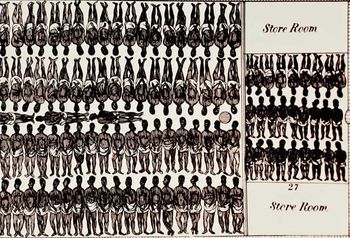
Slave-ship-interiorThe Association for the Study of African American Life and History has selected Civil Rights in America to mark the 50th anniversary of the 1964 Civil Rights Act.

“The history of civil rights in the United States is largely the story of free people of color and then African Americans to define and enumerate what rights pertain to citizens in civil society. It has been the history of enlisting political parties to recognize the need for our governments, state and federal, to codify and protect those rights. Through the years, people of African descent have formed organizations and movements to promote equal rights.

More here. (Note: One post every day throughout February will be dedicated to Black History Month.)

Friday, January 31, 2014

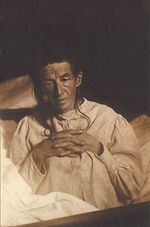
illness, aging, death

Drakulic_flirting_220wSlavenka Draculic at Eurozine:

Perhaps it is only Americans who are blessed with an optimistic view of old age where it's possible to flirt with a stranger at seventy or eighty or – who knows – at ninety. The problem is that they impose it on the rest of the world. There's a whole beauty industry out there, helping women to achieve that goal. Emancipated or less emancipated, women are easily persuaded by the fashion, cosmetics, body-shaping and food industries, so that today it's not necessary to look old; so many products are on their disposal, all you need to do is buy them. Indeed, it has never been easier to hide your age. Look at another role model, Jane Fonda: the right food, special gymnastics and cosmetics (not to mention a little bit of plastic surgery) and every seventy-six year old woman can look twenty years younger – that is, still able to show herself without feeling shame. Therefore there is no reason to look your age; on the contrary, it is indecent to “let yourself go”. Not only impolite, but indecent, just like spitting in public or even worse.

The dominant ideology of eternal youth (and health, which is just another word for eternity) suggests that with the help of science, it is possible not only to look good but to overcome any illness that befalls you and to live long too. The latest findings in biology, stem cell research and glycobiology have already been put to use in the battle against ageing. One cosmetic product based on glycans is the suggestively named Forever Youth Liberator.

more here.

slavery in the modern world

Foner_slaverinthemodernworld_ba_img_0Eric Foner at The Nation:

The abolition of slavery appears, in retrospect, so inevitable a part of the story of human progress that it may seem jarring when Davis emphasizes that there was nothing predetermined about it. He endorses the view advanced by recent scholars that, far from being retrograde or economically backward, slavery in the mid-nineteenth century was a dynamic, expanding institution, with powerful support everywhere it existed. “Never was the prospect of emancipation more distant than now,” the Times of London observed in 1857. Despite abolition in the British Caribbean and Spanish America, there were more slaves in the Western Hemisphere on the eve of the Civil War than at any point in history. Had the Confederacy emerged victorious, which was entirely possible, “it is clear that slavery would have continued well into the twentieth century.” Contingency, even accident, produced the end of slavery in the Old South, the greatest slave society the modern world has known.

Davis is well aware, of course, that emancipation did not usher in the abolitionist dream of a society of equals. The end of slavery in the Caribbean was succeeded by new forms of unfreedom, as planters brought in indentured workers from Asia to replace the blacks who had abandoned the plantations. Davis notes that the Fourteenth and Fifteenth amendments, adopted in the United States immediately after the Civil War to guarantee the civil and political equality of the former slaves, are virtually without precedent in other post-emancipation societies. Yet Reconstruction was soon succeeded by a new system of racial inequality. Did emancipation, then, make any difference in the United States?

more here.

The Quantum Mechanics of Fate: How time travel might explain some of science’s biggest puzzles

ScreenHunter_479 Jan. 31 14.47

George Musser in Nautilus:

The objective world simply is, it does not happen,” wrote mathematician and physicist Hermann Weyl in 1949. From his point of view, the universe is laid out in time as surely as it is laid out in space. Time does not pass, and the past and future are as real as the present. If your common sense rebels against this idea, it is probably for a single reason: the arrow of causality. Events in the past cause events in the present which cause events in the future. If time really is like space, then shouldn’t events from the future influence the present and past, too?

They actually might. Physicists as renowned as John Wheeler, Richard Feynman, Dennis Sciama, and Yakir Aharonov have speculated that causality is a two-headed arrow and the future might influence the past. Today, the leading advocate of this position is Huw Price, a University of Cambridge philosopher who specializes in the physics of time. “The answer to the question, ‘Could the world be such that we do have a limited amount of control over the past,’ ” Price says, “is yes.” What’s more, Price and others argue that the evidence for such control has been staring at us for more than half a century.

That evidence, they say, is something called entanglement, a signature feature of quantum mechanics.

More here.

Scarlett Johansson is right – the face of SodaStream doesn’t fit with Oxfam

Vijay Prasad in The Guardian:

ScreenHunter_478 Jan. 31 14.22Global charities seek global ambassadors to help them raise the profile of their work. Simply doing their best to stem the tide of suffering is not enough to gain potential donors' attention. But if a celebrity goes among the poor on behalf of the charity, the media flocks to cover the story – or at least the fact that the celebrity is there. The nuts and bolts of inequality are often overlooked, but the charity gets its name in print or on the television. This is the sorry state our humanism has reached.

It is precisely because of this that Oxfam, founded in Oxford in 1942 as Famine Relief, turned to the actor Scarlett Johansson in 2007 to become its global ambassador. She travelled to Oxfam projects, something that provided photo opportunities for herself (as a caring artist) and for Oxfam (to shine a light on the important work that the charity does).

In January, Johansson was appointed the brand ambassador for SodaStream, an Israeli company that produces machines to carbonate beverages. SodaStream's factory is located in the Israeli settlement of Maale Adumim, near Jerusalem.

Israeli settlements (including Maale Adumim) are built on land seized from the Palestinians during the 1967 war. By the standards of the Geneva convention, the Rome Statute and the international court of justice, they have been developed illegally by Israel. Israel has thumbed its nose at international law and continued to build its settlements, including industrial parks such as the one that houses SodaStream.

The European Union has called the E1 parcel of land that Israel plans to build on, extending from Maale Adumim, a violation of international humanitarian law. Johansson, in other words, had become the face of illegal Israeli settlement activity.

More here.

Neuroscientist James Fallon discovered through his work that he has the brain of a psychopath, and subsequently learned a lot about the role of genes in personality and how his brain affects his life

Judith Ohikuare in The Atlantic:

Fa648d63eIn 2005, James Fallon's life started to resemble the plot of a well-honed joke or big-screen thriller: A neuroscientist is working in his laboratory one day when he thinks he has stumbled upon a big mistake. He is researching Alzheimer's and using his healthy family members' brain scans as a control, while simultaneously reviewing the fMRIs of murderous psychopaths for a side project. It appears, though, that one of the killers' scans has been shuffled into the wrong batch.

The scans are anonymously labeled, so the researcher has a technician break the code to identify the individual in his family, and place his or her scan in its proper place. When he sees the results, however, Fallon immediately orders the technician to double check the code. But no mistake has been made: The brain scan that mirrors those of the psychopaths is his own.

After discovering that he had the brain of a psychopath, Fallon delved into his family tree and spoke with experts, colleagues, relatives, and friends to see if his behavior matched up with the imaging in front of him. He not only learned that few people were surprised at the outcome, but that the boundary separating him from dangerous criminals was less determinate than he presumed. Fallon wrote about his research and findings in the book The Psychopath Inside: A Neuroscientist's Personal Journey Into the Dark Side of the Brain, and we spoke about the idea of nature versus nurture, and what—if anything—can be done for people whose biology might betray their behavior.

More here.

The triumph of the maternalists: How paternalism has been feminised

Nancy McDermott in Spiked:

MaternalismPaternalism has emerged as the dominant form of authoritarianism in our society. Across the world, policymakers are quietly working behind the scenes to save us from ourselves, nudging us towards Jerusalem with smaller fast-food cups, architecture intended to make us climb more stairs, and maternity wards that encourage bonding and breastfeeding. These policies are seldom debated or even noticed. When they are, the routine argument is not whether they are a good idea but how ‘hard’ or openly coercive should they be. Why value autonomy at all when people, left to their own devices, continually make poor choices that foil their aspirations and create a social burden in the process?

This denigration of human rationality is sobering for anyone who believes that autonomy lies at the moral, intellectual and philosophical centre of our humanity. But it is also interesting that this new, nudging paternalism takes the form that it does. This is not the direct, father-knows-best style of paternalism of earlier eras. It is indirect and manipulative. It has nothing to prove and no one is claiming moral authority. On the contrary, paternalists are decidedly non-confrontational and anti-ideological. They seem almost reluctant to assume a moral standpoint; their interventions are merely ‘evidence-based’. It is a modus operandus that can hardly be called ‘paternal’ at all. To use the metaphor of the traditional family, the contemporary paternalist’s style is more akin to that of a wife, who defers to her husband publicly while quietly managing every aspect of her family’s life behind the scenes. This new style of paternalism – let’s call it ‘maternalism’ – is part of a peculiar state of affairs, characterised by the declining fortunes of men, the emergence of ‘zombie feminism’, and a widespread cultural denigration of masculinity.

More here.

21 Short Walks Around the Human Brain

David Schoonmaker in American Scientist:

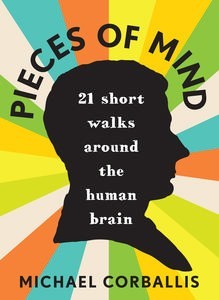
BookMany successful authors answer questions we long ago articulated and have wished we could answer. Michael Corballis goes at least a step further: He poses questions we wouldn’t have thought to ask and then answers them with clarity and wit. And what could be more fascinating to a human being than the human brain?

A Very Short Tour of the Mind exemplifies truth in advertising—it is very short, both in overall length and in the duration of each chapter, the longest of which barely makes it to the sixth page. Yet the book is packed with surprises. Did you know, for example, that left-handedness is generally considered by psychologists to be a lack of handedness? Or that the ratio of neocortex (the home of higher-order functions) to overall brain volume in primates is related to social-group size? Corballis ranges widely within and beyond his subject. He muses about bipedalism and why it may have been adaptive; explores why and how we are so skilled at recognizing faces; and closes with a chapter called “Lies and Bullshit,” in which he wonders why we are so very intolerant of the former but readily accepting of the latter. With his usual self-effacement, he ends with an admission about his own career as psychologist, educator and communicator that may bear on the question.

More here.

In the Sontag Archives

Benjamin Moser in The New Yorker:

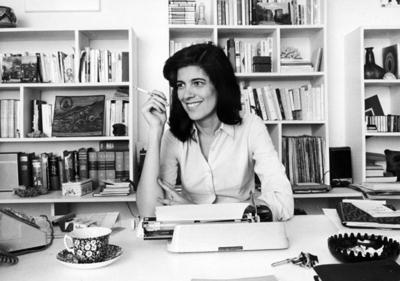
SontagAny biographer knows the unease, sometimes verging on nausea, that extended research into a single person’s life brings. I never met Sontag or Clarice Lispector, the subject of my last book. But after years of research, interviews, reading, and travelling, I probably know more about both of them than anyone outside their most intimate circles. I know about their sex lives and finances and medical records and professional failures, about their difficulties with their children and their parents, about the painful secrets that they desperately longed to conceal.

Even without these struggles, which are part of every life, the form, too, imposes choices. Just as history is not the past itself but a story about the past, biography is not a life but a life story. Just as a novelist gets to know his or her characters, a biographer gets to know his, too, and, in the face of the sprawling chaos of an entire life, knows that whatever he can tell about the subject is only a small selection that fits a narrative chosen according to his own tastes and interests.

He is also always aware that the biographer’s position, which necessarily involves judgments about the subject’s character and the choices she made, is profoundly unjust, for the simple reason that the subject herself cannot be consulted.

I am familiar with these concerns, and have always borne them in mind. Still, reading papers and manuscripts is one thing. Looking through someone’s e-mail is quite another, and the feeling of creepiness and voyeurism that overcame me as I sat with Gonzalez struggled with the unstoppable curiosity that I feel about Sontag’s life. To read someone’s e-mail is to see her thinking and talking in real time. If most e-mails are not interesting (“The car will pick you up at 7:30 if that’s ok xxx”), others reveal unexpected qualities that are delightful to discover. (Who would have suspected, for example, that Sontag sent e-mails with the subject heading “Whassup?”) One sees Sontag, who had so many friends, elated to be in such easy touch with them (“I’m catching the e-mail fever!”); one sees the insatiably lonely writer reaching out to people she hardly knew and inviting them to pay a call. In their reactions, one reads their bemusement, how hesitant they were to bother the icon, with her fearsome reputation.

Read more here.

Friday Poem

The Gift

Give me what you have on you.
Neither keys nor money.
Make it something temporary.

The hastily scribbled phone number.
The dry-cleaned piece of paper in your coat pocket.
The button about to fall off.

The words you just held back from saying.
Your strength too much to open a door.
All the things you no longer need.

Give me the rustle of your cotton.
The wind can do without.

by K. Schippers
from tellen en wegen
publisher: Querido, Amsterdam, 2011
Translation: 2012, Willem Groenewegen

Thursday, January 30, 2014

Are We Too Close to Making Gattaca a Reality?

4348941910_8f09fe9672_z-300x195

Ferris Jabr in Scientific American (photo: Katie Tegtmeyer, Flickr):

Preventing and treating diseases are not the only reasons people have turned to pre-implantation genetic diagnosis. PGD also makes it possible for parents to predetermine characteristics of a child to suit their personal preferences. In a few cases, people have used PGD to guarantee that a child will have what many others would consider a disability, such as dwarfism or deafness. In the early 2000s, lesbian couple Sharon Duchesneau and Candy McCullough—both deaf from birth—visited one sperm bank after another searching for a donor who was also congenitally deaf. All the banks declined their request or said they did not take sperm from deaf men, but the couple got what they were looking for from a family friend. Their son, Gauvin McCullough, was born in November 2001; he is mostly deaf but has some hearing in one ear. Deafness, the couple argued, is not a medical condition or defect—it is an identity, a culture. Many doctors and ethicists disagreed, berating Duchesneau and McCullough for deliberately depriving a child of one of his primary senses.

Much more commonly, hopeful parents in the past decade have been paying upwards of $18,000 to choose the sex of their child. Sometimes the purpose of such sex selection is avoiding a disease caused by a mutation on the X chromosome: girls are much less likely to have these illnesses because they have two X chromosomes, so one typical copy of the relevant gene can compensate for its mutated counterpart. Like Marie and Antonio Freeman in Gattaca, however, many couples simply want a boy or a girl. Perhaps they have had three boys in a row and long for a girl. Or maybe their culture values sons far more than daughters. Although the U.K., Canada and many other countries have prohibited non-medical sex selection through PGD, the practice is legal in the U.S. The official policy of the American Society of Reproductive Medicine is as follows: “Whereas preimplantation sex selection is appropriate to avoid the birth of children with genetic disorders, it is not acceptable when used solely for nonmedical reasons.” Yet in a 2006 survey of 186 U.S. fertility clinics, 58 allowed parents to choose sex as a matter of preference. And that was seven years ago. More recent statistics are scarce, but fertility experts confirm that sex selection is more prevalent now than ever.

“A lot of U.S. clinics offer non-medical sex selection,” says Jeffrey Steinberg, director of The Fertility Institutes, which has branches in Los Angeles, New York and Guadalajara, Mexico. “We do it every single day. We did three this morning.”

More here.

Mourning Tongues: How Auden Was Modified in the Guts of the Living

Auden1-243x350

Nina Martyris in the LA Review of Books:

ON THIS DAY 75 years ago — January 28, 1939 — “something slightly unusual” occurred in the annals of English poetry. William Butler Yeats died, and his death gave birth to a poem that set off one of the most extraordinary elegiac conversations of our time.

The poem was W. H. Auden’s “In Memory of W. B. Yeats,” and this is the story of its astonishing afterlife — how three separate elegies in three different countries were modeled on it; how Auden’s words were quite literally, in Auden’s line from the poem, “modified in the guts of the living,” and how, in a feat that even someone as reputedly self-anointing as Auden could not possibly have foreseen, it went on to link a multicultural pantheon of greats: Yeats, Auden, T. S. Eliot, Joseph Brodsky, Derek Walcott, and Seamus Heaney.

Auden was a natural master of the elegy. His pen was ready, generous, candid, and quick to rhyme. He shot off elegies on Freud, Henry James, Ernst Toller, Louis MacNeice, and JFK, and his “Funeral Blues,” a fine example of the coherence of grief, has become part of crematoria cool after it was sentimentalized by Hollywood. But of all his requiem compositions, it is his magnificent and measured elegy for Yeats that has a seminal place in the canon.

More here.