The Brain, in Exquisite Detail

James Gorman in The New York Times:

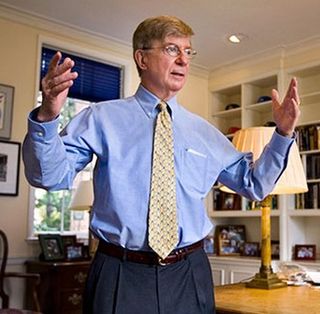
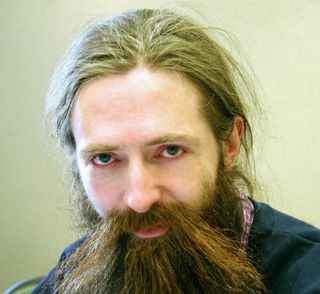
BRAIN-sfSpanAs a professor at Washington University and a leader of one of five teams there working on the Human Connectome Project, Dr. Barch focuses her research on the way individual differences in the brains of healthy people are related to differences in personality or thinking. For instance she said, people doing memory tasks in the M.R.I. machine may differ in competitiveness and commitment to doing well. That ought to show up in activity in the parts of the brain that involve emotion, like the amygdala. However, she points out that the object of the Connectome Project is not to find the answers to these questions, but to provide the database for others to try to do so.

Perhaps the greatest challenge is that the brain functions and can be viewed at so many levels, from a detail of a synapse to brain regions trillions of times larger. There are electrical impulses to study, biochemistry, physical structure, networks at every level and between levels. And there are more than 40,000 scientists worldwide trying to figure it out. This is not a case of an elephant examined by 40,000 blindfolded experts, each of whom comes to a different conclusion about what it is they are touching. Everyone knows the object of study is the brain. The difficulty of comprehending the brain may be more aptly compared to a poem by Wallace Stevens, “13 Ways of Looking at a Blackbird.” Each way of looking, not looking, or just being in the presence of the blackbird reveals something about it, but only something. Each way of looking at the brain reveals ever more astonishing secrets, but the full and complete picture of the human brain is still out of reach. There is no need, no intention and perhaps no chance, of ever “solving” a poet’s blackbird. It is hard to imagine a poet wanting such a thing. But science, by its nature, pursues synthesis, diagrams, maps — a grip on the mechanism of the thing. We may not solve the brain any time soon, but someday achieving such a solution, at least in scientific terms, is the fervent hope of neuroscience.

More here.

Monday, January 6, 2014

Sunday, January 5, 2014

Syed Ali Raza, 1913-2005

This Obituary is in honor of our father who died nine years ago today.

MEMBER OF PAKISTAN CIVIL SERVICE, RESPECTED AUTHOR AND INTELLECTUAL, SYED ALI RAZA DIES AT 91

by Azra Raza

AliSyed Ali Raza, Retired Director, Ministry of Foreign Affairs, Pakistan, died peacefully in his sleep at Musa House, Karachi, on Wednesday, January 5th, 2005 at 2:25 a.m. The youngest of four children of Syed Zamarrud Hussain (1876-1932) and Hashmi Begum (1885-1956), he was born in Bijnor, India, on November 29th, 1913. His paternal lineage is Rizvi Syed, tracing back to the Prophet Muhammad through Imam Ali Raza whose descendent Shah Syed Hassan Rasoolnuma arrived in Bengal from Sabzwar, Iran, in 1355 AD. Apparently he so impressed the ruling monarch Badshah Ghiassuddin with his charm and intellect that the King gave him the hand of the Royal Princess in marriage. The ruler of Delhi, Mubarak Shah, then invited Shah Syed Hassan to his Court where he served faithfully by overpowering the rebellion mounted by a smaller Principality. He was rewarded by being given the properties of Jarcha and Chols in Bulandsheher, UP. Shah Syed Hassan’s grandson, Syed Shah Jalal distinguished himself even further through his exceptional scholarship, courage, intellect, and leadership such that both Hindus and Muslims viewed him with the respect and awe accorded a spiritual leader or Pir in his lifetime. His mausoleum in Bijnor became a site for worship and elaborate annual rites commemorate his many and varied accomplishments to this day. The maternal side of Syed Ali Raza’s lineage is Zaidi Syed, his maternal great-grandfather Syed Muzaffar Ali was attached to the Oudh court with extensive landholdings in Muzaffar Nagar. Stories of his extraordinary wealth circulated including the reputation of his wife for leaving behind enough gold and silver threads which fell from her exotic dresses, for the servants to fight over each time she left a party. Ali Raza’s parents lost 6 children (ranging in age from 1-16 years, named Zainul Ibad, Ali Murad, Ali Imjad, Ali Ibad, Sadiqa Khatoon and Muhammad Raza) to the epidemics of plague, influenza and typhoid over a decade. The extreme grief affected both parents, but especially disheartened Ali Raza’s father Syed Zamarrud Hussain, who simultaneously lost his 28 year old brother, 26 year old sister-in-law and their only child. Inconsolable and anguished by the deep sorrow of losing practically his entire close family, he left the ancestral home accompanied by his wife, for a more or less nomadic existence, wandering for several years through Dehradoon and smaller villages (Kandhra, Kirana, Shamli) of Muzaffar Nagar. Three more children were born during this period, and the family finally returned to Bijnor where Ali Raza was born in 1913.

More here.

Is Life a Ponzi Scheme?

Mark Johnston in the Boston Review:

ScreenHunter_481 Jan. 05 16.59Who knows what form the end of humanity will take? Will it come by extraterrestrial invasion, or by the erosion of the ozone layer, or by a large asteroid impacting the earth, or by mass starvation during a long nuclear winter, or by a bacterium running amok in the post-antibiotic age, or by a nomadic black hole sucking up everything in its path as it wanders toward us, or by a gamma ray burst from any one of the host of supernovas destined to occur within three thousand light years of the earth, or by the eruption of the massive volcano that now sits, waiting, under Yellowstone National Park? Or will it be as the apocalyptic literature of Judaism and Christianity describes it, with the last days consisting of the terrifying separation of the sheep from the goats? Even if humanity somehow avoids all this, and even if we escape the solar system before the inevitable heat death of the sun, eventually the universe will come to consist of a subatomic soup so thin that nothing recognizably human will be able to exist.

So we are doomed. There is no way around it. The hope is that doom is far enough away for humanity to flourish individually and collectively. The lights will eventually go out; the issue is just how brightly they will burn in the interim.

Here ignorance is not exactly bliss, but it is helpful. Unless you are professionally involved in existential risk assessment or in one of those fields, such as bio-warfare, where the resultant blowback could indeed wipe us out, it is wise to forget about our inevitable collective obliteration precisely because of its capacity to uselessly demoralize us. When it comes to the end of humanity, Spinoza’s advice to individuals concerning their own deaths seems even more pertinent: “A free man thinks of nothing less than of death, and his wisdom is a meditation not on death, but on life.”

But what if, as a brute psychological matter, we just cannot put the end of humanity out of our minds? There are two quite different cases in which the thought of our collective end might worry us: the case where we are demoralized because we really are, or take ourselves to be, in the last days, and the case where we are demoralized merely by the fact that there will be a last day.

More here.

German, Jewish and Neither

Yascha Mounk in the New York Times:

ScreenHunter_480 Jan. 05 16.51My family, too, came to West Germany as immigrants. Born in the shtetls of Eastern Europe, my grandparents embraced Communism as teenagers, leaving home to become political activists. They survived the Holocaust by fleeing to the Soviet Union and returned to Poland after the war, keen to put their ideals into practice at long last. But then the regime they had helped to build threw them out amid a large-scale anti-Semitic witch hunt. Out of options, my mother and her father sought refuge in West Germany.

Born in 1982 as the citizen of a peaceful, affluent and increasingly cosmopolitan country, I spent a mostly happy childhood in places like Munich, Freiburg and Karlsruhe. I was a fervent supporter of the national soccer team and dreamed of running for the Bundestag. German is, and will remain, the only language I speak without an accent.

My family’s Jewish identity has never been strong. I had neither a bris nor a bar mitzvah. When I was young, my mother gave me Christmas presents so that I wouldn’t feel left out.

Even so, as I grew older, I felt more and more Jewish — and less and less German. Gradually, I concluded that staying in Germany was not for me.

The reaction of my classmates in Laupheim might suggest that ignorance or hatred — which have subsided since I was a child, but remain real problems — are why I left. But that’s not quite true. If there was one thing that made me feel I would never truly belong, it wasn’t hostility: It was benevolence.

More here.

Can Islam and evolution be reconciled?

Muslimevolution-Shaha1

Alom Shaha at the Rationalist Association:

People often assume that because I am a science teacher and an atheist my faith in science is what led me to reject faith in a God. This is not the case – I stopped believing as a child, long before I knew anything about the Big Bang theory or evolution by natural selection – but, as I have seen in some of my own students, many religious people can lose their faith, or at least have it severely tested, as a result of learning science.

I met someone like this at a recent conference called “Have Muslims Misunderstood Evolution?” organised by the Deen Institute, an organisation that claims to want to “articulate faith, not in spite of, but through scientific inquiry, critical thinking and logical reasoning, reviving intellectuality among modern Muslims.” This young man, a postgraduate biochemist at Imperial College London, told me that he had come to the conference in the hope that he would find a way to reconcile his belief in the teachings of Islam with what he described as “evidence for evolution in everything I do at work”.

He seemed deeply anguished by the fact that evolution by natural selection contradicts the core belief with which he was brought up – that the Qur’an is the literal word of Allah. When I asked him if he might consider the idea that the Qur’an wasn’t a divine document he told me that this was “impossible” for him, that his “life would have no meaning” if the Qur’an was not literally true.

His struggle is not unique. According to writer and journalist Myriam Francois-Cerrah, who chaired the conference, many Muslim science students experience “inner turmoil” as a result of studying evolution.

More here.

How do we go about finding a meaningful life, not just a happy one?

Roy F Baumeister in Aeon:

Italian-familyParents often say: ‘I just want my children to be happy.’ It is unusual to hear: ‘I just want my children’s lives to be meaningful,’ yet that’s what most of us seem to want for ourselves. We fear meaninglessness. We fret about the ‘nihilism’ of this or that aspect of our culture. When we lose a sense of meaning, we get depressed. What is this thing we call meaning, and why might we need it so badly?

Let’s start with the last question. To be sure, happiness and meaningfulness frequently overlap. Perhaps some degree of meaning is a prerequisite for happiness, a necessary but insufficient condition. If that were the case, people might pursue meaning for purely instrumental reasons, as a step on the road towards happiness. But then, is there any reason to want meaning for its own sake? And if there isn’t, why would people ever choose lives that are more meaningful than happy, as they sometimes do?

The difference between meaningfulness and happiness was the focus of an investigation I worked on with my fellow social psychologists Kathleen Vohs, Jennifer Aaker and Emily Garbinsky, published in theJournal of Positive Psychology this August. We carried out a survey of nearly 400 US citizens, ranging in age from 18 to 78. The survey posed questions about the extent to which people thought their lives were happy and the extent to which they thought they were meaningful. We did not supply a definition of happiness or meaning, so our subjects responded using their own understanding of those words. By asking a large number of other questions, we were able to see which factors went with happiness and which went with meaningfulness.

More here.

Sunday Poem

Brassicas

There was no sex in our village there was only

cabbage. Row upon row of it filling the haggards
on high, straight ridges. This is where babies came from
we were told, in all seriousness. My sister still remembers
being shown the exact head that she was discovered under.
We knew everything about growing the small, limp
plants that needed constant watering. Learned how to protect them
from root fly and caterpillar infestations. Recognized the different varieties,
from January King to Curly Kale, sewn in sequence for year-round cropping.
Instructed that it was never harvested until the hearts were firm and babies
were something only grown-up women found. Of sex
we knew nothing. We all hated it; the dank smell of it cooking
that permeated through the whole house for hours
after it was eaten, the sloppy look of it on the plates,
the run-off staining the spuds and bacon. But it was
good for us so we were made to finish it. Remember
how mother would add a teaspoon of soda to the water
to soften the fibers? Years later, I learnt that this destroys
the flavour, disarms the vitamins. The myth was easy
to believe in a farming community until our hormones and
neighbours’ sons, well educated in animal husbandry,
illuminated the shortcomings in our education.
Oh my sisters,
we are the daughters of cabbages and should celebrate our
cruciferae lineage; tough and sinewy of a strong variety,
adaptable to any climate, winter hardy;
never ones to take
ourselves too seriously: when I think on it,
my sisters, all that green we swallowed.

by Eileen Sheehan
from Down the Sunlit Hall
Doghouse Books, Tralee, 2008,

A.I. Has Grown Up and Left Home

David Auerbach in Nautilus:

HeadWe humans, more or less, behave like unified rational agents, with a linear style of thinking. And so, since we think of ourselves as unified, we tend to reduce ourselves not to a single body but to a single thinker, some “ghost in the machine” that animates and controls our biological body. It doesn’t have to be in the head—the Greeks put the spirit (thymos) in the chest and the breath—but it remains a single, indivisible entity, our soul living in the house of the senses and memory. Therefore, if we can be boiled to an indivisible entity, surely that entity must be contained or located somewhere. This has prompted much research looking for “the area” where thought happens. Descartes hypothesized that our immortal soul interacted with our animal brain through the pineal gland. Today, studies of brain-damaged patients (as Oliver Sacks has chronicled in his books) have shown how functioning is corrupted by damage to different parts of the brain. We know facts like, language processing occurs in Broca’s area in the frontal lobe of the left hemisphere. But some patients with their Broca’s area destroyed can still understand language, due to the immense neuroplasticity of the brain. And language, in turn, is just a part of what we call “thinking.” If we can’t even pin down where the brain processes language, we are a far way from locating that mysterious entity, “consciousness.” That may be because it doesn’t exist in a spot you can point at.

Symbolic artificial intelligence, the Cartesian theater, and the shadows of mind-body dualism plagued the early decades of research into consciousness and thinking. But eventually researchers began to throw the yoke off. Around 1960, linguistics pioneer Noam Chomsky made a bold argument: Forget about meaning, forget about thinking, just focus on syntax. He claimed that linguistic syntax could be represented formally, was a computational problem, and was universal to all humans and hard-coded into every baby’s head. The process of exposure to language caused certain switches to be flipped on or off to determine what particular form the grammar would take (English, Chinese, Inuit, and so on). But the process was one of selection, not acquisition. The rules of grammar, however they were implemented, became the target of research programs around the world, supplanting a search for “the home of thought.”

More here.

Turning Off the “Aging Genes”

From Aftau.org:

DnaRestricting calorie consumption is one of the few proven ways to combat aging. Though the underlying mechanism is unknown, calorie restriction has been shown to prolong lifespan in yeast, worms, flies, monkeys, and, in some studies, humans. Now Keren Yizhak, a doctoral student in Prof. Eytan Ruppin's laboratory at Tel Aviv University's Blavatnik School of Computer Science, and her colleagues have developed a computer algorithm that predicts which genes can be “turned off” to create the same anti-aging effect as calorie restriction. The findings, reported in Nature Communications, could lead to the development of new drugs to treat aging. Researchers from Bar-Ilan University collaborated on the research. “Most algorithms try to find drug targets that kill cells to treat cancer or bacterial infections,” says Yizhak. “Our algorithm is the first in our field to look for drug targets not to kill cells, but to transform them from a diseased state into a healthy one.”

Yizhak's algorithm, which she calls a “metabolic transformation algorithm,” or MTA, can take information about any two metabolic states and predict the environmental or genetic changes required to go from one state to the other. “Gene expression” is the measurement of the expression level of individual genes in a cell, and genes can be “turned off” in various ways to prevent them from being expressed in the cell. In the study, Yizhak applied MTA to the genetics of aging. After using her custom-designed MTA to confirm previous laboratory findings, she used it to predict genes that can be turned off to make the gene expression of old yeast look like that of young yeast. Yeast is the most widely used genetic model because much of its DNA is preserved in humans. Some of the genes that the MTA identified were already known to extend the lifespan of yeast when turned off. Of the other genes she found, Yizhak sent seven to be tested at a Bar-Ilan University laboratory. Researchers there found that turning off two of the genes, GRE3 and ADH2, in actual, non-digital yeast significantly extends the yeast's lifespan. “You would expect about three percent of yeast's genes to be lifespan-extending,” said Yizhak. “So achieving a 10-fold increase over this expected frequency, as we did, is very encouraging.”

More here.

Saturday, January 4, 2014

The Medium is Not the Message

P26_Price_396094h

Leah Price in the TLS:

In the age of Slow Food, Slow Parenting and Slow Knitting, it is no surprise that we should be presented with a Slow Reading manifesto. Just as some are giving up Hovis or Mighty White in favour of artisanal loaves, so data-mining and webcrawlers have provoked some human readers to stage a slowdown.

A high proportion of them are literary critics. If you care as much about form as about content, if noticing apparently insignificant details is a tool of your trade, then The Complete Idiot’s Guide to Speed Reading (2008) may sound like a pleonasm. Ever since modern literatures were first taught at university a couple of centuries ago, their average professor has read at the same pace as her seven-year-old. But while the average holds, the spread is widening. At one end lies Franco Moretti’s computer-assisted “distant reading”, which multiplies by several orders of magnitude the number of texts that would count as evidence for any claim about literature. At the other, “slow” has begun to replace “close”. After “A Movement for Slow Reading”, an article by Lindsay Waters published in the Chronicle of Higher Education in 2007, came small-press essays (John Miedema’s Slow Reading, 2009), pedagogical research (Thomas Newkirk’s The Art of Slow Reading, 2011) and cultural history (Isabel Hofmeyr’s Gandhi’s Printing Press: Experiments in slow reading, 2013).

The psychologist Daniel Oppenheimer recently showed that less legible fonts increase readers’ ability to remember the text, presumably because it slows them down. In Slow Reading in a Hurried Age, David Mikics explains how we can put on the brakes for ourselves.

More here.

Hazards of Revolution

549px-Info_box_collage_for_mena_Arabic_protests

Patrick Cockburn in the LRB (image from Wikimedia commons):

Why have oppositions in the Arab world and beyond failed so absolutely, and why have they repeated in power, or in pursuit of it, so many of the faults and crimes of the old regimes? The contrast between humanitarian principles expressed at the beginning of revolutions and the bloodbath at the end has many precedents, from the French Revolution on. But over the last twenty years in the Middle East, the Balkans and the Caucasus the rapid degradation of what started as mass uprisings has been particularly striking. I was in Moscow at the start of the second Russo-Chechen war in October 1999, and flew with a party of journalists to Chechnya to see the Chechen president, Aslan Maskhadov, in his headquarters in Grozny, where he was desperately trying – and failing – to avert the Russian assault by calling for a ceasefire. We were housed in a former barracks which seemed worryingly vulnerable to Russian air attack. But it soon became evident that the presidential guard’s greatest anxiety was that we would be abducted by Chechen kidnappers and held for ransom. The first Chechen revolt in 1994-96 was seen as a heroic popular struggle for independence. Three years later it had been succeeded by a movement that was highly sectarian, criminalised and dominated by warlords. The war became too dangerous to report and disappeared off the media map. ‘In the first Chechen war,’ one reporter told me, ‘I would have been fired by my agency if I had left Grozny. Now the risk of kidnapping is so great I would be fired for going there.’

The pattern set in Chechnya has been repeated elsewhere with depressing frequency. The extent of the failure of the uprisings of 2011 to establish better forms of governance has surprised opposition movements, their Western backers and what was once a highly sympathetic foreign media. The surprise is due, in part, to a misunderstanding of what the uprisings were about.

More here.

Using History to Serve Political Narratives

Jesusbbc_1

Hussein Ibish in The National:

When Mahmoud Abbas, the president of the Palestinian Authority, referred to Jesus in his recent Christmas greeting as a “Palestinian messenger”, the Israeli government accused him of an “outrageous rewriting of Christian history”.

Numerous pro-Israel commentators insisted that “Jesus was a Jew,” and that this only underscores the ancient Jewish connection to the land versus the supposedly tenuous Arab one.

Accepting, for the sake of argument, the traditionally-inherited histories about Jesus, both sides are right and wrong, factually and, especially, politically.

Israelis and their supporters are right that Jesus was born Jewish. But unless they are converts to Christianity or Islam, they accord him no religious significance. Jewish Israelis are on very shaky ground pointing to Jesus as a proto-Israeli, or anything other than a very heretical Jew at best.

Palestinians can make the counterargument that Jesus was the founder of Christianity, and that while he was born Jewish he became the first Christian, and was later identified as a prophet of Islam. Since the Christians and Muslims of the land almost entirely identify as Palestinians, by that logic Jesus was a proto-Palestinian.

Except that this is all historical, intellectual and political rubbish from both sides.

More here.

Are we languishing in capitalist decadence?

Dantes-Divine-Comedy-009Stuart Jeffries at The Guardian:

If you want to understand modern capitalism and consumer society, argues the German philosopher Peter Sloterdijk, you'd better explore the ramifications of Dostoevsky's metaphor. “He recognised the monstrous edifice as a man-eating structure,” Sloterdijk writes, “a cult container in which humans pay homage to the demons of the west: the power of money and pure movement.”

Sloterdijk sees Paxton's spawn everywhere today – crystal palaces containing the one and half billion winners of globalisation, while three times that number are excluded, some with their noses up against the glass until security guards hose them down. “Who can deny,” he writes, “that in its primary aspects, the western world – especially the European Union – embodies such a great interior today?” Who can deny, either, that the internet realises in cyberspace Paxton's dream of immateriality and of abolishing distance? “Experience the Arctic and the Amazon without the jet lag,” goes the ad. “Trek with Google Maps.”

It's perhaps inevitable that Sloterdijk would be catalysed by Dostoevsky's metaphor. In his vast trilogy Spheres, published between 1998 and 2004, Sloterdijk wrote the metaphysical history of enclosed spaces including Buckminster Fuller's geodesic domes and space travel, though not Apple's iCloud (it hadn't yet appeared to Steve Jobs in a dream).

more here.

the reissue of Rafael Bernal’s Mexico City-set “The Mongolian Conspiracy”

La-la-ca-1230-rafael-bernal-266-jpg-20131231J.C. Gabel at the LA Times:

Rafael Bernal, born in 1915 in Mexico City, doesn't come to mind when one thinks of great detective novelists of the 1960s. There is little about him on the Internet in English, and none of his other novels, plays, story collections or histories have been translated. Although he wrote dozens of books, his 1969 novel, “The Mongolian Conspiracy,” is considered his masterwork, but it was difficult to procure even an old dog-eared copy — until this past fall, when it was reissued by the folks at New Directions.

Filiberto Garcia, Bernal's protagonist, a pistolero, is a man of “international intrigue” and the classic antihero: sarcastic and outspoken to the point of insubordination, a hired-gun gumshoe with a rambling inner monologue that reveals an inferiority complex, and a proclivity for blurting out self-critical remarks, exclamation points bursting off the page in the tradition of vintage Tom Wolfe or Hunter S. Thompson. Yet Bernal's fictional alter ego is no doubt inspired by the tough-guy trifecta of Chandler, Hammett and Thompson.

“The Mongolian Conspiracy,” set in Mexico City, revolves around the poor Chinatown neighborhood off Dolores Street.

more here.

Saturday Poem

Ugly

Your daughter is ugly.
She knows loss intimately,
carries whole cities in her belly.

As a child, relatives wouldn’t hold her.
She was splintered wood and sea water.
They said she reminded them of the war.

On her fifteenth birthday you taught her
how to tie her hair like rope
and smoke it over burning frankincense.

You made her gargle rosewater
and while she coughed, said
macaanto girls like you shouldnt smell
of lonely or empty.

You are her mother.
Why did you not warn her,
hold her like a rotting boat
and tell her that men will not love her
if she is covered in continents,
if her teeth are small colonies,
if her stomach is an island
if her thighs are borders?

What man wants to lay down
and watch the world burn
in his bedroom?

Your daughter’s face is a small riot,
her hands are a civil war,
a refugee camp behind each ear,
a body littered with ugly things

but God,
doesn’t she wear
the world well.
.

by Warsan Shire
from teaching my mother how to give birth
publisher: flipped eye, London, 2011