
Stephen Luntz in IFL Science:
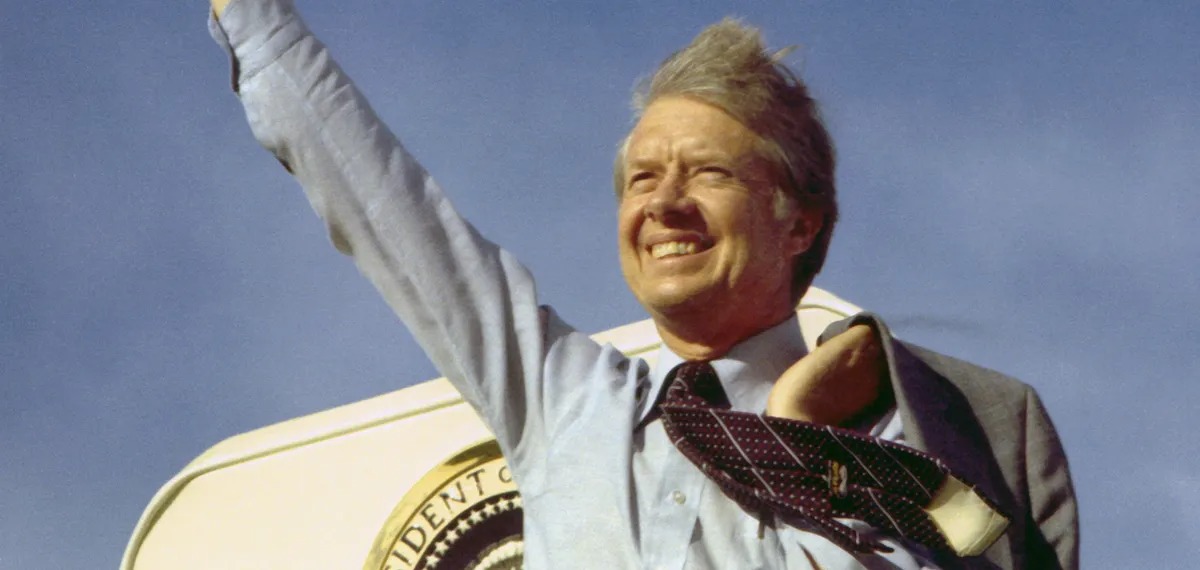 The story starts in 1974 when Professor F. Sherwood Rowland proposed that CFCs, whose use was rapidly expanding, might pose a threat to the ozone layer. Rowland would subsequently share the 1995 Nobel Prize for Chemistry for this work, but at the time, CFC manufacturers hit back that the claims were “purely theoretical”. Technically speaking they were right. No one really knew if CFCs would actually have these effects in the upper atmosphere, a region of the planet we had barely begun to study.
Unfortunately, others pointed out, if the theory was right, damage to the ozone layer would expose the surface to so much ultraviolet radiation, little life would survive above ground or in the upper layers of the ocean. Even lifeforms not directly under threat depend on more vulnerable species for food or pollination – total ecosystem collapse was a real possibility.
Doing nothing would be the ultimate gamble.
The manufacturers established lobby groups arguing no action be taken until we had proof. DuPont’s chair called the idea CFCs might damage the ozone layer “science fiction”. Carter, and the majority of the US Congress, feared by the time the evidence was in it might be too late.
More here.
Enjoying the content on 3QD? Help keep us going by donating now.
 A good New Year’s resolution might be to experiment what “doing nothing” might mean for your life, and trying to notice how it changes your worldview—and opens you up to imagine the possibility of other, larger, more systemic changes in society. Opt out of literally every possible thing you can. Cancel everything you currently have on auto pay, or at least the things you don’t absolutely need to survive, like subscriptions to household goods, take-out app memberships, and Substack newsletters full of product recommendations. Opt out of all after-school activities for your kids—all the driving around, and the new gear. Clear your schedule. And then start adding back in the things that bring you connection and joy.
  Fire-engine red. Egg-yolk yellow. Christmas-tree green. The palettes of this year’s potential Oscar contenders can be summed up in one word: Bold. “Everybody on Pedro’s sets ends up wearing really strong colors,” said Inbal Weinberg, the production designer who dreamed up the striking, primary color-heavy visual aesthetic for Pedro Almodóvar’s euthanasia drama, “The Room Next Door.”
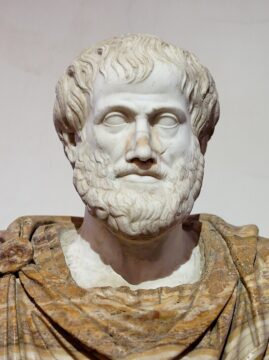 The Hungarian folktale Pretty Maid Ibronka terrified and tantalised me as a child. In the story, the young Ibronka must tie herself to the devil with string in order to discover important truths. These days, as a PhD student in philosophy, I sometimes worry I’ve done the same. I still believe in philosophy’s capacity to seek truth, but I’m conscious that I’ve tethered myself to an academic heritage plagued by formidable demons.
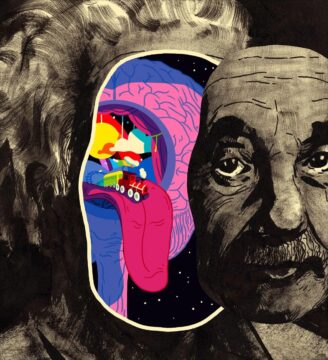 Isaac Newton’s lifelong quest to transmute base metals into gold is normally forgiven as a symptom of the pre-scientific nature of his age. But “great minds holding eccentric, even kooky, beliefs” is a pattern that crops up throughout history. Even after there became strong social reasons for scientists to disguise even the faintest whiff of the irrational. William James, the godfather of psychology, believed in ghosts. Fred Hoyle, who came up with the idea that stars created chemical elements via nuclear fusion, thought that influenza came from space. Nikola Tesla was obsessed with the number three. Nobel Prize winner Wolfgang Pauli believed that his mere presence could drive laboratory equipment to malfunction. Kurt Gödel starved himself to death out of fear of being poisoned. Brian Josephson, a still-living Nobel laureate, thinks that water has memories.
 Fussier friends would shiver in the mid-October wind, but Ann Mandelstamm is in her eighties and still hiking, so I grab a table on the patio. Just as I open the menu, she arrives, clad in a sporty navy sweater and jeans and wearing her trademark red lipstick, her red-gold hair pulled back with combs. She sits, her movements as lithe and graceful as ever. She has always had a quiet, midcentury glamour about her—the Kate Hepburn sort, impatient with frippery. Neither of us even mentions moving indoors.
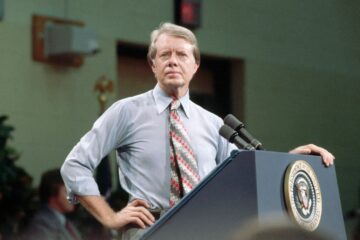 After the Soviet bloc began to disintegrate on his watch, Reagan was—and still is—mythologized as the primary victor of the Cold War.
 Billions of cells die in your body every day. Some go out with a bang, others with a whimper. They can die by accident if they’re injured or infected. Alternatively, should they outlive their natural lifespan or start to fail, they can carefully arrange for a desirable demise, with their remains neatly tidied away.
 The U.S. population will age and continue to see low growth in 2025, three experts have told Newsweek.
 In his newsletter, Sam Harris
  Here are some of the most important studies to date documenting how COVID-19 affects brain health:
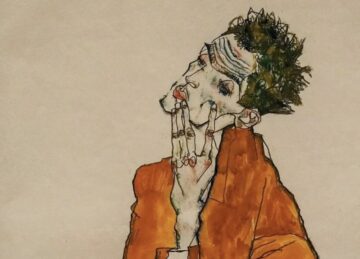 Even if you haven’t read Robert Musil’s unfinished modernist masterpiece, The Man Without Qualities, you probably agree that it has a great title. If you have read it, I’m sure you agree, because the novel returns obsessively to the theme of how its main character, Ulrich, can’t quite get his act, or, more fundamentally, his personality, together. But I’ve come up with an even better title. I think Musil should have called his novel The Man Without Philosophy.
 “All Life Long,” the title of the most recent album by the composer and organist Kali Malone, is taken from a poem by the British Symbolist author Arthur Symons: “The heart shall be weary and wonder and cry like the sea, / All life long crying without avail, / As the water all night long is crying to me.” The poem appears as an epigraph in W. E. B. Du Bois’s “The Souls of Black Folk,” which is where Malone found it. Beneath Symons’s lines, Du Bois supplies musical notation for the opening phrase of the spiritual “Nobody Knows the Trouble I’ve Seen.” The topic, then, is sorrow, songs of sorrow, sounds of sorrow.