Zia Haider Rahman’s dazzling début novel

140519_r25015_p465James Wood at The New Yorker:

Rahman’s novel, astonishingly achieved for a first book, sometimes confesses its indebtedness to other novels. The example of Naipaul is never far away. Rahman leans fairly heavily on “The Great Gatsby”—the bland narrator, struggling to make sense of a lavishly talented enigma. Most obviously, particularly in the novel’s early pages, Rahman borrows from W. G. Sebald’s “Austerlitz.” In Sebald’s novel, a nameless narrator has a chance encounter with a talkative stranger. The two fall out of touch, and then meet many years later, again by chance. Austerlitz has discovered something about his origins—that he is Jewish, was born in Prague, and escaped the Holocaust by coming to England in the Kindertransport. He gradually tells this long story to his interlocutor, and so becomes the book’s true narrator. In Rahman’s novel—which carries an epigraph from “Austerlitz”—Zafar appears at the doorstep of his old friend one morning in 2008. The narrator hasn’t seen him for years, and doesn’t at first recognize him. He is “a brown-skinned man, haggard and gaunt, the ridges of his cheekbones set above an unkempt beard.” We later discover that he has spent some time in a psychiatric hospital. He lives at his friend’s house for more than three months, and the story he tells of his rise and fall—supplemented, so the narrator tells us, by extracts from Zafar’s notebooks—forms the bulk of the novel. (The many epigraphs, for instance, are supposedly taken from these idea-sown notebooks.)

more here.
Jules Verne’s Twenty Thousand Leagues Under the Seas

2014+17leagues2Margaret Drabble at The New Statesman:

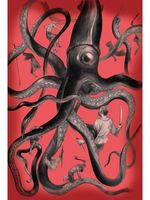
On the surface, Twenty Thousand Leagues is an action-packed tale of adventure and exploration, precursor to and inspiration for Boy’s Ownclassics by British writers such as Rider Haggard, Conan Doyle and John Buchan. In England Verne has been considered mainly a supreme storyteller. The very word “league” (both in English and in its French version) has a ring of the yarn or the tall story. Verne’s inventiveness of plot and boldness of characterisation are matched by a pleasure in daily details that bring his fantasies to life; he is particularly good, as perhaps a French writer should be, on food. Nemo is a gourmet, and Aronnax’s pleasure in the ingeniously contrived delicacies with which he is presented is delightfully portrayed: so is Ned Land’s hunger to get his teeth into a chop. The giraffe steaks and eland barbecues of Rider Haggard and the ham rolls, hard-boiled eggs and ginger beer of Enid Blyton pale in comparison to Captain Nemo’s fillets of emperor fish, soup of turtle, livers of dolphin and anemone jam. Ashore, Ned Land creates a feast of wood pigeons, wild boar, “rabbit kangaroos”, breadfruit and mangoes, a point at which Aronnax confesses that he has “become exactly like the Canadian. Here am I, in ecstasy at freshly grilled pork!”

more here.

Scientists Warn of Rising Oceans From Polar Melt

Justin Gillis and Kenneth Chang in The New York Times:

IceA large section of the mighty West Antarctica ice sheet has begun falling apart and its continued melting now appears to be unstoppable, two groups of scientists reported on Monday. If the findings hold up, they suggest that the melting could destabilize neighboring parts of the ice sheet and a rise in sea level of 10 feet or more may be unavoidable in coming centuries. Global warming caused by the human-driven release of greenhouse gases has helped to destabilize the ice sheet, though other factors may also be involved, the scientists said. The rise of the sea is likely to continue to be relatively slow for the rest of the 21st century, the scientists added, but in the more distant future it may accelerate markedly, potentially throwing society into crisis. The only thing more frightening than what science has learned about climate change is the unanticipated consequences that we have yet to learn. “This is really happening,” Thomas P. Wagner, who runs NASA’s programs on polar ice and helped oversee some of the research, said in an interview. “There’s nothing to stop it now. But you are still limited by the physics of how fast the ice can flow.”

…The new finding appears to be the fulfillment of a prediction made in 1978 by an eminent glaciologist, John H. Mercer of the Ohio State University. He outlined the vulnerable nature of the West Antarctic ice sheet and warned that the rapid human-driven release of greenhouse gases posed “a threat of disaster.” He was assailed at the time, but in recent years, scientists have been watching with growing concern as events have unfolded in much the way Dr. Mercer predicted. (He died in 1987.)

More here.

Tuesday Poem

Architecture

I peer into Japanese characters
as into faraway buildings
cut from the mind’s trees.

In the late afternoon a small bird
shakes a branch, lets drop a white splash.

In the wind, in the rain,
the delicate wire cage glistens,
empty of suet.

Poetry’s not window-cleaning.
It breaks the glass.
.

by Chase Twichell
from The Snow Watcher

Copper Canyon Press, 1998

Monday, May 12, 2014

When are you past your prime?

by Emrys Westacott

ScreenHunter_618 May. 12 12.10Recently I had a discussion with a couple of old friends–all of us middle-aged guys–about when one's powers start to decline. God only knows why this topic came up, but it seems to have become a hardy perennial of late. My friends argued that in just about all areas, physical and mental, we basically peak in our twenties, and by the time we turn forty we're clearly on the rocky road to decrepitude.

I disagreed. I concede immediately that this is true of most, perhaps all, physical abilities: speed, strength, stamina, agility, hearing, eyesight, the ability to recover from injury, and so on. The decline after forty may be slight and slow, but it's a universal phenomenon. Of course, we can become fitter through exercise and the eschewing of bad habits, but any improvement here is made possible by our being out of shape in the first place.

What about mental abilities? Again, it's pretty obvious that some of these typically decline after forty: memory, processing speed, the ability to think laterally, perhaps. Here too, the decline may be very gradual, but these capacities clearly do not seem to improve in middle age. Still, I think my friends focus too much on certain kinds of ability and generalize too readily from these across the rest of what we do with our minds. More specifically, I suspect they view the cognitive capabilities that figure prominently in and are especially associated with mathematics and science as somehow the core of thinking in general. Because of this, and because these capacities are more abstract and can be exercised before a person has acquired a great deal of experience or knowledge, certain abilities have come to be identified with sharpness as such, and one's performance at tasks involving quick mental agility or analytic problem solving is taken as a measure of one's raw intellectual horsepower.

A belief in pure abiity, disentangled from experiential knowledge, underlies notions like IQ. It has had a rather inglorious history, and it has been used at times to justify a distribution of educational resources favouring those who are already advantaged. Today it continues to interest those who prefer to see any assessments or evaluations expressed quantitatively wherever possible–-a preference that also reflects the current cultural hegemony of science. Yet what matters to us, really, shouldn't be abilities in the abstract–how quickly we can calculate, or how successfully we can recall information—but what we actually do with these or any other abilities we possess. Is there any reason to suppose that we make better use of what we've got before we're forty?

Read more »

Sunday, May 11, 2014

Democracies are notoriously short-sighted. With one simple device, we could give unborn citizens a say in our present

Thomas Wells in Aeon:

ScreenHunter_615 May. 11 21.14We already have a device with which to represent the wishes of past generations. Constitutions, the voices of our history, do not chain us to the past, for they can always be outvoted, but they do have a powerful influence on what our societies do now. We lack any such mechanism for considering the interests of future generations. And this is a trickier problem than might at first be obvious. Indeed, the very structure of reality seems to conspire against us.

While we might feel a sense of solidarity with past and future generations alike, time’s arrow means that we must relate to each other as members of a relay race team. This means that citizens downstream from us in time are doubly disadvantaged compared with the upstream generations. Our predecessors have imposed – unilaterally – the consequences of their political negotiations upon us: their economic regime, immigration policies, the national borders that they drew up. But they were also able to explain themselves to us, giving us not only the bare outcome of the US Constitution, for example, but also the records of the debates about the principles behind it, such as the Federalist Papers (1787-88). Such commentaries are a substantial source of our respect for our ancestors' achievements, beyond their status as a fait accompli.

By contrast, future generations must accept whatever we choose to bequeath them, and they have no way of informing us of their values.

More here.

Phineas Gage, Neuroscience’s Most Famous Patient: The True Story

Former 3QD writer, Sam Kean, in Slate:

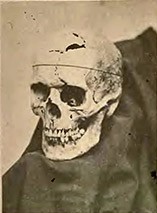
ScreenHunter_614 May. 11 21.09On Sept. 13, 1848, at around 4:30 p.m., the time of day when the mind might start wandering, a railroad foreman named Phineas Gage filled a drill hole with gunpowder and turned his head to check on his men. It was the last normal moment of his life.

Other victims in the annals of medicine are almost always referred to by initials or pseudonyms. Not Gage: His is the most famous name in neuroscience. How ironic, then, that we know so little else about the man—and that much of what we think we know, especially about his life unraveling after his accident, is probably bunk.

The Rutland and Burlington Railroad had hired Gage’s crew that fall to clear away some tough black rock near Cavendish, Vermont, and it considered Gage the best foreman around. Among other tasks, a foreman sprinkled gunpowder into blasting holes, and then tamped the powder down, gently, with an iron rod. This completed, an assistant poured in sand or clay, which got tamped down hard to confine the bang to a tiny space. Gage had specially commissioned his tamping iron from a blacksmith. Sleek like a javelin, it weighed 13¼ pounds and stretched 3 feet 7 inches long. (Gage stood 5-foot-6.) At its widest, the rod had a diameter of 1¼ inches, although the last foot—the part Gage held near his head when tamping—tapered to a point.

Gage’s crew members were loading some busted rock onto a cart, and they apparently distracted him. Accounts differ about what happened after Gage turned his head. One says Gage tried to tamp the gunpowder down with his head still turned, and scraped his iron against the side of the hole, creating a spark. Another says Gage’s assistant (perhaps also distracted) failed to pour the sand in, and when Gage turned back, he smashed the rod down hard, thinking he was packing inert material. Regardless, a spark shot out somewhere in the dark cavity, igniting the gunpowder, and the tamping iron rocketed upward.

The iron entered Gage’s head point-first, striking below the left cheekbone. It destroyed an upper molar, passed behind his left eye, and tore into the underbelly of his brain’s left frontal lobe. It then plowed through the top of his skull, exiting near the midline, just behind where his hairline started.

More here.

Robert Pinsky Interviewed by Heidi Legg

From The Editorial:

ScreenHunter_613 May. 11 21.00From which surroundings do you pull for imagery?

The ocean. And more beachside resort town than fisher folk. I like bars. I like boardwalks. I like to eat the things that live in the ocean. That idea of pleasure-seeking—and also hurricanes—of the New Jersey Shore. Also, the allure and romance of New York: after the ocean, I'd probably say the images and atmosphere of New York and its neighborhoods: that somewhat distant but powerful allure of the metropolis is probably second.

When did you realize you were onto something and recognize that you had a role to play in greatly influencing and chronicling American culture as you have today?

I am proud of the Favorite Poem Project, with the videos and the Poetry Institute for K-12 teachers.

Verbs I may prefer somehow to “influence” and that I guess feel more like what I want to do than “chronicle” might be “see,” “hear,” “remember” “understand,” “make,” “foster,” “encourage,” “understand” and “teach.”

What public opinion would you most like to change?

Arts education, in our public schools— I wish I could foster that. In my judgment, poetry and music are not ornamental activities on the outskirts of human intelligence: they are at its core.

More here.

9/11 Museum Stirs Memories — and Protest

Ira Chemus on History News Network:

9-11-memorial-new-york

Memories of old conflicts often spark new conflicts. So it's no surprise that there's controversy swirling around the National September 11 Memorial Museum, due to open on May 21, rising from the ashes of the fallen World Trade Center. The Museum will offer visitors a short video about another rising: “The Rise of Al-Qaeda”…

The real question that the critics of the video raise is: What story should the museum tell about the men who allegedly perpetrated the horrendous events of 9/11?

To explore that question, let's first consider another that they did not raise: Why tell the story of Al-Qaeda at all?

The museum is part of a memorial complex at the foot of the new One World Trade Center, now officially declared the nation's tallest skyscraper at exactly 1776 feet. That tower and its official height tell a symbolic story of their own, the story that George W. Bush began telling almost immediately after the attack: “The resolve of our great nation is being tested. But make no mistake: We will show the world that we will pass this test.” “This will be a monumental struggle between good and evil. But good will prevail.”

One World Trade Center is a monumental way to say “We have prevailed!”, that (as Ronald Reagan boasted when the U.S. defeated Grenada in 1983) America and all it has represented since 1776 is still “standing tall.” We have passed the test; we and our goodness still tower high above all who would attack or condemn or criticize us.

To tell the whole story, though, there is also (at the foot of the tower) a memorial to the fallen, reminding us how incredibly gruesome the test was and how much blood had to be shed. Yet the memorial's website tells us that “its design conveys a spirit of hope and renewal.” Perhaps it should say “resurrection.” In a country so steeped in Christian traditions, you don't have to be Christian to get the message (at least unconsciously): The horror of wholly unjustified death is made holy because the victim is risen again, high and mighty, right before our eyes.

If the tower and memorial tell the story clearly, why need a museum at all? In part, to make sure no visitor misses the symbolic point of the whole complex. In part, to spell out the story in greater detail.

Most importantly, though, the museum adds a crucial piece to the story: This was a battlefield where good met evil in an unusual but very real kind of war, it says. If the tower and memorial tell us who the good people were (and still are), the museum tells us who were (and still are) the bad guys, the perpetrators of this horror.

The video might have been devoted to the heroic rescue efforts on 9/11 or the immense outpouring of generosity that followed. But instead it is devoted solely to a story that might well be called “Who Was — And Still Is — Our Enemy?” The hall that houses the video is, in a sense, a theater of war. And right next to it, lest we miss the point, there's a gallery with photographs of the 19 alleged hijackers.

Read the rest here.

joining the dots between hot dogs, Van Halen and David Cameron

Steven Levitt and Stephen Dubner in The Guardian:

Illustration-by-Mystery-M-011When put on the spot and asked how we'd behave in a situation that pits a private benefit against the greater good, most of us won't admit to favouring the private benefit. But as history clearly shows, most people generally put their own interests ahead of others'. This doesn't make them bad people, it just makes them human. But this can be frustrating if your ambitions are larger than simply securing some small private victory. Maybe you want to ease poverty, or make government work better, or persuade your company to pollute less, or just get your kids to stop fighting. How are you supposed to get everyone to pull in the same direction when they are all pulling primarily for themselves?

Most people think there is a “right” way to think about solving a given problem and a “wrong” way too. This inevitably leads to a lot of shouting – and a lot of unsolved problems. We'd like to bury the idea that there's a right way and a wrong way, a smart way and a foolish way. The modern world demands that we all think a bit more productively, more creatively, more rationally; that we think from a different angle, with a different set of muscles, with a different set of expectations; that we think with neither blind optimism nor sour scepticism. That we think – ahem – like a freak. Thinking like a freak involves three relatively simple, core ideas. 1. Incentives are the cornerstone of modern life. And understanding them – or, often, deciphering them – is the key to understanding a problem, and how it might be solved. 2. Knowing what to measure, and how to measure it, can make a complicated world less so. There is nothing like the sheer power of numbers to scrub away layers of confusion and contradiction. 3. The conventional wisdom is often wrong.

More here.

Saturday, May 10, 2014

Akhil Sharma recalls the ‘mad excitement’ of his early years as a poor immigrant in America, ‘where everything was possible’. Or was it?

Akhil Sharma in the Financial Times:

Bdbc-433221273701The idea that money reveals things that our words hide has been a part of me for as far back as I can remember. My mother tells a story of how, when my father was a child, his mother, my grandmother, cooked a dish with peas. Peas used to be meaningfully more expensive than other vegetables. This was in India in the 1940s and 1950s. My grandmother, who was a strange angry person, did not like my father as much as she did her youngest son and so she spooned the peas that were in my father’s portion of the dish and put them in my uncle’s.

My family came to America in 1979. I was eight then. To me the best thing about America was its vast wealth. Everything about the country screamed money: how people had cars; the fact that the buildings were tall; that stores turned on electric lights during the day. I remember how during one of our first days in America we opened our mailbox and found a shopping circular printed on coloured paper. We assumed this must have arrived by mistake because in India glossy paper was precious and could be sold for much more money to the recycler than newsprint. When we found it, we grabbed it and hurried back to our apartment.

There were four of us in our family: my parents, my older brother and me. Anup was four years older than I was. We didn’t have much money. I remember once going with Anup and my mother to buy a slice of pizza as a special treat and my mother asking the counter worker to cut the slice into three so we could share. My memories of those early years, though, are of an almost mad excitement. Everything was possible in America and that sense of possibility was like a constant roar. I used to wake in the middle of the night thinking of all the good things that were going to enter my life.

More here.

With a Friend Like Harry: A psychological thriller about a friendly lunatic

Robert Roten in Lariat.org:

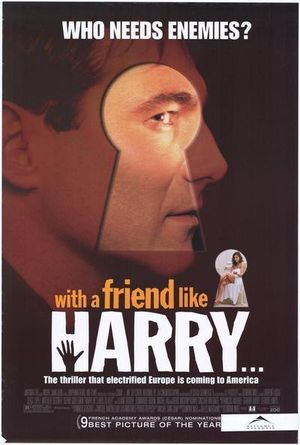
Harry“With a Friend Like Harry” is a complex psychological thriller about an old high school classmate who is more than a little strange. This French film with English subtitles is a little similar to some Hitchcock films like “Strangers on a Train.” It starts out with an average guy, Michel (Laurent Lucas), his wife and kids on a very unpleasant car trip on a very hot day. The kids are screaming in the back seat and one of the kids is repeatedly kicking the back of her father's seat while he is trying to concentrate on driving. There is no air conditioning in the car, and the car itself is making a lot of noise. Michel decides he's had enough and decides to go back home rather than continue on the trip to his parent's house. Then he meets an old high school classmate in a public rest room. Harry Ballestero (Sergi López) remembers Michel very vividly, but Michel has forgotten Harry altogether. It turns out that Harry is a big admirer of Michel's writings in some high school publications. He has even committed one of Michel's poems to memory. When he finds out that Michel has given up writing and he sees how family concerns are weighing on him, Harry decides to “help” Michel free himself from his worries and get back to writing. Harry and his girlfriend, Plum (Sophie Guillemin) stay at Michel's country home and Michel begins to learn more about Harry. He finds out that Harry is used to getting exactly what he wants, exactly when he wants it. He will do anything to get what he wants and he will not compromise. Harry is also rich, having inherited his father's estate, and can be quite generous. Harry buys a car to replace Michel's worn out vehicle. It is just part of Harry's plan to help Michel. Not all of Harry's plans are so benign.

The complexity of the plot has to do with the way Michel is changed by Harry.

More here. (Note: I will periodically post reviews of older films that I have recently enjoyed.)

INTERVIEW WITH WALTER KIRN

Tom Barbash in The Rumpus:

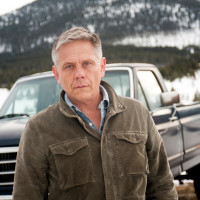
Walter-Kirn_Lynn-Donaldson-200x200Walter Kirn is one of those writers you read for the company of his mind. He is forever interesting, pointed, a literary bad-ass. If he was on a rival debate squad, I would run the other way. His range is capacious. He’s the author of five novels, a terrific story collection, a searing memoir,Lost In The Meritocracy, which lays to waste the myths about an Ivy League education. Two of his novels,Thumbsucker and Up in the Air, were made into excellent films, the latter nominated for six Oscars including Best Picture. He’s penned campaign coverage for The New Republic andGQ, driven the California Coast with Robert Downey, Jr. for a Rolling Stone cover story. And still he might be best known for his tough and intelligent book reviews over the years for New York Magazine and the New York Times Book Review.

Kirn’s latest book, Blood Will Out, is the story of an improbable acquaintanceship he shared with a man who called himself Clark Rockefeller, and who was convicted of murdering a man in Southern California. It’s a first-rate book about crime and class, identity, friendship, manipulation, and the difficult job of being a writer. It may well become a classic.

The Rumpus: One of the most interesting aspects of the book is the extent to which you explore your own role in the story, your desire for an adventure, and your self-described naïve acceptance of Clark’s mythology. When, in the course of writing the book, did you realize it would be in part about you? Or did you always intend to make it in part a memoir?

Walter Kirn: I always knew the book would largely be about me. It’s the anatomy of a con, and every deception is a dance, two-sided. Clark Rockefeller discerned in me—almost instantly, I have a hunch—a set of tendencies and vulnerabilities that allowed him to take me in. First, there was my social insecurity. I grew up in rural Minnesota and then went off to Princeton, where I didn’t feel I was treated very well. Being friends with a Rockefeller seemed to heal these wounds. Also, I’m a sucker for a good story, and he was a storyteller above all else.

More here.

NASA Study Concludes When Civilization Will End, And It’s Not Looking Good for Us

Tom McKay in PolicyMic:

ScreenHunter_612 May. 10 17.48Civilization was pretty great while it lasted, wasn't it? Too bad it's not going to for much longer. According to a new study sponsored by NASA's Goddard Space Flight Center, we only have a few decades left before everything we know and hold dear collapses.

The report, written by applied mathematician Safa Motesharrei of the National Socio-Environmental Synthesis Center along with a team of natural and social scientists, explains that modern civilization is doomed. And there's not just one particular group to blame, but the entire fundamental structure and nature of our society.

Analyzing five risk factors for societal collapse (population, climate, water, agriculture and energy), the report says that the sudden downfall of complicated societal structures can follow when these factors converge to form two important criteria. Motesharrei's report says that all societal collapses over the past 5,000 years have involved both “the stretching of resources due to the strain placed on the ecological carrying capacity” and “the economic stratification of society into Elites [rich] and Masses (or “Commoners”) [poor].” This “Elite” population restricts the flow of resources accessible to the “Masses”, accumulating a surplus for themselves that is high enough to strain natural resources. Eventually this situation will inevitably result in the destruction of society.

More here.