Evangelist-in-chief: Jimmy Carter redeemed the nation from the venality of the Nixon years

Jonathan Yardley in The Wshington Post:

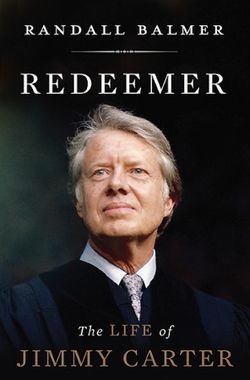
RedeemerIn Randall Balmer’s admirably succinct if thematically debatable biography, Jimmy Carter enters the White House in January 1977, three years after the resignation in disgrace of Richard M. Nixon, on a high if not downright inspiring note. “Carter represented a clean break with the recent past,” Balmer writes, “an opportunity to redeem the nation.” More than 100 pages later, in his concluding paragraph, Balmer returns to the theme, calling Carter “the man whose improbable election in 1976 redeemed the nation from the sins of Watergate.”

Like Carter, Balmer is a man of strong evangelical convictions — he teaches at Dartmouth, with an emphasis on American religious history — and he has framed this biography around the themes those convictions suggest. Inasmuch as Balmer is reasonably objective and unsentimental about Carter’s record as president, it would be unfair to say that he views Carter as a savior (a view that Carter himself probably would happily embrace), but there is a willingness here to accept Carter’s religiosity on its own terms, to make token acknowledgment of his “strain of self-righteousness” and “fierce competitiveness.” Balmar lays greatest emphasis on what he clearly views as the depth and sincerity of Carter’s beliefs and the degree to which those beliefs shaped his public and private lives, carrying on the cause of those “progressive evangelists [who] in the nineteenth century interpreted the prophetic calls for justice as a mandate for racial reconciliation and gender equality.”

More here.

Marxism and tradition in 1960s India

A.S. Byatt in The Guardian:

Clifford-Harper-illustrat-008Neel Mukherjee's very ambitious and very successful novel is set in Calcutta and the ricefields on the edge of the jungle in the west of West Bengal. It takes place in the second half of the 1960s and centres on the large and relatively wealthy Ghosh family, whose head, Prafullanath, owns various paper mills. The eldest grandson, Supratik, has left home and joined the CPI(M) (Communist Party of India, Marxist), and is working secretly to mobilise the peasants against the landlords. Letters from him to an unnamed correspondent form one thread of narrative. The other is an intricate account of events and relationships on the various floors of the Ghosh house. There are tragedies and comedies, deaths and births, disasters and feasts. The story is marked by marriages, and the failure of Chhayha to marry because she is too dark-skinned. The cast is huge and the reader spends time, at one point or another, with most of them. It takes a while to get to know all the men, women and children, but the story is always gripping, and there are various time-bombs that suddenly change the way we see the book's whole world.

One of Mukherjee's great gifts is precisely his capacity to imagine the lives of others. He can move from inside one head to inside another in a conversation or conflict and take the reader with him. He isn't really an omniscient narrator, there is no authorial voice – just an imagination that is more than adequate to its task. There is a scene in which Prafullanath goes in a large car to confront the massed and angry workers at a mill he has closed. Mukherjee sees this dangerous moment from every point of view – the workers who have not been paid for a year, the factory owner whose world has slipped out of his grip, Prafullanath's anxious sons. One of these, a hopeful writer, nevertheless manages to think up an ornate metaphor of “a fully reared-up snake, hood engorged, waiting to strike” for the workers, and to wonder if he could use it. The reader does not lose sight of the moral rights of the workers, but must imagine so much more.

More here.

On a Parish Death Notice

Justin E. H. Smith in his own blog:

6a00d83453bcda69e201a511ba62b2970c-400wi‘Nature’, in common usage, can mean a number of different things. Sometimes it refers to the external world, and more particularly to the earth’s surface, and more particularly still to that part of the earth’s surface made up of biomass. In the same general conceptual vicinity, we also find the notion of nature as environment, as the surrounding medium through which we move. At other times, ‘nature’ refers to the particular nature of a given being, or what is sometimes called ‘essence’– what it is to be a particular entity rather than another.

The first sense of ‘nature’ reflects the word’s etymology, which is rooted in the Latin verbnasci, ‘to be born’. Nature, on this understanding, is that which undergoes generation and growth (and generally also corruption or death). This connection between nature and birth is similarly reflected in the Slavic and many other Indo-European languages (in Russian, for example, nature is priroda, connected to the verb rodit’sia, ‘to be born’; in the Sanskrit praktiby contrast the verbal root has to do more with active creation than with generation). If less evidently, the concepts of generation and growth are also embedded in the Greek term physis, from which of course we get both ‘physical’ and what is sometimes held to lie beyond this, the ‘metaphysical’.

More here.

Mr. Politically Correct Obama, Meet Your Opposite, India’s Mr. Modi

Tunku Varadarajan in The Daily Beast:

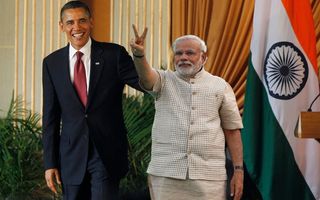
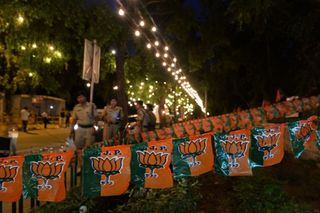
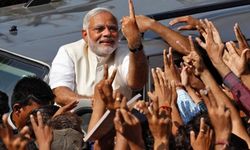
1400357321004.cachedWhen Barack Obama was made aware that Narendra Modi would be India’s next prime minister, the chances are that he moaned softly to himself…and cringed.

India’s voters had brought to power a man who is not permitted to visit the United States, having been denied a U.S. visa in 2005 on account of a State Department determination that he had violated religious freedoms in the Indian state of Gujarat. (Some 2,000 Muslims had died in riots that scarred Gujarat in 2002. Modi was the state’s chief minister at the time, and his critics hold him responsible for the deaths.) The visa ban was still in place when Modi was nominated last September to lead the Bharatiya Janata [Indian People’s] Party into the elections; and most awkwardly for Obama, the ban was still technically in place on the day of his victory. American diplomacy has been decidedly maladroit.

As if jolted awake by the obtuseness of his own State Department, Obama invited Modi to visit the U.S. “at a mutually agreeable time” when he called the Indian on Saturday to congratulate him on his triumph.

A meeting between the two men, when it occurs, could be fascinating to observe. Obama and Modi are from two different planets, and each, in his heart, is likely to have vigorous contempt for the other. The former is an exquisitely calibrated product of American liberalism, ever attentive to such notions as “inclusiveness.” He is the acme of political correctness (notwithstanding the odd drone directed at “AfPak”). Modi, by contrast, is a blunt-spoken nationalist, opposed to welfare, and to the “appeasement” of minorities.

More here.

Steven Pinker: ‘What could be more interesting than how the mind works?’

Colleen Walsh in the Harvard Gazette:

Q: Can you tell me about your early life? Where did you grow up and what did your parents do?

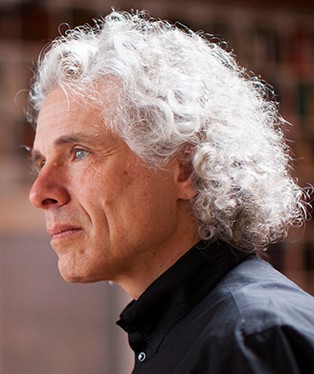
ScreenHunter_628 May. 18 18.56A: I grew up in Montreal, as part of the Jewish minority within the English-speaking minority within the French-speaking minority in Canada. This is the community that gave the world Leonard Cohen, who my mother knew, and Mordecai Richler, who my father knew, together with William Shatner, Saul Bellow, and Burt Bacharach. I was born in 1954, the peak year of the baby boom. My grandparents came to Canada from Eastern Europe in the 1920s, I surmise, because in 1924 the United States passed a restrictive immigration law. I can visualize them looking at a map and saying “Damn, what’s the closest that we can get to New York? Oh, there’s this cold place called Canada, let’s try that.” Three were from Poland, one from what is now Moldova. My parents both earned college degrees. My father had a law degree, but for much of his career did not practice law. He worked as a sales representative and a landlord and owned an apartment-motel in Florida. But he reopened his law practice in his 50s, and retired at 75. Like many women of her generation, my mother was a homemaker through the ’50s and ’60s. In the 1970s she got a master’s degree in counseling, then got a job and later became vice principal of a high school in Montreal.

More here.

Always Hungry? Here’s Why

18OBESITY-master495

David Ludwig and Mark Friedman in the NYT (image by Sarah Illenberger):

FOR most of the last century, our understanding of the cause of obesity has been based on immutable physical law. Specifically, it’s the first law of thermodynamics, which dictates that energy can neither be created nor destroyed. When it comes to body weight, this means that calorie intake minus calorie expenditure equals calories stored. Surrounded by tempting foods, we overeat, consuming more calories than we can burn off, and the excess is deposited as fat. The simple solution is to exert willpower and eat less.

The problem is that this advice doesn’t work, at least not for most people over the long term. In other words, your New Year’s resolution to lose weight probably won’t last through the spring, let alone affect how you look in a swimsuit in July. More of us than ever are obese, despite an incessant focus on calorie balance by the government, nutrition organizations and the food industry.

But what if we’ve confused cause and effect? What if it’s not overeating that causes us to get fat, but the process of getting fatter that causes us to overeat?

The more calories we lock away in fat tissue, the fewer there are circulating in the bloodstream to satisfy the body’s requirements. If we look at it this way, it’s a distribution problem: We have an abundance of calories, but they’re in the wrong place. As a result, the body needs to increase its intake. We get hungrier because we’re getting fatter.

It’s like edema, a common medical condition in which fluid leaks from blood vessels into surrounding tissues. No matter how much water they drink, people with edema may experience unquenchable thirst because the fluid doesn’t stay in the blood, where it’s needed.

More here.

Sunday Poem

Teeth
—for cousin Gedion, who drove us to Massawa
.

Two sisters ride down with us.
It is liberation day in Massawa.

The older sister is the color of injera; her teeth are big
& stuck out.
The younger sister is a cinnamon stick.

Their almond eyes are the same.
Ink black hair falls beautiful down both their backs.

I see that you love one of them & change my mind
many times about who I think it is.

Months later, I will show their photographs to my father
who will laugh & say he knows.

“It is this one,” he will say, surely, pointing
to the woman whose teeth stay, tame, in her mouth.

But what man would choose a woman
whose mouth looks stronger than his hands?

Know, Cousin, I pray there is love
between you & the older one
whose teeth might be bullets of ivory;

I imagine from this mouth:
kites,
rain,
ax equal to lace, the yellow & lick
of a jar filled with
the sweet of stinging bees.
.

by Aracelis Girmay

Saturday, May 17, 2014

India’s Election Isn’t as Historic as People Think

Del6320957

Adam Ziegfeld in The Washington Post's The Monkey Cage:

First, as of the most recent counting, almost 70 percent of Indians did not vote for the BJP. Commentators such as Max Fisher at Vox claim that the BJP “dramatically … swept the vote.” In fact, the BJP won about 31 percent of the vote, a new high for the party. Although this is the first national election in which the BJP has ever won more votes than any other party, less than a third of Indians voted for it. The BJP’s legislative majority is largely a function of India’s single-member district (SMD) electoral system, the same system used in American, British, and Canadian legislative elections. In an SMD system, votes rarely translate proportionally into seats. This system rewards parties that are the largest in each electoral district. The BJP’s vote is patchily distributed across India, which works to its advantage. In a number of states where it is disproportionately strong, the BJP was, in district after district, the largest party, even if not always by a very large margin. For example, in India’s largest state, Uttar Pradesh, the BJP won about 42 percent of the vote. However, it is likely to win 71 of Uttar Pradesh’s 80 seats (almost 90 percent) because the remaining 58 percent of the vote was split across a number of different parties.

Meanwhile, in states where the BJP won few seats, it did quite poorly. Thus, relatively few of the BJP’s votes were wasted—that is, cast in electoral districts where the party ultimately failed to win a legislative seat. As a result, the party won a legislative majority on a fairly small vote share. Previously, no party had won a legislative majority with less than 40 percent of the vote. Meanwhile, Congress suffered an ignominious defeat in part because its vote was fairly evenly distributed across the country. Coming in second or third place across many electoral districts brings no electoral reward. In this election, Congress looks a lot like the Liberal Democrats in Britain—a party that typically wins respectable vote shares in lots of districts but fails to win many seats.

More here.

The Case for ‘Soft Atheism’

Gary Gutting interviews Philip Kitcher in the NYT's The Stone:

G.G.: So you reject all religious doctrines, but you also say that you “resist the claim that religion is noxious rubbish to be buried as deeply, as thoroughly and as quickly as possible.” Why is that?

P.K.: The past decade has seen some trenchant attacks on religion, and I agree with many points made by people like Daniel Dennett and Richard Dawkins. (Dennett seems to me clearly the most sophisticated of the “new atheists”; much as I admire Dawkins’s work in evolutionary biology and in enhancing the public understanding of science, he is more often off-target in his diatribes against religion.) But these atheists have been rightly criticized for treating all religions as if they were collections of doctrines, to be understood in quite literal ways, and for not attending to episodes in which the world’s religions have sometimes sustained the unfortunate and campaigned for the downtrodden. The “soft atheism” I defend considers religion more extensively, sympathizes with the idea that secularists can learn from religious practices and recommends sometimes making common cause with religious movements for social justice.

G.G.: So on your view, Dawkins and company don’t refute all forms of religion, just unsophisticated literal assertions of religious claims.

P.K.: Yes, I think there’s a version of religion, “refined religion,” that is untouched by the new atheists’ criticisms, and that even survives my argument that religious doctrines are incredible. Refined religion sees the fundamental religious attitude not as belief in a doctrine but as a commitment to promoting the most enduring values. That commitment is typically embedded in social movements — the faithful come together to engage in rites, to explore ideas and ideals with one another and to work cooperatively for ameliorating the conditions of human life.

More here.

Fathers of Revolution

Tamman-Azzam-Freedom-GraffitiII-Peace_600_wide

Wendy Pearlman in Guernica (Image by Tammam Azzam):

Statistics tell us that violence in Syria has left at least 150,000 dead, 9 million forced from their homes, and 9.3 million in need of humanitarian aid. But by the time numbers are published they are already out of date. In the West, the Syrian conflict connotes sectarian war, humanitarian crisis, Islamic extremism, and chemical weapons. It is easy to forget that, for many, this nightmare began with a dream.

I have interviewed more than 150 Syrian refugees, and they describe the start of protests in the spring of 2011 as their break through a barrier of fear. They raised their voices against a system that denied them voice. Though initial demands were only for reform, the regime of President Bashar al-Assad responded ferociously.

On my first trip to Jordan in 2012, I met displaced Syrians who had endured bombardment and buried loved ones, yet still retained a glimmer of optimism. A grandmother in the Zaatari refugee camp, then just rows of tents in the desert, expected to return to Syria any day. Insisting that I visit her there, she explained how to catch the bus from the Damascus airport to her village and carefully dictated her Syrian landline number.

When I returned in 2013, her village no longer existed. The Zaatari camp had quadrupled to become the fourth-largest city in Jordan, though one surrounded by a barbed-wire fence through which refugees were forbidden to exit. In Jordan, and then Turkey, I found that refugees’ descriptions of Syria frequently ended with the single verb “rah,” meaning to be gone and finished. A father from Homs traced a mental map of his old neighborhood, from the alley shortcuts he took in elementary school to the hospital where his daughter was born. “Rah,” he said, shaking his head. Nothing remained but rubble.

More here.

On the Job: Debating Sex Work

Ferguson-Banner

Michaele L. Ferguson reviews Melissa Gira Grant's Playing the Whore: The Work of Sex Work in the Boston Review (image by Vittorio Sciosia):

To Grant, the empowered sex worker is just as fantastic as the victimized whore. She argues that we need to dispel fantasies of prostitution altogether, to resist seeing sex workers as either wholly exploited or wholly empowered by the work they do. Sex workers, as workers in any field, like certain things about their jobs and dislike other things. Sex workers should have, with everyone else, the ability to voice a complicated and ambivalent relationship to their labors. “There must,” Grant writes, “be room for them to identify, publicly and collectively, what they wish to change about how they are treated as workers without being told that the only solution is for them to exit the industry.” They must be able to talk about their working conditions honestly and openly, without having to fit their experiences into someone else’s fantasy of prostitution, and without fearing police surveillance and incarceration in response.

But even Grant is not immune to the pull of fantasy. She makes potent arguments against victimization and control, but her demands on behalf of professionalism leave a false sense that sex work, because it is just another job, is unassailable. Pertinent avenues of criticism are foreclosed. In Grant’s imagination, we don’t ask what is actually good for women, we don’t ask why women predominate in sex work, and we don’t ask about which desires empower and which create harmful expectations that reinforce women’s vulnerability.

Grant urges us to “see off-the-clock sex workers as whole, as people who aren’t just here to fuck.” Sex workers have lives, lovers, families, desires, needs. Their work—much of which involves marketing, building Web sites, scheduling, communicating with clients, and managing money—is not reducible to sex. And not all those who perform sex work do so full-time, or even more than once or twice. Many have complicated work histories including both sex work and other forms of wage labor. If we can view sex workers as whole people, then we can also appreciate the agency exercised in their work.

Sex workers operate in a broader, structural context where “the labor market, the privatization of education and healthcare, and debt” help to explain why someone might find sex work an attractive option. Grant poignantly suggests that “vital information” about how to do sex work be made widely available so that anyone can access it, “should they ever be in the situation of explicitly trading sex for something they need.”

In other words, prostitution is not the result of a moral crisis but of a money crisis.

More here.

Narendra Modi and the new face of India

Pankaj Mishra in The Guardian:

ModiIn A Suitable Boy, Vikram Seth writes with affection of a placid India's first general election in 1951, and the egalitarian spirit it momentarily bestowed on an electorate deeply riven by class and caste: “the great washed and unwashed public, sceptical and gullible”, but all “endowed with universal adult suffrage”. India's 16th general election this month, held against a background of economic jolts and titanic corruption scandals, and tainted by the nastiest campaign yet, announces a new turbulent phase for the country – arguably, the most sinister since its independence from British rule in 1947. Back then, it would have been inconceivable that a figure such as Narendra Modi, the Hindu nationalist chief minister of Gujarat accused, along with his closest aides, of complicity in crimes ranging from an anti-Muslim pogrom in his state in 2002 to extrajudicial killings, and barred from entering the US, may occupy India's highest political office.

Modi is a lifelong member of the Rashtriya Swayamsevak Sangh (RSS), a paramilitary Hindu nationalist organisation inspired by the fascist movements of Europe, whose founder's belief that Nazi Germany had manifested “race pride at its highest” by purging the Jews is by no means unexceptional among the votaries of Hindutva, or “Hinduness”. In 1948, a former member of the RSS murdered Gandhi for being too soft on Muslims. The outfit, traditionally dominated by upper-caste Hindus, has led many vicious assaults on minorities. A notorious executioner of dozens of Muslims in Gujarat in 2002 crowed that he had slashed open with his sword the womb of a heavily pregnant woman and extracted her foetus. Modi himself described the relief camps housing tens of thousands of displaced Muslims as “child-breeding centres”. Such rhetoric has helped Modi sweep one election after another in Gujarat.

More here.

What Are the Draws and Drawbacks of Success for Writers?

Mohsin Hamid in The New York Times:

Bookends-Mohsin-Hamid-tmagSFWriting fiction is, in many ways, like a religion. It is a daily practice, a way of life, a set of rituals, an orientation toward the universe. It is a communion with the intangible, a bridge between the finite and infinite. There’s a reason religions use stories to communicate, and it’s the same reason religions persecute storytellers: Stories are powerful. They are how we make sense of what cannot be known. So imagine a situation in which you were paid to pray, and in which a few of the devout were given huge payouts for their devotion. This does happen. It corrupts religions. And it corrupts writers too. In the words of the poet Jalaluddin Rumi: “If you want money more than anything, / you’ll be bought and sold. / If you have a greed for food, / you’ll be a loaf of bread. / This is a subtle truth: / whatever you love, you are.”

It’s a radical thought, but I wonder whether in some way we professional fiction writers might be better off if, like poets of old, we were to make nothing from our writing and had to earn our living elsewhere. Radical or not, it’s how most writers actually live today, working their day jobs, and writing — unpaid, alone, with passion — at night.

More here.

who are the schwenkfelders?

ID_LF_GOLBE_SHWENK_AP_001Stefany Anne Golberg at The Smart Set:

No one is quite sure just what a Schwenkfelder is these days, including many of those who call themselves Schwenkfelders. The number of these people is so very small, and gets smaller the more you investigate. It all began with the spiritual awakening of Silesian nobleman Caspar Schwenckfeld von Ossig in 1518 or maybe 1519. (How many American stories begin with a spiritual awakening.) Schwenckfeld had gotten fired up by the teachings of Martin Luther and was inspired to take Luther’s ideas further. The complicated theology of Caspar Schwenckfeld — described in Schwenckfeld’s Concept of the New Man as “a skillful blending of Johannine mysticism and Pauline Anthropology, modified by the sifting process of fifteen hundred years of Christian theology” — boiled down to this: That people could communicate directly with God, that true spirituality didn’t need all the machinery of hierarchies and priests and sacraments, that church was not a place but a community. Schwenckfeld wanted a theological system that would appeal to all Christians — he dreamed of a day when the warring factions of Europe would become brothers and worship as one. Schwenckfeld sent books and letters to Luther with the details of his discoveries, certain that the theologian would be interested. Schwenckfeld called it the “Middle Way.” There are several references to Caspar Schwenckfeld in the private letters of Martin Luther, in which Luther calls Schwenckfeld a simpleton and a maniac, and his Middle Way the “spue” of the devil. How frustrating it must have been for poor Martin Luther to see his proposals taken to such extremes. In time, Luther’s view of Schwenckfeld would be shared by the Silesian authorities. They would label the hard-of-hearing and gentle Schwenckfeld a heretic and eventually force him into a polite, voluntary exile. It is well known that Schwenckfeld prayed for Martin Luther every day, for all the days of his life.

more here.

Ivan Klíma’s crazy century

The-opposite-of-Kundera---010Ian Sansom at The Guardian:

Kafka's The Trial; Hašek's The Good Soldier Švejk; Kundera's The Joke; Bohumil Hrabal's Dancing Lessons for the Advanced in Age; Josef Škvorecký's Lieutenant Boruvka novels: one might be forgiven for thinking that all Czech literature is somehow synonymous with absurdism, dark humour and the erotic sublime. But this is too simplistic. Do Austen, Dickens and Larkin represent Eng lit? “I don't like it when people make generalisations about nations or ethnicities,” writes the novelist Ivan Klíma in his new memoir, which covers his life from early childhood in Prague to the Velvet Revolution in 1989, “claiming that Germans are disciplined, Czechs have a sense of humour, the English are tight-laced, the Russians are drunkards, Jews are businessmen and Gypsies are thieves”. Just as there is more to English literature than marriage plots, social panoramas and patiently lowered horizons, there is more to Czech literature than long jokes and the aesthetics of the forlorn. There is, for example, the work of Klíma.

With his once-fashionable shaggy Beatles haircut and his ever-serious and scholarly mien, Klíma looks well meaning and yet utterly out of touch – like a university professor. Yet Philip Roth once described Klíma as “my principal reality instructor”.

more here.

books on the Civil Rights Act of 1964

18BOYLE-master675-v3Kevin Boyle at The New York Times:

Over the past century, Congress has passed only a handful of truly transformative pieces of legislation. The Social Security Act comes to mind, as do the G.I. Bill, the Marshall Plan, the laws that created a mammoth military and laid down a web of highways, and the reforms that reopened the nation to immigration. Visionary laws — each and every one — meant to achieve policy aims of striking originality.

Then there’s the Civil Rights Act of 1964. Its provisions were simple enough: The key sections outlawed the segregation of public spaces and prohibited employers and federal agencies from discriminating on the basis of race, sex or national origin. But the act’s significance extended far beyond its particulars, its purpose defined as much by morality as policy. Drafted in the midst of a crisis created by the courage of children, pushed through the Senate past the defenders of an indefensible social order, it marked one of those extraordinary moments when the promise and practice of equality align and democracy is affirmed.

more here.