Subaltern Mythologies?

Editorsnote

Vivek Chibber in Jacobin responds to Bruce Robbins review of his book Postcolonial Theory and the Specter of Capital in n+1:

Bruce Robbins’ review in the latest issue of N+1 falls somewhere in-between. His tone for most of it is respectful, sometimes generous. He quite ably sets the context for the book’s arguments and tries to lay out what is at stake. In this, he rises above the mud-slinging that has been the resort of some of his colleagues. But once Robbins sets out his own criticisms, the essay degenerates into a series of distortions and misconceptions. What makes them interesting, and worth responding to, is that they converge with misgivings that even sympathetic readers have expressed.

The crux of Robbins’ criticism comes at the end of his review, and centers around three issues: whether my views of the English Revolution of 1640 and/or 1688 are defensible; whether my framework can apprehend the difference between East and West; and whether my materialism is really a restatement of rational choice theory. On all three counts his criticisms are mistaken.

More here. Robbins responds in n+1.

Culture as Opportunity?

Bytyci_intro_468w

Hamze Bytyci in Eurozine:

Art is here to provide individuals the freedom to express their own feelings, views or identity without having to give too much heed to social conventions. Yet when it is about the art and culture of Sinti and Roma, the situation seems to be a bit more complex. Here there are a number of prejudices, stereotypes or simply certain expectations that come to bear, be it on the part of the majority society or that of members of this minority itself. They influence not only the everyday life of many Sinti and Roma, but also, possibly their artistic production, be it only through the compulsion of having to react to and reflect on the overall situation.

In order to be able to assess the social effect that the art and culture work of Roma and Sinti has, it is necessary to first take at least a cursory look at the situation of the Sinti and Roma in Germany. This, however, proves difficult since there are no official studies on the situation of the non-German Roma in Germany. The following information is thus based on two studies that focus only on the situation of the German Sinti and Roma. It can be assumed that the situation of the non-German Roma – in particular among the Roma who have moved to Germany from Romania and Bulgaria – is even graver, especially in the field of education and in terms of economic and social factors. With regard to discrimination and racism, we can, by contrast, assume that the experience of the German Sinti and Roma is not much different from that of the non-German Roma.

More here.

The 100 best novels: No 17 – Moby-Dick

Robert McCrum in The Guardian:

Moby-Dick-011On 5 August 1850 a party of writers and publishers climbed Monument Mountain in Massachusetts, during the American equivalent of a hike in the Lakes. Among the literati on this excursion were Nathaniel Hawthorne, 46, author of The Scarlet Letter (No 16 in this series), a recently published bestseller (although a term not yet in use), and the young novelist Herman Melville, who, after a very successful debut (Typee), was struggling to complete an unwieldy coming-of-age tale about a South Seas whaler. Melville, who was just 31, had never met Hawthorne. But after a day in the open air, a quantity of champagne, and a sudden downpour, the younger man was enraptured with his new friend, who had “dropped germinous seeds into my soul”. Rarely in Anglo-American literature has there been such a momentous meeting. It was the attraction of opposites. Hawthorne, from an old New England family, was careful, cultivated and inward, a “dark angel”, according to one. Melville was a ragged, voluble, romantic New Yorker from mercantile stock. Both writers had hovered on the edge of insolvency and each was a kind of outsider. A fervent correspondence ensued. Melville, indeed, became so infatuated that he moved with his wife and family to become Hawthorne's neighbour. Thus liberated, fulfilled, and inspired to say “NO! in thunder, to Christianity”, he completed Moby-Dick; or, The Whale, in the spring of 1851. After an early reading of the manuscript, Hawthorne acclaimed it in a letter that remains, tantalisingly, lost. All we have is Melville's ecstatic response (“Your heart beat in my ribs and mine in yours, and both in God's…”), and, subsequently, a dedicatory declaration of Melville's admiration for Hawthorne's “genius” at the front of Moby-Dick (the first edition hyphenated the whale's name). So how homoerotic was this friendship? No one will ever know; it remains one of the mysteries of American letters. All we can say for certain is that, after climbing Monument Mountain, Melville adopted Hawthorne's idea of the “romance” as a mixed-genre, symbolic kind of fiction, and found his creative genius somehow released in the making of his new book.

And that is everything, because Moby-Dick is, for me, the supreme American novel, the source and the inspiration of everything that follows in the American literary canon. I first read it, inspired by my sixth-form English teacher, Lionel Bruce, aged about 15, and it's stayed with me ever since. Moby-Dick is a book you come back to, again and again, to find new treasures and delights, a storehouse of language, incident and strange wisdom. Moby-Dick is – among some fierce contenders which will appear later in this series – the great American novel whose genius was only recognised long after its author was dead. From its celebrated opening line (“Call me Ishmael”) it plunges the reader into the narrator's quest for meaning “in the damp, drizzly November of my soul”.

More here. (Note: For Professor John Collins who is re-reading Moby Dick as a result of our recent conversation about Melville. It remains my favorite novel to which I return over and over in order to, among other things, understand the storms in the souls of men that make them go whaling)

Human–microbe mismatch boosts risk of stomach cancer

Ed Yong in Nature:

WEB_1_14501_42-31108440The Colombian town of Tuquerres, nestled high in the Andes Mountains, has one of the highest rates of stomach cancer in the world: about 150 cases per 100,000 people. Meanwhile in the coastal town of Tumaco, just 200 kilometres away, the equivalent rate is only around 6 in 100,000. The main cause of stomach cancer is Helicobacter pylori, a bacterium that infects half the world’s population. It is usually harmless, but occasionally leads to tumours. H. pylori has been infecting humans since our origins in Africa, and diversified with us as we spread around the world. But in places such as South America, the arrival of European colonists has broken this long history of co-evolution, leaving some people with H. pylori strains that do not share their ancestry.

Now, a team of scientists led by Pelayo Correa and Scott Williams at Vanderbilt University Medical Center in Nashville, Tennessee, has shown that this mismatch can turn a normally benign infection into a potentially carcinogenic one. When analysed together, the genomes of hosts and microbes give a better prediction of the risk of disease than when considered alone, the team found. Their results are published in Proceedings of the National Academy of Sciences1. “A lot of people have H. pylori, but very few have bad outcomes. Is that due to the organism or the host?” says Martin Blaser, a microbiologist at New York University School of Medicine. “This paper provides evidence that the fit is important. It’s a very nice advance.”

More here.

Wednesday Poem

Aboriginal Landscape

You’re stepping on your father, my mother said,
and indeed I was standing exactly in the center
of a bed of grass, mown so neatly it could have been
my father’s grave, although there was no stone saying so.

You’re stepping on your father, she repeated,
louder this time, which began to be strange to me,
since she was dead herself; even the doctor had admitted it.

I moved slightly to the side, to where
my father ended and my mother began.

The cemetery was silent. Wind blew through the trees;
I could hear, very faintly, sounds of  weeping several rows away,
and beyond that, a dog wailing.

At length these sounds abated. It crossed my mind
I had no memory of   being driven here,
to what now seemed a cemetery, though it could have been
a cemetery in my mind only; perhaps it was a park, or if not a park,
a garden or bower, perfumed, I now realized, with the scent of roses 
douceur de vivre filling the air, the sweetness of  living,
as the saying goes. At some point,

it occurred to me I was alone.
Where had the others gone,
my cousins and sister, Caitlin and Abigail?

By now the light was fading. Where was the car
waiting to take us home?

I then began seeking for some alternative. I felt
an impatience growing in me, approaching, I would say, anxiety.
Finally, in the distance, I made out a small train,
stopped, it seemed, behind some foliage, the conductor
lingering against a doorframe, smoking a cigarette.

Do not forget me, I cried, running now
over many plots, many mothers and fathers 

Do not forget me, I cried, when at last I reached him.
Madam, he said, pointing to the tracks,
surely you realize this is the end, the tracks do not go further.
His words were harsh, and yet his eyes were kind;
this encouraged me to press my case harder.
But they go back, I said, and I remarked
their sturdiness, as though they had many such returns ahead of them.

You know, he said, our work is difficult: we confront
much sorrow and disappointment.
He gazed at me with increasing frankness.
I was like you once, he added, in love with turbulence.

Now I spoke as to an old friend:
What of  you, I said, since he was free to leave,
have you no wish to go home,
to see the city again?

This is my home, he said.
The city — the city is where I disappear.


by Louise Glück
from Poetry, Vol. 203, No. 3, December, 2013

What scientific idea is ready for retirement?

That is Edge's annual question for this year. Here is my sister Azra's response:

Mouse Models

ScreenHunter_496-Jan.-15-09An obvious truth that is either being ignored or going unaddressed in cancer research is that mouse models do not mimic human disease well and are essentially worthless for drug development. We cured acute leukemia in mice in 1977 with drugs that we are still using in exactly the same dose and duration today in humans with dreadful results. Imagine the artificiality of taking human tumor cells, growing them in lab dishes, then transferring them to mice whose immune systems have been compromised so they cannot reject the implanted tumors and then exposing these “xenografts” to drugs whose killing efficiency and toxicity profiles will then be applied to treat human cancers. The inherent pitfalls of such an entirely synthesized non-natural model system have also plagued other disciplines.

A recent scientific paper showed that all 150 drugs tested at the cost of billions of dollars in human trials of sepsis failed because the drugs had been developed using mice. Unfortunately, what looks like sepsis in mice turned out to be very different than what sepsis is in humans. Coverage of this study by Gina Kolata in the New York Times incited a heated response from within the biomedical research community, “There is no basis for leveraging a niche piece of research to imply that mice are useless models for all human diseases.” They concluded by saying that, “The key is to construct the appropriate mouse models and design the experimental conditions that mirror the human situation.”

The problem is there are no appropriate mouse models which can mimic the human situation. So why is the cancer research community continuing to be dominated by the dysfunctional tradition of employing mouse models to test hypotheses for development of new drugs?

More here. And read other responses here.

I was also asked to participate but my response didn't make the final cut. Oh, well. I give it here below in any case if you want to read it:

The Current High School Science Curriculum

ScreenHunter_497 Jan. 15 09.54For decades, during their four years in high school almost all Americans have taken at least a year-long course in each of the following subjects: biology, chemistry, and physics, in addition to several years of mathematics. Yet, we are all familiar with the frequent surveys which repeatedly show dismaying levels of innumeracy and scientific illiteracy in American adults as well as a shocking and depressing prevalence of anti-scientific beliefs in rubbish ranging from crystal healing to astrology to homeopathy to anti-vaccination skullduggery to young-Earth tomfoolery to mind-boggling conspiracy theories of every sort. Why?

The current science curriculum emphasizes learning facts about science far too much over learning a scientific attitude toward the world. While it is admittedly essential to know things like the basic structure of atoms and how sodium metal and chlorine gas can combine to form common table salt, or how a human red blood cell transports oxygen from our lungs to the many tissues all over our bodies that need it, many of the scientific facts learned in high school are soon forgotten, especially by those who do not go on to study more science in college. In other words, what students learn in science classes in high school ends up not being of much practical benefit to many, if not most, of them in their later lives.

What needs to be stressed in addition to facts is the major aspect of science which can be thought of as a struggle to overcome our innate tendencies toward false views of the world.

Read more »

Tuesday, January 14, 2014

125 Self-Immolations: Why Suicide By Fire Protests Continue in Tibet

Self-immolation-2-e1389727057530

Tenzin Tharchen in The Reporters:

All of Tibet is essentially under lockdown. “Tibet” here corresponds roughly to what the Chinese government has designated the Tibet Autonomous Region, plus Tibetan areas of the Chinese provinces of Sichuan, Yunnan, Gansu and Qinghai. It’s a huge area–five times the size of France.

China is the largest country in the world ruled by a dictatorship and has one of the worst human rights records of any country. But at the same time, it’s one of the most rapidly changing societies, and the changes have brought about freedoms inconceivable in the Maoist era. As long as you don’t publicly defy the Communist Party, as long as your pursuits don’t threaten the power or interests of Party officials, as long as you don’t have something the Communist Party wants, you are left alone to think and saywhatever you want in private, to do whatever work you want.

Chinese-ruled Tibet, by contrast, is a totalitarian society under military occupation. No independent reporting is allowed in Tibet. Chinese reporters must serve the state, and their reporting is more tightly controlled than in China. Indeed, almost all Chinese reporting from Tibet comes directly from Xinhua, the official state news organ. Foreign reporters are not allowed in Tibet except when accompanied by government minders on government-controlled itineraries.

Given such tight control of information, it’s amazing how much has gotten out about the self-immolations and other news the Chinese government would prefer no one know about. Most information that “escapes” from there is sent out via cell phone and internet by ordinary people to Tibetan exiles, news organizations such as Radio Free Asia and Voice of America, and Tibet advocacy groups such as International Campaign for Tibet, Free Tibet and the Tibetan Centre for Human Rights and Democracy.

Still, even though news of the self-immolations has emerged, I wonder whether or not there is any other place in the world where so many people could have killed themselves in such dramatic fashion with so little clear effect.

More here.

Absinthe: How the Green Fairy Became Literature’s Drink

P01pjvmd

Jane Ciabattari in the BBC:

Arthur Rimbaud called absinthe the “sagebrush of the glaciers” because a key ingredient, the bitter-tasting herb Artemisia absinthium or wormwood, is plentiful in the icy Val-de-Travers region of Switzerland. That is where the legendary aromatic drink that came to symbolise decadence was invented in the late 18th Century. It’s hard to overstate absinthe’s cultural impact – or imagine a contemporary equivalent.

The spirit was a muse extraordinaire from 1859, when Édouard Manet’s The Absinthe Drinker shocked the annual Salon de Paris, to 1914, when Pablo Picasso created his painted bronze sculpture, The Glass of Absinthe. During the Belle Époque, the Green Fairy – nicknamed after its distinctive colour – was the drink of choice for so many writers and artists in Paris that five o’clock was known as the Green Hour, a happy hour when cafes filled with drinkers sitting with glasses of the verdant liquor. Absinthe solidified or destroyed friendships, and created visions and dream-like states that filtered into artistic work. It shaped Symbolism, Surrealism, Modernism, Impressionism, Post-Impressionism and Cubism. Dozens of artists took as their subjects absinthe drinkers and the ritual paraphernalia: a glass, slotted spoon, sugar cubes – sugar softened the bitter bite of cheaper brands – and fountains dripping cold water to dilute the liquor.

Absinthe was, at its conception, not unlike other medicinal herbal preparations (vermouth, the German word for wormwood, among them). Its licorice flavor derived from fennel and anise. But this was an aperitif capable of creating blackouts, pass-outs, hallucinations and bizarre behaviour. Contemporary analysis indicates that the chemical thujone in wormwood was present in such minute quantities in properly distilled absinthe as to cause little psychoactive effect. It’s more likely that the damage was done by severe alcohol poisoning from drinking twelve to twenty shots a day. Still, the mystique remains.

More here.

Jerk Reaction

ID_IC_MEIS_BENJA_AP_001

Morgan Meis in The Smart Set:

The biography [of Walter Benjamin] was written by two men, Howard Eiland and Michael W. Jennings. They were the men for the job, both having been involved in editing the definitive four-volume English-language edition of Benjamin’s Selected Essays from The Belknap Press of Harvard University Press. Howard Eiland was also the co-translator of Benjamin’s lifelong unfinished poetic-fragmentary history of the birth of Modernity, The Arcades Project. These men know something of Walter Benjamin. They know his thinking. There is no point in writing about the life of Walter Benjamin unless you have labored to understand the thinking of Walter Benjamin. And there is no way to understand the thinking of Walter Benjamin unless you’ve immersed yourself in his work over long years. Which brings us back to Gershom Scholem’s quote. Can Jennings and Eiland bring Benjamin out of hiding? Can they track down the boundlessness?

The answer is no. But that was to be expected. You can never really track down boundlessness. That’s why it is boundless. We all hold a secret hope, probably, when we first crack open a biography of a beloved figure, that some aspect of the boundlessness is going to be tracked down. But the thing that keeps us reading any good biography is actually the expansion of the boundlessness, not its contraction. In a good biography, the contradictions of a human life are heightened. As we learn more about the real life of a person, the gap between mundane and genius widens into a chasm.

This is what happens in Walter Benjamin: A Critical Life. I can even tell you exactly where the chasm opens widest. It happens on page 315. That’s where Eiland and Jennings quote at length from a letter that Benjamin’s estranged wife Dora wrote to Scholem on June 27, 1929. The marriage between Walter and Dora had been falling apart for years. Benjamin had been chasing a Latvian woman named Asja Lacis around Europe and the USSR for some time. He’d also taken to visiting houses of ill repute with an oily character named Franz Hessel. (Hessel, by the way, was the inspiration for the character Jules in the novel Jules et Jim, made into a classic film in 1962 by François Truffaut.) This is not the gentle, harmless, wounded image of Walter Benjamin that many of us hold dear (partly, it must be said, from the two or three famous photographs of Walter that seem to capture his delicate soul, partly from his writings). The actual Walter Benjamin was self-absorbed, cruel, thoughtless, greedy, and vain. He was, in short, just like the rest of us.

More here.

Why We Should Stop Teaching Novels to High School Students

Natasha Vargas-Cooper in BookForum:

Did0-002-197x300It wasn’t until my second reading of Hemingway’s The Sun Also Rises, over a decade after it first had been assigned to me by my public high school English teacher, that I understood that Jake’s dick didn’t work. The word “impotence” never shows up in the book, and in my teenage mind it didn’t pose a huge problem between him and Lady Brett. Couldn’t they just dry hump like every one else in the tenth grade did? Abstract notions of emasculation—how that related to bullfighting, trench warfare, loss, diminution, dying—did not even occur to me. And even if some enterprising young teacher (which numbered exactly 10 in the 3,800-student high school I attended) had had the time to spell it all out—whack me over the head with a “goodbye to all that! the end of an era!” sermon—I doubt it would have made much difference. For I, like most high school sophomores, had no frame of reference to tap into the heady though subtle emotions that course through Hemingway’s novels. Reading Hemingway and Fitzgerald now, on the treacherous precipice of thirty, I can kind of relate to the themes of adult loss, waning youth, disintegrating plans buried under too many compromises. But teenagers? I’m agog that these novels show up on high schoolers’ reading list. I think about how hungry I was a teenager, starving for stimuli. It couldn’t be just anything. It had to feel vital and urgent, to be something that could put words to all the new and bewildering feelings that wriggled through my body each day. Trout fishing in Spain did not cut it.

Picture: Joan Didion.

More here.

Aiming to Push Genomics Forward

Andrew Pollack in The New York Times:

Here comes genomics, Take 2.

Genome2-articleLargePharmaceutical companies invested heavily in genetic studies in the frenzy after the sequencing of the human genome a decade ago, only to find it did not lead to the expected bonanza of new drugs. Now, however, Regeneron Pharmaceuticals, a fast-growing biotechnology company, is undertaking an ambitious new genomics effort, in partnership with the Geisinger Health System, which treats three million people in Pennsylvania. Regeneron will sequence DNA from about 100,000 volunteers among Geisinger’s patients, seeking genetic variants linked to different diseases that may provide clues to developing new drugs. Geisinger, in turn, hopes to use the genetic information to improve patient care.

It now costs several thousand dollars to sequence a complete genome, meaning to determine the order of the three billion chemical units of DNA — usually represented by the letters A, C, G and T — in a person’s chromosomes. Even that is still too expensive for a project of this scope. So at first Regeneron will sequence just the exome, the 1 to 2 percent of the DNA that contains the recipes for proteins. A complete exome can be sequenced for less than $1,000. Similar projects are also beginning, though mostly in the public sector. Britain and Saudi Arabia have each announced plans to sequence 100,000 genomes. The United States Department of Veterans Affairs plans to collect DNA from one million veterans. Various medical centers and health systems have smaller projects. The biotechnology giant Amgen paid $415 million about a year ago to acquire deCODE Genetics, which had determined, partly through calculations, the genome sequences of 300,000 people in Iceland.

More here.

We are missing the big picture when it comes to nutrition

David L. Katz in KevinMD:

Trans-fat-free-constructionOn the matter of food, we have the law of unintended but perfectly predictable consequences working against our hopes and dreams. The truth about food and health is quintessentially like the forest obscured by those darn trees. Embracing the notion that we actually have to eat well, overall, and be active, to optimize our health suppresses magical thinking in ways we seem unwilling to sanction. So, instead, we continue to focus — as we have now for calamitous decades — on one food, nutrient, nutrient grouping, or ingredient at a time, all the while missing the big picture.

I have written before, more than once, about how egregiously misguided this is. It does nothing but play into the designs of Big Food, which is delighted to reshuffle their very short list of favorite cheap ingredients into new versions of junk and profit from our preoccupation du jour. If we fixate on cutting fat, we can have low-fat cookies. If we fixate on carbs, we can have low-carb brownies. If we fixate on fructose, we are privileged to trade not up but sideways to equally sugary but now “high-fructose corn syrup free” versions of the same rubbish. If we focus on sugar, we have the opportunity to keep runnin’ on donuts, but now sweetened with aspartame. If we focus on aspartame, well, then it’s back to sugar.

If we fixate on gluten, we can have gluten-free junk. If grains are bad, there are innumerable ways to eat badly without them, just as there are with them. If meat is the enemy, there is a whole universe of variations on the theme of vegan junk food to explore.

This is not theoretical. We have been inventing new ways to eat badly for literal decades, with the profound ills of modern epidemiology to show for it. The suspended animation of common sense and an apparent unwillingness to learn from the follies of nutritional history consign us to repeat them again and again.

More here.

Karachi’s Dark Knight: A personal history of a crime-fighter

H. M. Naqvi in The Caravan:

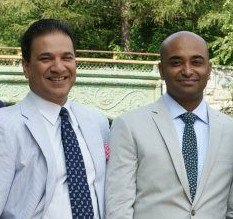
Highres_copyright-john-stanmeyerviiJameel Yusuf is small and sturdy and wears his trousers slightly above his waist. Quick on his feet, he has a firm handshake and the general disposition of an economics professor—he wears a trim salt-and-pepper beard and rectangular-rimmed spectacles and peers at you with inquisitive eyes. His gaze, manner and mien do not betray that Yusuf was once one of the toughest characters in a city with a tough reputation. He was Karachi’s Dark Knight.

Yusuf, however, will say, “I’m just a Khoja businessman.” The Khojas are a tight-knit, mostly mercantile community who populate cities from South Asia to East Africa and Canada. Muhammad Ali Jinnah, the urbane founder of Pakistan, was one. Yusuf’s trajectory was rather more traditional: he got into the textile business after graduating from university, manufacturing cones used in spinning units, before venturing into construction. He built one of the first malls in Karachi in the mid 1980s. By the late 1980s, he had become a successful self-made businessman—“Whenever I take up something, I like to do a thorough job,” he said—and middle-aged.

And in the late 1980s, Karachi had become unsettled. The American-funded insurgency in Afghanistan against the USSR had drawn to a close. More than 3.5 million Afghan refugees—the largest population of refugees in the world—had crossed the border into Pakistan. They settled in camps in and around the northern Khyber province, and in and around Karachi. It was a city where Pathans and mostly Urdu-speaking Mohajirs were already at daggers drawn. A fiery Mohajir student leader named Altaf Hussain had used an incident in which a bus driver ran over a student as his launching pad into national politics. With the death of Zia ul-Haq in 1988, democracy had also returned to Pakistan after a decade of military rule.

The general tumult allowed powerful crime syndicates to operate with impunity.

More here.

Monday, January 13, 2014

San Francisco and the Storm of Progress

by Katharine Blake McFarland

800px-SF_From_Marin_Highlands3

Early one Saturday morning I found my landlady standing in front of our building, staring at the wall, with a bottle of bleach and a pair of rubber gloves. “What are you working on?” I asked, with a forced cheeriness that comes from being a little afraid of her. “I'm bleaching the piss off the front of the building,” she said.

It's true that San Francisco often smells like pee. Since I moved here six months ago, I've seen more people urinating on the sidewalk than in the previous 28 years of my life combined (years spent living in Boston and D.C., among other places). Homelessness is rampant here, but more than that, visible. Walk down any street in my neighborhood—Market Street, Castro Street, 18th Street down to Dolores Park—and you will be forced to reckon with more than the smell of urine: you will see evidence of ravaged humanity. Nests of sleeping bags and trash bags tucked into doorways. Guardians of trashcans, babbling and searching for cigarette butts, clothes stained red and brown like maps. Young runaways and addicts, their escapes gone wrong, cross-legged on the sidewalk, their skinny dogs on leashes.

I recall Joan Didion's haunting refrain in Slouching Toward Bethlehem, “children are missing.” All of these children in my neighborhood are missing from some place else, some location of origin, but maybe not each one is missed, and maybe that's part of the problem. Just yesterday I passed a boy sleeping against the wall of my building who looked so much like my 24-year-old brother I had to restrain myself from stooping down next to him, wiping the dirt off his face, and taking him upstairs for a shower and chocolate milk.

Read more »

Writing on the Margins: Deuteronomy, Social Justice & Twelve 4th Graders

by Josh Yarden

Martin-Buber-Quotes-1A friend recently asked me to teach her fourth grade Sunday School class while she was out of town. They were learning about biblical history, archeology, theories about the authorship of the Torah and how the text evolved. I was impressed that people teach such things to children in elementary school. Her lesson plan for last week included sharing ‘passages from Deuteronomy that reflect a regard for various groups of relatively powerless people in society, human rights and dignity embedded in these passages.' I realized that her request connected to the themes of the essays I published in this column in recent months: “Marginal Lives,” and “Torasophy: A Biblical Humanism,” and I accepted the challenge of introducing a bit of Deuteronomy to today's fourth graders who have the potential to become tomorrow's agents of social change.

She suggested chapter 15, verses 7-11, so I took a look at the text and a few translations. As I was comparing and contrasting, I found myself reading the Hebrew text aloud and formulating my interpretation. I was wondering how far I might stray from authoritative translations, when I remembered the words Everett Fox quoted at the opening of the introduction to his translation and commentary, The Five Books of Moses. The following is adapted from a 1926 lecture by Martin Buber.

Read more »

Sunday, January 12, 2014

The Man Who Invented Modern Probability

Slava Gerovitch in Nautilus:

ScreenHunter_494 Jan. 12 17.12If two statisticians were to lose each other in an infinite forest, the first thing they would do is get drunk. That way, they would walk more or less randomly, which would give them the best chance of finding each other. However, the statisticians should stay sober if they want to pick mushrooms. Stumbling around drunk and without purpose would reduce the area of exploration, and make it more likely that the seekers would return to the same spot, where the mushrooms are already gone.

Such considerations belong to the statistical theory of “random walk” or “drunkard’s walk,” in which the future depends only on the present and not the past. Today, random walk is used to model share prices, molecular diffusion, neural activity, and population dynamics, among other processes. It is also thought to describe how “genetic drift” can result in a particular gene—say, for blue eye color—becoming prevalent in a population. Ironically, this theory, which ignores the past, has a rather rich history of its own. It is one of the many intellectual innovations dreamed up by Andrei Kolmogorov, a mathematician of startling breadth and ability who revolutionized the role of the unlikely in mathematics, while carefully negotiating the shifting probabilities of political and academic life in Soviet Russia.

More here.