The paradox of Charles Ives

0a275282-38d6-11e4_1093733hCarol J. Oja at the Times Literary Supplement:

In “Monster (for Charles Ives)”, the American abstract expressionist Robert Motherwell painted the head and upper body of a scraggly animal, pierced by a white hole that receded into grey nothingness. “I dedicated the painting to Ives,” Motherwell stated, “for the title refers to the monstrous ambiguity of the modernist artist’s situation, which Ives no less (and no more) epitomizes than other deeply serious composers, poets, playwrights, painters and sculptors in the U.S.A. in the twentieth century.” Motherwell said his inspiration came from listening to the music of Ives on a classical radio station in New York City, a shared sonic space for devotees of high art. He created this painting in 1959, five years after Ives’s death and somewhere amid the composer’s tumultuous journey from spurned rebel to canonical visionary.

Myth-making and myth-bashing have defined the “monstrous ambiguity” of Ives’s cultural status, and in Charles Ives in the Mirror: American histories of an iconic composer, David C. Paul unpacks shifting perceptions of the composer and his music. Paul has crafted an ambitious intellectual history, putting Ives at the centre of diverse forces, including the history of twentieth-century composition, the legacy of transcendentalism, the cultural marketing of the Cold War and the rise of American Studies and American musicology.

more here.

Hector Berlioz’s “To be or not to be”

Fellix vallotton kp0Peter Bloom at The Hudson Review:

Berlioz cannot be said to have been gifted at languages other than his own, of which he became a master. As a boy in the Isère, in the eighteen-naughts, he was tutored in Latin by his demanding father, a learned country doctor. Virgil became the composer’s lifelong companion (ergo Les Troyens). Berlioz spent two years in Italy in his late twenties and picked up Italian as a diligent tourist. He travelled extensively in Germany in his forties and learned nary a word. He twice visited Russia and there spoke exclusively French. He went five times to England between 1847 and 1855 and did on the first occasion mention to his father that he found himself able, to his surprise, to say what he needed to say. His love of Shakespeare derived, however, from no such practical experience. It rather developed—this is one of those things that cause us to see Berlioz as fanatique and excentrique—from love itself. Love for the Anglo-Irish actress Harriet Smithson, that is, who came to Paris in 1827 and who, during an intensive but short-lived craze for Shakespeare in English, revealed the depths of the dramas and captivated the French public with her performances of leading roles inHamlet, Romeo and Juliet, Othello, King Lear, The Merchant of Venice, and Richard III.

All of the French Romantics were smitten by Smithson—Hugo and Gautier, Dumas and Delacroix, the list goes on—but only Berlioz made it his business relentlessly to pursue the actress and eventually to persuade her, after a courtship whose vicissitudes forever confirm how truth is stranger than fiction, to become his wife.

more here.

At 8:48 on the morning of September 11, Michael Wright was a thirty-year-old account executive working on the eighty-first floor of the World Trade Center

From Esquire:

ScreenHunter_791 Sep. 11 16.08All of a sudden, there was the shift of an earthquake. People ask, “Did you hear a boom?” No. The way I can best describe it is that every joint in the building jolted. You ever been in a big old house when a gust of wind comes through and you hear all the posts creak? Picture that creaking being not a matter of inches but of feet. We all got knocked off balance. One guy burst out of a stall buttoning up his pants, saying, “What the fuck?” The flex caused the marble walls in the bathroom to crack.

You're thinking, Gas main. It was so percussive, so close. I opened the bathroom door, looked outside, and saw fire.

There was screaming. One of my coworkers, Alicia, was trapped in the women's room next door. The doorjamb had folded in on itself and sealed the door shut. This guy Art and another guy started kicking the shit out of the door, and they finally got her out.

There was a huge crack in the floor of the hallway that was about half a football field long, and the elevator bank by my office was completely blown out. If I'd walked over, I could've looked all the way down. Chunks of material that had been part of the wall were in flames all over the floor. Smoke was everywhere.

More here.

Does life play dice?

Philip Ball in Chemistry World:

CW0914_Crucible_630m‘Quantum biology’ was always going to be a winning formula. What could be more irresistible than the idea that two of the most mysterious subjects in science – quantum physics and life – are connected? Indeed, you get the third big mystery – consciousness – thrown in for good measure, if you accept the highly controversial suggestion by Roger Penrose and Stuart Hameroff that quantum behaviour of protein filaments called microtubules is responsible for the computational capability of the human mind.

Chemists might sigh: once again those two attention-grabbers, physics and biology, are appropriating what essentially belongs to chemistry. For the fact is that all of the facets of quantum biology that are so far reasonably established, or at least well grounded in experiment and theory, are chemical ones. The least disputable case, though arguably the most mundane, is enzyme catalysis, where quantum tunnelling enables proton and electron transfer. It also appears beyond doubt that photosynthesis involves transfer of energy from the excited chromophore to the reaction centre in an excitonic wavefunction that maintains a state of quantum coherence. It seems rather staggering to find these quantum phenomena operating in the warm, messy environment of the cell while physicists and engineers still struggle to harness them at cryogenic conditions for quantum computing.
The riskier reaches of quantum biology also address chemical problems: the mechanism of olfaction(proposed to happen by sensing of odorant vibrational spectra using electron tunnelling) and of magnetic direction-sensing in birds (which might involve quantum entanglement of electron spins on free radicals).
Yet it is no quirk of fate that these phenomena are sold as a union of physics and biology, bypassing chemistry. As Jim Al-Khalili and Johnjoe McFadden explain in a forthcoming book, Life on the edge, the first quantum biologists were pioneers of quantum theory: Pascual Jordan, Niels Bohr and Erwin Schrödinger. Bohr was never shy of pushing his view of quantum theory – the Copenhagen interpretation – into fields beyond physics, and his 1932 lecture ‘Light and life’ seems to have been influential in persuading Max Delbrück to turn from physics to genetics – work which later won Delbrück a Nobel prize.
More here.

Europa

Justin E. H. Smith in his blog:

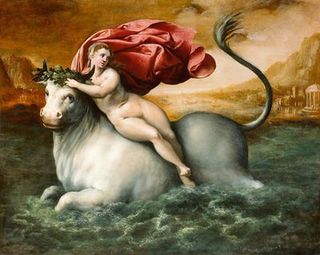
EuropaOne day I'm sitting in a rented SUV in a traffic jam, near yet far from LaGuardia, listening to NPR. Some harmless duffer, probably wearing a bowtie and a Yankees cap, is waxing sentimental about the great baseball stadiums of yore. I get in a plane and the next day I'm back in France and the taxi driver is listening to France Culture. Some professor is on, talking about Maurice Blanchot, who suspects that what we all really want, deep down, is to get spanked.

So I'm back in France. I came out of the airplane into a gauntlet of ads from HSBC, the ones asking you to imagine what banking is going to be like in the future. Whenever I see them I imagine how they will look –sorry, how they would look– sticking out of post-apocalyptic rubble.

Really, I'm sorry. Elif Batuman has announced that we've exited the age of irony and have entered the age of awkwardness. Oy, Elif, I just can't keep up with all the ages, and I suppose that in itself is a prescription for countless awkward encounters. Anyhow I'm still dwelling on how ironic, not awkward, all the feverish proclamations of capitalism triumphant are going to look someday.

Now I'm back home, back in Europe. Where? When I got my French cellphone contract they told me I would have to call for a special forfait prior to any trips to North America, but they assured me I could use it anywhere in 'Europe'. This sounded strange, and ill-defined. I asked if I could use it in Romania. Yes, of course, the agent replied. Bulgaria? Yes. Croatia? I think so. Montenegro? Um. Moldova? Uh. Chechnya? No, definitely not.

More here.

Military Sexual Assault: Male Survivors Speak Out

Nathaniel Penn in GQ:

ScreenHunter_789 Sep. 11 14.33A warship is like a city—sprawling, vital, crowded with purposeful men and women. But on a warship, as in a city, there are people who will see you not as their friend or their neighbor but rather as their prey.

After turning 25, Steve Stovey joined the Navy to see the world: Malaysia, Australia, Japan, Fiji, the Persian Gulf. His first year and a half as a signalman on the USS Gary was “the greatest time of my life,” he says.

In late September 1999, Stovey was sailing to Hawaii, where he'd be joined by his father on a Tiger Cruise, a beloved Navy tradition in which family members accompany sailors on the final leg of a deployment. Parents and kids get to see how sailors live and work; they watch the crew test air and sea weapons. The Disney Channel even made a movie about a Tiger Cruise, with Bill Pullman and Hayden Panettiere. The West Coast itinerary is usually Pearl Harbor to San Diego.

On the morning of September 20, two weeks before the warship was due in port, three men ambushed Stovey in a remote storage area of the ship, where he'd been sent to get supplies. They threw a black hood over his head, strangled and sodomized him, then left him for dead on a stack of boxes. Stovey told no one. He was certain that his attackers, whose faces he hadn't glimpsed, would kill him if he did. He hid in a bathroom until he could contain his panic and tolerate the pain. Then he quietly returned to his post.

More here.

Delhi by heart

Dushka Saiyid in YoulinMagazine:

Raza-rumi-delhi-by-heart-harper-collins-india-2013-1Raza Rumi’s book, Delhi by Heart, is an ode to a civilization and culture that flourished in Delhi from the time of the Sultanate and the arrival of the Sufi saints in the 13th century, till its final denouement in 1857, when the British ferociously crushed the revolt against their usurpation of power in the Indian sub-continent. It was a death knell not only for Delhi, but also for the Indo-Islamic culture that had flowered since the Sultanate period. Rumi’s canvas is wide and buttressed by diligent research, as he explores the rich tapestry of Delhi’s past: Sufi saints, rulers, poets, architecture and the urban development of the city. Dehli was the nursery and home, of what he has described as the Ganga/Jamna culture, and he points out that the, “north Indian cuisine, language and manners evolved within the precincts of Delhi”. The richness and inclusiveness of the Indo-Islamic culture, and its’ fading away with the demise of the Mughal empire, is the theme of the book. With an inclination towards Sufism, he mentions that five great Sufi orders migrated from Central Asia to India between the 12th and 15th centuries, coinciding with Muslim rule. They distanced themselves from the orthodox Ulama and were more inclusive, “and became the focus of religious syncretism”. Nizamuddin Auliya, was the pre-eminent Sufi saint of Delhi, and his dargah was open to people of all castes, creed and religion. He reflects on the relationship of Amir Khusrau with Nizamuddin, drawing parallels with that of Maulana Rumi with Shams Tabriz. It was Nizamuddin Auliya who instructed Khusrau to develop a language that could be understood by all. He quotes from the writings of Raj Kumar Hardev, who became a disciple of Nizamuddin Auliya: “When we were all present, Hazrat instructed us saying, ‘You all must get together and prepare a language that the Hindu residents of India, and the Muslims who have entered India, can both use easily to communicate in dealing with one another’.” Amir Khusrau is also attributed with being the founder of popular music tradition, as a synthesis between the indigenous music and the influences brought in by Muslims began to take place. Two of his disciples who founded Qawal Bachche, were given to him by Nizamuddin Auliya to give devotion a musical expression.

…A journalist and a television discussant, with formal training in the field of development, Raza Rumi has now emerged as an important author, who combines knowledge and understanding of history and culture with great facility. He wrote the book wanting “to transcend boundaries and borders and reject the ills of jingoism”, but it does more than that, for it is all about self-discovery and getting to grips with our fractured identity in a post-colonial state.

More here. (Note: Read the book and loved it. Congratulations to dear friend Raza Rumi on his brilliant success. Gunfire recently killed his driver while Raza miraculously escaped the attack and is now living in exile very far from his beloved Lahore.)

Curing blindness: Vision quest

Cori Lok in Nature:

Blindness2

Visual impairment affects some 285 million people worldwide, about 39 million of whom are considered blind, according to a 2010 estimate from the World Health Organization. Roughly 80% of visual impairment is preventable or curable, including operable conditions such as cataracts that account for much of the blindness in the developing world. But retinal-degeneration disorders — including age-related macular degeneration, the leading cause of blindness in the developed world — have no cure.In the past seven years, there has been mounting hope and excitement about the prospect of slowing or even reversing vision loss from retinal disorders. Clinical trials testing gene therapy, cell transplants and retinal prostheses are under way, and many studies — including the trial1, 2 involving Morehouse and Haas — are producing promising results. Biotechnology firms are taking up the challenge, and several have formed to take treatments through clinical testing. But most of the successes so far have been in treating rare congenital disorders, and it is still unclear how many people will ultimately benefit and to what extent vision can be preserved or restored. “There's a growing appreciation of the complexity of the clinical problem,” says Thomas Reh, a neurobiologist working on cell transplants for the eye at the University of Washington in Seattle. It may seem vulnerable and complex, but the eye has features that make it a good testing ground for experimental treatments. Unlike internal organs, surgeons can easily operate on it and peer inside to track how well a therapy is doing. It is also walled off from many damaging inflammatory responses that might derail a cell-transplant or a gene therapy. So the eye is “a good way to dip the toes in the water”, says Stephen Rose, chief research officer at the Foundation Fighting Blindness in Columbia, Maryland, which funds research and consults with drug firms.

More here.

Thursday Poem

The Calculus

There's a culture which counts like this: “one,
two, many.” It is sufficient. They don't use numbers
to measure. There are so many women your wife
gets pushed out of bed. Everyone knows without a
name for it how many dead men a camel can carry.
There is so little light the dark part of each eye
grows knuckle-size.
The invention of zero will end their life. They don't
say “no moon tonight”; they say “the moon is
gone.” We can add this egg of absence to anything
—then we are richer.

by William Matthews
from Sleek for the Long Flight
White Pine Press, 1988

Wednesday, September 10, 2014

Basic income: the world’s simplest plan to end poverty, explained

451654054.0_standard_755.0

Dylan Matthews over at Vox (photo: Thomas Trutschel/Photothek via Getty Images):

There are a number of different names this idea has gone by over the years. “Universal basic income” and “basic income guarantee” are used frequently. “Guaranteed minimum income” and “negative income tax” are generally used to refer to versions of the plan that also impose a tax that gradually eats up the cash transfer, as a means of reducing the cost of the policy. “Demogrant” was popular in the '70s, and “citizens' dividend” and “social wage” get used from time to time.

2) Who supports basic income?

Surprising people! Arguably the biggest popularizer of the idea in the 20th century was libertarian economist Milton Friedman, who specifically favored a negative income tax as a replacement for much of the welfare state. Many left-of-center economists, like James Tobin and John Kenneth Galbraith, were also on board. More recently, Emmanuel Saez and Jonathan Gruber, two of the most influential left-leaning economists currently working, argued that an ideal tax system would feature a “large demogrant.”

Martin Luther King Jr. endorsed the idea in his book Where to Go From Here: Chaos or Community?, writing, “I am now convinced that the simplest approach will prove to be the most effective—the solution to poverty is to abolish it directly by a now widely discussed measure: the guaranteed income.” Activists and scholars Richard Cloward and Frances Fox Piven authored an influential article in The Nation in 1966 which called for a national movement of the poor with the intended goal of achieving a basic income. More academically, left philosophers and intellectuals like Erik Olin Wright, Peter Frase, Carole Pateman,Antonio Negri, and Michael Hardt and in particular Philippe Van Parijs have written in favor of the idea.

But the idea still retains appeal on the right for the same reasons Friedman embraced it.

More here.

john gray on francis fukuyama

9781846684364John Gray at Literary Review:

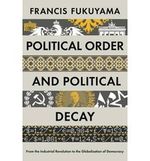
The telltale word here, and throughout the two volumes, is 'evolve'. For Fukuyama, as for many other modern thinkers, today and in the past, political development is an evolutionary process. What drives this process is never specified; if there is a social equivalent of the natural selection of genetic mutations, we learn no more about its workings from Fukuyama than we did from Karl Marx or Herbert Spencer, who produced similar speculations in the 19th century. It is never explained why political evolution should have any particular end state, nor why the process should involve the convergence of institutions. As it operates among species, evolution shows no such tendency. Drift and diversity, punctuated by extinction, are the normal state of affairs. Why should evolution in society – if there is such a thing – be any different?

The answer, of course, is that Fukuyama takes for granted that the end point of political development is the system of government he prefers. As he puts it here and in the previous volume, the problem that most of the world faces is 'getting to Denmark' – where 'Denmark' means not the actual country but 'an imagined society that is prosperous, democratic, secure, and well governed, and experiences low levels of corruption'. He sees many of the humanitarian and military interventions of Western governments as bungling attempts to promote this imaginary society: 'The international community would like to turn Afghanistan, Somalia, Libya, and Haiti into idealized places like “Denmark,” but it doesn't have the slightest idea of how to bring this about.' Oddly, Fukuyama omits Iraq from his list of Western failures. The reason for all of these fiascos, however, is clear: 'We don't understand how Denmark itself came to be Denmark and therefore don't comprehend the complexity and difficulty of political development.'

more here.

Walter Benjamin, Theodor Adorno, and the critique of pop culture

140915_r25456-320Alex Ross at The New Yorker:

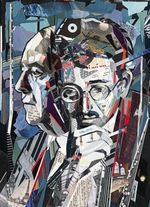
To read the biographies of Benjamin and Adorno side by side—Eiland and Jennings’s new book, seven hundred and sixty-eight pages long, takes a place on the shelf next to Stefan Müller-Doohm’s hardly less massive 2003 life of Adorno—is to see the fraying of the grand old European bourgeoisie. Benjamin was born in Berlin in 1892; his father, Emil Benjamin, was an increasingly successful entrepreneur, his mother something of a grande dame. “Berlin Childhood Around 1900,” the most lyrical of Benjamin’s works, conjures the sumptuousness of his family home, although his all-seeing eye pierces its burnished surface: “As I gazed at the long, long rows of coffee spoons and knife rests, fruit knives and oyster forks, my pleasure in this abundance was tinged with anxiety, lest the guests we had invited would turn out to be identical to one another, like our cutlery.”

Adorno was born in Frankfurt in 1903, in conditions of comparable ease. His father, Oscar Wiesengrund, ran a wine-merchant business, and his mother, Maria Calvelli-Adorno, had sung opera. From earliest childhood, Adorno, as he chose to call himself on leaving Germany, swam in music, forming ambitions to become a composer. “Early on, I learned to disguise myself in words,” Benjamin wrote. Adorno hid in sounds.

more here.

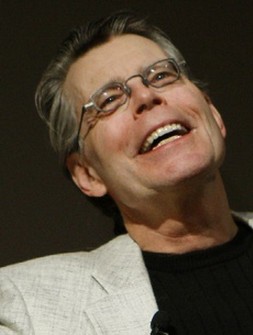
How Stephen King Teaches Writing

Jessica Lahey in The Atlantic:

Jessica Lahey: You write that you taught grammar “successfully.” How did you define “success” when you were teaching?

ScreenHunter_788 Sep. 10 17.24Stephen King: Success is keeping the students’ attention to start with, and then getting them to see that most of the rules are fairly simple. I always started by telling them not to be too concerned with stuff like weird verbs (swim, swum, swam) and just remember to make subject and verb agree. It’s like we say in AA—KISS. Keep it simple, stupid.

Lahey: When people ask me to name my favorite books, I have to ask them to narrow their request: to read or to teach? You provide a fantastic list of books to read at the end of On Writing, but what were your favorite books to teach, and why?

King: When it comes to literature, the best luck I ever had with high school students was teaching James Dickey’s long poem “Falling.” It’s about a stewardess who’s sucked out of a plane. They see at once that it’s an extended metaphor for life itself, from the cradle to the grave, and they like the rich language. I had good success with The Lord of the Flies and short stories like“Big Blonde” and “The Lottery.” (They argued the shit out of that one—I’m smiling just thinking about it.) No one puts a grammar book on their list of riveting reads, but The Elements of Style is still a good handbook. The kids accept it.

More here.

The Revolutionary Technique That Quietly Changed Machine Vision Forever

From the MIT Technology Review:

ScreenHunter_787 Sep. 10 17.18Computers have always had trouble identifying objects in real images so it is not hard to believe that the winners of these competitions have always performed poorly compared to humans.

But all that changed in 2012 when a team from the University of Toronto in Canada entered an algorithm called SuperVision, which swept the floor with the opposition.

Today, Olga Russakovsky at Stanford University in California and a few pals review the history of this competition and say that in retrospect, SuperVision’s comprehensive victory was a turning point for machine vision. Since then, they say, machine vision has improved at such a rapid pace that today it rivals human accuracy for the first time.

So what happened in 2012 that changed the world of machine vision? The answer is a technique called deep convolutional neural networks which the Super Visison algorithm used to classify the 1.2 million high resolution images in the dataset into 1000 different classes.

This was the first time that a deep convolutional neural network had won the competition, and it was a clear victory. In 2010, the winning entry had an error rate of 28.2 percent, in 2011 the error rate had dropped to 25.8 percent. But SuperVision won with an error rate of only 16.4 percent in 2012 (the second best entry had an error rate of 26.2 percent). That clear victory ensured that this approach has been widely copied since then.

More here. [Thanks to Jennifer Oullette.]

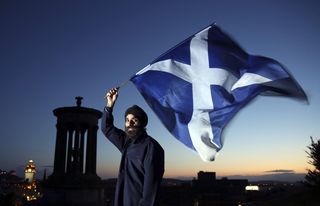
Why Scotland Might Just Say Yes to Independence

RTR3Z6GH

Mark Blyth in Foreign Affairs (photo: Paul Hackett / Courtesy Reuters):

An independent Scotland would have a massively oversize banking system, with assets possibly exceeding 1,000 percent of GDP. This would represent an Icelandic-sized risk to British taxpayers, who would have to stand behind the liabilities of the Scottish banks if they ran into trouble. As the Financial Times put it in a recent editorial, no British government would back those banks “unless Scotland were to accept very heavy constraints over its public finances.” In short, budgetary austerity and conservative policies would remain the only game in town, even after independence.

To get out of this bind, an independent Scotland would need its own currency, an option the Yes campaign has only recently acknowledged as a possible “plan B.” Without monetary sovereignty, a country can neither print nor devalue its way out of trouble. And if it doesn’t want to default, austerity is the only way forward.

Yet to establish an independent currency, Scotland would need three things: a central bank, a bond shop, and independent tax institutions. For now, Edinburgh has none of these. And it would take five to ten years to build them. In the meantime, the country Scotland just broke up with would be raising the taxes, paying the bond investors, and running the currency — and charging a pretty penny to do so. Joining the euro, the only other alternative, would simply mean austerity would come from another direction, from Berlin rather than London.

Given all this, if Scotland votes in favor of independence, the United Kingdom’s reaction would not likely be the velvet divorce the Yes campaigners envision. Nationalism, like most forms of identity politics, thrives only in the face of a foreign other. Far from safeguarding Scotland’s position in Europe, the United Kingdom’salready resurgent nationalism will likely grow fiercer. Edinburgh’s exit would probably make London’s withdrawal from the EU more likely, complicating the Yes campaign’s desire to protect European interdependence.

Yet perhaps the oddest thing about the Scottish debate has been its lack of concern for issues of language, culture, or past sins — all central features of Basque, Catalan, and other independence movements. On the surface, it’s been all about the money, which makes the recent turn at the polls all the more telling. Although the No camp has largely won the economic arguments, the Yes campaign has gained the upper hand. The question is why?

More here.

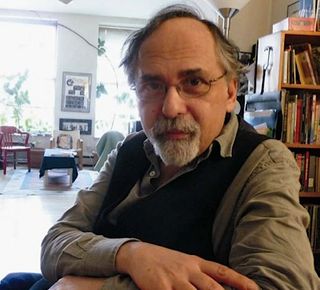
Art Spiegelman Breaks His Silence on Israel

Mira Sucharov in Forward:

ScreenHunter_786 Sep. 10 13.04Art Spiegelman — celebrated comics book artist, illustrator and author of the Pulitzer Prize-winning “Maus” — has broken his silence on the subject of Israel. At least that’s how he put it to his Facebook followers last week when he shared a collage he designed for a recent issue of the magazine The Nation.

Prefacing the social media post by saying that he has spent a “lifetime trying to NOT think about Israel,” Spiegelman went on to say that “Israel is like some badly battered child with PTSD who has grown up to batter others.”

Captioned “Perspective in Gaza (The David and Goliath Illusion),” the Biblical-style art image consists of two panels. On the left is a traditional rendering of David facing Goliath. The right-hand panel presents a shrunken Goliath brought closer to the foreground. Using the tricks of size and perspective to make what is surely not an original political point, it’s a clever play on Spiegelman’s life’s work as an illustrator.

At least two important questions arise from this. First, what does it say when The Jewish Museum in New York mounted a Spiegelman retrospective which overlapped with the controversy over Israel critic Judith Butler’s slated talk there on a subject unrelated to Israel? (Butler later pulled out amidst the pressure.) Had Spiegelman spoken up against Israel earlier, might the museum’s donors and critics have applied similar tactics?

More here.

Wednesday Poem

Fears in Heaven
.

My father asks me to call him
by his first name which is Ali
because we are, after all
now the same youthful age

It feels extremely odd
when this devout Muslim
politely asks me to join him
for a stiff drink, or two

He asks me if I want
to take any of his virgins
because it is his plan
to stay with my mother

I ask him if he is certain
whether she wants to do that
and he betrays his doubts
with an uneasy crooked smile

So here we stand with our
drinks, anxious and awkward
but knowing we have time
to settle into eternal dullness
.

by S. Abbas Raza,
September 10, 2014

Between Qaum and the nation

Vijay Prashad in HimalSouthAsian:

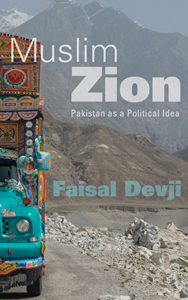
Muslim-zionFaisal Devji and I went to graduate school together at the University of Chicago. We worked with Barney Cohn, a scholar with an adventurous sense of scholarship. Devji’s early studies were conducted at the feet of Fazlur Rahman, the intellectual of Islam (author of Islam, 1966 and 1979), who died in 1988, two years after Devji got to Chicago. Among our small cohort, Devji was the smart one – clear in his head that he wanted to uncover the intellectual foundations of Muslim nationalism in the Subcontinent. His was, however, the experience that haunts graduate students – having travelled the archives, making notes and photocopies, he returned to the US, where his bag with the research notes was stolen. Undaunted, Devji wrote a brilliant intellectual history – Muslim Nationalism: Founding Identity in Colonial India (1993). His study spanned the time from Nazir Ahmad’s Mirat al-arus (The Bride’s Mirror, 1869) to Mohammed Iqbal’s Pas Chih Bayad Kard ay Aqwam-i-Sharq (What Should Then Be Done, Oh People of East, 1936), from the era of post-Mutiny reform to the emergence of a new patriotic confidence. Lingering behind the close readings of Iqbal were his European interlocutors Martin Heidegger and Henri Bergson, enriching the dissertation to a level that was not common among people of our age.

…Reading Muslim Zion is not easy. This is an intellectual’s intellectual history. Even though Devji scorns évènementiel history for its “mechanism”, it is worthwhile to have some grounding in the historical worlds of the Subcontinent to best benefit from this book. Much can be gained when an author takes the risk to tie the loose ends of human life into a coherent story. But for Devji such a narrative might stand in for a continuity that does not exist in the intellectual emergence of the idea of nationalism in the Muslim League and its environs. If he had written a history that began with Sir Sayyid Ahmad Khan and ended with Liaquat Ali Khan’s premiership, as so many histories of Muslim nationalism do, it would have seemed that Pakistan was already evident in the pages of the journal Tahzib al-Akhlaq (Refinement of Morals), founded in 1870. Here and there in Devji’s pages is evidence of a conflict between Muslim elites in different cities, rooted in different parts of the colonial bureaucracy and the social relations of capitalism (Devji notes that much is buried in the “unexplored history of Muslim capitalism”). The Pakistan movement was not rooted amongst the heirs of Sir Sayyid among the Aligarh intellectual grandees nor was it rooted in the religious redoubts of Deoband. It had its leadership amongst the western Indian (mainly Shia) elites such as Aga Khan and Mohammed Ali Jinnah, and in the royal households of the Gangetic plain, such as Mahmudabad and Jehangirabad.

More here.