The Double Life of Objects

Tubingen_016

Richard Marshall interviews Thomas Sattig in 3:AM Magazine [Photo: Tuomas Tahko]:

3:AM: In your book about language and reality you study them together rather than separately. Why put them together?

TS: Metaphysicians often begin with prephilosophically accessible phenomena and then go deep by asking what the phenomena are like fundamentally. Given that the phenomena are familiar, we have common-sense beliefs and intuitions about them. What role does common sense play in the metaphysical enterprise? I believe that foundational metaphysical analysis should aim to preserve our common-sense conception. The task is a difficult one. Soon tensions between our metaphysical principles and our ordinary thought and talk start appearing. But we should resist giving up our prephilosophical beliefs too easily. For they are prima facie guides to how things are and to how they could be. So I recommend searching for an equilibrium between the metaphysical analysis of the deep structure of the world and our ordinary, linguistic and mental, representation of the latter. The way in which I recommend establishing such an equilibrium is by giving a semantical account of ordinary discourse, which links familiar linguistic behaviour with deep metaphysics. To be sure, this is a type of semantics geared to the demands of metaphysicians. Semantics as done in linguistics and philosophy of language doesn’t share the aim of uncovering the metaphysical basis of ordinary thought and talk.

3:AM: You begin with what you call temporal supervenience. Can you explain what you mean by this term?

TS: The problem of temporal supervenience is an equilibrium problem of the sort I just mentioned. There are different conceptions of time. While ordinary space is three-dimensional, ordinary time is one-dimensional—it can be represented by a line—and consists of past, present, and future. This is the ordinary conception of time, in virtue of being the conception to which we are committed by our ordinary temporal discourse. When we describe the world in ordinary time, we describe it from the perspective of the present time—we use tensed language.

Modern physics, by contrast, offers a different conception: there is only a four-dimensional spacetime of which time is merely an aspect. In its most general form, the problem concerns the metaphysical status of our ordinary conception of time.

One instance of the problem concerns the status of tense. Is temporal perspective an aspect of the reality represented by ordinary thought and talk—are there fundamentally present-directed, past-directed and future-directed facts—or do we merely represent a fundamentally tenseless reality in a tensed way? Another instance concerns the relationship between ordinary time and spacetime. How is what goes on in ordinary time related to what goes on in spacetime?

More here.

The Longevity Gap

50471458

Linda Marsa in Aeon (Picasso at home in his villa in villa at Notre-Dame de Vie in Mougins in 1967 surrounded by his latest paintings. He was 85 at the time. Photo by Gjon Mili/Time Life/Getty):

The life expectancy gap between the affluent and the poor and working class in the US, for instance, now clocks in at 12.2 years. College-educated white men can expect to live to age 80, while counterparts without a high-school diploma die by age 67. White women with a college degree have a life expectancy of nearly 84, compared with uneducated women, who live to 73.

And these disparities are widening. The lives of white, female high-school dropouts are now five years shorter than those of previous generations of women without a high-school degree, while white men without a high-school diploma live three years fewer than their counterparts did 18 years ago, according to a 2012 study from Health Affairs.

This is just a harbinger of things to come. What will happen when new scientific discoveries extend potential human lifespan and intensify these inequities on a more massive scale? It looks like the ultimate war between the haves and have-nots won’t be fought over the issue of money, per se, but over living to age 60 versus living to 120 or more. Will anyone just accept that the haves get two lives while the have-nots barely get one?

We should discuss the issue now, because we are close to delivering a true fountain of youth that could potentially extend our productive lifespan into our hundreds – it’s no longer the stuff of science fiction. ‘In just the last five years, there have been so many breakthroughs,’ says the Harvard geneticist David Sinclair. ‘There are now a number of compounds being tested in the lab that greatly slow down the ageing process and delay the onset of diabetes, cancer and heart disease.’

Sinclair, for instance, led a Harvard team that recently uncovered a chemical that reverses the ageing process in cells. The scientists fed mice NAD, a naturally occurring compound that enhances mitochondria – the cell’s energy factories – leading to a more efficient metabolism and less toxic waste. After just a week, tissue from older mice resembled that of six-month-old mice, an ‘amazingly rapid’ rate of reversal that astonished scientists. In human years, this would be like a 60-year-old converting to a 20-year-old practically before our eyes, delivering the tantalising dream of combining the maturity and wisdom of age with the robust vitality of youth. Researchers hope to launch human trials soon.

More here.

On Israel-Palestine and BDS

Israel_settlements_ap_img

Noam Chomsky in The Nation (Photo: AP/Bernat Armangu):

The opening call of the BDS movement, by a group of Palestinian intellectuals in 2005, demanded that Israel fully comply with international law by “(1) Ending its occupation and colonization of all Arab lands occupied in June 1967 and dismantling the Wall; (2) Recognizing the fundamental rights of the Arab-Palestinian citizens of Israel to full equality; and (3) Respecting, protecting, and promoting the rights of Palestinian refugees to return to their homes and properties as stipulated in UN Resolution 194.”

This call received considerable attention, and deservedly so. But if we’re concerned about the fate of the victims, BD and other tactics have to be carefully thought through and evaluated in terms of their likely consequences. The pursuit of (1) in the above list makes good sense: it has a clear objective and is readily understood by its target audience in the West, which is why the many initiatives guided by (1) have been quite successful—not only in “punishing” Israel, but also in stimulating other forms of opposition to the occupation and US support for it.

However, this is not the case for (3). While there is near-universal international support for (1), there is virtually no meaningful support for (3) beyond the BDS movement itself. Nor is (3) dictated by international law. The text of UN General Assembly Resolution 194 is conditional, and in any event it is a recommendation, without the legal force of the Security Council resolutions that Israel regularly violates. Insistence on (3) is a virtual guarantee of failure.

The only slim hope for realizing (3) in more than token numbers is if longer-term developments lead to the erosion of the imperial borders imposed by France and Britain after World War I, which, like similar borders, have no legitimacy. This could lead to a “no-state solution”—the optimal one, in my view, and in the real world no less plausible than the “one-state solution” that is commonly, but mistakenly, discussed as an alternative to the international consensus.

The case for (2) is more ambiguous. There are “prohibitions against discrimination” in international law, as HRW observes. But pursuit of (2) at once opens the door to the standard “glass house” reaction: for example, if we boycott Tel Aviv University because Israel violates human rights at home, then why not boycott Harvard because of far greater violations by the United States? Predictably, initiatives focusing on (2) have been a near-uniform failure, and will continue to be unless educational efforts reach the point of laying much more groundwork in the public understanding for them, as was done in the case of South Africa.

Failed initiatives harm the victims doubly—by shifting attention from their plight to irrelevant issues (anti-Semitism at Harvard, academic freedom, etc.), and by wasting current opportunities to do something meaningful.

More here.

on Kantian ethics

A108b622-01dc-11e4_1078872hMichael Rosen at the Times Literary Supplement:

My own belief is that we can indeed see Kant’s moral philosophy as consistent but that to do so we have to approach it from a radically different starting point.

According to Kant, values are of two kinds: “dignity” and “price”. Dignity is “unconditional and incomparable”, in contrast to price in which trade-offs can be made. Only one thing, however, has dignity: “morality, and humanity insofar as it is capable of morality”, or, as Kant also calls it, “personhood”. Personhood is an aspect of human beings that transcends the empirical realm and makes us, as it were, citizens of two worlds (“so that a person as belonging to the sensible world is subject to his own personhood insofar as he belongs to the intelligible world”). It is from this inner, intrinsic value of personhood that all other values must descend.

Yes, you might say, but how? If personhood is a transcendental inner kernel that all of us carry within us, then it is, it seems, something that can’t be increased, diminished or destroyed. How is it supposed to guide our actions? The immediate answer is that personhood is something that we have an absolute duty to respect. Yet that, of course, might seem to do no more than kick the can down the road in front of us. We know how to respect things that can be violated, like the right to free speech, but how do we respect an indestructible transcendental kernel?

more here.

the Venice Architectural Biennale

Le-corbusiers-design-for-the-maison-domino-1914Roderick Conway Morris at The Spectator:

An eccentric English aristocrat who constructed a 20-mile network of underground corridors to avoid coming into contact with his fellow humans on his country estate; a Japanese dentist who has amassed an enormous collection of decorative details from buildings spanning a century, retrieved from Tokyo demolition sites; the German inventor of ‘Scalology’, who has spent 60 years studying staircases; and Inuit soapstone carvings of a Cold War early-warning station and of an airport terminal are among the surprises offered by the 14th Venice International Architecture Biennale.

The Dutch architect Rem Koolhaas is this year’s artistic director. With his team of researchers, he has not only composed a fascinating show — Elements of Architecture in the Central Pavilion at the Biennale Gardens — but by insisting on the announcement further in advance than usual of the theme to be tackled by the national pavilions (Absorbing Modernity: 1914–2014) he has also shaped a more co-ordinated overall view of the chosen subject than ever before. The theme has given rise to a variety of thought-provoking reflections on both Architectural Modernism and its impact on those who have lived with the results.

more here.

Charles Simic’s soccer addiction

79653671_jpg_600x417_q85Charles Simic at the New York Review of Books:

I haven’t done a thing in three weeks except watch soccer. Mowing the lawn, paying bills, working on an essay and a lecture whose deadlines are fast approaching, writing overdue letters of recommendation and one of condolences, answering dozens of urgent emails and writing an angry letter to The New York Times pointing out the many historical inaccuracies in John Burns’s recent piece on the hundredth anniversary of the 1914 assassination in Sarajevo of Archduke Franz Ferdinand of Austria—all these have had to wait. With sixty-four games to watch, it’s a wonder I find time to brush my teeth or tie my shoelaces. The only phone calls I let through these days are those from other junkies who want to discuss some game we are watching. Should an unexpected visitor come to the door, I would emulate the example of soccer players and fake an injury, dropping on the floor and writhing in agony until the person left.

Consequently, I was astonished last Sunday when my wife marched into our TV room, where I was making myself comfortable in my chair to watch the Netherlands play Mexico, and asked me if I wanted to go picking strawberries with her and our little granddaughter. My mouth fell open. I was about to ask her to repeat what she said, but then I remembered how it is with soccer and the women in my family.

more here.

On Doing Nothing Students

Ben Sobel in Harvard Magazine:

HarvardI took this past semester, my junior spring, off from Harvard. What was I trying to accomplish? It took a few months to realize it, but the truest answer I can give is “nothing, really.” What kind of a Harvard student spends a few months he could have spent in Cambridge traveling aimlessly through Western Europe, the Balkans, and North Africa—trying to accomplish nothing? At Harvard, I had developed an obsession with ensuring that every instant of my time could be justified in terms of tangible accomplishments. “Productiveness” is a buzzword around here—as qualifier, quantifier, boast, and complaint—and the concept hovers spectrally alongside a disconcerting amount of on-campus dialogue. Most undergraduates have likely been on one or both sides of an exchange like this:

“How was your weekend?”

“Productive.”

Because the word is used constantly in this sort of context, productivity becomes a universal validator, and, more disturbingly, an end in itself. In these conversations, it doesn’t matter whether the weekend was good or bad, as long as it was productive. On campus, what I was achieving didn’t matter, as long as I was achieving. In this way, my productivity fetish allowed me, paradoxically, to move through my life in a monumentally lazy way. As long as I was productive, “good” and “bad” and “happy” and “sad” were all subordinate considerations. The constant noise of commitments, which I had sincerely convinced myself were important and substantial, let me tune out larger uncertainties. These larger uncertainties—about goodness and badness and happiness and sadness; about who I am, what I like to do, how I want to relate to others; and most importantly, about what I’m trying to achieve through all this achievement in the first place—were and are far more difficult to confront than any number of innocuous, “productive” obligations.

So I buried my unsettling concerns in piles of schoolwork, term-time jobs, and extracurricular organizations. In some ways, this was one of the best things that could have happened to me. My fixation on generating tangible achievements helped me write the best papers I’ve written and think the most stimulating academic thoughts I’ve thought. Each of my productivity-chasing pursuits introduced me to wonderful people I wished I had time to get to know better and wonderful ideas I wished I had time to understand better. Indeed, I produced good things—but these products often felt secondary to the feeling of productiveness they gave me. Rare were my moments of unproductivity, but rarer still were my moments of genuine, uncompromising self-reflection. I never spent any time alone with myself, in part because I had conditioned myself to view such activity as a shameful waste of time, and in part because I was profoundly unsettled by the “larger uncertainties” that surfaced whenever I spent time inside my own head. This is why it is necessary for me to frame my semester off in terms that sound unconscionable to my Harvard-honed sensibilities. “Accomplishing nothing” is exactly what I had trained myself to abhor in order to fight off the bugaboo of meaningful personal scrutiny. With the goal of “accomplishing nothing” in mind, the worst that could have happened is also, conveniently, the best that could have happened.

More here.

Women in science: From embroidery to explosives

Patricia Fara in Nature:

WomenIn the early twentieth century, female scientists felt beleaguered. It is “as though my work wore petticoats”, cries Ursula, the fictionalized version of distinguished physicist Hertha Ayrton in the 1924 novel The Call. The real-life Ayrton was denied entry to the Royal Society in 1902 because she was married; later she struggled to make the British government's War Office consider her design for a wooden fan to protect soldiers against gas attacks. Pre-war, alongside fellow suffragettes, Ayrton had marched behind banners embroidered with scientific figureheads including Marie Curie and Florence Nightingale, but such protests often aroused contempt rather than support.

“I do not agree with sex being brought into science at all,” declared Ayrton. “Either a woman is a good scientist, or she is not.” Ringing words — so have we yet achieved the ideal she was fighting for a century ago? Overt discrimination is now illegal — equality of opportunity is firmly entrenched. But all over the world, traditional attitudes linger on. Glass ceilings and leaky pipelines still present tough challenges for ambitious women in science, especially at higher levels. Exposing prejudice is the first step to eliminating it. By examining the past, we can understand how we have arrived at the present — and how to improve the future. In Britain, where the suffragists and violent demonstrations had failed, the First World War persuaded the government that women belonged in the polling booth as well as the parlour. “Oh! This War! How it is tearing down walls and barriers, and battering in fast shut doors,” enthused a female journalist in 1915 in the Women's Liberal Review. By 1918, women had helped Britain to victory by making drugs, explosives, insecticides, alloys, electrical instruments and other essential laboratory products, and by carrying out research, running hospitals and teaching students. Yet after the war, it was almost universally assumed that female workers should give up their jobs and slip back into their previous roles as wives and mothers. Only much later did the authorities recognize the twin follies of converting highly educated men into cannon fodder and of failing to deploy female brains effectively.

More here.

Thursday Poem

Grass and Water

The geese have their heaven and I have mine,
though both are made of grass and water and both
have sudden and subtle bridges where the carved stone
changes color under the presumptive arches,
and it is microcosmic and symbolic
so I could be there lying under the stars,
if it is one of the hazy afternoons,
and even mistake the birdlime for the Milky Way
or one drop of water in the sunlight
for one of the late afternoons, though nothing I know
will save them even though their eggs are like steel,
even though their guards are wise; whereas I
still am struggling, I with the soft egg, I
with the infantile presidents. You should see me
explaining things to them, below the bridge
this side of the river, not for one good second
ridiculing them. I still am reading and thinking;
I still am comparing; and I am spending my time
like one or two others in understanding, that is
a type of heaven too, at least for me it is,
holding on to the stabbed uprooted sycamore.
.

by Gerald Stern
from American Sonnets
W.W. Norton, 2002

Wednesday, July 2, 2014

Faking Galileo

Massimo Mazzotti in the Los Angeles Review of Books:

Gal1-243x366Art forgeries have long been the stuff of thrillers, with fake da Vincis or Vermeers fooling connoisseurs, roiling the art world, and moving millions of dollars. We don’t think of ancient books driving such grand forgery, intrigue, and schadenfreude. This is changing thanks in part to a clever forgery of Galileo’s landmark book Sidereus Nuncius, published in Venice in 1610. Arguably one of the most extraordinary scientific publications of all times, Sidereus Nuncius turned Galileo into the brightest new star of Western science. Four centuries later, a faked copy of this book has disarmed a generation of Galileo experts, and raised a host of intriguing questions about the social nature of scholarly authentication, the precariousness of truth, and the revelatory power of fakes.

The story begins in 1609, when Galileo was a professor at the University of Padua, then under the rule of the Republic of Venice. The 45-year-old Galileo was on his way to toppling Ptolemaic and Aristotelian conceits, revolutionizing the principles of motion, and redefining what physics was and meant. He was also struggling with financial problems, saddled with supporting a lover and three children, with the dowry for a sister’s marriage, and with a hapless brother. With little hope for a salary increase, he borrowed money, gave private lessons, and made instruments to sell.

In July 1609, he heard about a spyglass being made in Holland. Quickly, he figured out the requisite shape and combination of lenses needed to go from two or three orders of magnification to eight. Just one month later he presented his invention to the Senate of Venice as a new military technology; it would, he told the Senate, make it possible to spot enemy ships at sea a full two hours before a naked-eye observer. There was no such thing as our notion of a patent in those days, so Galileo needed to be strategic in order to benefit from his inventions and discoveries. To this end, he offered the telescope as a “gift” to the Senate. It worked. He was rewarded in the form of tenure and a doubling of his salary.

More here.

A Challenge to Men: Q&A with Alan Lightman

From World Pulse:

Have you yourself faced obstacles to embracing a different view of masculinity?

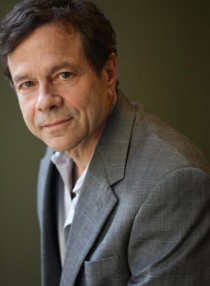
Alan_lightman_croppedThere is a stigma that exists today in the United States. I think it exists in all countries, but we’ll talk about the US. It’s a very subtle stigma regarding men working on “women’s issues” or being associated with women’s issues. I remember when the book The Corrections by Jonathan Franzen came out. Oprah Winfrey selected it as one of her Oprah’s Book Club books. Mr. Franzen declined the offer, and I heard him imply on NPR that his concern was that Oprah’s selections are “women’s books.” This is one example of the mentality I am talking about. I admit myself that when I first started the Harpswell Foundation, I initially placed most of the emphasis on helping Cambodia develop. At a subtle level, I myself was resisting the idea of working for women’s empowerment. I was both a victim and a culprit of this mentality. It took me a couple of years to get comfortable with the fact that the empowerment of women was, in fact, a central thrust of what I was doing.

I’ve always believed that women are equal to men, but I still had to erase this attitude in myself that was resisting the idea of aligning myself with women’s empowerment. I am a case study in the problem. But of course now I fully embrace this role.

More here.

Sa’adat Hasan Manto: How I Write Stories

From Scroll:

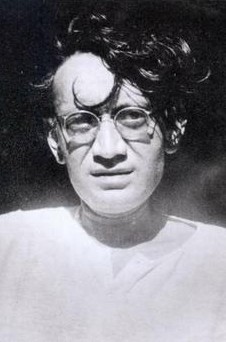
ScreenHunter_717 Jul. 02 23.12Honorable ladies and gentlemen!

I've been asked to explain how I write stories.
This “how” is problematic. What can I tell you about how I write stories?

It is a very convoluted matter. With this “how” before me I could say I sit on the sofa in my room, take out paper and pen, utter bismillah, and start writing, while all three of my daughters keep making a lot of noise around me. I talk to them as I write, settle their quarrels, make salad for myself, and, if someone drops by for a visit, I show him hospitality. During all this, I don’t stop writing my story.

If I must answer how I write, I would say my manner of writing is no different from my manner of eating, taking a bath, smoking cigarettes, or wasting time.

Now, if one asked why I write short stories, well, I have an answer for that. Here it goes:

I write because I’m addicted to writing, just as I’m addicted to wine. For if I don't write a story, I feel as if I'm not wearing any clothes, I haven't bathed, or I haven’t had my wine.

More here.

Against Mastery

0603Wilfred M. McClay at Hedgehog Review:

Do we imagine that complete control over our biological fates will necessarily make us happier? Perhaps it will. But one can as easily imagine that there might be little room for uninhibited joy or exuberance in such a world. More likely it will be a tightly wound world, saturated with bitterness and anxiety and mutual suspicion, in which life and health will be guarded with all the ferocity of Ebenezer Scrooge guarding his money. Growing mastery means growing responsibility, and the need to assign blame, since nothing happens by chance. Some of the blame will be directed at the parents, politicians, doctors, and celebrities who make plausible villains, or conspiracy theories that explain why someone else is always at fault. But much of the blame will devolve upon ourselves, since in being set free to choose so much about our lives, we will have no one else to blame when we make a complete mess of things.

No, there is good reason to fear that the more our lives are prolonged and powers extended, and the more death becomes seen as an avoidable evil whose precise moment should be “chosen,” rather than an inherent feature of human life, the more common it will be to encounter people who live imprisoned by their fear of all risk, since the possible consequences of any risk will seem too vast, too horrible, and too fully avoidable, to be contemplated.

more here.

flaubert’s sentimental education

Young Farmers 490x300Michael Wood at Lapham's Quarterly:

While Sentimental Education provides the requisite arcs and twists of a Bildungsroman, a coming-of-age novel, and a story of a Young Man from the Provinces, it also questions the assumptions of each, asking if any of these stories quite leads to where it is supposed to go. This is to say that we are invited to explore the realm of what Balzac calls illusions and Flaubert calls sentiments, where ambition and fantasy are rampant and sometimes fulfilled, where cynical advice passes as sagacity. It is the realm of what we think we know—what some of us are sure we know—but where none of us is always right. In other words, the world we enter in adolescence and rarely ever leave. The trouble with the place is that although it provides unheard-of opportunities, it offers no guarantee in individual cases. This is as true for bad news as it is for good. If so many European novels seem to know that things will not end well, they know this for sure only because they are novels, because the choice of endings belongs to the author, not to chance or history. What the novels and the authors know beneath their plots, or inside of them, is that almost anything can happen; that the difference between a successful plan and an aberrant fantasy can’t be told until the game is completely over.

more here.

A Cultural History of the Elevator

UrlDavid Trotter at The London Review of Books:

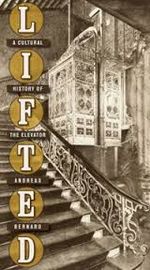
According to elevator legend, it all began with a stunt. In the summer of 1854, at the Exhibition of the Industry of All Nations in New York, an engineer called Elisha Graves Otis gave regular demonstrations of his new safety device. Otis had himself hoisted into the air on a platform secured on either side by guide-rails and – at a suitably dramatic height – cut the cable. Instead of plummeting to the ground fifty feet below, the platform stopped dead after a couple of inches. ‘All safe, gentlemen, all safe,’ Otis would bellow at the expectant crowd. The device was simple enough: a flat-leaf cart spring above the platform splayed out to its full extent as soon as the cable was cut, engaging notches in the guide-rails. Has any mode of transport ever been safer? After 1854, malfunctioning (or non-existent) doors were the only direct risk still attached to travelling by lift. Safety first was not so much a motto as a premise. No wonder that the closest high-end TV drama has come to Sartrean nausea is the moment in Mad Menwhen a pair of elevator doors mysteriously parts in front of troubled genius Don Draper, who is left peering in astonishment down into a mechanical abyss. The cables coiling and uncoiling in the shaft stand in for the root of Roquentin’s chestnut tree.

more here.

You can’t beat a good Indian curry, after all

William Sitwell in The Telegraph:

Indian_2960807bBritain’s restaurateurs are scratching their heads. An Indian establishment has clinched the number one spot in the National Restaurant Awards. And it’s knocked the man of the moment off the top spot. Tom Kerridge, whose Hand and Flowers pub was last year’s winner, will not be the only one wondering today exactly how the cuisine of naan breads, chicken tikka masala, pints of lager and chutney could have pulled it off.

Except that Gymkhana, the Mayfair eaterie that won the coveted award, isn’t exactly your average curry house. It opened in September 2013 and was inspired by the Raj era of Indian gymkhana clubs. Fans, hanging from the dark lacquered oak ceilings, whirl softly; wall lamps are made from Jaipur cut-glass; there are hunting trophies from the Maharaja of Jodhpur. Oak booths host tables of marble, the banquettes are of bitter chocolate leather. The rooms are divided by mottled glass screens, the walls are hung with old Punch sketches and Indian sporting prints. The menu, meanwhile, features dishes such as duck egg and white crab bhurji, Chettinad duck, achari roe deer chops, mustard mooli, lamb nalli barra and Gilafi buffalo seekh kebab. Desserts include Jaggery caramel custard and rosewater kulfi falooda. Among the cocktails is the Ooty town gimlet, made with Hendricks gin and crystalised rose petals. Yes, there is a lassi, only it’s made with Butterfly Boston absinthe, cucumber and dill.

More here.

Emotions Can Be Contagious on Online Social Networks

Tanya Lewis in Scientific American:

FacebookCould reading a cheerful or depressing post on Facebook influence your own mood? Apparently so, according to a new study conducted by the social networking company. When Facebook removed positive posts from the news feeds of more than 680,000 users, those users made fewer positive posts and more negative ones. Similarly, when negative posts were removed, the opposite occurred. The findings provide experimental evidence that emotions can be contagious, even without direct interaction or nonverbal cues, the researchers say. [The Top 10 Golden Rules of Facebook] “These results indicate that emotions expressed by others on Facebook influence our own emotions,” the authors wrote in the study published June 17 in the journal Proceedings of the National Academy of Sciences.

The idea that emotional states can spread among people without their awareness, known as emotional contagion, has been shown before in laboratory experiments. One study found that lasting moods such as depression and happiness can be transferred via a real-world social network, but the findings have been controversial because it was based on correlational evidence and could not rule out other potential variables. Facebook researchers decided to look for evidence of emotional contagion among users of its online social networking site. Facebook users often express emotions on the site, which their friends can view in their personal news feed.

More here.

Wednesday Poem

The Magic Carpet
.

Because I am the greatest in his realm
your husband sent for me, left me alone with you in the inner palace

where, on pain of death, no man may tread.
My commission was to render your face

in silks and thread of gold, the most delicate of textiles.
Of course the inevitable happened (for the rumours

of your beauty weren’t greatly exaggerated) and I set out to make your portrait
unfinishable. Every night I heard the women and eunuchs murmur

in the corridors: “Hush, hush, the master is working!”
when every night my work was withering,

stitch by ripped stitch, in my own hands. How long can I explain the delay,
my doings and undoings, this penelopian dithering?

Your face shimmers on the floor beneath me.
I cannot insert the final threads of vermilion, jade and blue

for fear that we have lift off before I can even step aside
and it carries me away from you.
.

by Billy Ramsell
from Complicated Pleasures
publisher Dedalus, Dublin, 2007

Tuesday, July 1, 2014

A Groundbreaking Work of Staggering Genius

Zia Haider Rahman’s first novel, In the Light of What We Know, is already the literary event of the year (reviewed in Open, ‘A Groundbreaking Work of Staggering Genius’, 23 June 2014). Born in Bangladesh and educated at Oxford, Cambridge and Yale, Rahman has worked as an investment banker and human rights lawyer.

S Prasannarajan in Open:

As a writer, you hold the world in your palm and play with it. Are you drawn to the novel as a form because of the freedom that it alone gives you?

There are few venues that offer the scope to explore the phenomena of experience and consciousness afforded by the art of the novel. I believe that the novel remains the pre-eminent form for a certain kind of enquiry.

Ideas, from philosophy to politics to mathematics, replace action in this novel, seldom seen in novels from the East. Am I right?

ScreenHunter_716 Jul. 01 16.35I wouldn’t presume to comment on what is (or isn’t) seldom seen in novels from the East. But to take your substantive point, I understand what you’re getting at though I would have to reframe it slightly. There’s a lot of action in this novel, ranging from walks in the leafy squares of Bloomsbury in London and boat rides off Manhattan island to train crashes in Sylhet and bomb explosions in Kabul. But what you’re noting is that there’s also a lot that is discussed, in the way that two men—both approaching middle-age, both of a certain education, both at pivotal moments in their lives— might discuss things if freed from quotidian claims. In the age of Twitter and Facebook, of soundbites and the frenetically simplifying accounts of an ever more complex social environment, these two men have been granted a space in which to slow down.

Consider an American president’s decision to take his country to war. What the media will slant us towards is the action of the battlefield, which is where the images are. But think of the drama that took place in the lead-up to the decision. The state department at loggerheads with the defense department; junior analysts at the CIA resigning noisily over the willful blindness of their superiors. All action is predicated on a drama, sometimes a struggle in itself, played out in thoughts and ideas, in the things we think we know.

Many of the novels that have left an enduring mark on me have not shied away from exploring the life of the mind, directly or indirectly. Sebald’s novels are an obvious example, but there are many other works too, not so readily detectable in similarities of style but whose influence has been, I think, on my perception of what fiction is capable of doing. Thomas Mann’s Doctor Faustus combines ‘action,’ as you put it, with ideas, or the actions of the mind. Our beliefs are what animate us and without them we would be lifeless.

More here.