tolstoy in the English-speaking world

0eef660c-1ebd-11e4-ad93-00144feabdc0Rosamund Bartlett at the Financial Times:

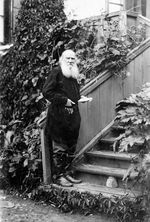
At the beginning of the 20th century, there were more people reading Tolstoy in translation than any other writer. That this was an extraordinary phenomenon becomes clear from reading an unsigned review of 13 new volumes of Tolstoy translations published in Britain’s liveliest literary periodical, the Saturday Review, in 1905. “Twenty years ago Tolstoy was hardly known outside Russia”, it begins. “We remember mentioning his existence to an American novelist of first rank, a great admirer of Turgenev, who did not seem inclined to believe that people would soon come to recognise the greater power of Tolstoy. Who has not heard of Tolstoy now?”

The novelist in question is undoubtedly Henry James, a friend and well-known admirer of Ivan Turgenev, the first leading Russian writer to be widely translated and recognised abroad. The critic is almost certainly James’s protégé HG Wells, one of a number of brilliant young writers drafted in to shake up the Saturday Review by its new editor in the 1890s. A year after this review was published, Wells would write Tolstoy a fan letter, telling him he had read everything by him he could find in English, about 18 volumes, and that, in his opinion, of all the works he had had the fortune to read, War and Peace and Anna Karenina were the “most magnificent and all-encompassing”.

more here.

Haruki Murakami’s ‘Colorless Tsukuru Tazaki’

La-kdm1-bk-0717-murakami-01-jpg-20140806David L. Ulin at The LA Times:

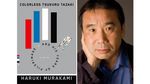
Haruki Murakami's “Colorless Tsukuru Tazaki and His Years of Pilgrimage” begins with a simple premise: A Tokyo railroad engineer, the Tsukuru Tazaki of the novel's title, unable to get over the summer of his sophomore year in college, when for no reason he can determine he was cut off by his close-knit group of high school friends. This unit of five was once inseparable; “We had several unspoken rules,” he explains, “one of them being As much as we possibly can, we do things together, all five of us.”

The betrayal sends Tsukuru into a spiral. “It was as if,” Murakami writes, “he were sleepwalking through life, as if he had already died but not yet noticed it.” It's a condition that lingers into adulthood. “Though he lacked a striking personality,” the author continues, “or any qualities that made him stand out, and despite always aiming for what was average, the middle of the road, there was (or seemed to be) something about him that wasn't exactly normal, something that set him apart. And this contradiction continued to perplex and confuse him, from his boyhood all the way to the present, when he was thirty-six years old.”

more here.

on ‘Becoming Freud,’ by Adam Phillips

10gornick-master495Vivian Gornick at the New York Times:

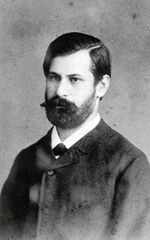
Freud was stunned by the stories people invent in describing their childhoods. In time he would become absorbed in showing us “how ingenious we are at not knowing ourselves, and how knowing ourselves . . . has become the problem rather than the solution.”

The discovery of and exploration of the unconscious was the central drama of Freud’s life, the one thing he kept passionate faith with throughout private and professional vicissitudes. It was through attention to the unconscious that he made his major discoveries, the most important being that from birth to death we are, every last one of us, divided against ourselves. We both want to grow up and don’t want to grow up; hunger for sexual pleasure, dread sexual pleasure; hate our own aggressions — our anger, our cruelty, our humiliations — yet these are derived from the grievances we are least willing to part with. The hope of achieving an integrated self is a vain one as we are equally divided about our own suffering; we do in fact love it and want — nay, intend — never to relinquish it. What Freud found most difficult to cure in his patients, Phillips tells us, “was their (mostly unconscious) wish not to be cured.”

more here.

Saturday Poem

The Fall of Rome
 
The piers are pummelled by the waves; In a lonely field the rain Lashes an abandoned train; Outlaws fill the mountain caves.  Fantastic grow the evening gowns; Agents of the Fisc pursue Absconding tax-defaulters through The sewers of provincial towns.  Private rites of magic send The temple prostitutes to sleep; All the literati keep An imaginary friend.  Cerebrotonic Cato may Extol the Ancient Disciplines, But the muscle-bound Marines Mutiny for food and pay.  Caesar’s double-bed is warm As an unimportant clerk Writes I DO NOT LIKE MY WORK On a pink official form.  Unendowed with wealth or pity, Little birds with scarlet legs, Sitting on their speckled eggs, Eye each flu-infected city.  Altogether elsewhere, vast Herds of reindeer move across Miles and miles of golden moss, Silently and very fast.


by W.H. Auden
from Another Time
Random House, 1940

Telling White People the Criminal Justice System is Racist Makes them Like it More

170038226.0_standard_755.0

Dara Lind in Vox:

[A]s [criminal-justice] reforms move from proposals to actual bills, the key question is how to persuade the general public that change is needed. A new study suggests that highlighting racism in the criminal justice system is not the answer, and in fact pushes white voters in the opposite direction. Even when whites believe the current laws are too harsh, they're less likely to support changing the law if they're reminded that the current prison population is disproportionately black.

The study, which was conducted by Rebecca Hetey and Jennifer Eberhardt of Stanford University and published in Psychological Science, consisted of two experiments.

The first experiment was conducted in San Francisco in 2012, when the state of California was considering a reform to its “three-strikes” law. Researchers showed white commuters a short video that featured a series of inmate mugshots. One version of the video reflected the total prison population: 25-percent black. The other reflected the population imprisoned under the three-strikes law: 45-percent black.

Both groups agreed that the three-strikes law was too harsh. But if the video they'd seen had more black inmates in it, they were less likely to agree to sign a petition to change it. More than half of the first group signed the petition; only a quarter of the second group did.

In other words, according to the researchers, “the blacker the prison population, the less willing registered voters were to take steps to reduce the severity of a law they acknowledged to be overly harsh.”

The second experiment involved asking white New Yorkers about the stop-and-frisk program — after telling some of them that the New York state prison population was 40 percent black, and the rest that New York City's prison population was 60 percent black. Both groups agreed that stop-and-frisk was punitive. But again, the group that heard the 60-percent statistic was substantially less likely to want to sign a petition to end stop-and-frisk.

More here.

Friday, August 8, 2014

Queer Theology and Sexchatology

Susannah_Cornwall

Richard Marshall interviews Susannah Cornwall in 3:AM Magazine:

Susannah Cornwall is a theologian with philosophical thoughts about how religions needs to get to grips with sexuality, about why bodies matter,about why sexuality is so divisive in religion, about queer theologies, about their outsider status, about Frederick Roden’s linking of Christian queer theology to Jewish traditions, about queer Muslim theology, about links between queer theologies and liberation theologies, about the relationship between sexuality, incarnation and erotic love, about what contemporary theology can add to debates about sex, about sexchatology, about Jürgen Moltman, about the challenges intersexed bodies bring to theology, and about how her theological positions speak to the stigmatised and marginalised.Divine…

3:AM: What made you become a theologian – and are you working only with Christian theology?

Susannah Cornwall: I was fortunate to grow up going to a church which was “broad church” in the best sense, where there were women in leadership for as long as I can remember, and where I was encouraged to participate fully even as a child. But, as for many people, I suspect, the trajectory that brought me to where I am today looks much clearer in retrospect than it ever did at the time. At every stage, serendipity has taken me onward. When I was 13 and choosing GCSE options, there were three subjects I passionately wanted to take, and only one timetable slot available. I was tossing up Religious Studies, Italian and Drama as possibilities. If I hadn’t chosen Religious Studies, then I might not have plumped for Theology and Philosophy at A-Level (I very nearly did Psychology instead). And if I hadn’t done Theology A-Level, then when I arrived at university to start my English literature degree (I was always going to do English – and I was always going to be a journalist) and quickly realized that I wanted to do Theology instead, I might not have been allowed to transfer onto the course. But I knew in my very first undergraduate lecture that it had been the right decision, and I’m convinced now, as I was then, that all theology is love and justice.

Most of my work has been on the cusp of Christian constructive theology and theological ethics. In some areas, especially feminist and postcolonial interpretation, I’ve drawn quite a bit on the work of Jewish scholars – always, I hope, with an awareness that Jewish narratives and texts can’t be unproblematically hijacked by Christian thinkers. And I’m currently researching accounts of variant sex and gender and understandings of the human being across Islam, Judaism and Christianity.

More here.

The Two Abysses of the Soul

Dostoevsky_1879-243x366

Costica Bradatan in LA Review of Books:

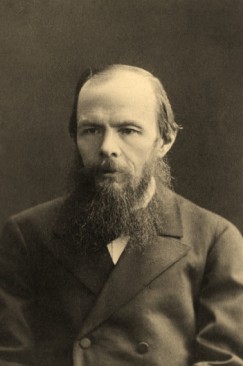
Toward the end of The Brothers Karamazov, as the prosecutor Ippolit Kirillovich makes his case for Dmitri Karamazov’s condemnation, he brings up the image of two abysses between which the defendant, in his view, is caught. One is the “abyss beneath us, an abyss of the lowest and foulest degradation,” while the other is “the abyss above us, an abyss of lofty ideals.” “Two abysses, gentlemen,” says the prosecutor, “in one and the same moment — without that […] our existence is incomplete.”

This image of the two intertwined abysses can be said to be a picture of Russia itself. The basest and the highest, the most despicable and the noblest, profanity and sainthood, total cynicism and winged idealism, all meet here. Andrei Tarkovsky has an uncanny ability to articulate this synthesis of opposites into a mystical vision of sorts — most of his films take the viewer from the depths of a dark, corrupted world all the way up to a realm of splendors and a vision of beatitude. In Andrei Rublev that happens literally as, at the end of the film, you are led from a black-and-white “vale of tears,” all mud and blood, to the serene contemplation of Rublev’s divine images, all in full color now. Outsiders may find this hard to take, but for a Russian sensibility such a transition is a natural movement. There is no break here, just the normal traffic between the two abysses of the soul.

Since the two abysses cannot be disjointed, along with the abyss of Katyn and of the Ukrainian famine, East Europeans get to know intimately the other one as well: the abyss of “lofty ideals” — of Russian literature, music, cinema, philosophy, and religious thought. Stalin has marked Eastern Europe forever, but so have Dostoevsky, Shostakovich, Tarkovsky, and Shestov. Historically, Russia has caused much suffering in the region, but it has also shaped people’s minds and affected their sense of being in the world. Russia’s cultural proximity has translated for East Europeans into an expanded repertoire of feelings, sensibilities, and states of being. In the long run, the situation has no doubt enriched — philosophically and existentially — the East European cultures.

This may be history’s ironic payback, some perpetual war reparation program.

More here.

Between Israel and Social Democracy: Tony Judt’s Jewishness

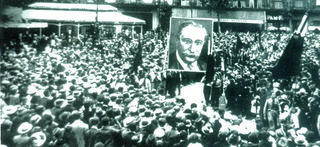
1407339328leon_blum_pop_front_1936_rallyPS666

Daniel Solomon in Dissent (French Popular Front rally for Leon Blum, 1936 (Parti Socialiste/Flickr):

On October 3, 2006, around 5:00 p.m., Tony Judt’s phone rang. On the other line was Patricia Huntington, the president of Network 20/20, a New York–based professional networking organization. Judt had planned to spend the evening speaking to the organization’s members about the influence of pro-Israel advocates over U.S. foreign policy, at the Polish Consulate on Madison Avenue. Huntington’s call freed up Judt’s evening schedule; the Polish consul general had cancelled the event.

The consul general’s decision followed a rhetorical assault by various pro-Israel Jewish groups, including the Anti-Defamation League, led by Abraham Foxman, and the American Jewish Congress, whose director David Harris had called the Consulate—“as a friend of Poland”—to highlight Judt’s allegedly anti-Israel advocacy. In the following days, Judt mustered a campaign against these apparent infringements against the historian’s free expression. An open letter to Foxman, signed by over one hundred of Judt’s colleagues andlater published in the New York Review of Books, to which Judt was a frequent contributor, accused the ADL director of fostering a “climate of intimidation.” In response, Foxmandescribed the original letter as an effort to “completely debase those values” of democratic speech that the undersigned themselves defended.

Judt died four years later, on August 6, 2010, from complications of amyotrophic lateral sclerosis (ALS). If the cancellation of his speech at the Polish Consulate created a new climate of intimidation, Judt had hardly noticed. Obituarists, both familiar and unfamiliar, remembered the historian both as an eminent student of modern Europe—from 1995 until his death, Judt was the founding director of New York University’s Remarque Institute—and as a public gadfly on the topic of Israeli politics. Many discussed this latter status as a synonym of Judt’s Jewishness. Events like the Polish Consulate dust-up, or the controversy surrounding Judt’s 2003 partial defense of a “one-state solution” to the Israeli-Palestinian conflict, defined both posthumous portrayals of Judt’s Jewish identity and, toward the end of his life, the historian’s own understanding of his bibliography. In a eulogy-qua-review of Judt’s collection of memoir-essays The Memory Chalet, Thomas Nagel described the historian’s essay on the one-state solution, “Israel: The Alternative,” as “a deliberately utopian fantasy that takes his rejection of identity politics to its limit.” In this telling, Judt’s last decade of public writing fully embraced the cosmopolitan, leaving little room for a provincial Jewish politics now fully in Zionism’s embrace. For a dying Judt as well as for his obituarists, the hawkish nationalism of many of Israel’s global advocates made contemporary Jewishness an ugly, reactionary enterprise.

Beyond Zionism and its discontents, however, Judt’s Jewishness was a vibrant companion of the historian’s aspiring cosmopolitanism. For Judt, the history of political cosmopolitanism— a politics that serves a common public, regardless of identity—was an outgrowth of a collective history of Jewish suffering. Fin-de-siècle and interwar France, the Nazi Holocaust, and Communist Eastern Europe—the epochs that weigh heaviest over Judt’s work as well as over the century-long destruction of European Jewry—were the predecessors of an increasingly egalitarian European state. The biography of Judt, a next-generation descendant of Holocaust survivors, is also the story of the political left: the imagination of the universal through the preservation of the provincial.

More here.

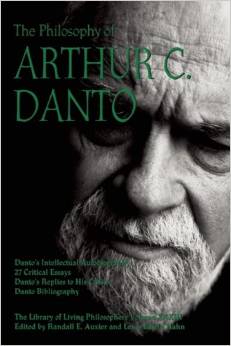
The Philosophy of Arthur C. Danto

Brian Soucek in Notre Dame Philosophical Reviews:

DownloadThe thirty-third volume of the Library of Living Philosophers is dedicated to the life and thought of Arthur Danto, the philosopher and art critic who died last October. The book is a mixed bag. This might be inevitable in a collection of twenty-seven essays and responses. But the problems go beyond the odd misfire among the contributions. The essays are at once repetitive and crucially under-inclusive; the arrangement is haphazard; and the number of essays that Danto, famous for his generosity, found impenetrable or just wrong is alarmingly high. Few will, and still fewer should, read this book cover-to-cover. The best service I can provide, then, is to highlight what parts more selective readers will not want to miss.

To start: anything written by Danto himself. The format — and point — of the Living Philosophers series is to put great thinkers in conversation with their critics, and Danto's short responses are almost always interesting, whether they are actually responsive or, as often, not. A reader gets more than a dozen essays deep into the book, in fact, before encountering a contribution that's better than Danto's response.

Even more rewarding is the 68-page intellectual autobiography that begins the book. Danto's narrative is breezy at times — one page alone finds Danto, in 1950, making a movie in Rodin's foundry, getting to know Giacometti in Paris, and visiting Santayana in Rome (10). Recent survivors of the academic job market may be scandalized to hear how, in 1951, Danto was offered his first position at Columbia during an unplanned stop at its bookstore “to pick up some 3×5 cards, God knows why” (11). (He taught there for the next four decades.) Hardly less serendipitous are Danto's stories about his decision to stop producing art cold turkey in the early '60s — before that, he was making as much money selling woodcuts as he did as an assistant professor of philosophy — or the unexpected invitation he received in 1984 to become the art critic for The Nation, a role he inhabited to great acclaim for the next twenty-five years.

More here.

The Last And First Temptation Of Israel

Andrew Sullivan in The Daily Dish:

What is one to make of the fact that the deputy speaker of the Knesset has called for ethnic cleansing in Gaza?

He’s not an obscure blogger for the Times of Israel. He is a luminary of the Likud – a man who got 23 percent of the vote in a contest for the Likud Party leadership. He was appointed to his current high position by Benjamin Netanyahu. And this is his proposal for Gaza:

a) The IDF [Israeli army] shall designate certain open areas on the Sinai border, adjacent to the sea, in which the civilian population will be concentrated, far from the built-up areas that are used for launches and tunneling. In these areas, tent encampments will be established, until relevant emigration destinations are determined. The supply of electricity and water to the formerly populated areas will be disconnected.

b) The formerly populated areas will be shelled with maximum fire power. The entire civilian and military infrastructure of Hamas, its means of communication and of logistics, will be destroyed entirely, down to their foundations.

c) The IDF will divide the Gaza Strip laterally and crosswise, significantly expand the corridors, occupy commanding positions, and exterminate nests of resistance, in the event that any should remain.

You read that right. There will be temporary “camps” where the Gaza population will be “concentrated”; they will be expelled with subsidies; basic supplies of water and electricity will be cut off for those who remain. The war-time ethics he recommends are: “Woe to the evildoer, and woe to his neighbor.”

More here.

Why Adjuncts Need More Than Solidarity

2205637713_edd868b50d_o

Gordon Haber in HIPPO Reads:

I want to stop blogging about adjuncting because (a) there are more qualified people doing it and (b) it doesn’t earn me any money. And then something comes along that irritates me so much I feel compelled to respond.

A.W. Strouse recently wrote an op-ed for The Chronicle of Higher Education criticizing the “wild popularity of a new genre of academic writing: the graduate-student blog about the evils of graduate school.”

Let’s leave aside that nothing related to academia is “wild.” Strouse’s piece is irksome to me for its criticism of academic peons who are sick of living in penury (for more see “Death of an Adjunct” in the Pittsburgh Post-Gazette and the story of this homeless professor). What is most irksome—and inadvertently quite revealing—is that nowhere in the piece does Strouse directly address why graduate students and adjuncts are so upset:because they are starving.

Maybe we do need an “ethics of solidarity” between graduate students, adjuncts and tenured faculty, as Strouse suggests. But there is one overarching problem: graduate students and tenure-track faculty are too afraid to help adjuncts, and tenured faculty do not seem to care much about adjuncts.

More here.

Dr. Mads Gilbert: Solidarity with Gaza! If no siege, no tunnels! – If no occupation, no rockets!

My brother Tasnim Raza, who is a surgeon, volunteered to go and help the wounded in Gaza but was told he would not be allowed to enter.

Dr. Mads Gilbert from Tromsø, Norway, was working at Al Shifa Hospital in Gaza during the last Israeli onslaught on Gaza. When he returned from Gaza to his home-town Tromsø on July 31, 2014, he went straight from the airport to give this spontaneous speech at a large solidarity demonstration for Gaza held at the same time.

When it comes to expertise, 10,000 hours of practice isn’t enough

Fiona Rutherford in New Statesman:

NatureWhat distinguishes a few exceptional talents from a mediocre majority? Is it hours upon hours of monotonous dedication to perfecting a skill? Or is it rather an innate gift, like a natural ability or talent? The nature versus nurture debate as applied to intelligence and expertise is not new. Since the mid-1800s scientists have been questioning whether experts are “born” or “made”. Sir Francis Galton, the 19th-century founder of the field of behavioral genetics, proposed that experts are born to be experts. He believed that ultimately our innate abilities limit the level of performance an individual can achieve, and practice is only necessary for reaching an expert level of performance. Yet later mid-20th century psychologists – like John Watson, one of the founders of behaviourism – denied innate abilities or the existence of talent, and instead proposed that practicing more intensively than others is probably the only reasonable explanation for success and accomplishment.

…However, a new study published in Psychological Science suggests otherwise. A team of sceptical psychologists has challenged the fashionable deliberate practice theory by testing whether it's supported by experimental evidence. The results make it clear that 10,000 hours of practice is not a guarantee of expertise in every field. The researchers from Princeton University, led by psychologist Brooke Macnamara, conducted a meta-analysis of the available scientific literature on deliberate practice in music, sports, educations, games and professions. A meta-analysis is a kind of “study of studies”, where scientists try to look at the big picture in a field and reconcile the findings of multiple studies from different teams around the world. While the implications of a single study on deliberate practice might be only mildly useful, when statistically analysed with similar research it can give results that are much more definitive. Meta-analyses have been vital in proving that there is no link between vaccines and autism, for example. The results showed that 26 per cent of the variance in individual performance for games could be explained by practice, dropping to 21 per cent for music and 18 per cent for sports. Interestingly, deliberate practice was shown to be far less important for education – a minuscule 4 per cent – and less than 1 per cent for professions.

More here.

Friday Poem

A Clarification

Judas did not mean to “betray” me—he never even knew such big words.
He was simply “a man of the market,” and all he did—when the buyers came—was sell me.

Was the price too low?
Not at all. Thirty silver coins are no small thing for a man made from dirt.

My dearest friends were all Judas, were all: men of the market.

by Najwari Darwish
from Anthologie Poetique
Al-Feel Publications, Jerusalem, 2012
translation Kareem Abu-Zeid

Cancer categories recast in largest-ever genomic study

From MedicalXpress:

CancerNew research partly led by UC San Francisco-affiliated scientists suggests that one in 10 cancer patients would be more accurately diagnosed if their tumors were defined by cellular and molecular criteria rather than by the tissues in which they originated, and that this information, in turn, could lead to more appropriate treatments. In the largest study of its kind to date, scientists analyzed molecular and genetic characteristics of more than 3,500 tumor samples of 12 different cancer types using multiple genomic technology platforms. Cancers traditionally have been categorized by their “tissue of origin”—such as breast, bladder, or kidney cancer. But tissues are composed of different types of cells, and the new work indicates that in many cases the type of cell affected by cancer may be a more useful guide to treatment than the tissue in which a tumor originates.

…Particularly striking results were seen in bladder and breast cancers. At least three different subtypes of bladder cancer were identified, one virtually indistinguishable from lung adenocarcinomas, and another most similar to squamous-cell cancers of the head and neck and of the lungs. (In the new study, these squamous-cell cancers appeared to form their own subtype, whether they originated in the lungs or in the head and neck.) The findings may help explain why patients with bladder cancer “often respond very differently when treated with the same systemic therapy for their seemingly identical cancer type,” said Benz.

More here.

Thursday, August 7, 2014

What Would Krishna Do? Or Shiva? Or Vishnu?

800px-Trimurti_ellora

Gary Gutting interviews Jonardon Ganeri in the NYT's The Stone (image from Wikimedia commons):

G.G.: What sort of ethical guidance does Hinduism provide?

J.G.: One of the most important texts in the religious life of many Hindus is the Bhagavadgita, the Song of the Lord. The Gita is deeply philosophical, addressing in poetic, inspirational language a fundamental conundrum of human existence: What to do when one is pulled in different directions by different sorts of obligation, how to make hard choices. The hard choice faced by the protagonist Arjuna is whether to go to war against members of his own family, in violation of a universal duty not to kill; or to abstain, letting a wrong go unrighted and breaking a duty that is uniquely his. Lord Krishna counsels Arjuna with the philosophical advice that the moral motivation for action should never consist in expected outcomes, that one should act but not base one’s path of action on one’s wants or needs.

G.G.: This sounds rather like the Kantian view that morality means doing what’s right regardless of the consequences.

J.G.: There are ongoing debates about what sort of moral philosophy Krishna is proposing — Amartya Sen has claimed that he’s a quasi-Kantian but others disagree. More important than this scholarly debate, though, is what the text tells us about how to live: that living is hard, and doing the right thing is difficult; that leading a moral life is at best an enigmatic and ambiguous project. No escape route from moral conflict by imitating the actions of a morally perfect individual is on offer here. Krishna, unlike Christ, the Buddha or Mohammed is not portrayed as morally perfect, and indeed the philosopher Bimal Matilal very aptly describes him as the “devious divinity.” We can but try our best in treacherous circumstances.

G.G.: How does the notion of “karma” fit into the picture?

J.G.: Let me be clear. The idea of karma is that every human action has consequences, but it is not at all the claim that every human action is itself a consequence. So the idea of karma does not imply a fatalistic outlook on life, according to which one’s past deeds predetermine all one’s actions. The essence of the theory is simply that one’s life will be better if one acts in ways that are ethical, and it will be worse if one acts in ways that are unethical.

More here.

Foucault’s Freedom

Oksala_talk2

Richard Marshall interviews Johanna Oksala in 3:AM Magazine:

3:AM: You’ve written about Foucault on freedom. Many people argue that Foucault’s position on subjectivity leads to a metaphysical determinism and that is often construed as eliminating human freedom. You disagree with this reading don’t you?

JO: My first book, Foucault on Freedom, engages with the question of how we should understand freedom today. You are right that the charges against Foucault’s philosophy in contemporary debates often focus on the question of the freedom of the subject. According to many of Foucault’s critics, the denial of an autonomous subject leads to the denial of any meaningful concept of freedom, which again leads to the impossibility of emancipatory politics. I argue that, rather than dismissing Foucault’s thought as politically dangerous and holding on to an autonomous and authentic subject for political reasons, it is more fruitful to take seriously the major impact Foucault’s thought has had on our ways of thinking about the subject, and also try to rethink freedom. I trace the different meanings of freedom in the different phases of Foucault’s thought and show how freedom emerges as a key theme in his thought. I emphasize Foucault’s idea that freedom lies in the ontological contingency of the present, in the unpredictability of our ways of thinking, acting and relating to other people.

3:AM: Your new book looks at Foucault and political violence. You disagree with Zizek andMouffe who say that violence is intrinsic to politics forever. Why is Mouffe’s position contradictory? How does your agonistic conception of politics help you dispute their claims?

JO: Yes, my book, Foucault, Politics, and Violence, questions the idea that violence is an ineliminable part of politics. I draw on Foucault to argue that theoretically we should approach violence as historically contingent practices and not as an expression of some primordial hostility. It is important for me to show this because such a philosophical approach opens up a way to political critiques of violence. For a critique of violence to make robust sense rather than merely to amount to wishful thinking, it must establish as a preliminary move that political violence is not necessary. Conversely, the acceptance of an ineliminable link between violence and politics would mark the end of all radical critiques of violence.

More here.

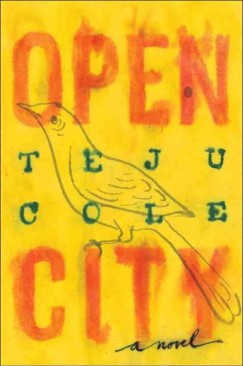
Crossing the Border of Fiction

Open-city-243x366

Kaya Genç on Teju Cole's Open City and Every Day Is for the Thief in the LA Review of Books:

IF YOU DON'T enjoy the company of Teju Cole’s perpetually adrift narrators, it’s unlikely you’ll enjoy Open City (2011) or this year’s book, Every Day Is for the Thief. (The author published another version in Nigeria in 2007.) The narrator of Open City is Julius, a young West African wandering the streets of New York City and Brussels; in Every Day, he is an unnamed traveler crisscrossing Lagos. The reader who enjoys a carefully constructed plot may also find these episodic structures devoid of purpose. Where is the narrative arc, such a reader may ask; what exactly is it that Julius searches for? What is he doing, besides remembering stuff, as he walks in New York and Brussels? And why does that other fellow spend so much time in Lagos if the city annoys him so much?

But, while his books may lack conventional plots, Cole’s characters are nevertheless driven by a chain of events, and his characters, if aimless, come fully equipped with histories. Julius, the narrator of Open City, is half-Nigerian, half-German while the narrator of Every Day isa Nigerian living in the United States. Both men are in their early thirties, with highbrow intellectual interests and a weakness for solitary excursions. Julius, who studied in the United States with full scholarship in his youth, is a psychiatrist completing a fellowship. The narrator in Every Day also enjoyed a privileged education in the United States and has aspirations to be an author.

These young men have the intellectual means to analyze their exilic, marginal, postcolonial selves as well as they do thanks to the critical toolboxes of their first-world institutions. (They are familiar with the works of Derrida, Said, and Badiou.) They enjoy discussing issues, like migration and identity, on a theoretical level. Open City’s Julius meets Farouq, a Moroccan guy working at an internet cafe in Brussels, who boasts about having wanted “to be the next Edward Said” in his youth. Julius and Farouq discuss, among other things, Benedict Anderson’s views about the Enlightenment, the significance of sharia law in the post-9/11 world, and Paul de Man’s writings on insight and blindness. Farouq’s thesis on Gaston Bachelard’s Poetics of Space was rejected by his department, a decision he believes was anti-Muslim. (The committee members convened nine days after 9/11.)

Although Cole’s characters seem to feel at home with theoretics, one can’t help but suspect that they use theory as a means to avoid their own problems. Beneath the glossy facade of the highbrow, impressively articulate Julius lies a very different character, as the book’s shocking finale shows, and it seems probable not only that Farouq failed to put the necessary work into his thesis, but that he also used his knowledge of identity politics to shape a politically loaded excuse for his academic failure.

More here.

The Philosophy Medal

Justin E. H. Smith in his own blog:

6a00d83453bcda69e201a73dfc91c2970d-450wiI recall trembling with excitement that first day last February, as I ran down the icy sidewalk toward the General Secretary’s apartments. It’s hard to believe, this sudden turn of events. There I was, a few months ago, the author of a single monograph on the sources of Klopp’s doctoral dissertation on the concept of inertia. And now, here I am, the homeland's most renowned expert on Kloppism-Noginism, called by the GenSek himself to serve as his loyal tutor! After he was humiliated at the Security Council meeting when the ambassador from the United Provinces of C**** dropped that unscripted question about Klopp’s debt to Epicurus, the GenSek's councillors decided it was time for a crash-course in Kloppist-Noginist philosophy. As if that had anything to do with revolution and state-building!

You have to understand, the GenSek is a fine Kloppist-Noginist, but books just aren’t his forté: he was too busy making revolution back when others were preparing for their exams. His first exposure to Klopp was in prison, where he wound up in the aftermath of some low-level, hunger-driven chicken thievery. He never got his Klopp from a leather-bound volume in the collected works at the Philosophy Faculty. No, that was a luxury reserved to me, and others of my class. The GenSek got it from poverty, from life, from the dank prison air. Now it’s time for me to give him what I can from my world, so that I may thrive in his world. Because it is his world now.

More here.

When Protesting Israel Becomes Hating Jews

Jason Stanley in the Boston Review:

There has been a great deal of attention to anti-Semitic demonstrations in Europe. The demonstrations in Berlin have been particularly hard to watch for those of us who are children of German Jewish refugees, and are aghast at what is happening to the people of Gaza. It is clear from Israeli social media and other sources that the demonstrations are being used as evidence of the threat Israel faces, and as support for Israel’s continued occupation of Palestinian lands and the subjugation of its people. It is worthwhile taking the time to explain why here, as so often elsewhere, the politics of hate play directly into the hands of those at whom it is directed. But first, some family history.

My father was raised in Berlin. His favorite park was Olivier Platz, in Charlottenburg; he liked the flowers, and he liked sitting on the benches. He liked watching the people go by the Kurfürstendamm from his grandparent’s balcony. Both of his parents grew up in Berlin, and loved that city dearly. They had picnics in Grunewald. My grandmother and grandfather met their friends at the Kempenski hotel. They were Germans.

Ultimately, of course, my father and his family lost everything. His grandfather, Magnus Davidsohn, was the cantor of the liberal synagogue on the Fasanenstrasse; my father watched it burn. He was beaten on the streets by thugs, beatings that gave him epilepsy. And because of a stroke of magical luck— the stroke that every survivor’s family has— in March of 1939, at the age of 6, he and my grandmother received a visa to the United States. In Germany, they were prosperous. But they arrived in New York City, in August of 1939, with nothing.

More here.