Saadat Hasan Manto’s distaste for dogmas

Hirsh Sawhney in TLS:

TLS_Sawhney_414479hThe Urdu writer Saadat Hasan Manto wrote penetrative short stories about India’s tragic Partition in 1947, an event defined by mass murder, rape and forced migration. Though Manto was born a Muslim, these stories are distinctly nonpartisan, indicting individuals from all of South Asia’s political groups and religious communities, and also British imperialists, whose hasty flight from the subcontinent had cataclysmic consequences. Some of these tales, such as the well-known “Toba Tek Singh”, use satire to convey the political absurdity of Partition, which turned friends and neighbours into enemies overnight, whereas stories such as “Cold Meat” tackle the brutality head-on. In this latter tale, which prompted the postcolonial Pakistani government to prosecute Manto for obscenity, a Sikh man returns home after several days of looting and murdering. The sight of his voluptuous wife arouses him, and he tries to make love to her. But he can’t get an erection. His sexually frustrated wife grows suspicious that he’s been cheating, and stabs him. While the man bleeds to death, he admits to having raped a girl during the chaos, but his confession doesn’t end there: it transpires that this beautiful girl was actually a corpse and that the man inadvertently committed an act of necrophilia.

Though Manto’s stark Partition stories are his most celebrated and frequently anthologized, he wrote prolifically and worked in a variety of genres during his short life. Between his birth in undivided India in 1912 and his death in 1955 in Pakistan, he churned out hundreds of short stories, radio plays and screenplays, and translated various European authors, including Victor Hugo, into Urdu. Towards the end of his life, disillusioned with Partition and in and out of a mental asylum for his alcoholism, he wrote a series of “Letters to Uncle Sam”, farcical yet astute essays about international politics and post-war neoimperialism.

More here.

Scientists and the social network

Richard Van Noorden in Nature:

Scientists-and-the-social-networkIn 2011, Emmanuel Nnaemeka Nnadi needed help to sequence some drug-resistant fungal pathogens. A PhD student studying microbiology in Nigeria, he did not have the expertise and equipment he needed. So he turned to ResearchGate, a free social-networking site for academics, and fired off a few e-mails. When he got a reply from Italian geneticist Orazio Romeo, an inter­national collaboration was born. Over the past three years, the two scientists have worked together on fungal infections in Africa, with Nnadi, now at Plateau State University in Bokkos, shipping his samples to Romeo at the University of Messina for analysis. “It has been a fruitful relationship,” says Nnadi — and they have never even met. Ijad Madisch, a Berlin-based former physician and virologist, tells this story as just one example of the successes of ResearchGate, which he founded with two friends six years ago. Essentially a scholarly version of Facebook or LinkedIn, the site gives members a place to create profile pages, share papers, track views and downloads, and discuss research. Nnadi has uploaded all his papers to the site, for instance, and Romeo uses it to keep in touch with hundreds of scientists, some of whom helped him to assemble his first fungal genome.

More than 4.5 million researchers have signed up for ResearchGate, and another 10,000 arrive every day, says Madisch. That is a pittance compared with Facebook’s 1.3 billion active users, but astonishing for a network that only researchers can join. And Madisch has grand goals for the site: he hopes that it will become a key venue for scientists wanting to engage in collaborative discussion, peer review papers, share negative results that might never otherwise be published, and even upload raw data sets. “With ResearchGate we’re changing science in a way that’s not entirely foreseeable,” he says, telling investors and the media that his aim for the site is to win a Nobel prize.

More here.

Wednesday, August 13, 2014

Why We Can’t Rule Out Bigfoot

3885_311abb492a69fe7da41be858fdd2aae8

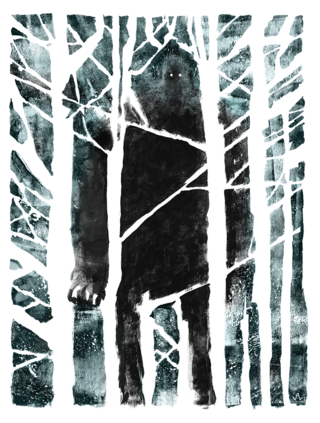
Carl Zimmer in Nautilus (illustration by Jeffrey Alan Love):

People often think that the job of scientists is to prove a hypothesis is true—the existence of electrons, for example, or the ability of a drug to cure cancer. But very often, scientists do the reverse: They set out to disprove a hypothesis.

It took many decades for scientists to develop this method, but one afternoon in the early 1920s looms large in its history. At an agricultural research station in England, three scientists took a break for tea. A statistician named Ronald Fisher poured a cup and offered it to his colleague,Muriel Bristol.

Bristol declined it. She much preferred the taste of a cup into which the milk had been poured first.

“Nonsense,” Fisher reportedly said. “Surely it makes no difference.”

But Bristol was adamant. She maintained that she could tell the difference.

The third scientist in the conversation, William Roach, suggested that they run an experiment. (This may have actually been a moment of scientific flirtation: Roach and Bristol married in 1923.) But how to test Bristol’s claim? The simplest thing that Fisher and Roach could have done was pour a cup of tea out of her sight, hand it to her to sip, and then let her guess how it was prepared.

If Bristol got the answer right, however, that would not necessarily be proof that she had an eerie perception of tea. With a 50 percent chance of being right, she might easily answer correctly by chance alone.

Several years later, in his 1935 book The Design of Experiments, Fisher described how to test such a claim. Instead of trying to prove that Bristol could tell the difference between the cups of tea, he would try to reject the hypothesis that her choices were random. “We may speak of this hypothesis as the ‘null hypothesis,’ ” Fisher wrote. “The null hypothesis is never proved or established, but is possibly disproved, in the course of experimentation. Every experiment may be said to exist only in order to give the facts a chance of disproving the null hypothesis.”

More here.

John Updike on John Cheever

Tumblr_mc689rrQcZ1r6xvfko1_1280John Updike from a 1991 piece in The New Republic:

In 1970, after the disappointing reception of the rather punchyBullet Park, an entry begins with the unforgettable cry, “Whatever happened to Johnny Cheever? Did he leave his typewriter out in the rain?” His perversely contented stuckness, as he rotates in a mire of drink and marital discontent, varied by rather forced spurts of child-cherishing and nature-worship but gradually deepening into phobia, artistic impasse, and vicious behavior, should be overwhelming, and it does tax our patience. But in fact even at his lowest ebb Cheever can write like an angel and startle us with offhand flashes of unblinkered acumen.

And there is, beneath the apparently futile churning of these jottings to himself, a story, which we know not from any editorial guidance in reading the journal excerpts but from the biographies by Susan Cheever and Scott Donaldson and his letters as edited by his son Ben. Cheever did, in the spring of 1975, stop drinking. The novel he then wrote, Falconer, and the handsome volume of Collected Stories that he allowed Gottlieb to assemble and to publish, won him the greatest financial and critical success of his life. At the same time, he came out of the closet, and the (mostly) suppressed homosexual urges so darkly alluded to in the earlier journals blossomed into lewd romps, mostly with “M.,” recorded as frankly and joyfully as a psychotherapist could wish: “When we met here, not long ago, we sped into the nearest bedroom, unbuckled each other’s trousers, groped for our cocks in each other’s underwear, and drank each other’s spit. I came twice, once down his throat, and I think this is the best orgasm I have had in a year.”

more here.

the literature of Alessandro Spina

Naffis-sahely_spinasshadow_ba_img_0André Naffis-Sahely at The Nation:

Three months after Alessandro Spina’s death in July 2013, Ilario Bertoletti, his Italian editor, published a memoir in which he described his first near-encounter with the notoriously reclusive writer: “It was June, 1993. The bell rang in the late afternoon; moments later, a colleague entered my office: ‘A gentleman dropped by. He looked like an Arab prince, tall and handsome. He left a history of the Maronites for you.’”

The editor made some inquiries and discovered that Spina had been quietly publishing a number of novels and short stories since the early 1960s. It was an oeuvre that charted the history of Libya from 1911, when Italy invaded the sleepy Ottoman province, all the way to 1966, when petrodollars sparked an economic boom, exacerbating the corruption and nepotism that eventually paved the way for Muammar Qaddafi’s coup d’état in 1969. Bertoletti runs an independent imprint based in Brescia, and it took him fifteen years to persuade Spina to let him reissue his books, or rather to assemble them into a 1,280-page omnibus edition entitled I confini dell’ombra: In terra d’oltremare (The Confines of the Shadow: In Lands Overseas).

more here.

The Shadows of Lauren Bacall

LaurenBacall-1940s-320Richard Brody at The New Yorker:

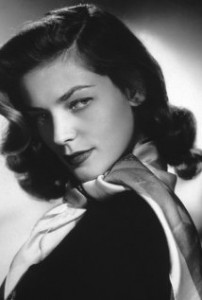
There’s no better evidence for the idea that watching a great actor means watching a great director at work than the career of Lauren Bacall, who, at the time that she was discovered by the director Howard Hawks, was hardly even an actress. She was a model whom Hawks’s wife, Slim Hawks, had spotted on a magazine cover. Howard Hawks claimed that Bacall, rather than her résumé, ended up in his office as a result of a misunderstanding. When he met her, he hated her high voice and told her to alter it to a throaty purr.

She was nineteen; he instructed her (so he said) to sass men, and, when she sassed Clark Gable, Hawks told his screenwriter Jules Furthman, “Do you suppose we could make a girl who is insolent, as insolent as Bogart, who insults people, who grins when she does it, and people like it?” They started writing, and, Hawks said, “I would try out the scenes on Bacall,” and here’s the thing—he added, “She was working all the time.” He got her to work even more, with a series of demanding lessons in accents. He maintained her natural, somewhat feline look—as Bacall wrote in her autobiography, “By Myself,” “Howard had chosen me for my thick eyebrows and crooked teeth and that’s the way they would stay.”

more here.

The Arab world is still trying to sort out the unfinished business of the Ottoman Empire

Vali Nasr in the New York Times:

Nasr-contributor-articleInline-v2The Arab world today is the product of maps drawn by the British diplomat Sir Mark Sykes and his French counterpart François Georges-Picot in 1916, and sanctified at the Treaty of Versailles in 1919. European rule over Arab states that were only nominally independent followed; this left these states struggling with legitimacy ever since. When the Europeans left, they were followed by dictators who talked of nationalism, but failed to convince their own citizens that they were important participants in the nation.

That was because the arbitrary boundaries had left these new Arab states open to perpetual internal clashes based on rivalries among tribes and religious sects. Their leaders spoke the language of modern nationalism, but their states never quite united. So they turned to domination by one tribe or sect over others.

The Ottomans, by contrast, knew how to manage diversity. Their decentralized model embraced a rudimentary pluralism that saw politics as the pursuit of a workable balance between differing tribes and religious communities. More often than they do now, these communities could tolerate and coexist with one another, despite differences.

In the failure of the Arab Spring and the ascendance of Islamist militancy, we are seeing a new explosion of tribal and sectarian differences. This is the real root of the challenge posed by nonstate movements that seek to form shadow governments in ungoverned territories. We have seen them before in Lebanon, Libya, the Palestinian territories.

More here.

How Green Was My Valley

Nadia Al-Issa in ArtAsiaPacific:

Cow-2-450x281“How Green Was My Valley” was a poetic meditation on the backbreaking labor, bittersweet sacrifice and precious pleasures entailed in the Palestinian people’s love for their homeland and struggle for its liberation. Featuring photography, painting, sculpture, video and installation art by 15 emerging and established Palestinian artists, the exhibition at Whitebox Art Center, New York, foregrounded the potential for absurd humor and daring dreams rooted in the cruel and oppressive landscape of occupation, and stood as a testament to the stubborn refusal of Palestinians to let go of hope.

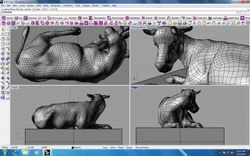
Rendering activism as labor, and labor as activism, Amer Shomali’s Pixelated Intifada (2012) is an animated, black-and-white 3D model of a cow that pays tribute to an act of resistance from the not-so-distant but increasingly elusive era of the late 1980s, and represents a labor movement undertaken to create a Palestinian economy autonomous from the Israeli military occupation. In 1987, a number of residents in Beit Sahour, a Palestinian town east of Bethlehem, set up a dairy farm to supplant the monopoly of the Israeli co-op Tnuva. The Beit Sahour farm was soon raided and shut down by the Israeli army, and the Palestinian activists involved were incarcerated. In retaliation, the activists hid the raided farm’s livestock in the surrounding countryside, spurring a four-year-long hunt by the Israeli army for the cows, which evolved into a symbol of sovereignty for Palestinians. Shomali’s pixelated cow revolves on the video screen, as if suspended in midair.

More here.

A Lost Way of Making Bodies From Before Skeletons and Shells

Ed Yong in National Geographic:

Body The program running on Jennifer Hoyal Cuthill’s computer is deceptively simple. First, it creates a cylinder. As the cylinder grows, it sprouts branches, first to the left and then to the right, always at the same specified angle. Each of the branches then becomes a stem in its own right, producing its own branches according to the same rules. On they go, branches off branches off branches, four levels deep. The results look like the leaves of ferns, but they’re much more. They look a lot like an ancient group of creatures called rangeomorphs, which existed in a time before skeletons, shells, legs, mouths, guts, and nervous systems. They were just a few inches long, but in a planet dominated mostly by single-celled creatures, they represented one of the first experiments in building relatively large and complex bodies.

…The best-preserved of the rangeomorph fossils show beautiful patterns that seem to repeat at different scales, with smaller versions of the same shape branching off larger ones. In other words, they look like fractals. Palaeontologists have always described them as such, but more in a metaphorical way than a mathematical one. “It had been suggested that they look a bit fractal-like but that hadn’t been tested,” says Hoyal Cuthill. She used her skills in computer science to write a program that uses simple rules of branching and growing to churns out a wide variety of body shapes, which look remarkably like actual fossils. The program has just 28 parameters, including the angle of the branches, their curvature, and how quickly the stems grow. Tweak the parameters, and you get a wide rangeomorph zoo. “It’s a relatively simple program but it’s versatile enough to generate a good approximation of the things we observe in the fossil record,” says Hoyal Cuthill.

More here.

Lauren Bacall

Akim Reinhardt in The Public Professor:

Lauren-Bacall-202x300In the late 1960s, when my father was just starting Ken’s Home Improvements, the contracting business he decided to get up and running now that he had a young son *cough* he relied on recommendations to get his first customers.

An early break came when someone recommended him to New York Timesfilm critic Rex Reed.

Reed was by then one of the nation’s top critics and had landed himself an apartment in The Dakota, the landmark Manhattan building on Central Park West. It would later become infamous as the home of John Lennon, when he was shot in front of it in 1980.

The Dakota is hard to describe. How many apartment buildings do you know that have their own Wikipedia entry, complete with a list of notable residents and cultural references?

It’s the only building I can think of that’s had the distinction of being jarringly out of place not once, but twice.

When it opened in 1884, the building stood in what was then still considered the northerly reaches of Manhattan. There were farms and trees, and not much else. Indeed, that’s where the name supposedly comes from; when Singer Sewing Machine magnate Edward Clark first announced his plans to build a luxury building all the way up on W. 72nd St., someone supposedly sneered, “That’s practically Dakota!”

More here.

On the 75th anniversary of The Wizard of Oz, remembering that there’s no place like home – and nothing like leaving it

Morgan Meis in The Smart Set:

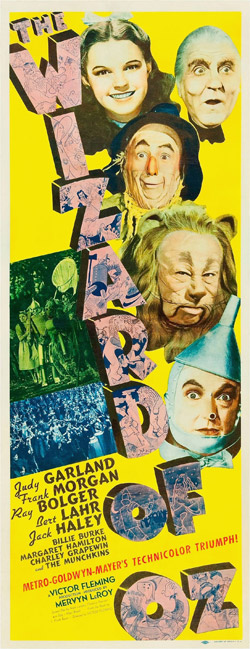
IC_MEIS_WIZARD_AP_001Salman Rushdie wrote an amusing little book in 1992. The title of the book is The Wizard of Oz. It’s about the famous movie with Judy Garland’s Dorothy and Toto and the Wicked Witches, East and West. The movie The Wizard of Oz is celebrating its 75-year anniversary this month. For three-quarters of a century, this unusual movie has been infecting the brains of young people all over the world. Rushdie was one of them. At age ten, Rushdie wrote his first story. He called it “Over the Rainbow.” Strange to think that there is a direct line from The Wizard of Oz to Rushdie’s now-classic tale of the partition of India, Midnight’s Children (1980).

Rushdie is an unabashed lover of the film. Call the film, he writes, “imaginative truth. Call it (reach for your revolvers now) art.” Rushdie also has strong opinions about what this artful film is and is not about. It is not about going home. Yes, Dorothy frequently talks about going home. After her house falls on the Wicked Witch of the East, the munchkins and the Good Witch Glinda tell her to go home immediately. She isn’t safe in Oz, they tell her, not with the Wicked Witch of the West still lurking about. So Dorothy follows the Yellow Brick Road in order to find the Wizard, who will help her return to her home in Kansas. At the end of the movie, she clicks her ruby slippers together and repeats, “There’s no place like home, there’s no place like home.” In a movie that Rushdie says is not about going home, there is quite a lot of home-talk.

But that’s not, says Rushdie, the real story. “Anybody,” he writes, “who has swallowed the screenwriters’ notion that this is a film about the superiority of ‘home’ over ‘away’, that the ‘moral’ of The Wizard of Oz is as sickly-sweet as an embroidered sampler — East, West, home’s best — would do well to listen to the yearning in Judy Garland’s voice, as her face tilts up towards the skies.”

Point taken. Garland’s Dorothy does yearn and tilt as she sings her famous song.

More here.

Tuesday, August 12, 2014

Maryam Mirzakhani wins Fields Medal

Bjorn Carey at the Stanford website:

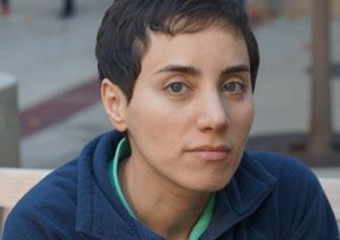
ScreenHunter_741 Aug. 13 11.56Maryam Mirzakhani, a professor of mathematics at Stanford, has been awarded the 2014 Fields Medal, the most prestigious honor in mathematics. Mirzakhani is the first woman to win the prize, widely regarded as the “Nobel Prize of mathematics,” since it was established in 1936.

“This is a great honor. I will be happy if it encourages young female scientists and mathematicians,” Mirzakhani said. “I am sure there will be many more women winning this kind of award in coming years.”

Officially known as the International Medal for Outstanding Discoveries in Mathematics, the Fields Medal will be presented by the International Mathematical Union on Aug. 13 at the International Congress of Mathematicians, held this year in Seoul, South Korea. Mirzakhani is the first Stanford recipient to win this honor since Paul Cohen in 1966.

The award recognizes Mirzakhani's sophisticated and highly original contributions to the fields of geometry and dynamical systems, particularly in understanding the symmetry of curved surfaces, such as spheres, the surfaces of doughnuts and of hyperbolic objects. Although her work is considered “pure mathematics” and is mostly theoretical, it has implications for physics and quantum field theory.

More here.

It will be sunny one day

From Letters of Note:

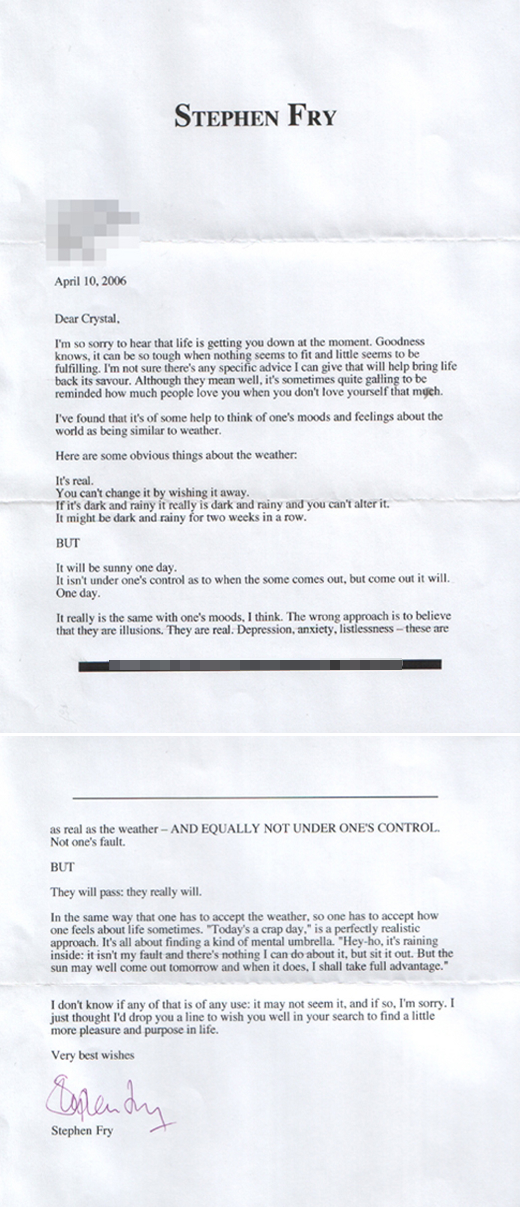
Early-2006, during a bout of depression, a young lady by the name of Crystal Nunn wrote a desperate letter to Stephen Fry. Says Crystal:

“I had no idea who to turn to. But I really needed someone to turn to and to ease the pain. So I wrote to Stephen Fry because he is my hero, and he has been through this himself. And low and behold, he replied to my letter, and I will love him eternally for this.”

Mr. Fry's wonderful reply can be seen below.

6918814422_f3942a23d8_o

More here.

The Glory of Math Is to Matter

Amir Alexander in Scientific American:

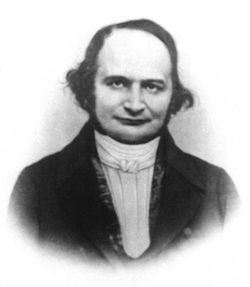
Carl_JacobiIn 1842, when the famed German mathematician Carl Gustav Jacobi was invited to speak to a scientific meeting in Manchester, he had a surprise in store for his English hosts. “It is the glory of science to be of no use,” he announced to the startled gathering of physical scientists. The true aim of science is “the honor of the human spirit,” and whether it turns out to be of any practical use matters not at all.

Jacobi made few converts that day. His declaration, he reported to his brother with satisfaction, “caused a vehement shaking of heads,” which was only to be expected from a crowd of men who were devoting their careers to improving industrial processes in the manufacturing capital of Europe. But things were different among Jacobi’s mathematical colleagues, who increasingly came to share his view that mathematical truths stood for themselves, and needed no further justification.

To be sure, no one (including Jacobi) denies that some fields of mathematics have proven extremely useful, and had made modern technology possible. But other fields, including some of the greatest mathematical discoveries ever, seem to serve no practical purpose whatsoever.

It was so from the beginning. The ancient science of geometry, as its name suggests, had its origins in the practical art of land measurement, but by the time Euclid codified it around 300 BCE it had strayed far from its roots.

More here.

Is Pakistan’s Democracy Under Threat?

Ahmed Humayun in Foreign Policy:

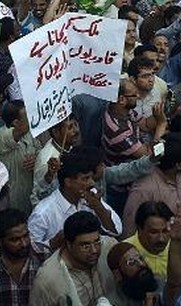
ScreenHunter_740 Aug. 12 17.33Although he won a big mandate last year at Pakistan's polls, Nawaz Sharif, the prime minister of Pakistan and head of the ruling party, the Pakistan Muslim league (PML-N), is under siege at home. The country's vociferous media is hyping up the clash between Sharif and Imran Khan, Sharif's foremost political challenger and the head of the Pakistan Tehrik-e-Insaf (PTI), who is organizing a “long march” on Islamabad on Pakistan's upcoming Independence Day on August 14. Meanwhile, Tahirul Qadri, the influential Pakistani-Canadian preacher, has announced a competing “Revolution” march on the same day to overthrow the political system. Widespread discontent at Sharif's performance in office to date and the determination of the security establishment to avoid ceding primacy to civilian rule has added to the sense of a looming political crisis.

Sharif made extravagant promises during the 2013 electoral campaign that have yet to be fulfilled. For example, the delivery of basic services remains dismal across the board — in particular, the severe energyshortage shows no sign of resolution. Another problem is that political power is excessively centralized. Sharif and his closest associates call the shots on all major initiatives, which has reduced the pool of available technocratic expertise and made the regime vulnerable to the charge of crony governance. Sharif himself has been disengaged from parliament, appearing a mere seven times in the national assembly over the course of the first parliamentary year. And much needed economic reforms that could result in job creation and significant economic growth — such as the widening of the tax base — have yet to be undertaken, in part due to the fear of political fallout.

More here.

obama and the ‘g’ word

Obama3Cynthia Haven at The Book Haven:

It was, perhaps, his most statesmanlike moment: a president brought to the decision he didn’t want to make, to defend a far-off nation he’d hoped was part of our nation’s past. “Earlier this week, one Iraqi cried that there is no one coming to help,”President Obama said in a somber statement delivered from the State Dining Room. “Well, today America is coming to help.” The New York Times described the situation with a certain amount of prissiness:

Speaking at the White House on Thursday night, Mr. Obama also said that American military aircraft had dropped food and water to tens of thousands of Iraqis trapped on a barren mountain range in northwestern Iraq, having fled the militants, from the Islamic State of Iraq and Syria, who threaten them with what Mr. Obama called “genocide.”

Dropping the “g” word gives gravitas to any presidential statement. What Mr. Obama “called” genocide presumably included not only the attempt to wipe the small tribe of Yezidis off the face of the earth by allowing them to die of thirst and hunger on a mountain, but also the attempt to erase 2,000 years of Christian history in Iraq, along with its Chaldean, Assyrian, and other adherents (some of whom are the last speakers of Aramaic anywhere – we wrote about that here), along with the massacre of hundreds of young Shia men at Takrit, with more, much more, to come.

more here.

West of the Revolution: An Uncommon History of 1776

Sea_lionsAndrew Graybill at The American Scholar:

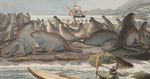
For years, Claudio Saunt vividly recalled the summer of 1976, when as an eight-year-old boy he went to see an enormous birthday cake that had traveled cross-country to his hometown of San Francisco in honor of the U.S. Bicentennial. The cake, purportedly the world’s largest confection, stood three stories tall, weighed 35,000 pounds, and was festooned with scenes from the American Revolution. But as Saunt, now a professor of history at the University of Georgia, explains in his marvelous new book, he was betrayed by his memory. From contemporary accounts, he has learned that the cake was actually a thoroughly local affair, created by a pastry chef to celebrate the Bay Area’s own 200-year anniversary, traced to the establishment of a Spanish outpost there in 1776. As Saunt puts it: “San Francisco’s history was at such odds with the narrative being celebrated for the national Bicentennial that my fourth-grade imagination turned the cake into a tribute to events in Boston, Philadelphia, and elsewhere along the East Coast.”

West of the Revolution is Saunt’s attempt to take in what was happening at other places in North America at the moment that the 13 colonies—which together represent just four percent of the continental landmass—were declaring their independence from England.

more here.

joseph epstein’s literary eduction

331x500xsledge_a_literary_education_cover.jpg,qitok=ICN3crSx.pagespeed.ic.diUvvineelJohn S. Sledge at Virginia Quarterly Review:

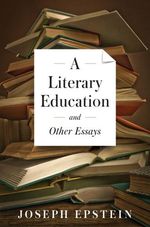
On the page, Epstein aspires to be one of the “laughing skeptics” and mostly succeeds. He is mistrustful of “large ideas, and especially idea systems,” but his touch is light, and he dishes out the bons mots without meanness or acerbity. One may not always agree with his judgments, but they are rendered with art and wit. For example, his definition of a “middlebrow” is “anyone who takes either Woody Allen or Spike Lee seriously as an artist.” Contemporary poetry is “slightly political, heavily preening, and not distinguished enough in language or subtlety of thought to be memorable.” He likes Henry James (though his enthusiasm for The Princess Casamassima strikes me, a student of James myself, as somewhat unusual), Willa Cather, and Ralph Ellison. Held in low regard, “second- or third-rate writers,” are Kurt Vonnegut, Toni Morrison, Jack Kerouac, and Adrienne Rich.

In his essay “What to Do about the Arts?” (1995), originally published inCommentary, Epstein relates the story of how, after Bill Clinton’s first inauguration, he was contacted by a British journalist for an opinion about the now-late poet and memoirist Maya Angelou. The man was surprised when Epstein said that he had no opinion about Angelou because he didn’t read her and knew no one who did.

more here.

If I Reacted to Other People’s Careers the Way They React to Me Becoming a Mathematician

Jordy Greenblatt in Put It All On Red:

Math-cartoonYou’re a doctor? I don’t really know anything about medicine, but can you explain exactly how the endocrine system works in two minutes or less?

You’re a writer? I had a terrible writing teacher in high school. I bet I wouldn’t like you.

You’re a carpenter? You must be super good at carpentering.

You’re a singer? I stopped singing in 11th grade. The last song I sang was… hmmmmm… let’s see… Mozart’s Requiem. I wasn’t very good at that song.

More here. [Thanks to Jennifer Oullette.]