Just what is it that makes today’s eco-terrorists so appealing?

EcoterrorBill Morris at The Millions:

Night Moves, the latest movie from Kelly Reichardt, joins a chorus of films and books that have spent the past several decades posing an intriguing question. To paraphrase the great English pop artist Richard Hamilton, the question is this: Just what is it that makes today’s eco-terrorists so different, so appealing?

The operative word here is appealing because Reichardt and company are drawn to something in the character of people who are willing to break the law in order to perform a service they see as vital to mankind and the planet. This moral ambiguity – the willingness to do wrong in order to do right – is a large part of the eco-terrorist’s appeal. Yet this is also where things get complicated. In Night Moves, the lofty ideals of the eco-terrorists become as compromised and distorted as those of the villains they are trying to fight. Try as they might to see the world as a simple black-and-white Manichaean snapshot, Reichardt’s characters keep getting sucked into pools of gray, those murky zones of moral ambiguity that have a way of perverting even the noblest of intentions.

more here.

The Allure of the Archives

9780300176735Brenda Wineapple at Threepenny Review:

The kick of research—not self-evident, by any means—is the subject of Farge’s marvelous book. Behind it lies the goal of history, which is “the understanding of a time and a world.” And what better way to open a dialogue between present and past than to find the past bundled together in a packet of old papers? Director of Research in Modern History at the Centre National de la Recherche Scientifique in Paris and the author of numerous books on eighteenth-century France, Farge explains how and why the historian is tempted to touch—and listen to—those “rags of realities” frequently stored in the repositories we know as archives: a library, a research facility, a local historical society, a hospital, a convent, a church, even a crematorium. (I spent one particularly productive afternoon, years ago, in an office at the Flanner and Buchanan Crematoria in Indianapolis, where I copied out old family recipes for apple crisp.) The archives may contain letters, transcripts, oral histories, photos, passports, paintings, and journals, along with what Farge calls “captured speech,” which, in snatches, allows us to hear what was going on beneath or beyond the official account of an era.

“The judicial archives, in a sense, catch the city red-handed,” she says. “When reading the police records, you can see to what extent resistance, defiance, and even open revolt are social facts.” People have to explain themselves in court. They lie, they plead, they confess, and they stonewall.

more here.

100 funny jokes by 100 comedians

From The Telegraph:

TonyHancockhat_2903337k“I don't want any publicity – you get too many begging letters. If they're anything like the ones I send out I don't want to know!” Tony Hancock (1924-1968)

'I knew a transsexual guy whose only ambition is to eat, drink and be Mary.' George Carlin(1937-2008)

'My grandmother started walking five miles a day when she was 60. She's 97 now and we don't know where the hell she is.' Ellen DeGeneres (January 26 1958-)

'A man can sleep around, no questions asked, but if a woman makes nineteen or twenty mistakes she's a tramp.' Joan Rivers (June 8 1933-)

'A few decades ago we had Johnny Cash, Bob Hope and Steve Jobs. Now we have no Cash, no Hope and no Jobs. Please don't let Kevin Bacon die.' Bill Murray (September 21 1950-)

'If something about the human body disgusts you, the fault lies with the manufacturer.' Lenny Bruce (1925-1966)

More here.

Microbiome science needs a healthy dose of scepticism

William P. Hanage in Nature:

CommentExplorations of how the microscopic communities that inhabit the human body might contribute to health or disease have moved from obscure to ubiquitous. Over the past five years, studies have linked our microbial settlers to conditions as diverse as autism, cancer and diabetes. This excitement has infected the public imagination. 'We Are Our Bacteria', proclaimed one headline in The New York Times. Some scientists have asserted that antibiotics are causing a great 'extinction' of the microbiome, with dire consequences for human health1. Companies offer personalized analysis of the microbial content of faecal samples, promising consumers enlightening information. Separate analyses from the same person can, however, vary considerably, even from the same stool sample. Faecal transplants have been proposed — some more sensible than others — for conditions ranging from diabetes to Alzheimer's disease. With how-to instructions proliferating online, desperate patients must be warned not to attempt these risky procedures on themselves. Microbiomics risks being drowned in a tsunami of its own hype. Jonathan Eisen, a microbiologist and blogger at the University of California, Davis, bestows awards for “overselling the microbiome”; he finds no shortage of worthy candidates. Previous 'omics' fields have faltered after murky work slowed progress2. Technological advances that allowed researchers to catalogue proteins, metabolites, genetic variants and gene activity led to a spate of associations between molecular states and health conditions. But painstaking further work dampened early excitement. Most initial connections were found to be spurious or, at best, more complicated than originally believed.

The history of science is replete with examples of exciting new fields that promised a gold rush of medicines and health insights but required scepticism and years of slogging to deliver even partially. As such, the criteria for robust microbiome science are instructive for all researchers. As excitement over the microbiome has filtered beyond academic circles, the potential mischief wrought by misunderstanding encompasses journalists, funding bodies and the public. Here are five questions that anyone conducting or evaluating this research should ask to keep from getting carried away by hype.

More here.

The Coming Race War Won’t Be About Race

Kareem Abdul-Jabbar in Time:

ScreenHunter_752 Aug. 20 12.59The U.S. Census Report finds that 50 million Americans are poor. Fifty million voters is a powerful block if they ever organized in an effort to pursue their common economic goals. So, it’s crucial that those in the wealthiest One Percent keep the poor fractured by distracting them with emotional issues like immigration, abortion and gun control so they never stop to wonder how they got so screwed over for so long.

One way to keep these 50 million fractured is through disinformation. PunditFact’s recent scorecard on network news concluded that at Fox and Fox News Channel, 60 percent of claims are false. At NBC and MSNBC, 46 percent of claims were deemed false. That’s the “news,” folks! During the Ferguson riots, Fox News ran a black and white photo of Dr. Martin Luther King, Jr., with the bold caption: “Forgetting MLK’s Message/Protestors in Missouri Turn to Violence.” Did they run such a caption when either Presidents Bush invaded Iraq: “Forgetting Jesus Christ’s Message/U.S. Forgets to Turn Cheek and Kills Thousands”?

How can viewers make reasonable choices in a democracy if their sources of information are corrupted? They can’t, which is exactly how the One Percent controls the fate of the Ninety-Nine Percent.

More here.

Wednesday Poem

Fern Hill

Now as I was young and easy under the apple boughs About the lilting house and happy as the grass was green, The night above the dingle starry, Time let me hail and climb Golden in the heydays of his eyes, And honoured among wagons I was prince of the apple towns And once below a time I lordly had the trees and leaves Trail with daisies and barley Down the rivers of the windfall light.  And as I was green and carefree, famous among the barns About the happy yard and singing as the farm was home, In the sun that is young once only, Time let me play and be Golden in the mercy of his means, And green and golden I was huntsman and herdsman, the calves Sang to my horn, the foxes on the hills barked clear and cold, And the sabbath rang slowly In the pebbles of the holy streams.  All the sun long it was running, it was lovely, the hay Fields high as the house, the tunes from the chimneys, it was air And playing, lovely and watery And fire green as grass. And nightly under the simple stars As I rode to sleep the owls were bearing the farm away, All the moon long I heard, blessed among stables, the nightjars Flying with the ricks, and the horses Flashing into the dark.  And then to awake, and the farm, like a wanderer white With the dew, come back, the cock on his shoulder: it was all Shining, it was Adam and maiden, The sky gathered again And the sun grew round that very day. So it must have been after the birth of the simple light In the first, spinning place, the spellbound horses walking warm Out of the whinnying green stable On to the fields of praise.  And honoured among foxes and pheasants by the gay house Under the new made clouds and happy as the heart was long, In the sun born over and over, I ran my heedless ways, My wishes raced through the house high hay And nothing I cared, at my sky blue trades, that time allows In all his tuneful turning so few and such morning songs Before the children green and golden Follow him out of grace,  Nothing I cared, in the lamb white days, that time would take me Up to the swallow thronged loft by the shadow of my hand, In the moon that is always rising, Nor that riding to sleep I should hear him fly with the high fields And wake to the farm forever fled from the childless land. Oh as I was young and easy in the mercy of his means, Time held me green and dying Though I sang in my chains like the sea.

by Dylan Thomas
from The Poems of Dylan Thomas
published by New Directions. Copyright © 1952

Muslim Zion: Pakistan as a Political Idea

Hassan Javid in Dawn:

51svY0qVmxL._SY344_BO1,204,203,200_For Devji, Pakistan represents an example of Zionism, which he interprets as being a political form in which national identity is defined primarily by religion. In this respect, so the argument goes, Pakistan bears a close resemblance to Israel; both nations were created amidst the decline of the British Empire, they ostensibly represented homelands for minorities fleeing real and perceived persecution, and they came into being with the transfer of large populations into territories that had previously not been inhabited by them.

Viewed through this lens, nationalism in Israel and Pakistan was not rooted in claims about specific territorial boundaries or even ethnic and linguistic groupings; instead, it decoupled the idea of the nation from its traditional markers, basing itself instead on the existence of a religious community, bound together by common beliefs that transcended questions of territory, language and ethnicity. All Jews were, and are, welcome to settle in Israel regardless of their previous territorial affiliations and, in 1947, the same was true of Pakistan with respect to the subcontinent’s Muslim population. If, as Benedict Anderson argues, all nations are essentially “imagined communities” in which identity and solidarity are constructed by the propagation of shared cultural values through a common linguistic medium within a defined territory, the Israeli and Pakistani nations were imagined primarily as religious communities superimposed onto relatively arbitrary physical spaces.

Comparing Pakistan with Israel in this fashion is not new. Indeed, as Devji himself mentions near the start of the book, no less a personage than General Ziaul Haq noted the similarities between the two countries in 1981.

More here.

Tuesday, August 19, 2014

Print Less but Transfer More

Helo

Mark Blyth and Eric Lonergan in Foreign Affairs (registration required):

Rather than trying to spur private-sector spending through asset purchases or interest-rate changes, central banks, such as the Fed, should hand consumers cash directly. In practice, this policy could take the form of giving central banks the ability to hand their countries’ tax-paying households a certain amount of money. The government could distribute cash equally to all households or, even better, aim for the bottom 80 percent of households in terms of income. Targeting those who earn the least would have two primary benefits. For one thing, lower-income households are more prone to consume, so they would provide a greater boost to spending. For another, the policy would offset rising income inequality.

Such an approach would represent the first significant innovation in monetary policy since the inception of central banking, yet it would not be a radical departure from the status quo. Most citizens already trust their central banks to manipulate interest rates. And rate changes are just as redistributive as cash transfers. When interest rates go down, for example, those borrowing at adjustable rates end up benefiting, whereas those who save — and thus depend more on interest income — lose out.

Most economists agree that cash transfers from a central bank would stimulate demand. But policymakers nonetheless continue to resist the notion. In a 2012 speech, Mervyn King, then governor of the Bank of England, argued that transfers technically counted as fiscal policy, which falls outside the purview of central bankers, a view that his Japanese counterpart, Haruhiko Kuroda, echoed this past March. Such arguments, however, are merely semantic. Distinctions between monetary and fiscal policies are a function of what governments ask their central banks to do. In other words, cash transfers would become a tool of monetary policy as soon as the banks began using them.

Other critics warn that such helicopter drops could cause inflation. The transfers, however, would be a flexible tool. Central bankers could ramp them up whenever they saw fit and raise interest rates to offset any inflationary effects, although they probably wouldn’t have to do the latter: in recent years, low inflation rates have proved remarkably resilient, even following round after round of quantitative easing. Three trends explain why.

More here.

Conversation with Agnes Varda

La-point-courte

Susan Kouguell in IndieWire, the discussion between Varda and Jean Michel Frodon:

Frodon: There was an important event in the history of world cinema — the New Wave. Just before the official opening of the Locarno Festival we screened “The 400 Blows,” but actually you started the New Wave with your film”La Point Courte,” which was quite original, stunning, and unlike all the others. You were no film buff, you were a woman, not a cinephile and being a woman with quite unique characteristics.

Varda: I’m troubled with the term “New Wave”. The New Wave included a number of young, new filmmakers but to me, there was the group the Cahiers du Cinema critics who loved American films, among them Truffaut. And like me, not knowing anything about filmmaking, were Jacques Demy, Chris Marker, and me. We were farther to the left than the others. These people were grouped in the same category as if we were a group. I felt different from the Cahiers du Cinema movement. I had no knowledge of French and American cinema, and I thought structure was more important than the way the films were shot.

My references were not from film. For example: When people would put their hands on their knees, I called that an “Egyptian shot,” or I would say, “Face” rather than “close up.” I knew nothing about film jargon.

Frodon: You did photography and theatre so you were in an artistic circle.

Varda: The theatre-goers, do not necessarily go to movies and vice versa. Actually the disciplines are quite separate. I watched many theatre plays but I didn’t know about cinema. I went to a lot of museums. I read a lot. I had my diploma. I took a year off just to read. I got up at nine in the morning, and read all afternoon as if I was going to school. I would read great classics. You don’t have time to read at school. This helped me a lot to think.

More here.

Alex Gourevitch on Thomas Paine

1-2-1B8D-25-ExplorePAHistory-a0m5l9-a_349

Over at The Junto:

It’s important to be clear about what private property meant to Paine. It meant the right to keep the full fruits of one’s labor—which is one meaning it still has today. Inequality was justifiable for him if it made everybody better off with respect to their fundamental interests.[1] But he saw that the current defense of private property created poverty, a poverty that had never before existed.[2] So it is possible, given the enormous productivity of a modern society, based on private property, for everyone to live better lives, not just secure from absolute poverty but for even the worst off to enjoy relative prosperity.

Paine took the communist challenge to heart, but in a way that aimed to defend private property. The introduction of Agrarian Justice names Babeuf directly, and the pamphlet itself makes an important change from the public works scheme in Rights of Man to a ‘National Fund’ that pays every adult enough money to be able to buy some land and tools. Paine accepted Babeuf’s argument that, in the natural state, it’s not just that nobody was poor but that everyone enjoyed a natural independence—and they should have a right to that independence under modern conditions as well.

Even though Paine says he is defending the principle of private property, he is driven to say, in Agrarian Justice, that “personal property is the effect of society; and it is as impossible for an individual to acquire personal property without the aid of society, as it is for him to make land originally… All accumulation, therefore, of personal property, beyond what a man’s own hands produce, is derived to him by living in society; and he owes on every principle of justice, of gratitude, and of civilization, a part of that accumulation back again to society from whence the whole came.”

Why add gratitude to justice? I think it’s because Paine sees that private property is not just a matter of rights and legitimate coercion: it is a form of social relationship.

More here.

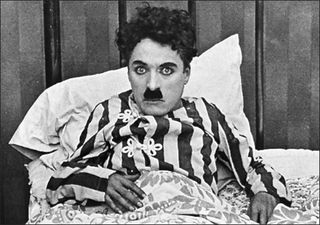
Courting Failure: On Walter Benjamin and Hannah Arendt’s Readings of the Schlemiel

Charlie-chaplin

Menachem Feuer in Berfrois:

As human beings we have to “court” failure. This term suggests two things: on the one hand, it suggests dating and becoming intimate with someone in a formal, old-fashioned way; on the other hand, it suggests that we just don’t experience something, we judge it. Taken together, we can say that in courting failure, one gets to know it in an intimate way and will have to, in the end, judge it. When we judge failure, when we court it, we ascribe meaning to it. But, to be sure, there is a kind of danger to such courting. Courting failure can impair judgment and could lead to problems. But, then again, courting failure could also lead to a teaching moment and help us to understand ourselves, the world, and, for some existential theologians, the meaning of faith.

Failure can be tragic, but it can also be comic. The difference between the two types of failure could be understood through tragedy and comedy. In the former, the tragic hero is blind to his tragic flaw; and because he or she does nothing to change it, this tragic character has a bad (“tragic”) end.

It contrast, the comic character has a flaw that he or she either corrects or lives with. The end of such characters, however, isn’t tragic; it is a happier (or a better) ending of sorts. But sometimes this ending, because it is deprived of what we honor most, is sad. However, comedy – and the failure it courts – can also give us hope.

Sometimes these two theatrical modes find a correlate in life. And sometimes scholars will use comedy to better understand their own lives and the world they live in. We find such a correlate in the work of Hannah Arendt and Walter Benjamin that pertains to the schlemiel. As Jews who were exiled from Germany, who experienced the failure of liberalism and humanism in Germany, and witnessed the rise of rabid anti-Semitism, they courted failure. Their lives were uncertain. But of the two, Benjamin’s life was more uncertain. And for the two of them, the Jewish comic character otherwise known as the schlemiel was of great interest. It spoke to Jewishness, failure, exile and hope.

More here.

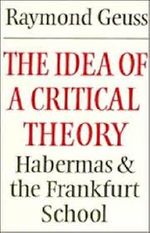
the idea of a critical theory

UrlRaymond Geuss at The Point:

At the beginning of the nineteenth century Hegel wrote that every philosopher is a child of his time and none can jump over his own shadow: every philosophy, then, is “its time grasped in a concept.” In the twentieth century Adorno took up this idea again when he spoke of the irreducible “kernel of time” embedded in the center of any philosophical view, and of the “temporal index” of truth. Whatever these rather difficult doctrines mean, they clearly are not intended to imply that at any given time all opinions are equally true.

I started a small book in Heidelberg, Germany in 1973 and finally finished it in 1980 at the University of Chicago; The Idea of a Critical Theory was published by Cambridge University Press in late 1981. Looking back at the text from the present—from 2013 and my home on this small island off the northwest coast of Europe—I think I can begin to see rather more clearly than I could then some of the relevant features of the historical context within which it was conceived and executed. To return for a moment to Hegel, who is the major spiritual presence hovering over this book—and whose work is the more important for understanding what I was trying to do for not being mentioned at all in the main text—the reader will recall that he also holds that philosophy is essentially retrospective, a reflection of a historical moment or movement that when it finally takes philosophical form is essentially already over. This doctrine marks a distinction between what is “really” happening in the political, social and economic world and the subsequent reflection of this in philosophy (religion, art, law, etc.).

more here.

pay attention!

HumanMark Edmundsun at The Hedgehog Review:

Pay attention! The phrase bears some considering. In his essay “On Truth and Lies in a Nonmoral Sense,” Friedrich Nietzsche posed the question of the nature of language and made an acute observation. Language, he wrote, is a mobile host of metaphors and metonyms that have become conventional over time. Words become like coins that have been worn plain from overuse. We no longer see the tropes that are embedded in our language, the figures of everyday speech. Well, here is one such trope: Attention is something that must be paid. Paying attention is not unrelated to discharging a debt, to offering tribute, to giving the entity that demands the attention something akin to cash. When you tell someone to pay attention, you are trying to take something from him, something that, one might assume, he does not wish to give: his focus, his presence of mind, his full being. Is it possible that paying attention is akin to paying tribute? When someone asks you to pay attention, he is imposing authority on you. Perhaps it is not that we can’t get ourselves to focus on this or that matter, but simply that offering attention is felt as a challenge, a burden. “I made myself pay attention, even though what he was saying was boring.” “It wasn’t easy to pay attention to him, but I did.” There’s a tribute involved. There’s a tax. There’s a debt. Do you understand? Are you paying attention to me? We can take satisfaction in paying a bill, or getting rid of a debt, but it is never exactly a joy.

more here.

edmund wilson on houdini

HarryHoudini1899Edmund Wilson from a 1925 piece at The New Republic:

Houdini is a short strong stocky man with small feet and a very large head. Seen from the stage, his figure, with its short legs and its pugilist's proportions, is less impressive than at close range, where the real dignity and force of his enormous head appear. Wide-browed and aquiline-nosed, with a cleanness and fitness almost military, he suggests one of those enlarged and idealized busts of Roman generals or consuls. So it is rather the man himself than the showman, the personality of the stage, who is interesting. Houdini is remarkable among magicians in having so little of the smart-aleck about him: he is a tremendous egoist, like many other very able persons, but he is not a cabotin. When he performs tricks, it is with the directness and simplicity of an expert giving a demonstration and he talks to his audience, not in his character of conjuror, but quite straightforwardly and without patter. His professional formulas—such as the “Will wonders never cease!” with which he signalizes the end of a trick—have a quaint conventional sound as if they had been deliberately acquired as a concession to the theatre. For preeminently Houdini is the honest earnest craftsman which his German accent and his plain speech suggest—enthusiastic, serious- minded, thoroughgoing and intelligent.

Houdini is in fact a German Jew (Houdini is not his real name)—born in Wisconsin.

more here.

Writing What You Know

Simon Hammond in The White Review:

BS-JohnsonIn the summer of 1959, a headstrong but lovesick English graduate took a trip to the hometown of his favourite writers, to mark the end of his degree and to help him forget his sorrows. En route to Dublin via the Welsh Coast he hitched a lift with the owner of an upscale holiday resort, who offered him a job for the summer, an offer he took up after walking in the footsteps of Joyce, Beckett and O’Brien. Travelling People, which BS Johnson wrote in fits and starts over the next two years, is the story of a young man who takes a job at a Welsh holiday resort. It has the brisk outlines of a familiar English comedy, but presented with an incongruous trickery more in keeping with Johnson’s Irish heroes. Plenty of direct experience made it into the novel (Johnson even incorporated letters that he had written that summer) but names were changed and elements added to provide excitement, perhaps even as wish-fulfilment. Henry has a passionate affair and gets a first in his degree, while Johnson wasn’t so fortunate; the heart attack that afflicts the owner, with whom Johnson fell out, never happened. But the translation of experience is uneasy: rogue autobiographical elements – Johnson’s romantic hysteria, his odd superstitions – crop up without explanation.

Published after a string of rejections to muted applause, with some copies returned in the belief that the typographical experimentation was a printing error, Johnson was nevertheless pleased with what he saw as the novel’s ingenuity, even claiming that in some respects it had improved on Joyce’s Ulysses. But behind the bravado lay a nagging dissatisfaction. He began to feel embarrassed by the fictional additions, to believe that the novel would have been better if it had been more honest, if he hadn’t compromised the truth for the sake of a good story. Increasingly Johnson dismissed it as an apprentice work, and was later reluctant to have it republished. Never again would he be so blasé with the facts of his life. The six novels that followed would be the work of a writer at war with the imagination.

More here.

The Intelligent-Life Lottery

George Johnson in The New York Times:

DnaAlmost 20 years ago, in the pages of an obscure publication called Bioastronomy News, two giants in the world of science argued over whether SETI — the Search for Extraterrestrial Intelligence — had a chance of succeeding. Carl Sagan, as eloquent as ever, gave his standard answer. With billions of stars in our galaxy, there must be other civilizations capable of transmitting electromagnetic waves. By scouring the sky with radio telescopes, we just might intercept a signal.

But Sagan’s opponent, the great evolutionary biologist Ernst Mayr, thought the chances were close to zero. Against Sagan’s stellar billions, he posed his own astronomical numbers: Of the billions of species that have lived and died since life began, only one — Homo sapiens — had developed a science, a technology, and the curiosity to explore the stars. And that took about 3.5 billion years of evolution. High intelligence, Mayr concluded, must be extremely rare, here or anywhere. Earth’s most abundant life form is unicellular slime. Since the debate with Sagan, more than 1,700 planets have been discovered beyond the solar system — 700 just this year. Astronomers recently estimated that one of every five sunlike stars in the Milky Way might be orbited by a world capable of supporting some kind of life. That is about 40 billion potential habitats. But Mayr, who died in 2005 at the age of 100, probably wouldn’t have been impressed. By his reckoning, the odds would still be very low for anything much beyond slime worlds. No evidence has yet emerged to prove him wrong.

More here.

Total police control over black bodies has echoes in American history

Ta-Nehisi Coates in The Atlantic:

LeadAmong the many relevant facts for any African-American negotiating their relationship with the police the following stands out: The police departments of America are endowed by the state with dominion over your body. I came home at the end of this summer to find that dominion had been. This summer in Ferguson and Staten Island we have seen that dominion employed to the maximum ends—destruction of the body. This is neither new nor extraordinary. It does not matter if the destruction of your body was an overreaction. It does not matter if the destruction of your body resulted from a misunderstanding. It does not matter if the destruction of your body springs from foolish policy. Sell cigarettes without proper authority and your body can be destroyed. Resent the people trying to entrap your body and it can be be destroyed. Protect the home of your mother and your body can be destroyed. Visit the home of your young daughter and your body will be destroyed. The destroyers of your body will rarely be held accountable. Mostly they will receive pensions.

It will not do to point out the rarity of the destruction of your body by the people whom you pay to protect it. As Gene Demby has noted, destruction is merely the superlative form of a dominion whose prerogatives include friskings, detainings, beatings, and humiliations. All of this is common to black people. All of this is old for black people. No one is held accountable. The body of Michael Brown was left in the middle of the street for four hours. It can not be expected that anyone will be held accountable.

More here.

Kurdistan: Where Poets Are More Than Poets

Alana Marie Levinson-LaBrosse in Fair Observer:

Poetry-pic-1The poet, in a collared shirt beneath a sweater vest and elbow-patched blazer, takes his seat. The more audacious fans push to shake his hand; he rises to accept, to graze cheeks in the formal kiss. Each time he stands, the audience follows, breaking into fresh, ferocious applause. He takes the stage flanked by three bodyguards who clear a path through the grabbing attendees.

During his short speech on political parties and their failings, the Kurdish language and its splintering, the audience keeps bursting into applause, like peals of thunder. I start a tally as he reads his poems. Audience members mouth the words along with him. After one poem, the clapping synchronizes and the audience takes up a chant, “Doo-bah-rah! Doo-bah-rah!” — “Again! Again!” and the poet relaunches, delivering the poem a second time. He leans over the lectern to deliver the lines. The tally: 48.

I remember the first time I’d seen such a response to live poetry — at an elocution contest sponsored by the American University of Iraq, Sulaimani (AUIS). Some 20 contestants took the stage and at least 100 students crammed into the cafeteria just to watch try-outs. At the time, the school only had 400 students. When the student-translator took the stage to read the poem in its original language first, the audience interrupted him, cheering at the end of each line. All this while the university had trouble galvanizing students to come to soccer games.

More here.