What Indian soldiers in the First World War wrote home about

To commemorate the centenary of India’s service in the First World War, the British historian David Omissi collected the letters of Indian soldiers away from home in Indian Voices of the Great War, published this year by Penguin. These eloquent letters offer a poignant glimpse into the lives of these Indian soldiers, whom history forgot.

David Omissi in The Caravan:

A wounded Sikh to his father
[Gurmukhi]
Brighton Hospital
18th January 1915

Tell my mother not to go wandering madly because her son, my brother, is dead. To be born and to die is God’s order. Some day we must die, sooner or later, and if I die here, who will remember me? It is a fine thing to die far from home. A saint said this, and, as he was a good man, it must be true.

Ram Prasad (Brahmin) to Manik Chand (c/o Sikander Ali, Bamba Debi Bazar, Marwari Water Tank, Bombay)
[Hindi]
Kitchener’s Indian Hospital, Brighton
2nd September 1915

And send me fourteen or fifteen tolas of charas [hashish], and understand that you must send it so that no one may know. First fill a round tin box full of pickles and then in the middle of that put a smaller round box carefully closed, so that no trace of the pickles can enter. And send a letter to me four days before you send the parcel off. [Letter withheld]

Ser Gul (Pathan, 129th Baluchis) to Barber Machu Khan (57th Rifles, serving at the front)

[Urdu]
Indian Hospital, Rouen
13th September 1915

I have no need of anything, but I have a great longing for a flute to play. What can I do? I have no flute. Can you get me one from somewhere? If you can, please do, and send it to me. Take this much trouble for me. For I have a great desire to play upon the flute, since great dejection is fallen upon me. You must, you simply must, get one from somewhere. I have no need of anything else. But this you must manage as soon as you can.

More here.

Birds Lost Their Sweet Tooth, Hummingbirds Got Theirs Back

Ed Yong in Not Exactly Rocket Science:

Hummingbird-990x618In 2004, the chicken became the first bird to have its genome fully sequenced. Its DNA revealed something odd—or rather, an odd lack of something. It was missing a gene called T1R2, which we and other mammals need to taste sweet foods. Chickens, it seemed, can’t taste sweets.

They aren’t alone. Maude Baldwin from Harvard University and Yasuka Toda from the University of Tokyo looked at the genomes of 10 different birds, from falcons to finches and ducks to doves. None of them had T1R2. Alligators do, and they’re some of the closest living relatives of birds. So at some point, as birds evolved from small dinosaurs, they lost their sweet tooth.

What about hummingbirds?

Hummingbirds feed largely on nectar, the sweet liquid that flowers produce. They love the stuff and the sweeter the better; they’ll actually reject flowers whose nectar isn’t sweet enough. They lack the T1R2 gene, but they can clearly taste sugar.

Baldwin and Toda have now discovered their workaround: they repurposed two other taste genes that are normally responsible for detecting savoury tastes. On a hummingbird’s tongue, these savoury sensors are sugar sensors too.

More here.

Can the Crowd Solve Medical Mysteries?

Carrie Arnold at PBS:

ScreenHunter_760 Aug. 22 20.49The Loops found themselves in purgatory. They had a diagnosis they didn’t believe, treatments that weren’t working, and a son that had been completely subsumed by his illness. If they could find out what was really wrong with their son, they believed, they could get him the help he so desperately needed. But no one could properly diagnose their son.

Jared Heyman knows the Loops’ frustration all too well. Several years ago, his younger sister was debilitated by an illness that no one could diagnose. Two years, nearly unspeakable agony, and half a million dollars in tests later, his sister finally got a diagnosis and treatment. “I knew there had to be a better way,” he says.

So Heyman set out to create that better way and started CrowdMed in 2013. The site allows patients to submit their cases to the site to be solved by a cadre of medical detectives from around the world. Heyman’s background in economics and the decade he spent as the head of a startup had given him an appreciation for the wisdom of crowds, which states that a large group of people tends to be smarter and more accurate than any single expert. What tricky diagnoses needed, Heyman realized, was a crowd of people doing their best to solve medical mysteries. Which is exactly what CrowdMed provides. He tested the concept by submitting his sister’s symptoms. Within three days, the site’s medical detectives had correctly identified her condition.

In the year since it began, CrowdMed has soared in popularity, with users in 21 countries around the world. Investors have also flocked to the project, including actor Patrick Dempsey (aka “Dr. McDreamy” on the television show Grey’s Anatomy), who recently pledged $1 million. The site’s promise, however, is tempered by concern from bioethicists and physicians alike, who worry about everything from privacy to medical errors.

More here.

Hashim Khan, Patriarch of a Squash Dynasty, Is Dead

William Yardley in the New York Times:

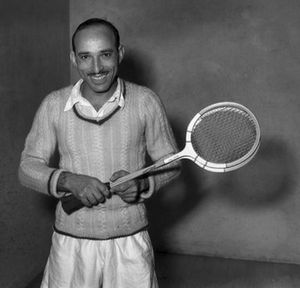
ScreenHunter_759 Aug. 22 15.05Hashim Khan, who learned to play squash when he was a boy, retrieving stray balls for British military officers in Pakistan, and went on to become a champion and the patriarch of a family dynasty in the sport, died on Monday in Denver. He was believed to be 100.

His death was confirmed by his son Mohammad.

Pakistan was not yet an independent nation when Khan began working as a ball boy at a British officers’ club near Peshawar where his father, Abdullah, was the head steward. When he was not fetching balls hit over walls — courts used to be roofless — young Hashim watched game after game.

When the officers cleared the courts, he went out to practice, barefoot. Sometimes he traded his lunch for lessons. The hard work eventually got him a job teaching squash at the club and led to the belated break that made him a star.

He was in his 30s and a national champion in his homeland when a player he regularly defeated, Abdul Bari of Bombay, made it to the final of squash’s British Open. Khan had not played internationally, but Bari’s success prompted Khan’s supporters to raise money to send him to the tournament in 1951. There were concerns that he was too old, but with Pakistan having just become independent from India, it was a matter of national pride.

He was at least 36 — and possibly several years older — when he played for the first time in the Open, squash’s most celebrated tournament. Khan made an impressive debut, vanquishing an array of international stars on his way to the final, where he defeated the man presumed to be world’s best player, the four-time champion Mahmoud Karim of Egypt, 9-5, 9-0, 9-0.

Khan won the Open for six straight years. In 1956, he defeated his cousin Roshan in the final. Roshan was 26 at the time. Khan was in his 40s.

The next year, he lost to Roshan in the final. Although it was a defeat for Khan, it enhanced his family’s fame.

More here. [Thanks to Farrukh Azfar.]

Was the Human Brain Unleashed?

Courtney Humphries in Harvard Magazine:

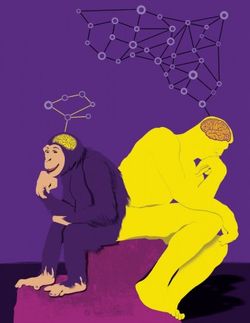
BrainCompare humans to other mammals and a distinguishing feature stands out: our large, cavernous craniums, and the densely folded brains stuffed into them. The human brain is more than triple the size of the brain of chimpanzees, our closest relatives. In particular, it’s the cerebral cortex—the wrinkled outer layer of the brain—that sets us apart. Whales and elephants also have big brains, but they can’t match our cortex in the sheer number of neurons and billions of connections among them. It’s obvious that our big brains are responsible in some way for enabling the unique things that humans do: developing languages, music, and art; using sophisticated tools and technologies; forming complex societies. But what is it about a bigger brain that makes these feats possible?

Randy Buckner, professor of psychology and of neuroscience, and his former student Fenna Krienen, Ph.D. ’13, have proposed a hypothesis to explain how the evolution of a large cortex may have enabled the distinct cognitive skills that humans display. The key is not just size but organization. As the human brain swelled, they argue, the cells in newly evolved areas were increasingly freed from constraints that patterned the simpler connections in other areas, and thus able to connect to each other in more complex ways that enabled new kinds of thinking.

More here.

Do gut bacteria control your mind?

From KurzweilAI:

Gut-bacteria-and-unhealthy-eatingBacteria within you — which outnumber your own cells about 100 times — may be affecting both your cravings and moods to get you to eat what they want, and may be driving you toward obesity. That’s the conclusion of an article published this week in the journal BioEssays by researchers from UC San Francisco, Arizona State University and University of New Mexico from a review of the recent scientific literature.

How your gut microbiome may control you

  • The diverse community of microbes, collectively known as the gut microbiome, influence human eating behavior and dietary choices to favor consumption of the particular nutrients they grow best on, rather than simply passively living off whatever nutrients we choose to send their way.
  • Some bacterial species prefer fat, and others sugar, for instance. They vie with each other for food and to retain a niche within their ecosystem — your digestive tract — and they also often have different aims than you do when it comes to your own actions.
  • Bacteria may influence your decisions by releasing signaling molecules into your gut. Because the gut is linked to the immune system, the endocrine system, and the nervous system, those signals could influence your physiologic and behavioral responses — and health.
  • Bacteria may be acting through the vagus nerve, which connects 100 million nerve cells from the digestive tract to the base of the brain, changing taste receptors, producing toxins to make you feel bad, and releasing chemical rewards to make you feel good.
  • Certain strains of bacteria increase anxious behavior (in mice).
  • Some strains of bacteria cause stomach cancer and perhaps other cancers.

More here.

Friday Poem

Begane Grond

Our lift talks to me, as I go up
or down, in a gentle, protective tone.
“We are here,” she says “you may go”.
She tells me the floor we have reached,
always lets me know where I am.

But whenever I descend to go out
into these streets I do not belong to,
Begane grond” she intones, in a voice
which sounds to me slightly concerned,
“Here,” I think she says, “here’s the world,

open the door, go. And do not fret,
everyone here is as foreign as you are.
No one belongs. Not anywhere.”

by Roni Margulies
from Poetry International
translated by Roni Margulies

Read more »

Thursday, August 21, 2014

Why the Ukraine Crisis Is the West’s Fault

John J. Mearsheimer in Foreign Affairs:

Easten_ukraine_624According to the prevailing wisdom in the West, the Ukraine crisis can be blamed almost entirely on Russian aggression. Russian President Vladimir Putin, the argument goes, annexed Crimea out of a long-standing desire to resuscitate the Soviet empire, and he may eventually go after the rest of Ukraine, as well as other countries in eastern Europe. In this view, the ouster of Ukrainian President Viktor Yanukovych in February 2014 merely provided a pretext for Putin’s decision to order Russian forces to seize part of Ukraine.

But this account is wrong: the United States and its European allies share most of the responsibility for the crisis. The taproot of the trouble is NATO enlargement, the central element of a larger strategy to move Ukraine out of Russia’s orbit and integrate it into the West. At the same time, the EU’s expansion eastward and the West’s backing of the pro-democracy movement in Ukraine — beginning with the Orange Revolution in 2004 — were critical elements, too. Since the mid-1990s, Russian leaders have adamantly opposed NATO enlargement, and in recent years, they have made it clear that they would not stand by while their strategically important neighbor turned into a Western bastion. For Putin, the illegal overthrow of Ukraine’s democratically elected and pro-Russian president — which he rightly labeled a “coup” — was the final straw. He responded by taking Crimea, a peninsula he feared would host a NATO naval base, and working to destabilize Ukraine until it abandoned its efforts to join the West.

Putin’s pushback should have come as no surprise. After all, the West had been moving into Russia’s backyard and threatening its core strategic interests, a point Putin made emphatically and repeatedly. Elites in the United States and Europe have been blindsided by events only because they subscribe to a flawed view of international politics. They tend to believe that the logic of realism holds little relevance in the twenty-first century and that Europe can be kept whole and free on the basis of such liberal principles as the rule of law, economic interdependence, and democracy.

More here.

The Strange & Curious Tale of the Last True Hermit

For nearly thirty years, a phantom haunted the woods of Central Maine. Unseen and unknown, he lived in secret, creeping into homes in the dead of night and surviving on what he could steal. To the spooked locals, he became a legend—or maybe a myth. They wondered how he could possibly be real. Until one day last year, the hermit came out of the forest.

Michael Finkel in GQ:

ScreenHunter_758 Aug. 22 12.03The hermit set out of camp at midnight, carrying his backpack and his bag of break-in tools, and threaded through the forest, rock to root to rock, every step memorized. Not a boot print left behind. It was cold and nearly moonless, a fine night for a raid, so he hiked about an hour to the Pine Tree summer camp, a few dozen cabins spread along the shoreline of North Pond in central Maine. With an expert twist of a screwdriver, he popped open a door of the dining hall and slipped inside, scanning the pantry shelves with his penlight.

Candy! Always good. Ten rolls of Smarties, stuffed in a pocket. Then, into his backpack, a bag of marshmallows, two tubs of ground coffee, some Humpty Dumpty potato chips. Burgers and bacon were in the locked freezer. On a previous raid at Pine Tree, he'd stolen a key to the walk-in, and now he used it to open the stainless-steel door. The key was attached to a plastic four-leaf-clover key chain, with one of the leaves partially broken off. A three-and-a-half-leaf clover.

He could've used a little more luck. Newly installed in the Pine Tree kitchen, hidden behind the ice machine, was a military-grade motion detector. The device remained silent in the kitchen but sounded an alarm in the home of Sergeant Terry Hughes, a game warden who'd become obsessed with catching the thief. Hughes lived a mile away. He raced to the camp in his pickup truck and sprinted to the rear of the dining hall. He peeked in a window.

More here. [Thanks to Bill Hooker.]

Where academic philosophy went wrong

Charlie Huenemann in his blog Huenemanniac:

ScreenHunter_757 Aug. 21 21.42I believe Peter Sloterdijk is right that the Enlightenment has been followed by philosophical cynicism, or an impressive array of natural knowledge unaccompanied by any faith in providence. The U.S., which became the dominant intellectual and cultural force in the course of the 20th century, was well-suited to put this cynicism to work: for America was built upon a pragmatic, “can do” attitude, and seemed ready to let expediency drive ideology . (There are probably interesting connections here to Protestantism and Holland of the 17th century.) And so there arose on American shores the fulfillment of the German idea of a research university, with its faculty as a specialized workforce and its students as Model-Ts rumbling down an assembly line on which three credits of this and three credits of that are bolted on to each chassis.

Each academic discipline became a guild or union, where membership is tightly controlled and guild members insist on their indispensability to the general curriculum. New disciplines created their own means of controlling membership and making cases for their newfound indispensability.

As unions generally lost power and new models of management were developed in the last third of the 20th century, the university also experienced a shift in authority from the faculty to the administration. In the names of efficiency and accountability, administrators deployed numerous measures for evaluating faculty “productivity”; and the nature of these measures encouraged faculty to entrench themselves more firmly in their respective guilds.

In the case of philosophy, this meant (1) more attention devoted to narrow problem-solving activity rather then efforts to deepen philosophical wonder; (2) increasingly narrow specialization and less general knowledge of the discipline itself and its history; (3) less engagement with anyone outside the professional guild; and (4) development of various cants and shibboleths to patrol membership in the guild.

More here.

Syria in Revolt: Understanding the Unthinkable War

Sadik J. Al-Azm in the Boston Review:

Burning-Syria-webThe people’s intifada in Syria, against the military regime and police state of the Assad family, took me by surprise. I was fearful at first that the regime would crush it almost instantly, given its legendary ferocity and repressiveness. Like other Syrian intellectuals, I felt total impotence before this devouring monster, which precluded any thought of an imminent, or even possible, collective “no.”

I was surprised by the revolution, but I should not have been. Daily experiences and recurrent observations foretold a crisis that many Syrians tried hard to deny. And deny we did. Let me explain.

After the violent suppression of the Damascus Spring in 2001–2002 and again after the assassination of former Lebanese Prime Minister Rafiq Hariri in Beirut in 2005, which led to the humiliating withdrawal of Assad’s troops from Lebanon, angst spread throughout Syria. I was working in Damascus, where the trepidation was especially pronounced. The country, it seemed, was teetering on the edge of an abyss.

But life flowed routinely on the surface. Talking about the situation publicly was out of the question. Even hinting at it was dangerous. When someone did speak up, others quickly changed the subject. A conspiracy of silence was the order of the day.

This period marked a palpable deterioration in relations among Syrians. Sectarian lines hardened, undermining long-standing friendships, harmony among colleagues, and the daily interactions of citizens. Even our way of joking changed.

More here.

A brash tech entrepreneur thinks he can reinvent higher education by stripping it down to its essence, eliminating lectures and tenure along with football games, ivy-covered buildings, and research libraries. What if he’s right?

Graeme Wood in The Atlantic:

ScreenHunter_756 Aug. 21 21.27Minerva, which operates for profit, started teaching its inaugural class of 33 students this month. To seed this first class with talent, Minerva gave every admitted student a full-tuition scholarship of $10,000 a year for four years, plus free housing in San Francisco for the first year. Next year’s class is expected to have 200 to 300 students, and Minerva hopes future classes will double in size roughly every year for a few years after that.

Those future students will pay about $28,000 a year, including room and board, a $30,000 savings over the sticker price of many of the schools—the Ivies, plus other hyperselective colleges like Pomona and Williams—with which Minerva hopes to compete. (Most American students at these colleges do not pay full price, of course; Minerva will offer financial aid and target middle-class students whose bills at the other schools would still be tens of thousands of dollars more per year.) If Minerva grows to 2,500 students a class, that would mean an annual revenue of up to $280 million. A partnership with the Keck Graduate Institute in Claremont, California, allowed Minerva to fast-track its accreditation, and its advisory board has included Larry Summers, the former U.S. Treasury secretary and Harvard president, and Bob Kerrey, the former Democratic senator from Nebraska, who also served as the president of the New School, in New York City.

Nelson’s long-term goal for Minerva is to radically remake one of the most sclerotic sectors of the U.S. economy, one so shielded from the need for improvement that its biggest innovation in the past 30 years has been to double its costs and hire more administrators at higher salaries.

More here.

Pasolini’s seductive utopian vision

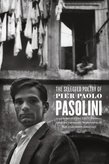
Cover00Adam Thirlwell at Bookforum:

Everything Pasolini did, he did as a poet. But what was it, precisely, that Pasolini did? Born in 1922, he began his career writing poetry in Friulian, his native language. Then he moved to Rome, where he wrote novels, this time exploring a dense Roman argot. And then came the movies of the ’60s and ’70s, including Mamma Roma, Teorema, and the trilogy of adaptations from Boccaccio, Chaucer, and the Arabian Nights, ending in his masterpiece of degradation, Salo. His atmosphere was constant scandal, and he added to that scandal with his essays in the high-end newspapers: small doses of acerbic thinking. But although he might have enjoyed using crazily various modes, he also had a certain style. In his movies, he loved fusing the hieratic with the everyday. And in his writing, too, he liked combining two things that don’t usually go together: a classical form or tone that could absorb its squalid subjects. His best poetry is a kind of diary written in long slabs and sequences—he called these poems poemetti, longer than a poesia, shorter than a poema—meditations on whatever he was thinking about, where the syntax is strung out along the terza-rima form (Dante’s meter!) in a papery festoon of thinking.

What Pasolini was thinking about, perhaps, is what now makes him seem—like so many products of the radical ’60s and ’70s—slightly dusty, as if from a time capsule. The deep aim of all his writing was as messy and outdated as utopia.

more here.

is it good to commemorate?

Snyder_cc_468wTimothy Snyder at Eurozine:

Perhaps above all, Auschwitz is resonant because it has come to stand for the depths of a fallen civilization. It is seen as evil, but also as modern. It reveals a tragic flaw. For this reason, its liberation by soldiers who seem to dialectically represent a healthy and victorious civilization is all the more poignant. If the Soviets freed Auschwitz, imply the civilizers, then they must have stood for values opposite to those of the Nazis who built it. Although many of the prisoners who awaited the Red Army at Auschwitz were not in fact Jewish, they have come to stand for those Jews who awaited the coming of the Soviets as their only chance for survival. The liberation of Auschwitz thus fits perfectly the civilizers' assumptions and literary needs, wedding as it does the emotionally irresistible force of the desperate hopes of Jewish survivors to the implicit notion that civilization itself has returned and triumphed.

This tempting literary move can only be made if prior references to Soviet power and policy are absent. Thus one can read a library of books about the Holocaust without learning that the Holocaust began in doubly-occupied lands where the German invasion of 1941 undid Soviet structures established after the Soviet occupation of 1939 in Poland or 1940 in the Baltics, that Soviet power was present everywhere the Holocaust took place, either immediately after or (usually) both before and after the mass murder of the Jews.

more here.

in the DFW archives

FP_MILEY_DFWBOOK_CO_002Mike Miley at The Smart Set:

To give you an idea of how concerned Wallace was about being unable to live up to the image of “DFW,” one of his books in the HRC library is On Writer’s Block. That’s not a typo: David Foster Wallace, author of the 600,000-word maximalist opus Infinite Jest, owned a book about overcoming writer’s block. Several of his letters to Don DeLillo express his envy of writers like William T. Vollmann and Joyce Carol Oates, who had the ability to crank out a new novel what seemed like every six months while Wallace struggled to produce a novel each decade. These letters even pepper DeLillo with amateurish questions such as “Do you have like a daily writing routine?” And this was after he’d published Infinite Jest!

Wallace relays his struggle to produce work in a consistent and disciplined manner in a letter to DeLillo: “… it’s frustrating to feel that I’m getting mature and more disciplined in some areas of adult life and yet still seem a slave to my moods and emotions when it comes to work.” Later in the same letter, Wallace even relates the shame of how private and isolating this struggle actually is when he describes the “sad manically charming and loquacious letters” he receives “from young writers who struggle” with writer’s block “and tell me that they regard me as some paragon of steady drive and discipline, which letters I try to answer politely but they make me feel fucked-up and Unknown.”

more here.

The Theft That Made The ‘Mona Lisa’ A Masterpiece

From the archives of NPR:

Ap110112031056_wide-443079141b63f0fbfe795bed6d0bbc5b2375ae84-s40-c85If you were standing outside the Louvre in Paris on the morning of Aug. 21, 1911, you might have noticed three men hurrying out of the museum.

They would have been pretty conspicuous on a quiet Monday morning, writer and historian James Zug tells weekends on All Things Considered host Guy Raz. “Sunday night was a big social night in Paris,” he says, “so a lot of people were hung over on Monday morning.”

The men, three Italian handymen, were not hungover. But they might have been a little tired. They'd just spent the night in an art-supply closet.

And on that morning, with the Louvre still closed, they slipped out of the closet and lifted 200 pounds of painting, frame and protective glass case off the wall. Stripped of its frame and case, the wooden canvas was covered with a blanket and hustled off to the Quai d'Orsay station, where the trio boarded a 7:47 a.m. express train out of the city.

They'd stolen the “Mona Lisa.”

Before its theft, the “Mona Lisa” was not widely known outside the art world. Leonardo da Vinci painted it in 1507, but it wasn't until the 1860s that critics began to hail it as a masterwork of Renaissance painting. And that judgment didn't filter outside a thin slice of French intelligentsia.

“The 'Mona Lisa' wasn't even the most famous painting in its gallery, let alone in the Louvre,” Zug says.

More here.

Wednesday, August 20, 2014

Salman Rushdie on Kazuo Ishiguro

Salman Rushdie in The Globe and Mail:

ScreenHunter_753 Aug. 20 21.02‘I was very consciously trying to write for an international audience,” Kazuo Ishiguro says of The Remains of the Day in his Paris Review interview. “One of the ways I thought I could do this was to take a myth of England that was known internationally – in this case, the English butler.”

“Jeeves was a big influence.” This is a necessary genuflection. No literary butler can ever quite escape the gravitational field of Wodehouse’s shimmering Reginald, gentleman’s gentleman par excellence, saviour, so often, of Bertie Wooster’s imperiled bacon. But, even in the Wodehousian canon, Jeeves does not stand alone. Behind him can be seen the rather more louche figure of the Earl of Emsworth’s man, Sebastian Beach, enjoying a quiet tipple in the butler’s pantry at Blandings Castle. And other butlers – Meadowes, Maple, Mulready, Purvis – float in and out of Wodehouse’s world, not all of them pillars of probity. The English butler, the shadow that speaks, is, like all good myths, multiple and contradictory. One can’t help feeling that Gordon Jackson’s portrayal of the stoic Hudson in the 1970s TV series Upstairs, Downstairs may have been as important to Ishiguro as Jeeves: the butler as liminal figure, standing on the border between the worlds of “Upstairs” and “Downstairs,” “Mr. Hudson” to the servants, plain “Hudson” to the gilded creatures he serves.

Now that the popularity of another television series, Downton Abbey, has introduced a new generation to the bizarreries of the English class system, Ishiguro’s powerful, understated entry into that lost time to make, as he says, a portrait of a “wasted life,” provides a salutary, disenchanted counterpoint to the less sceptical methods of Julian Fellowes’s TV drama. The Remains of the Day, in its quiet, almost stealthy way, demolishes the value system of the whole upstairs-downstairs world.

More here.

the genius of the local historical society museum

PI_GOLBE_HISTSOC_FT_002Stefany Anne Golberg at The Smart Set:

In Richfield Springs, New York, in the summer of 2013, I stopped into the local historical society just around closing time. I asked the Museum Assistant, Mr. Hazelton — a man in his 70s or thereabouts — if I could have a brief look around. Mr. Hazelton told me, in true historical society fashion, that this was impossible, as the museum was almost closed. Then he told me I could stay five minutes and, also in true historical society fashion, offered to show me around. We went through all the newspaper clippings taped to the walls, and the Richfield Springs miscellany encased beneath them. I saw a miniature version of the famous Richfield Springs clock, and an assortment of Richfield Springs commemorative mugs. By the time Mr. Hazelton had introduced me to most of the Richfield Springs citizens in the high school yearbooks dating from the 1940s, it was well past closing time. Having reached the end of the single room that comprised the Richfield Springs Historic Association Museum, Mr. Hazelton offered me some candy. He told me about himself, about his wife and children, and then about his children’s children. It was near dark when Mr. Hazelton ran out of talking and presented his sketches of barns. The sketches had been individually mounted on white-and-purple notecards by Mrs. Hazelton herself. Each one was signed by Mr. Hazelton and dated. And so, this is another kind of art you can find in a historical society: an ephemeral art of now, created by none other than the Museum Assistant himself, for the benefit of his own museum.

more here.