Economists Aren’t ‘Superior’ Just Because

217px-Supply-demand-right-shift-demand.svg

Henry Farrell discusses a new paper by Marion Fourcade, Etienne Ollion, and Yann Algan “The Superiority of Economists” over at Crooked Timber:

Marion Fourcade, Etienne Ollion and Yann Algan’s forthcoming piece on the ‘superiority of economists’ is a lovely, albeit quietly snarky, take on the hidden structures of the economics profession. It provides good evidence that e.g. economics hiring practices, rather than being market driven are more like an intensely hierarchical kinship structure, that the profession is ridden with irrational rituals, and that key economic journals are apparently rather clubbier than one might have expected in a free and competitive market (the University of Chicago’s Quarterly Journal of Economics gives nearly 10% of its pages to University of Chicago affiliated scholars; perhaps its editors believe that this situation of apparent collusion will be naturally corrected by market forces over time). What appears to economists as an intense meritocracy (as Paul Krugman acknowledges in a nice self-reflective piece) is plausibly also, or alternately, a social construct built on self-perpetuating power relations.

Unsurprisingly, a lot of economists are reading the piece (we’re all monkeys, fascinated with our reflections in the mirror). Equally unsurprisingly, many of them (including some very smart ones) don’t really get Fourcade et al’s argument, which is a Bourdieuian one about how a field, and relations of authority and power within and around that field get constructed. As Fourcade has noted in previous work, economists’ dominance has led other fields either to construct themselves in opposition to economics (economic sociology) or in supplication to it (some versions of rational choice political science). Economists have been able to ignore these rivals or to assimilate their tributes, as seems most convenient. As the new paper notes, the story of economists’ domination is told by citation patterns (the satisfaction that other social scientists can take from economists having done unto them as they have done unto others, is unfortunately of limited consolation). Yet if you’re an economist, this is invisible. Your dominance appears to be the product of natural superiority.

More here. Krugman's take here, and Marion Fourcade, Etienne Ollion, and Yann Algan's study can be found here.


How 4 Mexican Immigrant Kids and Their Cheap Robot Beat MIT

Ten years ago, WIRED contributing editor Joshua Davis wrote a story about four high school students in Phoenix, Arizona—three of them undocumented immigrants from Mexico—beating MIT in an underwater robot competition. That story, La Vida Robot, has a new chapter: Spare Parts, starring George Lopez and Carlos PenaVega, opens in January, and Davis is publishing abook by the same title updating the kids’ story. To mark that occasion, WIRED is republishing his original story.

Joshua Davis in Wired:

Team-660x505Oscar began by explaining that his high school team was taking on college students from around the US. He introduced his teammates: Cristian, the brainiac; Lorenzo, the vato loco who had a surprising aptitude for mechanics; and 18-year-old Luis Aranda, the fourth member of the crew. At 5’10” and 250 pounds, Luis looked like Chief from One Flew Over the Cuckoo’s Nest. He was the tether man, responsible for the pickup and release of what would be a 100-pound robot.

Szwankowski was impressed by Oscar. He launched into an in-depth explanation of the technology, offering details as if he were letting them in on a little secret. “What you really want,” he confided, “is a thermocouple with a cold junction compensator.” He went over the specifications of the device and then paused. “You know,” he said, “I think you can beat those guys from MIT. Because none of them know what I know about thermometers.”

“You hear that?” Oscar said triumphantly when they hung up. He looked at each team member pointedly. “We got people believing in us, so now we got to believe in ourselves.”

Read the full story here.

Menifesto: Laura Kipnis’s study of the un-fair sex

Kerry Howley in Book Forum:

ManThe twenty-first-century critic asked to opine on masculinity finds available to her a limited number of explanatory templates, socially acceptable ways of speaking that dominate our collective thinking about the male psyche. Most clearly, there is that of disapproval, talk of privilege and patriarchy and, of late, the much-deployed “rape culture.” There is also the moralizing template, preferred by presidential candidates and megachurch pastors, which merely ascribes desirable qualities to the state of being a man, generally preceded by the descriptor “real”: Real men raise their children, real men don’t cheat, real men, I don’t know, exercise portion control. For those with a lighter touch, there is the template of amused condescension: One might, for instance, elucidate the various phenomena of American male sentimentality—depressive alcoholism, distant fathers, baseball.

Locating a tone that neither scolds nor belittles the subject is only part of the challenge, because, having found an approach, one comes up immediately against a conceptual and moral problem: how to write about masculinity in a way that is neither essentializing nor prescriptive. If we assume that the differences between individual men are far greater than anything that might bind them together, and that a better world would consist of a wider rather than narrower definition of what it properly means to be a man, it becomes rather difficult to say anything at all.

More here.

How permanent stress may lead to mental disorders

From KurzweilAI:

Microglia-before-afterActivated through permanent stress, immune cells in the brain can cause changes to the brain, resulting in mental disorders, a research team headed by professor Georg Juckel, Medical Director of the Ruhr-Universität Bochum (RUB) LWL university clinic, has found. The research was based on psychoneuroimmunology, the study of the interaction between psychological processes and the nervous and immune systems of the human body. The team focused mainly on microglia, a type of glial cell that acts as the main immune defense in the central nervous system and comprise 10–15% of all cells found within the brain. Under normal circumstances, microglia repair synapses between nerves cells in the brain and stimulate their growth. Repeatedly activated, however, microglia may damage nerve cells and trigger inflammation processes — a risk factor for mental diseases such as schizophrenia, the researchers found.

Interactions between the brain and immune system

“Originally, the brain and the immune system were considered two separate systems,” explains Juckel in RUB’s RUBIN publication. “It was assumed that the brain operates independently from the immune system and has hardly anything to do with it. This, however, is not true. “Direct neural connections from the brain to organs of the immune system, such as the spleen, do exist. And vice versa, immune cells migrate to the brain, and local immune cells carry out various tasks there, including disposing of damaged synapses. Notably, treatment with an immune system mediator such as Interferon alpha, used in hepatitis C treatment, for example, leads to depressions in 20 to 30 per cent of the patients.

Picture: Microglia cells from rat cortex before (left) and after (right) traumatic brain injury

More here.

Tuesday, December 2, 2014

The Real Mr. Difficult, or Why Cthulhu Threatens to Destroy the Canon, Self-Interested Literary Essayists, and the Universe Itself. Finally.

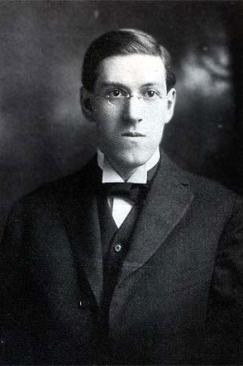
Howard_Phillips_Lovecraft-243x366

Nick Mamatas in the LA Review of Books:

I MAY AS WELL state my claim in as straightforward a way as possible: H. P. Lovecraft, he of the squamous and eldritch, is wrongly derided as a bad writer. Lovecraft is actually a difficult writer. The previous decade saw a slow-motion dust-up over the notion of difficult writers thanks to Jonathan Franzen’s 2002New Yorker essay “Mr. Difficult: William Gaddis and the Problem of Hard-to-Read Books” and the 2005 rejoinder by Ben Marcus in Harper’s: “Why Experimental Fiction Threatens to Destroy Publishing, Jonathan Franzen, and Life as We Know It.” Franzen suggested an age-old conflict between Contract writers who wanted to offer a “good read” to their audiences, and Status writers who pursued an artistic vision to the very limits of the novel-form. Marcus, in his response, pled a case for high modernism, for writers who “interrogate the assumptions of realism and bend the habitual gestures around new shapes.”

Both essays are harmed by the simple fact that Franzen and Marcus are self-interested: Franzen considers himself “a Contract kind of person” and was put out when he received a letter from a reader who complained that his novel The Corrections contained the word “diurnality.” Marcus was put out by Franzen’s essay, labeling his own piece “a response to an attack” from the real status players of literature: the inappropriately named realists who hold experimental fiction of the sort Marcus prefers to write in disdain.

As it has been nine years, surely it is time to plant another flag: Lovecraftian fiction as experimental fiction — that is, the sort of fiction I’ve been known to write. I’ve done a bit of actual experiments: what if we triggered nucleic exchange between Lovecraft and the Beats, or Raymond Carver, or David Foster Wallace, or New Narrative, or or or…? (See my The Nickronomicon.) If there’s a difference between the self-interest in this essay and those of Franzen and Marcus, it’s a simple one: you’ve never heard of me. There’s no reason why you should, as I am a Status writer with no status, a Contract writer who has reneged.

More here.

New Atheism, Old Empire

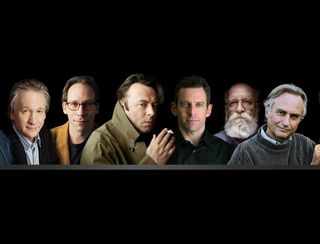
56568_54_news_hub_49740_588x448

Luke Savage in Jacobin:

The politics of the leading New Atheist thinkers are not uniform. Dawkins opposed the 2003 invasion of Iraq, while Harris and Hitchens were some of its leading apologists. Harris defends torture as an ethical necessity in the “war on terror” while Hitchens, who was voluntarily subjected to waterboarding, did not. Both Hitchens and Harris have been prone to bellicose outbursts of violent, almost bloodthirsty rhetoric, which cannot be said of Dawkins.

Nevertheless, all are united by several common intellectual threads. Each espouses a binary worldview that pits a civilized, cosmopolitan, and progressive West against a barbaric, monistic, and reactionary East. Though varied in their political positions, Harris, Hitchens, and Dawkins have all had very public dalliances with the Right, expressing either overt sympathy for, or enthusiastic endorsement of, some of its most vile and disreputable elements.

Each is outwardly a cultural liberal who primarily addresses liberal audiences — “respectable” to blue-state metropolitans and their equivalents elsewhere in ways Sean Hannity or Rush Limbaugh never could be — while embracing positions and causes that are manifestlyilliberal in the commonly understood sense of the term.

Beneath its many layers of intellectual adornment — the typical New Atheist text is laden with maudlin references to Darwin, Newton, and Galileo — we find a worldview intimately familiar to anyone who has studied the language of empires past: culturally supremacist, essentializing and othering towards the foreign, equal parts patronizing and paternalistic, and legitimating of the violence committed for its own ends.

In The End of Faith Harris suggests that nuclear-first strikes may be necessary if the ostensible conflict between “Islam” and “civilization” escalates: “What will we do if an Islamist regime, which grows dewy-eyed at the mere mention of paradise, ever acquires long-range nuclear weaponry?…The only thing likely to ensure our survival may be a nuclear first strike of our own.”

More here.

To Halt Ebola’s Spread, Researchers Race for Data

Kari Lydersen in Discover:

The Ebola virus has consistently stayed several steps ahead of doctors, public officials and others trying to fight the epidemic. Throughout the first half of 2014, it spread quickly as international and even local leaders failed to recognize the severity of the situation. In recent weeks, with international response in high gear, the virus has thrown more curve balls.

The spread has significantly slowed in Liberia and beds for Ebola patients are empty even as the U.S. is building multiple treatment centers there. Meanwhile the epidemic has escalated greatly in Sierra Leone, which has aserious dearth of treatment centers. And in Mali, where an incursion was successfully contained in October, a rash of new cases has spread from an infected imam.

Predicting the trajectory of Ebola rather than playing catching-up could do much to help prevent and contain the disease. Some experts have called for prioritizing mobile treatment units that can be quickly relocated to the spots most needed. Figuring out where Ebola is likely to strike next or finding emerging hot spots early on would be key to the placement of these treatment centers.

But such modeling requires data, and lots of it. And for stressed healthcare workers on the ground and government and non-profit agencies scrambling to combat a raging epidemic, collecting and disseminating data is often not a high priority.

Air traffic connections from West African countries to the rest of the world. Guinea, Liberia, and Sierra Leone are not well connected outside the region; Nigeria, in contrast, is. Image source

Air traffic connections from West African countries to the rest of the world. Guinea, Liberia, and Sierra Leone are not well connected outside the region; Nigeria, in contrast, is.

More here.

Evolution and the American Myth of the Individual

01stone-blog480

John Edward Terrell in the NYT's The Stone (photo Brian Snyder/Reuters):

At least part of the schism between Republicans and Democrats is based in differing conceptions of the role of the individual. We find these differences expressed in the frequent heated arguments about crucial issues like health care and immigration. In a broad sense, Democrats, particularly the more liberal among them, are more likely to embrace the communal nature of individual lives and to strive for policies that emphasize that understanding. Republicans, especially libertarians and Tea Party members on the ideological fringe, however, often trace their ideas about freedom and liberty back to Enlightenment thinkers of the 17th and 18th centuries, who argued that the individual is the true measure of human value, and each of us is naturally entitled to act in our own best interests free of interference by others. Self-described libertarians generally also pride themselves on their high valuation of logic and reasoning over emotion.

Philosophers from Aristotle to Hegel have emphasized that human beings are essentially social creatures, that the idea of an isolated individual is a misleading abstraction. So it is not just ironic but instructive that modern evolutionary research, anthropology, cognitive psychology and neuroscience have come down on the side of the philosophers who have argued that the basic unit of human social life is not and never has been the selfish, self-serving individual. Contrary to libertarian and Tea Party rhetoric, evolution has made us a powerfully social species, so much so that the essential precondition of human survival is and always has been the individual plus his or her relationships with others.

This conclusion is unlikely to startle anyone who is at all religious or spiritual. When I was a boy I was taught that the Old Testament is about our relationship with God and the New Testament is about our responsibilities to one another. I now know this division of biblical wisdom is too simple. I have also learned that in the eyes of many conservative Americans today, religion and evolution do not mix. You either accept what the Bible tells us or what Charles Darwin wrote, but not both. The irony here is that when it comes to our responsibilities to one another as human beings, religion and evolution nowadays are not necessarily on opposite sides of the fence.

More here.

Philip Larkin: Life, Art and Love

23JAMES-master315Michael Dirda at The Washington Post:

As late as the 1970s, it was hard to find Philip Larkin’s poetry in American bookstores. I remember searching all over Washington for his first collection, “The North Ship” (1945), before locating a paperback in the now long-gone Daedalus Bookshop next to the Uptown Theater. I already owned shabby copies of “The Less Deceived” (1955), “The Whitsun Weddings” (1964) and “High Windows” (1974), but I can no longer remember how I first discovered Larkin’s work. It was certainly prior to Noel Perrin’s moving essay on the long poem “Church Going,” part of the wonderful series of “Rediscoveries” he wrote for Book World in the 1980s and later collected in “A Reader’s Delight.”

Today, of course, Philip Larkin (1922-1985) is as famous a poet as any in the second half of the 20th century. In England he holds a roughly comparable position to Robert Frost in the United States — a beloved, curmudgeonly figure, with dark corners in his private life, who produced clear, accessible poetry that, once read, could never be forgotten. “Sexual intercourse began/ In nineteen sixty-three/ (which was rather late for me). . . . What will survive of us is love. . . . Age, and then the only end of age. . . . Never such innocence again.”

more here.

james joyce’s pomes penyeach

500px-Pomes_PenyeachAnthony Domestico at berfrois:

The 1932 Obelisk Press edition of Pomes Penyeach came at a crucial juncture in James Joyce’s writing career and in the life and mental health of his daughter, Lucia. At the time, Joyce was internationally renowned for Ulysses and laboring over his Work in Progress; meanwhile, Lucia was descending into the nightmare of schizophrenia, becoming increasingly delusional and erratic in behavior. Joyce had already published Pomes Penyeach, a series of 13 poems written between 1904 and 1924, with Shakespeare and Co. in 1927. In 1931, a publisher named Caresse Crosby, having seen and admired Lucia Joyce’s designs for a musical setting of Joyce’s poems, suggested that Joyce put out a limited edition volume of Pomes Penyeach containing illuminations of the initial letters for each poem. Joyce, eager to believe that some productive work would soothe Lucia’s inner demons and lead her back onto the road to normalcy, jumped at the chance.

Joyce approached Jack Kahane, a founder of Obelisk Press who had previously produced a limited edition of Joyce’s Haveth Childers Everywhere, and the two agreed to terms. With Desmond Harmsworth, Obelisk Press agreed to print a version of Pomes Penyeach that would use Lucia’s drawings and stress the handcrafted, artisanal nature of the book.

more here.

Reflections on Les Blank

Les_Blank_by_Chris_Simon_600Darrell Hartman at Guernica:

Dry Wood, Les Blank’s 1973 documentary about Creole life and music, throws the viewer headfirst into unfamiliar, almost bizarre, scenes of backwoods theater. It opens with a troupe of revelers costumed in cone hats, clown masks, and frilled jumpsuits, chasing a rooster around a yard. The camera follows their pickup trucks down a country road and into a gas station’s dirt parking lot, where they tip back handles of liquor and dance around while a fiddler plays. Someone throws a handful of pocket change up into the air; they go chasing after that, too.

This sequence of rag-tag Mardi Gras—like Rabelais with tractors and Budweiser—unfolds mostly on its own. No voiceover narrator or talking head chimes in to explain what we’re seeing—there are only the subjects themselves, accompanied by festive strains of zydeco music. Dry Wood becomes a brief immersion in that folk genre, a film that weaves the music into scenes of daily life—especially of celebration—for a dynamic, appreciative portrait of a longstanding American micro-culture.

In short, it’s vintage Blank.

more here.

In Conversation: Chris Rock

26-chris-rock-2.w529.h746Frank Rich interviews Chris Rock in Vulture:

What would you do in Ferguson that a standard reporter wouldn’t?

I’d do a special on race, but I’d have no black people.

Well, that would be much more revealing.

Yes, that would be an event. Here’s the thing. When we talk about race relations in America or racial progress, it’s all nonsense. There are no race relations. White people were crazy. Now they’re not as crazy. To say that black people have made progress would be to say they deserve what happened to them before.

Right. It’s ridiculous.

So, to say Obama is progress is saying that he’s the first black person that is qualified to be president. That’s not black progress. That’s white progress. There’s been black people qualified to be president for hundreds of years. If you saw Tina Turner and Ike having a lovely breakfast over there, would you say their relationship’s improved? Some people would. But a smart person would go, “Oh, he stopped punching her in the face.” It’s not up to her. Ike and Tina Turner’s relationship has nothing to do with Tina Turner. Nothing. It just doesn’t. The question is, you know, my kids are smart, educated, beautiful, polite children. There have been smart, educated, beautiful, polite black children for hundreds of years. The advantage that my children have is that my children are encountering the nicest white people that America has ever produced. Let’s hope America keeps producing nicer white people.

It’s about white people adjusting to a new reality?

Owning their actions. Not even their actions. The actions of your dad. Yeah, it’s unfair that you can get judged by something you didn’t do, but it’s also unfair that you can inherit money that you didn’t work for.

Read the full interview here.

Who was the Marquis de Sade really?

Suzi Feay in The Telegraph:

SadeThe Marquis de Sade, who died 200 years ago today, lived a turbulent life. He was born into an aristocratic Provençal family, enjoying all the privileges of the ancien régime before it took against him; he kept his head through the French Revolution and died, aged 74, in a lunatic asylum. His libertarian writings alienated two kings, a revolutionary tribunal and an emperor. He spent most of his adult life under lock and key: if they couldn’t get him for being bad, being mad would do. In his final miserable years, Sade was an obese, despised and penniless social outcast. Yet soon after his death in 1814 his reputation began to climb. He was claimed as a hero by writers and artists; in 1839, he was hailed as “one of the glories of France, a martyr… the very high and powerful seigneur de Sade”. He is now a seminal (an unfortunate though apt adjective) cultural figure. In France this year, celebrations are being held in his honour: the Musée D’Orsay is currently hosting an exhibition tracing the influence of Sade on Goya, Géricault and Picasso. The manuscript of his most notorious work, The 120 Days of Sodom, has been bought for seven million euros; his Provençal châteaux is owned by Pierre Cardin and acolytes beat a path there every year.

Sade’s bizarre psychopathy and life story, as much as his gruelling writings, have inspired such disparate figures as Flaubert, Angela Carter, the Surrealists, Camille Paglia and Pier Paolo Pasolini. American Psycho’s Patrick Bateman is a descendant of Sade’s murderous protagonists; Edward St Aubyn’s Patrick Melrose grows up in the shadow of Sade’s chateau, with a violent, abusive father who could have walked straight from the pages of Sade’s 1791 novel Justine. And let’s not forget Moors murderer Ian Brady, whose youthful reading of Sade apparently inspired his fantasies of domination and murder.

More here.

Math That Pursues, Spins and Swarms

Helene Stapinski in The New York Times:

MathBehind a black curtain in a downstairs corner of the National Museum of Mathematics in Manhattan (known as MoMath), a small group of mathematicians, designers and engineers was hard at work — laughing, shouting, clapping and having a blast, while being chased by robots. They were doing final testing on an exhibit called Robot Swarm, opening Dec. 14 and featuring dozens of glowing, motorized, interactive robots that resemble horseshoe crabs. The museum says it is the nation’s most technologically ambitious robotics exhibit. But the assembled experts, standing in stocking feet, were as excited as a gaggle of 6-year-olds. Sealed under an 11-by-12-foot glass floor, the small, colored robots swarm, skitter and react to whoever is standing on top of the glass. It is a strangely exhilarating sensation to be shoeless and have creatures — albeit human-made, computer-controlled creatures — react to your every step. “It’s cool, right?” asked a creator of the exhibit, Glen Whitney, who is also a co-founder of the museum. “It’s a feeling of power.”

Four visitors at a time will don harnesses with a small “reflector pod” on the right shoulder. That sends a location signal to overhead cameras, which transmit the information to the robots — which, in turn, move in accord with a variety of programmed settings determined by visitors working a control panel. Set the robots to “Run Away” mode, for example, and you can’t help feeling like Godzilla, stomping around the glass floor and scattering the frightened robots to the far corners of the grid. “Pursue” mode can be downright creepy, with the robots — like giant glowing cockroaches or trilobites — following you everywhere, trying to get as close to you as possible, surrounding you and then refusing to go away — until the algorithm is changed. In the more amusing “Spin” mode, the robots play a game of Simon Says, turning in whatever direction you turn, spinning when you spin.

More here.

Monday, December 1, 2014

3QD Philosophy Prize Finalists 2014

Hello,

PhilFinal2014The editors of 3QD have made their decision. The twenty semifinalists have been winnowed down to six, and three wildcard entries added. Thanks again to all the participants. Details of the prize can be found here.

On the right is a “trophy” logo that our finalists may choose to display on their own blogs.

So, here it is, the final list that I am sending to Huw Price, who will select the 1st, 2nd, and 3rd prize winners from these: (in alphabetical order by blog name here)

  1. 3 Quarks Daily: Is applied ethics applicable enough? Acting and hedging under moral uncertainty
  2. A Philosopher's Take: Moral Resposibility and Volunteer Soldiers
  3. Absolute Irony: Nāgārjuna, Nietzsche, and Rorty’s Strange Looping Trick
  4. Flickers of Freedom: The Case for Libertarian Compatibilism
  5. New York Times, Opinionator: The Dangers of Certainty: A Lesson From Auschwitz
  6. Philosopher's Beard: The Case for Ethical Warning Labels on Animal Products
  7. Practical Ethics: Why I Am Not a Utilitarian
  8. Psychiatric Ethics: Anosognosia and Epistemic Innocence
  9. Vihvelin: How Not to Think About Free Will

We'll announce the three winners on December 22, 2014.

Good luck!

Abbas

P.S. The editors of 3QD will not be making any comments on our deliberations, or the process by which we made our decision, other than to simply say that we picked what we thought were the best six posts out of the semifinalists, and added three others which we also liked.

Sunday, November 30, 2014

Shahzia Sikander’s “Parallax”

Dan Goddard in Arts + Culture:

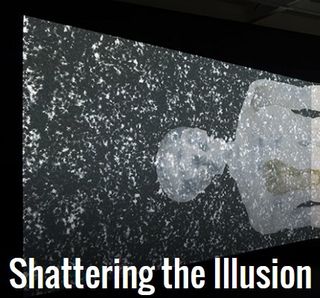
ScreenHunter_885 Dec. 01 11.44Commissioned for the 2013 Biennial in Sharjah, one of the United Arab Emirates states on the Arabian Peninsula, Shahzia Sikander’s Parallax is a complex, shifting, morphing, evolving, abstract, animated meditation on centuries of global competition for natural resources, the history of maritime trade, foreign control of the Strait of Hormuz during the colonial era and the dramatic conflicts today over the hotly contested strait where 35 percent of the world’s petroleum shipped by sea passes.

With aerial views of the strait drawn from 17th and 18th-century maps, swarming microbe-like forms, a map of the United States with Texas plainly visible, oil gushing from rock formations, locust-like red-white-and-blue arms and shattering Christmas trees, Sikander’s panoramic, three-channel HD single-image video is based on hundreds of small drawings derived from the tradition of Indo-Persian miniature painting that have been digitally animated, accompanied by music by the Chinese-born composer Du Yun and the voices of three local poets from Sharjah, who recite in Arabic.

Making its United States debut at the Linda Pace Foundation, Parallax marks Sikander’s return to San Antonio where she first began experimenting with animation in 2001 as an International Artist in Residence at Artpace. Presented as a widescreen projection through March 7, 2015, the video is a new acquisition by the Pace Foundation.

More here.

An interview with Francisco Bethencourt on Racism & How to Write History

51rGCXOYM9L._SL300_

Over at Five Books:

Your fourth book deals more directly with racism and its effects, The Dark Side of Democracy: Explaining Ethnic Cleansing by Michael Mann.

When I started my book on racism I was quite open-minded. I started with the Middle Ages, and I thought there was a good hypothesis relating racism in the Western world with the European expansion. The European expansion brought with it the need to classify different peoples of the world, the need to assert European superiority. But I didn’t know where to stop. At the beginning I thought I would stop with Darwin, but then I understood I had to include the 20th century, because it confirmed even more clearly that racism is triggered by political projects. Michael Mann was extremely useful in my research because he made me understand better the relation between nationalism and racism. In those circumstances, in the 19thcentury, nationalism based on democracy and citizenship triggered a struggle for territory, for the definition of new countries, mainly in central-eastern Europe and the Balkans. In that part of Europe you still had these composite, multinational empires — the Russian Empire, the Austro-Hungarian empire, the Ottoman Empire. All of these trends of nationalism — which had started at the beginning of the 19th century in a very generous, internationalist way, with dreams of sharing and cosmopolitanism — were confronted by the revolutions of 1848. Suddenly all these political projects bumped into claims of minorities. For instance, the Czechs had to deal with a strong German minority in the territory they were claiming. The Hungarians were confronted and challenged by Croatians and Romanians in the territories they were claiming. After the failure of the revolutions of 1848, you have a different trend, much narrower, much less cosmopolitan, much more centred in this idea of nation as a collective descent. And democracy, based on citizenship, brought with it the idea of exclusion. When you claim a territory, the issue was to exclude minorities who were struggling for the same territory. So this is the dark side of democracy, and I think Michael Mann saw it very well. Michael Mann is a sociologist, he bases his work mainly on secondary literature, and I must say he does it brilliantly. I am very attracted by his theories and he has several great ideas. I would not follow the way he practices history because I prefer to work on primary sources, but his work was a great inspiration. Also, he links history with sociology. This is another inter-disciplinary approach. We always work with some theoretical framework, and I was very inspired all my life by Max Weber, another sociologist. So I am glad I can still maintain this dialogue with what Michael Mann represents, historical sociology.

More here.