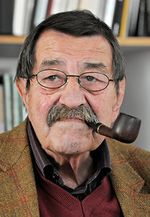
how will Günter Grass be remembered?

GRASS-articleInlineDavid L. Ulin at The LA Times:

“[W]riters,” he declared in his 1999 Nobel Prize lecture, “should consider the condition of permanent controversiality to be invigorating, part of the risk involved in choosing the profession. It is a fact of life that writers have always and with due consideration and great pleasure spit in the soup of the high and mighty. That is what makes the history of literature analogous to the development and refinement of censorship.”

Grass spent six decades operating out of such a premise, as a novelist and essayist, a playwright, artist and poet. (His final book, which has yet to appear in English, was a third volume of memoirs.) Beginning in the late 1950s, he wrote speeches for Berlin Mayor and West German Chancellor Willy Brandt; later, he was an outspoken opponent of reunification, arguing that because of its history, Germany had abdicated the right to be “strong and united.”

This sense of commitment unified his work and public posture, his stature as both artist and human being.

Or, as he explained in 1991: “Writers are involved not only with their inner, intellectual lives, but also with the process of daily life. … Both my writing and my drawing are invariably mixed up with politics, whether I want them to be or not.”

more here.
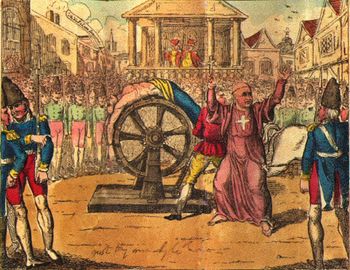
Broken on the wheel

Ken Armstrong in The Paris Review (via The Browser):

Calas3On the night of October 13, 1761, cries rang from the shop of Jean Calas, a cloth merchant who lived and worked in the commercial heart of Toulouse, in the South of France. The eldest of Calas’s six children, Marc-Antoine, a moody, handsome man who was fond of billiards and gambling, had just been found dead. The family said he had been murdered—perhaps stuck with a sword by someone who slipped into the darkened boutique from the cobblestone street.

A crowd gathered outside the front door as investigators were summoned. A doctor and two surgeons, called to examine the body, found only a “livid mark on the neck.” They signed a report refuting the family’s account of some intruder with a blade, concluding that Marc-Antoine, twenty-nine, had been “hanged whilst alive, by himself or by others.”

Those last five words, “by himself or by others,” began an enduring mystery and a true cause célèbre, one that might have been the “crime of the century” for the 1700s had the cliché been in use back then. Voltaire, the philosopher, dramatist and propagandist—“the greatest amuser of his age” and the greatest polemicist—became obsessed with the case, and for years worked to eradicate what he considered to be a stain on his country, church, and courts.

Finally, a panel of forty judges sat in Paris to hear the case against Calas once again. The verdict they issued, 250 years ago this week, “echoed and re-echoed” in Europe and beyond. Voltaire, by appealing directly to the people, helped established the power of public opinion as a tool to fight injustice. To some legal scholars, the infamous case also marked the first stirrings of the global movement to end capital punishment.

Read the rest here.

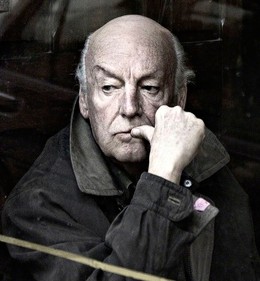
Tariq Ali on Eduardo Galeano

Tariq Ali in The Guardian:

ScreenHunter_1143 Apr. 18 14.07In Bertolt Brecht’s Galileo, the eponymous antihero is confronted by his student, who is livid that the great man has recanted: “Unhappy is the land that breeds no hero.” Galileo’s response is calm: “Unhappy is the land that needs a hero.” And he continues to work on his manuscript, which he then hands to his estranged pupil, who realises at the end of the play that what is really important has been achieved. The ideas will survive. My late friend and comrade, the Uruguayan journalist and historian Eduardo Galeano, who died this week, never recanted his beliefs in private or in public. Nor did he believe in heroes.

His entire work is suffused with the idea of mass democracy, whereby the poor and oppressed achieve self-emancipation through common action for limited or broader goals. Galeano was a modern-day Simón Bolívar, trying to achieve with his pen what the liberator had attempted with the sword: the unity of their continent against empires old and new. He spoke for the underground voices of the continent when US-backed military dictatorships crushed democracy in most parts of South America; he spoke for those being tortured, for indigenous people crushed by the dual oppression of empire and creole oligarchs.

Was he optimistic or pessimistic? Both, often together, but he never gave up hope.

More here.

Visiting Gore Vidal

James Campbell in The Times Literary Supplement:

VidalIn the summer of 1980, at the Edinburgh Writers’ Conference, precursor of the present festival, I was introduced to Gore Vidal as the editor of the New Edinburgh Review. “And how is Lord Jeffrey?” Vidal asked as he took my hand, referring to the first editor (1803–29) of the Edinburgh Review. “The wide eyes were alive with humour and so was the smiling mouth”, in the words of the memoir by the Austrian aristocrat Cecilia Sternberg, quoted, along with other passages in praise of himself, in Vidal’s memoir, Palimpsest. I was suitably charmed. Interviewed onstage, he answered questions with the amusing acerbity expected of him. When I included in my report for the TLS a characteristic witticism about Anthony Burgess (also present at the conference) writing for “an imaginary readership”, Vidal wrote a letter without smiling mouth to the Editor to deny that he had said any such thing. “How could I? I am part of Burgess’s audience and although I am often grotesquely imagined, I am not imaginary.”

I was chastened but puzzled. The joke had been repeated by more than one member of a delighted audience. After reading Sympathy for the Devil, I realize that I was not alone in being subject to the master’s morning-after revisionism. It was probably only Vidal’s affection for the TLS, to which at the time he was a regular contributor, that restrained him from instructing his lawyers to settle the potentially damaging calumny. (How could severed relations with Burgess harm him? But he would find a way.) In 2007, as Michael Mewshaw relates, the London Review of Books repeated a libel that had been originally issued in print many years earlier by Truman Capote who alleged that “a drunken Vidal had been bodily heaved from the White House by Bobby Kennedy”. After much expensive wrangling, Capote, a former friend of the wounded party, was obliged to pay damages and apologize, even though Vidal was often paralytically drunk and admitted in Palimpsest that Robert Kennedy “hated” him more than almost anyone.

More here.

The Shadow of the Crescent Moon,’ by Fatima Bhutto

Lorraine Adams in The New York Times:

FatimaFatima Bhutto’s first novel, about one tense morning in the life of three Pakistani brothers and two of the women they love, is set in the tribal region bordering Afghanistan. This land is also home to a three-dimensional chessboard of seemingly endless war — American drones killing the Taliban; Sunni Muslims bombing Shia Muslims; and an underground, generations-old fight for independence from the central government.

It’s important to note that Bhutto isn’t your average debut novelist. She’s the granddaughter of the former prime minister Zulfikar Ali Bhutto, who was hanged in 1979 on murder charges by Gen. Mohammad Zia ul-Haq, the military despot who was the architect of Pakistan’s shift toward fundamentalist Islam. She’s the niece of the assassinated former prime minister Benazir Bhutto, who she believes is “morally responsible” for the 1996 murder of her father, Mir Murtaza Bhutto, the partner with his brother, Shahnawaz, in an armed movement to overthrow General Zia. (Shahnawaz was found dead in a Cannes hotel room in 1985; an autopsy revealed that he had been poisoned.) This Borgia-like family history was detailed in Bhutto’s 2010 memoir, “Songs of Blood and Sword.” It’s no wonder she has consistently denied any interest in going into politics. Still, at age 32, Bhutto is more of a celebrity than most first-time fiction writers. Born in Kabul, raised in Damascus, educated in New York and London, she now lives in Karachi. She has over 850,000 followers on Twitter, where her page begins with a quote from Vladimir Nabokov that reads, “My loathings are simple: stupidity, oppression, crime, cruelty, soft music.”

Her novel addresses all of the above, and serves as a showcase for their far-reaching consequences.

More here.

Saturday Poem

Steampunk

At the center of beautiful women
who do not love us
burns a white flame.

We are machines
that consume and desire and wont
for such abiding loneliness

that to invite it
is to extract blossoms from the rain.
I am the elevator that opens

on each floor in the metal
hotel of your heart.
And on hearing the laughter

down the endless
hallway, I press a button
and slide shut my doors.
.

by Darren Morris
from The 2River View
Spring 2015

Friday, April 17, 2015

Throughout evolutionary history, we never saw anything like a montage. So why do we hardly notice the cuts in movies?

Jeffrey M. Zacks in Aeon:

ScreenHunter_1142 Apr. 17 17.00Suppose you were sitting at home, relaxing on a sofa with your dog, when suddenly your visual image of the dog gave way to that of a steaming bowl of noodles. You might find that odd, no? Now suppose that not just the dog changed, but the sofa too. Suppose everything in your visual field changed instantaneously in front of your eyes.

Imagine further that you were in a crowd and exactly the same thing was happening to everyone around you, at exactly the same time. Wouldn’t that be disturbing? Kafkaesque? In 1895 in Paris, exactly this started happening – first to a few dozen people, then to hundreds and then thousands. Like many fin-de-siècle trends, it jumped quickly from Europe to the United States. By 1903, it was happening to millions of people all over the world. What was going on? An epidemic of an obscure neurological disorder? Poisoning? Witchcraft?

Not quite, though it was definitely something unnatural. Movies are, for the most part, made up of short runs of continuous action, calledshots, spliced together with cuts. With a cut, a filmmaker can instantaneously replace most of what is available in your visual field with completely different stuff. This is something that never happened in the 3.5 billion years or so that it took our visual systems to develop. You might think, then, that cutting might cause something of a disturbance when it first appeared. And yet nothing in contemporary reports suggests that it did.

More here.

on Wilfred Owen’s “Insensibility”

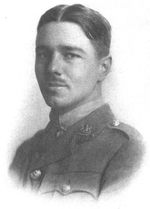
Wilfred_Owen_plate_from_Poems_(1920)Austin Allen at Poetry Magazine:

The poem plays out over six sections, each brief but densely woven. The first five describe soldiers at war, with the fifth also turning inward to address the speaker and his fellow writers and intellectuals. The sixth shifts to a denunciation of civilians who turn a blind eye to war’s devastation.

The poem’s structure is also founded, with caustic irony, on a biblical model. From the first lines onward, Owen imitates the Beatitudes of the Gospel of Matthew, as well as their equivalent in the Gospel of Luke: “Happy are men who yet before they are killed / Can let their veins run cold.” The Greek word that is traditionally translated as “Blessed” (as in the biblical phrase “Blessed are the meek”) can also be rendered as “Happy.” The eight “blessed” groups in Matthew are “the poor in spirit,” “they that mourn,” “the meek,” “they which do hunger and thirst after righteousness,” “the merciful,” “the pure in heart,” “the peacemakers,” and “they which are persecuted for righteousness’ sake” (King James Version). Within this allusive framework the poem spins a dense web of parallels and contrasts.

more here.

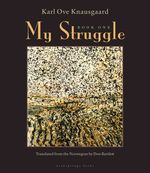
thinking about knausgaard

MyStruggle_cvrforwebBruce Bawer at Hudson Review:

Yet while these very traits may distinguish Knausgaard from your standard Norwegian-literary-elite type, they make him seem very familiar—and endearing—to rank-and-file Norwegians. Like most of his countrymen, Knausgaard is a matter-of-fact and unpretentious soul; although My Struggle does include a number of essayistic musings on life, death, and other grand abstractions, some of which go on at length (the last and longest one, in the final volume, fills over 400 pages), they read not like highfalutin poetry but, in good Norwegian fashion, like frank, intensely engaged, down-to-earth conversation of the sort you could imag­ine taking place over a few beers at some down-at-heels watering hole. For obvious reasons, Knausgaard has been compared to Proust (Time magazine even entitled its review “Norway’s Proust”), but he’s every bit as Norwegian as Proust was French, which is to say that while it came naturally to Proust to perpetrate elaborate, poetic, and witty prose, it comes just as naturally to Knausgaard to be blunt, straightforward, and prosaic—to spin out sentences so artless that they can read like excerpts from a hurriedly dashed-off letter. Knausgaard himself has said that he reveres Proust but has laughingly dismissed descriptions of himself as a Norwegian Proust, stating in an interview, quite sensibly, that the very concept is “a contradiction in terms.”

So Norwegian is he, indeed, that at one point, in what amounts to a summing-up of the so-called Jante Law—formulated in 1933 by Norwegian novelist Aksel Sandemose, by way of representing the manner in which almost all Norwegians are (or, at least until the last couple of decades, were) trained from infancy to think about themselves—Knausgaard tells himself:

Don’t believe you are anybody.

Do not fucking believe you are somebody.

Because you are not. You’re just a smug, mediocre little shit.

more here.

the middlemen—an underground network of recruitment agents in South Asia

1428327147Kamatcrabapplecrowd666Anjali Kamat at Dissent:

Over the past decade, contractors and subcontractors have earned billions of dollars providing half a million Asian migrant workers, primarily from India, Nepal, and the Philippines, to perform the menial tasks in American war zones that soldiers will no longer do: cooking, cleaning, laundry, construction, and base security. Employing these workers—an invisible support army with no domestic political constituency—has allowed Washington to keep troop numbers and casualty figures artificially low. Over the years, prompted by worker unrest and some media attention, conditions for workers have somewhat improved on the bases. But the very first phase of their exploitation—the manner in which they were recruited—has not changed, and they continue to be hired through the same extortionary system that supplies labor to the Gulf countries.

On a U.S. military base I visited in northern Afghanistan in December 2013, most of the workers were rural migrants from India and Nepal. The cooks spent twelve hours a day preparing and serving meals to hungry American soldiers: roast beef, turkey, mashed potatoes, meatloaf, and pasta. As they put up Christmas decorations in the dining hall under the watchful gaze of a U.S. commander, they spoke in hushed tones of fees paid to agents, threats made by loan sharks, and the pressures of working in a war zone. Everyone was deep in debt.

more here.

The new thought police

Joan W. Scott in The Nation:

ImageSince Wise's letter, a number of university leaders have echoed her invocation of civility. In September, Nicholas Dirks—once a postcolonial historian and anthropologist who wrote critically of British rule in India, and now chancellor of the University of California, Berkeley—released a statement to his campus community. Reminding his constituents that 2014 was the 50th anniversary of the Free Speech Movement, he called for civility in terms that should surprise anyone who has studied the First Amendment or the long history of academic freedom: “We can only exercise our right to free speech insofar as we feel safe and respected in doing so, and this in turn requires that people treat each other with civility. Simply put, courteousness and respect in words and deeds are basic preconditions to any meaningful exchange of ideas. In this sense, free speech and civility are two sides of a single coin—the coin of open, democratic society.” Dirks seems to have forgotten that the Free Speech Movement was not an event characterized by civility either in its expression or in its suppression.

Within days of Dirks's statement, Eric Barron, the president of Penn State, released a video message to his own community deploring the erosion of civility in university discourse. The video was provoked by the controversy over a child-sexual-abuse scandal involving coaches of the school's fabled football team. “Respect is a core value at Penn State,” Barron said in a statement. And so “we ask you to consciously choose civility and to support those whose words and actions serve to promote respectful disagreement and thereby strengthen our community.”

* * *

“Civility” has become a watch word for academic administrators. Earlier this year, Inside Higher Ed released a survey of college and university chief academic officers, which found that “a majority of provosts are concerned about declining faculty civility in American higher education.” Most of these provosts also “believe that civility is a legitimate criterion in hiring and evaluating faculty members,” and most think that faculty incivility is directed primarily at administrators. The survey brought into the open what has perhaps long been an unarticulated requirement for promotion and tenure: a certain kind of deference to those in power.

Read the rest here.

Friday Poem

The Unthinkable

It wants the grandest place
– the heavenly –
albeit not on the horizon,
neither between here and there
nor before, nor beside, nor behind
the borders of space.

Remain neutral
– this is the outline –
supple shell,
neither root nor egg,
moveable therefore, adaptable,
in the anonymous,
what is without reference,
mass in the department store,
at the railway station,
at the aerospace installation,
in the trail of automobiles
along the highway,
(anthropology of supermodernism)
in the bustle,
in haste,
globalising,
in motionless speed,
now, yonder, elsewhere,
circling information
everywhere and simultaneously, worldwide,
without coercion,
without necessity,
without a destination,
eroded knowledge,
fractured power,
indifferent,
free.

by Albert Bontridder
from Wonen in de vloed
publisher: Poëziecentrum, Gent, 2012
translation: 2012, Willem Groenewegen

Fruits and Vegetables Are Trying to Kill You

Moises Velasquez-Manoff in Nautilus:

3706_4764f37856fc727f70b666b8d0c4ab7aYou probably try to exercise regularly and eat right. Perhaps you steer toward “superfoods,” fruits, nuts, and vegetables advertised as “antioxidant,” which combat the nasty effects of oxidation in our bodies. Maybe you take vitamins to protect against “free radicals,” destructive molecules that arise normally as our cells burn fuel for energy, but which may damage DNA and contribute to cancer, dementia, and the gradual meltdown we call aging.

Warding off the diseases of aging is certainly a worthwhile pursuit. But evidence has mounted to suggest that antioxidant vitamin supplements, long assumed to improve health, are ineffectual. Fruits and vegetables are indeed healthful but not necessarily because they shield you from oxidative stress. In fact, they may improve health for quite the opposite reason: They stress you.

That stress comes courtesy of trace amounts of naturally occurring pesticides and anti-grazing compounds. You already know these substances as the hot flavors in spices, the mouth-puckering tannins in wines, or the stink of Brussels sprouts. They are the antibacterials, antifungals, and grazing deterrents of the plant world. In the right amount, these slightly noxious substances, which help plants survive, may leave you stronger.

Parallel studies, meanwhile, have undercut decades-old assumptions about the dangers of free radicals. Rather than killing us, these volatile molecules, in the right amount, may improve our health. Our quest to neutralize them with antioxidant supplements may be doing more harm than good.

More here.

THE MAGIC OF THE GRAVITY ASSIST

Oliver Morton in More Intelligent Life:

GravityIt will be the most far-flung rendezvous in historyand the end of the most taxing uphill trip ever made. On Bastille Day 2015, NASA’s New Horizons spaceprobe will reach Pluto after a slog of more than 5 billion kilometres, with the sun’s gravity pulling against it every step of the way. That such a trip is possible at all is remarkable. That it could be managed in less than a decade is a tribute both to the most brute force and the most subtle calculation. First the force. As interplanetary missions go, this is a small one, weighing half a tonne. But when it was launched in January 2006, it was sitting on top of one of America’s largest rockets, an Atlas V. The launcher burned more than a tonne of rocket fuel and oxygen for every kilo of the craft’s mass. As a result New Horizons headed off to Pluto faster than any previous space mission: 45km a second. Puck boasted that he could put a girdle round the Earth in 40 minutes. At that rate New Horizons could have done it in 14. The need for speed was simple; as the probe headed to the solar system’s outer edge, the centring sun pulled it back. Its gravity was not so strong as to bring the spacecraft to a haltNew Horizons will be the fifth human spacecraft to leave the system entirelybut it was enough to slow it down, draining away the kinetic energy the mighty Atlas had given it at lift-off day by day. By the time it reached Jupiter, about a year later, New Horizons had lost more than half its initial speed.

This is where the cleverness came in. Jupiter did not just provide a target on which New Horizons could test its cameras and other instruments. It also sped it back up. This pick-me-up, known as a gravity-assist manoeuvre, knocked five years off the time taken to get to Pluto. And unlike the Earth-shaking, sky-splitting $200m-or-more expense of an Atlas launch, it needed no fuel and no money. Gravity assists are a beautiful example of the conservation of momentum, one of the most fundamental ideas of Newtonian mechanics: for every action, there is an equal and opposite reaction. When a spacecraft swings past a planet, the pull of the planet’s gravity changes its momentum so that it ends up moving not just in a different direction, but also faster than before.

More here.

Make precision medicine work for cancer care

Mark A. Rubin in Nature:

Cnacer1Ten months ago, the physicians of a feisty 76-year-old sales clerk from New Jersey who had an advanced carcinoma in her urinary tract decided to try an unconventional therapy. A few weeks earlier, they had sent a sample of her tumour to my team at the Institute of Precision Medicine at Weill Cornell Medical College and NewYork-Presbyterian Hospital in New York City. Genetic sequencing had revealed that she had more copies than usual of the HER2 gene (also known as ERBB2). After years of failure with the usual arsenal of surgery, chemotherapy and radiation, the physicians included the drug Herceptin (trastuzumab) in the woman's treatment. Herceptin is more commonly used for breast cancer, but it targets the HER2 mutation. Since taking the drug, she has been free of disease.

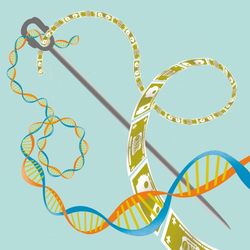
Advances in sequencing have dramatically increased the likelihood of discovering mutations that drive tumour growth in certain people and in certain tumours — even in specific cells within tumours. Yet mountains of genomic data are accumulating that are of little use because they are not tied to clinical information, such as family medical history. What is more, genomic data are generally confined to documents that cannot easily be searched, shared or even understood by most physicians. To achieve the level of success in precision medicine for cancer care that US President Barack Obama and others are anticipating, sequence data needs to be linked, in real time, to the patient sitting in front of his or her doctor. Integrated genomic and clinical data will also need to be available, in a searchable way, to a broad community of practitioners and researchers. Prototypes for centralized data banks are showing promise, but serious and sustained investment is needed to scale them up. Clinicians are used to appraising 20–50 measurements from routine laboratory tests, such as for blood-sugar levels. Such data can be easily entered into patients' electronic health records. Genomic data introduces a whole new level of complexity. To give an idea of the scale, it would take more than 25 days to transfer from one computer server to another the 2.5 petabytes (a petabyte is 1,000 terabytes) of data generated by The Cancer Genome Atlas — a US project started in 2005 to catalogue the mutations that drive cancer. This is according to my colleague Toby Bloom, deputy director for informatics at the New York Genome Center, a consortium that specializes in large-scale human genome sequencing.

More here.

Thursday, April 16, 2015

The world’s first hologram protest held in Spain

Alexis C. Madrigal in Fusion:

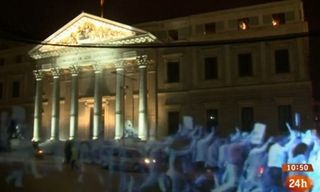
ScreenHunter_1141 Apr. 17 12.03A protest group pulled off an undeniably futuristic stunt this weekend in Spain: they sent thousands of holograms parading past the lower house of the country’s parliament.

The augmented reality protest was just the latest in activist groups’ campaign against a series of “citizen security” bills, which received final passage in March. The new laws criminalize some forms of protest, such as gathering in front of Parliament. And among highly restrictive digital provisions, the law makes taking or distributing “unauthorized” photographs of police a crime punishable with a 30,000 euro fine. All in, the laws would create 45 new infractions, mostly centered on cracking down on dissent.

The new measures will go into effect July 1, if they survive national and European legal challenges.

No Somos Delito, which translates as We Are Not Crime, has been protesting what they call the country’s “gag law,” and in that context, the hologram protest is more than the stunt it might first appear. Under conditions in which people cannot put their bodies into the streets, the ghostly virtual projections serve both as protest and as a reminder of the protests that cannot occur.

More here.

on ‘how to be both’ by ali smith

F158e712-00d3-4b1f-8a71-9ab5937d8e94Nathaniel Popkin at Public Books:

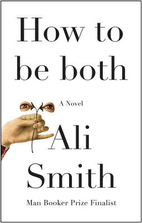
How to Be Both, the sixth novel by the Scottish writer Ali Smith, is an astounding work of art, so exquisite in its composition that reading it feels like staring into a Decadent painting, bound and endless all at once. This feeling is both the product of the book’s composition and simultaneously its silky essence. Depending on the version the reader has in her hands, she will start, either as I did, with the chatty ghost of Renaissance painter Francesco del Cossa (1435/6–1477/8), landed back on earth in the winter of 2014 in a room with 16-year-old George, whose mother has just died, or with George a few months previous, driving in Ferrara, Italy, with her mother and brother to see del Cossa’s greatest work. The book is about the duality of sexuality and of existence in general, a theme reinforced by the publisher’s decision to print two versions, reversing the order of the two interrelated but distinct parts. Most profoundly, How to Be Both depicts the power of art to produce within art maker and art observer alike capacities we don’t always realize are already there.

“Is there spring in purgatorium?,” purrs del Cossa’s ghost while standing in the place he has landed, room 55 of the National Gallery in London, where his painting Saint Vincent Ferrer hangs. A boy stands before the painting; Francesco can tell that the boy, really the girl George, “faces a door he can’t pass through.”

more here.

The novel that Malcolm Lowry thought burnt to a crisp

P19_Hofmann_1143061hMichael Hofmann at the Times Literary Supplement:

Who ever thought they would one day be able to read Malcolm Lowry’s fabled novel of the 1930s and 40s, In Ballast to the White Sea? Lord knows, I didn’t. The manuscript was the principal casualty of a fire on June 7, 1944 that destroyed the Lowrys’ beach shack outside Vancouver (from which the endlessly revised and near-perfect Under the Volcano was mercifully retrieved), and it was long supposed that all that was left of it were a few perfectly round pieces of charred typescript – like paper portholes – some of them oddly, but inescapably for the accident- and coincidence-obsessed Lowry (“The Element Follows You Around, Sir”), on the subject of fire. That, and the title.

It turns out, however, that in an access of prudence, Lowry had deposited the carbon of an early version of In Ballast in New York City in 1936 (where it had already done the rounds of publishers), with the mother of Jan Gabrial, his first wife, before setting off with Gabrial for Mexico. Mexico did for the marriage, and very nearly for Lowry as well, but it gave him the germ of Under the Volcano (originally a highly technical short story, about a Consul and his daughter witnessing a murder on a Mexican bus); in the end, after twenty months, he retreated to Los Angeles, met and married his second wife, Margerie Bonner, and struck north for Canada, where the couple lived on next to no money in conditions of extreme simplicity. There he continued to work on Under the Volcano and In Ballast pretty much in tandem.

more here.