
Category: Recommended Reading
Why everyone is talking about the new book by David Brooks
Husna Haq in Christian Science Monitor:
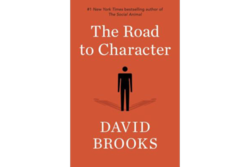
And so, he set out to explore that elusive quality, a certain contentment through selflessness. The result was “The Road to Character,” a new book in which Brooks profiles some of the world's greatest leaders, thinkers, and humanitarians, in an effort to shine a light on the sort of moral virtues that have been discounted in the modern age. “It occurred to me that there were two sets of virtues, the résumé virtues and the eulogy virtues,” he wrote in a New York Times oped piece which quickly became the NYT's most-emailed story of the day. “The résumé virtues are the skills you bring to the marketplace. The eulogy virtues are the ones that are talked about at your funeral — whether you were kind, brave, honest or faithful. Were you capable of deep love?” “We're raised in a society called the 'big me' society,” Brooks said Monday on “CBS This Morning.” “In 1950, the [Gallup organization] asked high school kids, are you a very important person? Then 12 percent said yes. Asked again in 2005, 80 percent said, yes, I'm a very important person. We all think we're super important. “That's great for your career if you're branding yourself. That's great for social media, if you want a highlight reel of you own life you can put up on Facebook, but if you want inner growth, you've got to be radically honest,” Brooks said. “…[T]he road to character is built by confronting your own weakness.” In his “The Road to Character,” Brooks found that great people in history became that way by doing just that – confronting their weaknesses.
More here.
The GHOST of CORNEL WEST
President Obama betrayed him. He’s stopped publishing new work. He’s alienated his closest friends and allies. What happened to America’s most exciting black scholar?
Michael Eric Dyson in The New Republic:
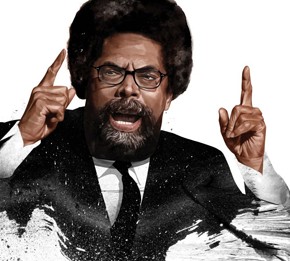
Cornel West’s rage against President Barack Obama evokes that kind of venom. He has accused Obama of political minstrelsy, calling him a “Rockefeller Republican in blackface”; taunted him as a “brown-faced Clinton”; and derided him as a “neoliberal opportunist.” In 2011, West and I were both speakers at a black newspaper conference in Chicago. During a private conversation, West asked how I escaped being dubbed an “Obama hater” when I was just as critical of the president as he was. I shared my three-part formula for discussing Obama before black audiences: Start with love for the man and pride in his epic achievement; focus on the unprecedented acrimony he faces as the nation’s first black executive; and target his missteps and failures. No matter how vehemently I disagree with Obama, I respect him as a man wrestling with an incredibly difficult opportunity to shape history. West looked into my eyes, sighed, and said: “Well, I guess that’s the difference between me and you. I don’t respect the brother at all.”
West’s animus is longstanding, and only intermittently broken by bouts of calculated love. In February 2007, West lambasted Obama’s decision to announce his bid for the presidency in Illinois, instead of at journalist Tavis Smiley’s State of the Black Union meeting in Virginia, calling it proof that the nascent candidate wasn’t concerned about black people. “Coming out there is not fundamentally about us. It’s about somebody else. [Obama’s] got large numbers of white brothers and sisters who have fears and anxieties, and he’s got to speak to them in such a way that he holds us at arm’s length.” It is hard to know which is more astonishing: West faulting Obama for starting his White House run in the state where he’d been elected to the U.S. Senate—or the breathtaking insularity of equating Smiley’s conference with black America.
More here.
And also see this: Michael Eric Dyson’s Interview on His Break With Cornel West
And counterpoint in Salon: Cornel West was right all along
And this from The Nation: Cornel West Is Not Mike Tyson
Our Ever Green World
Natalie Angier in The New York Times:

Green, she added, “is the color of life.” In surprising new research on the evolution of different forms of photosynthesis, scientists have found that the prized oxygen-making variety may be much older than anybody suspected, and that the greening and aerating of Earth could well have begun soon after the earliest living cells appeared.
More here.
Tuesday Poem
The New Song
For some time I thought there was time
and that there would always be time
for what I had a mind to do
and what I could imagine
going back to and finding it
as I had found it the first time
but by this time I do not know
what I thought when I thought back then
there is no time yet it grows less
there is the sound of rain at night
arriving unknown in the leaves
once without before or after
then I hear the thrush waking
at daybreak singing the new song
by W.S. Merwin
from The Moon Before Morning
Copper Canyon Press, 2014.
Monday, April 20, 2015
Perceptions
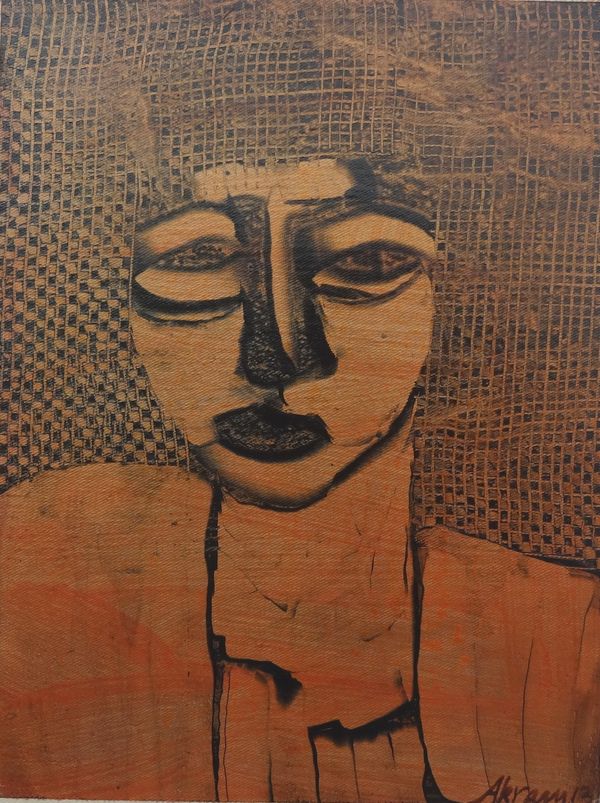
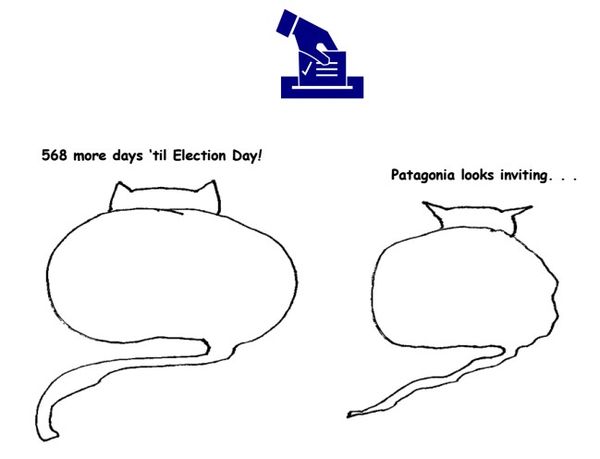
CATSPEAK
by Brooks Riley
Sunday, April 19, 2015
Monica Byrne: acclaimed novelist offers arresting visions of the future
The scientist turned author has just won the James Tiptree award for her first novel, The Girl in the Road, as she works toward a goal of ‘radical empathy’.
Lydia Kiesling in The Guardian:

Given her track record, this seems unlikely. Byrne’s first fiction efforts got her accepted into the prestigious Clarion Science Fiction and Fantasy Writer’s workshop, where she took a class with Neil Gaiman. She has a polymath’s assortment of interests and skills – pile “accomplished playwright” on to her résumé with the geochemistry degree. As she works on her new novel, set in Belize, she’s also writing a new play, an absurdist work called Such Cake, about two people trying to put on a good show despite the overwhelming evidence that, according to Byrne, “95% of all theater is bad”.
Her work has a kinetic quality that seems the natural habit of a quick mind, as difficult to pin down as the metallic hydrogen that forms a major plot point in The Girl in the Road. The novel travels nimbly from science to spirituality to geopolitics, claiming territory inside and outside of its genre.
More here.
Tiffanie Wen interviews Mohammed Dajani Daoudi
From Guernica:
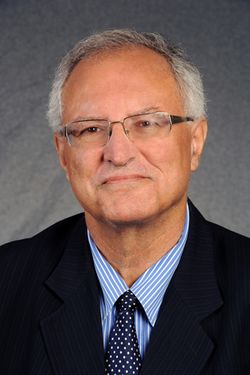
Born in Jerusalem in 1946, Dajani experienced the ramifications of the 1948 Arab-Israeli war firsthand. As Israelis took over Arab neighborhoods in Jerusalem, his family fled to Egypt, only to return as refugees in 1949. After the 1967 war, during which Dajani was separated from his family, he joined the ranks of Fatah, which advocated for the liberation of Palestine through armed struggle, and trained as a guerilla.
In 1970, Dajani’s passport was revoked by Jordan during the so-called Black September civil war, and in 1975 he was deported from Lebanon to Syria. Disappointed by the corruption he observed within Fatah, he took the opportunity to “divorce” politics and “marry” academics. He then, on an Algerian passport he was granted, traveled to the United States to complete a series of advanced degrees, including a master’s in social science at Eastern Michigan University, a PhD in government from the University of South Carolina at Columbia, and a PhD in political economy from the University of Texas at Austin. In 1985, King Hussein of Jordan issued Dajani a pardon, allowing him to return to Amman, where he worked at the Applied Science University as chair of the political science and diplomacy department.
More here.
The Vietnam War, as Seen by the Victors
Elisabeth Rosen in The Atlantic:
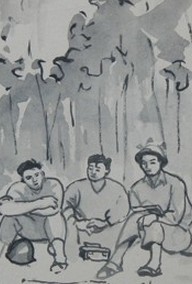
That morning, as communist troops swept into the South Vietnamese capital of Saigon and forced the U.S.-backed government to surrender, the North Vietnamese Army soldier marked the end of the war along with a crowd of people in Hanoi. The city was about to become the capital of a unified Vietnam. “All the roads were flooded by people holding flags,” Nguyen, now 65, told me recently. “There were no bombs or airplane sounds or screaming. The happy moment was indescribable.”
The event, known in the United States as the fall of Saigon and conjuring images of panicked Vietnamese trying to crowd onto helicopters to be evacuated, is celebrated as Reunification Day here in Hanoi. The holiday involves little explicit reflection on the country’s 15-year-plus conflict, in which North Vietnam and its supporters in the South fought to unify the country under communism, and the U.S. intervened on behalf of South Vietnam’s anti-communist government. More than 58,000 American soldiers died in the fighting between 1960 and 1975; the estimated number of Vietnamese soldiers and civilians killed on both sidesvaries widely, from 2.1 million to 3.8 million during the American intervention and in related conflicts before and after.
In the United States, the story of America and South Vietnam’s defeat is familiar. But North Vietnam’s war generation experienced those events differently, and several told me recently what it was like to be on the “winning” side.
More here.
How Israel Hid Its Secret Nuclear Weapons Program
Avner Cohen and William Burr in Politico:

In its final months, even as the Kennedy-Nixon presidential race captivated the country, the Eisenhower administration faced a series of crises involving Cuba and Laos. Yet, as the fall of 1960 progressed, President Dwight D. Eisenhower encountered a significant and unexpected problem of a new kind—U.S. diplomats learned and U.S. intelligence soon confirmed that Israel was building, with French aid, a secret nuclear reactor in the Negev Desert. Soon concluding that the Israelis were likely seeking an eventual nuclear weapons capability, the administration saw a threat to strategic stability in the Middle East and a nuclear proliferation threat. Adding fuel to the fire was the perception that Israel was deceitful, or had not “come clean,” as CIA director Allen Dulles put it. Once the Americans started asking questions about Dimona, the site of Israel’s nuclear complex, the Israelis gave evasive and implausible cover stories.
A little anecdote about an occurrence sometime in September 1960 sheds light on the development of U.S. perceptions that Israel was being less than honest about Dimona.
More here.
Sunday Poem
Eve of the Ascent
……….. —Yosemite National Park.
Neither level nor inhospitable.
near the summit the ridgeline gentles,
the bald rock ringed (unevenly) with pines.
We’re gathered by two campstoves
in the lee of giant boulders, our faces
sun-beatified gold-violet. We look up.
Half Dome steepens while we gaze
and seems farther away for how night-hikers
avoiding fees, spider through the trees
then disappear. Our day-sore muscles
ache against the stones—we’d sleep anywhere
and dream we were ascending.
For three days, our guides have warned us
if we slip outside the cables we will plummet
down the sheer rock face and die.
Alpine scalpel. Stilled bell. The campsite’s
eerie as a theater, the air is thin, and when
they tell us to set intentions, my demons
rise out of the valley in the massive,
granite forms to which I’ve fixed them—
the friends I’ve lost to wordless anger
crowd the switchbacks like anti-song,
pointing me back to the circuit path
that since I wanted it resolved leads
dully nowhere. I still want to believe
I acted justly. In Dante’s Purgatory, the wrathful
make their paces through a veil of smoke
they somehow need to see, then see through.
Pretty, bird-blue, iris-stinging smoke—
a thing that blocks the light you cannot cling to.
Behind gnarly junipers our white tent flaps
in wind that would lift it a mile over the valley
had we not weighed it down with heavy stones.
And what if what’s beyond this is no feeling?
We watch the midnight hikers’ headlamps
light the woods like water-ripple haloes.
Their voices echo as if across a lake, and I think
of swimming in late summer, late at night,
when I’d join my friends in the black waves naked,
and like I used to do on nights like this, I want to smoke,
or like the time twenty years ago when Carol and I
drove back from a summer in Seattle
and camped in Big Sky Country, trying to light
the bong we’d made from an empty can
of Country Time Lemonade. I took my contacts
out too soon, and couldn’t see the stars.
The miracle is friends who know you’re flawed
and love you anyway, like pilgrim Dante
who opened his arms to every penitent Italian
on the mountain. And while our fellow hikers
fall asleep in the shelter of our temporary city,
Carol imitates her Granny Ray, who like an angel
born in the state known from premium tobacco
suddenly appears, making us laugh so hard
we cannot breathe. Michael Wilson snores
three tents away, but we’re awake under gray stars
and the Dome looms, amplified in moonlight,
to the shape of what we cannot keep impossible.
.
.
by Katy Didden
from 32 Poems, Fall/Winter 2014
↔
Zayn Malik Solo – I Won’t Mind
Note: For Sheherzad
Hannah Arendt “Zur Person” Full Interview
The Tin Drum Chapter 1 by Günter Grass
günter grass (1927 – 2015)
Did Affluence Spur the Rise of Modern Religions?
Bret Stetka in Scientific American:
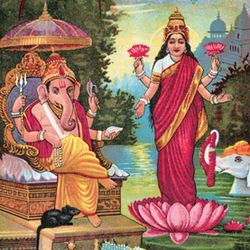
The authors investigated variables relating to political complexity and living standards. Affluence emerged as a major force in the rise of moral religion, in particular, access to energy. Across cultures moral religions abruptly emerged when members of a population could reliably source 20,000 calories of energy a day, including food (for humans and livestock), fuel and raw materials. “This number appears to correspond with a certain peace of mind,” says lead author Nicolas Baumard, a research scientist at École Normale Supérieure in Paris. “Having a roof over your head, not feeling like the world is full of predators and enemies, knowing that you'll have enough to eat tomorrow.” As Baumard points out, psychology research shows that affluence appears to influence our motivations and reward circuitry away from short-term gain to also considering the benefits of long-term strategy. In other words, with a steady energy supply, we had more time to cooperate, cultivate skills and consider consequences. Affluence also allowed more time for existential pondering: maybe we have some greater moral responsibility; perhaps life has a purpose.
Baumard acknowledges that moral and ascetic qualities probably existed in humans before the major religions emphasizing them.
More here.
Saturday, April 18, 2015
Freeman Dyson Interview
From the New York Times:
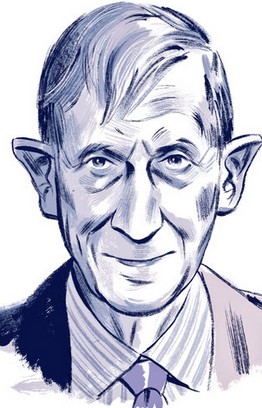
“The Left Side of History,” by Kristen Ghodsee, and “The Parthenon Enigma,” by Joan Connelly. Two wonderful new books by friends of mine. Kristen is an anthropologist at Bowdoin College, writing about the history of the last hundred years as it is seen through the eyes of her informants in Bulgaria. History looks very different if you fought for national liberation and human progress under the banner of Communism. Joan is an archaeologist at New York University. She writes about the archaic Greek myths and rituals that became embodied in the statuary of the Parthenon. She has a startlingly new interpretation of the Parthenon as the centerpiece of the religious life of ancient Athens. Kristen and Joan are kindred spirits, working with different tools in different millennia, and finding a similar illumination. To understand either modern Bulgarians or ancient Greeks, you must enter their world of human self-sacrifice.
Who is your favorite novelist of all time?
Octavia Butler, a tall black lady who died in 2006. She wrote “Parable of the Sower” and “Parable of the Talents,” two books that are normally classified as science fiction but are more concerned with theology than with science. The main character in both stories is a black woman who survives apocalyptic disasters and becomes the founder of a new religion in California. The character is in many ways a self-portrait of Octavia. I once spent a day with her entertaining a crowd of Chicago inner-city schoolchildren. I answered the science questions. She answered all the others. She was the star of the show.
More here.
‘Infested,’ About Bedbugs

A book about bedbugs is, by necessity, a book about nearly everything: about travel and adventure, about our relationship to nature, about how scientists solve problems, about trust and whether we view strangers as friends or foes. It is a book about what people will do under extreme circumstances, and about environmental politics, and art and mental illness. It is even a book about kinky sex.
Brooke Borel deftly takes us through this arthropod microcosm of the universe, as she traces the culture and biology of a resurgent scourge. The first page of each chapter is delicately spattered with ever-tinier drawings of bedbugs; at first you try to brush away what looks like specks of dust, just as you would similar blotches on your sheets, only to have realization dawn. You are infested.
Itchy New Yorkers who remember when staying in cheap hostels or dragging mattresses off the street happened with impunity might be skeptical, but the return of bedbugs “isn’t a fluke. It is a return to normal, an ecological homeostasis.”
more here.
Armenia’s genocide: death and denial
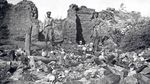
Last April, on the eve of the anniversary of the government deportations in 1915 that began the systemic massacres, then prime minister and now president Erdoğan, in a hedged but nonetheless unprecedented statement, offered his condolences for the mass murder, speaking of the “shared pain” of “millions of people of all religions and ethnicities [who] lost their lives in the first world war”. Yet the messaging is mixed. This year Turkey has chosen to mark the centenary of the allied landings in Gallipoli — a battle Mustafa Kemal was instrumental in winning — on the same date, April 24, as the remembrance of the Armenian genocide.
One can now find books in Turkey analysing these terrible events as a genocide but no official recognition that this was what it was. Erdoğan’s offer to open Ottoman archives to a panel of international scholars to determine the truth of what happened is superfluous in light of scholarship there for all to see.
The three newly published, and very different, books discussed here — and many previous works besides — can leave no one with a scintilla of doubt that what was done to the Ottoman Armenians (and the Assyrian Christians of eastern Anatolia) was genocide. They were annihilated, and the merciless drive against the Armenians was centrally directed by the Ottoman government under the Committee of Union and Progress (CUP) or Young Turks.
more here.