
Enjoying the content on 3QD? Help keep us going by donating now.
Category: Recommended Reading
Rick Kaufmann (1947 – 2024) Designer And Gallerist
Enjoying the content on 3QD? Help keep us going by donating now.
Friday, December 20, 2024
Jeannette Cooperman goes to Graceland in search of the last mystery train
Jeannette Cooperman at The Common Reader:
 Graceland. I am here, for the first time, for the forty-fifth anniversary of Elvis Presley’s death. The name does not feel apt. Surrounded by sweaty, mutton-chopped worshippers in shiny polyester jumpsuits, women with wrinkly tattoos, and little boys in capes, I gulp down hot, syrupy banana glopped with peanut butter on smashed Bunny Bread to condition myself, then set out to meet the fans who keep a dead man alive as an engine of consumerism, a weird religion, and an inexplicable (to me) lifelong obsession.
They surprise me.
Flo Shaw, who comes every year from Manchester, England, wears a sundress printed with black-and-white Elvis portraits and has his profile on her forearm. She lights up brighter than her raspberry hair as she describes loving Elvis for sixty-seven years (far longer than her marriage). A character, I think happily. Yet as she fields my questions, I sense a toughness and acumen in her worship. She thinks the critics are wrong: “So what if he didn’t write his own songs? The range is incredible—from hillbilly to ballads.”
More here.
Enjoying the content on 3QD? Help keep us going by donating now.
Lasers, hot rocks, and endless energy
From the Rational Optimist Society:
 What if I told you the next energy revolution isn’t in the sky, but under your feet?
Deep underground, beneath layers of dirt and ancient rock, an endless furnace burns hotter than the surface of the sun.
It’s been running since Earth formed 4.6 billion years ago, generating enough heat to easily power all of humanity.
This vast energy source has always been tantalizingly out of reach. But armed with a newly repurposed technology, three American startups are now racing to tap into Earth’s natural power plant.
Temperatures reach 10,800°F at Earth’s core. Just a few miles down, the rocks are hot enough to boil water instantly. This is the source of geothermal energy.
The heat locked in Earth’s crust holds more energy than all the world’s oil, coal, gas, and uranium combined—and it’s not close…
More here.
Enjoying the content on 3QD? Help keep us going by donating now.
Dana Gioia Loves Opera
Cynthia Haven at the Book Haven:
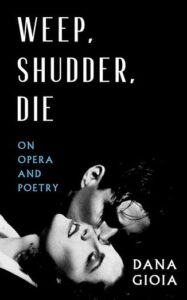 Poet and former National Endowment for the Arts chairman Dana Gioia has been busy. He’s just published a spate of new books: Poetry as Enchantment and Other Essays (Paul Dry Books); Dana Gioia: Poet & Critic (Mercer University Press, edited by John Zheng and Jon Parrish Peede); and last and shortest (205 pages), Weep, Shudder, Die: On Opera and Poetry, also with Paul Dry Books. He calls the last “an idiosyncratic book about the extravagant and alluring art of opera.” He also calls opera “the most intense form of poetic drama.” We couldn’t agree more.
From the Preface:
“This is a poet’s book about opera. To some people, that statement will suggest writing that is airy, impressionistic, and unreliable, but a poet also brings a practical sense of how words animate opera, lend life to imaginary characters, and give human shape to music. And a poet knows about love. There is no art that I love more than opera. I have written this book for those who, sharing the devotion, have wept in the dark of an opera house.” He adds that “the libretto is not a shabby coat rack on which the magnificent vestments of music are hung. Operas begin with their words. Strong words inspire composers, weak words burden them. Ultimately singers embody the words to give the music a human form for the audience.”
more here.
Enjoying the content on 3QD? Help keep us going by donating now.
Chinese AI technology has caught up at a ‘remarkable’ speed: Ex-Google CEO Eric Schmidt
Enjoying the content on 3QD? Help keep us going by donating now.
Is Human Agency in Danger of Being Drowned by Genetic Determinism?
Erik Parens at ELSI Hub:
 In his new book, Understanding the Nature-Nurture Debate, Eric Turkheimer sums up much of his thinking over his long and distinguished record as a behavioral geneticist. As a scientist, he has sought to understand what twin, adoption, and family studies can—and cannot—show regarding the role of genes in the emergence of human behavior. As a thinker, he has sought to understand what findings from those studies do—and do not—mean for us as individuals, who experience ourselves as having agency, and as citizens, who are acutely aware of the injustice and inequality that plague our society. And, as a colleague, Turkheimer has shown unstinting generosity to those of us in bioethics who want to understand what the science shows and what it means.
As the Human Genome Project took off in the 1990s and 2000s, Turkheimer had the insight and courage to stand nearly alone among his colleagues in criticizing what he took to be their unrealistic enthusiasm about how useful it would be—in terms of improving both behavioral and medical care—to sequence human genomes. He was among the first to recognize the way in which discoveries of single “genes for” rare disorders like cystic fibrosis were, essentially, red herrings in the hunt for causal pathways from genes to common disorders and other complex traits. Had Turkheimer’s skepticism about discovering causal pathways been taken more seriously, those charged with caring about the public’s health might have adjusted how much they invested in genomics.
But it isn’t such practical implications that preoccupy him in the new book. Rather, it is the ethical and social ones.
More here.
Enjoying the content on 3QD? Help keep us going by donating now.
Samantha Allen’s “Roland Rogers Isn’t Dead Yet”
Ryan McIlvain at the LA Review of Books:
 NEAR THE END of Samantha Allen’s new novel Roland Rogers Isn’t Dead Yet, a memoirist who’s been moonlighting as a ghostwriter confides that he isn’t really an artist anymore, or anyway not the kind who’ll likely win a National Book Award. “I’m never going to be one of those waiflike, purple prose–writing authors who gets cover blurbs like ‘delicate and masterful’ or ‘a powerful meditation on X, Y, and Z.’”
It’s hard to tell if Adam Gallagher is being falsely modest here, not least because the book’s fade-out doesn’t let us in on the success or failure of future books under his name. We do get to read excerpts from the ghosted book Adam has been quickly but passionately at work on—an autobiography of a famous Hollywood action star named Roland Rogers, who happens to be dead at the time the work is commissioned, contracted, interviewed for, drafted, revised, and published. Rogers’s book is called The Truth, and his main aim in it is to come out of the closet at last. And, on the evidence of the few pages presented to us in a playful, moving coda, I’d say Adam the ghostwriter/editor has got moves, plenty of them.
more here.
Enjoying the content on 3QD? Help keep us going by donating now.
The Philosophy of Schelling With Christopher Satoor
Enjoying the content on 3QD? Help keep us going by donating now.
in the country with Virginia Woolf
Laura Hackett in The Sunday Times:
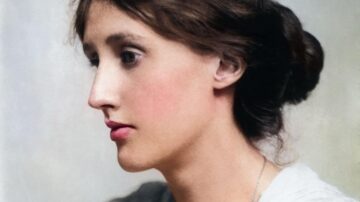 When Sylvia Townsend Warner expressed an interest in a cottage in East Chaldon, Dorset, in 1930, the surveyor described it as “a small undesirable property, situated in an out of the way place and with no attractions whatever”. Today, one imagines, the cottage, which had no electricity or running water, would be described as “bursting with potential”. Undeterred, Townsend Warner bought it for £90. In escaping London she was following the example of her novel Lolly Willowes, in which an unmarried woman moves to the countryside and becomes a witch. Virginia Woolf once asked her how she knew so much about witches. “Because I am one,” Townsend Warner replied.
Woolf moved to the countryside herself, to Asheham House, near Lewes in East Sussex, in 1915. And so did Rosamond Lehmann, the author of the scandalous Dusty Answer, in 1941 — her idyll of choice was the Berkshire village of Aldworth. All three women had gone through upheavals: Woolf was recovering from a suicide attempt, Townsend Warner had ended a long relationship and Lehmann had separated from her husband. Rural England offered rest and retreat.
More here.
Enjoying the content on 3QD? Help keep us going by donating now.
the Extraordinary ‘Lutfullah Khan Sound Archive’
From LUMS:
 LUMS is proud and thrilled to acquire the Lutfullah Khan Sound Archive, the premier repository for the literary, cultural, musical, and intellectual heritage of Pakistan and the wider region. There is no other audio library in the region that comes close to matching the scale, richness, and uniqueness of this incredible collection that is bound to serve as an invaluable resource for interdisciplinary scholarship, student learning, and community outreach across various disciplines, including history, sociology, religion, cultural studies, musicology, film studies, and more.
Mr. Lutfullah Khan (1916 – 2012) was a renowned collector, archivist, photographer, patron of the arts, and a classically trained and accomplished musician. Throughout his lifetime, he dedicated himself to assembling an unparalleled assortment of audio recordings. With tens and thousands of hours of recordings, his extraordinary collection includes oral recitations and conversations with more than 800 poets, writers, intellectuals, critics and other prominent personalities from Pakistan and the wider region. From Bade Ghulam Ali Khan to Suraiya Multanikar, the Lutfullah Sound Archive also has a remarkable and exceptionally rare archive of classical, semi classical, instrumental, and folk music. The typed catalogue of this collection alone is close to nearly 40 volumes. In recognition of his services to preserving cultural heritage, Mr. Khan was awarded the Pride of Performance in 2012.
More here. (Note: I was fortunate enough to view the collection in November 2024 on a visit to LUMS, Lahore. Truly magical and one of the wondrous accomplishments that all of humanity can be proud of)
Enjoying the content on 3QD? Help keep us going by donating now.
Friday Poem
In Broken Images
He is quick, thinking in clear images;
I am slow, thinking in broken images.
He becomes dull, trusting to his clear images;
I become sharp, mistrusting my broken images.
Trusting his images, he assumes their relevance;
Mistrusting my images, I question their relevance.
Assuming their relevance, he assumes the fact;
Questioning their relevance, I question the fact.
When the fact fails him, he questions his senses;
When the facts fail me, I approve my senses.
He continues quick and dull in his clear images;
I continue slow and sharp in my broken images.
He in a new confusion of his understanding;
I in a new understanding of my confusion.
by Robert Graves
from To Read a Poem
Harcourt Brace, 1992
Enjoying the content on 3QD? Help keep us going by donating now.
Thursday, December 19, 2024
Parfit: A Philosopher and His Mission to Save Morality
David Phillips at Notre Dame Philosophical Reviews:
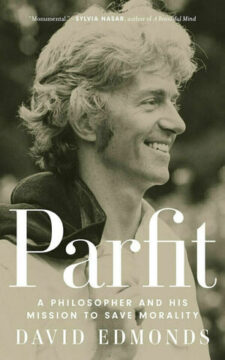 David Edmonds’ Parfit belongs to a burgeoning genre. There are the two recent collective biographies of Anscombe, Foot, Midgley and Murdoch (by Benjamin Lipscomb and by Claire Mac Cumhaill and Rachael Wiseman). There are M.W. Rowe’s J.L. Austin: Philosopher and D-Day Intelligence Officer and Nikhil Krishnan’s A Terribly Serious Adventure. Earlier works include Ray Monk’s Russell and Wittgenstein volumes, Tom Regan’s Bloomsbury’s Prophet, and Bart Schultz’s books on Sidgwick and the other classical utilitarians. And Edmonds himself is inter alia the author of The Murder of Professor Schlick and the coauthor of Wittgenstein’s Poker.
Derek Parfit stands out among the subjects of these various works for being so contemporary. Edmonds could draw on a vast collection of stories conveying Parfit’s legendary eccentricity. But he also took on in a particularly acute form the challenge of writing simultaneously for two quite different audiences. One audience consists of philosophers, some of whom are the sources of the stories and almost all of whom know a good deal about Parfit and his ideas. The other audience consists of general readers who are apt to come to the book knowing little or nothing about either.
I think Edmonds meets this challenge admirably. He is a lively and amusing writer. Readers of Notre Dame Philosophical Reviews are unlikely to turn to his book for an introduction to Parfit’s ideas. But it is likely to be the place where some readers with less philosophical training first encounter teletransporter cases, future Tuesday indifference, and the repugnant conclusion. They are in good hands.
More here.
Enjoying the content on 3QD? Help keep us going by donating now.
A transformative month rewrites the capabilities of AI
Ethan Mollick at One Useful Thing:
At the end of last year, there was only one publicly available GPT-4/Gen2 class model, and that was GPT-4. Now there are between six and ten such models, and some of them are open weights, which means they are free for anyone to use or modify. From the US we have OpenAI’s GPT-4o, Anthropic’s Claude Sonnet 3.5, Google’s Gemini 1.5, the open Llama 3.2 from Meta, Elon Musk’s Grok 2, and Amazon’s new Nova. Chinese companies have released three open multi-lingual models that appear to have GPT-4 class performance, notably Alibaba’s Qwen, R1’s DeepSeek, and 01.ai’s Yi. Europe has a lone entrant in the space, France’s Mistral. What this word salad of confusing names means is that building capable AIs did not involve some magical formula only OpenAI had, but was available to companies with computer science talent and the ability to get the chips and power needed to train a model.
In fact, GPT-4 level artificial intelligence, so startling when it was released that it led to considerable anxiety about the future, can now be run on my home computer. Meta’s newest small model, released this month, named Llama 3.3, offers similar performance and can operate entirely offline on my gaming PC. And the new, tiny Phi 4 from Microsoft is GPT-4 level and can almost run on your phone, while its slightly less capable predecessor, Phi 3.5, certainly can. Intelligence, of a sort, is available on demand.
More here.
Enjoying the content on 3QD? Help keep us going by donating now.
What are DIMENSIONS?
Enjoying the content on 3QD? Help keep us going by donating now.
Noah Smith on the Rise and Fall of “Neoliberalism”
Yascha Mounk at his Substack:
 Yascha Mounk: I’ve been trying to think through the state of economic policy at the moment, and it seems to me that we’re in a strange moment where there was a clear paradigm that economists followed in the ‘90s and perhaps the early 2000s, and that ran aground. Then there was a principled alternative to it that parts of the left tried to put forward, but that seems to have run aground as well.
Do you think there’s a kind of clear structure to how, let’s say, the mainstream of the Democratic Party thinks about economic policy right now?
Noah Smith: Well, in the 2000s, a kind of an intellectual movement among progressives started to crystallize, which I guess for want of a better term you could call anti-neoliberalism. People basically got a short list of things they thought the market got wrong and told this sort of simplified, potted history: In the 1980s, we decided markets could do everything, cut the government, and then this led to rising inequality, falling worker power, environmental degradation, etc.. And they thought that in order to get rid of those, we need to basically reverse the neoliberal changes—to strengthen unions, various kinds of regulations, and the welfare state. And that was the basic progressive program. And you saw some elements of that program get implemented by Biden, but a lot got blocked.
But the neoliberal turn was a lot less dramatic, I think, than people realize.
More here.
Enjoying the content on 3QD? Help keep us going by donating now.
Tangled Paths: A Life of Aby Warburg
Enjoying the content on 3QD? Help keep us going by donating now.
Caroline Blackwood: Muse And More
Negar Azimi at the New Yorker:
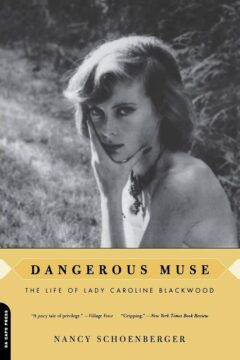 In the room devoted to the archives of Lucian Freud in London’s National Portrait Gallery, a strikingly tender painting depicts a young woman with waifish features, blond tresses, and enormous slate-blue eyes. The portrait, “Girl in Bed,” has a delicacy that stands out amid the characteristically mottled, fleshy faces of Freud’s subjects—the slender fingers and crumpled duvet, the high blush on the cheeks. The girl in question is Caroline Blackwood, a twenty-one-year-old heiress of aristocratic extraction, who would soon become the artist’s wife. Freud made ten-odd paintings of Blackwood, charting the zigzag of their relationship, from the sensitive, alluring “Girl Reading” and “Girl in Bed” (both produced in 1952, at the height of their courtship), to the abject “Hotel Bedroom,” from 1954, in which Blackwood appears wizened and withdrawn, while Freud himself stands by the window, lost in shadow.
The artist was hardly alone in his fixation. Walker Evans photographed Blackwood more than a hundred times, capturing her progression from nymphlike youth to haggard middle age. Robert Lowell, her third and final husband, immortalized her in his Pulitzer Prize-winning poetry collection “The Dolphin” as, variously, a dolphin, a baby killer whale, and a mermaid who dines on “her winded lovers’ bones.”
more here.
Enjoying the content on 3QD? Help keep us going by donating now.
A Man Out of Time
Christopher Tayler in Harper’s Magazine:
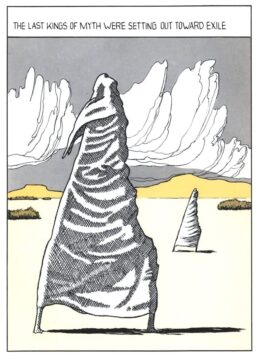 In 1983, at the height of his international fame as the author of Invisible Cities (1972) and If on a Winter’s Night a Traveler (1979), Italo Calvino published an anthology of nineteenth-century tales of the fantastic, featuring stories from France, Poland, Germany, Britain, the United States, and Russia. There was one conspicuous absence: Calvino’s own country. To include Italian writers “merely for patriotic reasons” would have been pointless, Calvino explained. Supernatural tales, and fantasy in general, were “very much a ‘minor’ field as far as nineteenth-century Italian literature is concerned.” By implication, the same was true of twentieth-century Italian literature—at least until the genre’s resurgence “in our time.”
Calvino’s anthology was modeled on similar productions by Jorge Luis Borges and a French admirer of Borges’s named Roger Caillois. Like theirs, it offered an intellectual pedigree for the anthologist’s own work. Calvino had no real need to bolster his or the stories’ credentials; some of the playful fables he had written in the Fifties had become assigned texts in middle schools, and other serious writers, such as Primo Levi, had been publishing science fiction collections since the Sixties. But letting himself be playful had caused Calvino a lot of heartache. His first published stories were based on his experiences as a wartime partisan, and he spent a long time trying and failing to write realistic novels about the social problems of industrialized Turin. To their credit, his circle of left-wing editors and critics were unfazed when he pivoted to writing about aristocrats being split into good and evil halves or living out their lives in the treetops. All the same, he never quite stopped dreading accusations of putting form over content. Couldn’t he have stuck to writing about Italian life in a more direct and political way?
More here.
Enjoying the content on 3QD? Help keep us going by donating now.
Are you what you eat? How food shapes self-image
Lizzie Collingham in Nature:
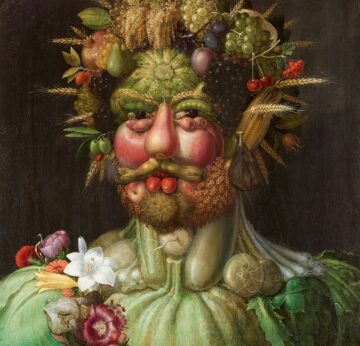 In seventeenth-century England, people often commented after a meal: “We ourselves have had ourselves upon our trenchers”. This is an early version of today’s well-worn aphorism, ‘you are what you eat’. In Eating and Being, historian Steven Shapin explores this idea and how philosophies of food have shaped the Western sense of self. His central idea is encapsulated in the book’s last lines: “In the past, knowledge about what we eat belonged to knowledge about who we are. It still does.”
The opening chapters recount how ancient Greek Hippocratic ideas about food and medicine laid the foundations for the Western understanding of food and identity. This philosophy of dietetics proved remarkably tenacious, providing the basis for medical thinking into the eighteenth century. Dietetics gave an account of how food formed not only the substance of the body, but also the psyche. A person’s temperament was determined by the balance of the four bodily humours: blood, phlegm and black and yellow bile. The balance of these fluids in individuals determined their personality types — phlegmatic, sanguinary, melancholic and choleric. It also provided a set of principles to live by. An ideal state could be achieved by following a regimen of moderation in all areas of life: habitat, exercise, sleep, bodily excretions, the emotions and, especially, food and drink.
More here.
Enjoying the content on 3QD? Help keep us going by donating now.