
Enjoying the content on 3QD? Help keep us going by donating now.
Category: Recommended Reading
Sunday, December 29, 2024
What Was the Biggest Factor in Kamala Harris’s Defeat?
Isabella Weber and Elie Mystal debate the matter in The Nation:
[Weber] As the dust settles on the 2024 elections, stunned Democrats are struggling to understand why the country voted the way it did. In the run-up to November 5, survey after survey showed that Americans were concerned about the cost of living, but many economists and pundits shook their heads in disbelief. They blamed a “vibecession.”
James Baldwin once said that anyone who has struggled with poverty knows how extremely expensive it is to be poor. People’s experience of inflation differs based on factors like race, income, gender, where you live, whether you have a car to drive to cheaper stores, whether you can buy in bulk to take advantage of discounts, whether you rent or own your home, whether you have a mortgage from before interest rates went up, whether you depend on credit-card debt, how many assets you hold, and so on. This diversity of lived experiences is not captured in the headline numbers. For many people, the favorable economic data and booming stock market belied the reality of exorbitant grocery prices, sky-high rents, prohibitive healthcare costs, and spiking interest rates.
More here.
Enjoying the content on 3QD? Help keep us going by donating now.
Brave New World
Herman Mark Schwartz in Phenomenal World:
Forty years ago, in 1984, Michael Piore and Charles Sabel published a MacArthur award-winning book, The Second Industrial Divide: Possibilities for Prosperity, that shaped a decades-long debate about the future of markets and the social orders supporting them. Piore and Sabel characterized the 1970s and early 1980s as a second critical inflection point in the history of capitalism. The first shift had been from craft to mass production in the early 1900s. Mass production matched large fixed investments in product-specific production equipment with semi-skilled workers struggling for long-term employment stability. P&S argued that those investments had created an overly rigid production structure vulnerable to almost any shock. And the 1970s and early 1980s presented a multitude of shocks—strikes, unstable oil prices, rising inflation, intensifying conflict between the US and Soviet Union in terms of nuclear threats and proxy wars, the beginning of deregulation and privatization, and new global public health challenges like the AIDS epidemic. Political struggles to reorganize society created an opening for a watershed in economic relations that gave their book its name: a second industrial divide. They argued that enterprises could and would increasingly shift towards what they termed “flexible specialization”—smaller, more equally sized firms using newer general-purpose equipment, run by a more egalitarian workforce, in a more competitive market—because this form was more resilient in the face of shocks. The rules of the game everywhere were about to be re-written, and their speculative sketch of a possible future won their place in intellectual history.
The big questions about the re-written rules were, of course, by whom, how, and with what outcomes? Forty years later, we now know P&S were wrong about how the second industrial divide eventually played out. They were right, however, about the fact of a historical divide in the interaction of labor relations and the supply side of the economy, and about the stakes inherent in the massive shift in the organization of production, consumption, and innovation this entailed. Today we face a similar inflection point—a third industrial divide.
More here.
Enjoying the content on 3QD? Help keep us going by donating now.
The Murmur of Engines
Christopher Clark in the LRB:
For more than fifty years, Perry Anderson has been the most erudite and compelling voice on the British Marxist left. His writing has always been marked by prodigious reading across the widest possible front, a commitment to clarity and analytical rigour, and fidelity to a materialist reading of history. The style is cool and forensic, its austere surfaces set off by a sprinkling of recherché locutions (mouvance, primum movens, suppressio veri, suggestio falsi, coup de main, plumpes Denken, kataplexis, animus pugnandi, lapsus calami, ante diem, to cite just a few from this book). Two great works of historical synthesis, Passages from Antiquity to Feudalism and Lineages of the Absolutist State, both published in 1974, earned Anderson wide renown for the brilliance and complexity of their conceptual architecture, though the empirical soundness of their arguments was challenged by some historical specialists. The epochal disappointments of the 1980s, when it became clear that the political hopes of the radical left were not going to be realised any time soon, had a muting effect. The mordancy of the early decades made way for the realism of the mature Anderson style, marked by long and probing critical essays focused on individual issues and thinkers.
There was a mid-19th-century moment when critics emerged as arbiters of the present, applying a science of discernment whose purposes were no less (and sometimes were more) ambitious than those of the works they examined. Anderson is a critic in this mould. His attention falls not just on works, but also on the persons who fashion them. This is not because he is in the business of augmenting or destroying reputations, but because he sees writing as a way of being active in the world.
More here.
Enjoying the content on 3QD? Help keep us going by donating now.
Making friends with your past and future selves
Katherine Ellison in Knowable Magazine:
 When asked why he didn’t begin writing novels until his 30s, the celebrated Czech author Milan Kundera said he didn’t have the requisite experience when he was younger. “This jerk that I was, I wouldn’t like to see him,” he added. Many of us look back at our former selves and wince to recall our immaturity. We vary quite a lot in the degree to which we feel friendly toward, and connected to, both our former and our future selves. Psychologists call this trait self-continuity, and suggest that it carries enormous weight in determining our long-term well-being.
In recent years, increasing research has shown that a sense of coherence between our past and present selves can bolster mental health and, particularly, emotional resilience. Our connection to our future selves, on the other hand, can sway choices with long-term impact on our future welfare, from watching our diets to saving for retirement. Self-continuity, says Cornell University gerontologist Corinna Löckenhoff, who researches the trait, gives us “an understanding of where we came from and where we’re going. It gives us direction and purpose and identity.”
More here.
Enjoying the content on 3QD? Help keep us going by donating now.
Sugar Pie DeSanto (1935 – 2024) Singer And Dancer
Enjoying the content on 3QD? Help keep us going by donating now.
For a Happier New Year, Focus on Your Loved Ones
Holly Burns in The New York Times:
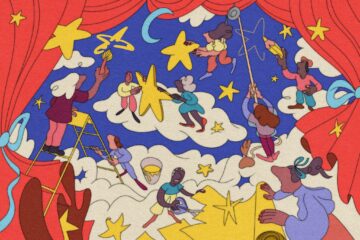 My New Year’s resolutions have always had one thing in common: They’ve been all about me. Some years I’ve vowed to pick up my high school French again; some years I’ve sworn off impulse shopping; and some years (OK, every year) I’ve promised myself I’d go to bed earlier. The goal, though, has always been the same: to become a better, happier version of myself. But while there’s nothing wrong with self-improvement, experts say that focusing on our relationships with the people around us may go a long way to making us happier.
“Our society has treated happiness as a highly individualistic pursuit — the idea being that it’s something that you make for yourself, that you get for yourself, and you do it all alone,” said Stephanie Harrison, founder of The New Happy, an online platform that uses art and science to change how we think about happiness, and author of “New Happy: Getting Happiness Right in a World That’s Got It Wrong.” We tend to set our sights on self-focused goals, Ms. Harrison said, “almost plucking them out of thin air, thinking, ‘OK, this will be the thing that makes me happy.’” Instead, she suggested, pivot to “think about happiness as something we create together and for each other.”
More here.
Enjoying the content on 3QD? Help keep us going by donating now.
Marisa Paredes (1946 – 2024) Actor
Enjoying the content on 3QD? Help keep us going by donating now.
Alfa Anderson (1946 – 2024) Lead Vocalist Of Chic
Enjoying the content on 3QD? Help keep us going by donating now.
Friday, December 27, 2024
Percival Everett’s Prose Is Having a Moment. How Is His Poetry?
Dwight Garner in the New York Times:
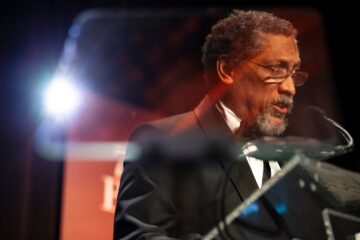 Percival Everett’s first novel was published in 1983. How long ago was that? It was same year Madonna, R.E.M. and Metallica released their first albums. Much of the world has only recently begun to catch up with him.
His current renown, a long time coming, is thanks to the success of “James,” a subversive retelling of “Adventures of Huckleberry Finn” that won the National Book Award this year, and the movie “American Fiction” (2023), which was based on Everett’s publishing satire, “Erasure.” You can almost hear the mass of eyeballs swiveling in his direction.
He also writes poetry. Since 2006, Everett has issued six books of verse. His latest, “Sonnets for a Missing Key,” is out now. He’s hardly the first important fiction writer to commit poetry on the side, as if with his left hand. Raymond Carver, Margaret Atwood, John Updike and Alice Walker are some of the others who come to mind — as well as, among a younger generation, the omnidirectionally talented Ben Lerner.
What’s Everett’s poetry like?
More here.
Enjoying the content on 3QD? Help keep us going by donating now.
The unbearable slowness of being: Why do we live at 10 bits/s?
Jieyu Zheng and Markus Meister at Science Direct:
This article is about the neural conundrum behind the slowness of human behavior. The information throughput of a human being is about 10 bits/s. In comparison, our sensory systems gather data at ∼109 bits/s. The stark contrast between these numbers remains unexplained and touches on fundamental aspects of brain function: what neural substrate sets this speed limit on the pace of our existence? Why does the brain need billions of neurons to process 10 bits/s? Why can we only think about one thing at a time? The brain seems to operate in two distinct modes: the “outer” brain handles fast high-dimensional sensory and motor signals, whereas the “inner” brain processes the reduced few bits needed to control behavior. Plausible explanations exist for the large neuron numbers in the outer brain, but not for the inner brain, and we propose new research directions to remedy this.
More here. The full paper is here. And here is a NY Times article about this by Carl Zimmer.
Enjoying the content on 3QD? Help keep us going by donating now.
Goethe: More Than Just An Old Romantic
George Steiner at The Guardian:
 Boyle’s treatment of Goethe’s readings and uses of Kant would make for a tidy monograph in itself. As would Boyle’s analysis of Goethe’s studies and experiments in optics, in the meaning and structure of light. The conclusions drawn were erroneous, but it has been argued that the treatise on colours, the Farbenlehre, is a stylistic, intellectual masterpiece at the heart of Goethe’s achievements. An achievement relating Goethe to Spinoza on the one hand, and to various schools of light-mysticism, of ‘illuminism’ in a literal vein, both Western and Oriental (Persian doctrines and literature fascinated Goethe).
But Boyle is also a literary expositor and critic of vivacious perspicacity. His treatment of Wilhelm Meister, Goethe’s didactic roman-fleuve, of the domestic epic, Hermann und Dorothea, of that enigmatic yet somehow pivotal drama, The Natural Daughter, of individual lyrics and of the gestation of Faust, already 25 years in the making and legendary prior to its publication, could be combined into a most useful guide to realms largely unknown to English literacy. In appendix, one would find Boyle’s analyses of Schiller’s aesthetics, dramas, historical narratives.
more here.
Enjoying the content on 3QD? Help keep us going by donating now.
2024’s Biggest Breakthroughs in Biology, Neuroscience, and Computer Science
Enjoying the content on 3QD? Help keep us going by donating now.
The Beginnings of Goethe’s Science: A Reassessment
Enjoying the content on 3QD? Help keep us going by donating now.
Macroeconomics: The predator of foolish regimes
Noah Smith at Noahpinion:
 Regular people in countries like Bolivia depend on imported food and fuel for their daily lives. To import food and fuel you need dollars — or some other international currency like euros or yen or yuan or whatever. Bolivia can get dollars two ways — by selling exports or by selling bonds. If it doesn’t sell enough exports — for example, if gas prices drop and its exports are worth less — it has to sell bonds in order to keep importing.
The country maintains a stockpile of “reserves” — basically, bonds that pay off in dollars — that it can use to buy imports if export revenue temporarily goes down. But if the country tries to maintain an exchange rate peg — basically, declaring that its currency is worth more dollars than it’s really worth, so it can keep buying more imports than it can really afford — then the stockpile of reserves will eventually get used up. At that point there’s no way to stop the country’s currency from crashing in value relative to the dollar, as everyone desperately exchanges more and more of their local currency for dollars in order to keep buying imported food and fuel. This abruptly impoverishes the citizenry, and it tends to lead to either a sovereign default or hyperinflation (for reasons you can read about in my post about Sri Lanka’s crisis back in 2022).
So basically, I predicted that Bolivia’s economy was in danger not from socialism — which seemed to be implemented far more prudently than in Venezuela — but from macroeconomic mistakes. Socialist or not, Bolivia was in danger of the kind of standard, well-known economic crisis that resource-exporting countries tend to stumble into.
More here.
Enjoying the content on 3QD? Help keep us going by donating now.
A New Biography Of Goethe
Dwight Garner at the New York Times:
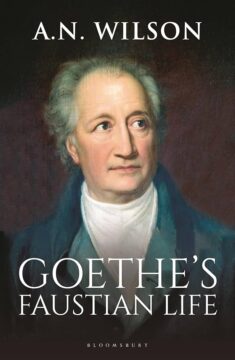 At what point does an aside become a tangent, a tangent a digression, a digression a meander, a meander a ramble, a ramble a circumlocution, a circumlocution an excursus and an excursus a cul-de-sac? The reader has time to consider such matters while reading A.N. Wilson’s elastic-waisted but hardly unintelligent new biography, “Goethe: His Faustian Life.”
Wilson is a prolific English biographer (of Darwin, Tolstoy, Milton and Queen Victoria, among others) and novelist whose books are usually worth attending to. Especially recommended is his bittersweet memoir “Confessions: A Life of Failed Promises,” from 2022. Two of his daughters, the classicist Emily Wilson and the food writer Bee Wilson, are inimitable writers as well. Does the world need another biography of the German polymath Johann Wolfgang von Goethe (1749-1832), the author of the novels “The Sorrows of Young Werther” and “Elective Affinities” as well as “Faust,” his masterpiece, a tragic play in two parts?
more here.
Enjoying the content on 3QD? Help keep us going by donating now.
Netflix’s One Hundred Years of Solitude Does the Impossible
Imogen West-Knights in Slate:
 One Hundred Years of Solitude has a near-mythical status for me that no other book does. Aged about 14, bored one day during the summer holidays, I found the Picador 1978 paperback edition on my parents’ bookshelf. I opened it on a whim, and read one of the most iconic first sentences in existence: “Many years later, as he faced the firing squad, Colonel Aureliano Buendía was to remember that distant afternoon when his father took him to discover ice.” I immediately sat down on the sofa and read for a further three hours. I date my life as a reader of literature to that afternoon, to that first sentence which I still know by heart. I have since reread it only once, 10 years later, because I wanted to wait until I had forgotten what happens. I’ll read it again as soon as the details have once more faded from my memory, and I can’t wait.
If you’ve not read it (and I appreciate that this is one of the most famous books in the world, but just in case), Gabriel García Márquez’s 1967 novel follows six generations of a sprawling family in the fictional Colombian town of Macondo. I read it before I knew what magical realism was, the genre García Márquez became a figurehead for, and it blew my head off. How could this be? It was so compellingly strange. Along the way, babies are born with pig tails, a single trail of blood makes its way all the way across town to announce someone’s death, a rainstorm lasts almost five years, someone literally ascends to heaven, ghosts and spirits abound.
More here.
Enjoying the content on 3QD? Help keep us going by donating now.
What Does It Mean to Be In the ‘Post-Genomic’ Age?
C. Brandon Ogbanu in Undark Magazine:
 As 2025 approaches, we can expect the silver anniversary announcements on the completion of a draft of the human genome to be on their way. Many of the people who were involved are still alive and well known. Because of this, we will likely hear reflections from an ensemble cast of characters associated with the 2000 announcement, and those whose more contemporary work is linked to the study of genomes: J. Craig Venter, Francis Collins, Jennifer Doudna, and others. We have entered what can be called a “post-genomic” age, where the biological sciences build on our understanding, developed over the past quarter-century, moving us towards the next generation of discoveries in various subfields of biology.
What work is “post” doing in “post-genomic?” One dictionary definition offers that “post” can be used as “a prefix, meaning ‘behind,’ ‘after,’ ‘later,’ ‘subsequent to,’ ‘posterior to.’” Its use in “post-genomic” does not indicate a world without genomics, but rather a scientific world where we take genomics for granted and it is no longer the bottleneck in understanding biological systems at the molecular level.
More here.
Enjoying the content on 3QD? Help keep us going by donating now.
Thursday, December 26, 2024
Michael Sandel and Thomas Piketty in Conversation
Enjoying the content on 3QD? Help keep us going by donating now.
How Money Problems and a Bad Manager Tore the Beatles Apart
Allan Kozinn and Adrian Sinclair at Literary Hub:
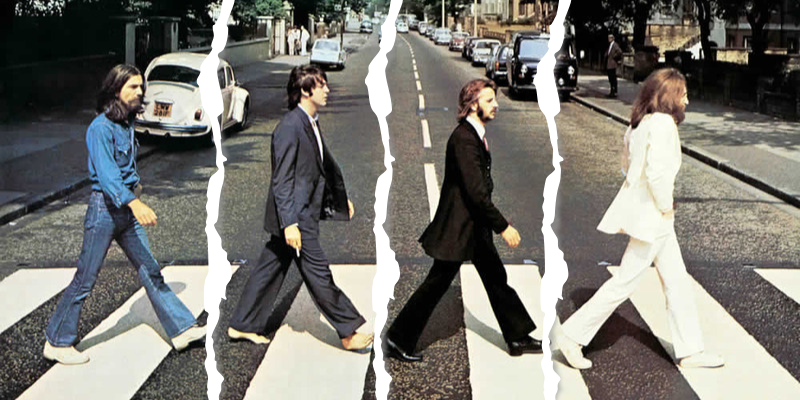 “Looking back on it, we did used to say, it’s like a divorce,” Paul McCartney reflected on the Beatles’ breakup, now a marathon heading into its fifth year. “It really was like that, but four fellas trying to divorce instead of a man and a woman. And then you get four sets of lawyers instead of just two. All of that kind of stuff was not making life easy at all.” At the moment, the lawyers were not the problem.
As Paul, Linda and their three daughters—Heather (11), Mary (4), and Stella (2)—were enjoying some downtime at High Park in Campbeltown between recording sessions in Stockport, the attorneys representing each of the former Beatles convened in New York on Monday, February 11, 1974—the tenth anniversary of the Beatles’ American debut concert in Washington, D.C.—to hammer out an agreement dissolving the Beatles’ partnership.
This had been Paul’s goal since early 1970, shortly after John Lennon announced to his bandmates that he was leaving the group. It was John, in fact, who first used the word divorce, likening his split from the Beatles—and the liberation he felt in declaring it—to his divorce from his first wife, Cynthia.
McCartney had not wanted to divorce the Beatles. He wanted to divorce Allen Klein, the brash New York manager whom John brought in to manage the Beatles and their company, Apple, which was losing money alarmingly by early 1969.
More here.
Enjoying the content on 3QD? Help keep us going by donating now.