3QD Politics & Social Science Prize Semifinalists 2015

The voting round of our philosophy prize (details here) is over. Thanks to the nominators and the voters for participating.

So here they are, the top 20, in descending order from the most voted-for:

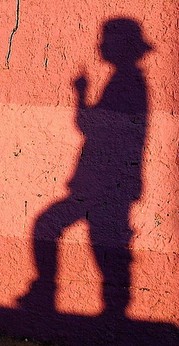
  1. PoliticsSemi2015Warscapes: Cold Remains in Greenland
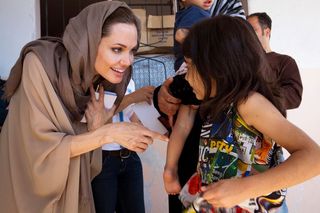
  2. Los Angeles Review of Books: The Limits of Muslim Liberalism
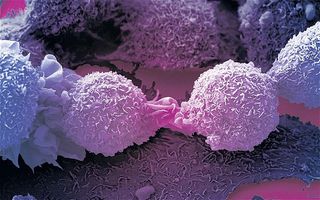
  3. 3 Quarks Daily: The Undocumented Journey North, Through Mexico
  4. Proof I Never Want To Be President: It's Not a Competition
  5. 3 Quarks Daily: Notes Of A Grand Juror
  6. 3 Quarks Daily: Delhi: the City of Rape?
  7. Justin Erik Halldór Smith: Abandoning Ukraine
  8. Scientia Salon: Why not Cynicism?

The editors of 3 Quarks Daily will now pick the top six entries from these, and after possibly adding up to three “wildcard” entries, will send that list of finalists to Ken Roth for final judging. We will post the shortlist of finalists here later today.

Narrating Crisis in Sri Lanka

Nimmi Gowrinathan in Guernica:

Sri-Lanka_600Jeya’s daughter is nine days old, unnamed, when I meet her in Sri Lanka. Miniscule compared to my chunky little boy, born only a few months earlier, she squirms beneath pink netting as I gingerly reach in to hold her hand. I don’t need to see her, Jeya says, turning away. That day, I was a human rights researcher, and I wondered what fresh trauma I would cause in the pursuit of documenting her story. Jeya’s daughter was born of rape. Half Singhalese, half Tamil. Half soldier, half civilian. She entered her world when a vicious cycle of violence had come full circle. They say the war is over now, the country is at peace. Discreetly positioned inside a church, sitting across from Jeya, I’m restless, intimately familiar with the pangs of guilt that interrupt my work and jar my sense of self. The last time I was here, I was a humanitarian worker. Then, at least, I could have carefully placed a tiny Band-Aid over the details of her damaged life. Now, I am intervening into local lives with only the promise of social justice in hand. I am an ill-equipped spy, sent to retrieve the most repressed memories from a repressed people. The stories will, at worst, incite a directionless moral outrage on behalf of the people, and at best, brand their government an international pariah. I am relieved Jeya will talk to me, as I have come looking for Victims of rape (Survivors, in aid parlance), but so far had only encountered Witnesses and Rumors. From inside the electrified fence of her internment, Jeya didn’t know which day the war ended. They never told us. Or maybe they did. None of us understood Singhalese.

It is a war the West knows little about, though its fighters became infamous around the globe.

More here.

Planet of the Apes: A new essentialist effort to explain male aggression

Dale Peck in Book Forum:

Article00IT'S BEEN YEARS SINCE I took Muay Thai; years, too, since I thought much about Stanley Crouch. Nevertheless, this was my obvious point of entry to Jonathan Gottschall’s The Professor in the Cage, which the author describes as “part history of violence, part nonfiction Fight Club, and part tour of the sciences of sports and bloodlust.” In fact, The Professor in the Cage is a straightforward work of popular science bookended by what Gottschall himself calls a “memoir stunt”: One day in his late thirties, Gottschall, a “cultured English professor,” decided to join the mixed-martial-arts gym that had opened across the street from his campus office, with the ultimate goal of engaging in at least one professional fight. By Gottschall’s account, the decision was motivated by dissatisfaction with his job as an adjunct teaching freshman composition, but the subsequent narrative complicates this explanation. Gottschall refers to his 2012 fight as “the culmination of a [two-year] journey,” yet he seems to have been “fascinated by fighting,” at least since the mid-’90s, when he watched a video of the Ultimate Fighting Championship’s inaugural bout, between Teila Tuli and Gerard Gordeau. At the end of that twenty-second bloodbath, “Gordeau left the cage with . . . one of Tuli’s front teeth broken off inside his foot.” Gottschall likens the experience to watching porn for the first time. He was “sickened” by the spectacle but “couldn’t look away,” and “in the ensuing months I frequently visited the video store, where I guiltily lurked through the section that included UFC tapes.” Finally there is the admission that “from grade school through high school, I attracted bullies.” But lest you pity the younger Gottschall, he hastens to tell readers: “I probably would have behaved the same way if I’d had the fangs and the claws for it. I wasn’t a good kid, just a weak one. In high school I occasionally managed to identify someone even weaker and more isolated than me, and I did my small part to make his life even harder and sadder than it already was.”

In college he “hit the weights,” building himself into “a 210-pound heavyweight who could bench-press more than 300 pounds”; afraid that strength alone wasn’t enough, he “took up karate” and studied it for more than fifteen years.

More here.

Friday Poem

Human Wishes

from the Latin of Juvenal (Decimus Junius Juvenalis),
c.AD 50-c.127,
Satires X

No one in his right mind would want to be
a big fish gobbling up the smaller fry;
it’s the big fish who attract hostility
like Seneca and the rest in Nero’s day.
You’re better off to sit tight in your room
than be conspiring in the rising steam
among the towels of the baths and gym;
take change if you go out walking after dark,
avoid the war zones and the periphery
and keep your wits about you in the park
where a knife gleams behind each shadowy tree.
All pursue riches in our modern Rome,
gardens, a coach-house and a second home
bought with the revenue from untaxed income
at Capua, Aquinum, Trevignano or Tivoli;
but poison’s seldom served in the wooden cups.
Beware the crystal glass and the golden bowl,
be careful when you raise wine to your lips
dining with colleagues on the Palatine Hill
or old friends in the Caffè Giovenal’
or swan and flamingo, antelope and stuff.
So which philosopher would we rather know
– the one who, staring from his portico,
laughs, or the one who weeps? Easy to laugh,
if we started weeping there’d be no end to it.
Democritus would shake with continual mirth,
even in his primitive times, at life on earth
and showed that stoicism spiced up with wit,
some candour and good sense, can mitigate
even the thick air of a provincial city.
Binge sex and fiscal heroin, discreet
turpitude flickering in a brazier light –
all anyone does now is fuck and shit;
instant gratification, entertainment, celebrity
we ask, but mumbling age comes even so,
the striking profile thick and stricken now,
the lazy tackle like a broken bough,
the simian features and the impatient heir.
What else can you expect from your white hair,
your voice like cinders under a kitchen door?
What use to you the glittering cleavages,
the best box in the house above the stage
when blind and deaf? Now fever and disease
run riot through our waste anatomies,
the old mind dithering in its anecdotage,
the joints all seizing up with rheumatism,
seek guidance of the heavenly gods who treasure
our lives more than we do ourselves. Subdued
by protocol and the fear of solitude,
you wed in haste and now repent at leisure
even as your hands shake in their final spasm.
Ask for a sound mind in a sound body
unfrightened of the grave and not demented
by grief at natural declension; study
acceptance in the face of fate; and if
you want to worship mere materialism,
that modern god we have ourselves invented,
I leave you to the delights of modern life.

Derek Mahon
from Adaptations
The Gallery Press, Oldcastle, 2006

R. K. Narayan’s ‘The English Teacher’

LF_GOLBE_NARAY_AP_001Stefany Anne Golberg at The Smart Set:

The writer R.K. Narayan was not prone to supernatural thoughts. He understood as well as anyone why The English Teacher — his 1944 novel about a grieving professor who learns to communicate with his recently deceased wife through trance writing — would inspire bewilderment in his readers, and even rage. In the first half of the book (the “domestic” half), a benignly self-absorbed English teacher of thirty, Krishna, living in the fictional Indian town of Malgudi, decides to devote himself more fully to his wife and child. In the second half (the “spiritual” half), the happy domestic picture dissolves into — as Narayan wrote in his memoir My Days — “tragedy, death, and nebulous, impossible speculations.” Readers might feel, wrote Narayan, as if they had been baited into the second half by the first. But he hoped readers would find an explanation knowing that, of all his novels, The English Teacher was the most autobiographical.

Months after his own wife’s death from typhoid, Narayan found himself walking down a private road in Mylapore, toward the house of a cousin’s friend. Narayan, convinced that his writing days were done, had taken to idle walks. He had no curiosity, no inspiration, no interest in the future nor anything related to the world of the living, save the life of his young daughter.

more here.

‘In a Weird Way’: A Brief History

0743477103.01.MZZZZZZZIvan Kreilkamp at The Millions:

What does “in a weird way” mean, and why did it become so much more prevalent in the late-20th century? The first uses of “weird” in English refer to “weird sisters,” as made famous by Macbeth (though the usage precedes the play), and in its earliest 19-century citations, “in a weird way” invariably means in an uncanny, creepy, or supernatural way. Some of the things that most often occur “in a weird way:” trees or leaves rustling in the wind, fires blazing up, and people muttering, singing, or murmuring. From an 1888 collection of sermons, describing the prophet David: “The demon was cast out, and the dark powers of the creation were mightily stirred up by it, and David, on his way home that night, felt them all about him in a weird way.” From an 1897 article in The American Archaeologist called “Notes on Delaware Indian Village Sites:” “The stone cists once occupying the eastern side of the burial place have been destroyed by the plow; the white oaks whose leaves rustled in the fall winds in a weird way have been cut down by the avaricious lumber man.” From “Catching the Wild Horse in South America,” in the Report of the Rugby School Natural History Society for the Year 1879: “A couple of the fattest mares captured are slaughtered, and without troubling themselves to skin them, the men cut up the carcases in huge joints, ribs, loins, back, etc., and pile them on the fires, which blaze high up in a weird way, owing to the quantities of fat and grease burning.” From the Wide World Magazine of 1898: “the native divers had tumbled out of their boats, and were swimming in a weird way down to the bottom of the translucent sea.” From a 1910 female traveler’s Journal of Japan: “I saw a most interesting method of laying a foundation of a native building — two dozen women pulling on a fan of ropes, and singing in a weird way, half drawing and twisting between each pull.”

more here.

on US democratic crisis as the result of an intellectual failure

Meaney_greatchastening_ba_imgThomas Meaney at The Nation:

The account of democracy in Political Order is one piece of Dunn’s puzzle. Like Dunn, Fukuyama is concerned with the “pseudo-democratic authorization of almost everything in the United States.” His book is a remarkably levelheaded and empirically grounded account of how certain homegrown ideas about democracy in America have created daunting obstacles to effective governance. To his credit, Fukuyama has not written a new entry in the fashionable genre of American decline. Nor is he concerned with conservative critiques of American society and culture, which go back at least as far as Brooks Adams’s The Law of Civilization and Decay (1895). Instead, Fukuyama has tackled something more precise and disturbing: the political decay of American political institutions. In the 1960s, Samuel Huntington used the term “political decay” to explain political instability in many newly independent countries after World War II, but for Fukuyama the problem that once afflicted the international periphery now bedevils the core. Central to his argument is the assumption that the United States in particular has lost the balance between democratic oversight and bureaucratic capacity. The problem is not that there is too much bureaucracy, or too much state power, or anything resembling an imperial presidency, but rather that each of these institutions has deteriorated beyond recognition and suffers from a deficit of legitimacy.

As Fukuyama sees it, the American state, starting in the second half of the twentieth century, stopped running according to Madisonian principles, in which the disarray of interest groups was supposed to produce something recognizable as the public interest.

more here.

Thursday, March 12, 2015

The Biology of Being Good to Others

Orr_1-031915_png_600x509_q85

H. Allen Orr reviews David Sloan Wilson's Does Altruism Exist?: Culture, Genes, and the Welfare of Others in the NYRB (illustration designed by Linley Sambourne and engraved by Joseph Swain, from Charles Kingsley’s The Water-Babies: A Fairy Tale for a Land-Baby, 1885):

David Sloan Wilson has focused on these twin biological problems for several decades. Wilson, the SUNY Distinguished Professor of Biology and Anthropology at Binghamton University, is widely regarded by biologists as a partisan in this debate. He has been the indefatigable champion of one particular theory, “multilevel selection,” for much of his career. This theory, it seems fair to say, has been a minority view among evolutionists. Ask one how altruism evolves and you are very unlikely to hear “by multilevel selection.”

But Wilson, who has written several books on evolution, does something unexpected in his new book. He announces that the problem of altruism has been definitively solved and that the levels-of-selection debate has been finally resolved. In fact it’s so resolved, he tells us, that it remains of interest only to historians of science. Does Altruism Exist?aims to present this “postresolution” view of how natural selection acts to the general reader.

As you might guess, Wilson’s own theory fares well in this postresolution view. Wilson thinks that multilevel selection (which I’ll explain below) not only accounts for altruism, it also provides a powerful way to think about, and even to help guide, the evolution of human social institutions like economies. The connection between how natural selection shapes the biological world and how human social institutions are arranged may not be obvious, but Wilson believes that the connection is both deep and important.

To begin at the end, Wilson’s answer to his titular question is yes, altruism exists. But getting to this answer requires some work. Wilson starts by distinguishing actions from thoughts. Thoughts, feelings, and rhetoric matter when it comes to altruism only insofar as they motivate actions that actually improve the welfare of a group. The actions that most matter are those that contribute to “group-level functional organization”: altruistic behavior by an individual can contribute to the smooth functioning of some group, whether an ant colony or a band of human hunters.

How can this smooth functioning of a group evolve? Wilson is certain that it’s not by selecting for the fittest individuals within a group, as the popular picture of natural selection would suggest. The reason is simple. Tradeoffs are the norm in life and when individuals act to further their own interests they generally don’t further the interests of the group. Indeed individuals can often do best by cheating, that is by shirking their group duties and looking out for numero uno.

More here.

Remembering Boris Nemtsov

Boris_Nemtsov_2013

Keith Gessen in the LRB:

It would be hard to imagine a less likely political martyr than Boris Nemtsov. He was loud, brash, boastful, vain and a tireless womaniser. My favourite story about him came from a Moscow journalist who once shared a cab with Nemtsov and a photographer whom he’d been wooing to no avail. It was late at night and he fell asleep. The photographer was the first to be dropped off, and Nemtsov suddenly woke up. ‘So what do you say?’ he asked. Receiving another no, he went back to sleep.

Nemtsov was a young physicist in Nizhny Novgorod when perestroika began. He got involved in protest politics and was elected to the first democratic Supreme Soviet in 1990, associating himself with the anti-Soviet, ‘democratic’ wing. He caught Boris Yeltsin’s eye and was appointed governor of Nizhny Novgorod. After six years with mixed results, he was called back to the Kremlin to join the cabinet of ‘young reformers’ who, it was claimed, would renew economic progress for Yeltsin’s second term. Nemtsov was the most handsome among them, and a physicist, and Jewish! Looking at photos of him with Yeltsin, who sometimes presented Nemtsov as his successor, one couldn’t help but be filled with hope. Then Nemtsov opened his mouth. The first time I saw him on TV was during a celebration of the ageing pop singer Alla Pugacheva; he reminded her that she’d once said she liked sleeping with her husband because he reminded her of Nemtsov. It was a strange performance for the future hope of Russian democracy.

I spent a week with Nemtsov many years later, in 2009, when he was running for mayor of Sochi. He was still amazing. It was early spring in Russia and yet Nemtsov had a full tan. Everywhere we went he wore blue jeans, a black jacket and a white shirt with the top three buttons undone. He addressed everyone he met with the familiar ty,which was rude, and he hit on all the women journalists. But he was totally committed to what he was doing, and bizarrely, bull-headedly, fearless.

More here.

Conservatives May Not Be Happier Than Liberals After All, Studies Find

Smiley face

Erica Goode in the NYT:

Conservatives are happier than liberals, or so decades of surveys that ask about life satisfaction would suggest.

The existence of a so-called ideological happiness gap is so well established that recently social scientists have mostly tried to explain it.

But a new series of studies questions the gap itself, raising the possibility that although conservatives may report greater happiness than liberals, they are no more likely to act in ways that indicate that they really are happier.

“If it’s real happiness, it should show up in people’s behavior,” said Peter Ditto, a professor of psychology and social behavior at the University of California, Irvine, and an author of an article about the studies, which were led by Sean Wojcik, a doctoral candidate at the university.

“What our evidence suggests is that it’s limited to self-reports of subjective well-being,” Professor Ditto said. The article appears in the March 13 issueof the journal Science.

In fact, when behaviors rather than self-reports were examined, liberals seemed to have a small but statistically significant happiness edge.

The researchers examined two behaviors linked to happiness: smiling and using positive language. For their subject pool, they chose large groups whose political leanings could be identified with some reliability, including members of Congress and users of Twitter and LinkedIn.

One study analyzed the emotional content of more than 430 million words entered in the Congressional Record over 18 years. Liberal-leaning politicians, the researchers found, were more likely to use positive words and no more likely to use sad or negative words.

Political ideology in the study was defined by the speaker’s voting record or party affiliation.

The study also examined publicly available photographs of 533 members of Congress, finding that conservative politicians were less likely than liberals to display smiles involving facial muscles around the eyes, a measure that previous research has found to be associated with genuine emotion.

More here.

Why People “Fly from Facts”

Troy Campbell and Justin Friesen in Scientific American:

480E985E-E2D9-4860-BACFF29EA253F7B1_article“There was a scientific study that showed vaccines cause autism.”

“Actually, the researcher in that study lost his medical license, and overwhelming research since then has shown no linkbetween vaccines and autism.”

“Well, regardless, it’s still my personal right as a parent to make decisions for my child.”

Does that exchange sound familiar: a debate that starts with testable factual statements, but then, when the truth becomes inconvenient, the person takes a flight from facts.

As public debate rages about issues like immunization, Obamacare, and same-sex marriage, many people try to use science to bolster their arguments. And since it’s becoming easier to test and establish facts—whether in physics, psychology, or policy—many have wondered why bias and polarization have not been defeated. When people are confronted with facts, such as the well-established safety of immunization, why do these facts seem to have so little effect?

Our new research, recently published in the Journal of Personality and Social Psychology, examined a slippery way by which people get away from facts that contradict their beliefs.

More here.

Researchers nearly double the size of worker ants

Mitch Leslie in Science:

Sn-antsH_0Researchers have changed the size of a handful of Florida ants by chemically modifying their DNA, rather than by changing its encoded information. The work is the latest advance from a field known as epigenetics and may help explain how the insects—despite their high degree of genetic similarity—grow into the different varieties of workers needed in a colony.

This discovery “takes the field leaps and bounds forward,” says entomologist Andrew Suarez of the University of Illinois, Urbana-Champaign, who wasn’t connected to the study. “It’s providing a better understanding of how genes interact with the environment to generate diversity.”

Ant nests have division of labor down pat. The queen spends her time pumping out eggs, and the workers, which are genetically similar sisters, perform all the other jobs necessary to keep the colony thriving, such as tending the young, gathering food, and excavating tunnels. Workers in many ant species specialize even further, forming so-called subcastes that look different and have different roles. In Florida carpenter ants (Camponotus floridanus), for example, workers tend to fall into two groups. Minor workers, which can be less than 6 mm long, rear the young and forage for food. Major workers, which can be almost twice as long, use their large jaws to protect the colony from predators.

A team from McGill University in Montreal, Canada, suspected that the mechanism involves DNA methylation: the addition of a chemical to DNA. Genome sequencing and other methods suggest that these physical differences don’t usually stem from genetic differences between individual ants. Instead, environmental factors help push workers to become majors or minors—specifically, the amount of food and coddling that young ants receive. But just how do these factors change the size of ants?

More here.

The idea that African homosexuality was a colonial import is a myth

Bernardine Evaristo in The Guardian:

ScreenHunter_1068 Mar. 12 15.00Africa has 54 countries and more than a billion people. One of the most ridiculous myths about it is that homosexuality did not exist in the continent until white men imported it. Robert Mugabe is one such propagator, calling homosexuality “un-African” and a “white disease”.

Throughout history people everywhere have explored and experimented with their sexuality. The desire to do so has never been confined to particular geographical locations. Its reach is universal. Yet today the myth of a pre-colonial sexual innocence, or more fittingly, ignorance, is used to endorse anti-gay legislation and stir up homophobia and persecution in Africa. In my father's country, Nigeria, a new law passed in January carries a 14-year prison sentence for same-sex marriage and up to 10 years for membership or promotion of gay groups. In Uganda, the Anti-Homosexuality Act can impose life imprisonment. Latter-day evangelicals from the US are partly to blame for this continuing persecution, but so are Africa's political leaders such as presidents Yahya Jammeh of the Gambia and Yoweri Museveni of Uganda, who use rabble-rousing anti-gay rhetoric to increase their power base and popularity.

While much has been written about this dangerous turn of events, little has been written about its origins. Two trailblazing studies in the field – Boy Wives and Female Husbands edited by Stephen O Murray and Will Roscoe, and Heterosexual Africa? by Marc Epprecht – demolish the revisionist arguments about Africa's sexual history. From the 16th century onwards, homosexuality has been recorded in Africa by European missionaries, adventurers and officials who used it to reinforce ideas of African societies in need of Christian cleansing.

More here.

Amateur Hour: one of the most plainly stupid things a group of senators has ever done

Fred Kaplan in Slate:

IranIt is a useful thing when a political party reveals itself as utterly unsuited for national leadership. This may be the one redeeming feature of Monday’s letter to the Iranian government signed by 47 (or, to put it another way, all but seven) Senate Republicans. The letter—which encourages Iran’s leaders to dismiss the ongoing nuclear talks with the United States and five other nations—is as brazen, gratuitous, and plainly stupid an act as any committed by the Senate in recent times, and that says a lot. It may also be illegal.

The banalities begin with the greeting: “An Open Letter to the Leaders of the Islamic Republic of Iran.” By custom, a serious letter to foreign leaders would address them by name. Who is it that the senators are seeking to influence: the supreme leader, the Parliament, the Revolutionary Guards? Clearly none of the above, otherwise it wouldn’t be an open letter. Nor, if this were a serious attempt of some sort, would Majority Leader Mitch McConnell (who was among the missive’s signatories) leave the task of organizing it to the likes of Arkansas Sen. Tom Cotton, an otherwise unknown freshman. As usual, the Republicans’ goal is simple: to embarrass and undermine President Barack Obama. The idiocies begin with the first sentence: “It has come to our attention while observing your nuclear negotiations with our government that you may not fully understand our constitutional system.” First, I’m curious: How has this come to their attention? Second, the letter writers reveal that they don’t understand our constitutional system either.

More here.

The art of science

Paul Kerley in BBC News:

Gut

These colourful and intricate images are this year's Wellcome Image Awards finalists. From a greenfly's eye, to a curved human spine – they showcase the best in science imaging techniques. Below is the final selection of 20 – but which one will be named overall winner on Wednesday 18 March?

Featuring an intricate pattern, with an almost carpet-like appearance in places, this photo is of a stomach chamber in a goat.

It shows the goat's reticulum – the second of four stomach chambers found in cattle, sheep and goats.

The oesophagus – the tube that carries food from the mouth to the stomach – is seen at the top of the image.

The photo by Michael Frank is of a specimen now held at the Royal Veterinary College in London, that would have come from a culled animal.

More here.

Thursday Poem

Without You

Again, damn it, radio, television, the papers.
The powers that be, as expected, are consummate crooks.
Those back in the days at least had some fear, today’s are no better.

I’d forbid the days to pass without you,
their pitiful sum total – you don’t come,
in the morning you are not to be found even in any of the mirrors,
you don’t arrive at noontime with a purse, a vagina,
an underarm, skin, a scent, an apple –
what should I do between noon and the evening?

In the evening you also do not come.
I want to know what has happened. Maybe you were on your way here,
perhaps they were running after you, maybe they raped you.
I think they cannot not rape you.

All this is radio, television, the papers.
The day without you is my untalented loneliness.
I lie under the ceiling, I pass.
Nothing has happened anywhere, you aren’t here.

A few armed conflicts,
a couple of traitors on TV.
The dollar exchange rate grew,
no trading in rubles today.
.

by Yuri Andrukhovych
translation: 2004, Vitaly Chernetsky

Wednesday, March 11, 2015

The Thing You Didn’t Know About Documentary Filmmaker Albert Maysles

MV5BMTA2MjMwOTQ4NzNeQTJeQWpwZ15BbWU3MDMzMTc5OTg@._V1_SY317_CR1,0,214,317_AL_

Arun Chaudhary in The Forward:

A camera operator who actually listens sounds like some impossibly perfect romantic partner, but viewing the Maysles’ work through this lens is an incredibly useful exercise for anyone with even a passing interest in documentary films.

Terms like “impressionistic,” “soft” and “dynamic” are used to describe Albert Maysles’ camerawork. But I think “listening” is a more apt word. His camera is constantly finding the most interesting sound — rather than the image — in any situation.

Even as dialogue plays, his camera will leave the subjects to capture the images behind the background noises: children playing with noisy wooden toys in a living room, that sort of thing. Traditionally, we see these images as “cutaways” in films, shots that cover up the editing happening in the dialogue, so the editor can cut back to the face seamlessly. But Albert confidently films these environmental moments as primary footage, sometimes even walking away from his subjects in mid-sentence even as his brother David would keep the mic on the speaker. Over and over again, we pan from sources of ambient noise to the faces of the subject. Emphasis on pan. That means these shots are one continuous take. Albert is making editing decisions that can’t be undone in the camera itself. And he is making these decisions on the basis of sound.

Here’s an example with a writerly touch: There’s a scene in “Salesman,” which follows four struggling door-to-door Bible salesman, in which the Maysleses suggest the poverty of a family not by narration or even dialogue but through the ambient audio track. The man of the house, a tired-looking fellow in a faded undershirt, puts on a record when he sees he has company. He’s clearly proud of his selection, and the scratchy Muzak cover of the Beatles’ “Yesterday” that comes on competes with the strained dialogue for the viewer’s attention and beautifully encapsulates the sadness of the scene. Lesser filmmakers might’ve asked the man to turn it down and missed a powerful opportunity.

More here.

Whales on the Wrong Side of the World

Carl Zimmer in his excellent blog, The Loom:

ScreenHunter_1065 Mar. 11 13.23In May 2010, a whale showed up on the wrong side of the world.

A team of marine biologists was conducting a survey off the coast of Israel when they spotted it. At first they thought it was a sperm whale. But each time the animal surfaced, the more clearly they could see that it had the wrong anatomy. When they got back on land, they looked closely at the photographs they had taken and realized, to their shock, that it was a gray whale. This species is a common sight off the coast of California, but biologists had never seen one outside of the Pacific before.

Aviad Scheinin, one of the marine biologists on the survey, posted the news on the web. “Nice Photoshopping,” someone replied.

Three weeks later, Scheinin got one more bit of news about the whale. It was photographed off the coast of Spain, having traveled 1864 miles. Then it disappeared.

After three years, a second gray whale appeared off the coast of Namibia in 2013. Comparing photographs, scientists could see that it was a different animal than the one that visited Israel. After lingering along the coast of Namibia for a month, the whale vanished.

These two sightings have left whale experts startled. In an interview with theOrange County Register, one scientists compared the feeling to walking down a street in California and seeing a giraffe.

But according to a new study, these two whales may be a hint of the new normal. Gray whales may be poised to move into the Atlantic, because we’re opening a path for them through the Arctic. But it’s not an unprecedented invasion. To some extent, it’s a case of history repeating itself.

More here.