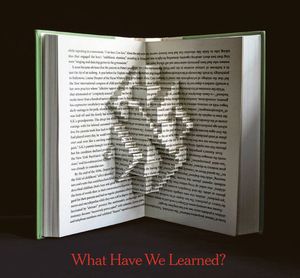
The German Silence on Israel, and Its Cost

Omri Boehm in the New York Times:

ScreenHunter_1062 Mar. 10 15.32Look at the media in nearly any country on any given day and you will find that there is no shortage of opinions on Israel and its policies. So when a respected public figure declines to share his own, it’s worth taking note.

In an extensive interview given in 2012 to the Israeli daily Haaretz, the German philosopher Jürgen Habermas was asked for his opinion about Israeli politics. His answer was that while “the present situation and the policies of the Israeli government” do require a “political kind of evaluation,” this is not “the business of a private German citizen of my generation.” (my emphasis).

The reluctance of German intellectuals to speak critically about Israel is, of course, understandable. Many would agree that refusing to comment in this case is only appropriate — German responsibility for the crimes of the Holocaust would make it so. Evidently, Habermas’s silence speaks for many other intellectuals, including ones who belong to younger generations.

Still, the problem with Habermas’s answer to Haaretz and the stance it represents is that, in fact, Habermas is not much of a private German citizen at all: when the quintessential public intellectual seeks refuge in privacy; when the founder of a branch of philosophy called discourse ethics refuses to speak, there are theoretical and political consequences. Silence here is itself a speech act, and a very public one indeed.

In order to understand the meaning of this silence, it is necessary to go back to Kant’s concept of enlightenment. In his well-known essay from 1784 — “What Is Enlightenment?” — Kant defines enlightenment as “man’s emergence from his self-incurred immaturity,” a process of growing up that consists in finding the “courage” to think for oneself. That does not mean, however, to think by oneself, or alone. On the contrary, Kant insists that using one’s “own understanding” is possible only through a “public use of one’s reason,” in at least two interrelated ways.

More here.

In Fake Universes, Evidence for String Theory

Natalie Wolchover in Quanta:

ScreenHunter_1061 Mar. 10 15.28Thirty years have passed since a pair of physicists, working together on a stormy summer night in Aspen, Colo., realized that string theory might have what it takes to be the “theory of everything.”

“We must be getting pretty close,” Michael Green recalls telling John Schwarz as the thunder raged and they hammered away at a proof of the theory’s internal consistency, “because the gods are trying to prevent us from completing this calculation.”

Their mathematics that night suggested that all phenomena in nature, including the seemingly irreconcilable forces of gravity and quantum mechanics, could arise from the harmonics of tiny, vibrating loops of energy, or “strings.” The work touched off a string theory revolution and spawned a generation of specialists who believed they were banging down the door of the ultimate theory of nature. But today, there’s still no answer. Because the strings that are said to quiver at the core of elementary particles are too small to detect — probably ever — the theory cannot be experimentally confirmed. Nor can it be disproven: Almost any observed feature of the universe jibes with the strings’ endless repertoire of tunes.

The publication of Green and Schwarz’s paper “was 30 years ago this month,” the string theorist and popular-science author Brian Greene wrote in Smithsonian Magazine in January, “making the moment ripe for taking stock: Is string theory revealing reality’s deep laws? Or, as some detractors have claimed, is it a mathematical mirage that has sidetracked a generation of physicists?” Greene had no answer, expressing doubt that string theory will “confront data” in his lifetime.

Recently, however, some string theorists have started developing a new tactic that gives them hope of someday answering these questions.

More here.

People who could really break the internet

Andrew Conway on Cloudmark Security Blog (via The Browser):

Is-having-NO-Internet-connection-better-than-a-SLOW-internet-connection

Credit: The Oatmeal

The first place you might consider attacking would be the DNS root name servers. These control the very top level of DNS, and without them no server on the Internet would have a name. There are a limited number of them, and they are controlled by a committee, the DNS Root Server System Advisory Committee otherwise known as the Secret Masters of the Internet. However, the servers themselves are run on heavily protected highly redundant hardware, and are geographically distributed. They also run different software, so a single vulnerability could not be used to take down all the root servers. They are such an obvious place to attack that they are too well defended to be a good target.

The Internet can route around damage. That is a strength when dealing with minor damage or attacks but a problem when a major component is damaged. The network traffic that gets rerouted causes bottlenecks and slowdowns elsewhere in the network. Once you hit the dreaded Reload Threshold, when web pages are loading slowly enough that people start hitting the reload button and sending multiple requests for the same page, then large sections of the net would grind to a halt. This happened on July 18th, 2001 when a train accident in a tunnel in Baltimore severed an Internet backbone cable. That afternoon users all over the US had problems accessing web sites in other parts of the US, apparently randomly. A simple brute force DDoS attack against one or two key points in the Internet would be enough to make the rest unusable. Personally I would probably go after MAE-West in San Jose, partly because almost all the traffic to and from Silicon Valley goes through there but mostly because it has a cool name.

Read the full piece here.

LOLITA’S LOATHSOME BRILLIANCE

Robert Macfarlane in More Intelligent Life:

LoHumbert Humbert, literature's best-known paedophile, calls it his “joy-ride”. For a year he tours the back-roads of rural America, with Lolita, who is 12, as his coerced companion and his regular victim. Together they cover thousands of miles in Humbert’s sedan, gliding down the “glossy” black-top from New England to the Rockies via the Midwestern corn prairies. They become connoisseurs of motel America—“the stucco court”, “the adobe unit”, “the log cabin”—always checking in as father and daughter, and never staying longer than a couple of nights. Milk bars and diners are their mealtime haunts; tiny tourist traps (“a lighthouse in Virginia…a granite obelisk commemorating the Battle of Blue Licks”) their daylight destinations.

Vladimir Nabokov’s account of this loathsome road-trip occupies less than a tenth of his notorious novel. To me these are the most brilliantly unsettling pages he ever wrote: a Baedeker of perversion that—in Humbert’s phrase—“put[s] the geography of the United States in motion”, as he and poor Lo career across the “crazy quilt of forty-eight states”. If you’ve read “Lolita” (1955), you’ll know the disturbing dissonance it incites. For Humbert is a narrator of astonishing guile, his voice so slyly supple that it distracts from the black vileness of his deeds. Style serves as his alibi and amnesty. You feel uneasily complicit at each jolt of pleasure his prose delivers, each arch allusion you pursue, each double-entendre you decode. Yes, his language is foully fallen—and it pulls the reader down with it.

More here.

Protection Without a Vaccine

Carl Zimmer in The New York Times:

VaccineLast month, a team of scientists announced what could prove to be an enormous step forward in the fight against H.I.V. Scientists at Scripps Research Institute said they had developed an artificial antibody that, once in the blood, grabbed hold of the virus and inactivated it. The molecule can eliminate H.I.V. from infected monkeys and protect them from future infections. But this treatment is not a vaccine, not in any ordinary sense. By delivering synthetic genes into the muscles of the monkeys, the scientists are essentially re-engineering the animals to resist disease. Researchers are testing this novel approach not just against H.I.V., but also Ebola, malaria, influenza and hepatitis. “The sky’s the limit,” said Michael Farzan, an immunologist at Scripps and lead author of the new study. Dr. Farzan and other scientists are increasingly hopeful that this technique may be able to provide long-term protection against diseases for which vaccines have failed. The first human trial based on this strategy — called immunoprophylaxis by gene transfer, or I.G.T. — is underway, and several new ones are planned.

…I.G.T. is altogether different from traditional vaccination. It is instead a form of gene therapy. Scientists isolate the genes that produce powerful antibodies against certain diseases and then synthesize artificial versions. The genes are placed into viruses and injected into human tissue, usually muscle. The viruses invade human cells with their DNA payloads, and the synthetic gene is incorporated into the recipient’s own DNA. If all goes well, the new genes instruct the cells to begin manufacturing powerful antibodies. The idea for I.G.T. emerged during the fight against H.I.V. In a few people, it turned out, some antibodies against H.I.V. turn out to be extremely potent. So-called broadly neutralizing antibodies can latch onto many different strains of the virus and keep them from infecting new cells.

More here.

inventing impressionism

2015+10 Impressionism 2Craig Raine at The New Statesman:

Here are some chairs I noticed. An empty chair at the natural optical centre of Degas’s Dance Foyer of the Opera at rue le Peletier (1872), occupied by a fan and a puddle of white cloth. It is waiting – and the viewer is waiting, subliminally – for its occupant to return and claim the fan. It is reserved. Someone has bagged it. Not a circumstance you often see painted, though common enough in real life. Nor is the violinist playing. He is pausing, his bow at rest on his trouser leg. Degas has painted a pause. A thing that hasn’t been painted before. In the same picture, a dancer to the right, in the foreground, is sitting on another chair, her legs stiffly out front – ungainly yet graceful, resting. The upright back of the chair is invisible because it is under her unmanageably stiff tulle skirt, lifting the skirt up and slightly out of alignment. All her fatigue is there in the mistake, the carelessness of her plonking down. (The tulle in this picture, by the way, is a miracle: done not in the easier pastel, with its naturally smudgy, suggestive cloudiness, but in oil paint, using the texture of the fine linen canvas.)

Degas’s Ballet Class (circa 1880) has a little old lady in the foreground reading a folded newspaper. Her straw hat has a band of feathers, leaving the crown exposed, to parallel the bald spot of the dancing master. Her paper has a flap hanging down that mirrors the main dancer’s open scissor legs. So, cleverly composed, then, but I want to draw your attention to the way the old lady is sitting on her chair.

more here.

On the St. Matthew Passion

Matthew PassionEthan Iverson at Threepenny Review:

Classical music is often bedeviled by the simple question “How do you make an audience truly engaged without pandering?” Peter Sellars’s staging of the St. Matthew Passion was one of most successful answers I’ve ever seen.

Part of the magic was how local everything was. The Berlin Philhar-monic is surely one of the most august organizations in the world, but there they were, right down the steps from us, looking a bit uncomfortable. They even sounded uncomfortable at times: the viola da gamba seemed a bit raw and out of tune, the violin obbligato for the the famous aria “Erbarme dich, Mein Gott” was determinedly ahead of the beat. The first night the final chorus of part one, “O Mensch,” was out of sync in a way closer to Charles Ives than Bach. On the second night, the orchestra played a cue before the Evangelist was in place and had to restart. Probably they were just momentarily wrong-footed by the pauses built in by Sellars: in any other production of St. Matthew, the continuo plays everything more or less right on the heels of the previous event. At the Armory, we waited to see what would happen next.

more here.

‘Them Poor Irish Lads’ in Pennsylvania

MacsuibeBreandán Mac Suibhne at the Dublin Review of Books:

And so it was that some four or five generations came of age around Glenties and Castlederg, Ballyconnell, Ballinamore, Boyle, and Crossmolina dreaming of places like Summit Hill, Mauch Chunk and Wilkes-Barre, Hazleton, Tamaqua, Pottsville and Plymouth.

Those names were whispered into the late twentieth century. As a child, in the 1970s, I heard some of them. Put to bed in my grandparents’ house outside Ardara, there were white-matted studio photographs of three handsome young men in big black wooden frames at the foot of the bed. The only other pictures on the walls of that house were the Sacred Heart of Jesus and the colour snap on the moon-phase calendar which Tommy Tom gave out every Christmas to advertise the Greenhouse Bar and Shop. The framed photographs had been shipped home from Pennsylvania and California in the early 1900s. The handsome men were elder brothers of my grandfather, Néillí Sweeney (1900-’86). He, the youngest of the family, never saw one of those brothers, and another he had no recollection of having seen. The brother whom he did not remember seeing was James, who died, aged twenty seven, after an operation on a sarcoma of the neck in the Mercy Hospital, Wilkes-Barre, in 1909. It was the same hospital, run by Irish nuns, where Con Carbon had died two years earlier. After stints in Scotland in his teens and early twenties, James had left for the hard coal fields in 1903, stopping with an uncle in Plymouth and going down the mines.

more here.

Monday, March 9, 2015

Sunday, March 8, 2015

ISIL vs the Graven Idols of History

Elliott Colla in Informed Comment:

Static1.squarespace.com_It is fair to say that most elites in the West (and elsewhere) tend to think of historical artifacts in terms of the sacred. We may not call the things that museums collect “holy” but they are sacrosanct in our minds. This is evidenced in the way we present them (literally, on pedestals and under lights arranged just so), and the way we seek to preserve and protect them.

As Carol Duncan has argued, being able to appreciate these artifacts is a mark of education and culture among modern elite cultures. It does not matter really whether one appreciates them as a scholar or archaeologist (for what they can tell us about history), or an aficionado (for their craft or aesthetic accomplishment) or as an amateur or tourist (who just likes the experience of viewing them). The social effect of appreciation is the same: to borrow from the work of Pierre Bourdieu, it is crucial for making social distinctions. Those who appreciate the value of such objects are civilized. Those who do not appreciate their value are barbarians.

It was not always this way. People used to venerate objects as sacred not on the ground of taste or science, but because they had an attachment to something that was holy — a person, a saint, a prophet, an event. In the past, there was no such thing as a universally venerated object — for the simple reason that, for instance, while Christians might venerate the objects that pertained to their narratives of the divine, Jews or Muslims would venerate other objects that pertained their narratives.

More here.

The troubled history of the foreskin

Common in the US, rare in Europe and now championed in Africa, male circumcision is hotly debated. Jessica Wapner explores whether the gains are worth the loss.

Jessica Wapner in Mosaic:

ScreenHunter_1057 Mar. 08 15.06The tomb of Ankhmahor, a high-ranking official in ancient Egypt, is situated in a vast burial ground just outside Cairo. A picture of a man standing upright is carved into one of the walls. His hands are restrained, and another figure kneels in front of him, holding a tool to his penis. Though there is no definitive explanation of why circumcision began, many historians believe this relief, carved more than four thousand years ago, is the oldest known record of the procedure.

The best-known circumcision ritual, the Jewish ceremony of brit milah, is also thousands of years old. It survives to this day, as do others practised by Muslims and some African tribes. But American attitudes to circumcision have a much more recent origin. As medical historian David Gollaher recounts in his bookCircumcision: A History of the World’s Most Controversial Surgery, early Christian leaders abandoned the practice, realising perhaps that their religion would be more attractive to converts if surgery wasn’t required. Circumcision disappeared from Christianity, and the secular Western cultures that descended from it, for almost two thousand years.

Then came the Victorians. One day in 1870, a New York orthopaedic surgeon named Lewis Sayre was asked to examine a five-year-old boy suffering from paralysis of both legs.

More here.

Sunday Poem

“Dainty footwear turns a young lady into an
altogether more beautiful creature . . .”

………………… Etiquette for Ladies – Eliza Sell

Sow

Trottering down the oss road in me new hooves
I’m farmyardy sweet, fresh from the filth
of straw an’ swill, the trembly-leg sniff
of the slaughter wagon. A guzzler, gilt.
Trollopy an’ canting. Root yer tongue beneath
me frock an’ gulp the brute stench of the sty.

I’ve stopped denying meself: nibbling
grateful as a pet on baby-leaves, afeared
of the glutton of belly an’ rump. I’ve sunk
an when lads howd out opples on soft city palms
I guttle an’ spit, for I need a mon
wi’ a body like a trough of tumbly slop
to bury me snout in.

All them saft years of hiding at ’ome
then prancing like a pony for some sod to bridle
an’ shove down the pit, shying away
from ’is dirty fists. All them nights,
me eyes rolling white in the dark when the sow I am
was squailin an’ biting to gerrout.

Now no mon dare scupper me,
nor fancy-arse bints, for I’ve kicked the fence
an’ I’m riling on me back in the muck,
out of me mind wi’ grunting pleasure,
trotters pointing to the heavens like chimdey pots,
sticking V to the cockerel
prissy an’ crowing on ’is high church spire.

by Liz Berry
from Black Country
Publisher: Chatto & Windus, London, 2014
____________________________________________

Note:

Black Country : Standard
oss road : street
gilt : sow
canting : cheeky or saucy
guttle : chew
mon : man
saft : foolish
squailin : squealing or crying
bints : derogatory slang for girls

Reflections of New York

François Van Bastelaer in Lensculture:

Ny3New York is a wonderful place, so many times showed in pictures. I try to present the city from a different point of view. I developed a project that shows the reality as something unusual, different, sometimes almost surrealist. All these pictures are the exact reality. The use of photoshop is very low (cropping, upside-down, perhaps densifying the colors). All the pictures you see here have been existing! At one moment, on a unique place from a specific perspective, but they are a piece of reality. It's the first of my projects about reflections.

NOTE: We discovered this great work when François Van Bastelaer submitted some of these photos to the LensCulture Exposure Awards. Even though the international jury did not select the submission as an award winner, the editors of LensCulture liked the work so much, that we decided to write a feature article about it and post it to Facebook, as well. Enjoy!

More here.

Why do they protest being looted when it’s for their own good?

Rohini Mohan in Yahoo News India (h/t Chapati Mystery):

B7ac6bb0-c18c-11e4-96ae-0dabae4789fa_1Landing-Image-Nirupabai-from-Barkuta-and-Lalubai-from-Vidyanagar-protest-against-mining-expansion-at-the-public-hearing-in-Korba-Chhattisgarh-Photo-by-Rohini-Mohan-In the last week of February, the first week of Parliament’s summer session, Delhi was festooned with protest. Men in white dhotis and women in several colors of bright marched around the roads, emerging like spokes from Mandi House, finally settling on Parliament Street. Their banners said “Kisan hai Bharat ka anna daata” (The farmer is India’s food provider). When the crowd chanted this, the words ‘kisan’ and ‘Bharat’ were the most emphatic. Farmers’ unions led the protest, joined by fishermen and laborers from villages in Uttar Pradesh, Jharkhand, Tamil Nadu, Assam, Punjab, Haryana, Chhattisgarh, Kerala, and West Bengal…All of them demanded the removal of the Narendra Modi government’s Land Ordinance promulgated last year, which amended the existing Land Acquisition Act, so that governments can acquire land for certain “important national projects” without seeking consent from the person who owns it…

Because several armchair commentators on TV and social media claimed that the protestors were “ignorant” and unaware of what they were opposing, I walked around the protest arena asking one simple question: What have you come here to protest? Sometimes, I followed it with two other questions: Where are you from, and have you had personal losses? In their answers, the protestors were cynical, upset, exhausted, and enraged, but most of all, they were informed.

“The compensation might still be four times the market value,” says Bhagwat Singh from Sambal, Uttar Pradesh, referring to the unchanged compensation clause that those favorable to the ordinance highlight as a good deal that makes the amendment a win-win for both corporates and farmers. “But if you give me no say, and add that even my fertile multi-crop field can be acquired, and not only for dams and power plants but also for factories where I’ll never be employed, then this is a raw deal for me, no?”

Read the full piece here.