You want to argue about wine? Screw it. Let’s argue about wine

Ben Dreyfuss in Mother Jones:

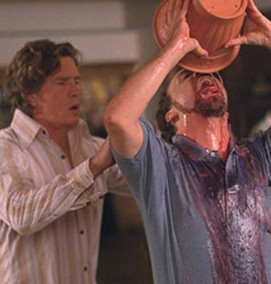
ScreenHunter_1332 Aug. 25 16.31Wine is a joke. Whether it's in a bottle, a box, or a boot, it's a stupid drink. Since time immemorial people have consumed wine, but for most of that time people were backwards and lived in fields and didn't know anything. Now we live in the 21st century and drink wine? Lol.

It doesn't even taste good! It tastes ok sometimes, but it's really sugary! It gives you terrible hangovers! It doesn't get you drunk! It ruins your teeth! You know who drinks wine? Europeans.

Americans who drink wine do so because they think they are living in a BBC adaptation of a Jane Austen novel. It feels rich and smart to have thoughts about wine and to order fancy, expensive bottles of wine. You are not smart. You are not fancy. You are not rich—or at least you won't be if you keep pissing your money away on wine.

You drink alcohol because your life is hard and you need a respite from the pain. You drink wine because you have been tricked by society into thinking it is a shibboleth of class and taste.

More here.

CIA Funded Literary Magazines, Ranked

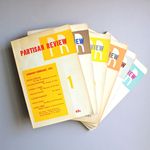
PartisanreviewPatrick Iber at The Awl:

Through the CCF, as well as by more direct means, the CIA became a major player in intellectual life during the Cold War—the closest thing that the U.S. government had to a Ministry of Culture. This left a complex legacy. During the Cold War, it was commonplace to draw the distinction between “totalitarian” and “free” societies by noting that only in the free ones could groups self-organize independently of the state. But many of the groups that made that argument—including the magazines on this left—were often covertly-sponsored instruments of state power, at least in part. Whether or not art and artists would have been more “revolutionary” in the absence of the CIA’s cultural work is a vexed question; what is clear is that that possibility was not a risk they were willing to run. And the magazines remain, giving off an occasional glitter amid the murk left behind by the intersection of power and self-interest. Here are seven of the best, ranked by an opaque and arbitrary combination of quality, impact, and level of CIA involvement.

more here.

The Pope and the Planet

Mckibben_1-081315_jpg_600x596_q85Bill McKibben at The New York Review of Books:

It is, therefore, remarkable to actually read the whole document and realize that it is far more important even than that. In fact, it is entirely different from what the media reports might lead one to believe. Instead of a narrow and focused contribution to the climate debate, it turns out to be nothing less than a sweeping, radical, and highly persuasive critique of how we inhabit this planet—an ecological critique, yes, but also a moral, social, economic, and spiritual commentary. In scope and tone it reminded me instantly of E.F. Schumacher’s Small Is Beautiful (1973), and of the essays of the great American writer Wendell Berry.1 As with those writers, it’s no use trying to categorize the text as liberal or conservative; there’s some of each, but it goes far deeper than our political labels allow. It’s both caustic and tender, and it should unsettle every nonpoor reader who opens its pages.

The ecological problems we face are not, in their origin, technological, says Francis. Instead, “a certain way of understanding human life and activity has gone awry, to the serious detriment of the world around us.” He is no Luddite (“who can deny the beauty of an aircraft or a skyscraper?”) but he insists that we have succumbed to a “technocratic paradigm,” which leads us to believe that “every increase in power means ‘an increase of “progress” itself’…as if reality, goodness and truth automatically flow from technological and economic power as such.”

more here.

The mysteries of “Whistler’s Mother.”

150831_r26901-320-240-19173714Peter Schjeldahl at The New Yorker:

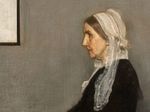
The chromatic subtleties contribute to an unsettled feeling. A more substantial jolt occurs when you register an over-all spatial distortion: the forms stretch horizontally, so that the length of Anna’s concealed legs, angled and descending to an upholstered footstool, suggests the anatomy of an N.B.A. draft pick. The more you notice of the composition’s economies—such as the cavalier indication of the bentwood chair legs, at the lower right, and, at the lower left, three perfunctory diagonal strokes that do for establishing the plane of the floor—the more happily manipulated you may feel, in ways that, like the camera tricks of a great movie director, excite a sense of the scene as truer to life than truth itself. It took me an hour of inspection to take in an inconspicuous, brownish strip across the bottom of the canvas. Anna’s dress falls smoothly past it and out of the picture. It is the edge of a stage or a platform. Whistler is looking up at his mom.

“Yes, one does like to make one’s mummy just as nice as possible,” Whistler allowed years later, answering friends who praised the speaking likeness of the portrayal. But he was exasperated by sentimental responses to the work. He regularly preached that subject matter should be regarded merely as a pretext for adventures in aestheticism. He said, “To me it is interesting as a picture of my mother; but what can or ought the public to care about the identity of the portrait?”

more here.

Business for the Other Billions: Addressing human needs at the base of the economic pyramid

John S. Rosenberg in Harvard Magazine:

BillionImagine a simple triangle diagram of the planet’s population. A fortunate couple of billion upper-income people—in the United States and Canada, much of Europe, Japan, Australia, and prospering urban centers in parts of Asia and Latin America—occupy the apex. The invisible hand of market capitalism supplies this prominent minority with bountiful goods and services. But that leaves a lot of people out. At the very bottom of the pyramid, a billion or more humans live in poverty (on less than $1.25 per person per day), often depending on government programs and charitable aid to subsist.

In between, pointed out V. Kasturi (universally, “Kash”) Rangan, live the low- and low-middle-income majority of mankind: perhaps four billion people who are entering or are already in the cash economy—but barely, with incomes of up to $15 per day. In a conversation, he compared the lives of these people, the base of the pyramid, with those at the top. Because they likely do not own property, and lack rent or tax receipts, they are not bankable, so they turn to exploitative money lenders for credit to stock a shop or start a small business. For medical care, they choose among local healers, vendors of patent nostrums, or queues at public clinics (where it may take a bribe to advance in line). Their labor, often interrupted by those queues or long bus trips to remit cash to a rural family, may be seasonal, itinerant, and legally unprotected. Functioning markets, he noted, imply a level playing field between consumers and producers, but most of these people aren’t getting a remotely fair deal. It is as if the broad base of the pyramid were an alternate universe where familiar rules don’t apply.

More here.

Square Root of Kids’ Math Anxiety: Their Parents’ Help

Jan Hoffman in The New York Times:

MATH-tmagArticleA common impairment with lifelong consequences turns out to be highly contagious between parent and child, a new study shows. The impairment? Math anxiety. Means of transmission? Homework help. Children of highly math-anxious parents learned less math and were more likely to develop math anxiety themselves, but only when their parents provided frequent help on math homework, according to a study of first- and second-graders, published in Psychological Science. Researchers tested 438 children from 29 public and private schools in three Midwestern states for math ability as well as math anxiety, at the beginning and end of the school year. Their parents completed questionnaires about math anxiety, and about how often they helped their children with homework.

So much for good intentions. The more the math-anxious parents tried to work with their children, the worse their children did in math, slipping more than a third of a grade level behind their peers. And the children’s weaker math achievements increased their nascent math anxiety. “The parents are not out to sabotage their kids,” said Sian L. Beilock, a cognitive psychologist at the University of Chicago and the author of “Choke,” about anxiety and performance. “But we have to ensure their input is productive. They need to have an awareness of their own math anxiety and that what you say is important.” For example, she said, comforting a homework-distressed child, by saying, “ ‘I’m not a math person either, and that’s O.K.,’ is not a good message to convey.”

More here.

Tuesday Poem

From a Balcony

The sun is an orange from the Peloponnese
staining clouds and stuccoed walls,

sailboats tacking out to sea.
Damson shapes chase light from under vines;

shadows grope their way,
thick arabesques of lace furrowed at the frame.

Hills are a smoke-stained fresco flaking,
rooftops shrill as pomegranate seeds.

Poplars are the spears of long-dead warriors
sprouted from a rill of dragon’s teeth.

Rising from that faded terracotta dome
come the curling throaty notes

of evening mass below, swelling in
and out of polyphony like a weaver’s skilful woof

their path the disappearing smoke
dragged from a censer’s golden arc.

Far across this dim intaglio
a white cat pads along a cooling lintel stone.

Only the distant thrum of a scooter
navigating narrow roads.
.

by Sarah Howe
from A Certain Chinese Encyclopedia
Tall-lighthouse, Luton, 2009

Monday, August 24, 2015

Sunday, August 23, 2015

REVIEW: Song of love and loss: Over the Moon by Imtiaz Dharker

Muneeza Shamsie in Dawn:

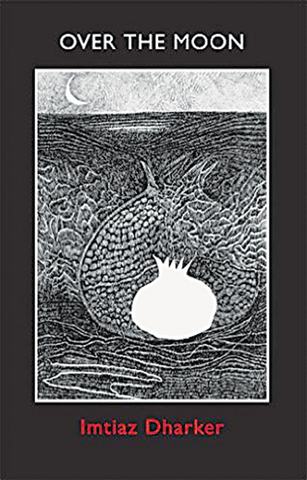
55d6e13e1eaebLast winter, the Lahore-born poet Imtiaz Dharker consolidated her reputation as a mainstream British poet with her powerful and moving sixth collection, Over The Moon, which won her the Queen’s Gold Medal for Poetry. The award, which was established in 1934 for Commonwealth writers, has been given to eminent poets ranging from Robert Graves and Derek Walcott to Ted Hughes and Fleur Adcock, but Dharker is the first recipient of South Asian origin.

Over the Moon is a spellbinding work, dedicated to Dharker’s late husband, Simon Powell, with the words “not because you died, but how you live”. Her collection is a poetic communication with him in which absence and memory are enriched and intertwined by an interplay of music, light and sound to convey both life and loss and worlds beyond the corporeal: Powell permeates the book as an ever-present, beloved, living spirit. Dharker grew up in Glasgow, with a strong awareness of Pakistan which she visited with her family and later spent several years in Bombay. Her book begins with a sequence rooted in Dharker’s subcontinental heritage and the cultural symbiosis so intrinsic to her poetry, and indeed her sense of self. ‘Taal’ captures the movements of time through the whirling imagery of music and dance.

More here.

In America, only the rich can afford to write about poverty

Barbara Ehrenreich in The Guardian:

3000Back in the fat years – two or three decades ago, when the “mainstream” media were booming – I was able to earn a living as a freelance writer. My income was meager and I had to hustle to get it, turning out about four articles – essays, reported pieces, reviews – a month at $1 or $2 a word. What I wanted to write about, in part for obvious personal reasons, was poverty and inequality, but I’d do just about anything – like, I cringe to say, “The Heartbreak Diet” for a major fashion magazine – to pay the rent.

It wasn’t easy to interest glossy magazines in poverty in the 1980s and 90s. I once spent two hours over an expensive lunch – paid for, of course, by a major publication – trying to pitch to a clearly indifferent editor who finally conceded, over decaf espresso and crème brulee, “OK, do your thing on poverty. But can you make it upscale?” Then there was the editor of a nationwide, and quite liberal, magazine who responded to my pitch for a story involving blue-collar men by asking, “Hmm, but can they talk?”

I finally got lucky at Harper’s, where fabled editor Lewis Lapham gave me an assignment that turned into a book, which in turn became a bestseller, Nickel and Dimed: On (Not) Getting By in America. Thanks to the royalties and subsequent speaking fees, at last I could begin to undertake projects without concern for the pay, just because they seemed important or to me. This was the writing life I had always dreamed of – adventurous, obsessively fascinating and sufficiently remunerative that I could help support less affluent members of my family.

Meanwhile, though I didn’t see it at first, the world of journalism as I had known it was beginning to crumble around me.

More here.

No Occupation Without Representation: Artists in Palestine

HG Masters in Arts Asia Pacific:

Feature_palestine_hourani_1000So much depends upon the acceptance of a few facts. This is what Edward Said was lamenting when, in August 2001, he wrote in the Cairo newspaper al-Ahram Weekly: “The appallingly unbroken history of Israel’s 34-year-old military occupation (the second longest in modern history) of illegally conquered Palestinian land has been obliterated from public memory nearly everywhere, as has the destruction of Palestinian society in 1948 and the expulsion of 68 percent of its native people, of whom 4.5 million remain refugees today.”

In the decade since, and as the occupation marked its 44th year in June, the struggle over the future of Palestine and the status of the Palestinian people remains one of representation, of the past and the present. Nearly everything about the Israeli occupation of the Palestinian territories is contested on the factual and semantic levels—how many people are wounded or killed by whom at any given demonstration, whether it is a “wall,” “barrier” or a “fence” that now runs through the West Bank, whether Israeli policies constitute “discrimination,” “apartheid” or “ethnic cleansing,” and even whether the 1947–48 Nakba happened at all. They are debates played out by politicians and activists, Israeli and Palestinian, on the international level for their respective strategic interests, as well as in the media, in proxy wars of propaganda and disinformation by factions competing to write the historical narrative of post-Mandate Palestine. As storytellers and emissaries of Palestinian culture, Palestinian artists across disciplines have been caught up in or have willingly participated in this struggle, as they address the urgent subjects of modern Palestinian culture: dispossession, nostalgia, exile and resistance.

More here.

So Wrong for So Long: Why neoconservatives are never right

Stephen M. Walt in Foreign Policy:

ScreenHunter_1329 Aug. 23 17.41Over the past few weeks, proponents of the nuclear deal with Iran — from President Barack Obama on down — have marshaled a powerful attack on some of the deal’s most prominent opponents. Specifically, they’ve been pointing out an indisputable fact: Many of the individuals and organizations that are most actively lobbying and speaking out against the deal helped dream up the idea of invading Iraq or worked hard to convince Congress and the American people to go along with the idea. The logic of the pro-deal camp is simple: Given that the opponents were so catastrophically wrong about the Iraq War, no one should listen to their advice today.

I agree with this basic argument, of course, but opponents of the deal do have one line of defense against the “Wrong on Iraq, Wrong on Iran” meme. It is possible someone could have been dead wrong about the wisdom of invading Iraq in 2003, but nonetheless be correct to oppose the nuclear deal with Iran today. None of us is infallible, and it is at least conceivable that Bill Kristol, Elliott Abrams, James Woolsey, Fred Hiatt, Max Boot, et al. could have blown it big-time in 2002 — but be absolutely right this time around.

Conceivable, I suppose, but highly unlikely. Why? Because their views in 2002 aren’t independent from the views they’re expressing today. On the contrary, their earlier support for the Iraq War and their opposition to the Iran deal stem from the basic neoconservative worldview that informs their entire approach to foreign policy.

More here. [Thanks to Ali Minai.]

Study of Holocaust survivors finds trauma passed on to children’s genes

Helen Thomson in The Guardian:

ScreenHunter_1328 Aug. 23 17.35Genetic changes stemming from the trauma suffered by Holocaust survivors are capable of being passed on to their children, the clearest sign yet that one person’s life experience can affect subsequent generations.

The conclusion from a research team at New York’s Mount Sinai hospital led by Rachel Yehuda stems from the genetic study of 32 Jewish men and women who had either been interned in a Nazi concentration camp, witnessed or experienced torture or who had had to hide during the second world war.

They also analysed the genes of their children, who are known to have increased likelihood of stress disorders, and compared the results with Jewish families who were living outside of Europe during the war. “The gene changes in the children could only be attributed to Holocaust exposure in the parents,” said Yehuda.

Her team’s work is the clearest example in humans of the transmission of trauma to a child via what is called “epigenetic inheritance” – the idea that environmental influences such as smoking, diet and stress can affect the genes of your children and possibly even grandchildren.

The idea is controversial, as scientific convention states that genes contained in DNA are the only way to transmit biological information between generations. However, our genes are modified by the environment all the time, through chemical tags that attach themselves to our DNA, switching genes on and off. Recent studies suggest that some of these tags might somehow be passed through generations, meaning our environment could have and impact on our children’s health.

More here.

Sunday Poem

In Magnolia
.. —for my sons

when i was twenty
five .. we hiked the grass

spare trails that snake
from ocean to Swan Pond .. my

two small crab catchers & me .. we
buried pet turtles at sea
………. beneath the crooked

footbridge .. sailed stick regattas
in the slim stream in the slow

woods .. bouncing like great
explorers of Kettle Cove & sea

slashed rocks .. listening to each other's
breath .. we trudged home sand fed
.

by Jim Bell
from Crossing the Bar
Slate Roof: a publishing collective
.

An exclusive look at the dreams Santiago Ramon y Cajal recorded to prove Freud was wrong

Ben Ehrlich in Nautilus:

DreamSantiago Ramón y Cajal, a Spanish histologist and anatomist known today as the father of modern neuroscience, was also a committed psychologist who believed psychoanalysis and Freudian dream theory were “collective lies.” When Freud published The Interpretation of Dreams in 1900, the science world swooned over his theory of the unconscious. Dreams quickly became synonymous with repressed desire. Puzzling dream images could unlock buried conflicts, the psychoanalyst said, given the correct interpretation. Cajal, who won the 1906 Nobel Prize for discovering neurons and, more remarkably, intuiting the form and function of synapses, set out to prove Freud wrong. To disprove the theory that every dream is the result of a repressed desire, Cajal began keeping a dream journal and collecting the dreams of others, analyzing them with logic and rigor.

Cajal eventually deemed the project unpublishable. But before his death in 1934, he gave his research, scribbled on stained loose papers and in the margins of books and newspapers, to his good friend and former student, the psychiatrist José Germain Cebrián. Germain typed the diary into a book, which was thought lost during the 1936 Spanish Civil War. In fact, Germain carried the manuscript with him as he traveled through Europe. Before his death, he gave it to José Rallo, a Spanish psychiatrist and dream researcher. To the delight of scholars and enthusiasts, Los sueños de Santiago Ramón y Cajal was published in Spanish in 2014, containing 103 of Cajal’s dreams, recorded between 1918 and his death in 1934.1 Translated here into English for the first time, these dreams, and Cajal’s notes on them, offer insight into the mind of a great scientist—insight that perhaps he himself did not always have.

A Common Dream

[Falling of pants]

I attend a diplomatic soiree and as I am leaving my pants fall down (Is it desire?)

[Drowning with daughter]

I take a walk by the bay (Santander?) and I fall into the water with one of my little daughters in my arms. I fight the waves, I am almost drowning, despite touching the seawall. The nightmare awakens me.

More here.