New DNA Results Show Kennewick Man Was Native American

Carl Zimmer in the New York Times:
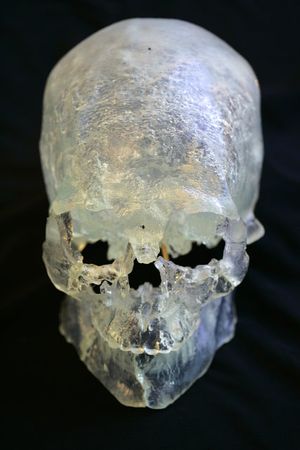
19KENNEWICK1-blog427In July 1996, two college students were wading in the shallows of the Columbia River near the town of Kennewick, Wash., when they stumbled across a human skull.

At first the police treated the case as a possible murder. But once a nearly complete skeleton emerged from the riverbed and was examined, it became clear that the bones were extremely old — 8,500 years old, it would later turn out.

The skeleton, which came to be known as Kennewick Man or the Ancient One, is one of the oldest and perhaps the most important — and controversial — ever found in North America. Native American tribes said that the bones were the remains of an ancestor and moved to reclaim them in order to provide a ritual burial.

But a group of scientists filed a lawsuit to stop them, arguing that Kennewick Man could not be linked to living Native Americans. Adding to the controversy was the claim from some scientists that Kennewick Man’s skull had unusual “Caucasoid” features.Speculation flew that Kennewick Man was European.

A California pagan group went so far as to file a lawsuit seeking to bury the skeleton in a pre-Christian Norse ceremony.

On Thursday, Danish scientists published an analysis of DNA obtained from the skeleton. Kennewick Man’s genome clearly does not belong to a European, the scientists said.

More here.

Of weapons programs in Iran and Israel, and the need for journalists to report on both

Dan Drollette, Jr. in the Bulletin of the Atomic Scientists:

IsraelNuclearGradientSmallAlthough Iran’s nuclear program dominates the headlines now (and did apparently have a military dimension at one time), that program has yet to produce a nuclear weapon, judging from the available public evidence. Meanwhile, the country pushing most aggressively for complete elimination of any prospect of an Iranian bomb—Israel—has an unacknowledged nuclear arsenal of its own. Although others project higher numbers, nuclear arsenal experts Hans M. Kristensen and Robert S. Norris estimate that Israel has roughly 80 warheads, built in secret.

It is noteworthy that while negotiations over limiting Iran’s enrichment program have taken center stage in news coverage—and will likely dominate the headlines as a final agreement is or is not reached at the end of this month—the history of Israel’s covert nuclear program draws relatively little media attention. Israel has long maintained a policy of nuclear ambiguity, neither confirming nor directly denying that it has a nuclear deterrent, and the United States government has officially taken the same stance, prohibiting its officials from stating that Israel is a nuclear weapons country.

More here.

Monday, June 22, 2015

Sunday, June 21, 2015

Neil Gaiman on How Stories Last

Maria Popova over at Brain Pickings:

Considering the scientific definition of life as a process that “includes the capacity for growth, reproduction, functional activity, and continual change preceding death,” Gaiman argues that stories are alive — that they can, and do, outlive even the world’s oldest living trees by millennia:

Do stories grow? Pretty obviously — anybody who has ever heard a joke being passed on from one person to another knows that they can grow, they can change. Can stories reproduce? Well, yes. Not spontaneously, obviously — they tend to need people as vectors. We are the media in which they reproduce; we are their petri dishes… Stories grow, sometimes they shrink. And they reproduce — they inspire other stories. And, of course, if they do not change, stories die.

More here.

Michael Shermer on: “Science drives moral progress”

Over at the Rationally Speaking podcast:

Photo by Jeremy DangerCommon wisdom holds that the world is getting more violent, but is that really true? Leading skeptic Michael Shermer, professor and author of many books on science, morality and skepticism, argues to the contrary. Shermer's thesis in his recent book, “The Moral Arc: How Science Leads Humanity Toward Truth, Justice, and Freedom,”is that as science has advanced our understanding of the world, we have become more willing to expand our circle of empathy beyond our own provincial “tribes,” and more able to design our societies to encourage human flourishing.

Dr. Michael Shermer is the Founding Publisher of Skeptic magazine, a monthly columnist for Scientific American, a regular contributor to Time.com, and Presidential Fellow at Chapman University. His new book is The Moral Arc: How Science and Reason Lead Humanity Toward Truth, Justice, and Freedom.

Dziga Vertov’s Soviet Toys

Jonathan Crow in Open Culture:

Consisting largely of simple line drawings, the film might lack the verve and visual sophistication that marked A Man with a Movie Camera, but Vertov still displays his knack for making striking, pungent images. Yet those who don’t have an intimate knowledge of Soviet policy of the 1920s might find the movie — which is laden with Marxist allegories — really odd.

Soviet Toys came out in 1924, during Lenin’s New Economic Policy (NEP), which gave some market incentives to small farmers. Not surprisingly, the farmers started producing a lot more food than before, and soon a whole new class of middleman traders formed — the reviled “NEPmen.”

The movie opens with a NEPman — a bloated caricature of a Capitalist (who coincidentally looks vaguely like Nikita Khrushchev) — devouring a massive heap of food. He’s so stuffed that he spends much of the rest of the movie sprawled out on the floor, much in the same way one might imagineJamie Dimon after Thanksgiving dinner. Then he belches riches at a woman who is can-canning on his distended belly.

More here.

This single-celled bug has the world’s most extraordinary eye

Michael Le Page in New Scientist:

ScreenHunter_1232 Jun. 21 16.42It is perhaps the most extraordinary eye in the living world – so extraordinary that no one believed the biologist who first described it more than a century ago.

Now it appears that the tiny owner of this eye uses it to catch invisible prey by detecting polarised light. This suggestion is also likely to be greeted with disbelief, for the eye belongs to a single-celled organism calledErythropsidinium. It has no nerves, let alone a brain. So how could it “see” its prey?

Fernando Gómez of the University of São Paulo, Brazil, thinks it can. “Erythropsidinium is a sniper,” he told New Scientist. “It is waiting to see the prey, and it shoots in that direction.”

Erythropsidinium belongs to a group of single-celled planktonic organisms known as dinoflagellates. They can swim using a tail, or flagellum, and many possess chloroplasts, allowing them to get their food by photosynthesis just as plants do.

More here.

In India’s largest Muslim ghetto

Basharat Peer in The Hindu:

19-Basharat_GLA_19_2443996gOn a recent afternoon, after a two-hour drive out of Mumbai, I followed a highway hugging the low hills of Mumbra, north-east of the city, near the Thane creek. As the road forked downhill, hundreds of grimy, teetering buildings stacked like tattered books in a neglected public library were the first glimpse intimation of Mumbra, India’s largest Muslim ghetto. Despite the heat, young boys played cricket in a clearing by a graveyard. A chaotic medley of vehicles choked the main street leading into the Kausa area of the ghetto.

Mumbra expanded with great velocity in the aftermath of the Babri Masjid in Ayodhya. The Bombay riots of December 1992, which overwhelmingly killed Bombay Muslims, and the retaliatory bomb blasts in January 1993 by the Muslim underworld, reconfigured the social geography of the city. Bombay Muslims from riot-hit areas sought safety in numbers and found it in Mumbra, where Muslims from the Konkani coast had a long-standing presence. Through a combination of the desire for safety among Muslims, the relatively cheaper price of apartments, and continued rural-urban migration, Mumbra’s population grew 20 times from about 45,000 before the 1992 riots to more than 9,00,000 in the 2011 Census — possibly one of the fastest expansions of an urban area in India.

Assadullah Khan, an electrical engineer in his late 40s, was among the first groups of people who moved to Mumbra from Mumbai after the 1992-1993 violence. Mr. Khan was living in Kannua Nagar in the suburb of Vitroli, a mixed neighbourhood, where Hindus and a smaller number of Muslims lived together without incident. Mr. Khan, who also gave part-time tuitions to students, was the only Muslim in his building. After the riots, most of his Muslim neighbours began to migrate to areas with a heavier concentration of their co-religionists. Mr. Khan was weighing his options.

More here.

Sunday Poem

“The devil took Jesus to a high mountain
and showed him all the world and said, I'll
give you all of this if you'll worship me.”

.
The Third Temptation
LISTEN

He watched with all his organs of concern
How princes walk, what wives and children say;
Re-opened old graves in his heart to learn
What laws the dead had died to disobey.

And came reluctantly to his conclusion:
“All the arm-chair philosophers are false;
To love another adds to the confusion;
The song of pity is the Devil's Waltz.”

And bowed to fate and was successful so
that he was king of all the creatures:
Yet, shaking in his autumn nightmare, saw,

Approaching down a ruined corridor,
A figure with his own distorted features
That wept, and grew enormous, and cried Woe.

.
by W.H. Auden
from Selected Poems
Vintage Books, 1975

why we should all learn from the ancient Greeks

Edith Hall in The Guardian:

JudeIn 1748, the Earl of Chesterfield wrote to his son: “Classical knowledge, that is, Greek and Latin, is absolutely necessary for everybody … the word illiterate, in its common acceptance, means a man who is ignorant of these two languages.” Classical knowledge is here limited to linguistic knowledge, education to men, and literacy to reading competence in Greek and Latin. Greek was also handy when white people wanted to deride the intellectual abilities of black ones. In 1833-4, American pro-slavery thinkers were on the defensive. The senator for South Carolina, John C Calhoun, declared at a Washington dinner party that only when he could “find a Negro who knew the Greek syntax” could he be brought to “believe that the Negro was a human being and should be treated as a man”. This snipe motivated a free black errand boy, Alexander Crummell, to head for Cambridge University in England. There he indeed learned Greek as part of his studies, financed by abolitionist campaigners, in theology at Queens’ College (1851–3).

The best-known example is the hero of Thomas Hardy’s Jude the Obscure. Jude Fawley, a poor stonemason living in a Victorian village, is desperate to study Latin and Greek at university. He gazes on the spires and domes of the University of Christminster – they “gleamed” like topaz. The lustrous topaz shares its golden colour with the stone used to build Oxbridge colleges, but is one of the hardest minerals in nature. Jude’s fragile psyche and health inevitably collapse when he discovers just how unbreakable are the social barriers that exclude him from elite culture. Hardy was writing from personal experience: as the son of a stonemason himself, and apprenticed to an architect’s firm, he had been denied a public school and university education; like Fawley, he had struggled to learn enough Greek to read the Iliad as a teenager. Unlike Jude, Hardy rose through the social ranks to become a prosperous member of the literary establishment. But he never resolved his internal conflict between admiration for Greek and Latin authors and resentment of the supercilious attitude of some members of the upper classes who had been formally trained in them.

More here.

Saturday, June 20, 2015

How the stormy eloquence of Delmore Schwartz made possible the glittering prose of Saul Bellow

Vivian Gornick in The Nation:

ScreenHunter_1231 Jun. 21 11.49In New York Jew, published in 1978, Alfred Kazin recalled that the “twin reading rooms” of the New York Public Library on 42nd Street “gave me a sense of the powerful amenity that I craved for my own life, a world of power in which my own people had moved about as strangers…. I was hungry for it all, hungry all the time. I was made so restless by the many minds within my reach that no matter how often I rushed across to the Automat for another bun and coffee…I could never get back to my books and notes…without the same hunger pains tearing me inside.”

What, exactly, was the “it” that the 22-year-old Kazin was so hungry for, sitting in the library in 1938? It was the English language. Not the American, the English. He was mad to read it, and also to write it, teach it, interpret it; to swallow it whole; to possess and be possessed by it. This was the “powerful amenity” he craved for his own life. Immigrant Jews who had fallen in love with English had been sitting in public libraries in New York since the 1880s, and many of them had longed to be intimates of the language in exactly the same way; but at the turn of the 20th century, to think of the language as anything other than a means to an end would have meant that you had climbed the ladder of acculturation three steps at a time. It wasn’t until the late 1930s, in the midst of the Great Depression, that this longing had begun to articulate itself with some real, rather than fantasy-ridden, hope of fulfillment. The first generation of college-educated Jews, born in America around 1914, was itself only half-in, half-out; but the hybrid experience alone allowed for their consideration of the exotic notion that English as a destiny might be seen as something other than utopian.

More here.

What happens when the sea swallows a country?

Rachel Nuwer at the BBC:

South-Nilandhe-Maldives-001People come from all over the world to experience the impeccable luxury of the Maldives, a nation composed of around 1,200 islands, located 370 miles (595km) off the southernmost tip of India. Despite its remoteness, the resorts here – each located on its own private island – are unparalleled. Guests can sip $40 (£25.60) glasses of Champagne at freshwater pools’ swim-up bars, dine on Russian caviar and Wagyu steak, and stream the latest episode of Game of Thrones in their air-conditioned suite. Nothing is lacking, nothing is out of reach.

Yet amid all this, a sinking realisation constantly undermines the islands’ carefully manicured perfection. It’s the knowledge that all of this may soon be gone. The nation, with its low-lying islands, has been labelled the most at-risk country in South Asia from the impact of climate change. Even if the swooning honeymooners do not allow this thought to mar their vacation, for the ever-smiling staff members, it’s harder to ignore. “Of course I’m concerned about climate change, about the reef, the environment and pollution,” says Mansoor, a Maldivian who works at one of the resorts. “But what can I do? I don’t know.”

Climate change threatens waterfront developments and seaside cities around the world, but for some, the stakes are higher than simply having to move a few miles inland, or even having to relinquish large cities like Miami, Amsterdam and Shanghai. For the citizens of around six to 10 island nations, climate change could rob them of their entire country.

More here.

‘Why Grow Up?’ by Susan Neiman

21-Cover-master675-v3A.O. Scott at The New York Times:

A great deal of modern popular culture — including just about everything pertaining to what French savants like to call le nouvel âge d’or de la comédie américaine — runs on the disavowal of maturity. The ideal consumer is a mirror image of a familiar comic archetype: a man-child sitting in his parents’ basement with his video games and his “Star Wars” figurines; a postgraduate girl and her pals treating the world as their playground. Baby boomers pursue perpetual youth into retirement. Gen-Xers hold fast to their skateboards, their Pixies T-shirts and their Beastie Boys CDs. Nobody wants to be an adult anymore, and every so often someone writes an article blaming Hollywood, attachment parenting, global capitalism or the welfare state for this catastrophe. I’ve written one or two of those myself. It’s not a bad racket, and since I’m intimately acquainted, on a professional basis, with the cinematic oeuvre of Adam Sandler, I qualify as something of an expert.

In the annals of anti-infantile cultural complaint, Susan Neiman’s new book, “Why Grow Up?,” is both exemplary and unusual. An American-born philosopher who lives in Berlin, Neiman has a pundit’s fondness for the sweeping generalization and the carefully hedged argumentative claim. “I’m not suggesting that we do without the web entirely,” she writes in one of her periodic reflections on life in the digital age, “just that we refuse to let it rule.”
more here.