FEMINISM’S SOUL BROTHER

From More Intelligent Life:

KhanThere are lots of good men who support women, but there are very few who speak up with courage about women’s lives and issues. One who has is Aamir Khan. Aamir spoke when he really didn’t need to: he had earned great love and admiration in India as a Bollywood star. And then he launched a talk show called “Satyamev Jayate” (“Truth Alone Prevails”), that goes to the heart of the issues Indian women have to deal with. He was famous and successful, with everything to lose—this definitely isn’t something you do for popularity—so he risked a lot. Why did he do it? There are probably two main reasons, both from his childhood. The first is that when he was 12 or so he loved tennis: he was good at it and often won. And like most children he would brag about winning, but his mother would always ask him about the boys who lost, and tell him to think about them. Her constant concern and questioning made him realise he needed to be compassionate.

The second reason was his best friend in high school. This friend was the boy that got all the top grades and who everyone said would do great things. When he left school, he went on to study social work. Aamir was surprised and touched that this man, who could have done anything, had followed his heart and worked for charities. They remained close and over the years Aamir’s friend kept him in touch with what was going on in the hidden places in India, the things that people don’t like discussing. So when one day a company contacted Aamir with the offer to do a show, he said yes, it was his time to do some good.

More here.

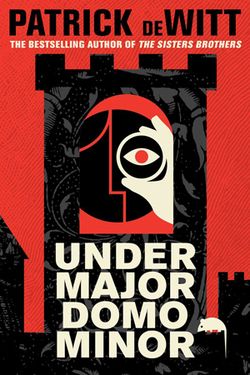
Patrick deWitt falls in love with lies

David Berry in National Post:

Ook“Rich American assholes,” deWitt explains over lunch at a downtown Toronto hotel, a lunch he picks apart as carefully and particularly as he speaks about writing, “are boring. To me they are. I thought it would be the opposite.” After a brief moment to chew and contemplate further, he continues: “When I tried to crack open the man’s skull and figure out what made him tick, I just couldn’t ever get past the thought that it was a very basic greed — covetousness, avarice. These are not very deep feelings for me, not complicated feelings for me. Bernie Madoff is probably more nuanced then I’m giving him credit for, but I just couldn’t get under his skin.” Taking a torch to the half-completed book, deWitt found salvation in the bedtime stories he had taken to reading his son: the dark, brooding fairy tales and fables of Europe, in particular the stark settings and characters of Jewish myth. Whether it was because they started as father-son bonding (deWitt sheepishly admits that it eventually became obvious he was enjoying them more than his son), or just because they were far away from the world of contemporary fiction, they sparked an old feeling within him – the sort of primordial urge that turns someone into a writer in the first place.

“I was reading for the reasons I did as a young man: just for pure enjoyment,” deWitt explains, his voice keeping its careful modulation. “I still do that, but reading becomes more complicated as you get older. Especially if you’re endeavouring daily to write your own books, you read with a degree of — well, it’s hard to forget you’re a writer when you’re reading. But I was reading these books and they made me forget that I was a writer.”

More here.

Saturday, September 5, 2015

The Web We Have to Save

Hossein Derakhshan in Matter:

ScreenHunter_1355 Sep. 05 18.56Seven months ago, I sat down at the small table in the kitchen of my 1960s apartment, nestled on the top floor of a building in a vibrant central neighbourhood of Tehran, and I did something I had done thousands of times previously. I opened my laptop and posted to my new blog. This, though, was the first time in six years. And it nearly broke my heart.

A few weeks earlier, I’d been abruptly pardoned and freed from Evin prison in northern Tehran. I had been expecting to spend most of my life in those cells: In November 2008, I’d been sentenced to nearly 20 years in jail, mostly for things I’d written on my blog.

But the moment, when it came, was unexpected. I smoked a cigarette in the kitchen with one of my fellow inmates, and came back to the room I shared with a dozen other men. We were sharing a cup of tea when the voice of the floor announcer — another prisoner — filled all the rooms and corridors. In his flat voice, he announced in Persian: “Dear fellow inmates, the bird of luck has once again sat on one fellow inmate’s shoulders. Mr. Hossein Derakhshan, as of this moment, you are free.”

More here.

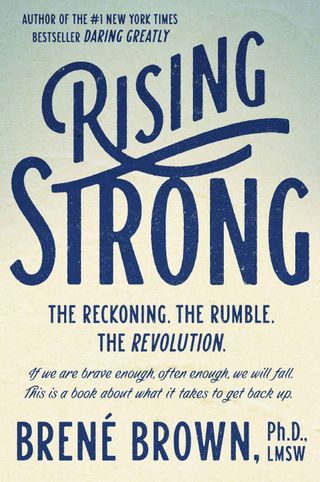
Rising Strong: Brené Brown on the Physics of Vulnerability and What Resilient People Have in Common

Risingstrong_brenebrown

Maria Popova in Brain Pickings:

“There is no science without fancy, and no art without facts,” Vladimir Nabokov famously proclaimed. Today, hardly anyone embodies this sentiment more fully than Brené Brown, who came of age as a social scientist in an era when the tyranny of facts trivialized the richness of fancy and the human experience was squeezed out of the qualitative in the service of the quantitative, the two pitted as polarities. But like Susan Sontag, who recognized how polarities limit and imprison us, Brown defied these dogmatic dichotomies and went on to become what she calls a “researcher-storyteller” — a social scientist who studies the complexities and nuances of the human experience with equal regard for data and story, enriching story with data and ennobling data with story in a quest to “find knowledge and truth in a full range of sources.”

In Rising Strong (public library), Brown builds upon her earlier work on vulnerability to examine the character qualities, emotional patterns, and habits of mind that enable people to transcend the catastrophes of life, from personal heartbreak to professional collapse, and emerge not only unbroken but more whole.

To be sure, this isn’t another iteration of “fail forward,” that tired and trendy (but far from new) cultural trope of extolling failure as a stepping stone to success — Brown’s research is about what happens in the psyche and the spirit when we are in the thick of the failure itself, facedown in the muddy stream, gasping for air; about what those who live from a deep place of worthiness have in common; about the choices involved in living a wholehearted life and the consequences of those choices in rising from our facedown moments to march forward.

More here.

Don’t Worry, Smart Machines Will Take Us With Them

7061_6495cf7ca745a9443508b86951b8e33a

Stephen Hsu in Nautilus:

AI can be thought of as a search problem over an effectively infinite, high-dimensional landscape of possible programs. Nature solved this search problem by brute force, effectively performing a huge computation involving trillions of evolving agents of varying information processing capability in a complex environment (the Earth). It took billions of years to go from the first tiny DNA replicators to Homo Sapiens. What evolution accomplished required tremendous resources. While silicon-based technologies are increasingly capable of simulating a mammalian or even human brain, we have little idea of how to find the tiny subset of all possible programs running on this hardware that would exhibit intelligent behavior.

But there is hope. By 2050, there will be another rapidly evolving and advancing intelligence besides that of machines: our own. The cost to sequence a human genome has fallen below $1,000, and powerful methods have been developed to unravel the genetic architecture of complex traits such as human cognitive ability. Technologies already exist which allow genomic selection of embryos during in vitro fertilization—an embryo’s DNA can be sequenced from a single extracted cell. Recent advances such as CRISPR allow highly targeted editing of genomes, and will eventually find their uses in human reproduction.

The potential for improved human intelligence is enormous. Cognitive ability is influenced by thousands of genetic loci, each of small effect. If all were simultaneously improved, it would be possible to achieve, very roughly, about 100 standard deviations of improvement, corresponding to an IQ of over 1,000. We can’t imagine what capabilities this level of intelligence represents, but we can be sure it is far beyond our own. Cognitive engineering, via direct edits to embryonic human DNA, will eventually produce individuals who are well beyond all historical figures in cognitive ability. By 2050, this process will likely have begun.

These two threads—smarter people and smarter machines—will inevitably intersect. Just as machines will be much smarter in 2050, we can expect that the humans who design, build, and program them will also be smarter. Naively, one would expect the rate of advance of machine intelligence to outstrip that of biological intelligence. Tinkering with a machine seems easier than modifying a living species, one generation at a time. But advances in genomics—both in our ability to relate complex traits to the underlying genetic codes, and the ability to make direct edits to genomes—will allow rapid advances in biologically-based cognition.

More here.

‘The Hotel Years,’ by Joseph Roth

06PROCHNIK-blog427-v4

George Prochnik in the NYT Book review:

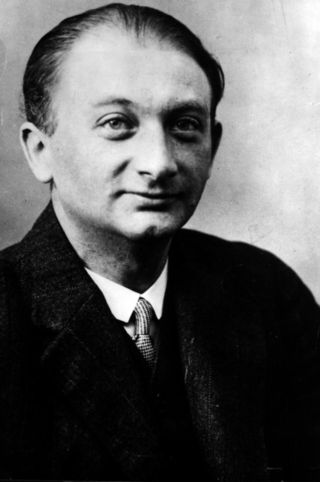
Reading the 64 essays by Joseph Roth anthologized in “The Hotel Years” — dazzling, elegiac, mordant and harrowingly oracular by turn — is like roaming through the Grand Budapest Hotel and discovering that it’s merged with the Overlook, the establishment from “The Shining.” There are so many fantastic scenes, indelible characters and exquisite lines to marvel at. Yet the cumulative vision is one of ­horror.

The articles span Roth’s 20 productive years: 1919-39, the interwar period during which Europe tried to catch its breath, but ended up mostly just panting with cramps and shut eyes, pretending the nightmare was past. Born in 1894, in Brody, a city in present-day Ukraine, then at the eastern edge of the Austro-­Hungarian Empire, Roth never really surrendered his allegiance to the Hapsburg monarchy, precisely because the territory it administered was so ethnically and religiously heterogeneous that race-based strains of patriotic identification were neutralized — or at least diluted for a spell.

He had a passion for hotels, which he considered remnant microcosms of that multiethnic ideal savaged by the Great War. In an essay titled “Arrival in the Hotel,” Roth proudly enumerates the nationalities represented at one establishment: “The waiter is from Upper Austria. The porter is a Frenchman from Provence. The receptionist is from Normandy. The headwaiter is Bavarian. The chambermaid is Swiss. The valet is Dutch. The manager is Levantine; and for years I’ve suspected the cook of being Czech.” Its guests, who included “Christians, Jews, Buddhists, Muslims and even atheists,” found themselves in the hotel “slightly on holiday from the rigidity of love of land,” seemingly restored by these precincts to “what they should always be: children of the world.”

More here.

Willoughbyland: England’s Lost Colony

Dcde0d1a-41fe-11e5-_957916kAdrian Tinniswood at Literary Review:

Here are two things you might not know about Suriname, as the lost colony of Matthew Parker's title is known today. It boasts the largest ants in the world; and in spite of a widely held belief that it lies somewhere in the South China Sea, it is in fact on the northeast coast of South America.

Europeans have been interested in this particular corner of South America since 1498, when Columbus encountered indigenous people during his exploration of the Orinoco delta. They were wearing gold ornaments that, they told him, came from 'a high land to the west'. That was enough. Within a year or two the Wild Coast, as it was called, became one of the main starting points in the European quest for El Dorado, the legendary city of gold that was thought, on the slenderest of evidence, to lie on a plateau deep in the interior. Germans, Spaniards, Portuguese and Dutch all set off into the jungles of Guyana with high hopes, only to fall victim to malarial fevers or the poison darts of hostile Arawaks. On one expedition in the 1560s only twenty-five came back out of a force of two thousand. 'The reports are false,' said a survivor. 'There is nothing on the river but despair.'

Failures like this did nothing to stem the tide of European speculation, as Parker's fascinating narrative makes clear. The early history of the Wild Coast, which occupies the first sixty-odd pages of Willoughbyland, makes for a complicated story, but Parker tells it well, negotiating his way through the labyrinth of competing expeditions and invasions with a laudable clarity of purpose.

more here.

The towering ego, serrated wit and prodigious literary output of Gore Vidal

D4adac9f-1079-4c35-8e4b-3591da7ce1c0Sarah Churchwell at the Financial Times:

It is common practice for books to be given different titles in the US and the UK, but rarely do those titles express each country’s cultural character as clearly as the two given to Jay Parini’s new biography of Gore Vidal. In America, it is called Empire of Self: A Life of Gore Vidal. In the UK, one of Vidal’s more famous quips has been commandeered into a very British title: Every Time a Friend Succeeds, Something Inside Me Dies: The Life of Gore Vidal.

That switch from indefinite to definite article in the subtitle is also telling. There have been several biographies of Vidal, mostly written by their protagonist, notably in the remarkable memoir Palimpsest (1995), as well as a less remarkable authorised 1999 biography by Fred Kaplan that pleased few, including its subject. Comparisons are inevitable, and inevitably invidious: how do you compete with a consummate raconteur of razoring wit and sumptuous style, whose egotism famously shouldered everyone else out of the room?

Vidal’s output was also prodigious — some 50 published volumes, encompassing fiction, history, plays, essays, memoirs, and film and television screenplays. Most readers now agree that Vidal’s greatest legacy comprises the seven novels about America from 1776 to 2000 that make up the Narratives of Empire (Burr, Lincoln, 1876, Empire,Hollywood, Washington, D.C. and The Golden Age) and his collected essays, most of which were published in the gargantuan United States: Essays 1952—1992(1994). Retelling the story of a nation in these works, Vidal justly described himself as America’s biographer.

more here.

Timothy Snyder’s ‘Black Earth’

06Marrus-blog427Michael R. Marrus at the New York Times:

We may think we know about the Holocaust, Snyder seems to be telling his readers. But he then goes on to contend that “we” get it wrong: We fail to understand Hitler’s ecological viewpoint, we neglect the participation of non-Germans in the killing, we distort the meaning of the concentration camps, we misread the role of states in which massacres occurred, we are wrong about the place of science, among other mistakes. To rectify this mountain of errors, Snyder prescribes some antidotes: a global perspective, an appreciation of Hitler’s colonial policy toward other countries and a “multifocal” approach, “providing perspectives beyond those of the Nazis themselves.” Tilting at some rather elderly windmills, Snyder insists we see that “Hitler’s world­view did not bring about the Holocaust by itself” and that the subject must be viewed internationally, “for Germans and others murdered Jews not in Germany but in other countries.” Even minimally informed readers are likely to find at least some of Snyder’s so-called failures inapplicable and at least some of his remedies familiar. And few are very likely to be surprised when, as if this were a new revelation, he announces that “the Holocaust is not only history, but warning.”

Snyder’s title refers to the fertile, food-producing regions in the heart of Ukraine, in the southern part of the Soviet Union, where Hitler and Stalin allowed their ecological fantasies, fears and murderous ambitions to roam freely, each considering the fate of the region and its population as crucial to the outcome of colossal geopolitical struggles. These territories were a prize for which each was prepared to sacrifice millions, and in the pursuit of which the Jews became the central obsession of the Nazi dictator. This was the cradle of the Holocaust, Snyder says, Hitler’s effort to destroy a planetary enemy.

more here.

Is Maureen Dowd Necessary? Defanging a Hillary Basher

Anita Finlay in The New Agenda:

Dowd-2-zuma-300x169The stinging slights offered by several women who had wielded the written word in an effort to cut Hillary Clinton off at the knees were in a class by themselves. Sally Quinn of the Washington Post appeared on CBS’ The Early Show with Harry Smith to say that Hillary is “a tortured person,” “doesn’t know who she really is or what she wants” and “maybe what she really needs is a wonderful, loving relationship with somebody instead of just going after power and being this ambitious person that I think she thinks she oughta be.”[ii] Newsweek’s Eleanor Clift had referred to the Clintons as “the Corleones.” There were others. But none in the same orbit as Maureen Dowd of the New York Times, whose attacks against the Senator felt distinctly personal in tone. Dowd, along with her sister columnists, purported to know what was desirable and acceptable – in a successful woman, yet they all imagined Hillary existed to be in service of a man, thereby telegraphing an addiction to a mindset that has been limiting women for eons. The woman does not, by definition of her sex, have to put her own goals aside. While these ladies were paid by the column inch for opinion rather than fact, opinions infested by trash talk can penetrate the psyche over time, creating a convincing negative portrait of someone that is often disconnected from the facts of their record. Such was the case with Ms. Dowd’s pronouncements about Hillary Clinton:

“After saying she found her “voice” in New Hampshire, she has turned into Sybil. We’ve had Experienced Hillary, Soft Hillary, Hard Hillary, Misty Hillary, Sarcastic Hillary, Joined-at-the-Hip-to-Bill Hillary, Her-Own-Person-Who-Just-Happens-to-Be-Married-to-a-Former-President Hillary, It’s-My-Turn Hillary, Cuddly Hillary, Let’s-Get-Down-in-the-Dirt-and-Fight-Like-Dogs Hillary.”[iii]

By painting Senator Clinton as a person with bi-polar disorder, Maureen Dowd officially joined the ranks of the sexists, hinting that “Sybil” Hillary might blow up the world from the Oval Office if she were having a bad hair day. Male politicians adjust and amend their message and narrative out on the campaign trail regularly. They are not referred to as mentally unstable. Dowd also wrote that “experience does not beat excitement” and much to my chagrin and dismay, that was true. Obama’s bedazzling branding and the celebratory press treatment he received were much better explanations for Hillary’s difficulties in the primaries than Dowd implying she was some sort of psychopath.

More here. (Note: Older column but even more relevant today)

The Politics of Distraction

Mark Leibovich in The New York Times:

CatWe begin, as many discussions about politics today should, with an analogy to pro wrestling. Consider the ‘‘foreign object’’ routine: One combatant produces a concealed item, usually from under his tights — a pointed stick or some hand-size tool of menace — and proceeds to jab his opponent with it. He perpetrates this atrocity in full view of everybody except the referee, who remains oblivious because a complicit third party (perhaps a tag-team partner or a manager) is distracting him. Now consider our current Republican primary battle royale. Foreign objects might not exist literally in modern campaigns. But there are figurative devices, known as ‘‘shiny objects,’’ that rely on the same principles of distraction, outrage and misdirection. They also involve a hapless dupe in the middle of it all — in this case, us.

…Writing in Esquire, Charles P. Pierce said he had expected that Scott Walker would be doing better with the Republican electorate at this point. ‘‘What I did not anticipate,’’ Pierce wrote, was “the rise of the shiny object that is The Man Called Trump.’’ Pierce added that he also did not expect that Walker himself ‘‘would turn out to be such an unimpressive lump of cheese.''

Donald Trump ‘‘is the brightest and shiniest of all the bright, shiny objects,’’ said David Axelrod, a longtime Obama political adviser. Trump is like a one-man meteor shower of this genre. He sprays exhilarating antagonism upon all manner of Megyn Kellys, Mexicans or whoever his ‘‘loser’’ target of the day might be. He tweets around the clock, rides around in a shimmering helicopter and has that noggin of shimmering hair. He hurls us into the ropes until we find ourselves disoriented, careening against a turnbuckle: Where are we? How did we get here? The shiny-­object metaphor is not confined to the realm of politics. Business ­strategy, technology and marketing consultants have all referred to ‘‘bright, shiny objects’’ (or ‘‘B.S.O.s’’) to describe the fickle tastes of modern life. Urban Dictionary identifies ‘‘S.O.S.’’ (‘‘shiny-­object syndrome’’) as ‘‘a condition which causes an inability to focus on any particular person while online dating.’’ (By the same token, a number of commentators have dismissed Trump’s recent success in the polls as ‘‘just a summer fling.’’)

More here.

Saturday Poem

Summary of a Conversation

What does it mean to be authentic,
to run down the middle of Dizengoff Street and shout in Judeo-Arabic
Ana min el-Maghreb, ana min el-Maghreb”?
(I am from the Atlas mountains, I am from the Atlas mountains).

What does it mean to be authentic,
to sit in Café Roval in a colorful robe (an agal and a zarbiyah, kinds of clothing),
or declaim:
my name is not Zohar, I am Zaish I am Zaish (a Moroccan name).
Neither this nor that,
and nonetheless a different language strikes the mouth until gums crack,
and nonetheless spurned and beloved scents pounce
and I fall between the chairs
lost in the jumble of voices.

.
by Erez Biton
from Timbisert: A Moroccan bird
Publisher: Hakibbutz Hameuchad, Tel Aviv, 2005

Friday, September 4, 2015

Review: Two Years, Eight Months and Twenty‑Eight Nights by Salman Rushdie

Ursula K Le Guin in The Guardian:

ScreenHunter_1354 Sep. 04 17.24A “colossal fragmentation of reality” occurred in the 20th century, Salman Rushdie has said, and his novels enact and display that fragmentation with terror and glee. His new book assures us that reality has lately been crumbling more colossally than ever, and is about to come completely unglued. The climate destabilisation we are experiencing is only a foretaste of advancing chaos, which the author describes with considerable relish. Eschatological lightning strikes, oracular infants and local failures of gravity will become the norm, as the Dark Ifrits, the mischievous forces of disorder, begin to take advantage of the weakening of the fabric of the everyday.

The cumbrous title transcribes a certain number of days into years and months, but not the four weeks that would naturally complete it, because the word “Nights” is needed to suggest the original Thousand and One. Rushdie is our Scheherazade, inexhaustibly enfolding story within story and unfolding tale after tale with such irrepressible delight that it comes as a shock to remember that, like her, he has lived the life of a storyteller in immediate peril. Scheherazade told her 1,001 tales to put off a stupid, cruel threat of death; Rushdie found himself under similar threat for telling an unwelcome tale. So far, like her, he has succeeded in escaping. May he continue to do so.

At the idea of trying to summarise the plot, I shriek and fall back fainting on my seraglio couch. Rushdie has a fractal imagination: plot buds from plot, endlessly. There are at least 1,001 stories and substories, and nearly as many characters. All you need to know is that they’re mostly highly entertaining, amusing and ingenious.

More here.

Why are there no fish in the deepest deep sea?

R. R. Helm in Deep Sea News:

ScreenHunter_1353 Sep. 04 17.19Here’s a mystery: below 8,400 meters there are no fish. There are other creatures: sea cucumbers, anemones, tiny worms, but no one has ever seen a fish. At 8,370 meters? There are fish. But not below 8,400 meters. At its deepest the ocean reaches roughly 11,000 meters, so there is plenty of space. And right below 8,400 meters it’s equally cold, equally dark, equally middle-of-no-where as it is right above 8,400 meters. But there is some magic line at 8,400 meters, below which fish apparently cannot go. No one understands why this line exists. Or if perhaps one day we’ll find a fish that can, in fact, cross it. But for now, scientists do have some ideas.

More here.

India and Pakistan’s Dialogue of the Deaf

Mohammed Hanif in the New York Times:

ScreenHunter_1352 Sep. 04 17.10We are at it again. India and Pakistan are talking a lot these days, mostly about why they don’t want to talk to each other. Our national security advisers were supposed to meet last week. And they were supposed to talk about terrorism. Instead, they did what they do best: They hurled accusations at each other about how the other side doesn’t really know how to talk, and the meeting was canceled.

India accuses Pakistan of sponsoring terrorism in India. Pakistan accuses India of sponsoring terrorism in Pakistan, and of having bad manners. To India, it seems obvious that Pakistani militants were behind the 2008 attacks in Mumbai, and it is exasperated that the world won’t punish Pakistan for that. It is upset that the man accused in the attacks, Zaki-ur-Rehman Lakhvi, was released on bail after a leisurely trial in Pakistan, and was able to produce a baby while in prison. India is also upset that the plot’s alleged mastermind, Hafiz Muhammad Saeed, is allowed to roam freely, addressing rallies despite the bounty the American government has placed on his head.

In its own defense Pakistan points to all the hundreds of suspected terrorists it has killed in the last year and a half. It reminds India that some 60,000 Pakistanis have been killed by terrorists. India responds by saying: You are only killing the terrorists who kill Pakistanis while protecting the terrorists who kill Indians.

Lurking under this neighborly rage are stereotypes that refuse to fade.

More here.