trillions of viruses in our bodies

Enrique and Gullans in delanceyplace:

Virus“The human virome includes trillions of viruses that live in and on our cells, plus even more that inhabit the bacteria in our microbiome. The virome is poorly understood and could be considered the 'dark matter of nature' and humanity; we know it is there but have a very hard time describing it or knowing what it is doing. The human virome is essentially our fourth genome; it interacts directly and indirectly with our other three genomes. Moreover, like your genome, epigenome, and microbiome, your virome is absolutely unique. Viruses live in our intestines, mouths, lungs, skin, and even in our blood, the latter being only discovered recently. But fret not; given that people are generally healthy day-to-day, the virome overall must be benign, and given the millennia of mutual coexistence, our viromes must provide benefits that we don't yet appreciate.

“Viruses are champions of DNA mutation. A 2013 study of the human gut virome tracked the identities, abundance, and mutations of native viruses in one person over two and a half years. There were 478 relatively abundant viruses, most of which had not been previously identified. A majority of the viruses were bacteriophage, the type that infects bacteria. Eighty percent of the viruses persisted for the entire 2.5 years, but they all mutated, some slowly, some very quickly. In some cases they mutated so fast that the virus would be deemed a new species within the 2.5 years. What came out of the body after symbiosis was very different from what went in. “So viruses, our ubiquitous interlopers, are an important part of our rapid evolution; they carry, exchange, and modify the DNA between cells or from one species to another. They drive evolution at all scales, in bacteria, plants, animals, and humans. The best example of this is the spread of antibacterial-resistance genes from one bacterial organism to its fellow species, and then to other bacteria of all types, in all geographies. Once a beneficial mutation arises in a microbe, viruses help spread it quickly throughout the microbiome and beyond.

More here.

Tuesday, September 8, 2015

The Refugee Crisis: A collection of statements, poems, images and personal reflections from across Europe and beyond

From Granta:

Jenni Fagan

The health of a society can be judged by how well it cares for its most vulnerable citizens. The current refuges are children, women and men who desperately need the rest of the world to understand that this can happen to anyone – and it won’t go away.

The refugee and migrant crisis in Europe is an opportunity to reach out, engage politically, act humanely and do the only decent thing anyone can do – imagine how it would feel if you were unsafe and your children’s lives and family’s future depended upon the understanding of strangers?

All populations are historically transient. Humans are a migrant race full stop. These people could easily be us, it’s time to get our priorities straight and offer our collective resolve to continue to challenge brutality and its effects on ordinary citizens in countries all across the world.

Tim Finch

They gave themselves away with the words on their T-shirts.

Invaders. Mystery space riders.

Tim Finch on Refugee Crisis 1

Army life. XVI Soldier 4. Spec. Mil.

Tim Finch on Refugee Crisis 2

Yes, they were an army of invading aliens

So we built a fortress to repel them.

More here.

Self-definition and equality in Obergefell v. Hodges

Justice_Anthony_Kennedy_ap_imgVivian Gornick at The Nation:

When in June the Supreme Court declared same-sex marriage the law of the land in Obergefell v. Hodges, on the one hand I, along with millions of others, cheered; on the other, I was reminded of that long ago time when I, and everyone I knew then, thought long and hard and almost daily about how good it would be if loneliness and marriage were no longer linked together; if it were free and independent persons who got married for any reason other than the fear of living alone.

Forty years ago, when the liberationist movements were young, the cast of mind among a multitude of activists and theorists working on behalf of women, blacks, and gays was visionary. The struggle for equal rights seemed existential, as though it was calling into philosophical question the very idea of politics. In a sense, we were like babes in the woods in a state of original wonderment. How had these hierarchies of power and powerlessness come about? we asked ourselves, as though this question had never been asked before. Why do the laws and customs of society invariably benefit this group and disenfranchise that one? What underlying purpose do these decisions serve? What is actually going on here?

more here.

danh vo at the venice biennial

Article00Claire Bishop at Artforum:

THE FIFTY-SIXTH VENICE BIENNALE is dominated by a Danh Vo double bill: “mothertongue,” a solo show in the Danish pavilion, and “Slip of the Tongue,” a large exhibition curated by the artist at the François Pinault Foundation’s Punta della Dogana, where Vo has mixed his own work with that of some three dozen others. Vo’s solo outing makes for one of this year’s most striking national pavilions, an exquisitely spare arrangement of Danish modern furniture, Oaxacan tiles, sinuous dead branches, and sawn-off or crated-up statuary from the first through seventeenth centuries. The tasteful atmosphere is subtly undercut by the venue’s plate-glass windows, which are covered in barely legible words (e.g., YOU'RE GONNA DIE) that turn out to be quotes from The Exorcist, as are many of the works’ expletive-laden titles (e.g., Do you know what she did, your cunting daughter?). Some of these elements have obvious autobiographical significance—the tiles and branches were shipped from the Vietnamese-born artist’s latest country of residence, Mexico—but understanding what, if anything, connects these meticulously arranged artifacts to one another is something of a challenge. An accompanying pamphlet offers extended captions, an essay by art historian Patricia Falguières, and an artist’s statement in which allusions to colonialism and Catholicism are interspersed among stories about Vo’s father, Phung. However, these texts are so aleatory and fragmented that they ultimately reinforce the installation’s poetic opacity.

In the sprawling Punta della Dogana, “Slip of the Tongue” is just as sparse and striking. Here, as in the pavilion, modestly scaled objects are judiciously distributed in a great deal of empty space, and even manage to counteract the relentless machismo of Tadao Ando’s architecture. Once again the configuration of works is transhistorical: Illuminated manuscript fragments by late-medieval masters, borrowed from the Fondazione Giorgio Cini, are displayed alongside modern and contemporary pieces from the Pinault holdings—including Bertrand Lavier, Lee Lozano, Pablo Picasso, Auguste Rodin, Nancy Spero, and Alina Szapocznikow—and more than twenty pieces by Vo himself.

more here.

How psychedelia transformed pop culture

51wQRENPRFL._SX338_BO1,204,203,200_Rob Young at The New Statesman:

Aldous Huxley had got his way, this book would have been titled Phanerothymia and Other Colours. That was the term Huxley proposed for the experience of taking lysergic acid diethylamide (LSD), the hallucinogenic drug first synthesised in a Swiss laboratory on the eve of the Second World War. It was the British psychiatrist Humphry Osmond who came up with “psychedelia”, from the Greek words for “mind” and “manifest”. The term has since become associated predominantly with music. Rob Chapman’s book attempts to catalogue the far-reaching effects of the psychedelic experience as it expanded into the world over a 25-year period after the war, when books such as Huxley’sThe Doors of Perception (1954) became required reading for counter­cultural sky pilots.

Acid removes the filters that the brain normally applies to reality and users often describe a perception of interconnectedness, a slowing down of time and sensations of synaesthesia. The arts had been striving for similar effects with special vigour in the 20th century through movements such as cubism and surrealism and various branches of avant-garde music. Chapman traces a curlicued history connecting the Hungarian artist László Moholy-Nagy’s kinetic light sculptures with the youth parties in mid-1960s San Francisco, where fledgling psychedelic groups such as the Grateful Dead and Jefferson Airplane routinely performed with multicoloured oil-wheel light shows.

more here.

An Extraordinary Story of Five Colonial Indians and the Myth of Muslim ‘Insularity’

M. Asaduddin in The Wire:

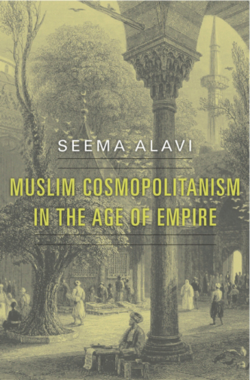
BookMuslim Cosmopolitanism in the Age of Empire is an exhilarating book encompassing broad swaths of trans-imperial history, religio-cultural geography and a stunning breadth of vision. Seema Alavi’s credentials as a historian of substance are well-established. Starting with a book on India’s military history and the Sepoys of the Company that came out of her doctoral research work in Cambridge with C A. Bayly, she later forayed into the history of indigenous medicine, producing the gem of a book, Islam and Healing with another book thrown in between—The Eighteenth Century in India. The current tome has a distinguishing feature that sets her apart from the ordinary run of historians – her multilingual scholarship, her willingness and ability to access source materials in several languages and her skill in marshalling arguments from different perspectives combined with insights drawn from literary sources to give a comprehensive, almost definitive, view of the phenomenon under discussion.

The seed of Muslim cosmopolitanism was, perhaps, sown when the Prophet had exhorted his disciples to undertake even the hazardous journey to China in quest of knowledge. Unlike some cultures, where travel across seas and mountains were proscribed for fear of losing purity/caste, Islam always put a premium on travel and trade, the Prophet himself being the best exemplar of both. When one travels one gets exposed to multiple cultures, belief systems and world-views, thus shedding one’s parochialism and embracing traits of cosmopolitanism. Baghdad (of Baitul Hikmah fame), Constantinople (current Istanbul, the seat of Ottoman empire), Cairo, Cordoba, Damascus, Bukhara, and Delhi were all Muslim cosmopolitan cities at different historical moments where scholars, statesmen, adventurers from all over the world congregated and conducted dialogue in a spirit of openness and catholicity. In the current times, when Muslims, for a variety of reasons, have become victims of insularity and ghettoisation, Alavi’s book is a potent antidote to the widespread but ill-informed media narrative about Muslim resistance to forces of modernity and globalisation.

More here.

Climate change: Track urban emissions on a human scale

Kevin Gurney et al in Nature:

High_no_labels_Fig6LayersCities are taking steps to combat climate change, given the scant progress made by international treaty negotiations. Los Angeles, California, home to around 4 million people, has one of the most ambitious targets: to reduce greenhouse-gas emissions by 35% below 1990 levels by 2030. The city has calculated its carbon 'footprint' and found that road vehicles constitute 47% of total carbon dioxide emissions, and that electricity consumption constitutes 32%1. So how should Los Angeles target its policies? Knowing that certain roads, types of vehicle or parts of a city dominate road emissions and why people drive at specific times would tell city planners where and how to lower emissions efficiently. Improvements in traffic congestion, air quality, pedestrian conditions, and noise pollution could be aligned. But tracking emissions road by road and building by building is beyond the capacity of most cities. Luckily, scientists are gathering the data that city managers need — in studies that match sources of CO2 and methane with atmospheric concentrations. Now the research community needs to translate this information into a form that city managers can use. Emissions data need to be merged with socio-economic information such as income, property ownership or travel habits, and placed in software tools that can query policy options and weigh up costs and benefits. And scientists should help municipalities to raise awareness of the power of detailed emissions data in tailoring climate and development policies.

Carbon hotspots

Cities account for more than 70% of global fossil-fuel CO2 emissions, the main driver of climate change. If the top 50 emitting cities were counted as one country, that 'nation' would rank third in emissions behind China and the United States2. Urban areas are set to triple globally by 2030 (ref. 3). Much of this emitting landscape falls within the control of mayors, city planners, businesses and community groups that have responsibility for residents' health and well-being. A 2014 survey lists 228 global cities — representing nearly half a billion people — that have pledged reductions equivalent to 454 megatonnes of CO2 per year by 2020 (see go.nature.com/inaxr4). Shenzhen in China, for example, aims to put an extra 35,000 electric vehicles on the road by the end of 2015. The German city of Munich aims to produce enough green electricity by 2025 to meet all its power requirements.

More here.

Lost in Translation: Proust and Scott Moncrieff

10835051496_6ece1caf74_b

William C. Carter in The Public Domain Review:

Proust’s theory of memory rejects the notion that we can simply sit and quietly resurrect the past in its true vividness through what he called voluntary memory. When we attempt to do this, we find that it doesn’t work very well. We remember very little and often only in a haphazard and rather bland way. On the other hand, Proust’s title should be taken to suggest a different approach: the Narrator’s search (recherche means both search and research in French) is an active, arduous quest in which the past must be rediscovered—largely through what Proust called involuntary memory, as demonstrated in the famous madeleine scene—then analyzed and understood, and finally, if your ambition is to preserve it in writing, transposed and recreated in a book. As we will see, Proust lived long enough to see the title Remembrance of Things Pastand, while he objected to it, did not take measures to change it.

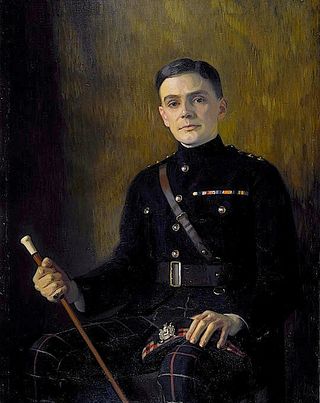
A native of Scotland, Scott Moncrieff had served as a captain in the Scottish Borderers during World War I. Before reading A la recherche du temps perdu, he had already made a name for himself as the translator of major French works, such as La Chanson de Roland (The Song of Roland) and Stendhal’s two masterful novels Le Rouge et le Noir (The Red and the Black) and La Chartreuse de Parme (The Charterhouse of Parma). After the Great War Scott Moncrieff had served as secretary to Lord Northcliffe, in addition to being an editor at The London Times. In January 1920, a thirty-year-old Scott Moncrieff resigned his post at the Times in order to devote himself entirely to translating À la recherche du temps perdu.

More here.

Yasmine El Rashidi Interviews Mona Eltahawy

28_mona_01

In Bidoun:

Eltahawy
I reach people who speak English, yes, and I have a large following in America, it’s true. But I’m also reaching people who speak Arabic. A lot of people on Twitter — the very same people who were angry at me over that Foreign Policy article — they were venting on Twitter and Facebook in English. They speak Arabic, too.

I wrote that essay understanding very well that I’m privileged. And I wrote that essay trying to look beyond my privilege. I wrote that essay to address people who are also privileged, and to ask them to look beyond that privilege.

I was interviewed by BBC Hard Talk a few weeks ago, and one of the questions that Stephen Sackur asked me was, “After what happened to you, where they beat you and broke your bones and sexually assaulted you — don’t you think that this essay was written out of personal anger?” Of course it was written out of anger, just not the anger he was talking about. My anger was a product of the realization that if I wasn’t who I was, if I didn’t have the privileges I have, I might very well be dead. If I didn’t have a high media profile, when I sent out that tweet saying I had been arrested, Al Jazeera and the State Department wouldn’t have picked up my story. Certainly not as quickly as they did. This hashtag #freemona wouldn’t have started trending globally in fifteen minutes. I probably would have died or been gang-raped or something horrendous.

I was so disheartened and angry by those people who verbally attacked me. We have to look beyond our privileges and see how horrendous it is to be a woman in so many parts of the Arab world. Clearly the women I’m writing about are not going to read my Foreign Policyarticle, and even if they did, so what? They’re not the audience. That audience, my audience, is those who know how bad it is, and yet their privilege prevents them from being outraged enough. And it’s that outrage that will make our revolution really succeed. The revolution to get Mubarak out of our heads! Mubarak is still in our heads. He’s called Morsi now!

El Rashidi
I know. It feels, at times, like it’s a farce….

Eltahawy
It is, it is! And it couldn’t have happened any other way because we had nothing else available. The revolution is not over, but it will not succeed until we get women involved, too. That’s the social and cultural revolution.

El Rashidi
Many say that the Muslim Brotherhood will serve as a catalyst for the real revolution.

Eltahawy
The Muslim Brotherhood is going to help really pinpoint this. You hear how Morsi talks. You hear how the Salafis talk. You see how women are addressed in the constitution. Mubarak is still up here. [Points] He’s in prison now but still terrorizing our minds. Unless we get him out of our heads the revolution is fucked.

More here.

Can the Democratic Party Retain Its Hold on Black Voters?

Lead_960

Theodore Johnson in The Atlantic:

Linked fate, in a political context, suggests that black voters approach elections with one simple question: Which candidate is better for the African American population? The analysis begins at the most fundamental level by ascertaining which party or candidate is most likely to protect civil rights and support equal access to economic opportunity for blacks. Everything else is secondary. For example, a politician’s stance on renewable energy, free market economics, abortion, immigration, national debt, and role of the military in regional conflicts all pale in comparison to basic considerations of liberty.

African Americans may ask themselves: Can we vote? Can we work? Can we prosper? Can we live? With game-changing statutes like the Civil Rights Act of 1964 and Voting Rights Act of 1965 being signed into law by a Democratic president and routinely the target of Republican opposition, the Democratic candidate immediately emerges as the preferred candidate. A recent study also shows that when the candidate is black, the effects of descriptive representation raises the level of black voter participation and support even higher—an occurrence confirmed by historical black turnout rates in the 2008 and 2012 presidential elections.

A competing view of linked fate is that black voters are not loyal to the party, but to each other at a deeper level than other races and ethnicities. A centuries-long history grounded in the shared experience of racial subjugation and discrimination produced a common bond among African Americans that leads them to view the world through the same prism. No matter how respectable and educated an African American was in the early 20th century, he or she was unlikely to be granted civil-rights protections until they were guaranteed for the whole race. The remnants of such views are still seen today, most prominently evinced in the Black Lives Matter movement. In short, there is no personal liberty without group liberty.

More here.

Monday, September 7, 2015

Nick Lane to Judge 6th Annual 3QD Science Prize

Update 28 September: Winners announced here.

Update 20 September: Finalists announced here.

Update 19 September: Semifinalists announced here.

Update 15 September: Voting round now open, will close on 18 September 11:59 pm EST. Go here to browse the nominated posts and vote.

* * *

We are very honored and pleased to announce that Nick Lane has agreed to be the final judge for our 6th annual prize for the best blog and online-only writing in the category of science. Details of the previous five science (and other) prizes can be seen on our prize page.
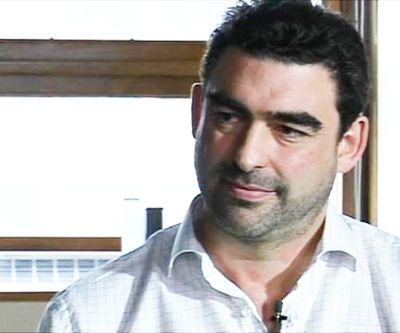
NickLaneNick Lane is a British biochemist and writer. He was awarded the first Provost's Venture Research Prize in the Department of Genetics, Evolution and Environment at University College London, where he is now a Reader in Evolutionary Biochemistry. Dr Lane's research deals with evolutionary biochemistry and bioenergetics, focusing on the origin of life and the evolution of complex cells. Dr Lane was a founding member of the UCL Consortium for Mitochondrial Research, and is leading the UCL Research Frontiers Origins of Life programme. He was awarded the 2011 BMC Research Award for Genetics, Genomics, Bioinformatics and Evolution, and the 2015 Biochemical Society Award for his sustained and diverse contribution to the molecular life sciences and the public understanding of science.

Nick Lane is the author of four acclaimed books on evolutionary biochemistry, which have sold more than 100,000 copies worldwide, and have been translated into 20 languages.

Nick's first book, Oxygen: The Molecule that Made the World, is a sweeping history of the relationship between life and our planet, and the paradoxical ways in which adaptations to oxygen play out in our own lives and deaths. His next book, Power, Sex, Suicide: Mitochondria and the Meaning of Life, is an exploration of the extraordinary effects that mitochondria have had on the evolution of complex life. Nick's third book, Life Ascending: The Ten Great Inventions of Evolution, is a celebration of the inventiveness of life, and of our own ability to read the deep past to reconstruct the history of life on earth. The great inventions are: the origin of life, DNA, photosynthesis, the complex cell, sex, movement, sight, hot blood, consciousness and death. Life Ascending won the 2010 Royal Society Prize for Science Books, and was named a Book of the Year by New Scientist, Nature, the Times and the Independent, the latter describing him as “one of the most exciting science writers of our time.” Nick's most recent book, published in 2015 is entitled The Vital Question: Why is Life the Way it Is? It attacks a central problem in biology – why did complex life arise only once in four billion years, and why does all complex life share so many peculiar properties, from sex and speciation to senescence? The book argues that energy has constrained the whole trajectory of evolution, from the origin of life itself, to the properties of complex organisms including ourselves.

As usual, this is the way it will work: the nominating period is now open. There will then be a round of voting by our readers which will narrow down the entries to the top twenty semi-finalists. After this, we will take these top twenty voted-for nominees, and the editors of 3 Quarks Daily will select six finalists from these, plus they may also add up to three wildcard entries of their own choosing. The three winners will be chosen from these by Dr. Lane.

The first place award, called the “Top Quark,” will include a cash prize of 500 dollars; the second place prize, the “Strange Quark,” will include a cash prize of 200 dollars; and the third place winner will get the honor of winning the “Charm Quark,” along with a 100 dollar prize.

(Welcome to those coming here for the first time. Learn more about who we are and what we do here, and do check out the full site here. Bookmark us and come back regularly, or sign up for the RSS Feed.)

The schedule and rules:

September 7, 2015:

  • The nominations are opened. Please nominate your favorite blog entry by placing the URL for the blog post (the permalink) in the comments section of this post. You may also add a brief comment describing the entry and saying why you think it should win. Do NOT nominate a whole blog, just one individual blog post.
  • Blog posts longer than 4,000 words are strongly discouraged, but we might make an exception if there is something truly extraordinary.
  • Each person can only nominate one blog post.
  • Entries must be in English.
  • The editors of 3QD reserve the right to reject entries that we feel are not appropriate.
  • The blog entry may not be more than a year old. In other words, it must have been first published on or after September 7, 2014.
  • You may also nominate your own entry from your own or a group blog (and we encourage you to).
  • Guest columnists at 3 Quarks Daily are also eligible to be nominated, and may also nominate themselves if they wish.
  • Nominations are limited to the first 100 entries.
  • Prize money must be claimed within a month of the announcement of winners.

September 14, 2015

  • The public voting will be opened.

September 18, 2015

  • Public voting ends at 11:59 PM (NYC time). Semifinalists are announced.

September 19, 2015

  • The finalists are announced.

September 28, 2015

  • The winners are announced.

One Final and Important Request

If you have a blog or website, please help us spread the word about our prizes by linking to this post. Otherwise, post a link on your Facebook profile, Tweet it, or just email your friends and tell them about it! I really look forward to reading some very good material and think this should be a lot of fun for all of us.

Best of luck and thanks for your attention!

Silly Ally, Nobody Want this Job

by Mara Jebsen

Citizen-crop_wide-78d13f5aace09e3355b5ec59e013d9aba182231c

In 1999, when Amadou Diallo was shot 41 times, my friend Z took it hard. She had just started dating a white guy, and he couldn’t understand why she was crying so much. “You’re no relation to him” he kept reminding her. She’d cry harder.

One afternoon, we were in a lounge at Duke University’s Mary Lou Williams Center for Black Culture, where, that year, we’d meet several times a week. There was an artist-in-residence there —a politically active poet from Durham, who was wildly charismatic, and had made himself a little following of artists from North Carolina, and students at the university. He loaned us Nina Simone CDs, and books of Eldridge Cleaver poems. Z and I usually talked about poetry, but this time talk was all about Diallo’s death and the new boyfriend who didn’t get it. “Maybe you could explain it to him,” she said, looking at me. “Why?” I asked. “Because you’re white,” she said, “and maybe you understand him better.”

I was stung—though I knew better than to show it. In any case, I didn’t talk to him, and in the end it didn’t matter, I figured, as I don't think the relationship was sustained. We were all about 19 at the time.

But why was I stung? Why didn’t I want her to think that I was like that boy because we were both white? How would I have explained to him that it was right that she cared about Diallo because they were both black? What would that conversation have sounded like, had I had the grace to venture it? I think, a solid 16 years later, that the answer to those questions has something to do with the central dilemma of the ally. What is it, in the end, to ‘devote’ yourself to a cause that is not (considered) your own?

Read more »

Sunday, September 6, 2015

Two degrees of climate change may be too much

Dawn Stover in Bulletin of the Atomic Scientists:

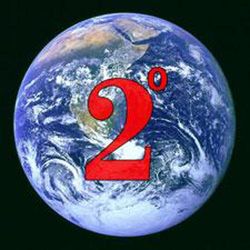
Earth2degreesTouring Alaska this week to shine a spotlight on global warming, President Obama warned that “climate change is no longer some far-off problem. It is happening here; it is happening now. Climate change is already disrupting our agriculture and ecosystems, our water and food supplies, our energy, our infrastructure, human health, human safety. Now. Today.”

This wasn’t supposed to happen. In 2009, 114 countries signed the Copenhagen Accord, agreeing “to stabilize greenhouse gas concentration in the atmosphere at a level that would prevent dangerous anthropogenic interference with the climate system;” “recognizing the scientific view” that the increase in global temperature should be held to no more than 2 degrees Celsius” (3.6 degrees Fahrenheit) above the pre-industrial level; and promising greater “long-term cooperative action to combat climate change.”

Paradoxically, an accord that should have spurred the world to immediate action instead seemed to offer some breathing room. Two degrees was meant to be a ceiling, but repeated references to an internationally agreed-upon “threshold” led many people to believe that nothing really bad could happen below 2 degrees—or worse yet, that the number itself was negotiable. Perhaps the biggest failure of the Copenhagen Accord was its pact for “long-term” action. Forty years ago, climate change was a “long-term” problem. Today it’s an emergency.

More here.

The migrants in our living room

Tim Parks in Politico:

ScreenHunter_1356 Sep. 07 09.25In the past they took refuge beyond the first border, then waited till they could return. They wanted to go home. Maybe we sent aid, maybe we didn’t. Only the genuinely persecuted or the unusually enterprising set off for the world’s old democracies, the prosperous centers of commerce. Occasionally there was a special crisis where one had to recognize responsibility: the 27,000 Ugandan Asians who came to Britain in 1972; the million and more Vietnamese who came to Europe at the end of the Vietnam War. They were one-offs; they were manageable.

Now it is different. Now any number of people, no, of peoples, are overflowing onto our beaches. By sheer weight of numbers they crash down border fences. They are not looking for safety, pure and simple. On the contrary, they are taking extra­ordinary risks. They fall out of aeroplanes over our cities. They crowd into dark containers. They walk miles through railway tunnels under the sea. Their women give birth in sinking ships. Their children lie dead in the sand. It doesn’t stop them. More than a place of refuge, they want a life. They want it now. And they know where: in Germany, France, the U.K. They want the life we have.

And we are surprised.

More here.

In Hyperspace

51nv8F0+uNL._SX329_BO1,204,203,200_

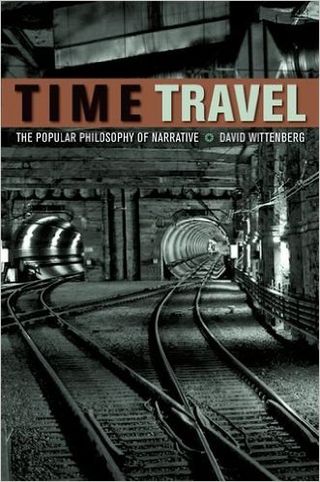
Fredric Jameson reviews David Wittenberg's Time Travel: The Popular Philosophy of Narrative, in the LRB:

It is probably not immediately obvious what interest a new theoretical study of science fiction holds for the mainstream adepts of literary theory; and no doubt it is just as perplexing to SF scholars, for whom this particular subgenre of the subgenre, the time-travel narrative, is as exceptional among and uncharacteristic of their major texts as SF itself is with regard to official Literature. To be sure, so-called alternative or counterfactual histories have gained popularity and a certain respectability; my personal favourite is Terry Bisson’s Fire on the Mountain, in which John Brown’s raid succeeds and a black socialist republic emerges in the South, as prosperous and superior in relation to its shrunken rust-belt northern neighbour as West Germany was to the East in the old days. And there remains the lingering mystery of what would have happened had the time traveller not stepped on the butterfly: this is from Ray Bradbury’s immortal ‘Sound of Thunder’, but the idea is adaptable to any number of wistful daydreams – had Lincoln not been assassinated, or Bobby Kennedy – or more sombre fantasies, like Philip K. Dick’s Man in the High Castle, in which Germany and Japan win the Second World War and divide the US between them. But these historical variants are not genuine time-travel narratives on the order of H.G. Wells’s Time Machine (1895), which inaugurates the standard narrative of the history of science fiction, to the detriment of Jules Verne or that other increasingly popular recent candidate, Mary Shelley’s Frankenstein (1818).

But where did the genre come from? My own hypothesis is a very general one: namely, that the late 19th-century invention of SF correlates to Walter Scott’s invention of the modern historical novel in Waverley (1814), marking the emergence of a second – industrial – stage of historical consciousness after that first dawning sense of the historicity of society so rudely awakened by the French Revolution. David Wittenberg does much better than this, but his remarkable hypothesis is only one of the conceptual breakthroughs in this stimulating contribution to literary theory.

More here.

The Age of the Crisis of Man : Thought and Fiction in America, 1933–1973

Crisis-of-Man-cover-243x366

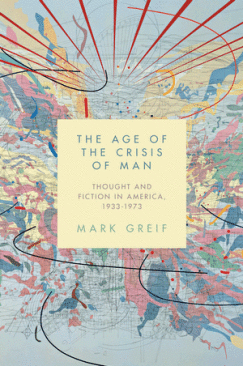
Mark Goble reviews Mark Greif's The Age of the Crisis of Man : Thought and Fiction in America, 1933–1973 in The LA Review of Books.

I DOUBT I’M ALONE in confessing that my earliest awareness of “literary criticism” as an enterprise and institution comes from Whit Stillman’s Metropolitan. You know the scene: earnest, middle-class Tom Townsend makes his move on Audrey Rouget with some exquisitely awkward name-checking of Lionel Trilling. Their exchange turns on Audrey’s disagreement with Trilling’s notion that, as she says, “nobody could like the heroine of Mansfield Park.” But Tom is not really interested in Austen, or in Audrey’s response to Fanny Price. “I like her,” Audrey insists, yet Tom is unpersuaded. “She sounds pretty unbearable,” he continues to declare, “but I haven’t read the book.”

With this remark, Tom signals many things — his arriviste awkwardness with works of culture, despite his intellectualism; his slightly condescending insecurity in the face of class pretensions he desires for himself. But more importantly, in the context of Mark Greif’s new book, Tom’s preposterous and charming bit of ventriloquism invokes the talismanic power of “ideas,” taken in their abstracted form. Novels and novelists that is, might have ideas, but critics seem better at delivering them for consideration, or put more plainly, for consumption. When Audrey presses Tom to justify his strong opinions in his readings of the text, he will have none of it, at least in part because that’s how many Jane Austen novels he has read: “None. I don’t read novels. I prefer good literary criticism. That way you get both the novelist’s ideas as well as the critic’s thinking.”

The Age of the Crisis of Man: Thought and Fiction in America, 1933-1973 is good literary criticism in this respect — and others too. In its emphasis on abstracted ideas, as much or more than the fiction that delivers them, it recalls the great critics that Tom Townsend brings to life in Metropolitan, even as it expresses a knowing appreciation for the limits and the aspirations of the language they once spoke.

More here.

The Radical Indian Activist Who Influenced Mexico City, Lenin And Einstein

Krish Raghav in National Geographic Traveller:

The streets of Mexico City in the early 1900s were buzzing with bohemian visions of a new world. The famous Mexican critic Carlos Monsiváis once described the capital as “an apocalyptic city, populated with radical optimists”. He forgot that, for three years at least, there was one radical humanist among them.

MN Roy is one of India's intellectual giants, an early 20th-century figure whose mind thought globally, and whose influence ran through some of the era's biggest minds, from Einstein and Gramsci to Lenin and Sun-Yat Sen.

All of this I learnt only after encountering a bizarrely named nightclub on the streets of Mexico City earlier this year. M.N. Roy (not his real name) is also sadly obscure, a largely forgotten fringe figure in the annals of modern Indian thought.

But he shouldn't be. His writings hold up extraordinarily well, and his philosophical school of Radical Humanism has newfound relevance in our fractured, divisive time. This is an attempt, through comics, to find resonance with a deeply unusual man and his ideas. It is, of course, a playful interpretation of his work rather than a scholarly analysis.

More here.