Paris climate deal: nearly 200 nations sign in end of fossil fuel era

Suzanne Goldenberg, John Vidal, Lenore Taylor, Adam Vaughan and Fiona Harvey in The Guardian:

ScreenHunter_1560 Dec. 13 20.00Governments have signalled an end to the fossil fuel era, committing for the first time to a universal agreement to cut greenhouse gas emissions and to avoid the most dangerous effects of climate change.

After 20 years of fraught meetings, including the past two weeks spent in an exhibition hall on the outskirts of Paris, negotiators from nearly 200 countries signed on to a legal agreement on Saturday evening that set ambitious goals to limit temperature rises and to hold governments to account for reaching those targets.

Government and business leaders said the agreement, which set a new goal to reach net zero emissions in the second half of the century, sent a powerful signal to global markets, hastening the transition away from fossil fuels and to a clean energy economy.

The deal was carefully constructed to carry legal force but without requiring approval by the US Congress – which would have almost certainly rejected it.

After last-minute delays, caused by typos, mistranslations and disagreements over a single verb in the highly complicated legal text, Laurent Fabius, the French foreign minister, brought down a special leaf-shaped gavel to adopt the agreement. The hall erupted in applause and cheers. “It is a small gavel but I think it can do a great job,” Fabius said.

More here.
R.I.P. Benedict Anderson, 1936-2015

Over at the New York Times:

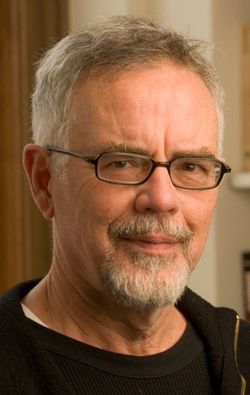
Benedict Anderson, a Cornell University scholar who became one of the most influential voices in the fields of nationalism and Southeast Asian studies, died Sunday in Indonesia. He was 79.

Anderson died in his sleep during a visit to the city of Malang, Indonesian media reported. The cause of death was not immediately known.

“This is to inform you that Ben Anderson has passed away in Java: the land and its people he loves most,” Thai historian Charnvit Kasetsiri, Anderson's close friend and colleague, said in an email to fellow scholars. Indonesians reacted with an outpouring of tributes on Twitter and Facebook.

Anderson is best known for his 1983 book “Imagined Communities: Reflections on the Origin and Spread of Nationalism,” whose admired but debated thesis is that nationalism is largely a modern concept rooted in language and literacy. Its publisher, Verso Books, said it had been translated into more than two dozen languages.

“Many readers of 'Imagined Communities' did not know that his knowledge of Southeast Asian languages gave him insights into Indonesian, Thai, and Philippine political culture and history,” said Prof. Craig J. Reynolds of Australian National University.

Anderson's influence was not limited to the sphere of theory, as he engaged with the contentious issues of the day with a rigorous analysis and dry wit that inspired his students.

More here.

Corey Robin over at his website has some thoughts:

All morning, people from so many different fields and persuasions have been testifying to Anderson’s impact upon them and their work. Which leads to a thought: I’d put Anderson up there with Clifford Geertz and, increasingly, Jim Scott as among the most influential scholars of the last half-century. All of them scholars of Southeast Asia. I’m sure other people have noticed this and/or perhaps written about this, so forgive my saying the obvious, but what is it about that region that has made it such a site of transformative scholarship and fertile reflection?

Symmetry is crucial to biology: a Q & A with Robert Trivers

Jill Neimark in Aeon:

ScreenHunter_1558 Dec. 13 14.36The evolutionary biologist Robert Trivers, a professor of anthropology and biological sciences at Rutgers University in New Jersey, is one of the most influential thinkers on evolution today. Four decades ago, he published a series of papers that teased out the intricacies of our relationships with parents, children, lovers and friends, and laid the groundwork for a Darwinian social theory. His hypothesis about reciprocal altruism explains the profound puzzle of why we help others who are not biologically related to us, even to our own temporary detriment. Quite simply: we expect that the other will return the favour at a later time. Trivers’s ingenious conception of parent-offspring conflict proposes that parents will want to invest equally in all their children (since they are all equally genetically related to the parent), while siblings will each try to get more of their parents’ investment, to the disadvantage of their brothers and sisters. He also came up with a novel explanation for why we so frequently deceive ourselves: the most convincing liar is one who believes his own lies. In the words of the cognitive scientist Steven Pinker at Harvard University: ‘It would not be too much of an exaggeration to say that [Trivers] has provided a scientific explanation for the human condition: the intricately complicated and endlessly fascinating relationships that bind us to one another.’ Trivers’s latest book, a memoir entitled Wild Life: Adventures of an Evolutionary Biologist, is published this month. Here, he discusses his two decades of research on symmetry, a phenomenon that seems to span all of nature, from physics to biology to art and architecture.

When you use the term symmetry to describe life, what do you mean?

Trivers: I am referring to bi-laterally symmetrical creatures, that is, creatures that have an imaginary line running down the middle of the length of their body – distances from this to a place on each side are symmetrical if they are identical. Likewise, you can compare elements on each side, let us say, ears, and ask if length and/or width are identical.

What captivates you about symmetry?

Trivers: It’s very simple: it is the only trait in which we know what the optimal value is. We might think your kidneys look perfect, but we don’t have an actual measure for the optimal kidney. So we can never say that you have managed to create the ideal kidney your body was aiming for genetically, in spite of the early perturbations and stresses experienced during development. We just don’t know.

More here.

Sunday Poem

Lost Earring

A poet once told me that he wrote a poem simply
to write a poem—no other premise was required.
I found that freeing. Another poet recently explained
he had decided to study one word for a whole year.
This poet had chosen the word and. “How boring,”
I thought until I paused to assess how much an and
can connect: a carrot to a blushing radish: a melodramatic
sadness to a scissor-sharp glee. Even a diamond-studded
bride could be leashed tenuously to a cracked syringe
glittering in a parking lot by applying this one-
syllable conjunction. That’s when I realized and
was one of the primary colors in the language,
like one of Rothko’s blues receding further and further
into his canvas—an unstoppable hallway of blue,
an unraveling cobalt bandage. Each day constructed
from a series of ands, a chain-link fence of small mouths
opening: the lost earring shaped like a black tear
my husband gave me, and the wedding I wish
I had attended in northern Spain in my thirties,
with the region’s most famous cheese shaped
like a woman’s breast, and the trees so dense
they emitted a chartreuse fog in the evenings.

by Alexandra van de Kamp
from 32 Poems Magazine
hVol. 12 / No. 2 / Fall-Winter 2014

In Praise of Distraction

Christina Lupton in Avidly:

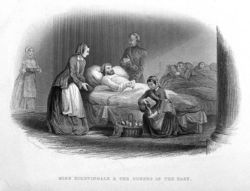
Distraction-3A recent NY Times piece by Tony Schwartz, chief executive of “The Energy Project,” a company dedicated to helping employers get their employees working better, deplores our addiction to electronic distraction. Get off line, he recommends, for good lengths of time. At least once a year, go read a book. This is fine, if increasingly familiar, advice. But it comes with a troubling idea of what literature is today: a salve for the distracted mind; a groove along which thoughts disordered by the bad habits of centripetal reading might fall back into line. A training ground for those trying to work better. It’s true, of course: for a very long time, books have been instruments of concentration. They have also mostly, though not exclusively, been written by those undistracted by ringing bells, the cries of children, the growling stomach, the fatigue of manual or secretarial labour. Reading is very closely associated with the pleasure of a state of non-distraction. And, for this reason, it has also been associated with privilege. Florence Nightingale, for instance, argues of women reading books in 1852 that no door is ever closed in favour of their seclusion; no protection ever erected to favour their concretion.

To be sure, there are plenty of stories of people finding ways to read and write late at night, between shifts or bouts of poverty, childbirth and manual labour. And while things like almanacs and abridgements and newspapers have made concessions to the distracted, novels, in particular, have evolved in tandem with the ideal of this kind of sequestration. We find the novel’s most honored readers holed up in closets and libraries; in childhood, sickness or old age, even as its lifetime supporters claim concentration through sinecure. Being absorbed in a book is easily romanticised — we may all feel individually and collectively that we once did that more and want to do it again — but there is no doubt that when we long for books in this way we also long for the sound of leisure talking to leisure.

More here.

The Death of Cancer

Sandeep Jauhar in The New York Times:

BookWhen I was doing my medical training nearly 20 years ago, there were two kinds of residents: those who were planning on specializing in oncology and those who couldn’t tolerate the subject for even a month. One night when I was on call, I worked with someone in the second camp. He told me about a patient of his, an elderly woman with pancreatic cancer that had grown into her bile duct and metastasized through her intestinal tract. She had been through several rounds of ­chemotherapy without success and was ready to quit treatment, but was afraid to tell her oncologist. “She told me, ‘I don’t want him to think I’m giving up,’ ” my colleague said, obviously disgusted that she didn’t feel comfortable speaking freely about her goals. He encouraged her to choose hospice care. Two weeks later, he said to me, his patient’s hospice aide came up to him on the ward. “She told me that my patient made her promise that the day she died, she would come find me and tell me. She said my patient wanted to thank me for encouraging her to die the way she wanted to.” I thought of this story at various points while reading “The Death of Cancer,” Vincent DeVita Jr.’s fascinating if hubristically titled new book, co-authored with his daughter, Elizabeth DeVita-Raeburn, a science writer. Today, more than four ­decades after President Nixon declared war on cancer and with so many new weapons in our arsenal supported by big budgets and a decidedly aggressive posture, when is it O.K. to give up? When is it best to ­surrender? DeVita himself has been one of the top commanders in this war. He was in the vanguard of chemotherapists, engineering the first cure for Hodgkin’s disease and diffuse large B-cell lymphoma. Later, he was director of the National Cancer Institute, physician in chief at Memorial Sloan Kettering Cancer Center in Manhattan and president of the American Cancer Society. In DeVita’s telling, we are winning this war. Childhood leukemias are now almost completely curable. Death rates for almost all types of cancers are steadily decreasing. We have an array of new biological molecules and immunotherapies that put the old slash-and-burn cancer drugs to shame. When he says, “We have the tools to eradicate cancer,” he is someone we should listen to.

Sadly, however, his assertion flies in the face of certain facts. As DeVita himself notes, cancer cells frequently mutate, becoming smarter at neutralizing even the most aggressive chemotherapeutic cocktails. Cancer remains the second-biggest killer in the United States (after heart disease). It seems highly unlikely that a disease that has been documented for ­mil­lenniums, that is written into the very nature of our cells, will ever be eliminated.

More here.

Saturday, December 12, 2015

Orwell taught us to fear technocratic jargon that doesn’t let us say what we mean. But that is language at its best

Elijah Millgram in Aeon:

ScreenHunter_1557 Dec. 12 16.36Everyone remembers Newspeak, the straitjacketed version of English from George Orwell’s novel 1984 (1949). In that dystopia, Newspeak was a language designed by ideological technicians to make politically incorrect thoughts literally inexpressible. Fewer people know that Orwell also worried about the poverty of our ordinary, unregimented vocabulary. Too often, he believed, we lack the words to say exactly what we mean, and so we say something else, something in the general neighbourhood, usually a lot less nuanced than what we had in mind; for example, he observed that ‘all likes and dislikes, all aesthetic feeling, all notions of right and wrong… spring from feelings which are generally admitted to be subtler than words’. His solution was ‘to invent new words as deliberately as we would invent new parts for a motor-car engine’. This, he suggested in an essay titled ‘New Words’ (1940), might be the occupation of ‘several thousands of… people.’

Now, I don’t have anything against the invention of new words when it’s appropriate. But Orwell was badly mistaken, and not just for ignoring the fact that English already picks up new words on a daily basis. His reasons for wanting that extra expressive power are, uncharacteristically, poorly thought-out. Language just doesn’t work in the way that either 1984’s Ministry of Truth or the more benign bureau of verbal inventors in ‘New Words’ presume. And understanding why that is will put us in a position to explain a lot of what goes under the heading of metaphysics.

More here.

Actually, Pakistan Is Winning Its War on Terror

Sameer Lalwani in Foreign Policy:

ScreenHunter_1556 Dec. 12 16.31The recent revelations that the San Bernardino shooters had extremist ties to Pakistan might appear to confirm the narrative that Pakistan is consumed by a downward spiral of extremist violence. But over the past year, it has quietly made some important, costly, and under-appreciated strides in its counter-militancy efforts. Individually, none are groundbreaking, but together they point in a more promising direction for Pakistani society, regional stability, and the U.S.-Pakistan relationship.

First, the Pakistani army has pursued more comprehensive military operations in tribal areas than initially expected. Although it has not directly targeted the Haqqani Network as the United States hoped, Pakistan has actively targeted a wide array of militant groups, not just the Pakistani Taliban (TTP).

Hafiz Gul Bahadur, the leader of the TTP and a longtime government tactical ally based in North Waziristan, may have only been displaced to Afghanistan during the early phases of the military’s operation, but the Pakistani army has made his life difficult. It reportedly targeted him, sidelined him operationally from his organization, and then eliminated some of his remaining commanders in airstrikes last fall.

More here.

Home grown: Asad Raza stages art show in his one-bedroom NYC apartment

Disclosure: Asad Raza is my nephew and a former 3QD columnist. This is Michael Slenske in Wallpaper:

ScreenHunter_1555 Dec. 12 16.24While the hoi polloi was busy overtaxing their social media feeds in Miami during Art Basel, a select group of curators and artists were busy considering one of the more intimate and intriguing art world happenings of recent memory back in NoLita, New York. The idea for this tiny sensation took seed five years ago when Buffalo-born, New York-based artist, writer, and producer Asad Raza was helping the British-German artist Tino Sehgal produce ‘This Progress’, his acclaimed 2010 exhibition at the Solomon R. Guggenheim Museum. During the end of the show’s run, he had an idea to produce another ephemeral show — inside his pint-sized one-bedroom apartment.

‘I didn’t get around to it and the idea just floated to the back burner,’ says Raza, who has worked with a who’s who of conceptual artists over the past seven years (including Philippe Parreno, Adrián Villar Rojas and Sarah Morris) producing shows all over the world. In the ensuing year he heard about other apartment-based exhibitions — from Jan Hoet’s Chambres d'Amis to Hans-Ulrich Obrist’s World Soup — which kept the idea alive. While working with Parreno this summer for his massive H {N)Y P N(Y} OSIS show at the Park Avenue Armory it brought back the desire, he says, ‘to make an intimate small show in my own life that’s totally different to what I’m doing here.’

More here.

Things we don’t write: K Anis Ahmed on the murdered writers of Bangladesh

Kazi Anis Ahmed in The Guardian:

ScreenHunter_1554 Dec. 12 16.19Things we don’t write about: The Prophet. The Quran. The mosque. The hijab. Indeed, anything to do with Islam that might offend anyone willing to kill. The problem is that we can never be certain what will offend them. The killing types are no longer visible, wizened old men who regularly announce where the red line lays. The mantle has passed onto teenagers wielding machetes, belonging to secret cliques, guided by international ideologies with vicious local consequences.

In a bewildering new trend, it is young rationalist bloggers in Bangladesh who have emerged as the primary target of Islamic extremists. How peculiar indeed, that killers espousing a retrograde vision of the world should be so obsessed with the most twenty-first century of media: the blog. Four bloggers have been hacked to death since the beginning of this year, and dozens more live in fear of becoming the next victim.

There is a specific history at play here. The secular bloggers of Bangladesh led a mass secular movement in 2013 demanding the death penalty for war crimes committed during Bangladesh’s 1971 war of independence. What’s unfolding now is in great part payback for the “insolence” of those seeking belated justice for a long-ignored genocide.

More here.

MERU

My wife and I just watched the movie Meru about the attempted ascent of the mountain of that name, which had never been summited before, by Conrad Anker (one of the top climbers in the world), Jimmy Chin, and Renan Ozturk. It is one of the most thrilling and moving films I have seen in a long time. Do yourself a favor and watch it.

Available for rent at Amazon here, and also on other outlets.

on ‘Strangers Drowning: Voyages to the Brink of Moral Extremity’ By Larissa MacFarquhar

Strangers-drowning-jacket-booksRowan Williams at Literary Review:

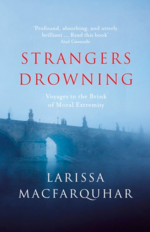
What if morality had more to do with habit and character, with the grace of receiving as well as of giving, rather than being just the sum total of right actions? Singer and many (but not all) of the figures whose stories feature inStrangers Drowning are committed Kantians in their ethics: they believe that morality is about the quest for the unequivocally good action. But, as the dilemmas flagged in the title should tell us, there are choices in which there is no unequivocally good outcome. Talking as though there were one can imperceptibly encourage us to ignore certain kinds of suffering or pain in the way touched on earlier. As many moral philosophers have insisted over the last few decades, focusing on how to make infallibly right choices (and also on hard cases where this looks practically impossible) isn’t a very useful way of thinking about a good life as opposed to an ensemble of right answers. Part of the discomfort generated by some of MacFarquhar’s case studies is to do with a sense that some people are looking almost obsessively for a scheme of ideas that will assure them beyond doubt that they are doing what is right. The more sympathetic figures in this book are those who ruefully acknowledge that their moral maximalism cannot ever quite deliver this and that the human cost along the way may be disturbingly high; or those whose generosity has about it some dimension of warmth or joy as well as effectiveness.

more here.

‘Rock, Paper, Scissors’ by Naja Marie Aidt

at The Quarterly Review:

Although Naja Marie Aidt made her English-language debut just last year with a short story collection entitled Baboon (Two Lines Press), in Denmark she has been required reading in most middle school and high school classes since the 1990s. A poet and author with nearly 20 works in various genres, Aidt has received numerous honors, including the Nordic Council’s Literature Prize for Baboon in 2008.

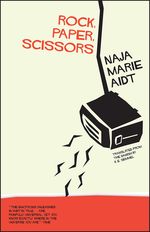
Aidt debuted in Denmark in 1991 with the poetry collection Så længe jeg er ung, and since then she has mainly been known for her poems and short stories. Her first novel, Sten, saks, papir, came out in Denmark in 2012, some 21 years after her first poetry collection. Now that novel has been published by Open Letter Books as Rock, Paper, Scissors, in K.E. Semmel’s translation.

In Rock, Paper, Scissors, we follow Thomas O’Mally Lindström—the owner of a small, successful stationery business—whose abusive and criminal father, Jacques, just passed away in prison. Along with his neurotic and temperamental sister, Jenny, Thomas reluctantly goes through their father’s old apartment, where he finds a broken toaster containing a large sum of money. Thomas decides to keep the money in his basement, even though he knows Jacques probably acquired it illegally. From this point, a thriller-like plot begins to unfold. Thomas becomes increasingly anxious, especially when a charming man by the name of Luke shows up at his father’s funeral. Luke—a nephew of one of Jacques’s old associates—seemingly had a close relationship with Thomas’s father.

more here.

on ‘The German War: A Nation Under Arms, 1939-45’ by Nicholas Stargardt

Cherbourg France1944Nikolaus Wachsmann at The Guardian:

Most Germans did not want war in 1939. When it came, following Hitler’s invasion of Poland, there was no euphoria and flag-waving, as there had been in 1914, but dejection; the people were downcast, one diarist noted. The mood soon lifted, as the Third Reich overran its neighbours, but most Germans still hoped for a quick conclusion. As Nicholas Stargardt points out in his outstanding history of Germany during the second world war, the Nazi regime was most popular “when it promised peace, prosperity and easy victories”. And yet, German troops continued to fight an ever more protracted battle, with ever more brutality, while the home front held tight. Even when it was clear that all was lost, there was no collapse or uprising, as in 1918. Why?

There are two easy answers. After the war, many Germans claimed to have been cowed by an omnipotent terror apparatus. More recently, some historians have argued the opposite: the Nazi regime was buoyed by fervent support, with ordinary Germans backing Hitler to the end. Stargardt dismisses both answers convincingly. Domestic terror alone, though ever-present, did not ensure the war’s continuation. Neither did popular enthusiasm for nazism. Of course there was significant support for Hitler’s regime, at least as long as the campaign went well. “God couldn’t have sent us a better war,” one soldier wrote to his wife in summer 1940, as the Wehrmacht routed France. But opinion was fickle, fluctuating with the fortunes of war.

more here.

The Secret History of One Hundred Years of Solitude

Paul Elie in Vanity Fair:

BookGabriel García Márquez began writing Cien Años de Soledad—One Hundred Years of Solitude—a half-century ago, finishing in late 1966. The novel came off the press in Buenos Aires on May 30, 1967, two days before Sgt. Pepper’s Lonely Hearts Club Band was released, and the response among Spanish-language readers was akin to Beatlemania: crowds, cameras, exclamation points, a sense of a new era beginning. In 1970 the book appeared in English, followed by a paperback edition with a burning sun on its cover, which became a totem of the decade. By the time García Márquez was awarded the Nobel Prize, in 1982, the novel was considered the Don Quixote of the Global South, proof of Latin-American literary prowess, and the author was “Gabo,” known all over the continent by a single name, like his Cuban friend Fidel.

Many years later, interest in Gabo and his great novel is surging. The Harry Ransom Center, at the University of Texas, recently paid $2.2 million to acquire his archives—including a Spanish typescript of Cien Años de Soledad—and in October a gathering of his family members and academics took a fresh look at his legacy, repeatedly invoking the book as his magnum opus. Unofficially, it’s everybody’s favorite work of world literature and the novel that, more than any other since World War II, has inspired novelists of our time—from Toni Morrison to Salman Rushdie to Junot Díaz. A scene in the movie Chinatown takes place at a Hollywood hacienda dubbed El Macondo Apartments. Bill Clinton, during his first term as president, made it known that he would like to meet Gabo when they were both on Martha’s Vineyard; they wound up swapping insights about Faulkner over dinner at Bill and Rose Styron’s place.

More here.

Brain-manipulation studies may produce spurious links to behaviour

Sara Reardon in Nature:

GettyImages-140157799webIn the tightly woven networks of the brain, tugging one neuronal thread can unravel numerous circuits. Because of that, the authors of a paper1 published in Nature on 9 December caution that techniques such as optogenetics — activating neurons with light to control brain circuits — and manipulation with drugs could lead researchers to jump to unwarranted conclusions. In work with rats and zebra finches, neuroscientist Bence Ölveczky of Harvard University in Cambridge, Massachusetts, and his team found that stimulating one part of the brain to induce certain behaviours might cause other, unrelated parts to fire simultaneously, and so make it seem as if these circuits are also involved in the behaviour. According to Ölveczky, the experiments suggest that although techniques such as optogenetics may show that a circuit can perform a function, they do not necessarily show that it normally performs that function. “I don’t want to say other studies have been wrong, but there is a danger to overinterpreting,” he says.

Ölveczky and his colleagues discovered these discrepancies by chance while studying rats that they had trained to press a lever in a certain pattern. They injected a drug called muscimol, which temporarily shuts off neurons, into a part of the motor cortex that is involved in paw movement. The animals were no longer able to perform the task, which might be taken as evidence that neurons in this brain region were necessary to its performance. But Ölveczky accidentally damaged one animal’s motor cortex while injecting the drug. He decided to use a toxin to permanently destroy that portion of the brain to see whether such a lesion would have the same effects as the temporary disruption. When the researchers tested this rat ten days later, they were surprised to find that it could still press the lever correctly, despite having not performed the task since the damage occurred. The observation suggested that the damaged circuit was never actually involved in the behaviour in the first place; without practice, the brain cannot simply switch to using a different circuit. The researchers concluded that their muscimol experiment had shut down multiple circuits, some of which were involved in the lever-pressing behaviour.

More here.

Friday, December 11, 2015

Does Everyone Dream?

From Discover:

DreamsEveryone dreams – even people who believe that they “never dream” and can’t remember any of their dreams. That’s according to a group of French researchers writing in the Journal of Sleep Research: Evidence that non-dreamers do dream. In questionnaire surveys, up to 6.5% of people report that they ‘never dream’. Although most of these people report having dreamed at some point in the past, roughly 1 in every 250 people say that they can’t remember ever dreaming – not even once.

But is it possible that these “non-dreamers” do in fact have dreams, but just can’t remember them? To study this question, Herlin et al., authors of the new paper, looked at people with REM sleep behavior disorder (RBD), a condition in which patients make movements, sometimes violent ones, while they sleep. Sometimes these movements are accompanied by speech. The movements seen in RBD are often quite complex and, interestingly, they seem to correspond to the content of the dreams that patients are experiencing. At least some of the actions seen in RBD are ‘acted out’ dreams. Herlin et al. report that some RBD patients report never dreaming: out of 289 diagnosed RBD cases, 2.7% reported that they had not dreamed for at least 10 years, and 1.1% said that they had never dreamed ever. However, in many cases their actions during sleep (captured on video in the sleep clinic) suggested that they were dreaming.

More here.