
Category: Recommended Reading
How Did the Nobel Prize Become the Biggest Award on Earth?
From Wired:
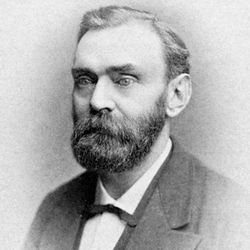
From the beginning, the Nobel Prize attracted public attention in a way that no other scientific award had. It all began with a journalistic error. In 1888, a French newspaper mistakenly wrote that Alfred Nobel, inventor of dynamite, had died. It was actually his brother, Ludvig, who had passed. But, in addition to lackluster fact checking, the paper commemorated the event with defamatory prose: “Dr. Alfred Nobel, who became rich by finding ways to kill more people faster than ever before, died yesterday,” it wrote. Nobel, it is said, was crushed by the idea that he’d be remembered as a “merchant of death.” In order to regain control of his legacy, he willed his fortune to create an award that would recognize people who had made positive contributions to mankind. Alfred Nobel was a celebrity, famous not only for his destructive invention, but also his reclusiveness. His will was made public a year after his death. The surprise announcement sparked a lot of interest from the outset, says Gustav Källstrand, senior curator at the Nobel Museum. “The fact that the inventor of dynamite had entrusted his money to create a peace prize, among other things, got a lot of people interested in the prize,” he said. The Nobel also attracted a lot of attention because of its huge cash prize. Scientists had been awarded medals, money, and even titles (How about a knighthood, Sir Isaac?) since at least the early Renaissance. But none of those awards came close to the Nobel’s purse. In the early days, it was worth about 20 years of an academic salary, and was the prototypical “genius award” that allowed scholars to freely pursue their interests. The prize money also gave the public a concrete way to comprehend what were (and still are) esoteric scientific discoveries, says Källstrand, who wrote a dissertation on how the Nobel became a bridge between science and society.
More here.
An unjustly-neglected Libyan novelist

Spina’s opus is the colonial epic The Confines of the Shadow, a cycle of 11 novels and short-story collections that offers a deep and singular account of the great historical fractures that preceded the establishment of Moammar El-Gadhafi’s Jamahiriya in 1977. A first installment, In Lands Overseas, containing three novels—The Young Maronite, The Marriage of Omar, and The Nocturnal Visitor—set during the Italian conquest and early occupation from 1911 to ’27, is now available from Darf in a translation by the poet André Naffis-Sahely. Two further installments focus on the brief golden age of the Italian colony, in the 1930s, and on the period of independence leading up to Gadhafi’s bloodless coup against King Idris in 1969. The Confines is a reminder, among many other things, of the radical transformations that Arab countries experienced in the 20th century—and that have continued to the present day, since Libya after Gadhafi’s fall has become a terrible new place.
In his lifetime, Spina saw more than one world end. When he realized that the establishment, development, and collapse of Italy’s Libyan colony were to be the focus of his life’s work, he began reading everything he could find on the subject. This research informs his first novel, The Young Maronite (1973), in particular. In it, we are treated to jaw-dropping quotations from Italian officials following the 1911 invasion (these have been removed from Darf’s translation—“a fairly daring choice,” writes Naffis-Sahely, intended to keep the flow of Spina’s prose unimpeded). In February 1912, Prime Minister Giovanni Giolitti told the Italian Parliament, to applause: “I wish with all my heart that the world may have only colonial wars, because colonial war means the civilization of populations that would otherwise go on in barbarism.”
more here.
the pessimism of Michel Houellebecq
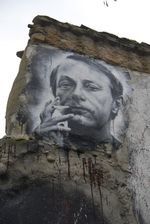
In interviews, Houellebecq has stated that his initial design for the novel involved a conversion to Catholicism, modeled on the one Huysmans depicts in the autobiographical Durtal novels. It is true that Islam as such takes up little room in the book, serving mainly as the counterpoint to the author’s vision of an occident in irrevocable decline. The arguments Houellebecq adduces for his pessimism are familiar to anyone who has read Bernard Lewis, Orianna Fallaci, or the authors associated with the concept of Eurabia: European institutions are weak and decrepit, their artificial values fundamentally estranged from the real issues that govern people’s lives; the Muslim population is growing while Europeans fail replace themselves; and, in the words of one of Houellebecq’s characters, anormalien possessing “almost abnormal brain power,” “whichever segment of the population has the highest birthrate, and does the best job of transmitting its values, wins.”
The archetypal Houellebecq protagonist follows one of two routes: either he fails to evolve, and his picaresque adventures become a pretext for more or less biting observations about contemporary life (Whatever, Lanzarote), or he moves from muted anguish about his lovelessness and the deplorable state of the Western world into wan, often lyrical resignation (The Elementary Particles, The Possibility of an Island). Submission is in the second camp; the narrator, whose vital possibilities were inseparable from the institutions and value systems of early 21st-century France, glimpses a possibility for a new kind of life in the serene acceptance of his society’s obsolescence and an opportune accommodation of the order destined to succeed it.
more here.
on ‘Charlotte Brontë: A Life’ By Claire Harman
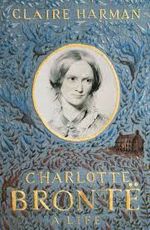
Even now, Brontë’s voice is the most compelling thing about her work: a voice as full of anger, violence and gall as passion. Harman has a lot more time for Brontë’s first novel, The Professor, than most (certainly she has more time for it than me) and she suggests that its annoying and repressed heroine, Frances Henri, gains power by staying silent: ‘This convention of not answering back allows able women a scornful superiority, flashing out in looks, in suppression of comment, withheld speech; quellingly disdainful, devastatingly critical, but always held in check.’ She concludes that ‘This pent-up power, secretly triumphant because unrealised, is the incendiary device at the heart of Jane Eyreand all Charlotte Brontë’s works.’ I’m not sure. I prefer Brontë and her heroines when they are realising their power – and even Harman later finds that Jane Eyre’s vividness and energy come from Jane’s ‘articulation of long-pent-up sorrows’.
Brontë’s stunning literary control deserted her in Shirley, which she wrote in unimaginable circumstances, beginning it before her brother and sisters died, one after another, and finishing it in the throes of grief. Throughout the novel, using the fig leaf of an androgynous narrator, Brontë interrupts the story to tell us what it means and what she thinks. At one point, dazed and bitter, she advises disappointed women to stay silent: ‘You held out your hand for an egg, and fate put into it a scorpion. Show no consternation: close your fingers firmly upon the gift; let it sting through your palm. Never mind; in time, after your hand and arm have swelled and quivered long with torture, the squeezed scorpion will die, and you will have learned the great lesson how to endure without a sob.’
more here.
Anti-parasite drugs sweep Nobel prize in medicine 2015
Ewen Callaway and David Cyranoski in Nature:

More here.
My People
I come from people who swear without realising they’re swearing.
I come from scaffolders and plasterers and shoemakers and carers,
the type of carers paid pence per minute to visit an old lady’s house.
Some of my people have been inside a prison. Sometimes I tilt
towards them and see myself reflected back. If they were from
Yorkshire, which they’re not, but if they were, they would have been
the ones on the pickets shouting scab and throwing bricks at policemen.
I come from a line of women who get married twice. I come from
a line of women who bring up children and men who go to work.
If I knew who my people were, in the time before women
were allowed to work, they were probably the women who were
working anyway. If I knew who my people were before women
got the vote, they would not have cared about the vote. There are
many arguments among my people. Nobody likes everybody.
In the time of slavery my people would have had them if they
were the type of people who could afford them, which they
probably weren’t. In the time of casual racism, some of my people
would and will join in. Some of my people know everybody
who lives on their street. They are the type of people who will argue
with the teacher if their child has detention. The women
of my people are wolves and we talk to the moon in our sleep.
.
by Kim Moore
from The art of Falling
Seren Books, 2015
Monday, October 5, 2015
Perceptions
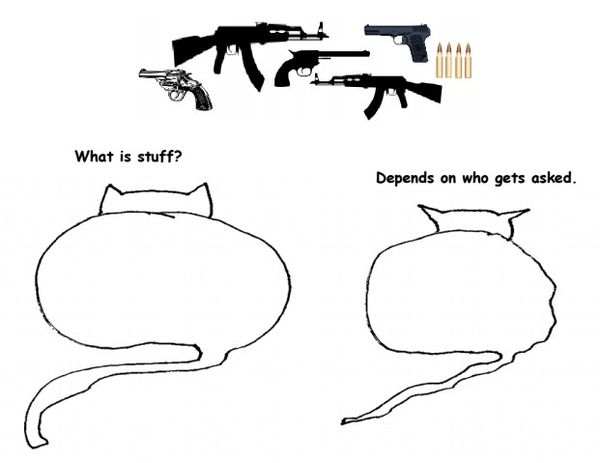
CATSPEAK
by Brooks Riley
Sunday, October 4, 2015
One of the world’s most important seed banks has left Syria, and it won’t be returning
Ross Andersen in The Atlantic:
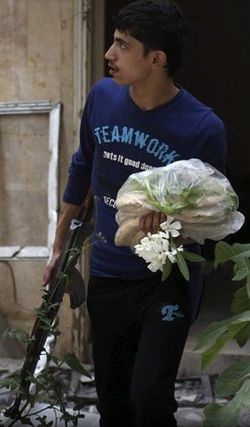
What is a city, if not a place of convergence? For the bulk of our existence, we humans have been wanderers, lovers of open land and sky. Cities tricked us out of this way of life. They seduced us with convergence, with hundreds, thousands, even millions of people, all living in one place. When scholars debate the site of the world’s first city, they are yearning after our cultural origins.
Recent human history can plausibly be described as a great experiment in urbanism. We used to roam, then we settled, and condensed into nodes. For thousands of years, the pace of these changes was slow, but in our current era, urbanization has accelerated. Hundreds of millions of people have moved into cities during this past century. Theirs is the largest migration in human history, and by a wide margin.
More here.
Patti Smith – Free Money – 1977
october delights (for shuffy)
Ionel Talpazan (1955 – 2015)
Meet the American Vigilantes Who Are Fighting ISIS

Jennifer Percy in the NYT Magazine:
Lawton arrived in Syria, was given an M-16 and in just over two weeks was participating in the offensive at Tel Hamis. ‘‘Fighting ISIS wasn’t high-profile yet,’’ he said. ‘‘Wasn’t a big deal. Easy ride to the front.’’
His nom de guerre was Heval Sharvan, but the freedom fighters called him Captain America. ‘‘I think, after this, I might want to relax and go back to work,’’ he said. ‘‘Maybe New York or maybe Miami. Well, Miami might be too chill.’’
Lawton told me about the day he killed an ISIS militant. A Kurd gave him a sniper rifle to attack an ISIS-controlled village. Lawton took a position on the roof of a building and saw an ISIS fighter with a rocket-propelled-grenade launcher running below. Lawton shot him.
‘‘The guy just exploded,’’ Lawton said. ‘‘He was just gone.’’ Lawton still had the rifle at his side, close to his body like a purse.
‘‘That was my first kill,’’ he said. ‘‘Kinda weird, but I had a nightmare that night.’’
‘‘About the militant?’’ I asked.
‘‘It’s hard to explain,’’ he said. ‘‘You know these guys are animals, but even with that knowledge … ’’ He trailed off. ‘‘You know you have to let the brain figure it out on its own,’’ he said. ‘‘He pointed the R.P.G. at me. He would have taken me and my friend. It was hard for me. Killing people, you know you are here to do it. But then, when it happens, and you see it. It’s different. He just exploded.’’
We walked together up the road toward the village. Barley fields spread for miles all around us. ‘‘A couple days later, I was good,’’ he said. ‘‘Ever since then, it’s been no problem. I just have to remember the videos.’’
He meant the videos of Foley, of the Syrian soldiers. He looked down and softened the earth with his boot. ‘‘See,’’ he said. ‘‘I have a big heart, and I never pictured myself actually doing it. I like to see the good in everybody.’’
More here.
Maybe Connect
Jedediah Purdy in The LA Review of Books:
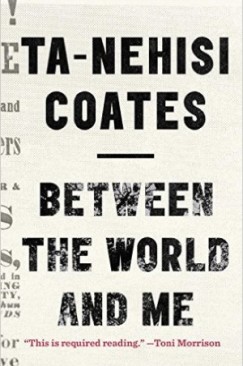
EVERYONE I KNOW is reading, or means to read, Ta-Nehisi Coates and Elena Ferrante. These authors have very little in common, by the way such things are typically measured: they share neither genre, style, gender, race, nor nationality. What they do share is the sense of personal urgency, the hunger, they’ve created in readers. What does this response say about these writers, seemingly so different, and about all of us who have brought them together in our book bags, in mind and feeling? How have they arrested and occupied our attention?
Coates’s Between the World and Me appeals to readers’ desperation to see more clearly, feel more definitely, in a time of terrible racial violence. It resonates, too, with our doubts that justice is near, or possible, or even something much of the country wants. Ferrante’s novels — particularly her Neapolitan series, the final volume of which was just published — touch a nearer and quieter desperation. As Joanna Biggs wrote in a brilliant review essay, everyone she knows seems to have tumbled from Ferrante’s pages to some intense recollection of their own formative friendships and losses, their own most private and defining confusion and pain.
Yet in these books, both authors, seemingly knowing what readers have come asking of them, refuse to give it. They refuse on grounds that are formal, political, and, in a fashion, ethical. What joins these very different works is their refusal to be our books, to offer an easy connection, a place to rest that feels like clarity.
This is what makes the books documents of the moment. Their resistance to making connection and meaning co-exists with hunger for these. These authors argue, in their language as well as their stories and assertions, that you do not really know others, or yourself.
More here.
Life Is a Braid in Spacetime
Max Tegmark in Nautilus:
Excuse me, but what’s the time?” I’m guessing that you, like me, are guilty of having asked this question, as if it were obvious that there is such a thing as the time. Yet you’ve probably never approached a stranger and asked “Excuse me, but what’s the place?”. If you were hopelessly lost, you’d probably instead have said something like “Excuse me, but where am I?” thereby acknowledging that you’re not asking about a property of space, but rather about a property of yourself. Similarly, when you ask for the time, you’re not really asking about a property of time, but rather about your location in time.
But that is not how we usually think about it. Our language reveals how differently we think of space and time: The first as a static stage, and the second as something flowing. Despite our intuition, however, the flow of time is an illusion. Einstein taught us that there are two equivalent ways of thinking about our physical reality: Either as a three-dimensional place called space, where things change over time, or as a four-dimensional place called spacetime that simply exists, unchanging, never created, and never destroyed.
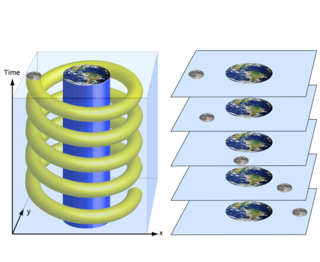
I think of the two viewpoints as the different perspectives on reality that a frog and a bird might take. The bird surveys the landscape of reality from high “above,” akin to a physicist studying the mathematical structure of spacetime as described by the equations of physics. The frog, on the other hand, lives inside the landscape surveyed by the bird. Looking up at the moon over time, the frog sees something like the right panel in the figure, “The Moon’s Orbit”: Five snapshots of space with the Moon in different positions each time. But the bird sees an unchanging spiral shape in spacetime, as shown in the left panel.
For the bird—and the physicist—there is no objective definition of past or future. As Einstein put it, “The distinction between past, present, and future is only a stubbornly persistent illusion.” When we think about the present, we mean the time slice through spacetime corresponding to the time when we’re having that thought. We refer to the future and past as the parts of spacetime above and below this slice.
More here.
Shahzia Sikander’s animated art evokes worlds of uncertainty
Sebastian Smee in the Boston Globe:
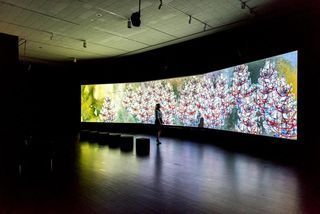
The film is derived from Sikander’s own paintings in watercolor, gouache, and ink. Their morphing forms, drenching colors, and disruptive details are lent added life and meaning by a haunting soundtrack. Produced by Sikander and the composer Du Yun, this audio helps steer us through the visuals. It shifts between the sounds of a bustling market, words intoned by three contemporary poets from Sharjah, and evocative music.
“Parallax” — the word describes two views of the same thing which are both real and yet incommensurable — is a work that asks to be experienced, then parsed, then experienced again. The middle part, the interpreting stage, can feel like hard work: Sikander’s struggles to give her work “relevance” can veer off, at times, into a free-associative gush.
But the work itself defeats objections, simply because it is so visually and acoustically captivating.
More here.
Sunday Poem
And the soul, if she is to know herself,
must look inside the soul —PlatoAnd the Soul
And the soul, if she is to know herself
must look into the soul and find
what kind of beast is hiding.And if it be a horse, open up the gate
and let it run. And if it be a rabbit
give it sand dunes to disappear in.And if it be a swan, create a mirror image,
give it water. And if it be a badger
grow a sloping woodland in your heart.And if it be a tick, let the blood flow
until it’s sated. And if it be a fish
there must be a river and a mountain.
And if it be a cat, find some people
to ignore, but if it be a wolf,
you’ll know from its restless wayof moving, if it be a wolf,
throw back your head
and let it howl.by Kim Moore
from The art of falling
Seren Books, 2015
NOTES ON A VOICE: ARTHUR CONAN DOYLE
Bee Wilson in More Intelligent Life:

Golden rule
Use energetic verbs to add urgency to plots that could seem static. Holmes never stands up if he can spring to his feet. He also grasps, thrusts, jerks and tosses. Watson even “ejaculates” when excited. The innocence adds to the sense of adventure.
Key decisions
1. Conjuring up 221B Baker Street, a masculine setting, far from family life, but cosy. So many of the stories begin and end here. We may have been alarmed by psychotic stepfathers or Ku Klux Klan vendettas, but 221B is still there.
2. Hinting at a vast Holmesian hinterland, as in “the singular tragedy of the Atkinson brothers at Trincomalee”. The endearing zealots who try to flesh out the back story are missing the point. To hear of Holmes’s monograph “Upon the Distinction Between the Ashes of the Various Tobaccos” is thrilling. To plough through it would be dull.
More here.
Saturday, October 3, 2015
What ‘Black Lives’ Means in Britain
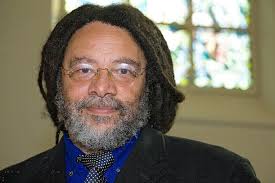
George Yancy interviews Paul Gilroy in The NYT's The Stone:
George Yancy: In a review of the 2013 movie “12 Years a Slave,” you wrote that neoliberalism — the unquestioning faith in free market values taken to ideological extremes — essentially ignores the existence of systemic racism, and presents it as “anachronistic.” This worldview, which so many of us in the West confront in society, you wrote, “decrees that racism no longer presents a significant obstacle either to individual success or to collective self-realization.” This made me think of, among other things, the killing in April of Walter Scott, a black man who was shot in the back eight times by a white police officer in Charleston, S.C. Obviously, there is nothing anachronistic about American racism. It is alive and well. From your perspective in Britain, how do you understand events like the Scott killing?
Paul Gilroy: I don’t come to the United States very often but I happened to be visiting when Walter Scott was shot by another trigger-happy police officer. I was angry and upset. I hope I don’t need to emphasize that I am a firm supporter of the movement that has arisen in response to this sequence of killings exposed by the ubiquity of the camera phone and the communicative resources of social media. Britain isn’t a gun-loving or -toting nation. Racism in our country doesn’t operate on the same scale as the racial organization of law and sovereign power in the United States, but our recent history also includes a long list of black people who’ve lost their lives following contact with the forces of law and order. Similarly, our police and their various private proxies have never been held to account for those deaths, so this is very familiar ground. Police in many polities can kill with impunity, and racial hierarchy augments their essentially permissive relationship with the law. The officer in this case was charged with murder. We will have to see whether he is found guilty. That would be a very rare outcome indeed.
Of course, to say that neoliberalism presents racism as anachronistic was not to say that racism is anachronistic. Confronting racism is a timely, urgent matter. The casual killing of black people appears to be a pursuit that originated in an earlier phase of American history. In his epochal analysis of historical and cultural process, the prolific Welsh novelist and academic Raymond Williams drew an important distinction in the way that social and cultural formations develop. Drawing upon him, we can say that we live with neoliberalism but it might not yet be fully dominant. There is certainly worse to come. Neoliberalism could still be emergent, while what appears to be the casual habit of murdering people who come into contact with the police might belong to its prehistory and could be considered either dominant or residual, depending on your point of view.
More here.