
Steve Stewart-Williams at The Nature-Nurture-Nietzsche Newsletter:
 [SSW: The next quote is Pinker’s rebuttal of a common response to Judith Rich Harris’s claim that parents have little impact on their kids.] “‘So you’re saying it doesn’t matter how I treat my children?’ What a question! Yes, of course it matters… First, parents wield enormous power over their children, and their actions can make a big difference to their happiness… It is not OK for parents to beat, humiliate, deprive, or neglect their children, because those are awful things for a big strong person to do to a small helpless one… Second, a parent and a child have a human relationship. No one ever asks, ‘So you’re saying it doesn’t matter how I treat my husband or wife?’ even though no one but a newlywed believes that one can change the personality of one’s spouse. Husbands and wives are nice to each other (or should be) not to pound the other’s personality into a desired shape but to build a deep and satisfying relationship.”
More here.
Enjoying the content on 3QD? Help keep us going by donating now.
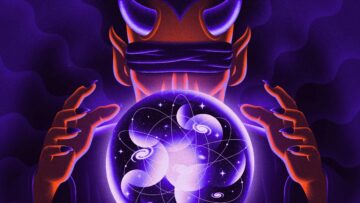 The French scholar Pierre-Simon Laplace crisply articulated his expectation that the universe was fully knowable in 1814, asserting that a sufficiently clever “demon” could predict the entire future given a complete knowledge of the present. His thought experiment marked the height of optimism about what physicists might forecast. Since then, reality has repeatedly humbled their ambitions to understand it.
 We can give ourselves far, far more than Donald Trump can ever take away, but it will—it will take extraordinary efforts. It won’t be business as usual. We will have to do things we haven’t imagined before, at speeds we didn’t think possible. […] I know, I know that these are dark days, dark days brought on by a country we can no longer trust. We are getting over the shock, but let us never forget the lessons: we have to look after ourselves and we have to look out for each other. We need to pull together in the tough days ahead.
 T
T What do a mobile shooting game, a nuclear power plant, and a local Chinese government office have in common? In the past two months, they have all tried incorporating DeepSeek’s R1
  Given the chance to become a movie director in Hollywood or a professor of philosophy at Harvard, I imagine very few of us would choose the academic life. The money and fame of being a movie director are far more tantalizing than teaching Plato, Kant, or Simone de Beauvoir. Terrence Malick chose to become a movie director instead of a philosophy professor, but not for the reasons you might think. It was not money and fame that convinced him, but the inability of philosophy courses to help “him understand himself and his place in the order of the cosmos” as Martin Woessner explained in a
  Relying on an experienced team of scientists and $200 million in initial funding, Lila has been developing an A.I. program trained on published and experimental data, as well as the scientific process and reasoning. The start-up then lets that A.I. software run experiments in automated, physical labs with a few scientists to assist.
 The early days of the second Trump Administration have been greeted with both shock and a search for lessons from history. Journalists have turned to the Nixon Administration’s attempts to “impound” congressionally allocated funds as both a precedent for Trump’s actions and evidence of their illegality. The rollback of DEI and the targeted firings of women and Black leaders across the military and the civil service is redolent of the southern “Redemption” that brought Jim Crow to power in the 1870s and 1880s after the end of Reconstruction. Notably absent in many of these discussions is the last time mass firings and large-scale workplace intimidation occurred in the federal government: the McCarthy Era and the Second Red Scare of the late 1940s and early 1950s.
 Talk about truth in advertising: MAYHEM is its own charm offensive, a massive attack of good vibes. It is a project designed to remind listeners why they fell in love with her in the first place, before the jazz belting or the traditional singer-songwriter gravitas or movie stardom. Inspiration from fiancé Michael Polansky, entrepreneur and one of the album’s executive producers, to return to her pop roots prompted an internal survey—Gaga told EW that instead of seeking to reinvent her sound, “I started to think about what makes me me? What are my references? What are my inspirations?” MAYHEM, then, isn’t the sound of someone reheating her nachos on the sly and trying to pass them off as fresh—it’s a full-on cooking show devoted to the art of nacho-reheating.
 Ping-pong is not a game that lends itself well to chatter. It demands sharp focus, quick reflexes, and a light touch, and the dozen players who have gathered this Monday afternoon at PingPod, a table-tennis venue on West 99th Street, are locked in the wordless rhythms of the back-and-forth. Aside from the occasional “Nice spin!” or grunt of self-reproach, the room is filled with the hollow percussion of little white balls glancing off paddles, skipping over the tops of the black tables, and rattling across the floor.
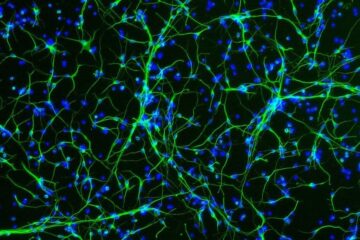 Women’s brains are superior to men’s in at least in one respect — they age more slowly. And now, a group of researchers reports that they have found a gene in mice that rejuvenates female brains. Humans have the same gene. The discovery suggests a possible way to help both women and men avoid cognitive declines in advanced age. The
  How irreversible, how irreparable is this process of mass vulgarization? Judging by the sphere of literature (the sphere closest to me), the path toward a reestablishment of high quality is not yet closed off, not yet taken from us, even if it will require a significant concentration of abilities and efforts. In principle, and according to the very nature of art—according to its flexibility and multifacetedness—the elite and the popular
 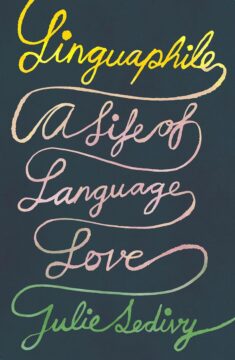 “If there is one feature that defines the human condition, it is language.” This pronouncement appears on the dust jacket of the new memoir by the linguist Julie Sedivy, Linguaphile: A Life of Language Love, but the idea dates back at least to Aristotle, who asserted that what distinguishes humans from other creatures is “logos,” our ability to think rationally and persuade others through language.
 Several years ago, I left my medical practice for a long vacation. On the morning of my first day back, my alarm went off. I pushed the button in and, for a few minutes, lay with the light off. Then, one at a time, I lowered my feet to the floor. The slow process that would transform me back into an anaesthesiologist had begun.