
Tracey Thorn at The New Statesman:
 Sly and the Family Stone achieved unprecedented success in the late Sixties, with number one records, a star turn at Woodstock, a cover on Rolling Stone magazine. Sly was not just a musical genius but a progressive mastermind, insisting that the band be multi-racial and made up of both men and women. Everything about them embodied the notion of inclusivity, of reaching towards a better world in which – without wanting to sound too blandly idealistic – all people could get along together. In a song like “Everyday People”, he made the impossible sound easy.
Perhaps overwhelmed by his own success, and threatened by the demands it placed on him, from the Seventies onwards he spiralled downwards into such heavy drug usage and unreliable behaviour that his work, and the very existence of the band, was undermined. The film paints an unflinching portrait of how this happened.
More here.
Enjoying the content on 3QD? Help keep us going by donating now.
 It’s a first date. The drink in your hand is mostly ice. You’ve talked about your jobs, your days, your dogs. The conversation lulls, and you can feel the question coming. “So,” the person across the table asks, “what do you do for fun?”
 If the world of Severance was real, your “innie” would be reading this article at work, oblivious to the fact that your “outie” intends to spend the evening scouring the internet for these very answers. While the Severance procedure—surgical implantation of a chip into the brain to create separate conscious agents with access to separate streams of memory and experience—is purely fictional at present, another brain-splitting surgical procedure, called a corpus callosotomy, is entirely real and has been in use since the 1940s. Instead of separating work life and personal life, this procedure separates the right and left hemispheres of the brain by severing the major line of communication between them, a thick bundle of nerves called the
  I had been on my way out for a smoke, and had stopped to hold the heavy bronzed steel and glass door for a woman whose long gray ponytail and colorful mismatched knitwear looked pleasingly hippie-ish.
 Even chatbots get the blues. According to a
 The new study,
  Wearable devices
 To forage is to look for things that aren’t lost. Birding, mushrooming, hunting agates in the wet sand at ebb tide or arrowheads in the sagebrush along the edge of a dry playa—everything I’ve spent time seeking has been right where it belonged, indifferent to whether it was found. If I failed to see birds when I could hear them or gather mushrooms when I could smell them, I considered it a failure to live in the right relation to my senses. The most apt phrase I know for the necessary state of attunement comes from psychoanalysis. The analyst, in Freud’s idealized therapeutic environment, cultivates “evenly hovering attention”—hard to cultivate, harder to maintain, no matter how early one starts.
 You know that creepy phenomenon where some people remember historic events differently than others? Like when people thought the classic kid’s book was called the “Berenstein Bears” instead of its actual title, the “Berenstain Bears.” Yep, this weird event is called the Mandela Effect.
 When I’m birdwatching, I have a particular experience all too frequently. Fellow birders will point to the tree canopy and ask if I can see a bird hidden among the leaves. I scan the treetops with binoculars but, to everyone’s annoyance, I see only the absence of a bird.
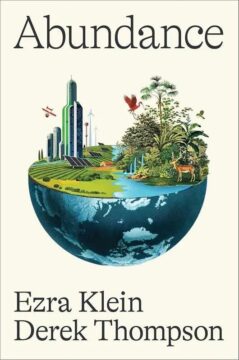 I’ve been waiting a long time for this book. Late in 2021, Ezra Klein wrote a New York Times op-ed titled “
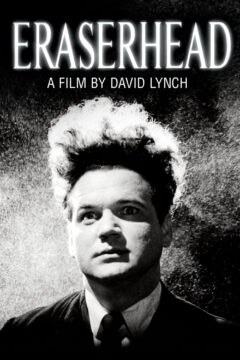 I saw Eraserhead in Providence in late 1979, I think, and I suspect it was at the Avon on Thayer Street. I liked cheeseball, poorly-constructed horror films in those days and I think Lynch’s film was being sold as midnight cult film fare, a more horrifying Rocky Horror Picture Show. So I went. At a similar moment, in undergraduate school at Brown University, I was also taking, or had just taken, Keith Waldrop’s survey course on this history of the silent film, which had offered me my first interaction with Bunuel and Dali’s Un Chien Andalou. In my recollection these experiences are utterly conjoined. Like the Bunuel film, Eraserhead scared me very thoroughly—it was merciless and unforgiving and also very funny—and likewise it established in my mind a set of filmic values (for which Un Chien Andalou was also partly responsible), antithetical to the barbarous Hollywood values, and from these I never really strayed: 1) cheap is fine, 2) black and white tells you some things, 3) good sound design is crucial, 4) non-actors are very often better than actors, 5) subjectivity is in a circular container, and thus the reiterations, 6) linearity in storytelling is a con, and 7) when in doubt stick a lady in a radiator and have her sing.