
Siddhartha Mukherjee in The New York Times:
 Covid was a privatized pandemic. It is this technocratic, privatized model that is its lasting legacy and that will define our approach to the next pandemic. It solves some problems, but on balance it’s a recipe for disaster. There are some public goods that should never be sold. Dr. Gounder checked off the basic mechanisms by which public health experts confront a pandemic: They create systems to understand and track its cause and spread; they identify the people most at risk; they deploy scalable mechanisms of protection, like air and water sanitation; they distribute necessary tools, such as vaccines and protective gear; they gather and communicate accurate information; and they try to balance individual freedoms and mass restrictions.
In the case of Covid, each of these responsibilities became increasingly relegated to the private sphere. In one of President Trump’s first national speeches about Covid, he told the nation, “You’re going to be hearing from some of the largest companies and greatest retailers and medical companies in the world.” And so we did.
As the new administration engulfs Washington, we are witnessing the further, and perhaps final, phase of this retreat. In its first weeks, the Trump administration announced far-reaching cuts in the Centers for Disease Control and Prevention as well as reportedly severe restrictions on the kind of research its employees can conduct. It moved to dismantle the U.S.A.I.D., even though the agency funds crucial health efforts around the world, including an early detection system for epidemics. The president proposed slashing funding for medical research at universities. And of course, to lead the Department of Health and Human Services, he chose Robert F. Kennedy Jr., who might have done more than anyone else alive to recast the miracle of vaccines as a dark and dangerous conspiracy.
More here.
Enjoying the content on 3QD? Help keep us going by donating now.

 In the introduction to his latest book, How to Feed the World, Vaclav Smil writes that “numbers are the antidote to wishful thinking.” That one line captures why I’ve been such a devoted reader of this curmudgeonly Canada-based Czech academic for so many years. Across his decades of research and writing, Vaclav has tackled some of the biggest questions in energy, agriculture, and public health—not by making grand predictions, but by breaking down complex problems into measurable data.
 ELAINE MAY DIDN’T SET OUT to become a director. What she really wanted to do was write. Her first film, A New Leaf, came about partly because it was 1968 and Paramount knew it would look good to hire a woman director. And partly because May wouldn’t sell her script without being guaranteed director approval—the only way to ensure her work didn’t get turned into something else entirely. The studio said no but told her she could direct the film herself; they also wouldn’t let her cast the female lead, but the part was hers if she wanted it. As May tells it, she had been offered $200,000 for the script alone, but as writer-director-star, she received just a quarter of the original fee. “You can’t expect to get that much the first time you direct,” her manager explained. Charles Bluhdorn, the industrialist who owned Paramount, told May that he was going to make her the next Ida Lupino. On the first day of shooting, when the crew asked May where she wanted the camera, she couldn’t find it. “I began sort of on one foot,” May remembered, “and just continued that way.” It was a fitting start for a woman who had become famous for improvising.
 In March 2019, heavy rains in California led to a brilliant carpet of orange poppies in Walker Canyon, part of a 500,000-acre habitat reserve in the Temescal Mountains southeast of Los Angeles. Run by a state conservation agency, the reserve was mainly a local attraction until a twenty-four-year-old Instagram and YouTube influencer with tens of thousands of followers posted two selfies of herself amid the poppies. The result, as technology critic Nicholas Carr explains in his book Superbloom (named after the viral hashtag #superbloom), brought a Woodstock-size influx of selfie-seekers who “clogged roads and highways,” “trampled the delicate flowers,” and in general “offered a portrait in miniature of our frenzied, farcical, information-saturated time.”
 ‘I assume that the reader is familiar with the idea of extra-sensory perception … telepathy, clairvoyance, precognition and psycho-kinesis. These disturbing phenomena seem to deny all our usual scientific ideas … Unfortunately the statistical evidence, at least for telepathy, is overwhelming … Once one has accepted them it does not seem a very big step to believe in ghosts and bogies.’
 T
T C
C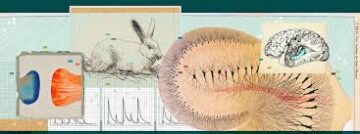 On a rainy day in July 2024, Tim Bliss and Terje Lømo are in the best of moods, chuckling and joking over brunch, occasionally pounding the table to make a point. They’re at Lømo’s house near Oslo, Norway, where they’ve met to write about the
  Since Sir Francis Galton coined the phrase “nature versus nurture” 150 years ago, the debate about what makes us who we are has dominated the human sciences.
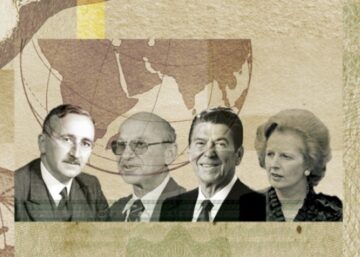 If critique could kill, neoliberalism would long be dead. So far, however, neither decades of intellectual opposition from the left and right nor the past decade of populist politics has done more than erode some measure of neoliberalism’s ideological preeminence. Talk from the right of “pro-family” policies, such as tax breaks and subsidies for having children, or moves by the Biden administration to secure domestic manufacturing of critical high-technology goods may hearten neoliberalism’s foes (even as they further blur the ideological map of American politics). Neither, however, offers anything like a consensus to replace the vision that, since the crises of the 1970s, has, with whatever degree of discontent, guided our collective thought and action.
 An Australian man in his forties has become the first person in the world to leave hospital with an artificial heart made of titanium. The device is used as a stopgap for people with heart failure who are waiting for a donor heart, and previous recipients of this type of artificial heart had remained in US hospitals while it was in place.