Rachel Wetzler at Artforum:
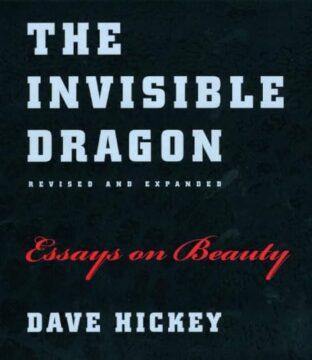 Writing in 1993, the late critic Dave Hickey described beauty as a kind of dirty word in the art world, believed to be hopelessly tainted by the market: “Beautiful art sells. If it sells itself, it is an idolatrous commodity; if it sells something else, it is a seductive advertisement.” Perhaps the clearest sign of beauty’s shifting fortune is the rehabilitation of Hickey’s own critical reputation. In his introduction to the 2023 reissue of his 1993 collection The Invisible Dragon: Essays on Beauty, he describes the paradoxical combination of renown and revulsion with which his work was met: “In the Dragon’s wake,” he writes, “the endowed lecturer was deposited unceremoniously at a Ramada Inn beside an empty highway and left to dine out of the candy machine.” (Indeed, I recall being assigned an essay from the book in a methods seminar during my first semester of graduate school back in 2010, where it was cast as a brash and unserious provocation.) But returning to The Invisible Dragon now, in anticipation of the new collection of his writings Feint of Heart, posthumously published by David Zwirner Books this past September, I wonder if he wasn’t on to something. For Hickey, the invocation of beauty didn’t represent a conservative retrenchment, but an appealing anarchy: It directly addresses itself to the beholder, requiring neither interpretive intermediaries nor ameliorative social purpose.
more here.
Enjoying the content on 3QD? Help keep us going by donating now.
 No part of our body is as perishable as the brain. Within minutes of losing its supply of blood and oxygen, our delicate neurological machinery begins to suffer irreversible damage. The brain is our most energy-greedy organ, and in the hours after death, its enzymes typically devour it from within. As cellular membranes rupture, the brain liquifies. Within days, microbes may consume the remnants in the stinky process of putrefaction. In a few years, the skull becomes just an empty cavity.
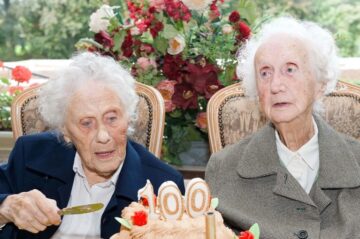 Scientists in Boston, Massachusetts have made reprogrammed stem cells from the blood of centenarians. They plan to share the cells with other researchers to better understand the factors that contribute to a long and healthy life. Early experiments are already providing insights on brain ageing. Centenarians offer an opportunity to study
 On the evening of October 16, 1984, the body of four-year-old Grégory Villemin was pulled out of the Vologne river in Eastern France. The little boy had disappeared from the front garden of his home in Lépanges-sur-Vologne earlier that afternoon. His mother had searched desperately all over the small village, but nobody had seen him.
 How autonomous and semi-autonomous technology will operate in the future is up in the air, and the U.S. government will have to decide what limitations to place on its development and use. Those decisions may come sooner rather than later—as the technology advances, global conflicts continue to rage, and other countries are faced with similar choices—meaning that the incoming Trump administration may add to or change existing American policy. But experts say autonomous innovations have the potential to fundamentally change how war is waged: In the future, humans may not be the only arbiters of who lives and dies, with decisions instead in the hands of algorithms.
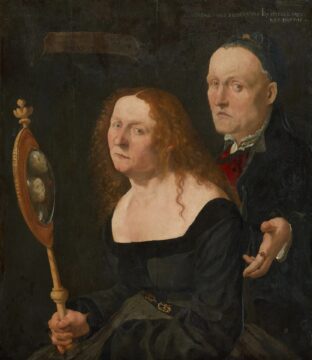 There are paintings that push beyond the confines of their chronology, with auras that have little to do with the orderly genre from which they emerge or even the painters who painted them. Obliterating the frames around them, they break through the fourth wall, headed straight for the viewer’s psyche like a parasite—settling into that part of the mind where we read and recognize ourselves.
 S
S It started, like many good things, as a joke. NBC was filming a preview of its 1984 lineup, and Selma Diamond, a comedian in her sixties, had been tasked with introducing “Miami Vice,” a flashy affair of Ferraris, cocaine cartels, and designer sports jackets. She pretended to misunderstand. “ ‘Miami Nice’?” At last, a show about retirees, with their mink coats and cha-cha lessons. She got a laugh. And some execs thought it might not be a terrible idea.