
Iris van Herpen. Water Splash Dress. From the Crystallization Collection, 2013.
PET plastic, acrylic spray.
Photograph by Sughra Raza on March 6, 2016 at Boston's MFA.

Iris van Herpen. Water Splash Dress. From the Crystallization Collection, 2013.
PET plastic, acrylic spray.
Photograph by Sughra Raza on March 6, 2016 at Boston's MFA.
by Brooks Riley
David Rieff in The Guardian:

Friends of mine who had worked in the former Yugoslavia during the Croatian and Bosnian wars had similar experiences in Zagreb and Sarajevo, though the dates in question were different. It seemed as if the “sores of history”, as the Irish writer Hubert Butler once called them, remained unhealed more than half a millennium later – at least in the desperate, degraded atmosphere of that time and place.
And yet, while alert to the possibility that history can be abused, as it unquestionably was in the Balkans in the 1990s, most decent people still endorse George Santayana’s celebrated dictum: “Those who cannot remember the past are condemned to repeat it.” The consequence of this is that remembrance as a species of morality has become one of the more unassailable pieties of the age. Today, most societies all but venerate the imperative to remember. We have been taught to believe that the remembering of the past and its corollary, the memorialising of collective historical memory, has become one of humanity’s highest moral obligations.
But what if this is wrong, if not always, then at least part of the time?
More here.
From Science Daily:

But an in-depth examination of the data by Daniel Gilbert (Edgar Pierce Professor of Psychology at Harvard University), Gary King (Albert J. Weatherhead III University Professor at Harvard University), Stephen Pettigrew (doctoral student in the Department of Government at Harvard University), and Timothy Wilson (Sherrell J. Aston Professor of Psychology at the University of Virginia) has revealed that the OSC made some serious mistakes that make this pessimistic conclusion completely unwarranted:
The methods of many of the replication studies turn out to be remarkably different from the originals and, according to Gilbert, King, Pettigrew, and Wilson, these “infidelities” had two important consequences.
First, they introduced statistical error into the data which led the OSC to significantly underestimate how many of their replications should have failed by chance alone. When this error is taken into account, the number of failures in their data is no greater than one would expect if all 100 of the original findings had been true.
Second, Gilbert, King, Pettigrew, and Wilson discovered that the low-fidelity studies were four times more likely to fail than were the high-fidelity studies, suggesting that when replicators strayed from the original methods, they caused their own studies to fail.
More here.
Keaton Patti in McSweeney's:
It was all lies.
Everything that I put forth as true in my book was fabricated, and I can’t keep the secret balled up inside of me anymore. I’m letting it all out. I won’t continue to sit back and watch parents use my bullshit shit book to teach their children that their bodily functions are normal and healthy. It’s not right.
I made it all up.
Everyone Poops? Looking back, it was such an absurd blanket statement that I can’t believe I got away with it. Everyone?EVERYONE? Most people, probably, but everyone? Nobody can know that. Not me, not you, not even God. Yet that didn’t stop me from writing that I poop, you poop, and God poops every Sunday and on the major holidays. It was crazy that nobody flushed out the truth.
I fudged the data.
“An elephant makes a big poop.”
“A mouse makes a tiny poop.”
All nonsense. For all I know it’s the other way around.
More here.
Andrew Bacevich in Moyers & Company:

In contrast to the universally reviled Shkreli, however, Trump has cultivated a mass following that appears impervious to his missteps, miscues and misstatements. What Trump actually believes — whether he believes in anything apart from big, splashy self-display — is largely unknown and probably beside the point. Trumpism is not a program or an ideology. It is an attitude or pose that feeds off of, and then reinforces, widespread anger and alienation. The pose works because the anger — always present in certain quarters of the American electorate but especially acute today — is genuine. By acting the part of impish bad boy and consciously trampling on the canons of political correctness, Trump validates that anger. The more outrageous his behavior, the more secure his position at the very center of the political circus. Wondering what he will do next, we can’t take our eyes off him. And to quote Marco Rubio in a different context, Trump “knows exactly what he is doing.”
Targeting Obama’s Presidency
There is a form of genius at work here. To an extent unmatched by any other figure in American public life, Trump understands that previous distinctions between the ostensibly serious and the self-evidently frivolous have collapsed. Back in 1968, then running for president, Richard Nixon, of all people, got things rolling when he appeared on Laugh-In and uttered the immortal words, “Sock it to me?” But no one has come close to Trump in grasping the implications of all this: in contemporary America, celebrity confers authority. Mere credentials or qualifications have become an afterthought. How else to explain the host of a “reality” TV show instantly qualifying as a serious contender for high office?
More here. (Thanks to Nermeen Shaikh)
Nancy Owano in PhysOrg:

Not just physical print forms but even digital forms could benefit from AR. Harris said, “In some ways, digital has been “a frozen print experience,” in that the reader is often looking at the same thing in both print and digital versions.” Once you add AR, you are experiencing movement, extra sound, “a lot of extra qualities” with the content. Reading behavior in the AR vein might involve people using their phones or tablet apps to scan their physical page and see extra elements pop up. You are not throwing your printed book into the dustbin to read the same online. Instead, “You use your device to discover more content. The content is digitally appealing and has stuff you can manipulate, but you need the actual book in order to do it.”
More here.
Self-Portrait
My childhood is all memories of a patio in Seville,
A orchard in the light where lemons ripened every fall,
My life as a young man- some twenty years about Castille,
My adult life- a few things I would rather not recall.
I've never gone Lothario or played at Don Juan at parties.
It's obvious from my slovenly apparel that I can't.
Still, I endured the arrow meted out to me by Cupid
And loved as much as women's hospitality could grant.
Though drops of leftist rebel blood may pulse throughout my body,
My verse has welled forth from a peaceful spring through all my days
More so than the good boys who follow all the holy strictures,
I stand as a good man, and in the good sense of the phrase.
I give myself to beauty. In contemporary fashion
I've cut some classic roses from the garden of Ronsard
But I've no love for make-up of the Modernist beauticians
And do not flock with birds that sing in high-flown avant-garde.
And I dislike the balladry of hollow lovelorn tenors,
The cricket-choirs and tweety-birds who warble at the moon.
I cock my ear to try and tell the voices from the echos,
And of the many voices I but listen to the one.
Maliha Diwan in Dawn:
Karachi Raj encapsulates the different personas of the metropolis: the reader is taken from Regal Chowk to the heart of the film industry, from the Basti to the inner workings of KU. Characters from all walks of life populate the novel: NGO-wallahs, philanthropists, socialites, the Pakistani president, a feisty rickshaw-wallah, construction workers, shopkeepers, a housewife, and an anthropologist, but in many ways the central character is the city itself. How did you go about writing this novel? And what was the inspiration behind it?

What is the unique nature of Karachi’s optimism and energy? Where does Karachi succeed in fulfilling its citizens’ dreams for a better life and where does it fail? What is the hierarchy of values and how does it get translated into distribution of resources and rewards? What is special about Karachi’s history — for example as the locus of much of the migration that occurred after Partition — and how does this illuminate the trajectory of other cities in comparable situations? This is what I was after in depicting the various physical manifestations of the city.
More here.
Carl Zimmer in the New York Times:

There is more at stake here than Dr. Stajic’s retirement. The cutting-edge technique at the center of this legal dispute, called low copy number DNA analysis, has transformed not just police work, but also a range of scientific fields including cancer biology, in vitro fertilization, archaeology and evolutionary biology. Yet some of the technique’s applications have triggered scientific controversy.
The medical examiner’s office has become a strong advocate for the technique. It is the only public lab in the United States that uses low copy number DNA to develop profiles for use in criminal cases. But experts have long warned that investigators must take particular care in interpreting these tests: analyzing so few DNA molecules can lead to errors.
More here.
Chris Hedges in TruthDig:

Many writers on socioeconomic policy have warned that the old industrialized democracies are heading into a Weimar-like period, one in which populist movements are likely to overturn constitutional governments. Edward Luttwak, for example, has suggested that fascism may be the American future. The point of his book The Endangered American Dream is that members of labor unions, and unorganized unskilled workers, will sooner or later realize that their government is not even trying to prevent wages from sinking or to prevent jobs from being exported. Around the same time, they will realize that suburban white-collar workers—themselves desperately afraid of being downsized—are not going to let themselves be taxed to provide social benefits for anyone else.
At that point, something will crack. The nonsuburban electorate will decide that the system has failed and start looking around for a strongman to vote for—someone willing to assure them that, once he is elected, the smug bureaucrats, tricky lawyers, overpaid bond salesmen, and postmodernist professors will no longer be calling the shots. A scenario like that of Sinclair Lewis’ novel It Can’t Happen Here may then be played out. For once a strongman takes office, nobody can predict what will happen. In 1932, most of the predictions made about what would happen if Hindenburg named Hitler chancellor were wildly overoptimistic.
One thing that is very likely to happen is that the gains made in the past forty years by black and brown Americans, and by homosexuals, will be wiped out. Jocular contempt for women will come back into fashion. The words “nigger” and “kike” will once again be heard in the workplace. All the sadism which the academic Left has tried to make unacceptable to its students will come flooding back. All the resentment which badly educated Americans feel about having their manners dictated to them by college graduates will find an outlet.
Fascist movements build their base not from the politically active but the politically inactive, the “losers” who feel, often correctly, they have no voice or role to play in the political establishment. The sociologist Émile Durkheim warned that the disenfranchisement of a class of people from the structures of society produced a state of “anomie”—a “condition in which society provides little moral guidance to individuals.” Those trapped in this “anomie,” he wrote, are easy prey to propaganda and emotionally driven mass movements.
More here.
Hope Jahren in The New York Times:
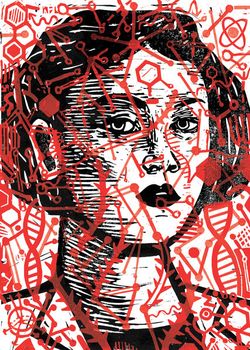
…The scientific method may be impartial, but the scientific culture is not. From grad-school admission on up through tenure, every promotion can hinge on a recommendation letter’s one key passage of praise, offered — or withheld — by the most recent academic adviser. Given the gender breakdown of senior scientists, most often that adviser is a man. Perhaps she decides to ignore this first email — and this is often the case — knowing that she has little to gain, and a lot to lose, from a confrontation. Once satisfied with her tendency toward secrecy, the sender then finds a way to get her alone: invites her to coffee, into his office, out for some ostensibly group event. At said meeting he will become tentatively physical, insisting that if people knew, they just wouldn’t understand. At this point, any objection on her part wouldn’t just be professionally dangerous, it would seem heartless — and she’s not a horrible person, is she?
More here.
Max Nelson in The Paris Review:

These lines suggest the tone and shape of a literary genre: a lament in which sorrow coexists with requests for divine vengeance. By placing them at the end of The Life and the Adventures of a Haunted Convict—acquired by Yale’s rare-book library in 2009 and published last month with helpful editorial comments by the scholar Caleb Smith—Reed was making a strong suggestion about the kind of book he’d written. The text itself, however, is an amalgam of genres that wouldn’t seem to combine: a picaresque memoir in which sermons jostle up against pulpy adventure anecdotes; dutiful recollections of fact move with little notice into fantasies and dreams; radical gestures of black empowerment share the page with the coarsest kinds of racial caricatures; and assertive denunciations of the prison system coexist with passages of meek and guilty self-recrimination. It’s puzzling to make sense of these apparent contradictions—to decide what Reed meant his book to do.
More here.

If the American writer Constance Fenimore Woolson is remembered at all, it’s mostly for her dresses. And these weren’t just any dresses. These were the dark silk ones that, after her sudden death, Henry James presumably tried to drown in a Venetian lagoon, hurling them from his gondola and jabbing them with a pole to keep them from rising. But he failed, and to Woolson’s admirers his failure is symbolic: You can’t keep this good writer down.
Woolson’s latest advocate is Anne Boyd Rioux, a professor of English at the University of New Orleans, whose very reliable “Constance Fenimore Woolson: Portrait of a Lady Novelist” resurrects her subject as a pioneering author who chose a literary career over the more conventional options of marriage and motherhood, a choice made in spite of the debilitating depressions that plagued her and her family.
Woolson’s bookish father, a prosperous New England stove manufacturer, was an insecure man whose deafness intensified his inherent melancholy, and the deaths of three of her older sisters, weeks after Woolson’s birth in 1840, so devastated her mother that she never recovered. In the aftermath, the Woolsons moved to Cleveland, but more family tragedy — the sudden deaths of two more sisters, shortly after they married — persuaded the 13-year-old Woolson to fear “the ways women gave up their health and even their lives to love and marriage.”
more here.

Though Hollow Heart is centered on the death of Dorotea Giglio, the narrative does not much rely on or emphasize the specificity of its contemporary Sicilian setting, or even in many ways the details of Dorotea’s life or character. This may be the point: “When they’re alive,” Di Grado writes, “people are so free that they need boundaries . . . the rip-off comes when you find out the truth. There’s no wall, no dividing line, no boundary, no end. . . . I’m equal to everything.” However, this reading is somewhat undercut by the complex relationships maintained by individual dead to their bodies, as well as the individuality maintained by Dorotea in her letters to fellow dead and her relationship with her mother. Whether or not this is intentional by Di Grado (and one could certainly argue that it is), it is probably best not to look to Hollow Heart for a final message or cleanly constructed metaphysical frameworks. Its aim is to provide an aesthetic experience of the contemplation of death, rather than an argued treatise on the afterlife.
Despite certain small issues it poses to the book’s structure, the mother-daughter component is perhaps the most compelling element of the story. Reminiscent of Nobel laureate Elfriede Jelinek’s The Piano Teacher, Dorotea and Greta Giglio’s relationship is characterized by troubled obsession and a tendency toward the psychoanalytic. A largely unsuccessful children’s fashion photographer, Greta spent much of Dorotea’s childhood trying to “make her disappear entirely” through stylized shots with long exposure times, causing the young Dorotea’s features to blend into her surroundings—notably similar to the blurring of identity which she describes after her death.
more here.

Alongside Jean-Jacques Rousseau, Thomas Hobbes, John Stuart Mill and John Rawls (the author studied at Harvard with the latter, whose ideas on the primacy of justice inform the book), Wenar cites an African ruler who features in many a polemic against the oil business. Teodoro Obiang Nguema Mbasogo is the embodiment of what theorists call the “resource curse”, the cruel law that condemns those born in the states richest in natural wealth to be among the most wretched of the earth.
Obiang seized power in 1979, since then Equatorial Guinea has been his fief. The stories of what goes on in Black Beach prison alone are enough to convey the hideousness of his rule. The fortune amassed by his son — who serves, if that is the right word, as vice-president of a nation where one in 10 children dies before the age of five — includes Michael Jackson’s crystal-encrusted glove and a fleet of luxury cars.
Wenar argues that Obiang, like his fellow kleptocrats, has no just right to dispose of his county’s natural wealth. He calculates that more than half of the world’s oil production cannot currently be exported without violating property rights because the people who live where that crude is pumped — and to whom it rightfully belongs — are too cowed to have any meaningful say in decisions about their national patrimony. That goes for other extractive commodities too, such as the diamonds that sustained Charles Taylor’s onslaught in Sierra Leone and Liberia. If we agree, then “international oil and mining companies are flying, trucking and sailing away billions of dollars of stolen wealth every day”.
more here.