How the chili pepper got to China

Andrew Leonard in Nautilus:

ScreenHunter_1882 Apr. 24 21.40In 1932, the Soviet Union sent one of its best agents to China, a former schoolteacher and counter-espionage expert from Germany named Otto Braun. His mission was to serve as a military adviser to the Chinese Communists, who were engaged in a desperate battle for survival against Chiang Kai-shek’s Nationalists.

The full story of Braun’s misadventures in China’s Communist revolution is packed with enough twists and turns for a Hollywood thriller. But in the domain of culinary history, one anecdote from Braun’s autobiography stands out. Braun recalls his first impressions of Mao Zedong, the man who would go on to become China’s paramount leader.

The shrewd peasant organizer had a mean, even “spiteful” streak. “For example, for a long time I could not accustom myself to the strongly spiced food, such as hot fried peppers, which is traditional to southern China, especially in Hunan, Mao’s birthplace.” The Soviet agent’s tender taste buds invited Mao’s mockery. “The food of the true revolutionary is the red pepper,” declared Mao. “And he who cannot endure red peppers is also unable to fight.’ ”


Maoist revolution is probably not the first thing that comes to mind when your tongue is burning from a mouthful of Kung Pao chicken or Mapo Tofu at your favorite Chinese restaurant. But the unlikely connection underscores the remarkable history of the chili pepper.

More here.

Why liberal economists dish out despair

Gerald Friedman in Evonomics:

ScreenHunter_1881 Apr. 24 21.34When I conducted an assessment of Senator Bernie Sanders’ economic proposals and found that they could produce robust growth, the negative reaction among powerful liberal economists was swift and vehement. How much, I wondered, did this reflect personal disappointment being rationalized into a political economy of despair? Professional economists tend to embrace an economic theory that government can do little more than fuss around the edges. From that stance, what do they have to offer ordinary people for whom the economy is not working? Not a whole lot.

It has certainly been a rough seven years for the liberal economists in the Obama Administration. Economic recovery has been slow, the slowest in the post-World War II era. Ambitious programs for reform of social insurance programs (such as unemployment insurance) and for public investment have been scaled back, and back. Yes, there is much that these economists who served Obama can be proud of: more people have health insurance, and the economy did not collapse. But the constant slog must have taken a toll. Having experienced so many compromises and disappointments, perhaps it is easier to say to those who expect more that it just can’t happen. There is comfort in the Thatcherite phrase: There Is No Alternative (TINA).

More here.

Saturday, April 23, 2016

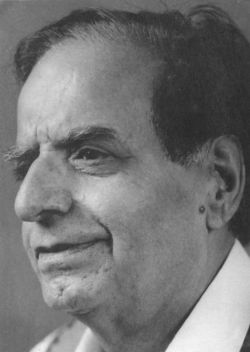
Renowned Urdu author Joginder Paul passes away

From the Times of India:

13006546_10209530910612759_7295453378866852087_nRenowned Urdu litterateur and author Joginder Paul passed away on Friday after a prolonged illness. He was 90.

Paul had been suffering from age-related illness and was hospitalized for some weeks.

He is survived by his wife Krishna, sons Sudhir and Sunit, and daughter Sukrita.

A large number of relatives, friends and admirers attended the last rites here.

Born on September 5, 1925 in Sialkot in present day Pakistan, Paul migrated to India at the time of Partition. His mother tongue is Punjabi, but his primary and middle school education was in Urdu medium.

He did his M.A. in English literature, which he taught until he retired as the principal of a post-graduate college in Maharashtra. Paul chose to put his creative expression in Urdu language, as he believed that Urdu is “not a language but a culture” and for him writing is to be in the culture. He was part of the Progressive Urdu Writers' Movement.

More here. And many readings of his work here. And here is a video interview.

[Joginder Paul was the father-in-law of occasional 3QD writer and friend, Ruchira Paul.]

The Gun Control We Deserve

Houston_Gun_Show_at_the_George_R._Brown_Convention_Center

Patrick Blanchfield in n+1:

AMERICA ALREADY HAS GUN CONTROL—all kinds of gun control. Start with the guns themselves: sawed-off shotguns are legal for general public ownership in Indiana; take one into Ohio and you’re looking at a felony charge. A pistol magazine that holds eleven rounds is a matter of indifference to Rhode Island; carry it into Connecticut and you’ve committed a crime. Even the definition of what makes a gun “loaded” differs from state to state. Or consider the laws governing concealed carry, which dozens of states have dramatically liberalized since the 1990s. In many states you don’t need to take a written test, sit through a safety video, or even prove you know how to fire a gun, let alone reliably hit a target, to be licensed to carry a concealed weapon. In other localities, you must do all of the above—and still you might be denied, because the criteria are black-box, subject to the discretion of the issuing authorities. In still other states you need no license at all: if you can buy a gun, you can carry it concealed. Complicating things further is a baroque network of reciprocity laws whereby some states recognize permits issued by others and issue permits to nonresidents. This landscape changes so rapidly that gun carriers who travel across state borders often rely on smartphone apps to alert them to local regulations.

Against this complex backdrop, the temptation to focus obsessively on particular interest groups and pieces of legislation—namely, the National Rifle Association (NRA) and the Second Amendment—is understandable. Despite the endless talk about both, the history and role of each may be somewhat different than you think. For nearly a century, the NRA focused on hunting and the cultivation of marksmanship in patriotic rapprochement with the US military and supported firearms registration laws and gun bans. The NRA’s emphasis on guns as tools for self-defense only really arose during the turbulent political and demographic upheavals of the 1960s and ’70s—as did its vehement rhetorical focus on the Second Amendment. As for the Amendment itself, things are also more complicated: whatever the status of the individual right to bear arms in the nation’s Constitution, an overwhelming number of state constitutions guarantee it in no uncertain terms. If the Second Amendment were to disappear tomorrow, the on-the-ground legal reality in forty-four states would remain the same.

The fiery debates over guns that regularly suck the air out of American public discourse rarely acknowledge these realities. This is in part because reckoning with an endlessly complicated mess of technical particularities, local oddities, and regional differences makes for poor national political theater.

More here.

Political Philosophy

9780199658015

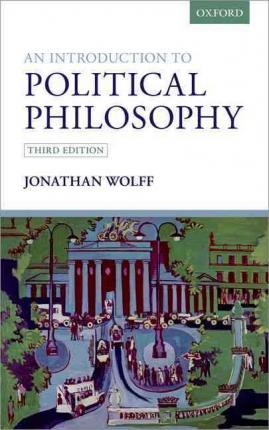
Richard Marshall interviews Jonathan Wolff in 3:AM Magazine:

3:AM: Poverty is a pressing concern and you’ve looked at the philosophical issues. Sen and Nussbaum want to change the conversation around poverty so we talk about ‘capability deprivation’ rather than low income. Do you agree with them? Won’t it make measuring poverty too vague to be useful in targeting its eradication – if that’s what we want?

JW: I am generally comfortable with the idea of talking about ‘capability deprivation’ although I do think there are complications with the notion of a ‘capability’ that many defenders of the capability approach brush under the carpet. Generally I do agree there is some case for trying to replace talk of poverty, understood as low income, with the more general idea of capability deprivation, because there are many ways in which people can be deprived of capabilities to function even if they are not poor on standard definitions (for example if they have a moderate income but are disabled, or victims of racial discrimination). But I don’t think it is a good idea to try to redefine poverty. First, poverty understood as low income is generally highly correlated with many forms of capability deprivation in any case; second, it is much more easy to measure; third, it provides a very easy to understand political target; and finally such a radical redefinition would cut the topic off from 100 years or more of excellent empirical research undertaken on the standard definition. So I would prefer to keep the concepts of “capability deprivation” and “poverty” apart.

3:AM: So what is poverty and does any definition pick out a distinct moral category that says that it is wrong?

JW: It is common to make a distinction between absolute poverty and relative poverty. Absolute poverty can be defined in various ways, but in my view the core idea is that it means having such a low command of resources that one’s basic health is threatened. To illustrate, if you cannot afford nutritious food, adequate clothing, and dry, warm, smoke-free accommodation, you have a very high chance of developing an illness that will shorten your life. Of course, we are talking averages and probabilities as you can live in absolute poverty and never suffer illness, or become ill, of course, even if wealthy, but this, still is the core idea. It doesn’t take a lot of moral or political philosophy to think that if a significant number of people in a society are living in avoidable absolute poverty, then there is a moral case to be answered. On some, theories, of course, some poverty is ‘deserved’. For myself, I don’t agree with those theories, but in any case the burden of proof will always be to show why it is deserved, against a presumption that on grounds of basic humanity no one should live in absolute poverty if it is avoidable.

Relative poverty is a different idea. It is often illustrated with an example from Adam Smith: that in the England of his day an ordinary artisan would be ashamed to appear in public without leather shoes or a linen shirt. The point is not that wearing wooden clogs or a shirt of flax, or whatever the alternative was, would damage your health. Rather it would, or at least could, damage your self-respect. The basic idea of relative poverty is not having enough to ‘fit in’ with what is normally expected in your society.

More here.

I Am Your Conscious, I Am Love: A paean 2 Prince

Prince

Hilton Als in Harper's (2012):

Jamie Foxx, dressed in a blue shirt with a satin sheen and dark trousers, traverses the stage, a pin spot following him as he follows his thoughts. “I’m not no fag,” he continues, almost bashfully. “But uh. I mean, he’s cute, he pretty . . . I just ain’t never seen no man that look like that. Just dainty and shit.” Beat. Hangdog expression. “I couldn’t look at him in his eyes.” Because “this little pretty bitch . . . came out with a little ice-skating outfit on, you know? With the boots sewn into the shit. And I’m like, That’s nice . . . I’m not gay. I’m just saying that’s nice.” More existential shrugging of the shoulders, turning away from the audience, embarrassment and confusion as Foxx’s desire attaches itself to a different, or rather unexpected, form. This is America, after all, where for sex to be sex it needs to be shaming. He flashes his goofy overbite. “I know you thinking—you thinking I’m gay,” Foxx says, more to his own heart and mind, perhaps, than to anyone in the audience. “I’m just saying I challenge any dude in here not to look in his eyes and feel some kind of shit . . . ’Cause he was pretty. He looked like a deer or something, or a fawn . . . I shouldn’t even be telling you this shit.” More laughter from the audience, more abashment from Foxx.

Then Foxx recalls how Prince started “talking with that shit”—adding a little audio to his distinctive visuals. Prince’s speaking voice—which Foxx’s audience may or may not know from a thousand and one uncandid interviews on VH1 and the like, or an awards show, or something—belies his slight frame: it’s deep and steady with few inflections. In any case, Foxx is spot-on when he imitates it. Foxx as Prince, utterly cool: “So how’s everything going?” Foxx as himself, his eyes downcast: “You know . . .” As Prince: “I heard you and LL [Cool J, the rapper who co-starred with Foxx in Oliver Stone’s Any Given Sunday (1999)] got into it . . . What do you think Jesus would have done in that situation?” Foxx, again as himself: “I don’t know. Knuckle up.” Laughter. And then, shaking off his Prince impersonation: “I glanced in his eyes once.” After a while, defiantly: “Okay, yeah. Okay, I was a fag for two seconds. But I wasn’t on the bottom of the shit, I was on top, don’t get it twisted . . . I’d have fucked the shit out of that motherfucker. That troubled me though, man . . . When I left, the security guard knew something was wrong with me. He was like, ‘What’s up playa? . . . You looked in his eyes, didn’t you?’ ” Foxx admits, sheepishly, that he did. He is so confused. Freeing his mind—will his ass follow? And then what? Will he be a fag, forever desperate to stare up into Prince’s slightly-lighter-than-the-color-of-Mercurochrome prettiness? Then Foxx asks the security guard if he’s ever looked into Prince’s eyes.

And one thinks, Looking into Prince’s eyes must be like looking at the world. Or, more specifically, the world of one black man loving another. How freaky is that? And who’s on top in that kind of mind fuck?

More here.

Janna Levin’s ‘Black Hole Blues’

0424-BKS-Cover-master315Maria Popova at The New York Times:

Central to LIGO’s success are its three original architects, known as the Troika: Rainer Weiss, the brilliant ruffian who invented the apparatus at the heart of LIGO; Kip Thorne, the revered astrophysicist and relativist with the wildly speculative yet mathematically precise mind, whose charisma saved the project from going under; and Ron Drever, the prickly Scottish genius considered a scientific Mozart — “a childlike spirit attached to a wondrous mind that just seemed to emanate astonishing compositions.” People, Levin intimates, are fragmentary but indivisible — they bring their aptitudes and their flaws to the work. Rigor and self-­righteousness often go in tandem, as do idealism and egotism. These scientists all contain multitudes.

Levin harmonizes science and life with remarkable virtuosity. As a boy, Drever made gadgets from bits of rubber tubing and sealing wax and built an entire television — possibly the only one in his Scottish village — on which locals watched the queen’s coronation. He carried this hacker spirit of zeal and frugality into his ingenious prototypes for LIGO. Thorne’s Mormon mother found her feminism incompatible with their faith, and the family broke with the church — the seedbed of the rebelliousness that made him a visionary scientist. Weiss’s youth in the golden age of high fidelity and his romance with a pianist catalyzed his obsession with making music easier to hear; he later envisioned an instrument to make the sound of space discernible. “LIGO covers the same frequency range as the piano,” he tells Levin.

These aren’t coincidences, Levin suggests as she dismantles the eureka convention of science, exposing the invisible, incremental processes that produce the final spark we call genius.

more here.

The luck factor: fortune’s role in our lives

K10663Jonathan Derbyshire at the Financial Times:

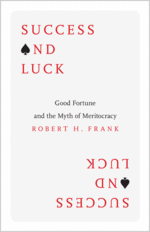
Frank’s argument in Success and Luck is easily summarised: the idea of meritocracy and the assumption that successful people get where they are solely by dint of their own efforts disguise the extent to which “success and failure often hinge decisively on events completely beyond any individual’s control”.

Take the case of Al Pacino. He has been at the top of his chosen field for so long that it’s hard to imagine an alternative history in which he did not succeed as an actor. Yet, Frank observes, Pacino owes his dazzling career to a “highly improbable early casting decision”: Francis Ford Coppola’s insistence, against the wishes of studio executives, that Pacino play Michael Corleone in the film adaptation of Mario Puzo’s novel The Godfather. The studio wanted Warren Beatty or Ryan O’Neal in the role, and only gave in when Coppola threatened to abandon the project. You might say that Pacino would have succeeded eventually anyway, but, as Frank notes, there are thousands of talented actors who simply never got the kind of break he owed to a tyro director in charge of his first big-budget film.

It is hard to think clearly about luck and success (although Frank makes a pretty good fist of doing so). This difficulty stems partly from the fact that we all share some very deep-rooted intuitions about concepts such as talent and entitlement or desert, which tend to collide with claims about the role that luck plays in our lives. Frank suggests, for instance, that it is “perfectly intelligible that most of us feel entitled to credit for possessing skills we did nothing to earn” — or at least for putting those skills to good use.

more here.

‘MONTAUK’ BY MAX FRISCH

MontaukJeff Waxman at The Quarterly Conversation:

There’s nothing terribly new about the confessional as a literary form. It can just as easily appear as swagger as it can an act of contrition, and this book has the flavor of both. And as a form, often in the guise of a personal essay, the confessional is having quite a moment. In the wake of the successful autoerotic exposures of Karl Ove Knausgaard’s multivolumeStruggles and the critically gorgeous self-scrutiny of Maggie Nelson’s more slenderArgonauts, there’s a contemporary appetite for the personal essay that has hardly been sated. And in the act of confession, there’s as much to be proud of in a debauched or dissolute life as there is to regret or repent. Lest the reader of this review fall into the trap most common for first-time encounterers of Frisch, this isn’t some kind of Swiss-intellectual misogynist rant, an I Hope They Serve Beer in Hell for the pretentious. It is very honestly self-interested and self-critical. It’s messy in the way that psychotherapy is messy, or that our unvarnished motives would be if the world could see them. It’s loving, in its way, and sadly aware of how much time has passed and how badly.

And I like the tendency in this kind of narrative to self-correct, to DAMN! oneself as Frisch does. To understand that the mistakes that we make are not just interpersonal, but a matter of style and substance. Frisch writes:

The morning sea beneath the deep clouds is the color of mother-of-pearl, the waves lifeless, the sun obscured. He finds it better to take off his shoes and walk barefoot, shoes in hand. Gulls over the empty beach, louder than any feeling, louder than the waves.

more here.

Revenge

At times … I wish
I could meet in a duel
the man who killed my father
and razed our home,
expelling me
into
a narrow country.
And if he killed me,
I'd rest at last,
and if I were ready—
I would take my revenge!

But if it came to light,
when my rival appeared,
that he had a mother
waiting for him,
or a father who'd put
his right hand over
the heart's place in his chest
whenever his son was late
even by just a quarter-hour
for a meeting they'd set—
then I would not kill him,
even if I could.

Likewise … I
would not murder him
if it were soon made clear
that he had a brother or sisters
who loved him and constantly longed to see him.
Or if he had a wife to greet him
and children who
couldn't bear his absence
and whom his gifts would thrill.
Or if he had
friends or companions,
neighbours he knew
or allies from prison
or a hospital room,
or classmates from his school …
asking about him
and sending him regards.

But if he turned
out to be on his own—
cut off like a branch from a tree—
without a mother or father,
with neither a brother nor sister,
wifeless, without a child,
and without kin or neighbours or friends,
colleagues or companions,
then I'd add not a thing to his pain
within that aloneness—
not the torment of death,
and not the sorrow of passing away.
Instead I'd be content
to ignore him when I passed him by
on the street—as I
convinced myself
that paying him no attention
in itself was a kind of revenge.

by Taha Muhammad Ali,
translated by Peter Cole, Yahya Hijazi and Gabriel Levin

Literature about medicine may be all that can save us

Andrew Solomon in The Guardian:

UntitledIt would seem to make sense that doctors start off with youthful emotion and then graduate to a self-protective distancing, but in his award-winning The Emperor of All Maladies: A Biography of Cancer, New York-based oncologist Mukherjee likewise speaks of being propelled willy-nilly into humanism: “I had never expected medicine to be such a lawless, uncertain world. I wondered if the compulsive naming of parts, diseases and chemical reactions – frenulum, otitis, glycolysis – was a mechanism invented by doctors to defend themselves against a largely unknowable sphere of knowledge.” Writing is a means to fight back against that defence. A doctor needs defences – but not too many. “It is an old complaint about the practice of medicine that it inures you to the idea of death,” Mukherjee writes. “But when medicine inures you to the idea of life, to survival, then it has failed utterly.” And elsewhere he observes: “Good physicians are rarely dispassionate. They agonise and self-doubt over patients.” He adds: “An efficient, thrumming, technically accomplished laboratory is like a robot orchestra that produces perfectly pitched tunes but no music.” Mukherjee chronicles his gradual revelation that while benevolence without discipline is an ineffective cure, precision without empathy is tone-deaf; his books, including the forthcoming The Gene: An Intimate History, can feel like overcompensation for the efficiency of his life as a physician.

How to bridge this gap? Part of it had to come from a study of what had gone before, but Mukherjee “had a novice’s hunger for history, but also a novice’s inability to envision it”. His books chronicle the emergence of that envisioning as he learned to reveal the vulnerability he shares with his patients. “Medicine … begins with storytelling,” he concludes. “Patients tell stories to describe illness; doctors tell stories to understand it. Science tells its own story to explain diseases.” In other words, explaining what is going on is part of the treatment itself.

More here.

‘The Universe in Your Hand’ and ‘Seven Brief Lessons on Physics’

Jennifer Ouellette in The New York Times:

OUELETTES-master675Have you heard the joke about the elderly rabbi who tries to settle a bitter dispute between two men? The rabbi listens to one man’s case and pronounces him right. Then he hears the second man’s case, and concludes the second man is right. At this point his eavesdropping wife steps in and points out that both men can’t possibly be right. To which the ­rabbi replies, “And you are right as well!” That conundrum lies at the heart of two new books: Christophe Galfard’s “The Universe in Your Hand,” and Carlo ­Rovelli’s “Seven Brief Lessons on Physics.” Rovelli uses the case of the indecisive rabbi to illustrate the dilemma faced by theoretical physicists in the 21st century, except in this case what is under dispute are two competing “rule books” for reality: Einstein’s general theory of relativity, and quantum mechanics. Each functions perfectly well within its specific realm: Quantum mechanics governs the subatomic world of the very small, while general relativity describes how the world works at very large scales. But neither offers a complete description of how the world works.

Galfard is a protégé of Stephen Hawking’s, co-authoring a young adult book with Hawking and his daughter, Lucy, in 2007 (“George’s Secret Key to the Universe”). Those Y.A. roots show in “The Universe in Your Hand.” There’s a lot to be said in defense of plain, simple language, but in this case it proves a mixed bag. The earlier chapters read more like draft scripts for the television series “Cosmos,” covering very familiar ground (the sun, the moon, our solar system, stars and galaxies) without doing much to make the material seem fresh. More problematic is Galfard’s frequent use of the second person — no doubt to provide a stronger sense of immediacy for the reader — which wears thin rather quickly and adds a whiff of condescension to the overall tone. He also tends to repeat himself a great deal; for Galfard, if a point is worth making, it’s worth restating at least twice more. The book could easily be trimmed by a third by eliminating some of those redundancies.

More here.

Friday, April 22, 2016

David Hume brought history and politics to the realm of ideas

Richard Bourke in The Nation:

ScreenHunter_1880 Apr. 22 17.44Over the past 50 years, the philosopher who’s played the most significant role in the cultural life of the United States isn’t Richard Rorty, Jerry Fodor, or Martha Nussbaum, but rather Immanuel Kant. This is largely because of his impact on postwar trends in moral philosophy. Kant’s influence during this period coincided with the rise of ethics as a dominant concern in political theory. John Rawls, Ronald Dworkin, and Thomas Nagel are among the most prominent examples of this widespread tendency. It is possible to exaggerate the novelty of this development; after all, questions of morality have always had a place in reflective debate about politics. Yet the strict subordination of politics to morals in recent decades does represent some kind of departure, or at least a return to a style of Kantian thought that had long been out of favor. Compared with current tendencies in political philosophy, normative inquiry was of marginal importance to the leading political thinkers in the first half of the 20th century, among them Max Weber, Otto Bauer, Michael Oakeshott, John Maynard Keynes, Friedrich Hayek, Raymond Aron, and Hannah Arendt.

I don’t mean to suggest that these thinkers took no interest in human values. Because politics is a product of the struggle over values, political thinking can hardly avoid such a pivotal issue. But there’s a difference between the study of human preferences and attachments and a preoccupation with an ideal theory of value.

More here.

The Ingenious Way Iranians Are Using Satellite TV to Beam in Banned Data

Andy Greenberg in Wired:

GettyImages-5081285201-1024x512Reza, a 20-something mechanical engineer working at an automotive parts factory in the northeastern Iranian city of Sabzevar, takes his web videos seriously. He’s watched theTED talk of amputee snowboarding champion Amy Purdy“over and over again.” The YouTube videos of Boston Dynamics robots Big Dog and Cheetah, which most of us find creepy, he describes as inspirational. “I was mesmerized by those videos,” he writes in an email, asking that WIRED not use his real name. “I wonder what would happen if I had the chance to watch [them] when I was a teenager. I might have studied harder in college.” If those viral clips mean more to Reza than to the average American, it’s probably because he has to work so much harder to see them. YouTube is blocked in Iran. The TED site isn’t, but Iran’s trickling internet speeds make its videos virtually unwatchable anyway. So every couple of days, Reza plugs a USB drive into his satellite TV’s set-top box receiver and changes the channel to a certain unchanging green and white screen that shows only fixed text instructions. He sets the receiver to record to the USB. Then a few hours later he takes the resulting MPEG file on the USB over to his computer, where he decodes it with a piece of software called Toosheh. The result, each time, is more than a gigabyte of compressed, fresh digital contraband pulled directly from space, past both Iran’s infrastructure bottlenecks and its draconian censors.

Last month, a Los Angeles-based group of eight Iranian and American activists that calls itself Net Freedom Pioneers officially launched Toosheh, that free anti-censorship system. Toosheh, Farsi for “knapsack” or “bundle,” is designed to allow Iranians to use their ubiquitous TV satellite dishes as an alternative to the country’s underdeveloped and highly censored internet, where a government body called the Supreme Council for Cyberspace blocks everything from “anti-Islamic” sites to news coverage of opposition political groups. By broadcasting on its own satellite TV channel anddistributing a piece of Windows desktop software that can decode that satellite video stream, the Toosheh project sends thousands of Iranians a daily digital bundle of news articles, videos, and audio—everything from Persian music videos to critical news coverage of the Iranian Revolutionary Guard. “When they use our software all the content disguised in the video file is extracted and opens in a folder for them,” says Mehdi Yahyanejad, the founder of Net Freedom Pioneers as well as Balatarin, a Reddit-like social news site in Persian. “It can’t be censored…it comes from the sky. Our users just get a big folder of content, and there’s no trace of it on the internet.”

More here.

Scott Aaronson Answers Every Ridiculously Big Question I Throw at Him

John Horgan in Scientific American:

1. Have you become what you wanted to be when you were a kid?

ScreenHunter_1879 Apr. 22 15.36Come on, that’s too high a bar! When I was a kid, I wanted to be the founder and ruler of a rationalist space colony, who also wrote video games and invented the first human-level AI and led a children’s liberation movement and discovered the mathematical laws underlying society.

On the other hand, as far as childhood dreams go, I have no right to complain. I have a wonderful wife and three-year-old daughter. I get paid to work on engrossing math problems and mentor students and write about topics that interest me, to do all the things I’d want to do even if I weren’t getting paid. It could be worse.

2. Why do you call your blog “Shtetl-Optimized”?

I get that a lot. It’s one of those things, like a joke, that dies a little when you have to explain it—but when I started my blog in 2005, it was about my limitations as a human being, and my struggle to carve out a niche in the world despite those limitations. It also gestured toward the irony of someone whose sensibility and humor and points of reference are as ancient as mine are—I mean, I already felt like a senile, crotchety old man when I was 16—but who also studies a kind of computer that’s so modern it doesn’t even exist yet.

Shtetls were Jewish villages in pre-Holocaust Eastern Europe. They’re where all my ancestors came from—some actually from the same place (Vitebsk) as Marc Chagall, who painted the fiddler on the roof. I watched Fiddler many times as a kid, both the movie and the play. And every time, there was a jolt of recognition, like: “So that’s the world I was designed to inhabit.

More here.