Nicholas Russell in The Baffler:
In David Fincher’s most mainstream film, The Social Network, an aggrieved ex of Mark Zuckerberg tells him that “the internet isn’t written in pencil, Mark, it’s written in ink.” Disappearing ink perhaps, given how difficult it has become to search for useful or accurate information, let alone its source, amid the hallucinatory derangements of artificial intelligence. Media literacy has never been more important. Society has never been lazier.
For the past few months, I’ve been researching how science fiction has been used as a guide for predicting the future. This has included reading interviews and speeches, the testimony of would-be prophets. Naturally, certain quotes pop up like weeds—but, in the case of the more platitudinal selections, no one can seem to agree on who actually said them. “Prediction is very difficult, especially about the future” was either coined by Danish physicist Niels Bohr or mythic Yankees catcher Yogi Berra. It’s entirely possible both men did, in fact, say some variation of the quote, though it’s more likely that Bohr, who was forty years older, said it first. But then again, he may not have said it at all.
The origin of the less elegant but more popular “We can predict everything, except the future” is similarly elusive. In 2012, user1202136 on the Stack Exchange forum for English etymology asked about the quote’s source, a question that’s been viewed four thousand times. The highest-rated answer, provided by a user going by Sven Yargs—who, according to his profile, has answered 3,444 other questions—is exhaustive in its detail: “The earliest instance of that approximate wording that I could find in a Google Books search is from David Redburn, ‘The ‘Graying’ of the World’s Population,’ in Social Gerontology (1998): ‘An oft-stated demographer’s joke comments, ‘it is easy to predict everything except the future’ and while this is demographic humor, or lack of it, it does relate the trepidation with which population specialists approach projections.’”
More here.
Enjoying the content on 3QD? Help keep us going by donating now.

 Our society faces a dramatic, but elusive, crisis.
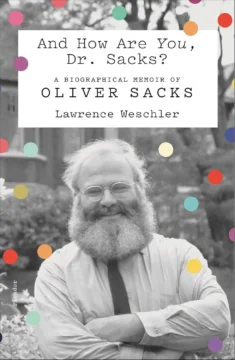 And here we arrive at a whole knot of issues at the heart of both Aviv’s and my own earlier characterizations of Oliver’s story. Because Oliver could relate to the situation of those wretched patients both out of the residue of his mother’s malediction itself and the sheer extent of the drug induced extravagances and catatonias he’d thenceforth experienced as its direct result during his ensuing wild California days (when his slogan had been “Every dose an overdose”), and beyond that, the wider identification he’d come to feel more generally with what his California-era friend, the psychoanalyst Bob Rodman, termed “communities of the refused” (an identification which would subsequently extend to Parkinsonians, Touretters, amnesiacs, the Deaf, the catatonic, the colorblind, the faceblind, and other such marginalized communities, and for that matter ferns and cuttlefish and even certain inert chemical elements as well). That sense of identification came to ground a profound empathy which, on the one hand helped him to give voice to the otherwise voiceless by helping them to reclaim their own stories, their own narratives, in so doing allowing them to reemerge as the active agents of their own lives—a practice which, granted, occasionally overstepped its bounds into outright projection and, in the subsequent recounting, downright confabulation.
 When Plato was an infant, bees alighted on his lips and, nestling there, set about making honey. His parents had placed him, sleeping, on the summit of a mountain while they paid tribute to the gods, and when they turned their attention back to him, they found the infant’s mouth full of golden sweetness. Cicero provides our first surviving record of the legend, which is repeated with variations over centuries, always as a portent of the sweet style the infant would ultimately possess.
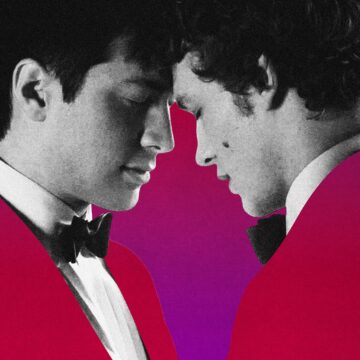 “Heated Rivalry” has become a breakout hit. The hockey drama — adapted from an erotic romance novel for the Canadian streaming service Crave — just ended its first season on HBO Max and has left gay men crying at watch parties that feel more like 19th-century religious revivals. If you want to understand why this show has become our community’s equivalent of a cultural earthquake, the answer is that watching a gay couple be mildly boring and in love is still radical.
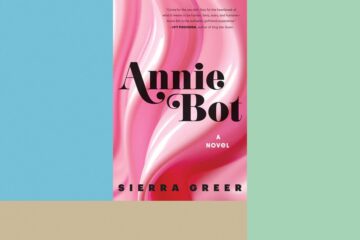 In an unremarkable New York apartment, sometime in the not-too-distant future, a man tells his robot to come to bed. She is a “Stella,” an intelligent machine who looks and sounds like a woman. We soon learn that she is a “Cuddle Bunny,” a euphemistic term for the sex-robot setting she’s currently running. She is also set to “autodidactic” mode, which gives her a searching intellect and a nascent independence. Her name is Annie, and we will follow her on the journey to elevated consciousness in “Annie Bot,” Sierra Greer’s slyly profound debut novel.
 If you want to lose weight, exercise doesn’t really matter.
 In a way I’ve never experienced in my life, I feel in synch with a political turn, felt by millions of voters, that’s now being reflected in the voice of one of the most dynamic leaders we’ve seen in a long time.
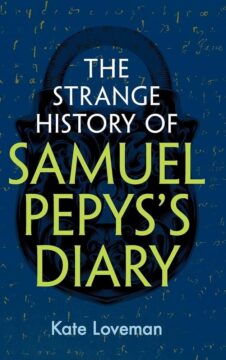 Pepys was a meticulous – some might say compulsive – record-keeper, and his talent for storing and retrieving vast amounts of information would be useful to him throughout his career. Loveman argues that the diary became his ‘catch-all’ for anything he couldn’t safely or conveniently note in his official or household accounts. Into its pages went social debts (who had given him dinner, who still owed him one), gossip, the music he heard and the plays he saw, and the most intimate aspects of his life, from bodily functions (including what has been called ‘one of the best documented attacks of flatulence in history’) to sex.
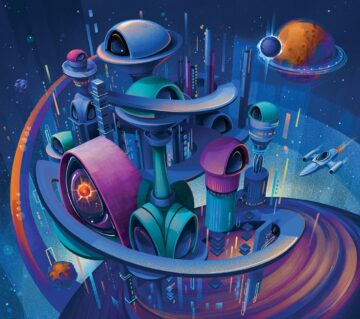 The Roman sage Marcus Aurelius said we should never let the future disturb us. But then he never had a conversation with the futurologist Nick Bostrom about the state of the world in 2050. “There’s a good likelihood that by 2050, all scientific research will be done by superintelligent AI rather than human researchers,” Bostrom said in an e-mail. “Some humans might do science as a hobby, but they wouldn’t be making any useful contributions.” Time to rethink your career options, Nature readers!
 W
W