
James Panero at The New Criterion:
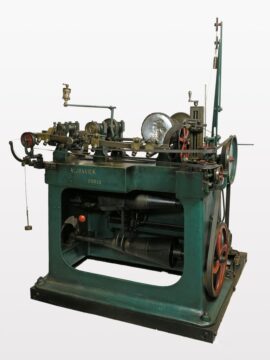
How did America’s Gilded Age leave its most enduring mark? Through its architecture? Its institutions? By the numbers, the age’s most lasting currency has been its coins and medals. Consider the penny. The sculptor Victor David Brenner designed the Lincoln cent in 1909. Since then, the U.S. Mint has produced nearly five hundred billion pennies featuring Brenner’s obverse design. On August 6, 2012, one such coin minted in 1909, a rare variety featuring Brenner’s initials, touched down on the planet Mars as a passenger on the Curiosity mission. Since the lander used the penny as a calibration target, what is surely mankind’s most remote work of bas-relief sculpture became covered in Martian dust. Closer to home, but equally remote and dust-covered, there is probably a Lincoln cent in the pocket or couch cushion of every American. The New York Times Magazine recently saw fit to publish a cover story slamming the penny’s obsolescence, but no consideration was given to the astonishing success of its design. In the history of the world, no other work of sculpture has been as ubiquitous.
more here.
Enjoying the content on 3QD? Help keep us going by donating now.
 In 2016, an essay arrived in our offices from John J. Lennon, then incarcerated at Attica Correctional Facility in New York. “
 Jaime Teevan joined
 Trump’s political rebirth is unparalleled in American history. His first term ended in disgrace, with his attempts to overturn the 2020 election results culminating in the attack on the U.S. Capitol. He was shunned by most party officials when he announced his candidacy in late 2022 amid multiple criminal investigations. Little more than a year later, Trump cleared the Republican field, clinching one of the fastest contested presidential primaries in history. He spent six weeks during the general election in a New York City courtroom, the first former President to be
 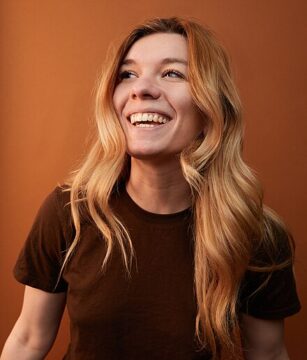 Annie Rauwerda: I started back in high school editing typos and adding things that I noticed were missing — like items to lists. But I had never done anything more than that because I was afraid of it because there are so many rules. Like, I’d seen the talk pages. And many of Wikipedia’s policies and guidelines and essays are very wordy.
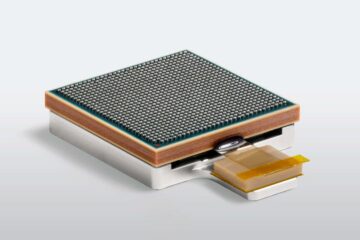 An optical fibre technology can help chips communicate with each other at the speed of light, enabling them to transmit 80 times as much information as they could using traditional electrical connections. That could significantly speed up the training times required for large artificial intelligence models – from months to weeks – while also reducing the energy and emissions costs for data centres.
 In the fall of 2012, when Hayat Tahrir al-Sham (HTS), the military power now in charge of Syria, was a mere minor terrorist organization, a band of their fighters in Aleppo took me prisoner. Back then they were known as Jabhat al-Nusra. I remained in the group’s custody for two years—often in solitary confinement cells, but not always. During this time, it often happened that news of some stupendous victory would make its way, via the fighters’ two-way radios, into our prisons. It was a surreal experience then to listen as a government checkpoint got blown into the sky, for instance, or a truckload of government troops fell into my captors’ hands.
 The thing that had precipitated Warner into the literary limelight, and earned her quite a lot of money, was her novel of 1926, Lolly Willowes. As an assertion of female autonomy and idiosyncrasy, it was both timely and captivating. It was also prescient, with its theme of decamping to the country about to be enacted in the life of its author (though perhaps without so sorcerous a resolution). Laura (Lolly) Willowes is a wry old-maidish lady occupying a rather put-upon role in the London household of her married brother, when she suddenly takes flight to a hamlet in the Chilterns called Great Mop, enters into a compact with the Devil and becomes a witch. Despite its subject matter, the book is not excessively whimsical – or its whimsey is tempered by a stern ironic overtone. A style at once mischievous and elegant is one of Warner’s hallmarks, whether it’s applied to a mediaeval nunnery beset by money worries (The Corner That Held Them, 1948), the beguiling and ruthless Cat’s Cradle Book (1960), or the distinctly unfairylike Kingdoms of Elfin (1977), her last subversive flight-of-fancy, carried out with an eldritch inventiveness.
 A
A Nicole Kidman’s eyes widened. “Haven’t you been to the Rockettes?” she asked. “I go every year. Oh yeah, I’m obsessed!”
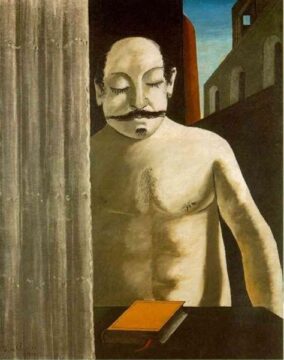 “So strong is the belief in life what is most fragile in life–real life, I mean–that in the end this belief is lost.” This is the first sentence of André Breton’s famous, infamous, notorious, and rarely actually read first Surrealist Manifesto. Breton was born in a small town in Normandy, France in 1896. He was thus a very young man at the outbreak of WWI. As for nearly everyone of that generation, the war was a defining and devastating experience. I myself had an obsession with learning about WWI around ten years ago. I remember reading some first-person accounts of soldiers describing the experience of gas attacks in the trenches of the Western Front. I had to put the book down. It was one of the few times in my life that I found myself literally unable to read through my tears.
 As Donald Trump gets ready to return to the White House on Jan. 20, he must be prepared to tackle one issue immediately: the possibility that the spreading avian flu might mutate to enable human-to-human transmission.
 Excessive prices charged by health care providers are overwhelmingly the reason why Americans’ health care costs so cripplingly much. But they’ve outsourced the actual collection of those fees to insurance companies, so that your experience in the medical system feels smooth and friendly and comfortable. The insurance companies are simply hired to play the bad guy — and they’re paid a relatively modest fee for that service. So you get to hate UnitedHealthcare and Cigna, while the real people taking away your life’s savings and putting you at risk of bankruptcy get to play Mother Theresa.
 F
F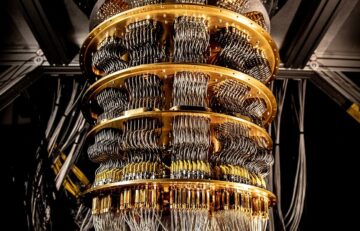 Researchers at Google have built a chip that has enabled them to demonstrate the first ‘below threshold’ quantum calculations — a key milestone in the quest to build