
Category: Recommended Reading
Man-made wilderness

It’s important, then, that humankind somehow finds a place in the wilderness. Muir was indulgent towards day-trippers in search of a brush with the wild (“Among the gains of a coach-trip are the acquaintances made and the fresh views into human nature; for the wilderness is a shrewd touchstone, even thus lightly approached”). Leopold was tactful and tolerant – up to a point – with regard to the “recreational use” of wilderness by hunters and fishermen. One of the most important lines in Feral is Monbiot’s quotation from Byron: the point of rewilding, he says, is to “love not man the less, but Nature more”.
But an undeniable misanthropic streak runs through wilderness appreciation in Britain. Wild Life on Moor and Fell (1937), a nature novel by W. R. Calvert, features a lead character named “Peter the Hermit”, a “strange and lonely man”, a “dweller in the Wild”, who retires to a remote Cumbrian cottage, his only contact with mankind being a reluctant monthly trip to a barber’s shop (where he is “irked” by a “desultory and one-sided” conversation). It’s a familiar archetype. Britain has had few John Muirs, hiking jovially to the mountaintop and beckoning to the city charabancs to follow him up (though of course Muir had no love for the city itself). Instead one might think of Henry Williamson and his fascist tendencies and disdain for the “spiciness and hyper-stimulation” of town life, or T. H. White, cloistered with his goshawk and his sexual anguish.
more here.
black country

Geology is destiny.
The Black Country is porous, like its limestone, and hard as Rowley rag, the dolerite in its quarries. For a time this was the most heavily industrialised few square miles on the planet, and yet, as its name suggests, it has never been fully urban. Its hills mark the watershed between the rivers Severn and Trent, thewrosne of Old English, a word that translates as ‘the link’. The Black Country’s borders are ill-defined, corresponding roughly to the old South Staffordshire coalfield (which incorporates enclaves of Worcestershire and Shropshire). It is in the English midlands, to the west of Birmingham, but not of it. On that, at least, we can all agree.
When I ring my dad on the day of the referendum he tells me that he has seen people queuing off the Rowley Road to vote. The hills fall away south below the line of voters, past the blackened brick of the air shaft that comes from the tunnel bored through the land below, past the shell of Cobb’s Engine House which used to pump water from the nearby mines into the canal, past Clent and Walton and the woods that once belonged to King Offa and Saint Kenelm, webbed with lanes where they say Harry Ca Nab, the leader of the devil’s hunt, still sometimes rides on his wild bull. He will surely be out tonight; Lord of Misrule.
more here.
the narcissist
THE NARCISSIST IS, according to the internet, empty. Normal, healthy people are full of self, a kind of substance like a soul or personhood that, if you have it, emanates warmly from inside of you toward the outside of you. No one knows what it is, but everyone agrees that narcissists do not have it. Disturbingly, however, they are often better than anyone else at seeming to have it. Because what they have inside is empty space, they have had to make a study of the selves of others in order to invent something that looks and sounds like one. Narcissists are imitators par excellence. And they do not copy the small, boring parts of selves. They take what they think are the biggest, most impressive parts of other selves, and devise a hologram of self that seems superpowered. Let’s call it “selfiness,” this simulacrum of a superpowered self. Sometimes they seem crazy or are really dull, but often, perhaps because they have had to try harder than most to make it, the selfiness they’ve come up with is qualitatively better, when you first encounter it, than the ordinary, naturally occurring selves of normal, healthy people. Narcissists are the most popular kids at school. They are rock stars. They are movie stars. They are not really rock stars or movie stars, but they seem like they are. They may tell you that you are the only one who really sees them for who they really are, which is probably a trick. If one of your parents is a narcissist, he or she will tell you that you are a rock star, too, which is definitely a trick.
more here.
Thursday Poem
The Problem of Describing Trees
The aspen glitters in the wind
And that delights us.
The leaf flutters, turning,
Because that motion in the heat of August
Protects its cells from drying out. Likewise the leaf
Of the cottonwood.
The gene pool threw up a wobbly stem
And the tree danced. No.
The tree capitalized.
No. There are limits to saying,
In language, what the tree did.
It is good sometimes for poetry to disenchant us.
Dance with me, dancer. Oh, I will.
Mountains, sky,
The aspen doing something in the wind.
.
by Robert Hass
from Time and Materials
Ecco, 2007
.
Wednesday, August 17, 2016
How to Write About Trauma
Saïd Sayrafiezadeh in the New York Times:
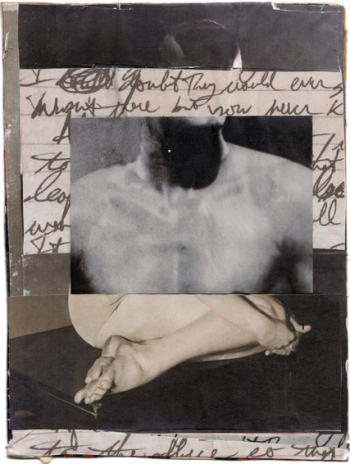
This could very well have been the end of the story if not for my freshman year in college, when I found myself being pursued, some might say stalked, by a male professor who had somehow determined, at least in his own mind, that I was gay. He had also determined, or so he said, that I was a good writer, or a great writer, hyperbole I happily accepted without question since I was in need of any and all approbation.
He gave me books, he gave me money, he gave me dinner. He also gave me letters, multipaged and pornographic, describing in no uncertain terms what we would do once I got over my sexual inhibitions. Sometimes I would hear him driving past my apartment building in his silver sports car with its distinctive downshift. Sometimes I imagined I heard him driving past. Sometimes I would wake up to find that a letter had been placed in my mailbox at some point during the night.
I was not gay and I told him so.
More here.
Mathematicians Are Overselling the Idea That “Math Is Everywhere”
Michael J. Barany in Scientific American:
Why does mathematics matter to society at large? Listen to mathematicians, policymakers, and educators and the answer seems unanimous: mathematics is everywhere, therefore everyone should care about it. Books and articles abound with examples of the math that their authors claim is hidden in every facet of everyday life or unlocks powerful truths and technologies that shape the fates of individuals and nations. Take math professor Jordan Ellenberg, author of the bestselling bookHow Not to Be Wrong, who asserts “you can find math everywhere you look.”
To be sure, numbers and measurement figure regularly in most people’s lives, but this risks conflating basic numeracy with the kind of math that most affects your life. When we talk about math in public policy, especially the public’s investment in mathematical training and research, we are not talking about simple sums and measures.
More here.
Why Islam resists secularization, and how that continues to shape the politics of the Middle East
Isaac Chotiner in Slate:

These failures have raised the fraught question of whether Islam itself is partially to blame. Shadi Hamid, a senior fellow at the Brookings Institution, is the author of a new book, Islamic Exceptionalism: How the Struggle Over Islam Is Reshaping the World. The title gives some hint of his provocative analysis. As he writes, “If Islam is, in fact, distinctive in how it relates to politics, then the foundational divides that have torn the Middle East apart will persist, and for a long time to come.”
I recently spoke by phone with Hamid. During the course of our conversation, which has been edited and condensed for clarity, we discussed why liberals have trouble taking religion seriously, the future of Islamist politics in Turkey and Egypt, and what the rise of Donald Trump has meant for American Muslims.
More here.
Trump’s border-wall pledge threatens delicate desert ecosystems
Brian Owens in Nature:

A wall could divide species that make a home in both nations. Bighorn sheep, for example, live in small groups and rely on cross-border connections to survive, says Epps. Other species, such as jaguars, ocelots and bears, are concentrated in Mexico but have smaller, genetically linked US populations. “Black bears were extirpated in West Texas, and it was a big deal when they re-established in the 1990s,” Epps says. Breaking their links with Mexican bears could put the animals at risk again. And birds that rarely fly, such as roadrunners, or those that swoop low to the ground, such as pygmy owls, could also have trouble surmounting the wall. Such a physical barrier would worsen the habitat disruption caused by noise, bright lights and traffic near the border. And a wall would cut across rivers and streams that cross the border, severing a vital link. “When water crosses the border, it unites ecosystems,” says Avila-Villegas. “If we block the water, it affects nature on a much more fundamental level.”
More here.
Mohammed Hanif: “The first time I saw Nusrat Fateh Ali Khan”
And here is the incomparable Nusrat singing “Mera Pia Ghar Aaya”:
new editions of T. S. Eliot
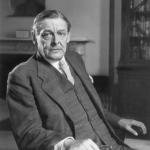
Certainly Eliot’s mind was a vast, labyrinthine echo chamber, and perhaps more than any other canonical poet of the English language, with the possible exception of his great antagonist John Milton, he was conscious of the previous uses by other writers of the words he deployed in his poems. But what exactly is the difference, one can’t help wondering while reading such notes, between an interesting allusion or echo and a mere verbal coincidence? And where should limits be set for the recording of these echoes or coincidences in the age of the internet, when it’s possible to pursue any phrase ad infinitum? Should notes in a scholarly edition aspire to the condition of an entry in the OED? Anyone with an interest in Eliot will be grateful for, and marvel at, the truly extraordinary knowledge of all things Eliotic that underpins these volumes, but – to get my quibble out of the way early, so that I can praise the numerous virtues of this edition with a clear conscience – it is not always easy to discern the value of the links the editors posit between Eliot’s words and the analogous phrases, drawn from a bewildering array of writers, presented for comparison in the commentary.
Those first ten lines of ‘Prufrock’, for instance, elicit, as well as the citations I’ve already mentioned, quotations from Jules Laforgue, W.E. Henley, Théophile Gautier, Russell S. Fowler (author of The Operating Room and the Patient, a 1906 book which includes a reference to ‘anaesthetic tables’), William James, James Thomson, William Acton, Charles-Louis Philippe, W.R. Burnett (a crime novelist in whose High Sierra – published in 1940 – the phrase ‘She was … a one-night-stand type’ occurs), Edward Winslow Martin (author of The Secrets of the Great City, 1868, which mentions ‘cheap hotels’), the London Baedeker, Cooper’s The Prairie and Hamlet’s ‘overwhelming question’ – ‘“To be, or not to be, that is the question.”
more here.
Jazz June
Among her many other poems, the African-American writer Gwen-dolyn Brooks wrote the following, perhaps her most famous work:
WE REAL COOL
We real cool. We
Left school. We
Lurk late. We
Strike straight. We
Sing sin. We
Thin gin. We
Jazz June. We
Die soon.
The poem adopts the viewpoint of marginalized black boys who shoot pool together. Brooks explained about the passage “We / Jazz June” that these boys, effectively locked out of mainstream society, gleefully attack its cherished symbols: to June, that month of wedding announcements in newspapers’ society pages, the boys bring jazz, originally the music of the low-down. (“Jazz” was once a verb, synonymous with “fuck.”)
I may have read that explanation in a textbook, but it’s possible—and this is the version of events I prefer—that I heard it from Brooks’s own lips, on the one, cringe-worthy occasion when I met her. This was in New York in 1991. I was a freelance (read: an unemployed) writer of twenty-eight, scrounging for a living, and I had signed on to write a young-adult biography of Brooks.
more here.
THE IMPROBABLE LIFE AND PRESCIENT POETRY OF BASIL BUNTING

Basil Bunting were not remembered for “Briggflatts”—his longest and best poem, first published fifty years ago—he might still be remembered as the protagonist of a preposterously eventful twentieth-century life. By the age of fifty, he had been a music critic, a sailor, a balloon operator, a wing commander, a military interpreter, a foreign correspondent, and a spy. He had married twice, had four children, lived on three continents (and one boat), survived multiple assassination attempts, and been incarcerated throughout Europe. He had also apprenticed at Ezra Pound’s poetic “Ezuversity” in Rapallo, played an “indifferent” game of chess with General Francisco Franco in the Canary Islands, and communicated with Bakhtiari tribesmen in classical Persian. Educated in Quaker schools, he was imprisoned for refusing to serve in the First World War—and released after a brief hunger strike—only to high-mindedly rush into the Second, during which he served in the Royal Air Force and MI6. Eventually, as he boasted to Pound’s wife, Dorothy, he became “chief of all our Political Intelligence in Persia, Iraq, Saudi Arabia, etc.” As a London Times correspondent in Tehran, in 1952, he watched as a hired mob congregated outside his hotel and chanted, “death to mr. bunting!” Guessing, correctly, that nobody calling for Mr. Bunting’s death had ever seen the man, Bunting joined the mob and chanted along with them. Soon after, he and his family fled the country, driving from Iran to Bunting’s mother’s house in England—a one-month trip—in a company car.
By the nineteen-sixties, though, Bunting’s life was at an uncharacteristic lull: he had spent the previous decade in his home of Northumberland, working at local newspapers, where he ended up subediting the business page and stock tables. He confessed in a letter to the publisher Jonathan Williams that his life had been “one of struggling to keep my belly filled and my children’s bellies filled, and no time whatever for literary pre-occupations.”
more here.
Tuesday, August 16, 2016
MOHAMMED HANIF: A Boy and His Internet
Mohammed Hanif in the New York Times:

Next, he wanted to look for scenes of the torture that angels inflict on dead sinners. Surely, such a thing doesn’t exist on the internet? It does. Getting worried that the boy’s parents might accuse me of corrupting him, I tried to take away the laptop. Just one more, he said, and after haggling over what he meant by one more — one more search, no matter how many hits? Or just one more page? — settled on a blood-curdling video set to a war anthem in which Pakistani soldiers are seen shooting at the Taliban and rescuing kidnapped children.
How did my nephew know about dajjal’s residence and those goings-on in the grave? Because he had heard about them from school friends. And by the end of his first tour of the internet, he had seen with his own eyes what he had only heard as rumor. Dajjal did reside in the Bermuda Triangle: We saw more than one image of that.
Growing up with myths and legends is an essential part of coming of age anywhere, but there comes a time when you expect to outgrow them and confront real monsters, like who you are and your role in making the world what it is. Initially you believe in a terrifying god. Then you think she isn’t terrifying all the time and realize you have to find your own way in life.
More here.
‘STRANGER THINGS,’ PARALLEL UNIVERSES, AND THE STATE OF STRING THEORY: A conversation with theoretical physicist Brian Greene
Corey Mueller in Popular Science:
Trying to figure out the science behind this piece of science fiction, Popular Science had the opportunity to speak with theoretical physicist Brian Greene, professor of physics and mathematics at Columbia University. Though he's skeptical of the idea of parallel universes and accessing alternate dimensions, he's open and willing to explore the possibility of them. Here's our conversation with him:
In Stranger Things, they use the terminology parallel universes and alternate dimensions, interchangeably. Are these the same? And if not, what's the difference?
No, I mean, they're not really the same. They're related, but you can have a single universe that has more dimensions than the ones that we're aware of. There's reason to think that there might be more dimensions of space beyond our three that we don't see.
Now, you can also have universes, you can also have multiverse proposals — that is, multiple universe proposals — where each universe only has three dimensions of space, and one of time. You can have many universes, each of which has the same number of dimensions that our naive perception suggests to exist: three space and one time. You can certainly put all those ideas together and have a many universe theory in which you also have extra dimensions of space, so they're not mutually exclusive.
More here.
Jonathan Matte: The surprising beauty of mathematics
General Equilibrium Theory: Sound and Fury, Signifying Nothing?

Raphaële Chappe over at INET:
General equilibrium theory is presented by Mas-Colell, Whinston and Green in two rather different ways. One is entirely abstractly, as relating to the idea that “we must simultaneously determine the equilibrium values of all variables of interest” (MWG, p.511). One can hardly quarrel with this ambition, if one is adopting an equilibrium approach at all. The other, rather more specific, involves the idea that “it aims at reducing the set of variables taken as exogenous to a small number of physical realities (e.g. the set of economic agents, the available technologies, the preferences and physical endowments of goods of various agents)” (MWG, p.511). Leave aside the point that “preferences” are hardly “physical”. This particular attempt at parsimony will have to justify itself through its successes.
One of the arguments as to why it has been successful is that it helps, we are told, to establish the conditions under which “market economies” have certain desirable properties. Mas-Colell, Whinston, and Green, for instance, claim that the so-called First Fundamental Theorem of Welfare Economics presents a ‘formal expression for competitive market economies of Adam Smith’s claimed” invisible hand” property of markets’ (p.545).[1] There is, however, a critical ambiguity here: do we mean by “market economies” the theoretical objects within the universe of general equilibrium theory or the real fields of activity they claim to model? If there were no relation then presumably the former would lose some of their interest.
As is well known, Cournot, Marshall and others began to establish a mathematical framework for partial equilibrium analysis, and Edgeworth and Walras posed and to a degree addressed the problem of identifying the conditions under which a price system might enable supply to be equated to demand simultaneously in all markets for traded commodities. However, it was only in the early 1950s, with the work of Arrow and Debreu, that research in the area of study that came to be called general equilibrium theory led to a formal demonstration of conditions for such an equilibrium to exist and to have specific desirable properties.
Arguably, the importance attached to research in general equilibrium came in part from the need to address a contrary idea, which had been prominent in the late nineteenth century and the first half of the twentieth: that of the anarchy of the market — the idea that the market is not harmonious and self-adjusting, automatically making its way to equilibrium, but rather unstable and even wasteful and chaotic.
More here.
Eton and the making of a modern elite
Christopher Bellaigue in The Economist:
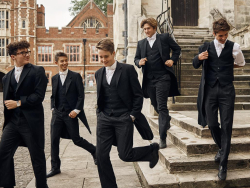
To judge from appearances in this historic little town across the Thames from Windsor Castle, which many tourists think is worth a visit between the Round Tower and Legoland, the answer is actually not a lot. Aside from the fact that there are more brown, black and Asian faces around, the boys go about in their undertakers’ uniforms of tailcoats and starched collars, as they seem to have done for centuries, learning in the old schoolrooms and depleting testosterone on the old playing fields before being locked up for the night in houses they share with 50 of their peers (each boy has his own room). As the absence of girls demonstrates, Eton considers itself exempt from the modern belief in the integration of the sexes that so many independent schools now espouse. And it remains a boarding school – a form of education which is in decline, and which some people consider a mild form of child abuse. Add to all this the statue of Henry VI, who founded the school in 1440, amid the uneven cobbles of School Yard, and the masters cycling in their gowns to their mid-morning meeting, resembling nothing so much as a synod of ravens, and you get the opposite impression to that conveyed by Henderson: one of solidity, immobility – anything but dynamism.
To the question, “which is the ‘real’ Eton?” – the laboratory for progressive ideas about social inclusion, or an annexe to Britain’s heritage industry – the answer is of course “both”.
More here.
The Psychiatric Question: Is It Fair to Analyze Donald Trump From Afar?
Benedict Carey in The New York Times:
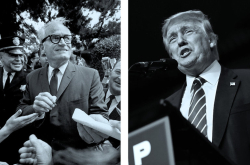
Enter Donald J. Trump.
The 2016 Republican nominee’s incendiary, stream-of-consciousness pronouncements have strained that agreement to the breaking point, exposing divisions in the field over whether such restraint is appropriate today. Psychiatrists and psychologists have publicly flouted the Goldwater Rule, tagging Mr. Trump with an assortment of personality problems, including grandiosity, a lack of empathy, and “malignant narcissism.” The clinical insults are flying so thick that earlier this month, the psychiatric associationposted a reminder that breaking the Goldwater Rule “is irresponsible, potentially stigmatizing, and definitely unethical.” Putting a psychiatric label on a candidate they oppose can be a “seemingly irresistible tool for some in the field,” said Dr. Paul Appelbaum, a professor of psychiatry, medicine and law at Columbia University who disapproves of the practice. “This year, perhaps more than most, they’re persuaded they’re saving the nation from a terrible fate.” William Doherty, a psychologist at the University of Minnesota, believes exactly that. In June, Dr. Doherty posted an online manifesto against “Trumpism” that has been signed by more than 2,200 mental healthspecialists. “Yes, for me this is an exception,” Dr. Doherty said. “What we have here is a threat to democracy itself.”
More here.
mozart and the starling

We still know very little about the starling brain, really. Our science is only just catching up to the species’ complex body and behavior, some 225 years after Mozart’s death. Among our recent discoveries is a sturdy musical form inside one type of starling song. Though the structure allows enough variation for one starling to sound nothing like the next bird over, all courting males organize their love songs in a four-part sequence of Whistle, Warble, Click, and Screech.
Each bird begins with a set of repeated whistles—a kind of reedy introduction. Next, as the feathers at his throat seethe and puff, he weaves a run of maddening musical snippets—as few as ten or as many as thirty-five—curated into descending tones. Some of these snippets are filched from nearby species (or lawn equipment, or cellular phones). It’s here, in this second movement, that the “Twin-kle Twin-kle” meets the chackerchackerchacker, the smoke alarm, and the Bee Gees. Without stopping, he then slams into the third section, that of the percussive click solo. Syncopated and note-less rattles shoot from his beak at presto speed, as many as fifteen clicks per second. And then he ends with a fortissimofinale of loud, exclamatory shrieks, enough to wake the neighbors.
more here.