Should ethics professors observe higher standards of behavior?

Judith Stark in The Conversation:

ScreenHunter_2050 Jun. 22 15.31This is an enduring dilemma in the area of ethics and one that has recently come to light with charges of unethical behavior brought against a prominent philosopher, Professor Thomas Pogge of Yale University. Pogge has been accused of manipulating younger women in his field into sexual relationships, a charge he has strenuously denied.

Without making any judgment on the case itself, this situation raises larger questions about how the behavior of the experts in ethics is to be reviewed and evaluated.

As with most professions, there are no “ethics police” in the professions themselves. We who work in these professions are expected to police ourselves according to our codes of ethics, as is the case, for example, with physicians, lawyers and clergy members. Obviously, law enforcement comes into the picture with actions that are against the law.

Of course, we know that these professions also harbor people who do engage in unethical behavior, but in the case of experts in ethics, should we expect a higher standard of good behavior simply because they are experts in ethics?

More here.

Wednesday Poem

Breaking Pitch

My father raises his hand to signal “enough,”
but I'm still pitching, and the ball spins
off my fingertips–a breaking pitch
with so much stuff on it my imaginary batter
is too baffled to swing, so much stuff
the angels whistle, the crows near
the garbage cans take off in a flurry
of caws, and the mosquitoes burst in midair,
so much stuff my father, fear
in his eyes, hits the pavement,
behind him glass shattering.

Above the garage, Mrs. Golub, who runs
a vacuum cleaner over her wood floors every two hours,
yells out the window,”I told you something
bad would happen if you let that kid play here.”
And Miss Lamar pushes her long
nose into the screen, “See if my car
has any glass on it,” and Mr. Gorelick,
who sells silk ties to posh men's shops,
shouts, “Clean up the mess, boy.”

I hear the cars on Clayton Road,
their tinny horns, the wind shaking
down leaves, the sound of the breaking
pitch trembling the wires that cross
from neighborhood to neighborhood, echoing
in shells strung from my best friend's
doorway, the white horsehide glinting
in the sun, a flash of light,
a prophecy of greatness.

Shaking his head, my father comes toward me,
his tightened fists warning me that I'll be sorry.
“Helluva curve,” he mutters, “helluva curve.”

by Jeff Friedman
from, Working in Flour
Carnegie University Press
.

Anglosplaining

Andreas Kluth in 1843 Magazine:

UntitledMany Germans have been glued to a television series, “Where We Come From”, that explains Germany’s long, complicated and often tragic history. The “we” in the title, however, is deceptive, for the host and narrator is Sir Christopher Clark, an Australian historian knighted for his services to Anglo-German relations. His academic credentials are excellent. His book on Prussia, “Iron Kingdom”, may be the best on the subject. His tome on the first world war, “The Sleepwalkers”, became a bestseller. But Germany has plenty of its own historians. Why Clark? The answer starts with the dappled bow tie he wears as he drives around Germany in a red cabriolet vw Beetle: the quintessential Brit (Aussies are close enough) in the quintessential German vehicle. Then there’s the language. Clark speaks grammatically flawless German, but with enough of an English cadence to sound cheeky, witty and incisive. Occasionally he uses humour, which can still be shocking on German public television. Sometimes he even says nice things about the country’s past, which to Germans is truly shocking. He does not seem full of himself. To Germans that is refreshing.

German Anglophiles consider such attributes “Anglo-Saxon”. The term is stretchable in this context and includes anybody English-speaking, whether Celtic or Saxon, pale or brown, from down under or beyond the pond. Clark is not an isolated case. The late Gordon Craig, a Scottish-American historian, achieved similar success. So has Timothy Garton Ash, a historian at Oxford and Stanford, who wows Germans with pithy insights delivered in sophisticated German.

More here.

Industrial optimist: Moholy-Nagy revisited

Jeff Tollefson in Nature:

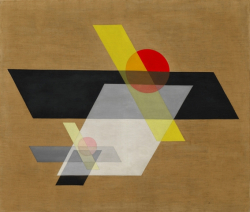
Moholy-Nagy-A11-43-900_pI’m standing in the spiraling rotunda of New York’s Guggenheim Museum, and over me dangles a chaotic mess held together by translucent Plexiglas. In the shadow the sculpture casts on the wall, the shapes converge in a pleasing negative blending intention and happenstance – impossible to predict, yet clearly part of a plan. On evidence, this is an artist thinking experimentally, and in multiple dimensions.

The industrial designer, artist and photographer Lázló Moholy-Nagy (1895-1946) was certainly that. As the Guggenheim’s retrospective Moholy-Nagy: Future Present shows, the Hungarian pioneer of the Bauhaus and beyond worked in a dazzling array of media: film, photography, painting, sculpture, graphic design and typography. But behind the restless eclecticism, he adhered to the unifying theory (with the Constructivists) that art is integral to social transformation and must embrace new technologies. At a time of vast industrial expansion, he declaimed himself as “[n]ot against technological progress, but with it”, championing novel industrial materials — from Formica and aluminium to the Plexiglas in Dual Form with Chromium Rods (1946) in the rotunda. Drawn towards the airy, the transparent and the brilliantly coloured, he was also in love with light and movement: like contemporary Alexander Calder, he engineered moving parts and even electric motors into kinetic sculptures.

More here.

Tuesday, June 21, 2016

A Crash Course in the Long-Term Relationship

Yoona Lee in the Los Angeles Review of Books:

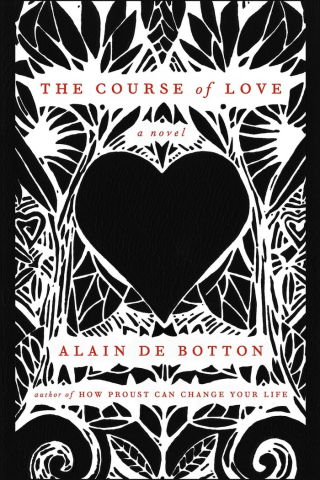
The-Course-of-Love-image-1In 1993 an unusually precocious 23-year-old named Alain de Botton rocked the literary world with the release of his first novel, On Love (also known as Essays in Love). Since then he has become a minor cultural phenomenon, thanks in part to his preternatural understanding of the human condition, unerringly articulate writing, and embrace of a mind-bogglingly broad array of subject matter, from commercial cookie manufacturing to Roman architecture. An accomplished polymath, de Botton is a journalist, novelist, and philosopher who has even founded a global, multichannel enterprise called The School of Life. For more than two decades, his second novel has been breathlessly anticipated by his admirers.

Written in de Botton’s characteristic style — accessible and sprinkled with friendly parenthetical asides — The Course of Love picks up where On Love leaves off. The main character of that novel, a Lebanese-German named Rabih Khan, has grown into a young man of 31. An architect now living in Edinburgh, he still slams doors during arguments, enjoys a good sulk now and then, and has a penchant for pragmatic, independent-minded women with ruddy hair and charmingly imperfect teeth. He is still an unabashed and incurable Romantic.

When Rabih meets his client, an unflappable Scottish woman named Kirsten McLelland, he quickly falls deeply in love. Soon they are dating, and at the end of the second chapter, de Botton summarizes their entire subsequent relationship in stark terms. The couple will marry and encounter major challenges along with the banality of domestic life. Over the course of 13 years, they will have a daughter followed by a son, and one will have an affair. “This will be the real love story,” the author concludes.

More here.

Grandfather Clocks and the Big Bang

Sean Carroll in UnDark:

ScreenHunter_2048 Jun. 21 18.08There are two things going on, both of which are crucial to the operation of a pendulum clock. One is a little gizmo called an escapement, which turns the back-and-forth-rocking of the pendulum into the one-way ticking of the clock. Robert Hooke, a rival of Isaac Newton’s, invented the first escapement back in the seventeenth century. The clock hands are driven by an “escape wheel” with pointed teeth that are angled in a uniform direction. The pendulum, meanwhile, is connected to a two-armed piece called the “anchor.” As the anchor rocks back and forth, one of the arms first pushes the escape wheel in one direction, and then the other catches the teeth so that the wheel cannot move in the other. In this way, the oscillations of the pendulum become the uniform motion of the clock hands.

All of this sounds good, and would seem at first to be sufficient: the angling of the anchor arms and the teeth on the escape wheel provide a directionality to the motion of the clock. Except: where did entropy come in? How does the universal arrow of time governed by increasing entropy become related to the local arrow of time of this particular clock?

The answer resides in the seemingly innocent lifting and pushing of the anchor. It seems, by looking at the drawing of an escapement, that the wheel can obviously move in only one direction. But the underlying laws of physics assure us that if something can move in one direction, it can also move in the reversed direction. In this case, that would involve the anchor briefly lifting up, with the escape wheel swiftly and spontaneously moving backwards while it was lifted.

Why doesn’t that happen, and what does it have to do with entropy?

More here.

It’s different now, but Muslims have a long history of accepting homosexuality

Shoaib Daniyal in Scroll.in:

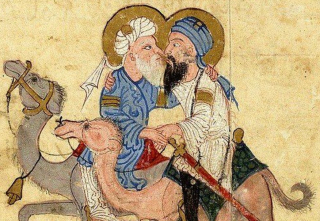
ScreenHunter_2047 Jun. 21 18.01At the height of the Islamic Golden Age – a period from the mid-8th century to the mid-13th century when Islamic civilisation is believed to have reached its intellectual and cultural zenith – homosexuality was openly spoken and written about. Abu Nuwas (756-814), one of the great Arab classical poets during the time of the Abbasid Caliphate, wrote publicly about his homosexual desires and relations. His homoerotic poetry was openly circulated right up until the 20th century.

Nuwas was an important historical figure – he even made a couple of appearances in The Book of One Thousand and One Nights (known in Urdu as Alif Laila). It was only as late as 2001 that Arabs started to blush at Nuwas’ homoerotism. In 2001, the Egyptian Ministry of Culture, under pressure from Islamic fundamentalists, burnt 6,000 volumes of his poetry.

Most modern Muslims, therefore, have little knowledge of what the Islamic Golden Age was really about, even though they keep on wanting to go back to it.

“ISIS have no idea what restoring the Caliphate actually means,” a tweet by Belgian-Egyptian journalist Khaled Diab said. “In Baghdad, it’d involve booze, odes to wine, science… and a gay court poet.”

More here.

Cosmopolitan Folk

Nadelman-tangoChristopher Benfey at The New York Review of Books:

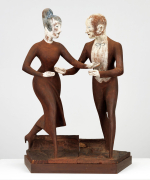
A multivalent exhibition now at the New-York Historical Society, drawn from the sprawling folk art collection of the sculptor Elie Nadelman (1882-1946) and his independently wealthy wife, Viola (1878-1962), is far more interesting than even its organizers seem to realize. The more than two hundred objects on display range from clipper ship figureheads (“It was not just a sailor who carved this but an artist,” Nadelman remarked of a ravishing gilded eagle with detachable wings) to miniature carved animals, amid a trove of carefully selected pottery, exquisitely detailed needle-cases, and an early, ingenious earthenware roach motel—the glazed, funnel-shaped opening of which traps roaches lured inside by molasses. This staggering array of material is complemented by a dozen or so of Nadelman’s wondrous figurative sculptures, fashioned in weathered cherry or mahogany and often given an overlay of seemingly aging paint.

The big news of the exhibition is that Nadelman (along with Viola, already a well-informed specialist, before their 1919 marriage, in antique lace and embroidery) was also among the first generation of serious collectors of American folk art and among the first to use the Germanic derived notion of a national “Volk” to confer prestige on such objects rather than the pejorative adjective “primitive,” favored by early twentieth-century enthusiasts of African masks, “peasant” carvings, and Native American pottery.

more here.

England’s post-imperial stress disorder

2016-06-01T100450Z_1138960992_D1BETHJNQWAB_RTRMADP_3_GLOBAL-ECONOMYAndrew Brown at The Boston Globe:

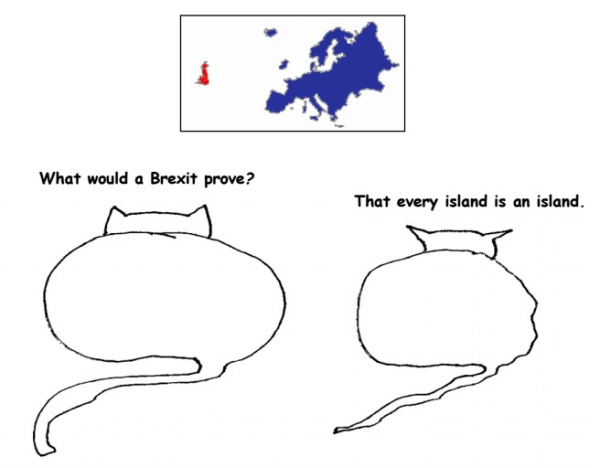
The campaign to get Britain out of the European Union is hard enough to understand if you are British. For foreigners it must be quite incomprehensible. Although Scotland, Wales, and Ireland are all solidly in favor of remaining, English attitudes towards Europe have become as delusional, and as powerful, as American attitudes towards gun control. We are suffering from national psychosis: post-imperial stress disorder.

Three dates are useful in understanding the deeper roots of what is happening to this country — 1945, 1956, and 1966. 1945, when the second world war ended, still feels like yesterday in the English imagination. We were bankrupt, with our cities bombed to rubble and hundreds of thousands of young men killed or wounded. Food, clothing, and petrol were all rationed and would be for another five years. But when you ask if British society was better then, a huge majority of the English people think it was. The overall figure is 51 percent worse today to 27 percent better, and when you break it down it is only those under 24 or non-white who think things have really gotten better since the war. Otherwise men and women from every region of the country believe that British society has got worse in the 70 years of European peace and unimaginable prosperity since the war.

The problem, you see, is that this peace and prosperity did not come on our own terms — which brings us to the second crucial date, of 1956. That was when the British Army, in collaboration with the French and the Israelis, invaded Egypt to recapture the Suez canal. I was there, though only a year old: My father was at the time the British consul in Ismailia, on the canal. He’d known things were going wrong for months, ever since he received a top-secret coded cable asking where the post office was in Ismailia — something that showed that an invasion was being planned, but that no one had any maps for it.

more here.

W(h)ither the New Sensibility

Against_Interpretation_(Sontag_book)Rochelle Gurstein at The Baffler:

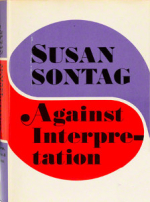
Who would have thought that Susan Sontag’s “One Culture and the New Sensibility”—widely regarded as an opening salvo in the long culture war against “elitist” standards”—is now fifty years old?

I revisited Sontag’s celebrated essay because I was reading a new book by George Cotkin called Feast of Excess: A Cultural History of the New Sensibility (Oxford University Press, 2015). Making my way through Cotkin’s twenty-three short chapters about the life and times of the many, many diverse figures he offers as representative of the new sensibility, I was surprised to find how elastic the concept had become. Cotkin locates its roots in the “minimalism” of John Cage in 1952, followed by Robert Rauschenberg’s early experimental work, Marlon Brando’s style of rebellion inThe Wild One, and six more predecessors. He then traces how it “exploded” in the 1960s—this is where Sontag appears (he calls her “the queen of the New Sensibility,” and its “cheerleader”), in between chapters on Lenny Bruce and Andy Warhol on one side and John Coltrane and Bob Dylan on the other, along with three more exemplars. Cotkin goes on to show how the new sensibility became a “cultural commonplace” by the 1970s, beginning with the plays, poetry, and radical political activism of the black nationalist Amiri Baraka, and then, after three more vignettes, his account comes to a close with Erica Jong’s Fear of Flying, followed by Chris Burden’s performance pieces of 1974.

more here.

Antarctica’s CO2 Level Tops 400 PPM for First Time in Perhaps 4 Million Years

Bob Berwyn in Moyers and Company:

GettyImages-517986604-1280x720The concentration of heat-trapping CO2 pollution in the atmosphere has passed the 400 parts per million (ppm) threshold in Antarctica for the first time in at least 800,000 years, and possibly as long as 4 million years, scientists reported this week. The new measurements, reported by British and US research stations, show that every corner of the planet is being affected by the burning of fossil fuels, according to British Antarctic Survey (BAS) scientists who track environmental changes on the frozen continent. “CO2 is rising faster than it was when we began measurements in the 1980s. We have changed our planet to the very poles,” sad British Antarctic Survey scientist Dr. David Vaughn, who reported on the readings from the Halley VI Research Station.

Independently, researchers with the National Oceanic and Atmospheric Administration this week also reported a similar reading from the Amundsen-Scott South Pole Station. Before humans started wide-scale burning of coal, oil and gas in the mid-1800s, the CO2 level had been steady at about 280 ppm for many millennia. Since then, the concentration has increased in lockstep with fossil-fuel combustion, at a rate of about 2.1 ppm per year. The steady increase means more and more heat is trapped near the surface of the Earth, melting ice caps, intensifying heat waves and droughts, raising sea levels and killing corals reefs. CO2 concentrations in the Northern Hemisphere first reached the 400 ppm level in 2013, said Pieter Tans, head of NOAA’s long-term greenhouse gas monitoring program. In 2014, they stayed above the mark for three months, and last year for five months. This year, climate trackers said they increased at a record rate and they’re set to stay above that level for many decades, if not centuries, depending on future fossil-fuel combustion.

More here.

The Case for Antidepressants

Abigail Zuger in The New York Times:

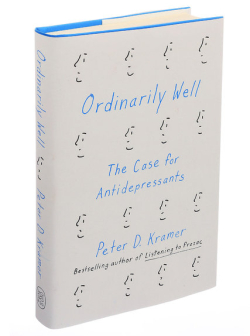
BookIn a telling passage toward the end of his latest celebration of antidepressant drugs, Dr. Peter Kramer looks back on the pleasures of his long psychiatric career. He mentions the good company of his patients, his teachers, his colleagues. Then he turns to his favorite medications. He seems to choke up a little. “To get to meet Prozac and then to work in concert,” he writes without a trace of irony. “I am conscious of the privilege.” One needs no better evidence that the relationship between prescribers and their pills is quasi human, a partnership that may be utterly rational or wildly emotional, bolstered by wishful thinking, undone by bitter suspicion. Such has certainly been the case for antidepressants. Their safety and efficacy have been questioned repeatedly over the last decade. Some patients maintain the drugs are poison, while some experts have suggested they are just pricey, overused placebos. Foremost among the drugs’ champions has been Dr. Kramer, the author of “Listening to Prozac” in 1993 and a professor at Brown Medical School, who now offers a long, point-by-point defense composed of anecdotes and data.

Dr. Kramer’s bottom line is well summarized by the double meaning of “Ordinarily Well: The Case for Antidepressants” — he argues that antidepressants work just about as well as any other pills commonly used for ailing people, and that the drugs keep people who take them reasonably healthy. Antidepressants are not magic, Dr. Kramer acknowledges; they come with a risk of side effects, and their use in children can be quite problematic. But he has found them immensely helpful in the care of pretty much every variety of depressed adult. Further, he can back up his impressions with statistical proof. The reader with no particular ax to grind will emerge from the book with two impressions. One is that Dr. Kramer’s data is extremely persuasive. A second is that future rebuttals may well be just as persuasive, thanks to the staggering difficulties of subjecting psychoactive agents to rigorous scientific analysis. For its articulate, heartfelt demonstration of all those problems, the book is invaluable.

More here.

Monday, June 20, 2016

Sunday, June 19, 2016

Poem for Father’s Day

THOSE WINTER SUNDAYS

Sundays too my father got up early
and put his clothes on in the blueblack cold,
then with cracked hands that ached
from labor in the weekday weather made
banked fires blaze. No one ever thanked him.

I’d wake and hear the cold splintering, breaking.
When the rooms were warm, he’d call,
and slowly I would rise and dress,
fearing the chronic angers of that house,

Speaking indifferently to him,
who had driven out the cold
and polished my good shoes as well.
What did I know, what did I know
of love’s austere and lonely offices?

Robert Hayden, 1913 – 1980

Is This New Swim Stroke the Fastest Yet?

Regan Penaluna in Nautilus Magazine:

[Misty] Hyman came of age as a world-class swimmer during the underwater revolution. “I was 13 when I started staying under water longer than is typical,” she says, explaining she could go 30 meters without breathing. “I found I could be faster under water than at the surface.” Most swimmers were using the dolphin kick to propel themselves underwater, but Hyman’s coach, Bob Gillet, wanted to experiment. In 1995 he came across a study in Scientific American about how tuna were able to swim at almost 50 mph, where dolphins top out around 25 mph. The study found that the flick of a fish tail generated more efficient thrust than that of a marine mammal tail. Gillet wondered whether the dolphin kick might be more powerful on its side, so the undulations were horizontal, like those of a fish.

One cool December day in Phoenix in 1995, Gillet put it to the test. Hyman showed up for practice at Gillet’s outdoor pool, and he asked her to try it. “In the most respectful way, I called him a mad scientist,” she says. Her first attempts were awkward, and she ended up three lanes over from where she started. But she got better, and soon she was cutting through the water like an eel. She was going faster than she did with the dolphin kick. Faster than she had ever swum before. This gave Gillet another idea.

They went to the local country club pool, where the lighting was brighter and Gillet could walk out to the edge of a diving board to capture video. They took a long, thin rubber tube, fastened it to Hyman’s wrist, ran it down the length of one side of her body, and fastened the other end to her ankle. Then they filled the tube with store-bought food dye, and Hyman corked the tube with her thumb. She jumped into the pool, released her thumb, and took off as Gillet filmed. What they saw in the footage afterward astonished them. The dye swirled out to reveal huge vortices after each of her horizontal kicks. Gillet suspected that these miniature whirlpools, reaching 4 feet in diameter, propelled her forward. He also thought it was possible that when Hyman did the dolphin kick facedown, the bottom of the pool and the surface of the water interfered with these vortices and slowed her down.

More here.

Not Safe for Work: Why Feminist Pornography Matters

1459284456Potter666

Claire Potter in Dissent:

Pornography transformed women into “adult toys,” wrote feminist activist, journalist and Women Against Pornography (WAP) co-founder Susan Brownmiller in 1975, “dehumanized objects to be used, abused, broken and discarded.” “Pornography is the theory; rape is the practice,” former Ms. magazine editor Robin Morgan declared in 1977. Pornography, some argued, was a form of terror: women “will know that we are free when the pornography no longer exists,” wrote Andrea Dworkin, one of the most well-known advocates of anti-porn feminism, in 1981. In 1996, legal scholar Catharine MacKinnon argued against the idea that pornography was a creative practice entitled to First Amendment protection. While pornography itself was not responsible for sexual assaults against women, wrote MacKinnon, “men who are made, changed and impelled by” porn were.

Yet porn also had its defenders: politicians, media figures, and civil libertarians who had historically sought to free sexuality from control by the state. Even more importantly, porn was vigorously defended within feminism. Beginning with a clash between feminists at the 1982 Barnard Conference on Sexuality, the struggle came to a head when Dworkin and MacKinnon drafted an anti-pornography civil rights ordinance at the request of city officials in Minneapolis, Minnesota. Although the ordinance passed, Mayor Donald Fraser refused to sign it, prompting anti-pornography activists to take it to Indianapolis, a city whose mayor supported the legislation. Here, the Feminist Anti-Censorship Task Force (FACT), a coalition of New York academics and culture workers allied with the American Civil Liberties Union (ACLU), successfully challenged the ordinance’s constitutionality. Allowing people who believed they had been harmed by porn to sue for damages, they argued, would turn all erotica and sexual materials into a potential legal liability for the seller and result in de facto censorship. In effect, this prevented enactment of the ordinance anywhere in the United States.

Defenders of porn within radical feminism did not seek to deny the reality of exploitation and sexual violence: novelist Dorothy Allison, a member of FACT, wrote freely about having been subjected to cruel, sexualized beatings and incestuous rape as a child. But feminists who called themselves “pro-sex” objected to the idea that consuming or making porn was categorically harmful. Journalist Ellen Willis asked in 1979: “Is there any objective criterion for healthy or satisfying sex, and if so what is it?”

More here.

Is Islam ‘Exceptional’?

Lead_960

Shadi Hamid makes the case in The Atlantic:

To understand the Middle East’s seemingly intractable conflicts, we need to go back to at least 1924, the year the last caliphate was formally abolished. Animating the caliphate—the historical political entity governed by Islamic law and tradition—was the idea that, in the words of the historian Reza Pankhurst, the “spiritual unity of the Muslim community requires political expression.” For the better part of 13 centuries, there had been a continuous lineage of widely accepted “Islamic” politics. Even where caliphates were ineffectual, they still offered resonance and reassurance. Things were as they had always been and perhaps always would be.

Since the Ottoman Caliphate’s dissolution, the struggle to establish a legitimate political order has raged on in the Middle East, with varying levels of intensity. At its center is the problem of religion and its role in politics. In this sense, the turmoil of the Arab Spring and the rise of the Islamic State, or ISIS, is only the latest iteration of the inability to resolve the most basic questions over what it means to be a citizen and what it means to be a state.

It is both an old and new question, one that used to have an answer but no longer does. Islam is distinctive in how it relates to politics—and this distinctiveness can be traced back to the religion’s founding moment in the seventh century. Islam is different. This difference has profound implications for the future of the Middle East and, by extension, for the world in which we all live, whether we happen to be American, French, British, or anything else. To say that Islam—as creed, theology, and practice—says something that other religions don’t quite say is admittedly a controversial, even troubling claim, especially in the context of rising anti-Muslim bigotry in the United States and Europe. As a Muslim-American, it’s personal for me: Donald Trump’s dangerous comments on Islam and Muslims make me fear for my country. Yet “Islamic exceptionalism” is neither good nor bad. It just is.

More here.

Our Sovereign Father, Donald Trump

Trump3

Brian Connolly in the LA Review of Books:

Democracy, especially in the United States, has always been vexed by the concept of sovereignty. It is one thing to invoke the liberating, empowering phrase “popular sovereignty,” the sine qua non of democracy; it is another altogether to think through the sovereignty of popular sovereignty — which remains a question of domination and subjection that on the surface seems inimitable to democracy. Donald Trump makes manifest this latent desire of the people (or at least an increasingly large segment of the people) to be subjected to some sovereign authority. The glaring contradictions, the all-encompassing narcissism, the insistent claims to violate the law, to do what needs to be done, to “Make America Great Again,” are all evidence not of Trump’s failings — his combination of danger and incompetence is, as most opinion polls suggest, apparent to nearly everyone — but of a political reality taking hold in the United States today: the desire for a new age of the sovereign.

“Sovereignty” is a concept with a long and complicated history, grounded in the fantasy of an indivisible, final political authority. German political philosopher Carl Schmitt’s well-known definition of sovereignty — himself a staunch proponent of dictatorship — is very much at the core of Trump’s appeal. “Sovereign,” Schmitt wrote in his classic work of 1922, Political Theology, “is he who decides on the exception.” This definition has become a recurring trope in work on sovereignty in the United States, particularly since 9/11. But what, exactly, is the exception? Schmitt elaborates, claiming that a sovereign:

decides in a situation of conflict what constitutes the public interest or interest of the state, public safety and order [. . .]. The exception, which is not codified in the existing legal order, can at best be characterized as a case of extreme peril, a danger to the existence of the state, or the like. But it cannot be circumscribed factually and made to conform to a preformed law.

The sovereign, in a moment of conflict, determines the interest of the state, public order, and safety, and is able to do so by declaring exceptions to the law which cannot rest on facts, in order to articulate and enact dictatorial powers in a moment of crisis. A shadow of this definition lingers over Trump, who consistently articulates the United States as in a state of perilous crisis.

More here.