
Category: Recommended Reading
Sunday Poem
The Lights Going on in the Rooms Strung Out
Back Through the Years
.
the way
the blue moon
(remembered)
lights up
as you turn to
….be held
and to hold me
your
.. beholder
.
by Anselm Hollo
from Poetry Magazine
.
Saturday, August 13, 2016
The Art of the Eulogy: On ‘Dead People’
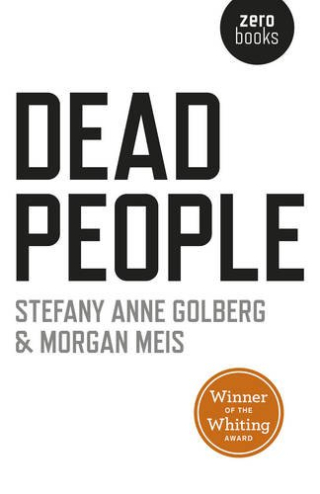
Nick Ripatrazone in The Millions:
In their new book Dead People, Morgan Meis and Stefany Anne Golberg complicate our understanding of the public action of eulogy. They offer eulogies for a unique cast, includingChinua Achebe, Osama bin Laden, Susan Sontag, and Kurt Cobain. Although the origin of the word “eulogy” is “to speak well,” Golberg and Meis interrogate that idea, and instead see how the “death of a fellow human being can be the opportunity to enter into that person’s life.” The traditional Aristotelian method of eulogy is to step back and consider someone’s life from a distance. Instead, the authors of Dead People dig in: “We’ve chosen to wear our bias on our sleeve. We’ve chosen to take these lives personally.”
Golberg and Meis pen alternating eulogies, some of which were published previously as standalone essays. The result is a book that is very much an anthology. Dead People is not a single narrative, thesis-driven work of non-fiction. In fact, the writers’ introduction to the work is their only action of framing, which results in the book having many different entry points. You don’t need to read Dead People front to back; its value lies within its stylish and substantive reconsideration of an ancient form.
A few entries can example how Meis and Golberg use eulogies as part prose-poems, part historical reconsiderations, and part philosophical treatises. The result is an intellectually entertaining and flexible book. Meis first considers the life of Christopher Hitchens, and consistent with his plan for the book, interrogates the man for his unflinching support of the Iraq war: “Hitch could never say it. There was something greater at stake for him. There was something that he valued more deeply, in this case, than he valued the truth.” It’s a clever way to craft a portraiture of Hitchens, as a man whose morality could exist on some other plane.
More here.
The Philosopher and Her Kisses
Stephanie DeGooyer in the LA Review of Books:
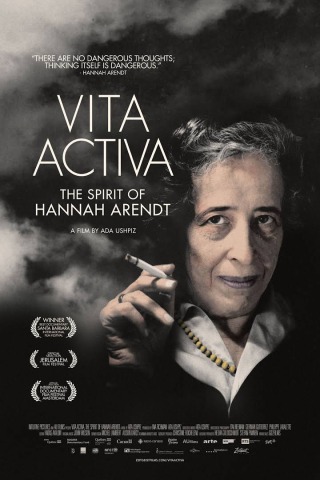
A PHONE RINGS in Hannah Arendt’s home study. Her husband, the poet and philosopher Heinrich Blücher, answers. It’s William Shawn, Arendt’s editor at The New Yorker. Arendt signals that she is not home — her report on the Eichmann trial is overdue — and occupies herself at the typewriter. Blücher moves to the hallway where Arendt unexpectedly emerges to playfully chastise him for not kissing her goodbye. Blücher avers: “Never disturb a great philosopher when they are thinking.” Arendt, embracing him, replies, “but they cannot think without kisses.”
This is a scene from Hannah Arendt, the 2012 biopic from director Margarethe von Trotta and distributed by Zeitgeist Films about the political thinker’s personal life after the publication of Eichmann in Jerusalem, her notoriously misunderstood book about the trial of Adolf Eichmann. We watch as Arendt weathers the hostility over her phrase the “banality of evil,” which seemingly made Eichmann’s crimes unexceptional and implicated Jewish council leaders in the extermination of millions of Jews. The American novelist Mary McCarthy features prominently as Arendt’s witty and faithful friend, while Blücher sustains her with kisses and wise counsel. In one odd moment, Arendt appears to draw courage for her own public ostracism by reflecting on a prior conversation with Martin Heidegger about his Nazism. (Heidegger joined the Nazi party in 1933 and stayed a member until it was dismantled in 1945. The nature of his involvement with and the degree of his belief in the Nazi program remains a subject of controversy.)
Hannah Arendt makes academic life alluring, almost sexy. Richard Brody, in his review for The New Yorker, calls the film “soft-core philosophical porn.” Von Trotta, he says, “titillates the craving for the so-called intellectual life while actually offering little intellectual substance.” Indeed, Arendt’s immaculately stylized Riverside Drive apartment is arguably the star of the film, even though no academic today, much less a refugee such as Arendt, could even dream of such an address. But beyond the film’s window-dressed intellectualism is a more important ethical question about how the life of a philosopher, particularly a female philosopher, should be portrayed. In presenting Arendt as a philosopher who cannot think without kisses does von Trotta suggest that Hannah Arendt — the theorist and champion of active, public, political life — can only be viewed meaningfully in her private habitat? Are the thoughts of the female philosopher only as good as the kisses that interrupt and sustain them?
More here.
Cao Fei’s Fantastical Take on China’s Sociopolitical Climate
Monica Uszerowicz in Hyperallergic:
In Italo Calvino’s novel Invisible Cities, Marco Polo regales Kublai Khan with tales of his travels, musing about the strange poetry of each city and their intersections with memory and selfhood. These cities, in actuality, are not quite real, and whether we are to suspend our disbelief is not clear. As Marco Polo would have it, it’s the space between fantasy and reality from which one gleans the most insight. Regarding the city of Penthesilea, he asks, “Outside of Penthesilea, does an outside exist? Or, no matter how far you go from the city, will you only pass from one limbo to another, never managing to leave it?”
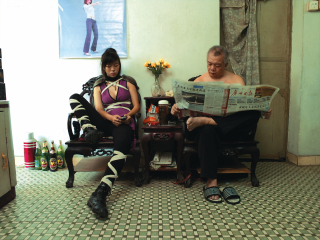
The artist Cao Fei has cited Invisible Cities as a reference point for her short film, “La Town,” which surveys a mysterious city in the throes of post-apocalyptic destitution. La Town is an amalgamation of many places, with its German grocery store, bombed-out McDonalds, and supernatural creatures: a giant octopus appears to have made its way through a window; Santa’s reindeer lay prone on a set of train tracks. The city is built of tiny plastic toys and models, scuffed and bloodied until they lose the inherent charm of being miniature. Two invisible narrators argue back and forth — in French — about the reality of experience, recalling the dialogue between the protagonists of the Alain Resnais 1959 film, Hiroshima Mon Amour, whose memories may or may not be founded in truth. “The illusion, quite simply, is so, so perfect,” says a woman’s voice in Cao’s film. “You saw nothing in La Town,” a man’s voice replies. “Nothing.”
In viewing Cao’s first stateside museum retrospective at MOMA PS1, I found myself continually returning to “La Town.” Its decisive fiction feels allusive of the aftershocks of rapid globalization or, maybe, the singularity. Cao is 37, and the show acts as a chronological timeline of her career, leading visitors from the experimental work of her time at the Guangzhou Art Academy to her recent video, “Rumba II: Nomad,” in which Roomba vacuum cleaners, unleashed at the site of demolished buildings, explore and absorb the urban sprawl like alien creatures.
More here.
‘Hot’ Sex & Young Girls

Zoë Heller reviews Nancy Jo Sales's American Girls: Social Media and the Secret Lives of Teenagers and Peggy Orenstein's Girls and Sex: Navigating the Complicated New Landscape in the NYRB:
History has taught us to be wary of middle-aged people complaining about the mores of the young. The parents of every era tend to be appalled by the sexual manners of their children (regardless of how hectic and disorderly their own sex lives once were, or still are). There were some in the 1950s who were pretty sure that the decadent new practice of “going steady” augured moral disaster. Both Sales and Orenstein have undoubtedly grim and arresting information to impart about the lives of American girls. And neither of them can be dismissed as a sexual puritan. (They are not troubled about teenagers leading active sex lives, they assure us, only about the severely limited forms in which female sexuality is currently allowed to express itself; they are not even against casual sex per se, just eager to ensure that there should be, as Orenstein puts it, “reciprocity, respect, and agency regardless of the context of a sexual encounter.”) Even so, neither of their books entirely avoids the exaggerations, the simplifications, the whiff of manufactured crisis that we have come to associate with this genre.
Both writers make rather invidious comparisons between the frenzied, romance-free social lives of today’s young women and their own halcyon youths. Sales recalls walking back from school with her ninth-grade boyfriend to do homework together at her house. “The point of being together was not to have sex, necessarily. It was to become intimate,” she writes. Orenstein observes that her college experience was not about binge-drinking and hook-ups, but “late-night talks with friends, exposure to alternative music and film, finding my passions, falling in love.”
To use these sun-dappled recollections of life before the iPhone as a way of pointing up the misery of girls’ present conditions is a little misleading. To be sure, certain kinds of sexism have been amplified—or perhaps transmitted more efficiently—in the Internet era, and girls are now under pressure to present themselves as pliable sexual creatures at a much earlier age than they have been in the past. But even in the far-off 1970s and 1980s, young women experienced their share of exploitation, abuse, and unsatisfactory sex.
More here.
‘KNOWN AND STRANGE THINGS’ By Teju Cole
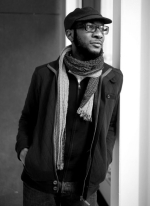
Teju Cole’s captivating and lauded novels, “Open City” and “Every Day Is for the Thief,” reflect his identity as a writer with a global perspective — born in the United States and raised in Nigeria. His international access as an author, art historian and photographer — one who also teaches and is a photography critic for The New York Times Magazine — shapes not only his obsessions but, in a chicken-and-egg sense, determines his gaze. He takes in news from African countries and American cities; but also, by necessity and interest, Asian, European and Latin American culture and history. In short, the world belongs to Cole and is thornily and gloriously allied with his curiosity and his personhood. “Known and Strange Things,” his first collection of nonfiction, journeys through all the landscapes he has access to: international, personal, cultural, technological and emotional. When he feels homesick, he informs us in this book, he “visits” his parents in Nigeria through Google maps — a sweet if distant form of connection.
In “The Anxiety of Influence,” the renowned critic Harold Bloom argued that poets, especially those in the Western tradition since the Renaissance, necessarily negotiate the work of their predecessors as they write. “The precursors flood us,” Bloom wrote, “and our imaginations can die by drowning in them, but no imaginative life is possible if such inundation is wholly evaded.” Cole shares Bloom’s interest in the fraught and burdened relationship writers and artists have to our ancestors, and he seeks to answer yet another question: How does the imagination cross and recross racial and filial boundaries, and what does this crossing mean?
more here.
punk’s not dead

They came not to bury punk but to praise it. 20 years ago, Legs McNeil and Gillian McCain published “Please Kill Me: The Uncensored Oral History of Punk” with Grove Press. The format was ingenious — no single person could lay claim to know the whole of the sprawling, anarchically creative, drug-riddled scene.
Not even McNeil, Punk Magazine’s “resident punk” from its founding in 1976 through its 1979 end, who couldn’t bring himself to write a memoir. “I thought, how boring,” he says. “My story?” It took the help of McCain, a friend, fellow lover of oral histories and patient co-conspirator, to make the project come together.
“Please Kill Me,” five years in the making, was important not just because it made visible the genealogy of an underground music scene (the Velvet Underground to the New York Dolls to the Stooges to Television, Blondie and the Ramones) but because it showed how brilliantly an oral history could capture culture. Previously, histories like it had been rare — McNeil and McCain were primarily inspired by “Edie” by Jean Stein, edited by George Plimpton — but now they’re everywhere, with “Freaks and Geeks,” the March on Washington and lobster rolls getting the oral history treatment.
more here.
‘Zero K’, by Don DeLillo

The emotional and rhetorical weight of Zero K is comparable to the intensity of three novels published in the eighties that established DeLillo’s reputation and which form the core of his oeuvre: White Noise, The Names, and Libra. Along with his 1997 masterpiece Underworld, these fictions are the finest work of a great artist who stands on the edge of American culture yet identifies and explores as well as anyone the forces of power and influence that define mainstream American life and undermine our persistent assumption of the autonomy of the individual. This exploration is both contemporary and prescient.
“Haven’t you felt it?” a character asks in Zero K.
The sense of being virtualized. The devices you use, the ones you carry everywhere, room to room, minute to minute, inescapably. Do you ever feel unfleshed? All the coded impulses you depend on to guide you. All the sensors in the room that are watching you, listening to you, tracking your habits, measuring your capabilities. All the linked data designed to incorporate you into the megadata. Is there something that makes you uneasy? Do you think about the technovirus, all systems down, global implosion? Or is it more personal? Do you feel steeped in some horrific digital panic that’s everywhere and nowhere?
This description of powerlessness, with its hints of apocalypse, captures perfectly the paranoia implicit in the invasive reach of twenty-first-century technologies.
more here.
The tolerant philosopher: why Pierre Bayle is the forgotten figure of the Enlightenment
Anthony Gottlieb in New Statesman:

Immortality, it seems, does not always last. One reason for Bayle’s eclipse is that his ideas no longer seem novel or shocking; moreover, his writings digress uncontrollably. This is not a winning combination. His Historical and Critical Dictionary – once among the commonest books in northern European homes – is a jumble of more than six million words, most of which come in rambling footnotes. Published between 1697 and 1702, it was a unique source of information and argument at that time. Now we have Wikipedia. Bayle’s pioneering tract on religious freedom is titled A Philosophical Commentary on These Words of the Gospel, Luke 14:23, “Compel Them to Come In, That My House May Be Full”. If you think the title is unwieldy, you should see the book.
More here.
What Machines Know: Surveillance Anxiety and Digitizing the World
Jacob Silverman at Full Stop:
There was a social component to this, too. Would he have to start telling friends not to post photos of his kid? What novel matters of propriety did new parents now have to negotiate? Was he giving into an uninformed, instinctual revulsion at the latest digital technology?
These questions weren’t easily dismissed, but something more complicated was at work — overlapping concerns about visibility, identity, a parent’s responsibility, the commoditization of everyday communications, and how difficult it can be to articulate the kind of harm being done here. In his dilemma, we can also see how privacy is no longer, as one popular definition has it, the ability to control what other people know about us. Instead, in recent years privacy has split along two lines: what humans know about us and what machines know about us.
More here.
James Flynn: Why our IQ levels are higher than our grandparents’
Saturday Poem
Men With Heads of Eagles
Men with the heads of eagles
no longer interest me
or pig-men, or those who can fly
with the aid of wax and feathers
or those who take off their clothes
to reveal other clothes
or those with skins of blue leather
or those golden and flat as a coat of arms
or those with claws, the stuffed ones
with glass eyes; or those
hierarchic as greaves and steam engines
All these I could create, manufacture,
or find easily: they swoop and thunder
around this island, common as flies,
sparks flashing, bumping into each other,
on hot days you can watch them
as they melt, come apart,
fall into the ocean
like sick gulls, dethronements, plane crashes.
I search instead for the others,
the ones left over,
the ones who have escaped from these
mythologies with barely their lives;
they have real faces and hands, they think
of themselves as
wrong somehow, they would rather be trees.
.
by Margaret Atwood
from Margaret Atwood Selected Poems
Simon & Schuster, 1976
.
Friday, August 12, 2016
A massive new study debunks a widespread theory for Donald Trump’s success

Max Ehrenfreund and Jeff Guo in The Washington Post:
According to this new analysis, those who view Trump favorably have not been disproportionately affected by foreign trade or immigration, compared with people with unfavorable views of the Republican presidential nominee. The results suggest that his supporters, on average, do not have lower incomes than other Americans, nor are they more likely to be unemployed.
Yet while Trump's supporters might be comparatively well off themselves, they come from places where their neighbors endure other forms of hardship. In their communities, white residents are dying younger, and it is harder for young people who grow up poor to get ahead.
The Gallup analysis is the most comprehensive statistical profile of Trump's supporters so far. Jonathan Rothwell, the economist at Gallup who conducted the analysis, sorted the respondents by their Zip code and then compared those findings with a host of other data from a variety of sources. After statistically controlling factors such as education, age and gender, Rothwell was able to determine which traits distinguished those who favored Trump from those who did not, even among people who appeared to be similar in other respects.
Rothwell conducted this kind of analysis not only among the broad group of Americans polled by Gallup. He was also able to focus specifically on white respondents, and even just on white Republicans. In general, his results were the same regardless of the group analyzed.
Rothwell's research includes far more data than past statistical studies of Trump. It also provides a detailed view not only of the people who support him but also of the places where they live. Academics and other analysts will continue to study the Trump phenomenon in months and years to come, and may, of course, reach different explanations.
This research leaves some mysteries unsolved. Something is afflicting the places where Trump's supporters live, but Trump's supporters do not exhibit more severe economic distress than do those who view him unfavorably. Perhaps, Rothwell suggests, Trump's supporters are concerned less about themselves than about how the community's children are faring. Whatever it is, competition from migrant labor or the decline of factory work appear to be inadequate explanations.
More here.
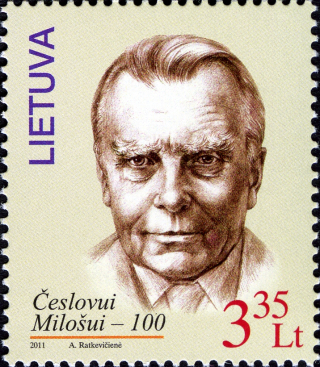
A Stupid Man: Rufi Thorpe on the Influence of Czesław Miłosz and Writing While Female
Rufi Thorpe in LA Review of Books:
I FIRST HEARD a Czesław Miłosz poem in a lecture hall in Vilnius, Lithuania. The room was long and a little too warm; dust motes were swimming in the shafts of light let in by arched Gothic windows, but otherwise the room was dim. I was deeply and profoundly hungover. The speaker that day was Ed Hirsch, a poet who manages to exude a frank, earthy kindness. I don’t know if Hirsch really said this or if I have confabulated it over the years, but I remember him stopping suddenly and declaring, “I am a very stupid man.” There was a laugh from the audience, but he went on, serious. “No,” he said, “I mean that. I struggle with my stupidity.” There was a feeling in the room that he was playing a game with us — we all knew he wasn’t stupid; he was and is, in fact, quite brilliant. I felt, though, I knew what he meant.
I was in Vilnius as part of a writing program at a time when I could barely see straight. I was 26. I had completed my MFA, but failed to get anything published, which felt like a failure. I had recently lost about 40 pounds and was exercising with the fervor of a religious convert. I had body dysmorphia — I couldn’t tell whether I was skinny or fat anymore (I was a size four). I couldn’t tell whether I had any talent as a writer. I couldn’t tell what I should be doing with my life. When I tried to look at things, they swayed and buckled. Nothing in the world was clear to me.
And there I was, in Vilnius, with its Baroque churches like fantastical wedding cakes and its narrow winding streets; Vilnius, with its multiple histories, erased, rewritten, statues erected and taken down, as the city became first part of one country and then the next; Vilnius, with its many tongues, Polish, Lithuanian, Russian, and English spoken on the streets; Vilnius, with its tragedies, with its buried bodies, its KGB torture rooms, its Jewish ghettos. No place but Vilnius could possibly have impressed on me more quickly how stupid I was.
More here.
thought in action, panpsychism (and not using the f-word)
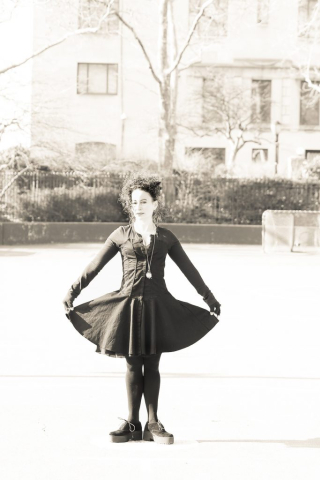
Richard Marshall interviews Barbara Gail Montero in 3:AM Magazine:
3:AM: Your work intersects with a major philosophical concern about the role of thinking in elite skillfulness. A dispute between John McDowell and Hubert Dreyfus perhaps helps set the scene. Dreyfus argues that the expert acting skillfully gets in the ‘flow’, loses herself whilst acting. Can you explain how Dreyfus and his ilk set up this explanation?
BGM: I’ll give it a shot. Dreyfus does, indeed, say that the expert acting skillfully gets in the f**w. (I generally try to avoid that f-word, which, as I understand it, is widely misappropriated from Mihaly Csikszentmihalyi’s research investigating optimal experience not optimal performance.) What Dreyfus means by this is that in such situations experts perform their actions neither deliberately nor intentionally; their minds are not guiding their movements. As he sees it, it’s not that in opening your front door, you have a conception of the correct way to turn the knob and then carry out your action in light of this conception. Rather, as he sometimes puts it, the situation “elicits” the action and the mind dissolves into a relationship to the environment. The movement, on his view, is “nonminded.” I’m not sure if he would equate this with “losing the self,” since the concept of “the self,” is rather protean and one could understand the self in such situations as nonminded. But in as much as the phrase “losing the self” simply means not engaging the deliberative, reflective mind, then, on Dreyfus’s account, the self does dissolve into movement.
An example Dreyfus likes to use to illustrate his position is driving: an experienced driver can round a corner, ease off the accelerator and then stop at a light all while her mind is fully engaged on other matters. And—the recent data on texting while driving notwithstanding—I think this is basically right.
More here.
Can A Robot Feel?
An Epidemiology of Representation
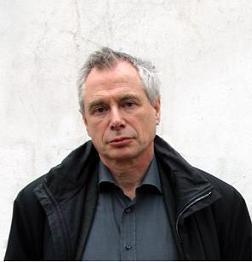
A Talk with Dan Sperber over at Edge:
[DAN SPERBER:] What I want to know is how, in an evolutionary perspective, social cultural phenomena relate to psychological mental phenomena.
The social and the psychological sciences,when they emerged as properly scholarly disciplines with their own departments in the nineteenth century took quite different approaches, adopted different methodologies, asked different questions. Psychologists lost sight of the fact that what's happening in human minds is always informed by the culture in which individuals grow. Social scientists lost sight of the fact that the transmission, the maintenance, and the transformation of culture takes place not uniquely but in part in these individual psychological processes. This means that if what you're studying is culture, the part played by the psychological moments, or episodes, in the transmission of culture should be seen as crucial. I find it unrealistic to think of culture as something hovering somehow above individuals — culture goes through them, and through their minds and their bodies and that is, in good part, where culture is being made.
I've been arguing for a very long time now that one should think of the evolved psychological makeup of human beings both as a source of constraints on the way culture can develop, evolve, and also, of course, as what makes culture possible in the first place. I've been arguing against the now discredited “blank slate” view of the human mind—now splendidly laid to rest by Steve Pinker—but it wasn't discredited when I was a student, in fact the “blank slate” view was what we were taught and what most people went on teaching. Against this, I was arguing that there were specific dispositions, capacities, competencies, in the human mind that gave rise to culture, contributed to shaping it, and also constrained the way it can evolve — so that led me to work both in anthropology—and more generally in the social sciences—,which was my original domain, and,more and more, in what was to become cognitive sciences.
In those years, the late 60s, psychology was in the early stags of the “cognitive revolution.” It was a domain that really transformed itself in a radical manner. This was, and still is, a very exciting intellectual period in which to live, with, alas, nothing comparable happening in social sciences, (where little that is truly exciting has happened during this period in my opinion). I wanted the social sciences to take advantage of this revolution in the study of cognition and I've tried to suggest how this could be done.
How do the microprocesses of cultural transmission affect the macro structure of culture, its content, its evolution? The microprocesses, the small-scale local processes I am talking about are, on the one hand, psychological processes that happen inside people's brains, and on the other hand, changes that people bring about in their common environment—for instance the noise they make when they talk or the paths they unconsciously maintain when they walk—and through which they interact.
More here.
The Origins of Neoliberalism
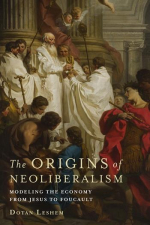
Traditionally, Western thought framed human life as evolving in a three-dimensional space: the economic, the political, and the philosophical. Nowadays, as in times past, this tradition sets its origins in classical Athens, a time when the happy and self-sufficient public life of politics and the solitary one of philosophy were nourishing on the surplus generated by the economy. The economy was confined to the private sphere of the household and excluded from the public sphere that was occupied by politics.The Origins of Neoliberalism: Modeling the Economy from Jesus to Foucault retells the history of the West following the less traversed economic side of the story by conducting a philological history that traces the meanings that were attached to the notion of oikonomia in Greek speaking antiquity. Doing so, the book offers a twist on the historical narrative of the present: it argues that the rise of the “economy of the mystery which from eternity has been hid in God who created all things” (Ephesians 3:9) in Greek-speaking Christianity of late antiquity plays a decisive role in this history. By reinserting this too-often ignored chapter, the book goes beyond closing a great gap in the histories of economic thought, philosophical inquiries, and political theory. As the research conducted in the book is of a genealogical nature, The Origins of Neoliberalism holds (and demonstrates) that recovering the mysteries of the economy in early Christianity is of great relevance for any critical engagement with neoliberalism, let alone overcoming it.
The book does so by tracing the rise of the economy from the private sphere of the earthly household in the classical era into the public sphere of the Christian ecclesia. The transfer of the economy from the private sphere to the public one was accompanied by yet another change: from the management of life necessities to the dispensation of divine mysteries.
more here.
Mircea Eliade’s 1924 diary/journal/novel
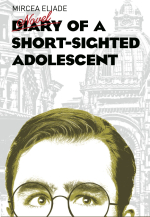
Mircea Eliade wrote his first book, Romanul adolescentului miop (1924) (literally, The Novel of the Short-Sighted Adolescent), when he was seventeen years old. He described it not as a novel – as the Romanian title would suggest – but as the literary account of a failed attempt to write a novel. And yet, the word “novel” is used in the original title (the English edition has opted for ‘Diary’, thereby emphasizing its incipient nature, and encouraging comparisons to other well-known diarists such as Holden Caufield and Adrian Mole). The last sentence of the book coincides with the first one: “As I was all alone I decided to begin writing The Novel of the Short-Sighted Adolescent this very day”, providing the already read text with a circular and paradoxical structure that is simultaneously finite and in the process of being finalized, organized and chaotic. Similarly, the narrator is both a character and his interpreter. The short-sighted adolescent is not someone who does not see well – on the contrary, he is a keen observer of people – but someone who is afraid of being seen as an ugly, indecisive, good-for-nothing young man particularly because he is short-sighted. While the other boys in his classroom are machos– as we would call them nowadays –, constantly boasting about their success with women, the short-sighted adolescent is an introverted non-macho who is, however, ironic and surprisingly inscrutable.
The author feels at home in this knot of contradictions. As he frequently mentions, the process he employs is that of transcribing excerpts from the journal started by him a few years before – a fact which is biographically accurate. Eliade regularly kept a journal while he was in Romania and in India, but he left it in the care of some friends when he went to London in 1940, hoping to recover it upon his return.
more here.