Biologists are close to reinventing the genetic code of life

John Bohannon in Science:

ColiThe term “life hacking” usually refers to clever tweaks that make your life more productive. But this week in Science, a team of scientists comes a step closer to the literal meaning: hacking the machinery of life itself. They have designed—though not completely assembled—a synthetic Escherichia coli genome that could use a protein-coding scheme different from the one employed by all known life. Requiring a staggering 62,000 DNA changes, the finished genome would be the most complicated genetic engineering feat so far. E. coli running this rewritten genome could become a new workhorse for laboratory experiments and a factory for new industrial chemicals, its creators predict. Such a large-scale genomic hack once seemed impossible, but no longer, says Peter Carr, a bioengineer at the Massachusetts Institute of Technology Lincoln Laboratory in Lexington who is not involved with the project. “It's not easy, but we can engineer life at profound scales, even something as fundamental as the genetic code.”

The genome hacking is underway in the lab of George Church at Harvard University, the DNA-sequencing pioneer who has become the most high-profile, and at times controversial, name in synthetic biology. The work takes advantage of the redundancy of life's genetic code, the language that DNA uses to instruct the cell's protein-synthesizing machinery. To produce proteins, cells “read” DNA's four-letter alphabet in clusters of three called codons. The 64 possible triplets are more than enough to encode the 20 amino acids that exist in nature, as well as the “stop” codons that mark the ends of genes. As a result, the genetic code has multiple codons for the same amino acid: the codons CCC and CCG both encode the amino acid proline, for example. Church and others hypothesized that redundant codons could be eliminated—by swapping out every CCC for a CCG in every gene, for instance—without harming the cell. The gene that enables CCC to be translated into proline could then be deleted entirely. “There are a number of 'killer apps'” of such a “recoded” cell, says Farren Isaacs, a bioengineer at Yale University, who, with Church and colleagues, showed a stop codon can be swapped out entirely from E. coli. The cells could be immune to viruses that impair bioreactors, for example, if crucial viral genes include now untranslatable codons.

More here.
Friday Poem

Winter Rye

On an evening of broccoli
And Billy Collins
My mind drifts back to May,

When the pale-green bermuda
Replaced the winter rye, and my father
Dutifully attended to his guests.

He poured the wine and laughed
At little jokes, so nervous in their delivery,
And consoled her group of friends.

And so finally she was, as they say,
Put to rest, and it was quietly sound, enough so
That I found myself watching him carefully

Watching him smile at each and every guest,
Such dignity amid the Chardonnay,
Such grace among the last of the winter rye.
.

by Richard Fenwick
from Anon Seven
.

Thursday, August 18, 2016

A YEAR WITHOUT OLIVER SACKS

Orrin Devinsky in The New Yorker:

Devinsky-AYearWithoutOliverSacks-1200A year ago, I lost my best friend, Oliver Sacks. For many years, each week, Oliver and I would cruise north on the West Side bike path at sunrise. Alone, our bicycles a few inches apart, we spoke about everything and anything, but mostly about interesting patients, natural history, and food. His voice was soft, and I struggled to hear his words. But his volume and pedalling cadence always accelerated when the massive TRUMP PLACE buildings appeared to our right. He detested the giant protuberances that unpleasantly punctuated the view from our bike seats, and often cursed them. Instead, he looked forward to passing by the Seventy-ninth Street Boat Basin, which reminded him of his City Island days. There, he had a housekeeper who, once a week, would make a beef stew for him and divide it into seven daily portions. One day, when the portions began to decline in size, Oliver asked, “Did the price of beef go up? I will give you more.” His housekeeper sheepishly admitted to pilfering some stew; she could not afford it for herself. “Then I will give you money for eight pounds instead of four, and you keep half.”

We would climb the small hill into Riverside Park’s Ninety-first Street garden for a water stop, and Oliver would become absorbed by a crocus, columbine, hyacinth, or tulip. A stray dandelion once launched a discourse on their unfair label as weeds, the potential diuretic effect of their leaves, their definite edibility (he popped it in his mouth, stem and all), the plant’s name (the coarsely toothed leaves resembled lions’ teeth, leading the French to call it dent de lion), and the paradoxical fecundity of these asexual plants. Almost every living eukaryote—organisms with complex cells, from algae and fungi to plants and animals—reproduces sexually, at least some of the time. But certain dandelion species only reproduce asexually. Oliver predicted their “imminent” extinction, at least in geological time, since “only bdelloid rotifers survived tens of million of years living the sexless life.” It was one of the rare times I had something to add. John Maynard Smith, I told him, considered the bdelloid’s successful asexuality “an evolutionary scandal.”

“Very good,” Oliver agreed, with his broad, mischievous smile.

More here.

Anti-inflammatory drug reverses memory loss in Alzheimer’s-disease-model mice

From KurzweilAI:

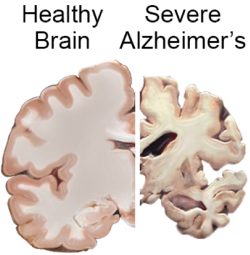
Alzheimers-brainAnti-inflammatory drug mefenamic acid completely reversed memory loss and brain inflammation in mice genetically engineered to develop symptoms of Alzheimer’s disease and amyloid beta-induced memory loss, a team led by David Brough, PhD, from the University of Manchester has discovered. The non-steroidal anti-inflammatory drug (NSAID) drug targets an important inflammatory pathway called the NLRP3 inflammasome, which damages brain cells, according to Brough. This is the first time a drug has been shown to target this inflammatory pathway, highlighting its importance in the disease model, Brough said.

“Because this drug is already available and the toxicity and pharmacokinetics of the drug is known, the time for it to reach patients should, in theory, be shorter than if we were developing completely new drugs. We are now preparing applications to perform early phase II trials to determine a proof-of-concept that the molecules have an effect on neuroinflammation in humans.” “There is experimental evidence now to strongly suggest that inflammation in the brain makes Alzheimer’s disease worse. Until now, no drug has been available to target this pathway, so we are very excited by this result.” The research, funded by the Medical Research Council and the Alzheimer’s Society, paves the way for human trials that the team hopes to conduct in the future, but Brough cautions that more research is needed to identify its impact on humans and the long-term implications of its use. The findings were published Thursday Aug. 11 in an open-access paper authored by Brough and colleagues in the journal Nature Communications.

More here.

Never mind a second chance. Our incarcerated women need a first one

Christia Mercer in The Guardian:

ScreenHunter_2156 Aug. 18 22.33The United States contains 5% of the world’s women and 33% of its incarcerated women, more per capita, and in absolute terms, than any other country in the world. Though that’s only 7% of the US prisoner population overall, the statistics don’t reflect the uniquely horrible circumstances many incarcerated women faced before their convictions.

They’re girls who were victimized as children, ignored in substandard schools and unprotected by social services. Girls who dropped out of high school, self-medicated with alcohol or illegal drugs and then made mistakes that got them caught up the in the prison industrial complex.

The reality of these women’s struggles was driven home anew in a report, released Wednesday by the Vera Institute of Justice and the Safety and Justice Challenge. It says that women are the fastest-growing demographic in our jails – where people are booked and held prior to conviction – and that this is exacerbating the societal disadvantages they face.

The US does a disservice to its female prisoner population by locking them up without giving them a first chance in life, much less a second one.

A shocking 32% of the women incarcerated in New York were victims of rape before arrest.

More here.

Saving Science

Science isn’t self-correcting, it’s self-destructing. To save the enterprise, scientists must come out of the lab and into the real world.

Daniel Sarewitz in The New Atlantis:

ScreenHunter_2155 Aug. 18 19.53Science, pride of modernity, our one source of objective knowledge, is in deep trouble. Stoked by fifty years of growing public investments, scientists are more productive than ever, pouring out millions of articles in thousands of journals covering an ever-expanding array of fields and phenomena. But much of this supposed knowledge is turning out to be contestable, unreliable, unusable, or flat-out wrong. From metastatic cancer to climate change to growth economics to dietary standards, science that is supposed to yield clarity and solutions is in many instances leading instead to contradiction, controversy, and confusion. Along the way it is also undermining the four-hundred-year-old idea that wise human action can be built on a foundation of independently verifiable truths. Science is trapped in a self-destructive vortex; to escape, it will have to abdicate its protected political status and embrace both its limits and its accountability to the rest of society.

The story of how things got to this state is difficult to unravel, in no small part because the scientific enterprise is so well-defended by walls of hype, myth, and denial. But much of the problem can be traced back to a bald-faced but beautiful lie upon which rests the political and cultural power of science.

More here.

Can the Academic Write?

A conversation about style with David Wolf, commissioning editor at The Guardian Long Read.

Jo Livingstone in The Awl:

JL: You’ve used the term “academic writing” with me before, as an insult. Where did you get this term, and what does it mean?

ScreenHunter_2154 Aug. 18 16.08DW: Well, obviously the thought is not original to me! There’s a stereotype — which is wrong on many levels, and I’m not endorsing it — that journalists write good, plain, intelligible, clear sentences which everyone understands, whereas academics write torturous, confusing, hermetic, boring shit that no one would want to read unless they were also an academic. They don’t realize they’re doing this: they’re oblivious to the fact that they are writing in an academic way. This is the stereotype.

JL: This stereotype does match reality sometimes. Often an academic thinks they are clarifying when in fact they’re obfuscating, if the reader doesn’t share the same vocabulary of professional terms.

DW: Yeah, I think vocabulary is an important part of this — I would guess for many academics, their ideal readers will all have a similar intellectual framework, have read the same books, know the same lingo. But that isn’t going to be the case, of course, if you’re writing for a wider audience. Now, there are a lot of different ways — not just assuming readers will understand certain phrases and references — that academic writing can go wrong for a journalistic audience. Obviously there was that big argument about this in the nineties and early ’00s.

More here.

Man-made wilderness

B35b2a74-646a-11e6-a774-ff13af5d13cbRichard Smyth at the Times Literary Supplement:

It’s important, then, that humankind somehow finds a place in the wilderness. Muir was indulgent towards day-trippers in search of a brush with the wild (“Among the gains of a coach-trip are the acquaintances made and the fresh views into human nature; for the wilderness is a shrewd touchstone, even thus lightly approached”). Leopold was tactful and tolerant – up to a point – with regard to the “recreational use” of wilderness by hunters and fishermen. One of the most important lines in Feral is Monbiot’s quotation from Byron: the point of rewilding, he says, is to “love not man the less, but Nature more”.

But an undeniable misanthropic streak runs through wilderness appreciation in Britain. Wild Life on Moor and Fell (1937), a nature novel by W. R. Calvert, features a lead character named “Peter the Hermit”, a “strange and lonely man”, a “dweller in the Wild”, who retires to a remote Cumbrian cottage, his only contact with mankind being a reluctant monthly trip to a barber’s shop (where he is “irked” by a “desultory and one-sided” conversation). It’s a familiar archetype. Britain has had few John Muirs, hiking jovially to the mountaintop and beckoning to the city charabancs to follow him up (though of course Muir had no love for the city itself). Instead one might think of Henry Williamson and his fascist tendencies and disdain for the “spiciness and hyper-stimulation” of town life, or T. H. White, cloistered with his goshawk and his sexual anguish.

more here.

black country

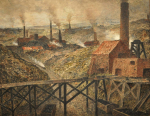
Constantin-Meunier-In-the-Black-Country-for-Anthony-CartwrightAnthony Cartwright at Granta:

Geology is destiny.

The Black Country is porous, like its limestone, and hard as Rowley rag, the dolerite in its quarries. For a time this was the most heavily industrialised few square miles on the planet, and yet, as its name suggests, it has never been fully urban. Its hills mark the watershed between the rivers Severn and Trent, thewrosne of Old English, a word that translates as ‘the link’. The Black Country’s borders are ill-defined, corresponding roughly to the old South Staffordshire coalfield (which incorporates enclaves of Worcestershire and Shropshire). It is in the English midlands, to the west of Birmingham, but not of it. On that, at least, we can all agree.

When I ring my dad on the day of the referendum he tells me that he has seen people queuing off the Rowley Road to vote. The hills fall away south below the line of voters, past the blackened brick of the air shaft that comes from the tunnel bored through the land below, past the shell of Cobb’s Engine House which used to pump water from the nearby mines into the canal, past Clent and Walton and the woods that once belonged to King Offa and Saint Kenelm, webbed with lanes where they say Harry Ca Nab, the leader of the devil’s hunt, still sometimes rides on his wild bull. He will surely be out tonight; Lord of Misrule.

more here.

the narcissist

NarcKristin Dombek at n+1:

THE NARCISSIST IS, according to the internet, empty. Normal, healthy people are full of self, a kind of substance like a soul or personhood that, if you have it, emanates warmly from inside of you toward the outside of you. No one knows what it is, but everyone agrees that narcissists do not have it. Disturbingly, however, they are often better than anyone else at seeming to have it. Because what they have inside is empty space, they have had to make a study of the selves of others in order to invent something that looks and sounds like one. Narcissists are imitators par excellence. And they do not copy the small, boring parts of selves. They take what they think are the biggest, most impressive parts of other selves, and devise a hologram of self that seems superpowered. Let’s call it “selfiness,” this simulacrum of a superpowered self. Sometimes they seem crazy or are really dull, but often, perhaps because they have had to try harder than most to make it, the selfiness they’ve come up with is qualitatively better, when you first encounter it, than the ordinary, naturally occurring selves of normal, healthy people. Narcissists are the most popular kids at school. They are rock stars. They are movie stars. They are not really rock stars or movie stars, but they seem like they are. They may tell you that you are the only one who really sees them for who they really are, which is probably a trick. If one of your parents is a narcissist, he or she will tell you that you are a rock star, too, which is definitely a trick.

more here.

Thursday Poem

The Problem of Describing Trees

The aspen glitters in the wind
And that delights us.

The leaf flutters, turning,
Because that motion in the heat of August
Protects its cells from drying out. Likewise the leaf
Of the cottonwood.

The gene pool threw up a wobbly stem
And the tree danced. No.
The tree capitalized.
No. There are limits to saying,
In language, what the tree did.

It is good sometimes for poetry to disenchant us.

Dance with me, dancer. Oh, I will.

Mountains, sky,
The aspen doing something in the wind.
.

by Robert Hass
from Time and Materials
Ecco, 2007
.

Wednesday, August 17, 2016

How to Write About Trauma

Saïd Sayrafiezadeh in the New York Times:

Sayrafiezadeh-blog427One summer afternoon, when I was 4 or 5 years old, I was raped by a next-door neighbor. If the act itself was gruesome, the aftermath was surprisingly uneventful, beginning with the fact that my mother, despite knowing what had transpired, did nothing. As for me, I did what everyone tries to do under similar circumstances: move on and be normal. With the exception of the occasional nightmare that visited me in the years that followed, I was convinced that there had been no lasting damage. How miraculous it was that I had emerged unscathed.

This could very well have been the end of the story if not for my freshman year in college, when I found myself being pursued, some might say stalked, by a male professor who had somehow determined, at least in his own mind, that I was gay. He had also determined, or so he said, that I was a good writer, or a great writer, hyperbole I happily accepted without question since I was in need of any and all approbation.

He gave me books, he gave me money, he gave me dinner. He also gave me letters, multipaged and pornographic, describing in no uncertain terms what we would do once I got over my sexual inhibitions. Sometimes I would hear him driving past my apartment building in his silver sports car with its distinctive downshift. Sometimes I imagined I heard him driving past. Sometimes I would wake up to find that a letter had been placed in my mailbox at some point during the night.

I was not gay and I told him so.

More here.

Mathematicians Are Overselling the Idea That “Math Is Everywhere”

Michael J. Barany in Scientific American:

ScreenHunter_2153 Aug. 17 23.55Most people never become mathematicians, but everyone has a stake in mathematics. Almost since the dawn of human civilization, societies have vested special authority in mathematical experts. The question of how and why the public should support elite mathematics remains as pertinent as ever, and in the last five centuries (especially the last two) it has been joined by the related question of what mathematics most members of the public should know.

Why does mathematics matter to society at large? Listen to mathematicians, policymakers, and educators and the answer seems unanimous: mathematics is everywhere, therefore everyone should care about it. Books and articles abound with examples of the math that their authors claim is hidden in every facet of everyday life or unlocks powerful truths and technologies that shape the fates of individuals and nations. Take math professor Jordan Ellenberg, author of the bestselling bookHow Not to Be Wrong, who asserts “you can find math everywhere you look.”

To be sure, numbers and measurement figure regularly in most people’s lives, but this risks conflating basic numeracy with the kind of math that most affects your life. When we talk about math in public policy, especially the public’s investment in mathematical training and research, we are not talking about simple sums and measures.

More here.

Why Islam resists secularization, and how that continues to shape the politics of the Middle East

Isaac Chotiner in Slate:

ScreenHunter_2152 Aug. 17 23.31One of the hopes that grew out of the Arab Spring was that a relatively moderate strain of Islamist politics could thrive in the region. Given the widespread prevalence of dictators and military-led regimes, and the violent radicals who oppose them in mirrored gruesomeness, groups like Egypt’s Muslim Brotherhood were seen as potential alternatives. Five years later, however, the Arab Spring has devolved into a collection of bloody failures everywhere from Egypt to Syria. Another proposed model of Islamism—Recep Tayyip Erdogan’s Turkey—was already giving way to autocracy well before a quashed coup attempt further entrenched Erdogan’s demagoguery.

These failures have raised the fraught question of whether Islam itself is partially to blame. Shadi Hamid, a senior fellow at the Brookings Institution, is the author of a new book, Islamic Exceptionalism: How the Struggle Over Islam Is Reshaping the World. The title gives some hint of his provocative analysis. As he writes, “If Islam is, in fact, distinctive in how it relates to politics, then the foundational divides that have torn the Middle East apart will persist, and for a long time to come.”

I recently spoke by phone with Hamid. During the course of our conversation, which has been edited and condensed for clarity, we discussed why liberals have trouble taking religion seriously, the future of Islamist politics in Turkey and Egypt, and what the rise of Donald Trump has meant for American Muslims.

More here.

Trump’s border-wall pledge threatens delicate desert ecosystems

Brian Owens in Nature:

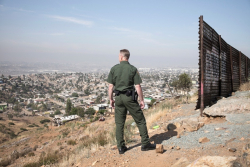
GettyImages-455494618webWith Republican presidential candidate Donald Trump talking about walling off the United States from Mexico, ecologists fear for the future of the delicate and surprisingly diverse ecosystems that span Mexico’s border with the southwestern United States. “The southwestern US and northwestern Mexico share their weather, rivers and wildlife,” says Sergio Avila-Villegas, a conservation scientist from the Arizona-Sonora Desert Museum in Tucson. “The infrastructure on the border cuts through all that and divides a shared landscape in two.” Trump’s policies tend to be short on detail, but he has talked about sealing off the entire 3,200-kilometre border with a wall that would be 10–20 metres high. “We will build a wall,” Trump says in a video on his campaign website. “It will be a great wall. It will do what it is supposed to do: keep illegal immigrants out.” Constructing a wall “would be a huge loss”, says Clinton Epps, a wildlife biologist at Oregon State University in Corvallis. “We know how important the natural movement of wildlife is for the persistence of many species.” Far from being a barren wasteland, the US–Mexico borderlands have some of the highest diversity of mammals, birds and plants in the continental United States and northern Mexico — including many threatened species.

A wall could divide species that make a home in both nations. Bighorn sheep, for example, live in small groups and rely on cross-border connections to survive, says Epps. Other species, such as jaguars, ocelots and bears, are concentrated in Mexico but have smaller, genetically linked US populations. “Black bears were extirpated in West Texas, and it was a big deal when they re-established in the 1990s,” Epps says. Breaking their links with Mexican bears could put the animals at risk again. And birds that rarely fly, such as roadrunners, or those that swoop low to the ground, such as pygmy owls, could also have trouble surmounting the wall. Such a physical barrier would worsen the habitat disruption caused by noise, bright lights and traffic near the border. And a wall would cut across rivers and streams that cross the border, severing a vital link. “When water crosses the border, it unites ecosystems,” says Avila-Villegas. “If we block the water, it affects nature on a much more fundamental level.”

More here.

new editions of T. S. Eliot

MTIwNjA4NjMzODAzOTMzMTk2Mark Ford at The London Review of Books:

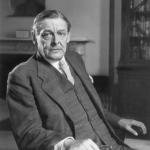
Certainly Eliot’s mind was a vast, labyrinthine echo chamber, and perhaps more than any other canonical poet of the English language, with the possible exception of his great antagonist John Milton, he was conscious of the previous uses by other writers of the words he deployed in his poems. But what exactly is the difference, one can’t help wondering while reading such notes, between an interesting allusion or echo and a mere verbal coincidence? And where should limits be set for the recording of these echoes or coincidences in the age of the internet, when it’s possible to pursue any phrase ad infinitum? Should notes in a scholarly edition aspire to the condition of an entry in the OED? Anyone with an interest in Eliot will be grateful for, and marvel at, the truly extraordinary knowledge of all things Eliotic that underpins these volumes, but – to get my quibble out of the way early, so that I can praise the numerous virtues of this edition with a clear conscience – it is not always easy to discern the value of the links the editors posit between Eliot’s words and the analogous phrases, drawn from a bewildering array of writers, presented for comparison in the commentary.

Those first ten lines of ‘Prufrock’, for instance, elicit, as well as the citations I’ve already mentioned, quotations from Jules Laforgue, W.E. Henley, Théophile Gautier, Russell S. Fowler (author of The Operating Room and the Patient, a 1906 book which includes a reference to ‘anaesthetic tables’), William James, James Thomson, William Acton, Charles-Louis Philippe, W.R. Burnett (a crime novelist in whose High Sierra – published in 1940 – the phrase ‘She was … a one-night-stand type’ occurs), Edward Winslow Martin (author of The Secrets of the Great City, 1868, which mentions ‘cheap hotels’), the London Baedeker, Cooper’s The Prairie and Hamlet’s ‘overwhelming question’ – ‘“To be, or not to be, that is the question.”

more here.

Jazz June

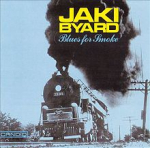
220px-Blues_for_SmokeClifford Thompson at Threepenny Review:

Among her many other poems, the African-American writer Gwen-dolyn Brooks wrote the following, perhaps her most famous work:

WE REAL COOL

We real cool. We
Left school. We

Lurk late. We
Strike straight. We

Sing sin. We
Thin gin. We

Jazz June. We
Die soon.

The poem adopts the viewpoint of marginalized black boys who shoot pool together. Brooks explained about the passage “We / Jazz June” that these boys, effectively locked out of mainstream society, gleefully attack its cherished symbols: to June, that month of wedding announcements in newspapers’ society pages, the boys bring jazz, originally the music of the low-down. (“Jazz” was once a verb, synonymous with “fuck.”)

I may have read that explanation in a textbook, but it’s possible—and this is the version of events I prefer—that I heard it from Brooks’s own lips, on the one, cringe-worthy occasion when I met her. This was in New York in 1991. I was a freelance (read: an unemployed) writer of twenty-eight, scrounging for a living, and I had signed on to write a young-adult biography of Brooks.

more here.

THE IMPROBABLE LIFE AND PRESCIENT POETRY OF BASIL BUNTING

Spaide-TheImprobableLifeandPrescientPoetryofBasilBunting-1200Christopher Spaide at The New Yorker:

Basil Bunting were not remembered for “Briggflatts”—his longest and best poem, first published fifty years ago—he might still be remembered as the protagonist of a preposterously eventful twentieth-century life. By the age of fifty, he had been a music critic, a sailor, a balloon operator, a wing commander, a military interpreter, a foreign correspondent, and a spy. He had married twice, had four children, lived on three continents (and one boat), survived multiple assassination attempts, and been incarcerated throughout Europe. He had also apprenticed at Ezra Pound’s poetic “Ezuversity” in Rapallo, played an “indifferent” game of chess with General Francisco Franco in the Canary Islands, and communicated with Bakhtiari tribesmen in classical Persian. Educated in Quaker schools, he was imprisoned for refusing to serve in the First World War—and released after a brief hunger strike—only to high-mindedly rush into the Second, during which he served in the Royal Air Force and MI6. Eventually, as he boasted to Pound’s wife, Dorothy, he became “chief of all our Political Intelligence in Persia, Iraq, Saudi Arabia, etc.” As a London Times correspondent in Tehran, in 1952, he watched as a hired mob congregated outside his hotel and chanted, “death to mr. bunting!” Guessing, correctly, that nobody calling for Mr. Bunting’s death had ever seen the man, Bunting joined the mob and chanted along with them. Soon after, he and his family fled the country, driving from Iran to Bunting’s mother’s house in England—a one-month trip—in a company car.

By the nineteen-sixties, though, Bunting’s life was at an uncharacteristic lull: he had spent the previous decade in his home of Northumberland, working at local newspapers, where he ended up subediting the business page and stock tables. He confessed in a letter to the publisher Jonathan Williams that his life had been “one of struggling to keep my belly filled and my children’s bellies filled, and no time whatever for literary pre-occupations.”

more here.