
Video length 6:24
Category: Recommended Reading
Scents and sensuality
William Dalrymple in The Economist:

Meanwhile the sultan set to work recording the things that gave him the most intense pleasure. His book, the “Ni’matnama” or “Book of Delights”, survives today in the British Library, having passed through the eager hands of the Mughals and Tipu Sultan before being packed off in 1799 to the greyer skies of London by the conquering East India Company. The book is one of the greatest records of the life and pleasures of the bon viveur ever written. It includes advice on all manner of matters, such as hunting expeditions (don’t leave home without a picture of your beloved, camphor to have rubbed into your feet, your best sparrow hawk, and a cheetah or two). There are pages of recipes, which range from ten different ways to concoct the perfect samosa (don’t forget to add saffron, fried aubergines and ginger) to instructions for making the medieval Indian equivalent of Viagra: Ghiyath swears by sparrow brains fried in milk and ghee – eat this, he writes, and smear a mixture of balsam oil, cardamom, Tibetan musk and honey on your penis, and the combination will produce “strong lust…desire returns, joy is bestowed on the heart, there are erections and semen flows.”
More here.
The Perfect Gift? It’s the One They Asked For
John Tierney in The New York Times:

Don’t aim for the “big reveal.” Many shoppers strive to find a sensational toy or extravagant piece of jewelry that will create drama when it’s opened. But drama is not what recipients want, according to a new study by Jeff Galak of Carnegie Mellon University. He and his colleagues have found that gifts go wrong because the givers are focused on the moment of exchange, whereas the recipients are thinking long-term: Will I actually get any use out of this? Don’t “over-individuate” your gifts. People too often give bad presents because they insist on buying something different for everyone. In experiments using greeting cards and gifts, psychologists found that people typically feel obliged to choose unique items for each person on their list even when the recipients wouldn’t know if they got duplicates — and even when one particularly good gift would work better for everyone. The more gifts you select, the more likely you’ll pick some duds. If you can find one sure thing, don’t be afraid to give it more than once.
More here.
Monday, December 12, 2016
Perceptions
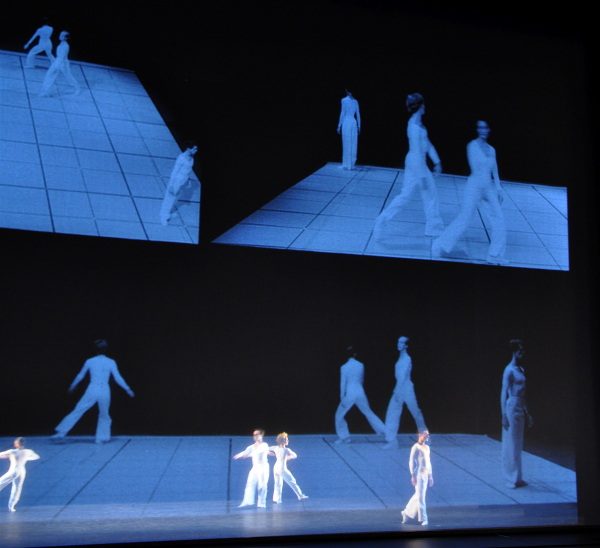
Lucinda Childs Dance Company. “Dance”, 1979.
“… A racist and homophobic Chicago riot, July 12, 1979, is known as the day disco died an ignominious death. Meanwhile, Minimalism, idealistic and unfiltered, reached perhaps its pinnacle at the decade’s end with Lucinda Childs’ “Dance,” her choreography to Philip Glass’ “Dance Nos. 1–5” with filmed projections by the conceptual artist Sol LeWitt.”
“In a Washington Post review of Dance, Alan M. Kriegsman wrote, “a few times, at most, in the course of a decade a work of art comes along that makes a genuine breakthrough, defining for us new modes of perception and feeling and clearly belonging as much to the future as to the present. Such a work is Dance”.”
CATSPEAK
by Brooks Riley

Sunday, December 11, 2016
The Calcutta Pococurante Society: Public and Private in India’s Age of Reform
Joshua Ehrlich in the Public Domain Review:
Firstly.—Three courses and a des[s]ert.
Secondly.—An additional course.
Thirdly.—Cant, Humbug, and Absurdity in all their branches whether Tory, Whig, Radical, Ultra, or Liberal, Medical, or Literary, Martial, or Civil, National, or individual … (p. 3).
The proceedings which follow are a mixture of light humor, literary chatter, and armchair philosophy, all dripping with booze. “My dear compatriots and I,” one member sets the scene, “are scribbling in Calcutta, the ruling caste, and tippling our Hock and Champaigne round this table” (p. 22). Another notes “how much the art of preparing the necessaries of life has advanced in Calcutta”, referring specifically to “the modus operandi of cooling wines” (p. 33). Elsewhere a full page is taken up by a wine list. Evidently, this is “a club where the mind can throw off its coat, and put its legs upon a chair if they are tired” (p. 7). The members’ wandering dinner chat, peppered with lines of poetry and elements of the occult, is not the kind of thing modern readers are used to seeing in print. Nor is it obvious why past readers should have wanted to.
Early nineteenth-century Calcutta (now Kolkata) has long held particular fascination for historians. In older tellings, this was the setting of a “Bengal Renaissance”, which saw ambitious attempts to synthesize eastern and western philosophical traditions, and gave an early (if abortive) impulse to Indian nationalism. Recent studies have situated Calcutta’s intellectual and political ferment in the larger context of a British-imperial or global age of reform.
More here.
“Everything Will Change”

David Broder in Jacobin:
Yesterday’s papers offered a gloomy take on what was at stake in the Italian consitutional referendum. The Sunday Times headlined that prime minister “Renzi resists the march of the Radical Right”; a piece in the Independent went with “Italy is holding a vote that could destroy Europe” (later edited to “the euro”) whereas another declaring Sunday, December 4 “the most dangerous moment for Europe since Brexit” was illustrated with a photo of Matteo Renzi and the somber caption “everything will change.” The Observer meanwhile treats the referendum as part of its series on the “threat to liberal democracy.” So after the Italian population voted by almost 60 percent to reject Renzi’s constitutional reform, is the country now headed toward the authoritarian abyss?
Certainly the attempt to shoehorn the referendum into a wider narrative of European decline and the rise of nationalisms is not only a foreign media projection. During the campaign both Renzi himself and his right-wing opponents sought to promote this same narrative, with the Democratic Party (PD) prime minister portraying himself as the last bulwark against nationalist populism, just as the leaders of the hard-right Northern League sought to spin the vote as a referendum on the euro and migration, regardless of its actual policy substance.
Meanwhile the eclectic Five Star Movement (M5S), currently second in national polls, mounted a No campaign light on constitutional detail but heavy on the idea of using the vote as a means of sacking Renzi. Contradicting the new generation of M5S leaders like Luigi di Maio or Rome mayor Virginia Raggi, the party’s founder Beppe Grillo like the Lega Nord drew comparisons with the Trumpist revolt.
Despite this framing of the referendum by such figures, doubtless also heavily shaping public responses to the ballot, it is also important to see the referendum as more than a party affair.
More here.
Against the Politics of Fear

Corey Robin over at his website:
In the last few days, I’ve gotten a lot of emails and comments asking me why I seem, in my Facebook posts and tweets, to downplay the threat of Trump. Why I resist the comparisons to Hitler and the Nazis, why I emphasize the continuities between Trump and previous Republicans, why I insist on attending to the fractures and cleavages within his coalition.
Now, of course, nothing I say is meant to downplay the threat at all; it’s all designed to get us to see it more clearly (clearly, of course, by my lights), and while I don’t see my posts or tweets primarily or even secondarily as organizing tools, I’d like to think they give us some potential sense of leverage over the situation. But let me not get too fancy or fussy in my response; let me simply take this criticism head on.
There are a lot of academic, intellectual, and scholarly reasons I could cite for why I say what I say about Trump, and you probably know them all, and they’re all relevant and important. But there is, I recognize, something deeper going on for me. And that is that I am fundamentally allergic to the politics of fear. That term is complicated (I explore it a lot in my first book), so forgive the very truncated, simple version I’m about to give here.
The politics of fear doesn’t mean a politics that points to or invokes or even relies on threats, real or false. It doesn’t mean a politics that is emotive (what politics isn’t?) or paranoid. It means something quite different: a politics that is grounded on fear, that takes inspiration and meaning from fear, that sees in fear a wealth of experience and a layer of profundity that cannot be found in other experiences (experiences that are more humdrum, that are more indebted to Enlightenment principles of reason and progress, that put more emphasis on the amenability of politics and culture to intervention and change), a politics that sees in Trump the revelation of some deep truth about who we are, as political agents, as people, as a people.
I cannot tell you how much I loathe this kind of politics.
More here.
The self is moral
Nina Strohminger in Aeon:
One morning after her accident, a woman I’ll call Kate awoke in a daze. She looked at the man next to her in bed. He resembled her husband, with the same coppery beard and freckles dusted across his shoulders. But this man was definitely not her husband.
Panicked, she packed a small bag and headed to her psychiatrist’s office. On the bus, there was a man she had been encountering with increasing frequency over the past several weeks. The man was clever, he was a spy. He always appeared in a different form: one day as a little girl in a sundress, another time as a bike courier who smirked at her knowingly. She explained these bizarre developments to her doctor, who was quickly becoming one of the last voices in this world she could trust. But as he spoke, her stomach sank with a dreaded realisation: this man, too, was an impostor.
Kate has Capgras syndrome, the unshakeable belief that someone – often a loved one, sometimes oneself – has been replaced with an exact replica. She also has Fregoli syndrome, the delusion that the same person is taking on a variety of shapes, like an actor donning an expert disguise. Capgras and Fregoli delusions offer hints about an extraordinary cognitive mechanism active in the healthy mind, a mechanism so exquisitely tuned that we are hardly ever aware of it. This mechanism ascribes to each person a unique identity, and then meticulously tracks and updates it. This mechanism is crucial to virtually every human interaction, from navigating a party to navigating a marriage. Without it, we quickly fall apart.
A classic philosophical thought experiment poses the following paradox. Imagine a ship, let’s call it the Nina, whose planks are replaced, one by one, as they age. Eventually every original part is changed, resulting in a boat made of entirely new materials. Our intuition that this is the same ship becomes problematic when the builders reassemble all the Nina’s original parts into a second ship. The Nina’s identity is tied up inextricably with her physicality.
More here.
My Life with the Physics Dream Team: Freeman Dyson on working with the greatest physicists of the 20th century
Steve Paulson in Nautilus:
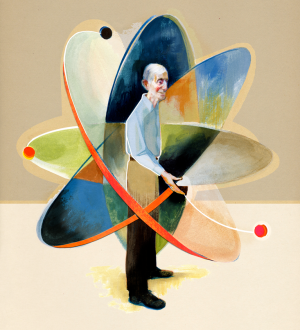
…Are you fundamentally an optimist about the human species?
Yes. It comes from having grown up in the 1930s. In so many ways, things were black in the 1930s, far worse than they are today. People don’t remember, but everything in England was covered with soot. When I would go to London for the day, the color in my shirt would turn black because there was so much soot in the air. England is much cleaner now than it was then. The United States is much cleaner now. Los Angeles was full of smog when I first came there. Economic problems were much worse in the ’30s than they are today. Above all, we had World War II to look forward to. We were all quite aware of Hitler and the fact that we were going to have to fight him, and that we probably wouldn’t survive. That was what I grew up with. That was far worse than the kind of wars we have today.
More here.
Paar Chanaa De, Shilpa Rao & Noori, Episode 4, Coke Studio Season 9
Note: The song here is about doomed lovers Sohni-Mahiwaal. Take a moment to read their story.
bill viola: the movement in the moving image
william christenberry (1936 – 2016)
john glenn (1921 – 2016)
Sunday Poem
The dead seal near McClure’s Beach
1.
……….Walking north toward the point, I came on a dead seal. From a few feet away, he looks like a brown log. The body is on its back, dead only a few hours. I stand and look at him. There’s a quiver in the dead flesh. My God he is still alive. A shock goes through me, as if a wall of my room had fallen away.
……….His head is arched back, the small eyes closed, the whiskers sometimes rise and fall. He is dying. This is the oil. Here on its back is the oil that heats our houses so efficiently. Wind blows fine sand back toward the ocean. The flipper near me lies folded over the stomach, looking like an unfinished arm, lightly glazed with sand at the edges. The other flipper lies half underneath. The seal’s skin looks like an old overcoat, scratched here and there, by sharp mussel-shells maybe…
……….So I reach out and touch him. Suddenly he rears up, turns over, gives three cries. Awaark! Awaark! Awaark! — like the cries from Christmas toys. He lunges toward me. I am terrified and leap back, although I know there can be no teeth in that jaw. He starts flopping toward the sea. But he falls over, on his face. He does not want to go back to the sea. He looks up at the sky, and he looks like an old lady who has lost her hair.
……….He puts his chin back on the sand, rearranges his flippers, and waits for me to go. I go.
2.
Today I go back to say goodbye. He’s dead now, but he’s not—he’s a quarter mile further up the shore. Today he is thinner, squatting on his stomach, head out. The ribs show more—each vertebra on the back underneath the coat is now visible, shiny. He breathes in and out.
He raises himself up, and tucks his flippers under, as if to keep them warm. A wave comes in, touches his nose. He turns and looks at me—the eyes slanted, the crown of his head looks like a boy’s leather jacket bending over his bicycle bars. He is taking a long time to die. The whiskers white as porcupine quills, the forehead slopes…goodbye brother, die in the sound of waves, forgive us if we have killed you, long live your race, your inner-tube race, so uncomfortable on land, so comfortable in the ocean. Be comfortable in death then, when the sand will be out of your nostrils , and you can swim in long loops through the pure death, ducking under as assassinations break above you. You don’t want to be touched by me. I climb the cliff and go home the other way.
by Robert Bly
from News of the Universe
Sierra Club Books, 1980
.
Saturday, December 10, 2016
Zadie Smith: On Optimism and Despair
A talk given in Berlin on November 10 on receiving the 2016 Welt Literature Prize.
Zadie Smith in the New York Review of Books:
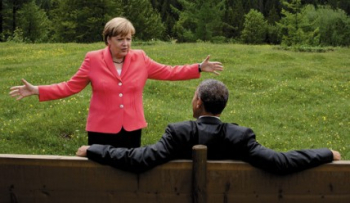
The question is: “In your earlier novels you sounded so optimistic, but now your books are tinged with despair. Is this fair to say?” It is a question usually posed in a tone of sly eagerness—you will recognize this tone if you’ve ever heard a child ask permission to do something she has in fact already done.
Sometimes it is put far more explicitly, like so: “You were such a champion of ‘multiculturalism.’ Can you admit now that it has failed?” When I hear these questions I am reminded that to have grown up in a homogeneous culture in a corner of rural England, say, or France, or Poland, during the 1970s, 1980s, or 1990s, is to think of oneself as having been simply alive in the world, untroubled by history, whereas to have been raised in London during the same period, with, say, Pakistani Muslims in the house next door, Indian Hindus downstairs, and Latvian Jews across the street, is thought of, by others, as evidence of a specific historical social experiment, now discredited.
More here.
Bresson and the Elliptical Economies of a Master Filmmaker
Originally a painter, Bresson was a proponent of pure cinema, something he elaborates throughout “Bresson on Bresson.” Interviewed during the making of “Pickpocket,” he asserted his desire “to make a film of hands, glances, objects, refusing everything that is theatrical.” To that he later added: “More and more in my films, I’m trying to suppress what people call plot. Plot is for novelists.” In an interview given while “Pickpocket” was in release, he asserted that “films should not have subjects at all.”
In fact, Bresson’s films tended to focus on individual figures. Most of his movies can be seen as dramas of faith and bids for redemption — both on the part of the filmmaker and the central character, who in “Au Hasard Balthazar,” the 1970 movie widely considered his masterpiece, happens to be a donkey.
“Impossible tasks attract me,” Bresson told Le Figaro in 1949. “It’s good to create obstacles. I, at least, don’t work well without obstacles,” he said in a radio interview, conducted in English, at the 1962 Cannes Film Festival, where “The Trial of Joan of Arc” won a special jury prize. Five years later, he ended a conversation with the critic Georges Sadoul by musing, “I wonder if my films are worth the effort they require.”
more here.
Nabokov and Edmund Wilson: the feud

Novelist Vladimir Nabokov is not only one of the midcentury masters of prose but also, arguably, our greatest literary cartographer. The author of such masterworks as “Lolita” and “Pale Fire” often sketched maps of the settings of his favorite novels. One can easily find online his diagram of the trek Leopold Bloom takes across the Dublin of James Joyce’s “Ulysses,” his layout of the Samsa family flat in Franz Kafka’s “The Metamorphosis” and his topography of Sotherton Court from Jane Austen’s “Mansfield Park.” The ability to create maps from text, to envision spatially the events of a novel in detail, is a special one, and it typifies the obsessive creativity of Nabokov, one of the gods of both Russian and American letters.
Alex Beam, in his new literary biography, “The Feud: Vladimir Nabokov, Edmund Wilson, and the End of a Beautiful Friendship,” becomes a cartographer of a different type as he maps out the contours of a friendship-turned-feud. Edmund Wilson, Nabokov’s foil here, is less known now than his Russian competitor, but there was a time when he was one of the premier American critics.
Beam’s book gives us a brief but detailed sketch of how two erudite men of letters went from intimate confraternity to bitter enmity in the span of a few decades.
Their friendship began in 1940 when Nicolas Nabokov, an émigré composer who rented a house across the street from Wilson in Wellfleet, Mass., asked his neighbor if he would help his cousin Vladimir, a struggling novelist who had recently arrived in the States. “Do whatever you can,” he implored.
more here.
Is physics turning into biology?
Ashutosh Jogalekar in The Curious Wavefunction:

The overriding “fundamental law” in biology is that of evolution by natural selection. But while the law is fundamental on a macro scale, its details at a micro level don't lend themselves to real explanation in terms of origins. For instance the bacterial flagellum is a product of accident and time, a key structure involved in locomotion, feeding and flight that resulted from gene sharing, recombination and selective survival of certain species spread over billions of years. While one can speculate, it is impossible to know for certain all the details that led to the evolution of this marvelous molecular motor. Thus biologists have accepted history and accident as integral parts of their fundamental laws.
Physics was different until now. Almost everything in the universe could be explained in terms of fundamental laws like Einstein's theory of general relativity or the laws of quantum mechanics. If you wanted to explain the shape and structure of a galaxy you could seek the explanation in the precise motion of the various particles governed by the laws of gravity. If you wanted to explain why water is H20 and not H30 you could seek the explanation in the principles of quantum mechanics that in turn dictate the laws of chemical bonding.
More here.
Why sexual desire is objectifying – and hence morally wrong
Raja Halwani in Aeon:
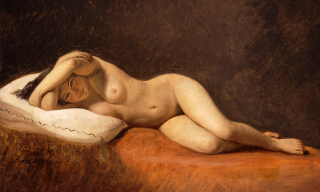
Once desire becomes suspect, sex is never far behind. Kant implicitly acknowledged the unusual power of sexual urges and their capacity to divert us from doing what is right. He claimed that sex was particularly morally condemnable, because lust focuses on the body, not the agency, of those we sexually desire, and so reduces them to mere things. It makes us see the objects of our longing as just that – objects. In so doing, we see them as mere tools for our own satisfaction.
Treating people as objects can mean many things. It could include beating them, tearing into them, and violating them. But there are other, less violent ways of objectifying people. We might treat someone as only a means to our sexual pleasure, to satisfy our lust on that person, to use a somewhat archaic expression. The fact that the other person consents does not get rid of the objectification; two people can agree to use one another for purely sexual purposes.
More here.