Wednesday Poem

Working the Stacks

Reach up for the light cord and tug through its little knot
of resistance, and there’s Samuel Johnson,
sharing the floor with Nietzche,
Anthony Trollope, Franz Fanon, Osbert and Edith Sitwell,
German small-print dictionaries,
black bound insurance tables,
histories of 1920 trolley companies that failed,
Even before you locate a book,
you can feel its weight
in your hands, the self-sufficiency
of 1870 geographies, the erotics
of steam engines. You’re pushing the whole language
ahead of you, leaning your shoulder
into the cart and, when that doesn’t work,
falling against it
till, just when you’re certain that it won’t budge,
it starts to roll as if it’s considered the prospects
of staying in the same spot forever
and decided, instead,
to revel in the fact that it has wheels,
Hitler rides the same cart up with Marcus Aurelius,
Big Bill Haywood, the Marquis de Sade,
and Salvador Dali. Of course
you talk to yourself, but it’s really more a hum,
the kind one keeps up
moving among bodies slumbering so deeply
they could be dead, music
that doesn’t require the mouth to be open,
as the mind sings to itself
day in and day out,
working alone,
on its way to words or on its way back.

Christopher Bursk
from The First Inhabitants of Arcadia
The University of Arkansas Press, 2006
.

LOVE, TERROR, AND CIGARETTES

170109_r29267-320x444-1482944965Joan Acocella at The New Yorker:

The German writer Gregor Hens smoked his first cigarette when he was five. His mother gave it to him. It was New Year’s Eve, and the Hens family, like many Germans, were out in the snow setting up fireworks. But they couldn’t light the fuses, because Gregor’s two older brothers were fighting over the lighter. Frau Hens finally lost patience: “She pulled out a cigarette, lit it and held it out to me.” Little Gregor took this wonderful thing and held it to the fuse of one of the rockets, which shot into the sky. Then he saw that the cigarette’s ember had ceased to glow. “You have to take a drag on it, my mother said out of the half-darkness.” He took a drag, the ember glowed again, and the child suffered a near-collapse from coughing and joy.

As Hens tells us in his memoir, “Nicotine” (Other; translated from the German by Jen Calleja), this experience eventually landed him with a decades-long addiction to nicotine. It also, he believes, gave him the beginnings of a personality: “I became myself for the first time.” He means this literally. In his mind, the entire episode—the coughing fit, his mother’s blue hat, his almost uncontainable pride in the fact that he, not his brothers, detonated the first rocket—comes together into a story, the first memory he has that is a story rather than just an image or a sensation. And, because he is a writer, he sees this birth of a story as the birth of his personality. How nice: to have the emergence of one’s self marked by a rocket exploding!

more here.

Carmen Herrera: Art Without Lies

Herrera-la-silla-e1482342429399Claire Messud at the NYRB:

When Carmen Herrera is asked to explain her paintings in Alison Klayman’s film about her life and work, The 100 Years Show (2015), she says, “If I could put those things in words, I wouldn’t do the painting. I would tell you…Usually artists are not the best people to talk about art. I think it’s a great mistake. You cannot talk about art—you have to art about art.”

Herrera, now 101 years old, has spent the better part of a century doing just that. For most of that time, the world paid scant attention to her “arting”: only in the last decade has she been granted the attention she should by rights have received half a century ago. As a Cuban, as a woman, she found little public support in the New York art world. Reluctant to be classified by national origin or gender, she struggled to find a place, but continued to produce work, prolifically, for decades: “I kept going,” she says in Klayman’s film. “I couldn’t stop.”

Herrera paints or draws daily even now, and her work has remained an exhilarating example of hard-edged abstraction. Inspired by Miró and Mondrian, a friend of Barnett Newman and of Leon Polk Smith, a young artist in post-war Paris at the same time as Ellsworth Kelly, she is an artist for whom the pure line remains the source of inspiration and joy (“I like straight lines…I like order. In this chaos that we live in, I like to put order,” she explained in a 1994 interview).

more here.

Vulgar Tongues: an Alternative History of English Slang

Vulgar-tongues-an-alternative-history-of-english-slangLynne Truss at The New Statesman:

This is the trouble with books on slang. However exhaustive they are, they always leave you asking, “But why?” Max Décharné’s engaging book Vulgar Tongues is a spectacular feat, collating information from a mind-boggling range of sources – from jazz lyrics to dime novels, from 18th-century brothel directories to 1960s criminal autobiographies.

Take a word such as “chippie”, meaning whore. Décharné gives us a couple of quotations from Dashiell Hammett’s Red Harvest (1929) and Raymond Chandler’s The High Window(1942) – which is where you would expect him to find some. But his killer examples are the title of the jazz record “Chasin’ Chippies” by Cootie Williams and His Rug Cutters (1938) and an exchange from a 1960 Chester Himes novel set in Harlem,The Big Gold Dream:

“I was watching out for my girls,” Dummy replied.

“Your girls?”

“He’s got two chippie whores,” Grave Digger replied. “He’s trying to teach them how to hustle.”

more here.

Tuesday, January 3, 2017

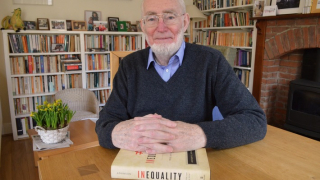
Sir Tony Atkinson, economist and campaigner, 1944-2017

201503_Atkinson_Inequality

Chris Giles and Sarah O’Connor in the FT:

When academic economics was obsessed by free markets and a ruthless search for efficiency, while simply seeing societies as populated by multiple copies of one representative individual, the study and measurement of inequality was deeply unfashionable.

Sir Tony Atkinson, who died aged 72 on New Year’s Day, was the British economist who kept that flame alive through the 1980s and 1990s, surviving to see it return to the centre of economic concerns on both the political left and right.

For more than 50 years Atkinson battled for economics to take poverty and inequalityseriously, crediting his interest in the subject to a stint of voluntary service working at a deprived hospital in Hamburg in the mid-1960s. From 1967 when he took up a fellowship at St John’s College, Cambridge, he dedicated himself to the theory and the practicalities of understanding differences in society.

Three aspects of Atkinson’s work stand out. First came his concern about understanding the causes and consequences of poverty. This was a practical passion, which led him to ask what had to change in policy to improve people’s lives.

The practicalities did not end in the don’s study or lecture theatre, however. As a social campaigner as well as academic, Atkinson also sought to improve people’s lives on the street — manning a stall in Brightlingsea market in the early 1970s, when a professor at nearby Essex university, to explain benefit entitlements to passers-by.

A second strand of his academic contribution was more theoretical. As editor of the Journal of Public Economics for 25 years, and often in partnership with Joseph Stiglitz, Nobel Prize-winning economist, he challenged the orthodoxy of free-market economics, providing answers to how to reform economies where markets are not working well and policy constraints are severe.

More here.

The whole philosophy community is mourning Derek Parfit. Here’s why he mattered.

Shutterstock_356591723

Dylan Matthews in Vox:

Derek Parfit, who died at age 74 on Sunday evening, was not the most famous philosopher in the world. But he was among the most brilliant, and his papers and books have had a profound, incalculably vast impact on the study of moral philosophy over the past half century.

His work did not dwell on topics of merely academic interest. He wrote about big topics that trouble everyone, philosopher and layperson alike: Who am I? What makes me “me”? What separates me from other people? How should I weigh my desires against those of others? What do I owe to my children, and to the future in general? What does it mean for an action to be right or wrong, and how could we know?

Parfit was not a prolific author; he tended to write his books over the course of decades, refining them repeatedly after discussions with colleagues and students. In the end, he wrote only two: 1984’s Reasons and Persons, and 2011’s On What Matters, a two-volume, 1,440 page tome whose third volume is still yet to be published. But both are classics, the latter generating such furious debate that a volume of essays discussing it was released two years before the book itself even came out (most of the key arguments had circulated in draft form for some time).

For an excellent overview of Parfit’s life and the major themes of his work, I highly recommend Larissa MacFarquhar’s beautiful and incisive New Yorker profile, published as On What Matters finally hit shelves. But perhaps the best way to experience Parfit’s writing, and understand why both his ideas and his method of articulating them proved so influential, is to dig into a few of his most important and fascinating arguments.

If there’s a single idea with which Parfit is most strongly identified, it’s the view that personal identity — who you are, specifically, as a person — doesn’t matter. This argument, made in the 1971 paper “Personal Identity” and in the third section of Reasons and Persons, is jarring at first, but his case is persuasive, and the implications are profound.

Parfit asks us to imagine that he is fatally injured in an accident, but his brain is mostly unharmed. His two brothers are also in the accident, and emerge brain-dead, but with otherwise healthy bodies. Doctors then split his healthy brain in half, and implant a half in each of his brothers’ bodies. “Each of the resulting people believes that he is me, seems to remember living my life, has my character, and is in every other way psychologically continuous with me,” Parfit writes in Reasons and Persons. “And he has a body that is very like mine.”

He then asked: What happened to Derek Parfit in all this? Did he die? That can’t be right; if anything, he doubled.

More here.

The Rules of the Game: A New Electoral System

Maskin_sen_1-011917

Eric Maskin and Amartya Sen in The NY Review of Books:

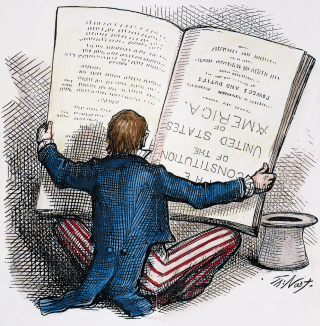
Americans have been using essentially the same rules to elect presidents since the beginning of the Republic. In the general election, each voter chooses one candidate; each state (with two current exceptions) awards all its Electoral College votes to the candidate chosen by the largest number of voters (not necessarily a majority) in that state; and the president-elect is the candidate with a majority of Electoral College votes.

Primary elections for president have also remained largely unchanged since they replaced dealings in a “smoke-filled room” as the principal method for selecting Democratic and Republican nominees. In each state, every voter votes for one candidate. In some states, the delegates to the national convention are all pledged to support the candidate getting a plurality of votes (again, possibly less than a majority). In others, delegates are assigned in proportion to the total votes of the candidates.

These rules are deeply flawed. For example, candidates A and B may each be more popular than C (in the sense that either would beat C in a head-to-head contest), but nevertheless each may lose to C if they both run. The system therefore fails to reflect voters’ preferences adequately. It also aggravates political polarization, gives citizens too few political options, and makes candidates spend most of their campaign time seeking voters in swing states rather than addressing the country at large.

There are several remedies. Perhaps in order of increasing chance of adoption, they are: (1) to elect the president by the national popular vote instead of the Electoral College; (2) to choose the winner in the general election according to the preferences of a majority of voters rather than a mere plurality, either nationally or by state; and, easiest of all, (3) to substitute majority for plurality rule in state primaries.

More here.

A Few Quick Bloggy Thoughts on the Sam Gold / Daniel Craig / David Oyelowo “Othello”

Daniel-and-David-1280x720

Isaac Butler in Parabasis:

Now that I've seen it, I’d like to briefly talk about a couple of aspects of Sam Gold’s recent, much-lauded production of Othello at New York Theatre Workshop and how it will hopefully come to influence how we produce Shakespeare. No, I’m not talking about the casting of movie stars, although both Daniel Craig and David Oyelowo’s performances were excellent. I’m talking instead about the way the production through sheer excellence makes a great case against both over conceptualization and the recent controversial efforts to “translate” Shakespeare plays to make them more accessible to contemporary audiences.

If you’ve seen this Othello, you might balk at my saying that it resists over conceptualization. This Othello was very directed, and the design was extremely present. The production transformed New York Theatre Workshop into a wood-lined barracks, with only a few light sources (none of them traditional theatrical light). When the audience entered, a soldier sat on stage playing Guitar Hero. The first scene took place almost entirely in the dark. The costumes looked deliberately unfinished. The cast sang Hotline Bling at one point. Two cast members besides Oyelowo were Black, shifting the focus away from Othello’s racial otherness and towards other themes.

Yet the production avoided literal conceptualizing. This play did not literally take place during the Iraq war, but it gestured at it. It did not literally take place in a barracks, but used elements of a barracks as scenery. Rather than taking us to a specific place or time, the design choices instead aimed to create the right environment for this interpretation of the text, an interpretation that was focused on war and its effects on masculinity.

More here.

The End of Progressive Neoliberalism

1483356265FraserFF15chicagocomegetmyvotebobsimpson2_11_16666

Nancy Fraser in Dissent:

Trump’s victory is not solely a revolt against global finance. What his voters rejected was not neoliberalism tout court, but progressive neoliberalism. This may sound to some like an oxymoron, but it is a real, if perverse, political alignment that holds the key to understanding the U.S. election results and perhaps some developments elsewhere too. In its U.S. form, progressive neoliberalism is an alliance of mainstream currents of new social movements (feminism, anti-racism, multiculturalism, and LGBTQ rights), on the one side, and high-end “symbolic” and service-based business sectors (Wall Street, Silicon Valley, and Hollywood), on the other. In this alliance, progressive forces are effectively joined with the forces of cognitive capitalism, especially financialization. However unwittingly, the former lend their charisma to the latter. Ideals like diversity and empowerment, which could in principle serve different ends, now gloss policies that have devastated manufacturing and what were once middle-class lives.

Progressive neoliberalism developed in the United States over the last three decades and was ratified with Bill Clinton’s election in 1992. Clinton was the principal engineer and standard-bearer of the “New Democrats,” the U.S. equivalent of Tony Blair’s “New Labor.” In place of the New Deal coalition of unionized manufacturing workers, African Americans, and the urban middle classes, he forged a new alliance of entrepreneurs, suburbanites, new social movements, and youth, all proclaiming their modern, progressive bona fides by embracing diversity, multiculturalism, and women’s rights. Even as it endorsed such progressive notions, the Clinton administration courted Wall Street. Turning the economy over to Goldman Sachs, it deregulated the banking system and negotiated the free-trade agreements that accelerated deindustrialization. What fell by the wayside was the Rust Belt—once the stronghold of New Deal social democracy, and now the region that delivered the electoral college to Donald Trump. That region, along with newer industrial centers in the South, took a major hit as runaway financialization unfolded over the course of the last two decades. Continued by his successors, including Barack Obama, Clinton’s policies degraded the living conditions of all working people, but especially those employed in industrial production. In short, Clintonism bears a heavy share of responsibility for the weakening of unions, the decline of real wages, the increasing precarity of work, and the rise of the two–earner family in place of the defunct family wage.

More here.

A Gut Makeover for the New Year

Roni Caryn Rabin in The New York Times:

‏microIf you’re making resolutions for a healthier new year, consider a gut makeover. Refashioning the community of bacteria and other microbes living in your intestinal tract, collectively known as the gut microbiome, could be a good long-term investment in your health. Trillions of microbial cells inhabit the human body, outnumbering human cells by 10 to one according to some estimates, and growing evidence suggests that the rich array of intestinal microbiota helps us process nutrients in the foods we eat, bolsters the immune system and does all sorts of odd jobs that promote sound health. A diminished microbial ecosystem, on the other hand, is believed to have consequences that extend far beyond the intestinal tract, affecting everything from allergies and inflammation, metabolic diseases like diabetes and obesity, even mental health conditions like depression and anxiety.

Much of the composition of the microbiome is established early in life, shaped by forces like your genetics and whether you were breast-fed or bottle-fed. Microbial diversity may be further undermined by the typical high-calorie American diet, rich in sugar, meats and processed foods. But a new study in mice and people adds to evidence that suggests you can take steps to enrich your gut microbiota. Changing your diet to one containing a variety of plant-based foods, the new research suggests, may be crucial to achieving a healthier microbiome. Altering your microbiome, however, may not be easy, and nobody knows how long it might take. That’s because the ecosystem already established in your gut determines how it absorbs and processes nutrients. So if the microbial community in your gut has been shaped by a daily diet of cheeseburgers and pepperoni pizza, for example, it won’t respond as quickly to a healthy diet as a gut shaped by vegetables and fruits that has more varied microbiota to begin with.

More here.

How the Trolley Problem Explains 2016

Clio Chang in The New Republic:

2a5a4975e9a7860a9ce598dbbc7a50125f8f64aaImagine that you’re a rude teen hanging near some trolley tracks, kicking around rocks, when you look up and notice that five people are tied to the tracks. A trolley suddenly appears, careening towards them. You can save the five people by pulling a lever, thus diverting the trolley to a different set of tracks where another person (dang! Just your luck!) is tied up. Do you pull the lever, killing one to save five?

This thought experiment, devised by philosopher Philippa Foot in 1967, along with its sadder partner dilemma, the Fat Man (instead of flipping a switch, you have to push a fat man off of a bridge to stop the trolley from hitting the five people), has found a resurgence in 2016, becoming what Brian Feldman has termed the “Internet’s Most Philosophical Meme.” The Facebook page Trolley Problem Memeshas grown to over 170,000 likes since its inception earlier this year; newly added memes attract thousands of likes and hundreds of in-depth comments (the inside joke “multi-track drifting” almost always inevitably comes up, which riffs off of another meme, the gory details of which are way beyond the scope of this piece). You can now buy t-shirts that say “I pulled the lever” or “I choose you to be my ethical dilemma” with a picture of the trolley on it. If something happened this year, you can bet that there is a trolley problem for it.

More here.

The Art and Life of Louise Bourgeois by Robert Storr

Article00A roundtable discussion at Bookforum:

Christopher Lyon: First I'd like to say something about the book we're here to discuss. This 828-page tome on the art and life of Louise Bourgeois, who was born in 1911 and died in 2010, is the product of some thirty years of work on Robert Storr's part. It comprehensively surveys Bourgeois's career as an artist, which spanned nearly seventy-five years, with more than nine hundred illustrations. Chapters relating Bourgeois's life and analyzing her creative achievement alternate with portfolios, in chronological sequence, that show the unfolding of her oeuvre. The final chapter is a coda that details Rob's close and complicated relationship with his subject, beginning in the early 1980s. It is, and probably will remain, the definitive monograph on Louise.

Robert Storr: I don't think there's such a thing as a definitive book, that's part of my point. It will be the first essai at making a comprehensive book. I should just say in parentheses that the fact it exists at all is very much to the credit of Chris, who has stayed with this project long past the patience of most mere mortals. In terms of design, production, the whole thing.

CL: Thank you for saying that. I thought it would be good if we could pull everybody into the conversation at the beginning. You're all familiar with Louise's work and I wondered to what extent this book confirmed, challenged, or surprised you.

more here.

john berger (1926 – 2017)

ImgresMichael McNay at The Guardian:

The art critic, essayist and novelist John Berger threw down his challenge early in his television series Ways of Seeing. This came in 1972, the year when Berger, who has died aged 90, broke through to real fame from his niche celebrity on the arts pages of the New Statesman. Ways of Seeing, made on the cheap for the BBC as four half-hour programmes, was the first series of its kind since Civilisation (1969), 13 one-hour episodes for which Kenneth Clark, its writer and presenter, and a BBC production team had travelled 80,000 miles through 13 countries exploring 2,000 years of the visual culture of the western world. Berger travelled as far as the hut in Ealing where his programmes were filmed, and no farther. What he said in his characteristic tone of sweet reasonableness was:

“In his book on the nude, Kenneth Clark says that being naked is simply being without clothes. The nude, according to him, is a form of art. I would put it differently: to be naked is to be oneself; to be nude is to be seen naked by others and yet not recognised for oneself. A nude has to be seen as an object in order to be a nude.”

In other words, art is a commodity and a woman in art is an object. No approach to art could have been more different from Clark’s gentlemanly urbanity.

more here.

drugs and war

Kamienski-Shooting-cover-webMike Jay at the LRB:

In October 2013 a Time magazine article entitled ‘Syria’s Breaking Bad’ alerted Western media to the prevalence across the region of a little-known stimulant drug, Captagon. Lebanese police had found five million locally produced tablets, embossed with a roughly stamped yin-yang symbol, sealed inside a Syrian-made water heater in transit to Dubai. In October 2015 Captagon made global headlines when the Saudi prince Abdel Mohsen was intercepted at Beirut airport with 32 shrink-wrapped boxes and eight leather suitcases containing two tons of top-grade pills, valued at £190 million. By this time rumours abounded on all sides in the Syrian war that Captagon was fuelling a grim cult of battlefield atrocities. An investigation by Vanity Fair in France last April uncovered a trail of testimonies and video images of pumped-up soldiers and ‘zombies roaming, all smiles, across fields of ruins and severed heads’. Caches of pills in ports and abandoned villages supplied the evidence.

On 13 November 2015, when terrorists massacred ninety people at the Bataclan in Paris, Captagon was immediately suspected. To Professor Jean-Pol Tassin, an addiction specialist at Inserm, the National Institute for Health and Medical Research, the killers’ ‘empty expressions, their determination, their mechanical movements’ all suggested that an amphetamine-type stimulant was involved. Dozens of articles profiled ‘la drogue des djihadistes’, explaining that Captagon replaced fear, doubt and fellow feeling with superhuman confidence, an implacable sense of mission and visions of imminent awakening in paradise.

more here.

Monday, January 2, 2017

Crowdfunding Science and Tribefunding Science

by Jalees Rehman

Competition for government research grants to fund scientific research remains fierce in the United States. The budget of the PandaNational Institutes of Health (NIH), which constitute the major source of funding for US biological and medical research, has been increased only modestly during the past decade but it is not even keeping up with inflation. This problem is compounded by the fact that more scientists are applying for grants now than one or two decades ago, forcing the NIH to enforce strict cut-offs and only fund the top 10-20% of all submitted research proposals. Such competition ought to be good for the field because it could theoretically improve the quality of science. Unfortunately, it is nearly impossible to discern differences between excellent research grants. For example, if an institute of the NIH has a cut-off at the 13 percentile range, then a grant proposal judged to be in the top 10% would receive funding but a proposal in top 15% would end up not being funded. In an era where universities are also scaling back their financial support for research, an unfunded proposal could ultimately lead to the closure of a research laboratory and the dismissal of several members of a research team. Since the prospective assessment of a research proposal's scientific merits are somewhat subjective, it is quite possible that the budget constraints are creating cemeteries of brilliant ideas and concepts, a world of scientific what-ifs that are forever lost.

How do we scientists deal with these scenarios? Some of us keep soldiering on, writing one grant after the other. Others change and broaden the direction of their research, hoping that perhaps research proposals in other areas are more likely to receive the elusive scores that will qualify for funding. Yet another approach is to submit research proposals to philanthropic foundations or non-profit organizations, but most of these organizations tend to focus on research which directly impacts human health. Receiving a foundation grant to study the fundamental mechanisms by which the internal clocks of plants coordinate external timing cues such as sunlight, food and temperature, for example, would be quite challenging. One alternate source of research funding that is now emerging is "scientific crowdfunding" in which scientists use web platforms to present their proposed research project to the public and thus attract donations from a large number of supporters. The basic underlying idea is that instead of receiving a $50,000 research grant from one foundation or government agency, researchers may receive smaller donations from 10, 50 or even a 100 supporters and thus finance their project.

Read more »

Sunday, January 1, 2016

Why Germans Can Say Things No One Else Can

From The Book of Life:

We’re hugely dependent on language to help us express what we really think and feel. But some languages are better than others at crisply naming important sensations.

Germans have been geniuses at inventing long – or what get called ‘compound’ – words that elegantly put a finger on emotions that we all know, but that other languages require whole clumsy sentences or paragraphs to express.

Here is a small selection of the best of Germany’s extraordinary range of compound words:

1. Erklärungsnot

[Explanation-Distress]

Literally, a distress at not having an explanation. The perfect way to define what a partner might feel when they’re caught watching porn or are spotted in a restaurant with a hand they shouldn’t be holding. More grandly, Erklärungsnot is something we feel when we realise we don’t have any explanations for the big questions of life. It’s a word that defines existential angst as much as shame.

2. Futterneid

[Food-Envy]

The feeling when you’re eating with other people and realise that they’ve ordered something better off the menu that you’d be dying to eat yourself. Perhaps you were trying to be abstemious; now you’re just in agony. The word recognises that we spend most of our lives feeling we’ve ordered the wrong thing. And not just in restaurants.

More here.

In praise of, dare we say it, the media

From the Globe and Mail:

NY791-YE+2016+Top+10+StorieMark Twain once complained about newspapers that use one half of their pages to tell readers how good the other half are. It’s a valid grievance; no paper ought to do it. But in a year that saw a boom in fake news, neo-Nazi sloganeering against the “lugenpresse” and attacks on journalists by the president-elect of the United States, it is defensible for this little space to spend a minute celebrating, not our newspaper in particular, but a free and unbiased press in general.

Note the word “celebrating.” We could have said “defending,” but we aren’t going to play that game. The attacks on the media of the past year, from left and right, have been driven either by political operatives or opportunists. There is political gain to be had from whining ceaselessly that the “elite” media are biased against you, as Donald Trump and many others ritually do. There is also a solid business model in telling your readers that the mainstream press are lying to them, and that they should spend their money and time on the alternative that you just happen to own and operate. There is no point decrying these inevitabilities, and it is wrong to be censorial about them if one is committed to free speech.

Note in that first paragraph the word “unbiased.” There are undoubtedly readers who got to that contentious term and crumpled this page into a tightly wadded ball, carried it to the kitchen garbage pail and dropped it in with relish.

The charge of bias is a constant today, for reasons already stated, but also because there is no hiding the fact that newspapers and the people who write for them have a variety of leanings.

More here.