We Spoke to the Surgeon Who Gave a Man His Penis Back

Sheherzad Preisler in Nautilus:

11078_b015f24e9c4eaa54104d9abcbc99b2d0In May this year, Curtis Cetrulo, a plastic-reconstructive surgeon at Massachusetts General Hospital, performed the first penis transplant in the United States. Previously his patient, Thomas Manning, 64, had most of his penis amputated to stem penis cancer, a rare form of the disease. Since the transplant, Manning has received a wave of media attention, and been a remarkably good sport about it. After the amputation, he told the New York Times, “I couldn’t have a relationship with anybody. You can’t tell a woman, ‘I had a penis amputation.’”

Cetrulo is thankful that Manning has been so good-natured about the media attention . “He’s doing it because he wants people to realize there’s some hope, despite the fact that no one’s talking about it,” Cetrulo says. And they should be. “The penile transplant-seeking patient population is desperate,” Cetrulo says. According to Cetrulo, more than 1,500 soldiers have returned from Iraq and Afghanistan who are awaiting penile transplants.

We spoke to Cetrulo about Manning’s operation, how Manning’s faring, and about the future of penis-transplant surgery.

How did you get involved in transplanting penises?

We had done a hand transplant here in 2012, and I was presenting that case in our transplant rounds when two people approached me and asked if this was possible for penile transplants.

More here.

The United States Is Not an Apocalyptic Wasteland, Explains Steven Pinker

Phil Torres in Motherboard (at Vice):

Motherboard: Trump has repeatedly painted an apocalyptic picture of contemporary America. He has talked about (black) people getting shot while walking down the street, about terrorists disguising themselves as refugeesfleeing the atrocities of Syria, and about Mexico sending its “criminals” and “rapists” across the southern border. Could you briefly explain why this characterization of the contemporary US is factually wrong?

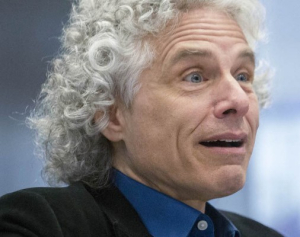
ScreenHunter_2423 Dec. 06 17.51Steven Pinker: Unfortunately, it’s all too easy for newsreaders to believe that apocalyptic picture. The news media give lavish coverage to violent incidents, seldom follow up on negative reportage in the past, and rarely put events in statistical or historical perspective. Worse, they allow themselves to be played by violence impresarios, namely terrorists and rampage killers, who correctly anticipate that they can attract the world’s attention by killing a number of innocent people at once. This is true not just of tabloids and cable news chasing eyeballs and clicks, but of high-quality outlets who feel that by highlighting what goes wrong, they are discharging their duty as watchdogs, muckrakers, and afflicters of the comfortable.

The facts are as follows. The rate of violent crime is lower now than it was at any time between 1966 and 2009. Immigrants have a lower rate of violent crime than American citizens. Terrorists kill just three-tenths of one percent of all American homicide victims. The rate of death from terrorism in the United States was higher in the early 1970s than it is today. And since 2002, more Americans have been killed by right-wing American terrorists than by Islamic terrorists. It’s true that the rate of violent crime went up between 2014 and 2015, most likely a consequence of the retreat of active policing since Ferguson. But it’s a small uptick in the context of the massive downward trend since 1992.

More here.

the lightness of errol flynn

Errol-flynnBrian Doyle at The American Scholar:

I know this sounds crazy—believe me, I know—but I just saw 19 Errol Flynn movies in a row (from Captain Blood, the 1935 film that made him instantly famous, to 1953’s The Master of Ballantrae, his last decent film and good performance before he died in 1959, only 50 years old), and I just read all three of the books he wrote, and I have read an awful lot written and said about him by other people.

Some conclusions:

One, Errol Flynn is one of the greatest actors I have ever seen, and I have been utterly absorbed in movies and movie actors since I was five years old when my sister took me to a movie theater for the first time (to see the new hit The Swiss Family Robinson). I am no professional critic, I am no scholar, but anyone who has seen thousands of actors in maybe 2,000 films has an informed opinion beyond his own taste.

Two, Flynn’s colorful life off screen—as dashing lover, epic seducer, irrepressible rake, suave man-about-town, innocent defendant in a spurious rape trial (the charges trumped up by a corrupt Los Angeles Police Department furious at Warner Bros. for not paying the usual bribe), legendary imbiber, and penniless star who lived his last years cruising the world on his boat—overshadows the superb acting he did on screen.

more here.

How the publishing industry took on the taboo

161212_r29159-876x1200-1480695823Louis Menand at The New Yorker:

Contrary to what, Googling around, you might assume, obscenity is not protected by the First Amendment. “There is a bone in my prick six inches long. I will ream out every wrinkle in your cunt.” Those sentences are from the opening pages of Henry Miller’s first novel, “Tropic of Cancer,” which was published in France in 1934. Are they obscene? It took thirty years, but American courts eventually decided that they are not, and therefore the book they appear in cannot be banned. To get to that result, judges had to ignore the usual understanding of “obscene”—most people probably think that if “cunt” isn’t obscene, what is?—and invent a new definition for constitutional purposes. But the decision changed the way books, and, soon afterward, movies and music, are created, sold, and consumed. Depending on your point of view, it either lowered the drawbridge or opened the floodgates.

“Tropic of Cancer” is not a verbal artifact to everyone’s taste, but it made a deep impression on two people in a position to advance its fortunes. The first was Jack Kahane. Kahane was born in 1887 in Manchester, the son of Romanian Jews who had settled in the North of England and made, then lost, a fortune in the textile business. He was a Francophile, and, when the First World War broke out, in 1914, he went off to France to fight for civilization. He was gassed and badly wounded in the trenches at Ypres. But he had fallen in love with a Frenchwoman, Marcelle Girodias, from a well-off family; they married in 1917, and remained in France. In 1929, he decided to go into the book business.

He had plenty of company. Between the wars, Paris was home to many English-language presses. There were two basic types. The first specialized in modernist writers.

more here.

Odd Jobs

At the junction of Steward St and Artillery Lane - Sandys Row SynagogueAnna Hartford at Threepenny Review:

I became utterly in thrall to London. I wanted nothing more than to think of myself as legitimate there. To be real. To be a “Londoner,” or at least to be able to say, “I live in London.” I kept dwelling on the vague temporal qualifications each of these identities required. How long till you’re living there, and not just visiting? Is it three months? Six? How long till you’re a “Londoner”? Is it five years? Seven? Or do you have to be from there? I attempted rampant assimilation. Having pointedly refused anything but instant coffee in all my days, I became a filter coffee convert, in the way of my new people. I felt an immense satisfaction and sense of belonging when I could publicly cling to a paper coffee cup.

After a few months, my best friend arrived from Johannesburg. The year before we had declared that we were going to do this together: Big Ben, Beatles, pounds, center-of-everything, discover-the-world. We found our own place: it had bay windows; or, more accurately, it was a bay window. The space probably began life as a reading nook or something, back when there was enough London to go around, but by the time we showed up it had been transformed into a stand-alone studio. Likely it’s been subdivided again since then. We practiced, in these first efforts at running our own home, forgoing every imaginable tenet of domestic hygiene, without incident.

We stayed in the same room, we read the same books out loud to each other, and a few weeks in we managed to find the same job.

more here.

Can You Get Too Much Protein?

Roni Caryn Rabin in The New York Times:

ProtProtein has achieved a venerated status in the dietary world for everything from building muscle to preventing weight gain. But can you get too much of a good thing? Protein powders that come in chocolate, strawberry, and cookies and cream flavors are doled out by the scoopful and mixed into smoothies, making it possible to effortlessly consume protein in amounts that far exceed dietary recommendations. A canned protein drink can contain almost as much protein as an eight-ounce steak, and snack bars or a small bag of protein chips can pack more of the macronutrient than a three-egg omelet. But while some nutritionists have encouraged the protein craze, a number of experts are urging caution. They point out that protein powders and supplements, which come from animal products like whey and casein (byproducts of cheese manufacturing) or from plants like soy, rice, pea or hemp, are a relatively new invention. The vast majority of Americans already get more than the recommended daily amounts of protein from food, they say, and there are no rigorous long-term studies to tell us how much protein is too much. “It’s an experiment,” said Dr. John E. Swartzberg, chairman of the editorial board of the University of California, Berkeley, Wellness Letter. “No one can tell you the long-term effects, and that’s what worries me as a physician. No one can tell you what the results are going to be in people’s bodies 10 or 15 years later.” People need sufficient protein in the diet because it supplies indispensable amino acids that our bodies cannot synthesize on their own. Together they provide the essential building blocks used to make and maintain muscle, bone, skin and other tissues and an array of vital hormones and enzymes.

But the average adult can achieve the recommended intake — 46 grams of protein a day for women, and 56 grams for men — by eating moderate amounts of protein-rich foods like meat, fish, dairy products, beans or nuts every day. There are about 44 grams of protein in a cup of chopped chicken, 20 grams in a cup of tofu or serving of Greek yogurt, and 18 grams in a cup of lentils or three eggs. American men already consume much greater amounts, averaging nearly 100 grams of protein a day, according to a 2015 analysis of the 2007-2010 National Health and Nutrition Examination Survey. The revised Dietary Guidelines for Americans, released in January, cautioned that some people, especially teenage boys and adult men, should “reduce overall intake of protein foods” and eat more vegetables.

More here.

Monday, December 5, 2016

Perceptions

Pierre-Chareau-Jewish-Museum-05

“Pierre Chareau: Modern Architecture and Design”, current exhibition at The Jewish Museum, New York.

“Commenting on Chareau’s work and the exhibition design, DS+R’s (exhibition design) founding partner, Elizabeth Diller, noted, “Pierre Chareau: Modern Architecture and Design is an opportunity to return to a significant figure in every architect’s education, but one primarily known through only one masterwork, the Maison de Verre. This exhibition is a rare opportunity to see so much of Chareau’s creative output brought together in one place. The challenge in undertaking its design was to provide a multi-faceted and imaginative backdrop that would highlight, but not compete with, his exceptional mastery of detailing and assemblage. By engaging with Chareau’s furniture, interiors, and collected ephemera, we are able to absorb and represent his idiosyncratic voice, which has had relatively little exposure in the U.S.'”

More here, here, and here.

Sunday, December 4, 2016

Frank Ramsey (1903–1930): A Sister’s Memoir

Ray Monk in the New York Review of Books:

ScreenHunter_2420 Dec. 05 00.03“Well, God has arrived. I met him on the 5:15 train.”

Thus, in the New Year of 1929, was Ludwig Wittgenstein’s return to Cambridge announced by John Maynard Keynes in a letter to his wife, Lydia Lopokova. Wittgenstein had previously been at Cambridge before World War I as a student of Bertrand Russell, but had acquired his godlike status through the publication after the war of his first and only book, Tractatus Logico-Philosophicus, which was very quickly recognized as a work of genius by philosophers in both Cambridge and his home city of Vienna. Wittgenstein himself was initially convinced that it provided definitive solutions to all the problems of philosophy, and accordingly gave up philosophy in favor of schoolteaching. In 1929, however, he returned to Cambridge to think again about philosophical problems, having become convinced that his book did not, in fact, solve them once and for all.

What drew him back to Cambridge was not the prospect of working again with Russell, who by this time (having been stripped of his fellowship at Trinity College, Cambridge, because of his opposition to World War I) was a freelance journalist, a political activist, and only intermittently a philosopher. Rather, it was the opportunity of working with Frank Ramsey, the man who had persuaded him of the flaws in the Tractatus. Most significantly, Ramsey had shown that the account Wittgenstein gives of the nature of logic in the Tractatus could not be entirely correct.

More here.

How, in an age in which “the fast eat the slow,” has Thomas Friedman not been gobbled up?

Belén Fernández in Jacobin:

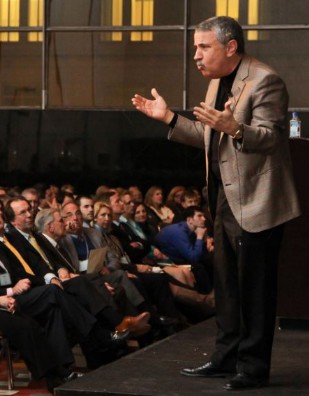
ScreenHunter_2419 Dec. 04 20.53The late Alexander Cockburn, reflecting on the work of decorated New York Times foreign affairs columnist and neoliberal warmonger extraordinaire Thomas Friedman, once observed: “Friedman’s is an industrial, implacable noise, like having a generator running under the next table in a restaurant. The only sensible thing to do is leave.”

But while generators at least serve a rather obvious function, the same can’t usually be said of Friedman, who has just spewed out his latest unnecessarily humongous book Thank You for Being Late: An Optimist’s Guide to Thriving in the Age of Accelerations.

In the nearly eight hundred pages that comprise my electronic version of the manuscript, there is approximately one glimmer of hope: the point at which Friedman remarks that this is “maybe my last book.”

The title Thank You for Being Late is a reference to Friedman’s realization that when his Washington, DC breakfast companions are a few minutes tardy, he can use the time not only to people-watch and eavesdrop on neighboring conversations but also to have ideas. Who knew?

More here.

How Do Gravitational Waves Escape From A Black Hole?

Ethan Siegel in Forbes:

ScreenHunter_2418 Dec. 04 20.48Perhaps the greatest discovery of all announced in 2016 was the direct detection of gravitational waves. Even though they had been predicted by Einstein's general theory of relativity 101 years prior, it took the development of a laser interferometer sensitive to ripples in space that would displace two mirrors separated by multiple kilometers by less than 10^-19 meters, or 1/10,000th the width of a proton. This finally came to pass during LIGO's 2015 data run, and two bona fide black hole-black hole merger events unambiguously popped out of the data. But how does physics actually allow this? Mārtiņš Kalvāns wants to know:

This question has puzzled me for a long time. Articles about LIGO discovery state that some percentage of black hole merger mass was radiated away, leaving [a] resulting black hole smaller than [the] sum of [the] original mergers. Yet it is accepted that nothing escapes black holes […] So my question is: how was energy radiated from black hole mergers?

This is a really deep question, and goes straight to the heart of black hole physics and general relativity.

More here.

How Stigma Sows Seeds of Its Own Defeat: Defending the liberal project is a Sisyphean task in part because successfully inculcating liberal norms leads to habits that weaken the ability to sustain them

Conor Friedersdorf in The Atlantic:

In the Western world, the percentage of people who say that it is essential to live in a democracy is in precipitous decline. In the United States, only 19 percent of millennials agree that it would be illegitimate for the military to take control of government. The president-elect routinely speculates about authoritarian policies, like stripping citizenship from those who burn the American flag in protest.

During a bygone crisis in global politics, when the liberal order was under sustained attack, Friedrich Hayek published this diagnosis of the challenge before liberals:

If old truths are to retain their hold on men’s minds, they must be restated in the language and concepts of successive generations. What at one time are their most effective expressions gradually become so worn with use that they cease to carry a definite meaning. The underlying ideas may be as valid as ever, but the words, even when they refer to problems that are still with us, no longer convey the same conviction; the arguments do not move in a context familiar to us; and they rarely give us direct answers to the questions we are asking. This may be inevitable because no statement of an ideal that is likely to sway men’s minds can be complete: it must be adapted to a given climate of opinion, presuppose much that is accepted by all men of the time, and illustrate general principles in terms of issues with which they are concerned.

The passage resurfaced this week when Will Wilkinson, in-house philosopher at the Niskanen Center, cited it to suggest that the Sisyphean task of saving liberalism is now ours, the boulder at our feet, the struggle of the hill looming once again.

“If the old truths are not updated for each new age, they will slip from our grasp and lose our allegiance,” he wrote. “The terms in which those truths have been couched will become hollow, potted mottoes, will fail to galvanize, inspire, and move us. The old truths will remain truths, but they’ll be dismissed and neglected as mere dogma, noise. And the liberal, open society will again face a crisis of faith.”

Across the Western world, liberals are grappling with how to execute that project. And while I have no pat answer, I do see an obstacle to success that’s worth understanding.

More here.

Sunday Poem

On Auden’s Musee des Beaux Arts

Not for me so much do I care
what it means—
the parent smiling while
her child’s skating,
cutting figure eights over
a pond’s ice,
veil between two worlds.
One- a world to laugh & breathe in.
The other, you drown in.

Or, seeing something
fall from the sky—
who speaks for
him or her that never grew wings
or simply dreamed the possible—
mention the torturer’s horse
casually scratching its ass,
see how quickly one’s thoughts turn
soft & nuzzy.
Now is the time
to further expand the metaphor:
Off goes the gilded Jolly Roger,
a smiley face
o’er its skull & bones.
At the tiller, a pirate steering,
tacking further, each instant
more distant from those
casually orphaned of human love and care.
See how it gathers speed with all the available air.
.

Walter Burnham

____________________________________________
.
Auden's Musee des Beaux Art

Fake news, a fake president and a fake country: Welcome to America, land of no context

Andrew O'Hehir in Salon:

Trump_fake_headlines-620x412How much of the “news” is fake? How much of reality is “real”? After an election cycle driven by lies, delusions and propaganda — including lies about lies, multiple layers of fake news and meta-fake news — we are about to install a fake president, elected by way of the machineries of fake democracy. The country that elected him is fake too, at least in the sense that the voters who supported Donald Trump largely inhabit an imaginary America, or at least want to. They think it’s an America that used to exist, one they heard about from their fathers and grandfathers and have always longed to go back to. It’s not. Their America is an illusion that has been constructed and fed to them through the plastic umbilicus of Fox News and right-wing social media to explain the anger and disenfranchisement and economic dislocation and loss of relative privilege they feel. All of which are real, if not necessarily honorable; it represents the height of liberal uselessness to keep on quarreling about whether Trump’s fabled “white working class” suffers real economic pain or is just a cesspool of racism. That argument is really about other things, to be sure: It’s about whether the Democratic Party — whose long-promised era of permanent demographic hegemony and middle-class multiculturalism keeps being delayed into the indefinite future, defeat after defeat after defeat — requires a major reconstruction or just a little cosmetic surgery. Meanwhile, out in the pseudo-reality of Trumpian America, racial resentment and economic suffering are so profoundly intertwined that there’s no way to disentangle them. Arguments that the so-called left should pretty much ignore the deplorables who keep on voting against their own interests, or should abandon “identity politics” in quest of some middle-road economic populism that blends Bill Clinton and FDR, are both missing the point. In a nation where a candidate who won the popular vote by roughly 2.5 million did not win the election, we are no longer dealing with reality, at least as it used to exist.

Hillary Clinton was the ultimate Establishment candidate facing the ultimate outsider, and also a quintessential old-media personality facing a veritable Voldemort of social media. Given that, she came pretty damn close to pulling it off. But Clinton was also a candidate from reality facing a shimmering celebrity avatar, a clownish prankster who took physical form in our universe but who could say anything and do anything because he was self-evidently not real. That disadvantage proved impossible to overcome. Furthermore, Trump’s supporters may be delusional and misguided, but they aren’t half as dumb as they often look to “coastal elites.” Many of them understood, consciously or otherwise, that his incoherent promises could not be taken literally and that his outrageous personality did not reflect the realm of reality. They were sick of reality, and you can’t entirely blame them. For lots of people in “middle America” (the term is patronizing, but let’s move on) reality has been so debased, or so much replaced, as to seem valueless.

More here.

How Louisa May Alcott won the hearts of generations to come

Christina Beck in The Christian Science Monitor:

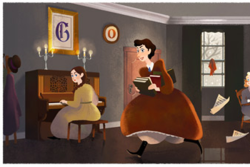
AlcottOne hundred and eighty-four years ago today, a literary giant was born to a small, struggling family in Pennsylvania. Yet within just a few decades, Louisa May Alcott won herself both a reputation and the hearts and minds of generations with her prose. Google Doodle creator Sophia Diao decided to depict Ms. Alcott with her three sisters in commemoration of her birthday and her most beloved work, “Little Women.” Alcott was born in 1832, the daughter of prominent (but impecunious) Transcendentalist intellectual Amos Bronson Alcott. Mr. Alcott moved his family around frequently, finally settling in Concord, Mass., in 1840 when Louisa was eight years old. In Concord, the Alcotts found, if not earthly wealth, then a bounty of friends and intellectual sparring partners. Prominent Transcendentalists and New England intellectuals Ralph Waldo Emerson and Henry David Thoreau also lived in town, as did Margaret Fuller and Nathaniel Hawthorne. In the midst of this intellectual bounty, however, the Alcotts continued to struggle financially, forcing Louisa to take jobs as a school teacher and a seamstress. As abolitionists and New Englanders, the Alcotts supported the North during the American Civil War, and Louisa took her commitment to the cause a step further when she served as a nurse in Union hospitals.

Her experiences during the Civil War inspired her first book, “Hospital Sketches,” which won her some small notice in the literary world. “Hospital Sketches,” although rarely read today, served to highlight Louisa’s writing talent, and attracted the notice of a publisher. That publisher met with her father, and the two men struck a deal, urging Louisa to write a book for young girls. Contingent on Louisa’s writing was a book contract for her father. At first, Louisa was reluctant to write the book, saying that it was not her preferred type of writing. Yet her manuscript, called “Little Women,” which drew on her own experiences with her three sisters, quickly became a massive success, finally lifting the Alcotts out of their longstanding poverty.

More here.

Saturday, December 3, 2016

400 Years of Jerusalem Culture

04Namdar-blog427-v2Ruby Namdar at The New York Times:

Jerusalem’s veneer of harmony, tolerance and inclusiveness is as thin and as alluring as the fine layer of gold covering the gray lead dome standing on the top of the contested Temple Mount, or the Haram al-Sharif as it is called in Arabic. Timeless conflict brews under the beautiful surface of the sacred city, whose many names are yet another manifestation of the continuing rivalry around the “ownership” of its holy sites and symbolic history. The controversial resolution passed by Unesco in October, which attempted to classify the Western Wall, one of Judaism’s holiest sites, as a part of the Muslim Al Aqsa Mosque compound, is yet another step in this long tradition of conflict.

This everlasting rivalry, paradoxically, has only enhanced the beauty and cultural richness of Jerusalem. The various churches and mosques, each competing to have the tallest structure in the sacred city, have invested a fortune in building magnificent minarets and bell towers meant to own the Jerusalem skyline. The warring Christian sects, in their struggle to dominate the sacred Church of the Holy Sepulcher (a struggle that at times has led to almost comical fistfights among priests, monks and ministers), have made great efforts to enhance their part of the space and make it outshine the others. In the same tradition, the great resources allocated by the Israelis to restore and celebrate Jerusalem’s Jewish past have made it an attractive destination for travelers from all around the world.

more here.