
Video length: 25:02
Category: Recommended Reading
How Cubans Live as Long as Americans at a Tenth of the Cost
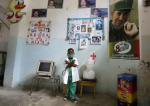
Cuba has long had a nearly identical life expectancy to the United States, despite widespread poverty. The humanitarian-physician Paul Farmer notes in his bookPathologies of Power that there’s a saying in Cuba: “We live like poor people, but we die like rich people.” Farmer also notes that the rate of infant mortality in Cuba has been lower than in the Boston neighborhood of his own prestigious hospital, Harvard’s Brigham and Women’s.
All of this despite Cuba spending just $813 per person annually on health care compared with America’s $9,403.
The difference comes back to the basic fact that in Cuba, health care is protected under the constitution as a fundamental human right. The U.S. protects unlimited firearms and freedom from quartering soldiers but does not guarantee health care. Instead we compromise, taking inefficient and expensive half-measures to rescue people in serious peril.
As a poor country, Cuba can’t afford to equivocate and waste money on health care. Much advanced technology is unavailable. So the system is forced instead to keep people healthy. This pressure seems to have created efficiency.
more here.
no small events
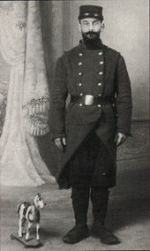
In May 1940, Hitler’s armies swept lightning-fast into France and the Low Countries. Fearing the worst as the Nazis advanced, more than eight million panicked civilians left their homes and fled south. It was soon one of the largest mass migrations in recorded history. Today, the French simply call it l’exode: the exodus. Two million Belgians were on the road by June, roughly one-third of the entire country. Six million of the refugees were French. Somewhere between one quarter and one third of them were children. Entire cities emptied overnight. Reims, a bustling regional center in Champagne, lost 98 percent of its quarter-million inhabitants. The town of Evreux shriveled from twenty thousand souls to fewer than two hundred. By June 13, even Paris had been deserted; only the old, the sick and the poor remained behind. Southbound roads coagulated and clogged with overheating cars, teenage boys on bicycles, pushcarts piled high with suitcases and mattresses and tired children. The last trains to leave the capital were choked with people.
One of the refugees, a 62-year-old French novelist named Léon Werth, produced an astonishing eyewitness account of his passage into exile. “We’re not living in ordinary times,” Werth wrote that summer. “We are shipwrecked.” That the memoir was ever published is something of a miracle. Thirty-three days after they left Paris, Werth and his wife Suzanne arrived in Saint-Amour, a village in the foothills of the Jura mountains. The text was completed by autumn, but publishing it in the so-called “free zone” of Vichy France was out of the question: Werth was Jewish. In October, however, Werth was visited by his best friend Antoine de Saint-Exupéry, a gifted writer and pilot who smuggled the manuscript out of France via Algiers and Lisbon. Werth never saw the book in print. Lost mysteriously for fifty years, the memoir first appeared in France in 1992. The first English edition of 33 Days appeared last year, a slim volume translated with great dexterity and feeling by Austin Denis Johnston.
more here.
Getting by in Castro’s Cuba
The first time I was arrested by the Cuban police was almost thirty years ago. I was at Los Cocos prison, a half-hour drive outside Havana, talking across a wall to AIDS patients locked up there by the authorities. At the time, Cubans were being tested for HIV at work, and those found to be suffering from symptoms were taken and put away in this prison hospital facility, denied visits from family or friends.
At the time, soldiers returning from campaigns in Angola and Ethiopia were blamed for the outbreak of HIV-AIDS in Cuba. A few days after my attempt to interview the patients at Los Cocos, I found myself at a parade ground on the outskirts of Havana, where commander-in-chief Fidel Castro was to welcome the male and female troops back and bestow medals on them. This was the closest I ever came to El Comandante. He and his entourage brushed past me on their way towards the ranks of troops, and I could swear that the glare from the big man (and he was very big and burly, the son of an immigrant from Galicia in Spain) was meant just for me. Again, my attempts to interview any of the soldiers were cut short as I was bustled away from them.
more here.
What Not to Say to a Cancer Patient
Jane Brody in The New York Times:

…Another author of very helpful books on living with cancer is Dr. Wendy Schlessel Harpham, who has had a recurring cancer for more than two decades. She suggests that people offer specific ways they can help. For example, they may say they can shop for groceries, care for children, take the dog for a run, or accompany the patient to the doctor, and then be sure to follow through with the offer. Many people now use online sites like caringbridge.org to keep people up to date on their health and needs or organizing platforms such as mealtrain.com or lotsahelpinghands.com to ask for specific help. Dr. Harpham said she came to dread the query “How are you?” because “no matter how it was intended, being asked ‘How are you?’ rattled my heightened sense of vulnerability. I found myself consoling those who asked and then fighting the contagion of grief and fear. Even when the news was good, I didn’t have the energy to include all the people who wanted updates.”
More here.
UK Government Corruption
From here.
Tuesday Poem
Saigon, The Movie
James Bond flies into Phuket, which he pronounces
Fukit and this announces the demise
of the colonial era.
My mother sits on the Left Bank, harvesting rice.
The Baron announces his arrival
with a slice of lemon between his teeth and
Panama with razors embedded in its rim, to wear
to restaurants with a view of crossfire.
The iron butterfly folds back her wings, and rests awhile
on the pillows of this city.
But they are soaked
with the formalin of diplomacy
and the perfumes of an irresistible corruption.
Finally the old merchants
dig up their gold and re-invest in a
coat of arms they wire to a security gate.
Guard dogs with degrees, and lap-dog breeds
that do not bark.
Here a childhood made sensitive to bombs,
a kindergarten closed down with prayer,
American linguists in a helicopter, dropping
ration packs of Chiclets and brand new grammar.
.
by Adam Aitken
from Romeo and Juliet in Subtitles
Brandl & Schlesinger, Sydney, 2000
ISBN: 1 876040 20 3
.
Monday, November 28, 2016
Perceptions
Taking Offense
by Katrin Trüstedt
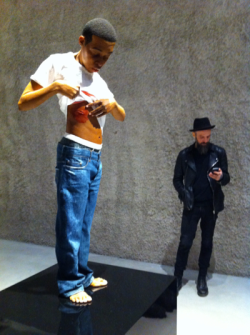
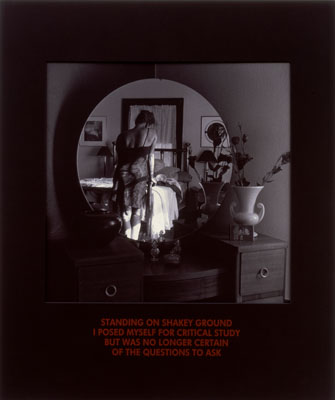
The decision to vote a certain way and the entire social and political subjectivation underlying this decision cannot be traced back to a given political stance or factual economic interests, but is instead indebted to a complex dynamic of identification and demarcation. In order to explain the striking shift in the milieu of his upbringing, Eribon foregrounds not “just” the considerable economic hardship the working class has endured in France, but more importantly, the fact that this economic hardship has been ignored in the past decades by the left party under François Mitterrand (with many parallels to the Democrats in the US, the Labour Party under Tony Blair in the UK and the Social Democrats under Gerhard Schröder in Germany). The way that his relatives, like so many others, have turned away from a strong allegiance with the Left is connected to a feeling of being “hurt” in a particular way. Not only has their economic status deteriorated, but the degradation also has remained unacknowledged.
CATSPEAK
by Brooks Riley

Sunday, November 27, 2016
A Fantastic Optical Illusion: Just Another Brick in the Wall?

Phil Plait in Slate:
I love optical illusions, especially ones that really twist your brain around. I saw one recently that really had me going for a minute. And it’s not so much the illusion itself that really gets me, but my own brain’s reaction to it.
The photo is above. I saw it on a Facebook post from this week, though it’s been around since at least 2014.* It shows a brick wall, seen at a shallow angle, with somewhat large gaps between the bricks. The bricks are red, and it appears that there’s a small gray rock stuck in between them just above center.
So what’s the illusion? I couldn’t see it at all, even after a good 30 seconds of staring at it. I was starting to suspect there was no illusion, and it’s a gag to fool people, when I read the comments and realized what I was missing.
If you still haven’t seen it, then what follows below will spoil it for you. If you don’t want to know then don’t read any further until you’ve figured out the illusion!
OK, fairly warned be thee says I.
More here.
Ten questions about anthropology, feminism, Middle East politics, and publics: Interview with Lila Abu-Lughod
Sindre Bangstad in American Ethnologist:
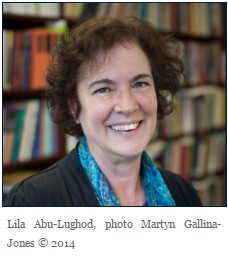
Sindre Bangstad (SB): You and I met in 2014 because we had both turned, as anthropologists, to address a disturbing public issue: Islamophobia. This opened us up to forms of hostility that our earlier ethnographic work in Muslim communities, yours in Egypt and mine in South Africa, had not. In your article in the November issue of AE, “The Cross-Publics of Public Ethnography,” you consider what anthropologists can bring to contentious public debates. You confess that your most recent book, Do Muslim Women Need Saving? took you out of the comfort zone of our discipline. I’d like to talk with you about the meaning of this transition to what I’ve explored as public anthropology in a series of interviews in my forthcoming Anthropology of Our Times: An Edited Anthology in Public Anthropology. You prefer to call it public ethnography, following Didier Fassin. I’d like to talk about your early work first.
More here. [Thanks to Nadia Guessous.]
The Genetics of Success
Chhay Lin Lim in Notes on Liberty:

When Belsky et al looked at the genetic profiles and the people they studied, they found that people with higher polygenic scores did not only have greater educational attainments, but also had more prestigious occupations, higher incomes, more assets, greater upward social mobility, and were more likable and friendly.
More here.
Darcy James Argue’s Terrific Thrill: A staggeringly ambitious album explores the themes of cultural paranoia and false truth
David Hajdu in The Nation:
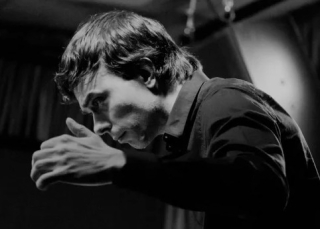
Argue efficiently established his reputation as a major musical voice with his two previous albums, Infernal Machines (2009) and Brooklyn Babylon (2013), both of which were composed for and recorded by Argue’s ongoing ensemble, the 18-piece band called Secret Society. The group, by nature of its instrumentation, qualifies as a jazz big band, though the music is not big-band jazz by a definition Count Basie or Buddy Rich would have used. The Secret Society rarely swings in the traditional way, though it can cook up a sly, churning funk groove when Argue wants it to. If Argue’s society of 21st-century virtuosos has a secret, it’s the fact that it could be a ballroom band with all the pizzazz of, say, Wynton Marsalis’s Jazz at Lincoln Center Orchestra, if it had a leader less creative and forward-thinking than Darcy James Argue.
More here.
How neoliberal doctrine undermined the Obama administration and ushered in the age of Trump
John Weeks in Open Democracy:
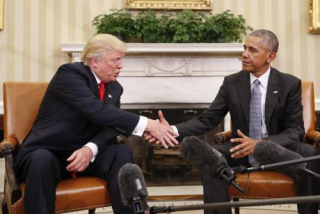
In November 2008 Barack Obama won the presidency with almost 53% on a voter turnout of 58%. The winning percentage was the highest since 1988 and the turnout the largest for 50 years. The first non-white president took office on a surge of enthusiasm exceeding any since Franklin Roosevelt in 1932 (by comparison John Kennedy went to the presidency with less than half of total votes and a winning margin of 0.2 percentage points).
The enthusiasm for Obama arose from fervent hope for specific changes: 1) a universal, affordable health system; 2) the end of two disastrous wars (Afghanistan and Iraq); 3) economic recovery from the worst collapse in 80 years; and 4) action against banks and bankers to prevent a recurrence of the collapse.
To fulfil these hopes, Obama had majorities in both houses of Congress, 58 of 100 Senators (largest majority of any party in 30 years) and 257 seats in the House (most since 1992). By any measure the new president enjoyed an overwhelming majority. Under some circumstances the Republican minority in the Senate could prevent voting, but a determined and bold president could force votes within the arcane Senate rules.
More here.
Dr Denise Baden battles with the establishment view of Fidel Castro at the BBC
Video length: 5:46
How Your Brain Decides Without You
Tom Vanderbilt in Nautilus:

In watching and interpreting the game footage, the students were behaving similarly to children shown the famous duck-rabbit illusion, pictured above. When shown the illusion on Easter Sunday, more children see the rabbit, where on other Sundays they are more likely to see the duck.1 The image itself allows both interpretations, and switching from seeing one to the other takes some effort. When I showed duck-rabbit to my 5-year-old daughter, and asked her what she saw, she replied: “A duck.” When I asked her if she saw “anything else,” she edged closer, forehead wrinkled. “Maybe there’s another animal there?” I proffered, trying not to sound as if magnet school admission was on the line. Suddenly, a shimmer of awareness, and a smile. “A rabbit!”
More here.
lupita tovar (1910 – 2016)
sharon jones (1956 – 2016)
Reading Dostoyevsky For Thanksgiving
Laurie Sheck in billmoyers.com:
A Few Facts
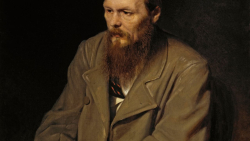
2. This was in the prison camp in Omsk where he was serving out a sentence of hard labor after being convicted of sedition for being part of a revolutionary cell dedicated to the liberation of the serfs and freedom of the press.
3. For the seven months following his arrest, he’d been kept in solitary confinement in the Peter and Paul Fortress on the Neva, his cell window smeared with an oily paste to prevent any daylight from seeping through.
4. One morning he was suddenly taken to Semyonov Square, where he was given a white death-shirt to put on and allowed to kiss the cross. He was sixth in line for execution, with only minutes left to live, when the announcement came that the Czar had decided to spare the prisoners’ lives. Apparently this had been planned all along.
5. On the way to the prison camp, they stopped for the night in Tobolsk where a town bell had been sent into exile, convicted of ringing for seditious purposes. Its sentence was eternal silence.
6. In Tobolsk, he met a man who was chained to the wall. He had been chained there for eight years. The chain was 7 feet long and extended from his sleeping pallet to the opposite wall. The man spent every day walking from the pallet to the wall and back. He said he didn’t mind. He showed where the chain attached to his underclothes, and the most comfortable way to lie down on the sleeping pallet. When he spoke, his voice was mild with a slight lisp. He said he had once been a government official.
7. It was in Omsk that the epileptic seizures began. They came mostly once or twice a month. Sometimes, though rarely, twice a day. They could lie dormant for as long as four months. After each seizure something in him grieved. Words blackened or grew muffled for days, sometimes a week, their distant contours alien and heavy. He tried but couldn’t lift them.
8. He wasn’t allowed a single book for almost four years. Except the Bible.
9. “Awkward, immobile, silent … his pale, thin, earthen-colored face covered in dark red spots,”a young prison guard described him years later.
10. “I look at their pale faces, at their poor beds, at all of this impassable nakedness and poverty — I peer in — and it is as if I want to make sure that it is not the continuation of a disfigured dream, but actual truth. But it is truth: I hear someone’s groan, someone throws out his hands heavily and clangs his chains,” he would remember in The House of the Dead.
…Dostoyevsky experienced more than one hundred major seizures, walked in chains and prison garb, wasn’t permitted to hold a pen or pencil for nearly four years or read any book but one. He watched two children die and wrote several times of a man’s inner life in the minutes and seconds before execution. He had Myshkin think about a donkey’s goodness and importance, and led him to the room where he would stroke and soothe Rogozhin. His books offer the words to feel into pursued to their radical end, embodied. To feel into — which doesn’t mean to understand, or analyze, or interpret, or heal. Doesn’t mean to solve, define, make steady, claim knowledge of, but has something to do with drawing close, with how there’s a radiance more mysterious, more unspeakable than horror; more private in its wounds, more lasting.
More here.