In Pakistan, Justice for the Killers Among Us

Mohammed Hanif in the New York Times:

ScreenHunter_2518 Jan. 17 16.48The army chief of Pakistan recently confirmed the death sentence of Saad Aziz, a business-school graduate and restaurant manager who was convicted of killing my friend Sabeen Mahmud. Sabeen, who was 40 then, ran The Second Floor in Karachi, a cafe where many writers and artists, including me, got their first break. It was also a hub for activists advocating controversial, often lost, causes. She was shot dead on April 24, 2015, minutes after a talk she had organized about the disappearance of Baloch activists, allegedly at the hand of Pakistan’s military intelligence agencies.

Chances are that after the requisite technical appeals to higher courts and a plea for mercy to the president of Pakistan, Aziz will hang. There are even stronger chances that we’ll never know for sure why he killed Sabeen.

Aziz was sentenced to death by a military court last May. The media weren’t allowed to cover the trial. There is no detailed judgment. We’ll never get to hear what Aziz may have said in his defense or about his motives.

Was he a lone killer, or acting on someone’s behalf? Was Sabeen killed for taking a stand against the Pakistani Taliban and their supporters in the mainstream? For defying the powerful military establishment? Because she insisted on drawing red hearts on walls around the city to mark Valentine’s Day?

More here.

HOW KIRK FRANKLIN IS PUSHING THE BOUNDARIES OF GOSPEL

170116_r29293-320x429-1483726799Vinson Cunningham at The New Yorker:

It’s hard to describe in a word what Kirk Franklin does for a living. Franklin, forty-six, is the most successful contemporary gospel artist of his generation, but he isn’t a singer. He plays the piano, but only intermittently onstage, more to contribute to the pageantry than to show off his modest chops. Above all, he is a songwriter, but in performance and on his albums his role more closely resembles that of a stock character in hip-hop: the hype man. The best hype men—Flavor Flav, Spliff Star, the early Sean (P. Diddy) Combs—hop around onstage, slightly behind and to the side of the lead m.c., addressing the microphone in order to ad-lib or to reinforce punch lines as they rumble by. But a hype man is, by definition, a sidekick, and while most of the sound in Franklin’s music comes from elsewhere—usually, a band and an ensemble of singers—he is always and unquestionably the locus of its energy and intention.

When I first saw Franklin perform live, last spring, at the newly renovated Kings Theatre in Brooklyn, he stood at center stage, spotlit, rasping out preachy interjections whenever his singers paused for breath. The theatre had the grandeur of a cathedral: blood-red velvet curtains framed the stage; golden ceilings, patterned with blue-and-purple paisleys, soared over vaudeville-era balconies and plush seats. During “I Smile,” a bouncy, piano-propelled anthem to joyful resilience against life’s troubles, Franklin punctuated the chorus with a rhythmic series of shouts: “I smile”—“Yes!”—“Even though I’m hurt, see, I smile”—“Come on!”—“Even though I’ve been here for a while”—“Hallelujah!”—“I smile.”

more here.

My summer as a military propagandist in Iraq

UrlWillem Marx at Harper's Magazine:

I was flown across the Atlantic to meet my new employers. In downtown Washington, I was surprised by the ubiquity of fresh-faced young men, their blue short-sleeved buttondowns tucked neatly into khakis. Lincoln Group had its headquarters above an Indian grocery on K Street; a small placard in the building’s foyer read: VISITORS TO LINCOLN GROUP/ IRAQEX, 10TH FLOOR, SHOULD BE ANNOUNCED IN ADVANCE. On the tenth floor, electricians wired lights in some rooms while in others suited men conferenced behind glass walls. The company’s head of human resources, who had only just been hired herself, told me with a weary smile that things had been crazy lately.

Paige Craig popped in to see me as I filled out work papers in a tiny waiting room. Shaking my hand with a mighty grip, he uttered something to the effect of “welcome aboard.” He was very well built, with short, tidy hair and the tight khaki trousers and shirt of a military man. As he strode away, he seemed purposeful. Bailey, by contrast, was baby-faced and slight, his sandy-brown hair cut in a Bill Gates bob. In his comer office, we chatted about Oxford. He had studied economics and management at Lincoln College. When I asked whether his college had inspired the company’s new name, he shrugged. “Partly,” he said cryptically. He did say that Lincoln Group was rapidly expanding and that it offered incredible opportunities for bright young people like me: stock options were available to employees after just three months, and I might consider staying on after the summer. Christian Bailey hadn’t yet been to Iraq himself. Although he had planned numerous trips, he said, something always came up that kept him in D.C.

more here.

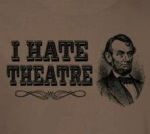
Theater: Why I Hate the Theater

3e0adab4ca87c27d85e7bcbd70408a77Javier Marías at Threepenny Review:

The biggest problem for me is that the theater of the age I live in has almost always tried to be “innovative” and “modern.” And that supposed innovation and modernity often consists in such infelicities as these: if it’s a classic work, you almost never see that work, but a version, adaptation, or recreation by some sly contemporary who thus pockets all the money, given that Sophocles, Shakespeare, Lope de Vega, Molière, Goldoni, and other such luminaries are all out of copyright. These adaptations generally involve the destruction of the classic work: some dispense with verse, if there is any; others dress Julius Caesar, Mark Antony, and Brutus in suit and tie, or as Nazi bigwigs, or have them run around naked throughout the entire play (although there is also a fashion for dressing everyone in a kind of hideous sack, so that they all look the same); there are those who prefer to have the characters prancing around a completely bare stage, screaming loudly, or on a stage equipped with a ramp or a tent or a net they can dangle from. Actors are usually told to be either “very natural” or “very artificial,” but the result is always the same, namely, their complete inability to speak the words audibly and in a way that captures the interest of the audience, who end up being so distracted by the actors’ howls, phoney pauses, incomprehensible songs or litanies, and imperfect diction (as well as looking to their own protection, because actors often hurl water or even fireworks into the audience) that they take little notice of what the actors are trying to communicate verbally. In the theater nowadays, it’s almost impossible, regardless of whether it’s relevant or not, to escape (a) hysterical, meaningless dancing, perhaps so that the audience can enjoy some “physical movement”; (b) a more or less “savage” or vaguely medieval scene, along the lines of some kind of revelry or peasant hoedown, or a lynching perhaps, or a gang rape, or a bit of group cannibalism—and whichever option they choose, none of them impresses or seems remotely believable; (c) somersaults, pirouettes, and juggling with a bit of mime thrown in, and there’s nothing I loathe more than mime and juggling (no need, I hope, to explain why).

more here.

Tuesday Poem

Deliberate

So by sixteen we move in packs
learn to strut and slide
in deliberate lowdown rhythm
talk in syn/co/pa/ted beat
because we want so bad
to be cool, never to be mistaken
for white, even when we leave
these rowdier L.A. streets—
remember how we paint our eyes
like gangsters
flash our legs in nylons
sassy black high heels
or two inch zippered boots
stack them by the door at night
next to Daddy’s muddy gardening shoes.
.

by Amy Uyematsu
from Poetry Outloud
Poetry Foundation, 2005
.

Physician Aid in Dying Gains Acceptance in the U.S.

Paula Span in The New York Times:

SpanJudith Katherine Dunning had been waiting anxiously for California to adopt legislation that would make it legal for her to end her life. The cancer in her brain was progressing despite several rounds of treatment. At 68, she spent most of her day asleep and needed an aide to help with basic tasks. More centrally, Ms. Dunning — who, poignantly, had worked as an oral historian in Berkeley, Calif. — was losing her ability to speak. Even before the End of Life Option Act became law, in October 2015, she had recorded a video expressing her desire to hasten her death. The video, she hoped, would make her wishes clear, in case there were any doubts later on. “She felt she had completed all the important tasks of her life,” recalled her physician, Dr. Michael Rabow, director of the symptom management service at the University of California, San Francisco. “When she could no longer communicate, life was no longer worth living.”

In recent months, this option has become available to a growing number of Americans. Last June, aid-in-dying legislation took effect in California, the most populous state. In November, Colorado voters approved a ballot measure by nearly a two-thirds majority. The District of Columbia Council has passed a similar law, and the mayor quietly signed it last month. Aid in dying was already legal in Washington, Vermont, Montana and Oregon. So even if the District of Columbia’s law is blocked, as a prominent Republican representative has threatened to do, the country has arrived at a remarkable moment: Close to 20 percent of Americans live in jurisdictions where adults can legally end their lives if they are terminally ill and meet eligibility requirements. The laws, all based on the Death With Dignity Act Oregon adopted in 1997, allow physicians to write prescriptions for lethal drugs when patients qualify. The somewhat complicated procedure involves two oral requests and a written one, extensive discussions, and approval by two physicians. Patients must have the mental capacity to make medical decisions.

More here.

Monday, January 16, 2017

Sunday, January 15, 2017

Kareem Abdul-Jabbar on Two Books About Muslim Identity

Kareem Abdul-Jabbar in the New York Times:

ScreenHunter_2515 Jan. 15 20.03In 1776, Thomas Jefferson’s friend Senator Richard Henry Lee expressed both of their opinions when he asserted in Congress, referring to Muslims and Hindus, that “true freedom embraces the Mahometan and the Gentoo as well as the Christian religion.” In 1777, the Muslim kingdom of Morocco became the first country in the world to formally accept the United States as a sovereign nation. In 1786, when the United States needed protection from North African pirates who were stealing ships and enslaving crews, it signed the Treaty of Tripoli, which stated that “the government of the United States of America is not, in any sense, founded on the Christian religion, as it has in itself no character of enmity against the laws, religion or tranquillity of Musselmen.” In 1785, George Washington declared that he would welcome Muslim workers at Mount Vernon. In 1786, Jefferson triumphed in his Bill for Establishing Religious Freedom in Virginia, by persuading the Legislature to overwhelmingly reject attempts to include Jesus Christ as the religious authority in the bill. Jefferson later declared that this was one of his three greatest accomplishments.

Clearly, some of our founding fathers were very comfortable extending religious freedom to include Islam. They should have been. Islam didn’t just show up in America one day like an excited tourist. America imported it when we brought slaves over from Africa, an estimated 20 percent of whom were Muslim.

More here.

The many tragedies of Edward Teller

Ashutosh Jogalekar in The Curious Wavefunction:

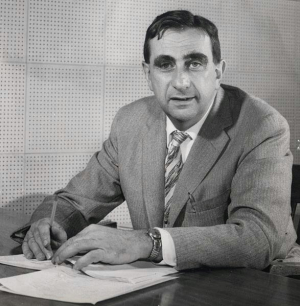
587px-TellerEdward Teller was born on this day 107 years ago. Teller is best known to the general public for two things: his reputation as the “father of the hydrogen bomb” and as a key villain in the story of the downfall of Robert Oppenheimer. To me Teller will always be a prime example of the harm that brilliant men can do – either by accident or design – when they are placed in positions of power; as the famed historian Richard Rhodes said about Teller in an interview, “Teller consistently gave bad advice to every president that he worked for”. It’s a phenomenon that is a mainstay of politics but Teller’s case sadly indicates that even science can be put into the service of such misuse of power.
Ironically it is the two most publicly known facts about Teller that are also probably not entirely accurate. Later in life he often complained that the public had exaggerated his roles in both the hydrogen bomb program and in the ousting of Oppenheimer, and this contention was largely true. In truth he deserved both less credit and less blame for his two major acts. Without Teller hydrogen bombs would still have been developed and without Teller Oppenheimer would still have been removed from his role as the government’s foremost scientific advisor.
The question that continues to dog historians and scientists is simple; why did Teller behave the way he did?
More here.

Massive scientific report on marijuana confirms medical benefits

Beth Mole in Ars Technica:

ScreenHunter_2514 Jan. 15 19.51In a new 400-page analysis that blows through the current state of scientific knowledge on the health risks and benefits of marijuana, one of the strongest conclusions is that it can effectively treat chronic pain in some patients.

The sweeping report, released Thursday by the National Academies of Science, Engineering, and Medicine, covered more than 10,000 scientific studies and came to nearly 100 other conclusions. Those mostly highlight unanswered questions and insufficient research related to health effects of marijuana, as well as several risks. However, the firm verification that marijuana does have legitimate medical uses—supported by high-quality scientific studies—is a significant takeaway in light of the Drug Enforcement Administration’s decision in August to maintain marijuana’s listing as a Schedule I drug. That is, a drug that has no medical use.

The new report also strongly concludes that the Schedule I listing creates significant administrative barriers for researchers wishing to conduct health research on marijuana and its components—an issue Ars has previously reported on.

“It is often difficult for researchers to gain access to the quantity, quality, and type of cannabis product necessary to address specific research questions on the health effects of cannabis use,” concluded the authors, a panel of experts led by Marie McCormick, a pediatrician and public health researcher at Harvard.

In a public presentation of their findings, the report’s authors repeatedly refused to comment on the DEA’s scheduling of marijuana, noting that the issue was outside the scope of their scientific review.

More here.

If Donald Trump really is compromised, we need immediate action, not media overreach

Matt Taibbi in Rolling Stone:

ScreenHunter_2513 Jan. 15 19.43Have we ever been less sure about the truth of an urgent news story?

Three days into the "Russian dossier" scandal, which history will remember by a far more colorful name, we still have no clue what we're dealing with. We're either learning the outlines of the most extraordinary compromise to date of an incoming American president by a foreign power, or we're watching an unparalleled libel and media overreach.

The tale was first made public by David Corn at Mother Jones a week before the presidential election. Corn's October 31st article was entitled, "A Veteran Spy Has Given the FBI Information Alleging a Russian Operation to Cultivate Donald Trump."

Corn, with whom I spoke Wednesday, had documents back in October containing explosive accusations of Trump sex romps and other serious blackmailable behavior. But he chose not to publish them, because he couldn't confirm those details.

Corn says now he was also concerned that running the documents might lead to damage to/outing of some sources. (Hang on to that thought.)

Corn ultimately focused on the elements he could confirm: that a dossier asserting that Russians had a file of compromising information on Trump had been prepared by a veteran intelligence source, one with enough standing in Washington that the FBI chose to investigate the claims.

There are some who would quibble even with printing that much. But in the context of this election season, which saw awesome publishing excesses on all sides, Corn showed restraint.

More here.

Medical correctness

Anthony Daniels in The New Criterion:

Hippocrates-alexIn Russia in 1839, Custine wrote that Tsar Nicholas I was both eagle and insect: eagle because he soared over society surveying it with a sharp raptor’s eye from above, and insect because he bored himself into every tiny crack and crevice of society from below. Nothing was either too large or too small for his attention; and sometimes one feels that political correctness is rather like that. For the politically correct, nothing is too large or too small to escape their puritanical attention. As a consequence, we suspect that we are living an authoritarian prelude to a totalitarian future. Whether medical journals be large or small depends, of course, on the importance that you attach to them. As a doctor I am inclined to accord them more importance than the average citizen might; but what is indisputable is that they are not immune from political correctness, quite the reverse. Reading them, one has the impression of being buttonholed by a terrific bore at a cocktail party, who won’t let you go unless you agree with his assessment of the situation in Somalia.

At first sight, medicine might appear an unpromising subject for political correctness. You are ill, you go to the doctor, he tries to cure you, whoever you might be: what could be more straightforward than that? But in fact medicine is a field ripe for political correctness’s harvester. The arrangement by which health care is delivered is eminently a subject of politics; moreover we live in the golden age of epidemiology, in which the distribution of health and disease is studied more closely even than the distribution of income. Inequalities are usually presented as inequities (they have to be selected carefully, however: I have never seen the superior life expectancy of women, sometimes considerable and present almost everywhere, described as an inequity, even though the right to life is supposedly the most basic of all in the modern catechism of human rights). The decent man abominates unfairness or injustice: therefore the man who abominates unfairness or injustice is decent. Political correctness—linguistic and semantic reform as the first step to world domination—came comparatively late to medical journals. This is because, where intellectual fashions are concerned, doctors are usually in the rear, rather than the vanguard. Their patients plant their feet on the ground for them, whether they want them planted there or not; for there is nothing quite like contact with a cross-section of humanity for destroying utopian illusions.

More here.

What Drives Successful Crowdsourcing?

Michael Fitzgerald in Harvard Magazine:

CrowdKarim Lakhani says his work poses a provocative question: can a crowd of random people outsmart Harvard experts? Lakhani, professor of business administration, seeks the answer in his role at Harvard’s Institute for Quantitative Social Science, where he is principal investigator at the Crowd Innovation Lab and NASA Tournament Lab.

…His research got a real-world boost when he began teaching at Harvard Business School (HBS). After he presented a case study on crowdsourcing at an HBS executive-education program, one of the attendees—NASA’s chief medical officer—asked whether such a contest could help the agency. “Give me a test case,” Lakhani responded. NASA asked him to come up with an algorithm that would identify the ideal contents for a space emergency medical kit. Using Topcoder, a crowdsourcing company that brings random groups of developers and designers together to work on problems, and $25,000 in prize money, the contest led to a solution that worked better and faster than one NASA had developed internally. That led to the creation of the NASA Tournament Lab, which added economists to help design effective contests, as well as post-docs in physics and computer science to tackle the full range of problems NASA wanted to solve. In six years, the lab has run hundreds of competitions on Topcoder, addressing challenges ranging from solar-flare detection to the counting of asteroids. Almost all have produced effective code for the agency. The Tournament Lab also addresses a crucial problem with competitions: lack of empirical evidence for why they work. Lakhani notes that a crop of good textbooks explains how to design competitions and other theoretical aspects of competitions, but “What’s been missing is field evidence” of what—apart from sports or internal contests—motivates crowds to solve problems. The lab has provided answers. People form crowds to solve problems for three reasons, Lakhani says: extrinsic benefits (improved professional profile or rewards like cash); intrinsic benefits (it helps solve a problem, or it’s fun); and pro-social benefits (participants like being part of something bigger than themselves that makes the world a better place).

More here.

Sunday Poem

The Tip

Just days before the crash
that killed him, my father
lost the tip of his index finger
while working on the same vehicle
that would take him away.

I recall my mother’s scream
that brought me out of Mann’s
The Magic Mountain,
and to the concrete drive
now sprinkled in crimson.
His stunned look
is what has stayed with me.
Shock that part of him could take leave
without permission or warning?
He was a man who hated surprises,
who lined his clothes and shoes
like a platoon he inspected daily,
and taught us to suspect the future. His
was the stranger in a strange land’s fear
of not knowing, and not having.

After the doctor snipped the ragged end
of joint and skin like a cigar
and stitched it closed, my father
stared transfixed at the decapitated
finger, as if it had a message for him.
As if he suspected this small betrayal
of his body was just the tip
of chaos rising.
.

by Judith Ortiz Cofer
from El Coro
University of Massachusetts Press, 1997
.