The Radical Works of a Young Dostoevsky

DotMatthew James Seidel at The Millions:

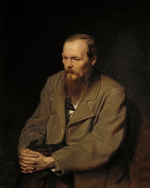
At 28, Fyodor Dostoevsky was about to die.

The nightmare started when the police burst into his apartment and dragged him away in the middle of the night, along with the rest of the Petrashevsky Circle. This was a group made up of artists and thinkers who discussed radical ideas together, such as equality and justice, and occasionally read books. Madmen, clearly. To be fair, the tsar, Nicholas I, had a right to be worried about revolution. The Decembrist Revolt of 1825 was still fresh in everyone’s mind, and it was obvious throughout the world that something was happening. In addition to earlier revolutions in America and France, revolutionary ideas were spreading like a virus around the world through art, literature, philosophy, science, and more. To the younger generation and Russians who suffered most under the current regime, it was exhilarating. For those like Nicholas I, whose power depended on the established order, it was terrifying.

So these revolutionaries, most barely in their 20s, were hauled off to the Peter and Paul Fortress, a prison that contained some of Russia’s most vicious criminals. After months of isolation broken up by the occasional interrogation, Dostoevsky and the rest were condemned to death by firing squad.

more here.

palestinian diary

AAEAAQAAAAAAAAbIAAAAJGJiMWEwNjQxLTE5OTMtNGU1Zi05NGJhLWM1ZTBlZmI2ZGFmOAFida Jiryis at The London Review of Books:

More than one and a half million Palestinians live in Israel, not in the West Bank and Gaza, but in Israel itself, in the Galilee in the north, the Triangle in the centre and the Naqab (Negev) in the south. After the wiping out of Palestine in 1948, about 15 per cent of the Palestinian population remained in the new state of Israel. On the surface, we are far more privileged than our brethren in the West Bank and Gaza; having Israeli citizenship and a passport means that we can vote, we have access to good education, public healthcare and social benefits, and we can travel easily, although we can’t visit some Arab countries. We don’t live in an occupied zone surrounded by checkpoints, with the constant threat of clashes, Israeli army incursions and settler violence. We are free to study almost anything we choose, in a country with a large job market. But this is a façade behind which is a system of rampant structural and institutional discrimination. As Palestinians, we spend every minute of our lives paying for the fact that we are not Jewish.

When I lived in my family’s village of Fassouta, in the Galilee, I was reminded every morning as I drove to work of my people’s dispossession. First, I had to drive through the remains of Suhmata and Dayr El-Qasi, two Palestinian villages that were destroyed in 1948. All that remains of Suhmata is a mass of shrubs and some stones that survived the Israeli bulldozers when they ploughed the village into the ground. In the miracle of Israel’s creation, Dayr El-Qasi was turned into Elqosh, a Jewish village, some of whose residents live in houses that were not destroyed in 1948, perhaps because they appreciate the Arab architecture. The Palestinians of Dayr El-Qasi and their descendants have lived in refugee camps in Lebanon ever since.

more here.

Tuesday Poem

The Kitchen Gods

Carnage in the lot: blood freckled the chopping block —
The hen's death is timeless, frantic.
Its numbskull lopped, one wing still drags
The pointless circle of a broken clock,
But the vein fades in my grandmother's arm on the ax.
The old ways fade and do not come back.
The sealed aspirin does not remember the willow.
The supermarket does not remember the barnyard.
The hounds of memory come leaping and yapping.
One morning is too large to fit inside the mouth.
My grandmother's life was a long time
Toiling between Blake's root and lightning
Yahweh and the girlish Renaissance Christ
That plugged the flue in her kitchen wall.
Early her match flames across the carcass.
Her hand, fresh from the piano plunged
The void bowel and set the breadcrumb heart.
The stoves eye reddened. The day's great spirit rose
From pies and casseroles. That was the house —
Reroofed, retiled, modernized, and rented out,
It will not glide up and lock among the stars.
The tenants will not find the pantry fully stocked
Or the brass boat where she kept the matches dry.
I find her stone and rue our last useless
Divisive arguments over the divinity of Christ.
Only where the religion goes on without a god
And the sandwich is wolfed down without blessing,
I think of us bowing at the table there:
The grand patriarch of the family holding forth
In staunch prayer, and the potato pie I worshipped.
The sweeter the pie, the shorter the prayer.
.

by Rodney Jones
from Transparent Gestures
Houghton Mifflin, 1989
.

The Doe’s Song

Leath Tonino in Orion Magazine:

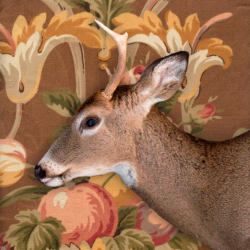
Tonino_image-771x771RICHARD NELSON’S 1997 book, Heart and Blood: Living with Deer in America, doesn’t deal all that much with roadkill, but the few statistics it does provide are overwhelming. By chance I had been overwhelmed with them at breakfast, drinking my coffee, reading at the table in Vermont, before getting in the car for the drive to New Jersey. “Back in 1961 when deer were scarce by present standards,” Nelson writes, “œofficial reports counted fewer than 400 deer killed by cars on [Wisconsin’™s] roads. Just 30 years later, in the 1990s, the number had soared to between 35,000 and 50,000 whitetails killed annually, and the actual figure could be much higher, since injured deer often get away from the highway before dying.” He goes on: The number of deer killed by cars in Boulder [Colorado] varies from 120 to more than 200 each year, and an equal number (if not more) are injured or straggle off to die in the brushland. Deer accidents increase during winter, midsummer, and especially the fall rut. An animal control officer told me, “We’ll pick up two or three dead deer every day in rutting season, plus usually one more that’s injured so badly it has to be euthanized.”

A spring morning, a cup of coffee, the house quiet. I leaned back in my chair and thought about the math. Boulder plus every other city, town, and open road in Colorado. Plus Wisconsin. Plus Florida and California. Plus Vermont and New Jersey. Two or three. Plus usually one more. Between 35,000 and 50,000. Could be much higher. I took a gulp, then took another. Straggle off to die in the brushland.

More here.

Cell maps reveal fresh details on how the immune system fights cancer

Heidi Ledford in Nature:

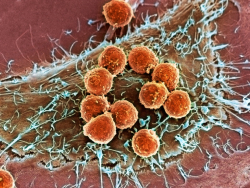
CellsDetailed maps of the immune cells that surround tumours could suggest fresh therapeutic targets, point out biological markers that can be used to select the patients most likely to respond to a given therapy, and offer insights into the best time to start administering that treatment, according to two studies released on 4 May.

…One team, led by systems biologist Bernd Bodenmiller of the University of Zurich in Switzerland, mapped the immune response to a form of kidney cancer called clear cell renal cell carcinoma2. It focused on two kinds of immune cell, T cells and macrophages. Both can either mount or suppress an immune attack on a tumour, depending on the state that they are in and the proteins they express. Bodenmiller and his colleagues examined samples from 73 people with kidney cancer along with 5 samples of healthy tissue. They analysed 3.5 million cells for the expression of 29 proteins used to characterize macrophages, and 23 to characterize T cells. The results showed that populations of those T cells and macrophages are more varied than previously thought. The team also found that patients who had a particular combination of T cells and macrophages also tended to have fast-progressing cancers. The data show that the current practice of looking at only one or two proteins to infer the state of a T cell or macrophage misses important information, says Kai Wucherpfennig, an immunologist at the Dana–Farber Cancer Institute. “It’s very unlikely that a single marker is sufficient,” he says.

Another study, led by oncologist Miriam Merad of the Icahn School of Medicine at Mount Sinai in New York City, created an atlas of immune cells associated with early-stage lung cancer1. The team compared normal lung tissue and blood with tumour tissue, and found that the young tumours had already begun to alter the immune cells in their neighbourhood. This is a sign that cancer therapies that target the immune system need not be reserved for advanced stages of the disease, says Merad. “It suggests that already, we could act,” she says. “We don’t have to wait until the tumour has spread.”

More here.

Monday, May 8, 2017

Yelahanka: Sketches of a Neighborhood

by Hari Balasubramanian

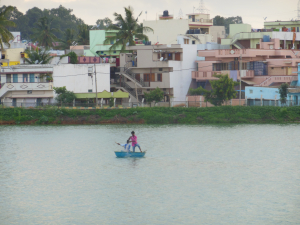
013My parents live in a two-bedroom flat at the northern end of Bangalore, in a town called Yelahanka. They moved in 2002, two years after I left for grad school in the United States. Over the last fifteen years, as I've continued to live abroad, Yelahanka has become the somewhat unfamiliar home in India, experienced every two years but no more than a few weeks at a time, and always changing each time I visited.

Once a town with a history of its own, Bangalore's explosive growth over the last few decades made Yelahanka part of the greater city. In 2005, when I came to renew my student visa, the highway outside my parents' flat complex, the Bangalore-Bellary road, was being widened in preparation for the new international airport twenty kilometers north. The city seemed then to be splitting at its outer limits: earthmovers raking up heaps of rubble on the roadsides; laborers patiently striking heavy hammers to break existing concrete structures; and uprooted trunks and roots of what had once been massive trees, caked with the red earth of the depths from which they had been dug up. A study based on satellite imagery revealed that Bangalore, once called Garden City for its beautiful parks and tree-lined boulevards, lost 180 square kilometers of its green cover from 2000-2006.

The new airport got going in 2008. A flyover – a separate airport access road to bypass local traffic – was constructed about 50 feet above, supported by giant pillars. In Yelahanka, these pillars landed on the lower road, splitting it in two. Instead of making things easier, the flyover for a long time felt like a major obstruction to the locals, blocking the view, and reducing access to public buses. The traffic, always notorious in India – an ever present cacophony of honks, a jostling for every inch of space between motorbikes, auto rickshaws and newly acquired cars – only got worse as drivers adjusted to the new u-turns and flows.

Read more »

Sunday, May 7, 2017

Artificial intelligence will have implications for policymakers in education, welfare and geopolitics

Special report in The Economist:

20160625_SRD004_0In July 2011 Sebastian Thrun, who among other things is a professor at Stanford, posted a short video on YouTube, announcing that he and a colleague, Peter Norvig, were making their “Introduction to Artificial Intelligence” course available free online. By the time the course began in October, 160,000 people in 190 countries had signed up for it. At the same time Andrew Ng, also a Stanford professor, made one of his courses, on machine learning, available free online, for which 100,000 people enrolled. Both courses ran for ten weeks. Mr Thrun’s was completed by 23,000 people; Mr Ng’s by 13,000.

Such online courses, with short video lectures, discussion boards for students and systems to grade their coursework automatically, became known as Massive Open Online Courses (MOOCs). In 2012 Mr Thrun founded an online-education startup called Udacity, and Mr Ng co-founded another, called Coursera. That same year Harvard University and the Massachusetts Institute of Technology got together to form edX, a non-profit MOOC provider, headed by Anant Agarwal, the head of MIT’s artificial-intelligence laboratory. Some thought that MOOCs would replace traditional university teaching. The initial hype around MOOCs has since died down somewhat (though millions of students have taken online courses of some kind). But the MOOC boom illustrated the enormous potential for delivering education online, in bite-sized chunks.

The fact that Udacity, Coursera and edX all emerged from AI labs highlights the conviction within the AI community that education systems need an overhaul. Mr Thrun says he founded Udacity as an “antidote to the ongoing AI revolution”, which will require workers to acquire new skills throughout their careers. Similarly, Mr Ng thinks that given the potential impact of their work on the labour market, AI researchers “have an ethical responsibility to step up and address the problems we cause”; Coursera, he says, is his contribution. Moreover, AI technology has great potential in education. “Adaptive learning”—software that tailors courses for each student individually, presenting concepts in the order he will find easiest to understand and enabling him to work at his own pace—has seemed to be just around the corner for years. But new machine-learning techniques might at last help it deliver on its promise.

More here.

Review: “Adults in the Room” by Yanis Varoufakis

One of the greatest political memoirs ever? The leftwing Greek economist and former minister of finance tells a startling story about his encounter with Europe’s ‘deep establishment’.

Paul Mason in The Guardian:

3500Yanis Varoufakis once bought me a gin and tonic. His wife once gave me a cup of tea. While dodging my questions, as finance ministers are obliged to, he never once told me an outright lie. And I’ve hosted him at two all-ticketed events. I list these transactions because of what I am about to say: that Varoufakis has written one of the greatest political memoirs of all time. It stands alongside Alan Clark’s for frankness, Denis Healey’s for attacks on former allies, and – as a manual for exploring the perils of statecraft – will probably gain the same stature as Robert Caro’s biography of Lyndon B Johnson.

Yet Varoufakis’s account of the crisis that has scarred Greece between 2010 and today also stands in a category of its own: it is the inside story of high politics told by an outsider. Varoufakis began on the outside – both of elite politics and the Greek far left – swerved to the inside, and then abruptly abandoned it, after he was sacked by his former ally, Greek prime minister Alexis Tsipras, in July 2015. He dramatises his intent throughout the crisis with a telling anecdote. He’s in Washington for a meeting with Larry Summers, the former US treasury secretary and Obama confidant. Summers asks him point blank: do you want to be on the inside or the outside? “Outsiders prioritise their freedom to speak their version of the truth. The price is that they are ignored by the insiders, who make the important decisions,” Summers warns.

More here.

Calculating Women

Despite the collaborative nature of science, for too much of its history the work of women and scientists of color was exploited and unacknowledged.

Priyamvada Natarajan in the New York Review of Books:

Natarajan_1-052517After a precisely calculated and perfectly executed voyage, the Mars Orbiter Mission reached its destination on September 24, 2014. The Indian Space Research Organisation, which oversaw the mission, had succeeded in doing what Russia, the United States, China, and Japan had failed to do: send an unmanned probe into orbit around Mars on the first attempt. The project’s success captured headlines worldwide, and a photograph of the cheering women on the administrative staff in the operations control room went viral on the Internet. Subsequently, articles about the female scientists and engineers who were central to the success of the project were widely published.

Perhaps never before had the participation of women in a space mission been so visible, even though women had been making fundamental computational contributions to astronomy and aeronautics for well over a century. Three recent books—Dava Sobel’s The Glass Universe, Margot Lee Shetterly’s Hidden Figures (which has also been turned into an Oscar-nominated film), and Nathalia Holt’s The Rise of the Rocket Girls—show some of what they accomplished.

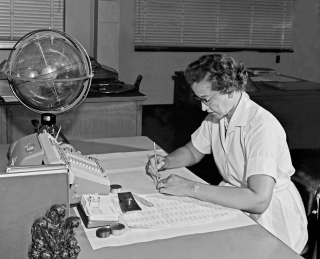
In the late nineteenth century, the term “computer” referred not to a machine but to a person who took measurements, graphed data, and made calculations that helped interpret information and predict results. Although computing was considered mechanical and menial, it was a necessary task that required precision and patience. Before the invention of the modern digital computer, it was crucial to the advance of science and technology. Computers were often women, who could be paid less than men and could work during wartime. Despite the integral part they played in establishing the US as a leader in modern astrophysics and space exploration, their work has remained largely unknown.

More here.

Why My Father Votes for Le Pen

Édouard Louis in the New York Times:

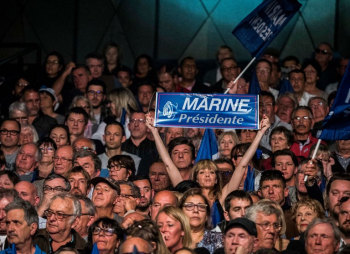
07louis-master768Last month, the face of Marine Le Pen appeared on my computer screen. The headline under the picture read, “Marine Le Pen in Round 2.” The leader of France’s far-right National Front, she had advanced to a runoff vote in the presidential election. I immediately thought of my father, a hundred miles away.

I imagined him bursting with joy in front of the TV — the same joy he felt in 2002 when Jean-Marie Le Pen, Marine Le Pen’s father and the previous leader of the National Front, also made it to the second round. I remembered my father shouting, “We’re going to win!” with tears in his eyes.

I grew up in Hallencourt, a tiny village in Northern France where, until the 1980s, nearly everyone worked for the same factory. By the time I was born, in the 1990s, after several waves of layoffs, most of the people around me were out of work and had to survive as best they could on welfare. My father left school at 14, as did his father before him. He worked for 10 years at the factory. He never got a chance to be laid off: One day at work, a storage container fell on him and crushed his back, leaving him bedridden, on morphine for the pain.

I knew the feeling of being hungry before I knew how to read. From the time I was 5 my father would order me to go down the street and knock on the door of one of my aunts to ask if she could spare some pasta or bread for our table.

More here.

A letter to my daughter: What I want you to know about freedom, fear and Donald Trump

Claire Messud in Salon:

Dear Livia,

TrumpWhen you were seven weeks old, we took you to a wedding in New York City. We dressed you in an embroidered white linen dress I’d also worn as an infant, we combed what little hair you had, we popped you in the car seat and zoomed down from western Massachusetts. With the exception of the lovely bride, you were the belle of the ball — handed from aspiring grandmother to aspiring grandmother, chin-chucked, dandled, cooed over, cuddled. Daddy surreptitiously changed your diaper in the library of the fancy private club. A television star praised your dimples. You loved every minute and didn’t cry once. Two days later, less than twenty-four hours after we got home, al-Qaeda terrorists hijacked passenger jets and flew them into a field in rural Pennsylvania, the Pentagon, and the Twin Towers, killing thousands. The world into which we thought you had been born was ineradicably altered in a matter of hours. So began the terrible Time of Fear, the better part of a decade in which our actions and reactions as a nation were premised on constant dread and anxiety. We prosecuted wars on false pretenses; we blithely dispensed with our fundamental moral beliefs and turned a blind eye to extraordinary rendition and torture. With arrogant ignorance, inadequate military preparations, and botched strategies, we sacrificed countless young men and women, both on the battlefield and afterward, many of them victims of severe injuries whose lives can never be fully restored. We treated our allies in the region with cavalier indifference (remember Kirk Johnson, Daddy’s friend from Berlin, who started the List Project and worked so hard to help Iraqis abandoned by the American government for whom they’d worked?). In the course of these years, we alienated a generation of young people across the Middle East. When I visited Turkey in 2007 as a cultural guest of the State Department, it was explained to me that under Bill Clinton, the United States had had a more than 75 percent approval rating in Turkey. By the last years of George W. Bush’s presidency, that rating was 9 percent. And 50 percent of the Turkish population was under twenty-five years old, which meant that most young Turks had never thought well of our country.

In 2008, Barack Obama ran for president with the slogan “Yes We Can,” on a platform of “Hope.” You turned seven years old that year — the age of reason — and both at home and in the country, the optimism was palpable. Your friend Annie favored Hillary and dressed up as HRC for Halloween; you liked them both, Hillary and Obama, and didn’t mind who won. Even though you were still small, you laughed at Sarah Palin jokes — not realizing, I think, that they were funny only because she wasn’t elected. We believed that we could, as a nation, surmount our fear together. We believed in choosing peaceful dialogue instead of conflict; in openness and tolerance instead of division and hatred. We believed in a progressive future instead of a return to the past. These past eight years have not been without problems or limitations. But it has a been a gift for you — and for us, raising you — to grow to maturity in a political culture that supports equal rights, dignity, and mutual respect for all, that believes in global cooperation on important issues as diverse as climate change and world peace.

More here.

Saturday, May 6, 2017

KUMAIL NANJIANI’S CULTURE-CLASH COMEDY

His standup comedy and his new movie, “The Big Sick,” offer portrayals of secular Muslims that American audiences rarely see.

Andrew Marantz in The New Yorker:
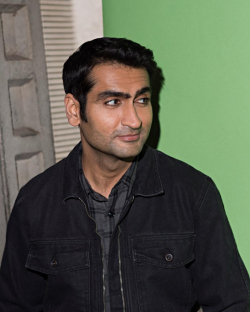
170508_r29897-800In 2009, on the “Late Show with David Letterman,” the comedian Kumail Nanjiani walked onstage, wearing a boxy black suit and a cordless mike, to do a standup set. The band played a few bars of “Born in the U.S.A.,” an allusion, presumably, to the fact that he wasn’t. The first anecdote of Nanjiani’s set fell flat. He stood stiffly, swallowing hard, his hands clasped tightly in front of his chest. Then he told a joke about theme-park attractions with excessively convoluted backstories. “It’s like a story line to a porn movie,” he said. “I really don’t care what all your professions are. I’m just here for the ride.” It wasn’t the cleverest punch line in Nanjiani’s act, but it received a big laugh and a ten-second applause break. He exhaled audibly, relaxing his hands. His next bit was about the Cyclone, the rickety roller coaster on Coney Island. “The Cyclone was made in the year 1927! Let that sink in. They should change the name of that ride to 1927, ’cause that fact is way scarier than any cyclone,” he said. “And the whole thing is made of wood . . . you know, that indestructible substance that nasa uses for its space shuttles.” The bit could have been delivered in the nineteen-sixties, by Woody Allen or Mort Sahl, with one exception: Nanjiani said the ride was “the scariest experience of my life—and I grew up in Pakistan.”

Nanjiani spent his childhood in Karachi, Pakistan’s biggest city. In 1997, when he was nineteen, he left to attend Grinnell College, a small liberal-arts school in the middle of Iowa. “I thought, from watching TV and stuff, that America was one place,” he told me. “They only show you L.A. and New York. They don’t warn you about Iowa.” When he got to college, he says, “I was super shy, but I learned that my friends thought I was funny.” His senior year, there was an open mike on campus, and his friends urged him to try standup. He performed for thirty-five minutes. “I don’t think I’ve ever done better than that crowd, reaction-wise,” he said. “Of course, it was full of people who knew me. But it gave me an irrational amount of confidence.” After school, he moved to Chicago and started performing. Michael Showalter, a comedian and director who has admired Nanjiani from the beginning, told me, “Anyone who saw him saw how smart and fresh his voice was. The question wasn’t whether he’d be successful, only which direction he’d choose to go in.”

More here.

Hundreds of Psychology Studies are Wrong

James M. Sherlock in Psychology Today:

Sherlock photo2This might sound like nothing new if you’ve kept up with the replication crisis, but I’m referring to a completely different issue – one that is all too often overlooked.

Let me introduce the problem with an example. In a recent article from The Conversation, researchers from the University of Queensland describe a study in which they observed families during hospital visits and measured the anxiety and distress of both parents and children. Measures of children’s anxiety and pain were positively associated with parents’ distress levels. The researchers interpret the role of the parents’ distress during the visit as causal, arguing that parents who are more anxious and distressed are less able to support their child during the procedure. This seems like a rather sensible and intuitive conclusion to draw; however, the researchers should have absolutely no confidence in doing so.

Anxiety sensitivity (i.e. how susceptible an individual is to feeling anxious, ranging from completely normal to pathologically desensitise/hypersensitive) is substantially genetic. In fact, nearly half of the variation (i.e. the differences between people in the population) in anxiety sensitivity is likely to be genetic. The researchers therefore have no way to distinguish whether the children are responding to their parents’ distress or simply share their anxious disposition for genetic reasons, or more likely some combination of the two.

More here.

George Lakoff says, ‘Don’t underestimate Trump’

Daphne White in Berkeleyside:

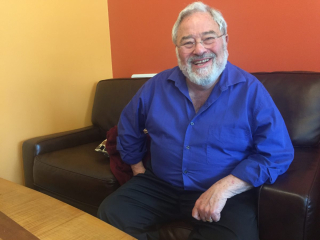
George-Lakoff.-Photo-Daphne-White-1200x900George Lakoff, retired UC Berkeley professor and author of Don’t Think of an Elephant, is one of a very few people in Berkeley who does not underestimate Donald Trump. “Trump is not stupid,” he tells anyone who will listen. “He is a super salesman, and he knows how to change your brain and use it to his advantage.”

In fact, Lakoff predicted a year ago that Trump would win with 47% of the vote. (The actual total was 46%.) Lakoff even told Hillary Clinton’s campaign and PAC staffers how to counteract Trump’s message. But they couldn’t hear him.

As far back as 2006, Lakoff saw the writing on the wall. “A dark cloud of authoritarianism looms over the nation,” he wrote in his book Thinking Points, A Progressive’s Handbook. ”Radical conservatives have taken over the reins of government and have been controlling the terms of the political debate for many years.” The progressives couldn’t hear him, either.

Lakoff’s message is simple, but it is couched in the language of cognitive linguistics and neuroscience. The problem is that political candidates rely on pollsters and PR people, not linguists or neuroscientists. So when Lakoff repeatedly says that “voters don’t vote their self-interest, they vote their values,” progressive politicians continually ignore him. His ideas don’t fit in with their worldview, so they can’t hear him.

More here.