
Elizabeth Arnold at the Shorenstein Center of Harvard University:
 In July of 2008, as a national broadcast correspondent, I reported on environmental conditions in Newtok, a remote community of roughly 400 Yup’ik people in Northwest Alaska. Newtok was losing forty to a hundred feet of coastline a year to erosion, and sinking because of “permafrost” that is no longer permanent, the direct result of a warming climate. Flooding threatened homes, the school, and the only supply of clean water. I chose to report on Newtok because the community was actively working on a relocation plan after voting to move to higher, more stable ground. My story compared the actions of Newtok with Kivalina, an Inupiaq community of the same size situated on a barrier island further north. Kivalina faced similar conditions and had filed suit that same year against ExxonMobil Corp. for damages caused by climate change.
In the decade since my report aired on National Public Radio, news outlets from all over the world visited Newtok, Kivalina, Shishmaref, Shaktoolik and a dozen other Alaska Native communities forced to consider relocation because of the effects of climate change. The national stories all fit the same narrative pattern. With images of houses tipping precariously off cliffs, and phrases such as “impending doom,” and “cultural extinction,” the reporting paints a picture of tragedy and hopelessness, framing community members as victims to sell the urgency of mitigation to the public. As a CNN correspondent unabashedly reported, “a trip here is like a trip into a disturbing future.”
The repetition of this narrow narrative in national and international media for more than ten years has not resulted in a groundswell of support for mitigation or adaptation. Nor has it resulted in public policy at the state or federal level. It may have even undermined the ability of these coastal communities to help themselves.
More here.
 Old houses are full of holes. Creatures sneak into the living room. A summer ago, a garter snake entered and slithered across my living room. I stepped on its head and threw it outside. The same year, I discovered a visitor who became my favorite for persistence. A chipmunk took up residence and remained on the first floor for two or three months. Every day I would hear chirping, at first sounding like an electronic signal. Then the chipmunk came into sight, pausing with its paws tucked or folded before it, I suppose sustained by my cat’s kibble and water. As for my cat, she stared at it intently, fascinated. My housekeeper, Carole, bought a tiny Havahart trap and baited it with whatever we imagined was a chipmunk treat. Every morning the bait was gone, but so was the chipmunk. One morning the creature skittered from the kitchen into the toolshed, where the door showed a wide space at its bottom, and never appeared again. I felt abandoned. When autumn descended into winter, I walked into the cluttered dining room, never used in old age, and smelled something rotten in a box of unsorted snapshots. Under a layer of pictures I found the small body of our chipmunk. It had not escaped after all. With a paper towel I picked it up, rigid and almost weightless, and threw it from the door as far as I could. Next morning when I opened the door to pick up the newspaper, half of his small mummified corpse lay beside the door.
 Books are so intimate, somehow, and perhaps this is one reason why so many of the current glut of reading memoirs leave me cold. Even as they strain for this sense of disclosure – don’t you feel like this, too? they ask – their tone is proprietorial, hellbent on exceptionality (I love the Brontës even more than you). You would, I think, accept this from a lover, but not from a writer you’ve never met – unless, I will now add, that writer happens to be Edmund White, the tone of whose new book, The Unpunished Vice: A Life of Reading, quite often resembles the gentle whisper of a sweetheart. Ownership, you see, is not at all his style. In fact, he doesn’t claim always to understand the books that he loves most. “I’ve read it 10 times, though I’m none the wiser for it,” he writes of
 Since 1900, average life expectancy around the globe

 Why do people care about sport? With hundreds of millions of human beings (myself included) obsessively following the world cup that is being played out in Russia, it’s a good time to reflect once again on this perennially interesting question.
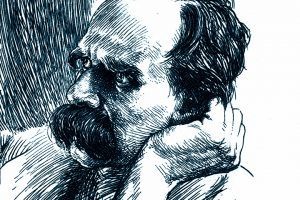 The German philosopher Friedrich Nietzsche (1844–1900) pursued two main themes in his work, one now familiar, even commonplace in modernity, the other still under-appreciated, often ignored. The familiar Nietzsche is the “existentialist”, who diagnoses the most profound cultural fact about modernity: “the death of God”, or more exactly, the collapse of the possibility of reasonable belief in God. Belief in God – in transcendent meaning or purpose, dictated by a supernatural being – is now incredible, usurped by naturalistic explanations of the evolution of species, the behaviour of matter in motion, the unconscious causes of human behaviours and attitudes, indeed, by explanations of how such a bizarre belief arose in the first place. But without God or transcendent purpose, how can we withstand the terrible truths about our existence, namely, its inevitable suffering and disappointment, followed by death and the abyss of nothingness?
 In 1890, just over six thousand people lived in the damp lowlands of south
 EARLY IN THE MORNING
 Here is the predicament that most of us seem to be in. We are not virtuous people. We simply do not have characters that are good enough to qualify as honest, compassionate, wise, courageous, and the like. We are not vicious people either—dishonest, callous, foolish, cowardly, and so forth. Rather we have a mixed character with some good sides and some bad sides. This is the most plausible interpretation of what psychology tells us. It is also true to our lived experience in the world. Those are the facts as I see them. Now comes the value judgment—this is a real shame. It is very unfortunate that our characters are this way. It is a good thing—indeed, a very good thing—to be a good person. Excellence of character, or being virtuous, is what we should all strive for. Admittedly, the news is not all bad. It would be a lot worse if most of us were vicious people. Imagine what it would be like to live in a world full of mostly cruel, self-centered, dishonest, and hateful people. It would be hell on earth.
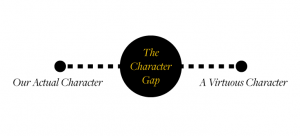 What strategies are there to try to develop a better character, and which of these strategies show substantial promise? In my book The Character Gap: How Good Are We?, I consider a number of different strategies. One I find quite interesting is what we might call “virtue labeling.” Suppose you come to believe, as I do, that most of the people we know do not have any of the virtues. So your friend, your boss, your neighbor … you need to change your opinion of all of them. Now here is the interesting idea—even with this new outlook firmly in mind, you should still go ahead and call them honest people next time you see them. You should still praise them for being compassionate. You should go out of your way to comment on their courage.